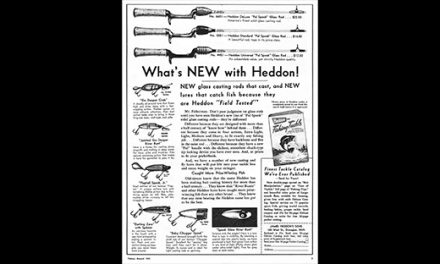

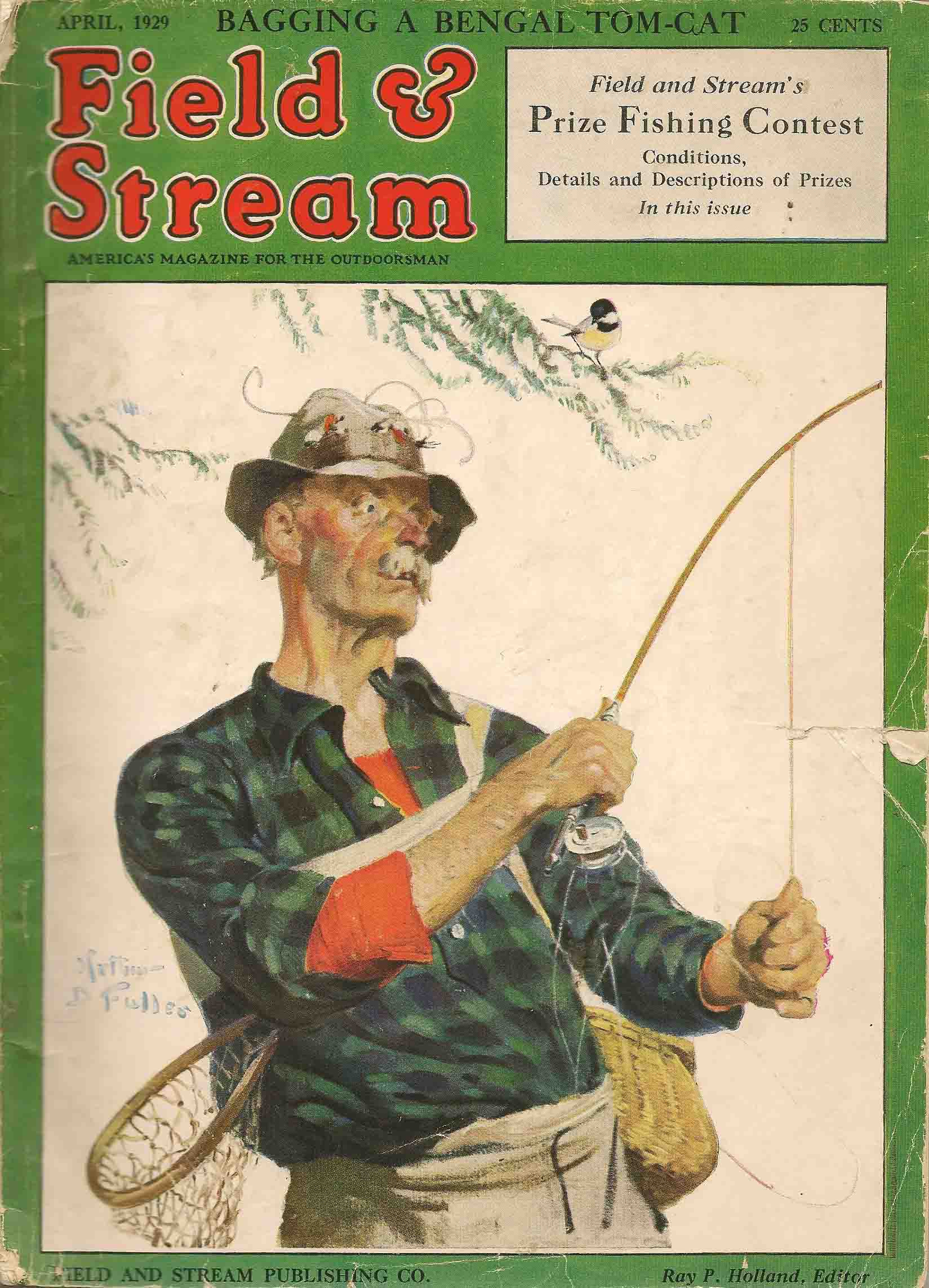
One must understand a bit of history to appreciate the ad below from the April 1929 issue of Field & Stream . Bait casting rods since the days of Dr. Henshall were either very long and designed to cast live bait or, starting at the beginning of the 20th century, short and somewhat stiff. Most were made of bamboo, metal or various type of wood.
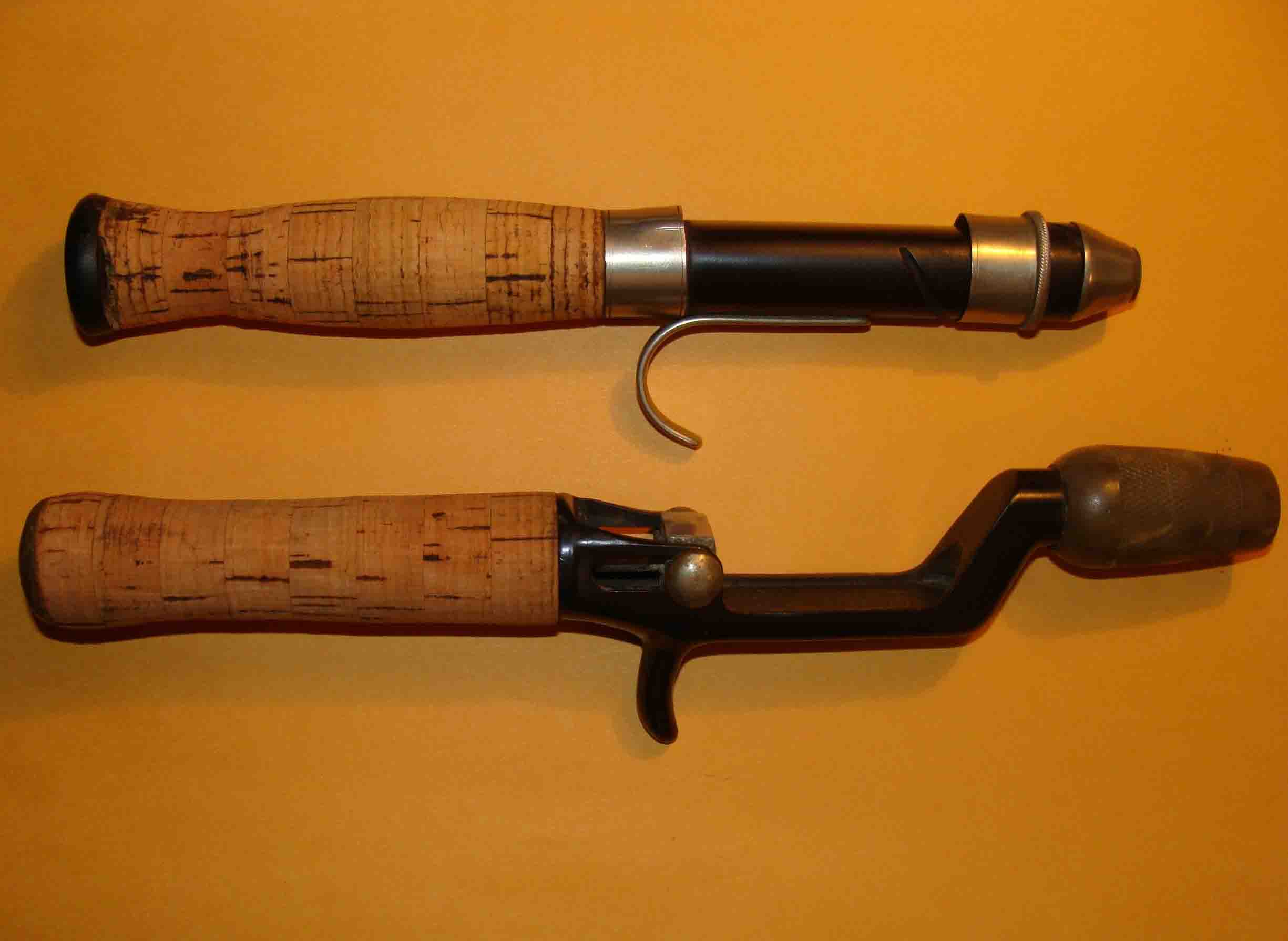
The metal rods that were on the market were almost exclusively hollow rolled steel, made up of short, fitted sections and with a seam running lengthwise. They were light but not smoothly tapered, and hence did not have the smooth action of the best bamboo. They also lacked strength due to the seam that ran the length of the rod.
In 1925, the American Fork and Hoe company came out with square, solid steel bait casting rods whose design was taken from fencing foils. Hence, the term “Rapier Steel” found its way into advertising. This was the first soft-action rod that also had strength. It was a task to convince the average fisherman that fishing with such a limber, yet strong rod was both easier and more fun:
“Wherever sportsman gather on lake or stream, you hear tales of a wonderful rod. They describe its marvelous action in playing large and heavy fish; how it yields to every rush without once relaxing a firm and steady pull. Its softness and delicacy in casting are reported as taking away half the strain and effort of this strenuous sport; and men who have put in three or four years of heavy work with a single rod state that it is as straight and true as the day it was first unpacked.”
The square, True Temper rod was an overwhelming success. They were commonly seen on the banks of lakes and rivers well into the 1950s. They were in a word: indestructible. The line guides were wrapped with fine copper wire, which was then tinned over. One could back the car over the rod with little harm.
A close friend takes his small grandsons on a lengthy wilderness canoe trip each year. The fishing rods he provides them are True Temper solid steel rods. He says there is no way they can possibly break them and ruin their trip. He is right!
According to Robert Page Lincoln, who fished on many occasion with Fred Arbogast; Fred (who was a national champion tournament caster) always preferred the True Temper solid steel rod over bamboo until the advent of seamless tubular steel.
For several years, I set up a large display of antique fishing equipment at sports shows. I was always asked by visitors if the solid steel fishing rods they had at home were worth anything. My semi-joking reply was usually something to the effect that there were two such rods in every garage in town. For a rod that was so popular for so long, there has never been much collector interest in them. Nor has a good history of the steel bait casting rod been written.

I vividly remember the NFLCC National Meet about 35 years ago when a first-time attendee brought about 25 solid steel bait casting rods for sale. At the end of the meet, they remained, tied in a bundle, abandoned against the showroom wall, waiting to be carried off to the nearest trash receptacle.
Most authors of the day suggested that the four and one-half foot models cast the easiest. I could not agree more. This is a rod length that I would never consider in bamboo, glass or graphite; I prefer rods of five and one-half feet or longer in these materials. This short, flexible True Temper steel rod “loads up” and almost seems to cast itself.
I often hear the comment that a steel casting rod must be so heavy that it would soon wear one out. When you get used to its slower timing, there is little notice taken of its weight as it seems to be an extension of one’s own arm movement.
I have had many exciting evenings in Canada fishing top water plugs with these short steel rods rigged with a Pflueger Supreme reel and braided line. In fact, I never think of them without recalling how my old Heddon Basser would sail out and land with a splash. A good jerk with the True Temper rod would cause the Basser to make a deep “whump” sound as it dived and as it floated back to the surface amid countless small bubbles, wakes of aroused Northern Pike would head toward the plug, which they attacked with a vengeance. Playing those fish on a short, limber True Temper solid steel rod was the thing that great memories are made of.
Tight Lines, Wild Bill
To read more of Bill’s Sunday Sonnetts on vintage tackle and fishing old gear, please click on this link.