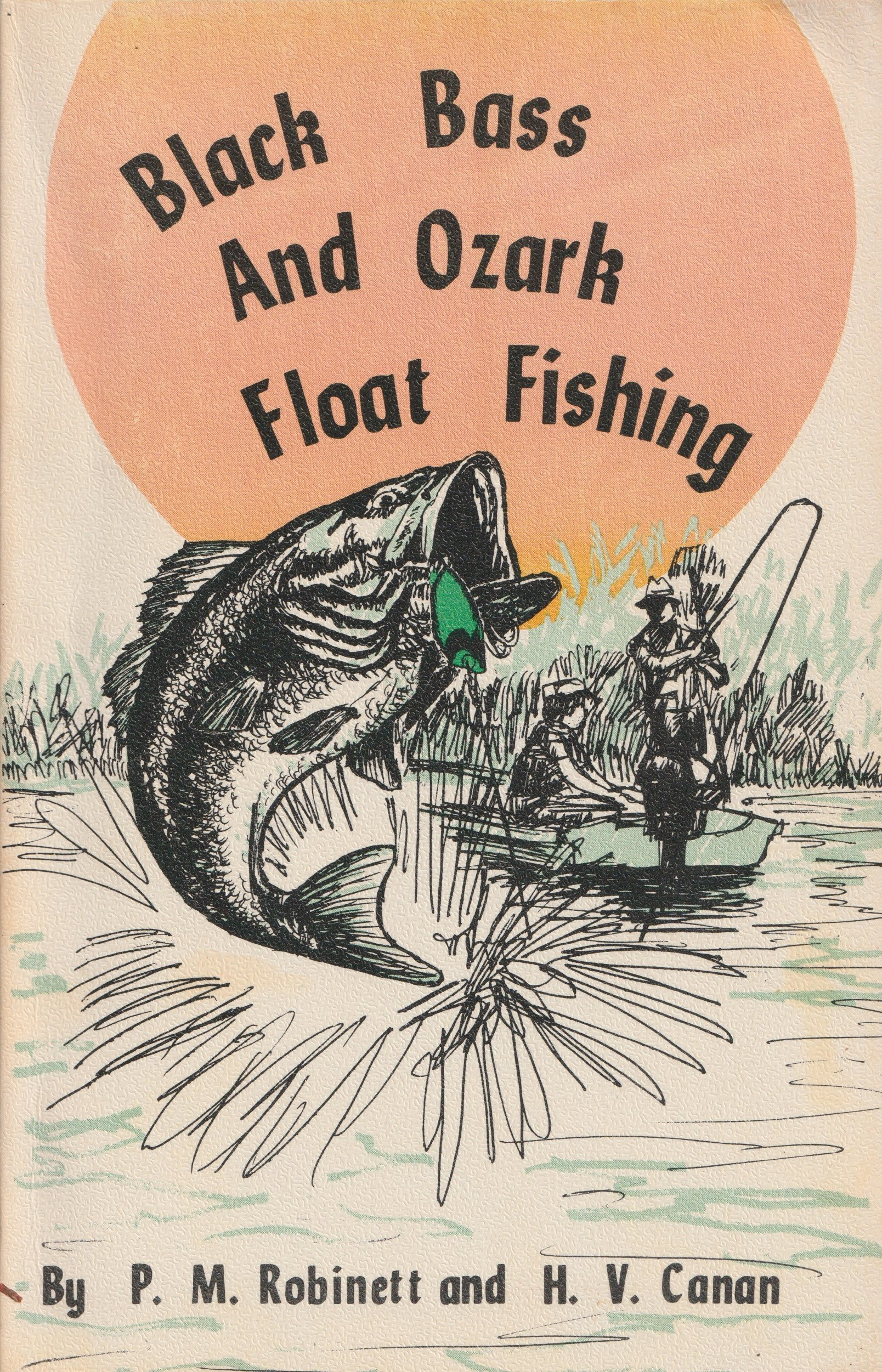
Black Bass and Ozark Float Fishing, by P. M. Robinett and H. V. Canan, was published in 1974 by School of the Ozarks Press. The School of the Ozarks is in Point Lookout, Missouri, just a few miles southwest of Branson. I picked this paperback book up – there’s also a hardcover edition – after running across it online, and based solely on the title and rough line-drawn cover art. I knew absolutely nothing about it other than that it looked like it might be interesting and unusual. I assumed it might be one of those curious folksy and informal books written by a couple of “good ol’ country boys” who talked a lot about fishing with crawdads and trotlines, and who shared recipes for deep-fried breaded bass and catfish. Boy, was I ever wrong.
First off, I feel compelled to declare that the lives of the authors, P. M. Robinett and H. V. Canan, are actually more interesting and dynamic than the book they wrote, and the book they wrote is something special. What follows are the cliff notes version of the life stories of Paul McDonald Robinett and Howard Voorheis Canan.
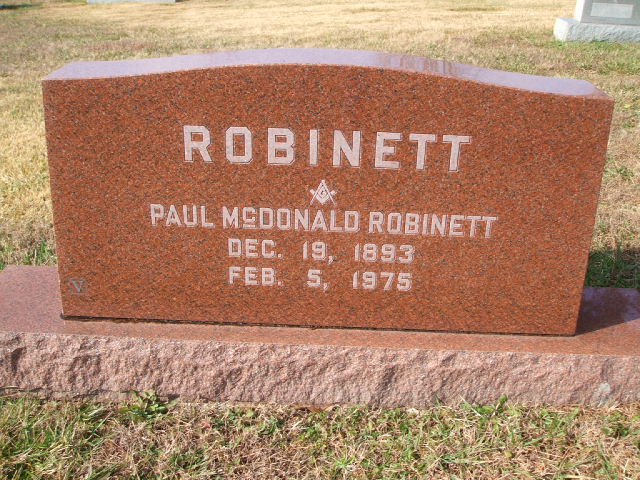
Robinett was born Dec. 19, 1893, in Mountain Grove, Missouri. He served in both WWI and WWII, achieving the rank of Brigadier General. As America prepared to enter World War I in 1917, Robinett attempted to enlist after earning a Bachelor of Science degree in Agriculture at the University of Missouri, but was disqualified for being underweight. He tried to enlist again after receiving a graduate fellowship at Iowa State, but was turned down again. He was finally able to circumvent those disappointments by entering officer’s training at Iowa, ultimately receiving a 2nd lieutenant commission in the 1st Cavalry. During WWI he served along the Mexican border.
Deciding to make the Army a career, Robinett continued his training in Kansas, France, Panama (as aide-de-camp to General Malin Craig), California, and the U.S. Army War College in Washington. Robinett was an expert horseman and while in France in 1924 he was a member of the U.S. Army equestrian team that competed in the Summer Olympics in Paris. He was also an expert marksman who offered to award a dollar to any soldier in his command who could outshoot him. Apparently only one soldier ever collected that dollar.
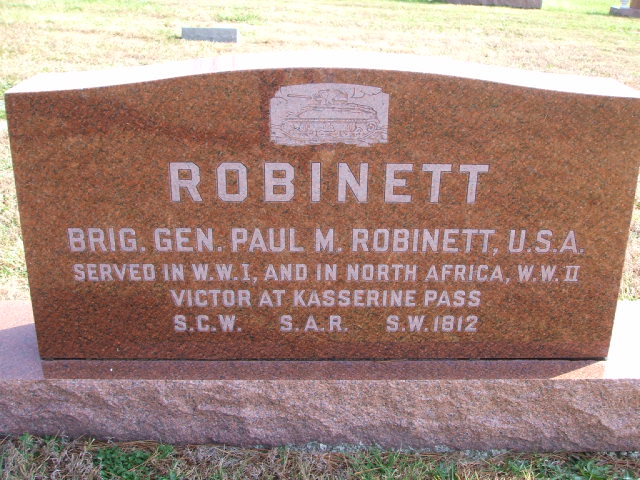
He achieved the rank of captain and served as Assistant Chief of Staff under both Leslie J. McNair and General George C. Marshall. President Roosevelt promoted him to colonel in late 1942. Robinett directed a rewriting of the Army’s intelligence manuals and ultimately became chief of intelligence. During WWII he commanded the 13th Armored Regiment, Task Force Green, in the Algeria landing and oversaw the capture of the city of Oran. He was promoted to Brigadier General, transferred to Tunisia and took command of the 1st Armored Division Combat Command B where he served with distinction. His division repulsed a German advance toward Tebessa near the Tunisian border. One of Robinett’s obituaries had the following account:
“One of the highlights of his 39 years in military uniform was the Battle of Kasserine Pass in North Africa in February of 1943, when he was credited with rallying U.S. Army forces and preventing the Germans from scoring a complete victory.”
The account of the Battle of Kasserine Pass is well worth reading, and includes Robinett’s pivotal role under the heading “The Americans Hold the Line.” It was a major battle that America lost, but that also triggered changes that ultimately lead to victory over the Nazis.
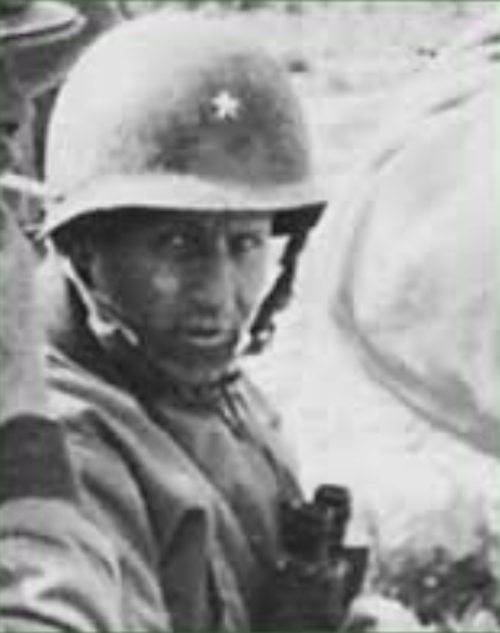
Before he could continue his division’s assault on Bezerte, Tunisia, German artillery hit Robinett and mangled his left leg. He ceded command to another officer and was evacuated to an American hospital where he spent a year recovering. Retiring from wounds received in battle, the highly decorated Robinett went on to author several books on military history, becoming Chief of Military History with 75 historians under his command. He also authored a book on his life growing up in Missouri and collaborated with Canan on two books, including one about the Battle of New Orleans and the War of 1812. Robinett died of a heart attack on Feb. 5, 1975, at the age of 81, only a year after making an unsuccessful run for the U.S. Senate. In late 1975 the collection of his personal papers – the Robinett Collection – was donated to the George C. Marshall Research Foundation in Lexington, VA.
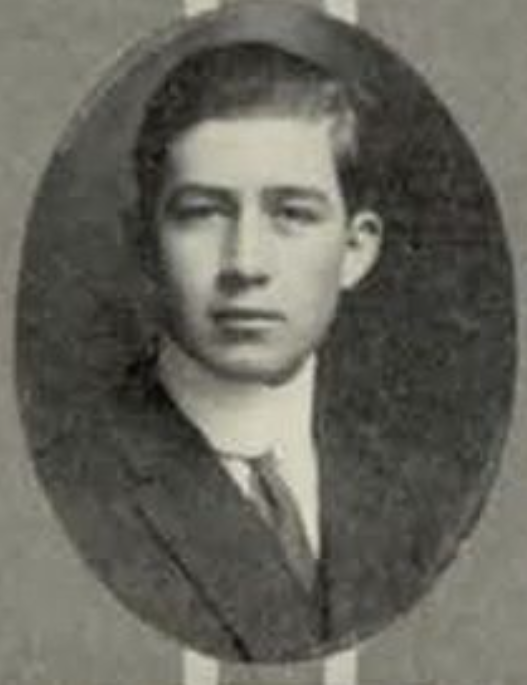
Howard Voorheis Canan was born on August 6, 1894, in Omaha, Nebraska. There is not as much information on Canan as there is on Robinett, but certain aspects of their careers and lives show a lot of intersection. Canan graduated from West Point in 1918 and subsequently served as a first lieutenant in World War I. He was stationed along the Mexican border doing survey work for three years, and it could be that this is where he first met Robinett. He later served in Panama, again perhaps with Robinett, who was also stationed in Panama around this same time. He was ultimately transferred and served at posts all over the United States, including Virginia, Texas, Colorado, Minnesota, and Michigan.
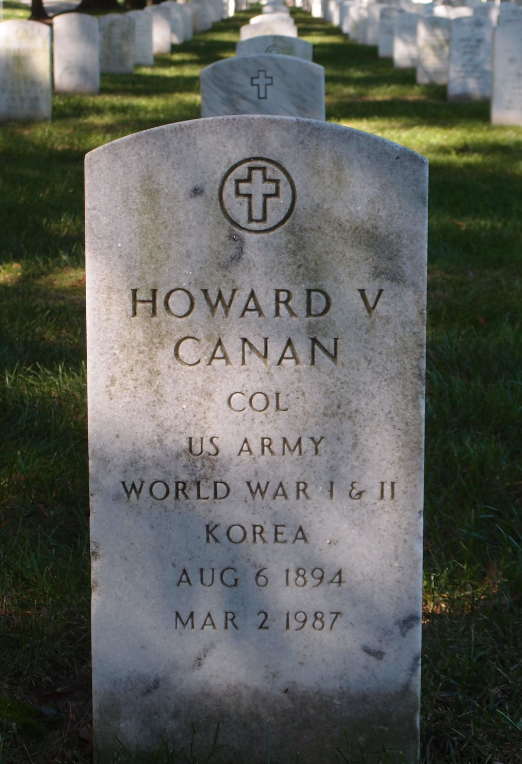
Canan attended the U.S. Engineer School at Fort Belvoir, VA, before graduating from Command and General Staff School in 1939. He rose to the rank of colonel and served more than three years in the European Theater during WWII, being stationed in London, Paris and Frankfurt. He participated in the assault of France and was decorated with the Legion of Merit, Bronze Star, Army Commendation Ribbon, and the French Croix de Guerre with palm. His marker at Arlington indicates that he served in both WWI and WWII, as well as in Korea, although I have been unable to find any details about his service there.
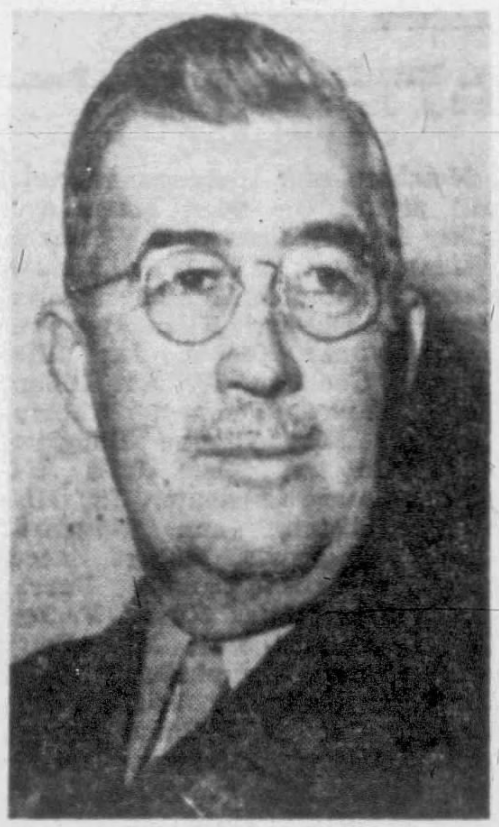
Canan put his degree and experience to good work after the war, working as the district engineer for the U.S. Lakes Survey, in addition to work as an engineer on the Dale Hollow Dam and Reservoir (TN), Center Hill Dam and Reservoir (TN/KY), Wolf Creek Dam and Reservoir (KY), and a follow-up study on the Norfolk Dam in Arkansas. Following his official retirement in 1954, he continued to work as a consulting engineer, but his interests broadened to history and writing. Howard Canan died on March 2, 1987, in Alexandria, VA, at the age of 92. He is buried at Arlington Cemetery in Virginia. His personal papers pertaining to military engineering in the U.S. and in the European Theater during World War II were donated to the State Historical Society of Missouri and may also be found at both the University of California and Stanford University sites. Canan collaborated with Robinett on at least two books, the Black Bass and Ozark Float Fishing book we’re looking at here, and The Battle Of New Orleans: War In The Southwest, The Struggle For New Orleans (1976).
Black Bass and Ozark Float Fishing
Robinett and Canan were soldiers and friends who also apparently bonded over a shared love of fishing. As I mentioned in my opening, reading Black Bass and Ozark Float Fishing is anything but a lazy trip down a river with a cane pole in one hand while reclining on a flour sack. It is an orderly, logical and well-organized volume, written in a matter-of-fact style you would expect from a couple of former high-ranking military men. There is nothing superfluous or flowery here, but the frequent personal anecdote or memory is presented with a dry though rich sense of humor.
The authors open several chapters with an inspirational quote, from folks like Izaak Walton, Herbert Hoover, and even William Shakespeare, which is a nice way to set the stage for what follows. They are fans of Walton and Hoover and those two men’s sporting aesthetic, emphasizing that the total fishing experience is one to appreciate and revere. They cite both Walton’s classic The Compleat Angler and Hoover’s Fishing for Fun and to Wash Your Soul in the preface as two of the better books on fishing. So, while this is a book that has plenty of detailed fishing information – such as caring for line, different ways to hook minnows as bait, how water temperatures affect fish, how to effectively fish after dark, and what specific lures they prefer – it is also heavy with interesting and humorous experiences and personal anecdotes. These are men who love fishing for all the right reasons.
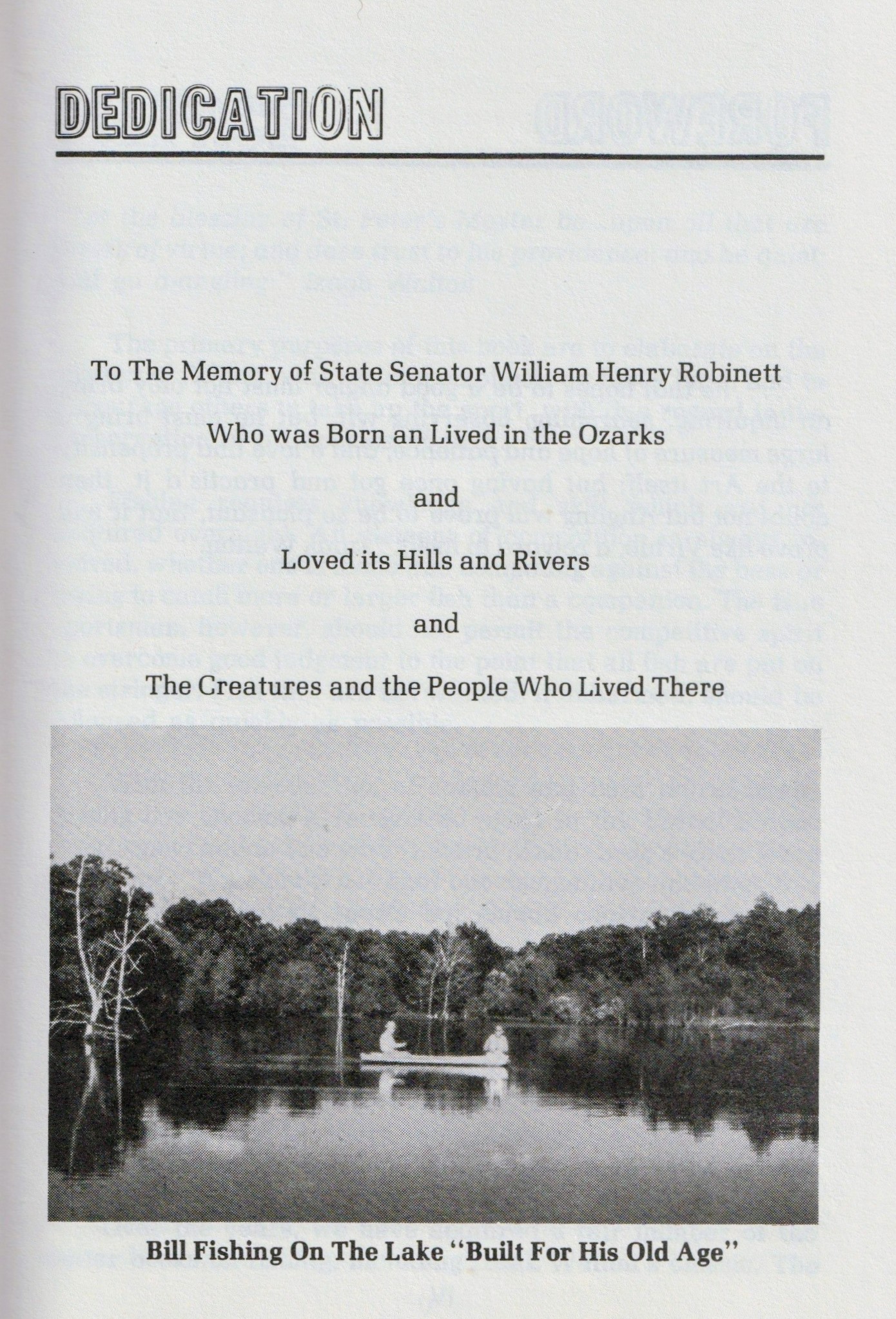
The chapters include:
- Myths About Fishing
- Theories About Black Bass Fishing
- Where to Fish For Bass
- Fishing With Live Bait
- Fishing With Artificial Bait
- The Art and Technique of Bass Fishing
- Other Ways of Fishing
- Fishing Oddities
- The Fish That Get Away
- Plugs We Remember
- Approaching the End
- Source Which Have Proved Helpful
- Guides We Have Known
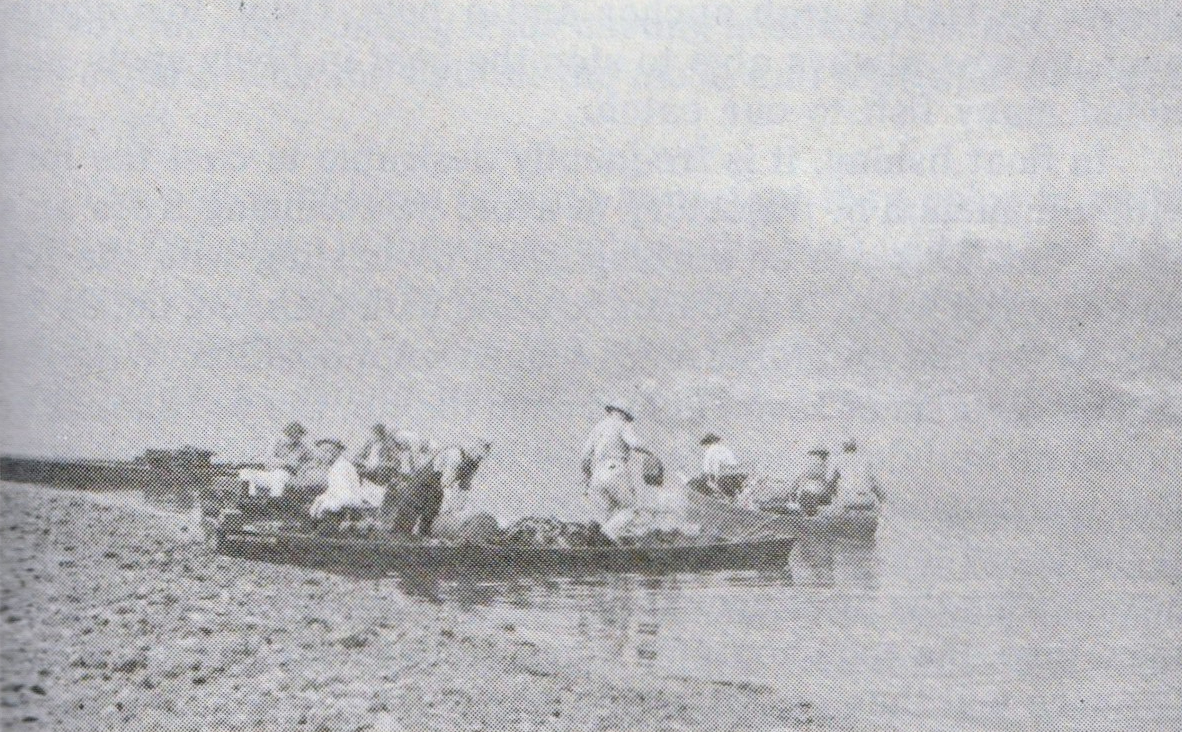
Surprisingly, float fishing actually takes up a very small portion of the book. In the chapter “Other Ways of Fishing” float fishing assumes four pages, with one-and-a-half pages being photographs. It does sound like a wonderful experience though, with the authors writing,
“Camping equipment and food can be carried on prearranged floats, which may last several days. During a float, one traverses deep-cut gorges of indescribable beauty. For many years float fishing was exceptionally good. The word spread across the country and it became popular in a number of states.”
“In recent years, however, fishing has deteriorated in Ozark streams, probably because of pollution and over-fishing. Although catches are not what they were, we feel that the natural beauty and peaceful surroundings encountered on a float are such that we still enjoy this form of fishing above all others. Very few areas, if any, surpass the Ozarks in the spring and fall.”
“The condition of the water in a stream has a great effect on the success of a float trip. If the water is muddy, fishing will be poor. Slightly murky water seems to be best but only those who live on a stream are in a position to select the water they prefer. Our advice is to delay fishing for several days after a severe rainstorm, if the stream you have selected is fairly large.”
Other methods discussed include trolling (which Robinett says is unsportsmanlike), “jump fishing” (casting to surface-breaking shad schools that bass have attacked), bottom bouncing, night fishing, bank fishing, fly-fishing, and bass fishing in Florida, which the authors describe as requiring different techniques than those used further north.
The chapter “Fishing Oddities” is a mighty entertaining read, as the authors recount encounters with and unusual catches of carp, catfish, shark, bullfrogs, turtles, birds, and even manatees. And if you’re someone who appreciates vintage lures, you’re sure to get a kick out of “Plugs We Remember.” The authors discuss their experiences with old lures such as the Hawaiian Wiggler, Bomber, FlatFish, Jitterbug, Lazy Ike and more. In “Sources Which Have Proved Helpful” they also provide a listing of recommended fishing books and magazine sources. The aforementioned Walton and Hoover books are of course included, as are Erwin Bauer’s The Bass Fisherman’s Bible, Robert Page Lincoln’s Black Bass Fishing, Harry Hawes’ My Friend the Black Bass, and more. Of Hawes’ book, they write, “This delightful book is a real treasure of fishing lore as well as a memoir of a lifetime of fishing. It should be read by every dedicated angler and lover of nature. It deserves more than just a second printing.” I fully concur, as my BFA review of Hawes’ My Friend the Black Bass confirms.
![Original caption: Paul M. Robinett and Mrs. James L. [Katy] Robinett.](https://s3.amazonaws.com/bass-archives.com/wp-content/uploads/2026/09/09190056/Paul-M.-Robinett-and-Mrs.-James-L.-Katy-Robinett.jpg)
“Guides We Have Known” recounts both good and bad guides, some by name, some with names they’ve forgotten. The accounts are funny, and their story of a guide named Rodgers gives you an idea of the understated humor in this book. In part, it reads,
“Canaan brought along a bottle of Bourbon, something he never did again. Following a very close call [Rodgers had saved the anglers form a bad dunking and loss of equipment], he thought the situation justified a drink. Rodgers replied quickly, ‘Don’t care if I do!’ Placing the bottle to his lips, he drank until it was about half empty. According to Robinett, Canaan’s eyes became wider and wider as the liquor disappeared. He was dumbfounded and remorseful. His cherished libation, which he hoped would suffice for two days was half gone before the first day was over. Somewhat later, Robinett reminded Canaan that the sun was over the yard arm and Rodgers had just returned from a war-time hitch in the Navy. The effect of the drink on Rodgers was not apparent but Robinett only remarked, ‘Well, that experience should teach you not to fool around with us hillbillies.’”
I have to declare that this 115-page book has become one of my favorites in my bass fishing library. It’s got enough sound fishing advice to satisfy a non-Ozark angler’s interest in learning something new, and more than enough good stories to put a smile on your face.




Another great and detailed examination of a long lost book title. Your research is always complete and exhaustive and adds so much to the historical context of your review. As you know, the Ozark region and it’s rich bassing history is a passion of mine, so it looks like I now have another great book to find and discover. Thanks, David!
Thanks Mike! Glad to introduce this somewhat rare book to you and other Bass Fishing Archives readers. I’d love to see a number of older bass fishing books we review here reprinted and made available to a wider audience, especially books like Ozark Float Fishing that are mostly forgotten treasures (imo). The fact that the authors lived rich lives as military heroes in both World Wars only adds to its richness. If you are able to secure a copy, I’d love to read your review of it as well (there’s no reason each of us cannot offer reviews of the same book).
I bought the Ozark fishing book by Robinette and Canaan in the late 70’s while visiting the School of the Ozarks Museum. It was a wonderful book but i think it fell apart from too much reading and got tossed…thanks for the memory!
You bet, Kevin! Thanks for reading and commenting.