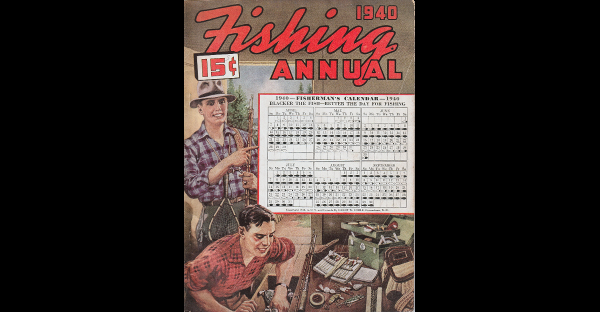

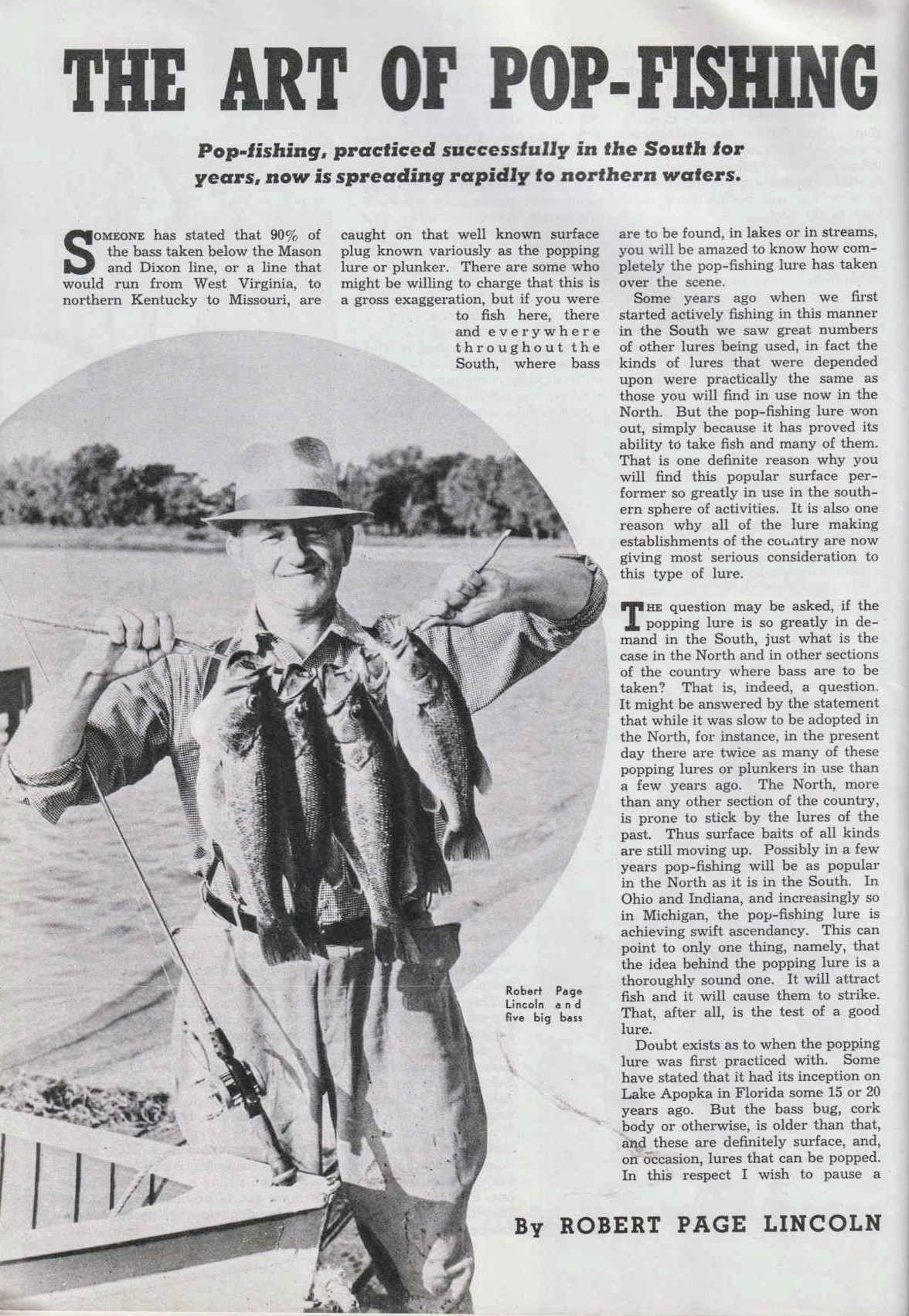
The 1940 Sports Afield Fishing Annual was/is a fantastic magazine. It’s got colorful stories by several celebrated fishing writers, is loaded with great photos, and has a number of awesome fishing ads. I’m going to explore more articles from this issue in the coming weeks, and I’m going to start with a very interesting piece by the great Robert Page Lincoln titled “The Art of Pop-Fishing.” In this story Lincoln brings to the masses a new pop-fishing technique that he claims was popular in the southern United States, but that was only recently being discovered and utilized in the North.
“Pop-Fishing” is what we today would simply call surface or topwater fishing. It’s interesting that the country’s fishing regions in 1940 were limited to the South and the North. There were virtually no new Western bass fishing techniques in 1940. That would, of course, change in the coming decades, but in 1940 the Mason-Dixon Line was the delineating line that Lincoln cites as separating the South from the North concerning fishing methods. He says that the South was much more inclined to try new techniques and lures than the North, claiming that “The North, more than any other section of the country, is prone to stick by the lures of the past.” Surmising that popping surface lures may have first been practiced in Florida 15 or 20 years earlier, he nevertheless recognizes that bass bugs were in use well before that time. One thing I found particularly interesting is Lincoln’s description of the prevailing practice for how bass bugs were fished, and what separates them from his description of “pop-fishing.”
“Originally the theory of the bass bug was that when you cast it to water you were not supposed to jerk it or give it any sort of animation at all. You just let it lie there motionless on the water. No strike coming on, you then moved it forward about six inches and again let it rest there on the surface. No Strike coming on it was moved six inches more and again permitted to rest silent on the water. Three times you did this. No strike occurring on any three moves, you then picked up the lure and directed it elsewhere.”
Such was the practice of the time that Lincoln states that once he wrote an article wherein he suggested jiggling the lure to further entice a fish to strike. He says that “A well known writer, having read this article, took me to task, stating, of course, that that was against all the rules and regulations of polite bass bug fishing. He simply reiterated the dictum of Will Dilg that the bass bug must remain motionless on the water.”
Will Dilg was the first president of the Izaak Walton League and editor of Outers’ Recreation magazine. He was also a force to be reckoned with, and apparently had such influence that his ideas on what constituted civilized sport angling were taken by many as gospel. Also, it seems that Robert Page Lincoln was a bit more inclined to walk his own path, stating, “I am rather of the belief that those bass bug fishermen who have been in the habit of following up the bass bug casting method, as applied by Will Dilg, have lost out on a lot of genuine sport if they have failed to try out the surface disturbers, or bubble bugs.” I much embrace Lincoln’s attitude toward skepticism of tradition for tradition’s sake.
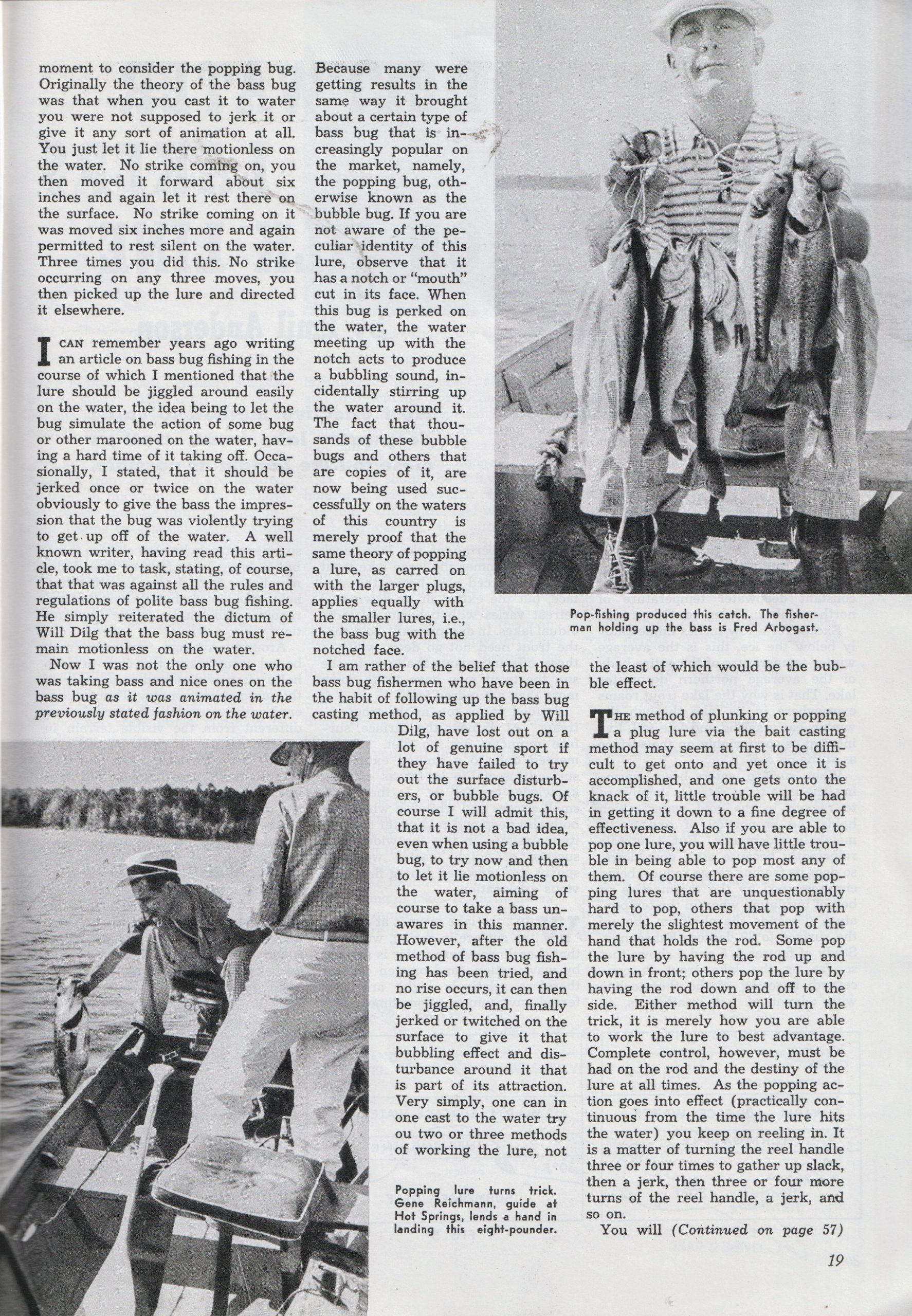
“Bubble bugs” was also what Lincoln called surface lures, as the jiggling, jerking and twitching he advises for surface plug fishing creates a bass-attracting sound and array of bubbles upon the lure’s retrieval.
Plunkers like the Creek Chub (Garrett, IN) Plunker, which was already on the market at the time of Lincoln’s story, and poppers like the Arbogast (Akron, OH) Hula Popper (it would be another year before its introduction, although Arbogast did have fly fishing poppers that predated the Hula Popper) would lead one to wonder how much the North really did lag behind the South in this technique. Perhaps anglers in the South just embraced the technique more fervently than anglers in the North. Lincoln does also mention the “familiar red head plug…one of many wobblers,” obviously the South Bend Bass Oreno, which was an extremely popular lure in the North and was fished at least part of the time as a surface lure by, I’d guess, virtually every northern angler who had it in his arsenal.
Lincoln also advises that night fishing with popping lures is great sport and a highly effective method for taking big bass and muskies. He declares, “By being jerked on the surface, thus creating the necessary commotion, bass will be attracted to it. It is, without doubt, the most effective of all the night baits open to one’s selection.”
Bass Fishing Archives writers have written several pieces over the last couple years on the effectiveness of night fishing, with particular emphasis on the successful use of the Arbogast Jitterbug, musky size, for catching big bass. Anytime I see the practice mentioned by the old time writers, my interest is immediately piqued. There are a few anglers who night fish for bass today, notably Jimmy Zinker, who did a full Big Bass Podcast a year ago on the subject. I know I’ve shared this more than once, but it’s good and deserves to be shared again.
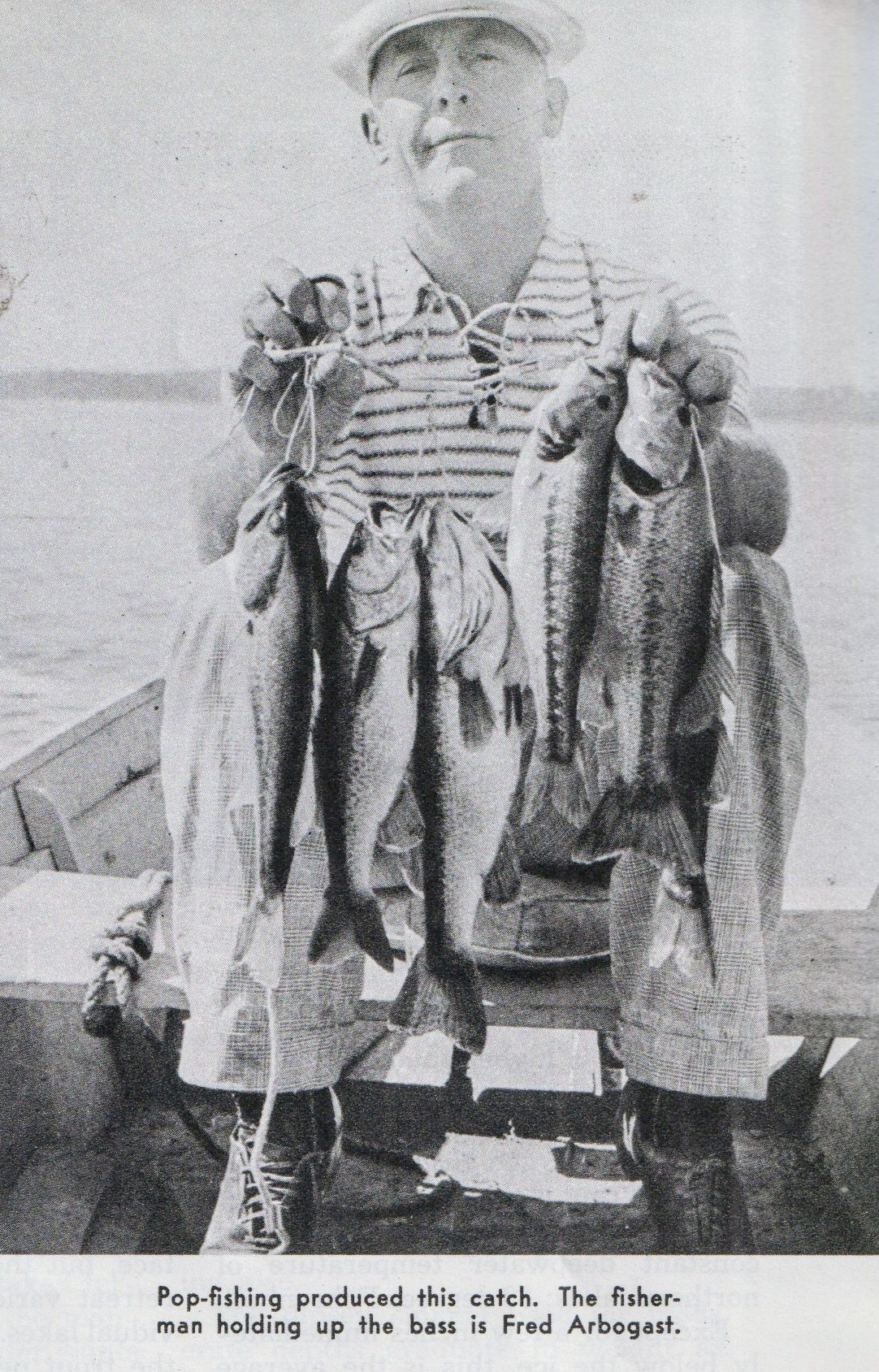
This is a great article, written with exuberance, attitude and joy. I’ve read a lot of Lincoln’s writing and this one is one of my favorite pieces by him. It’s made all the more enjoyable by the inclusion of two photographs, one of a smiling Robert Page Lincoln, with fedora at a jaunty angle, holding up a day’s catch of hefty bass. The other image is one I have not seen before of Fred Arbogast sitting in the back of a boat and with a self-satisfied look on his face, holding a stringer of bass. Great stuff!
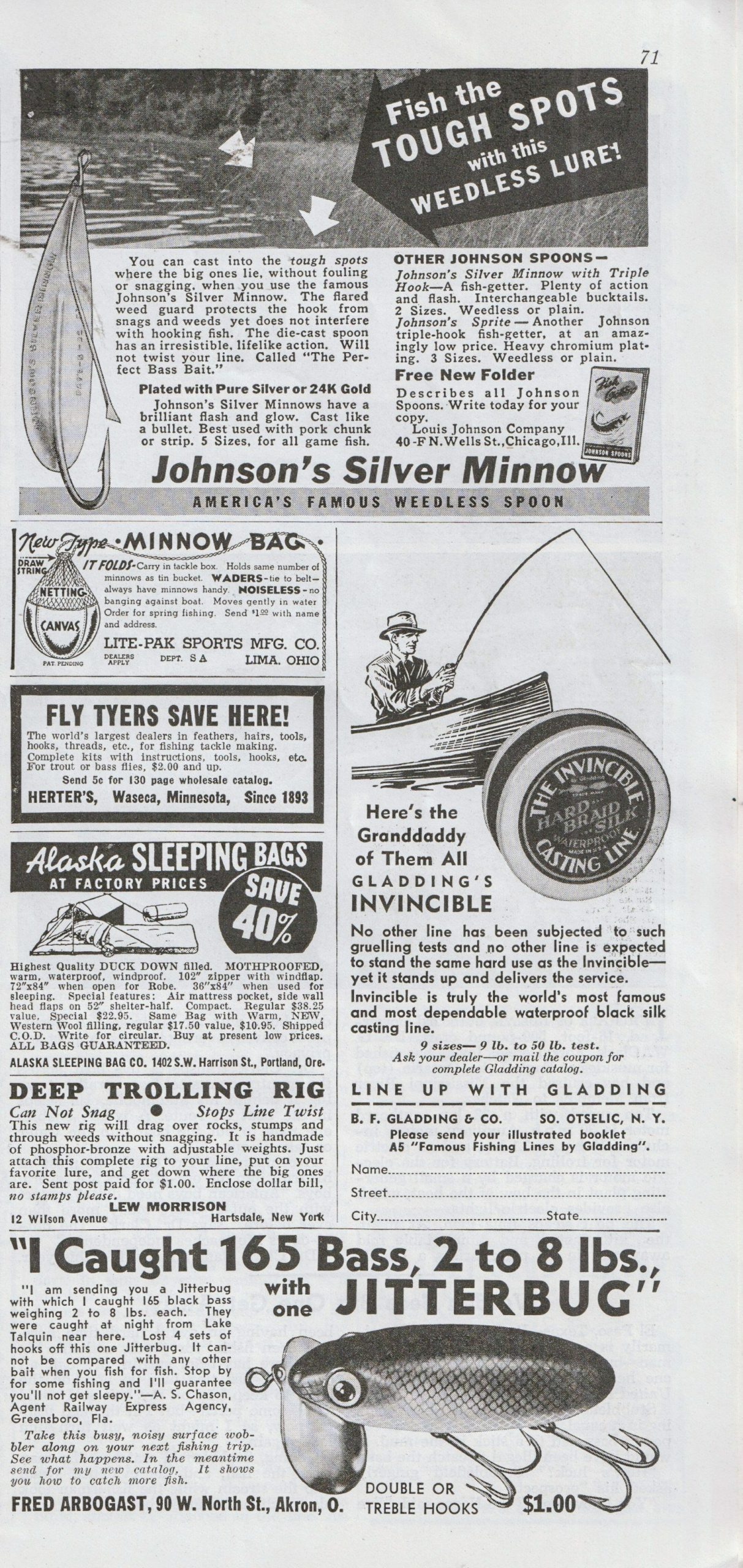
This issue of the Sports Afield Fishing Annual also contained a number of impressive fishing ads, many of which were full page ads. It’s interesting to compare the tenor of these ads, only a year before the attack on Pearl Harbor, to those that would appear just a few years later when America officially entered WWII. Check out my story on the Sports Afield Fishing Annual 1943 to see some of those ads.
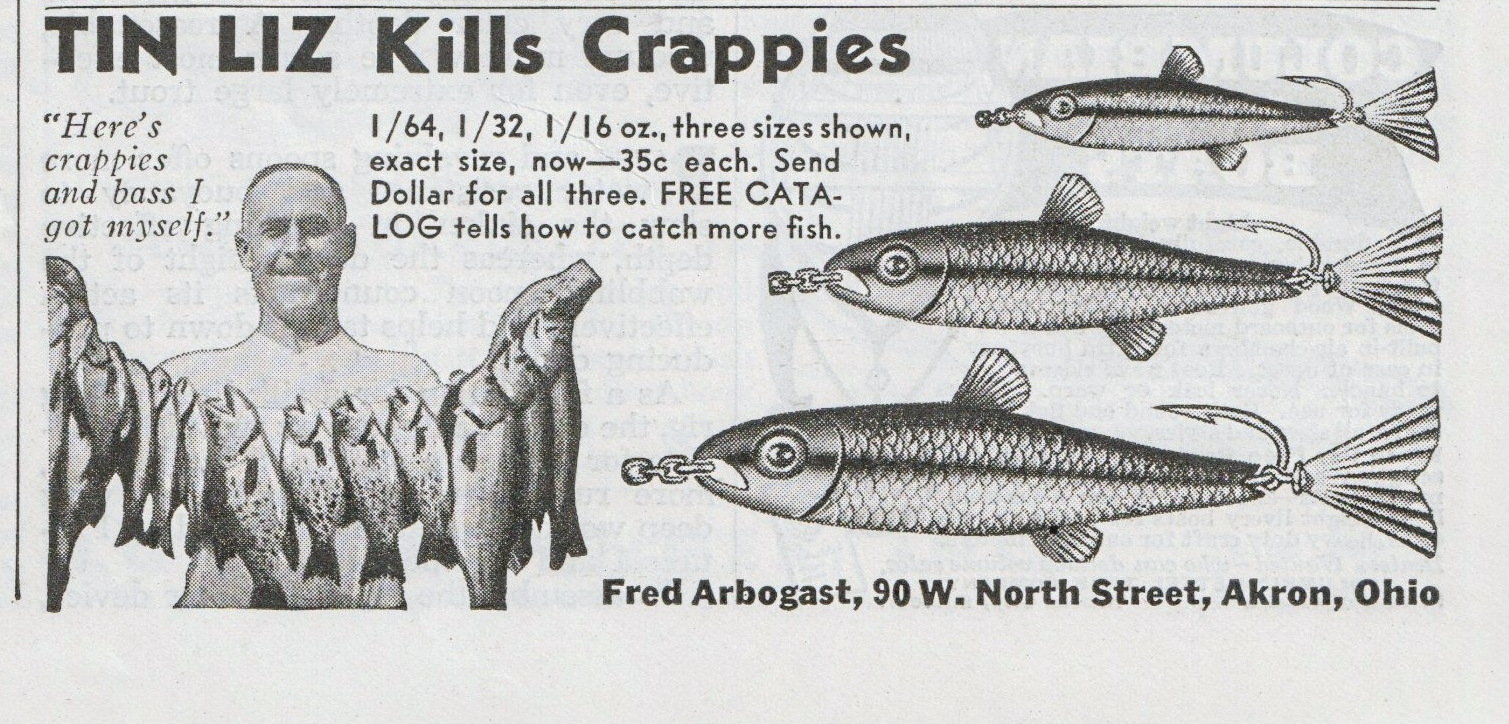
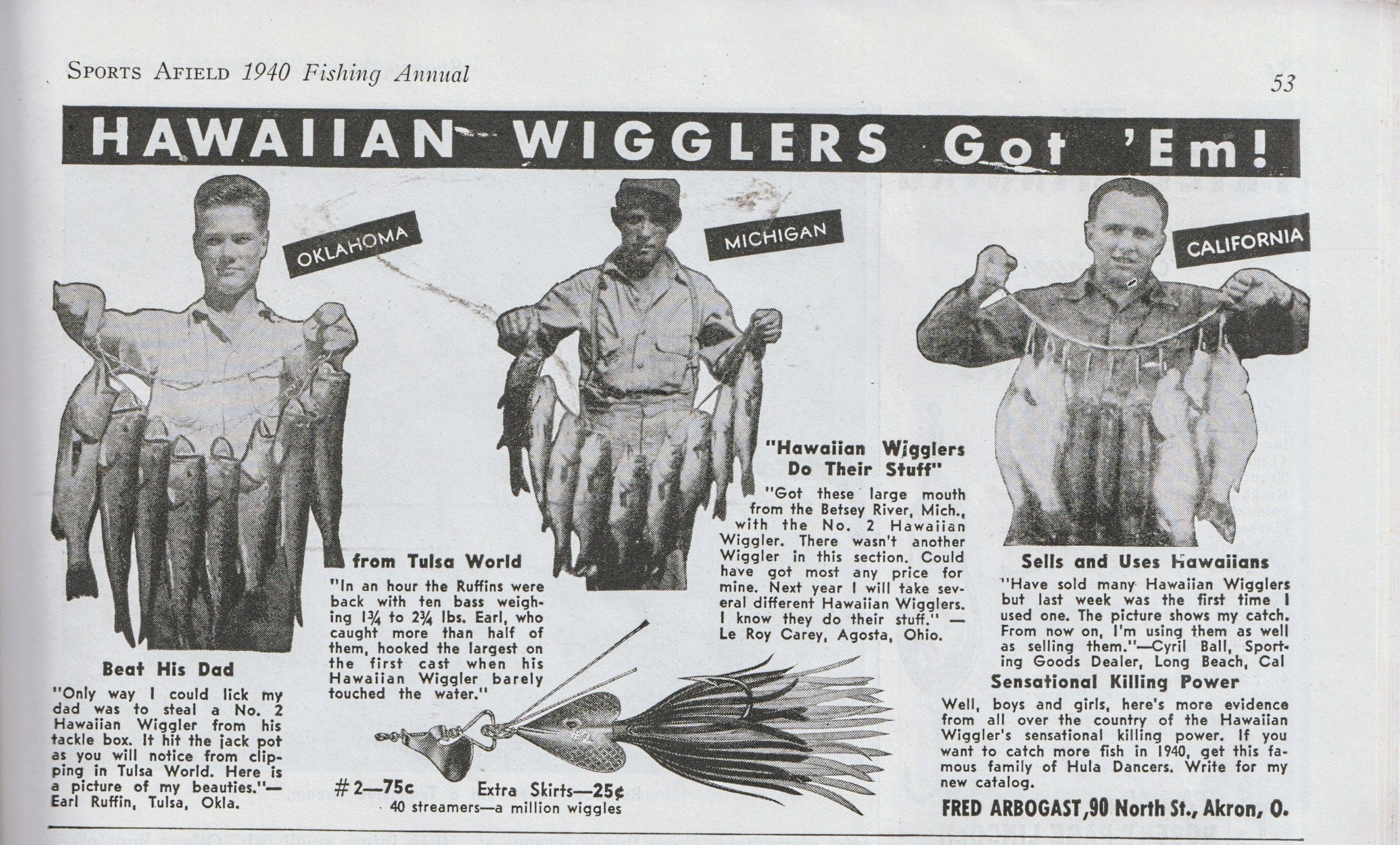
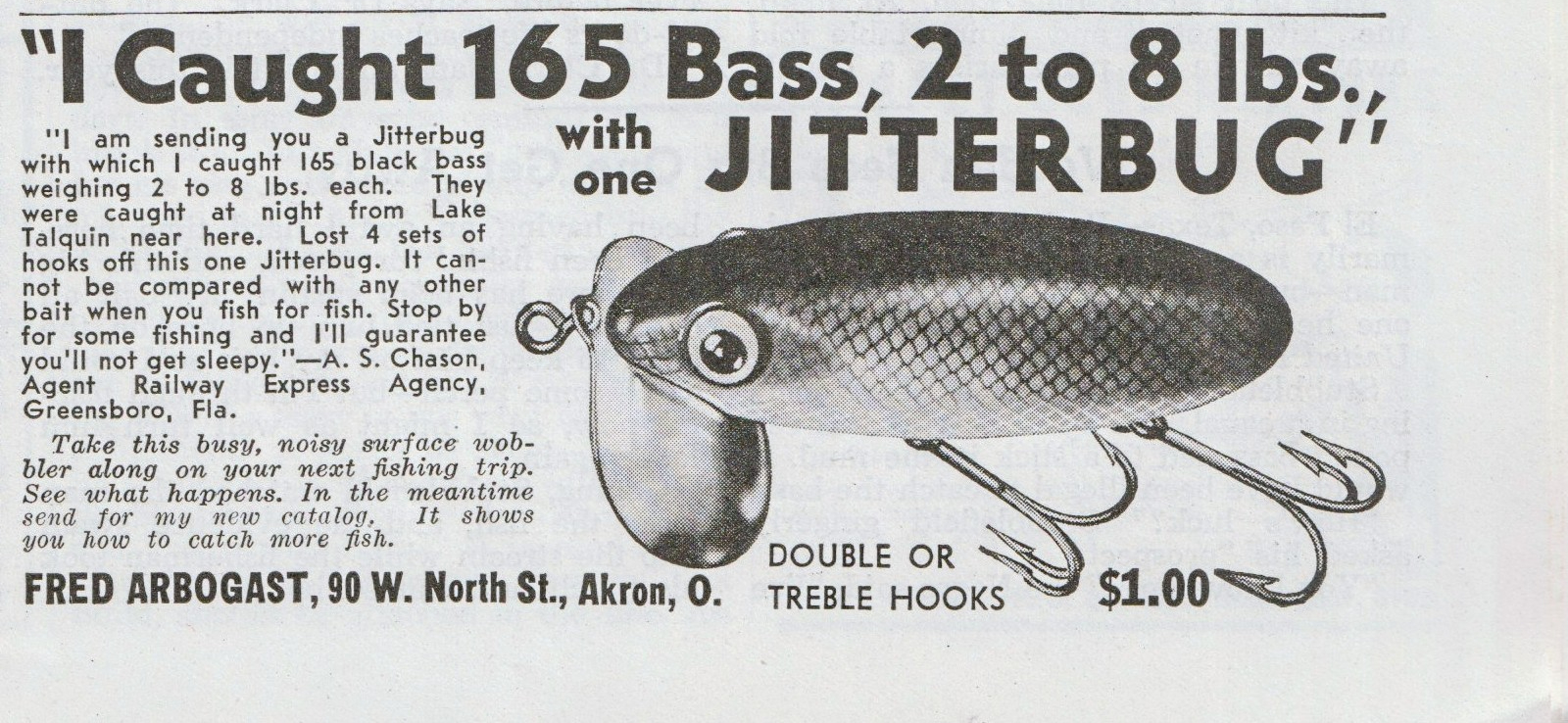
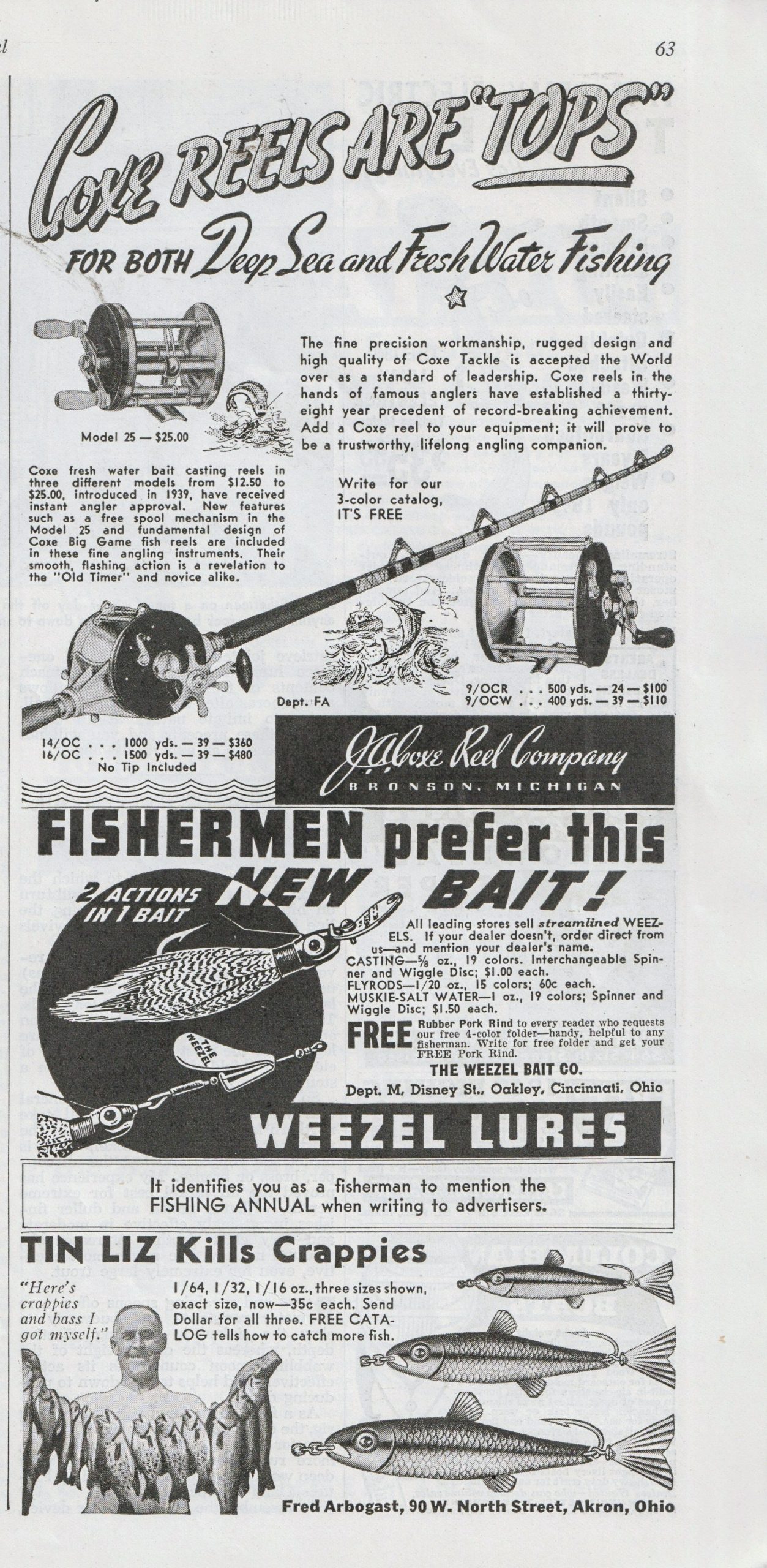
Curiously, the Fred Arbogast Company did not have a full page ad in this issue. Instead they had three separate, small ads, highlighting their Hawaiian Wiggler, Tin Liz (featuring another pic of Fred Arbogast), and Jitterbug. Each of these ads follow the famous Arbogast advertising formula of showing testimonials or images of anglers with successful catches.
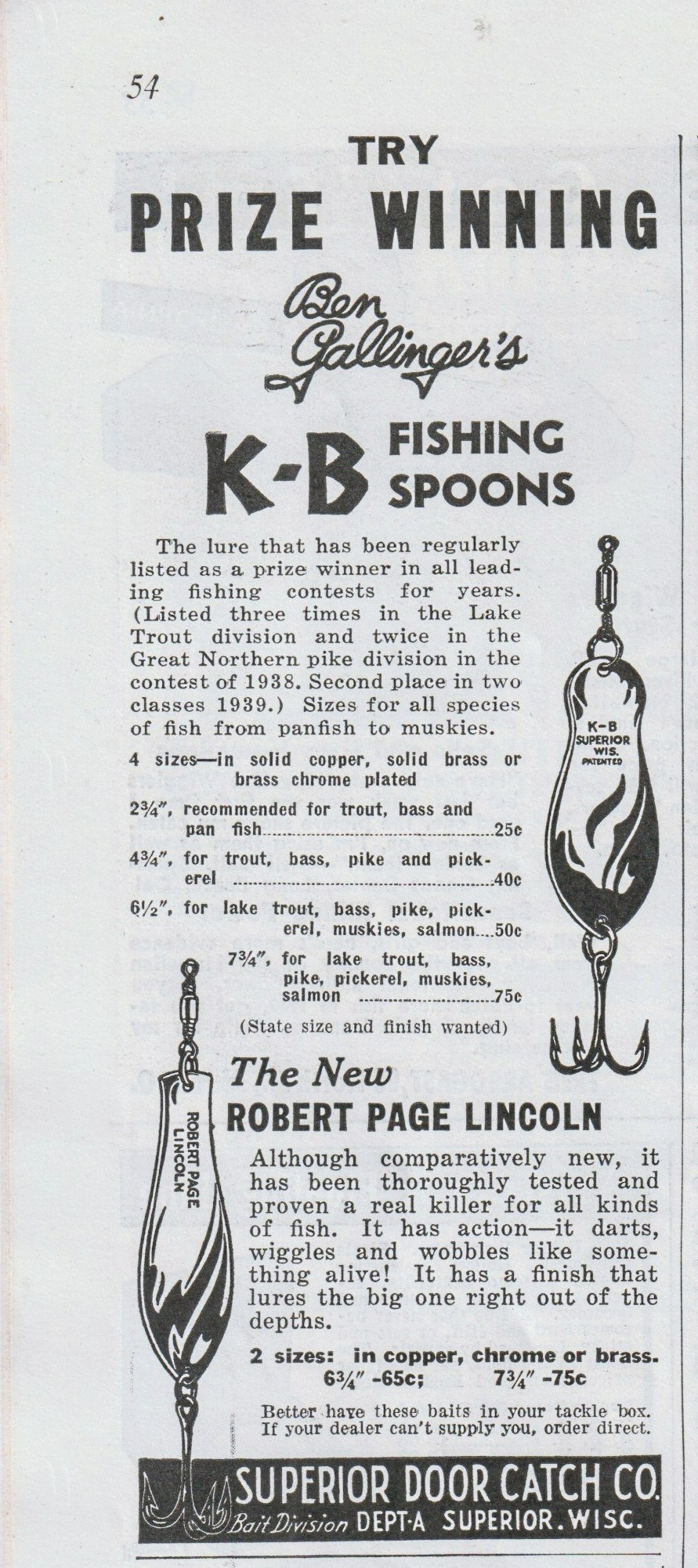
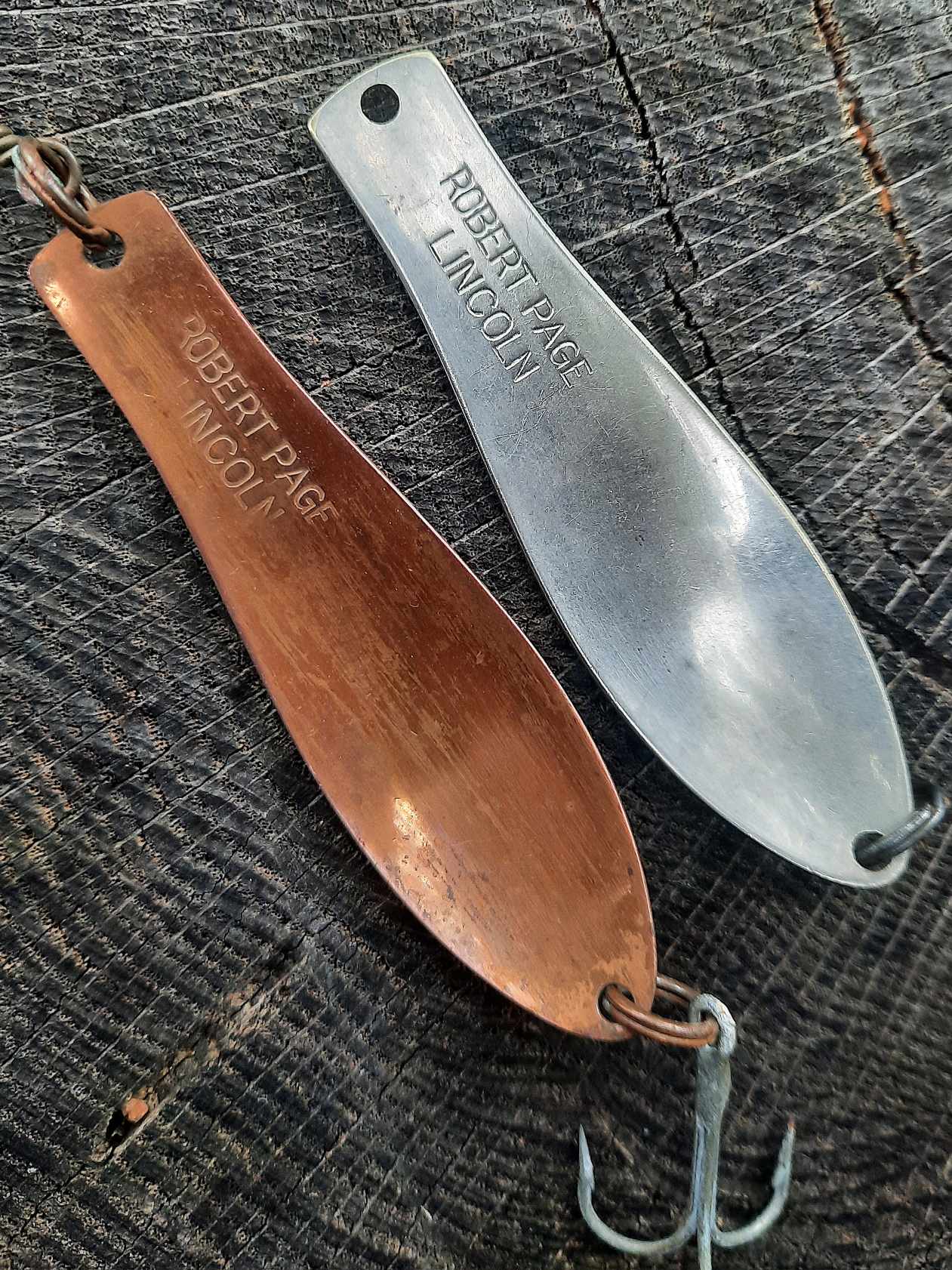
Also of note is the K-B Spoons/Superior Door Catch Co. ad featuring “The New Robert Page Lincoln” spoon. The text adjacent to this lure reads, “Although comparatively new, it has been thoroughly tested and proven a real killer for all kinds of fish. It has action – it darts, wiggles and wobbles like something alive! It has a finish that lures the big one right out of the depths.” I was fortunate to secure two old RPL spoons over the past year, one copper and one silver in color.
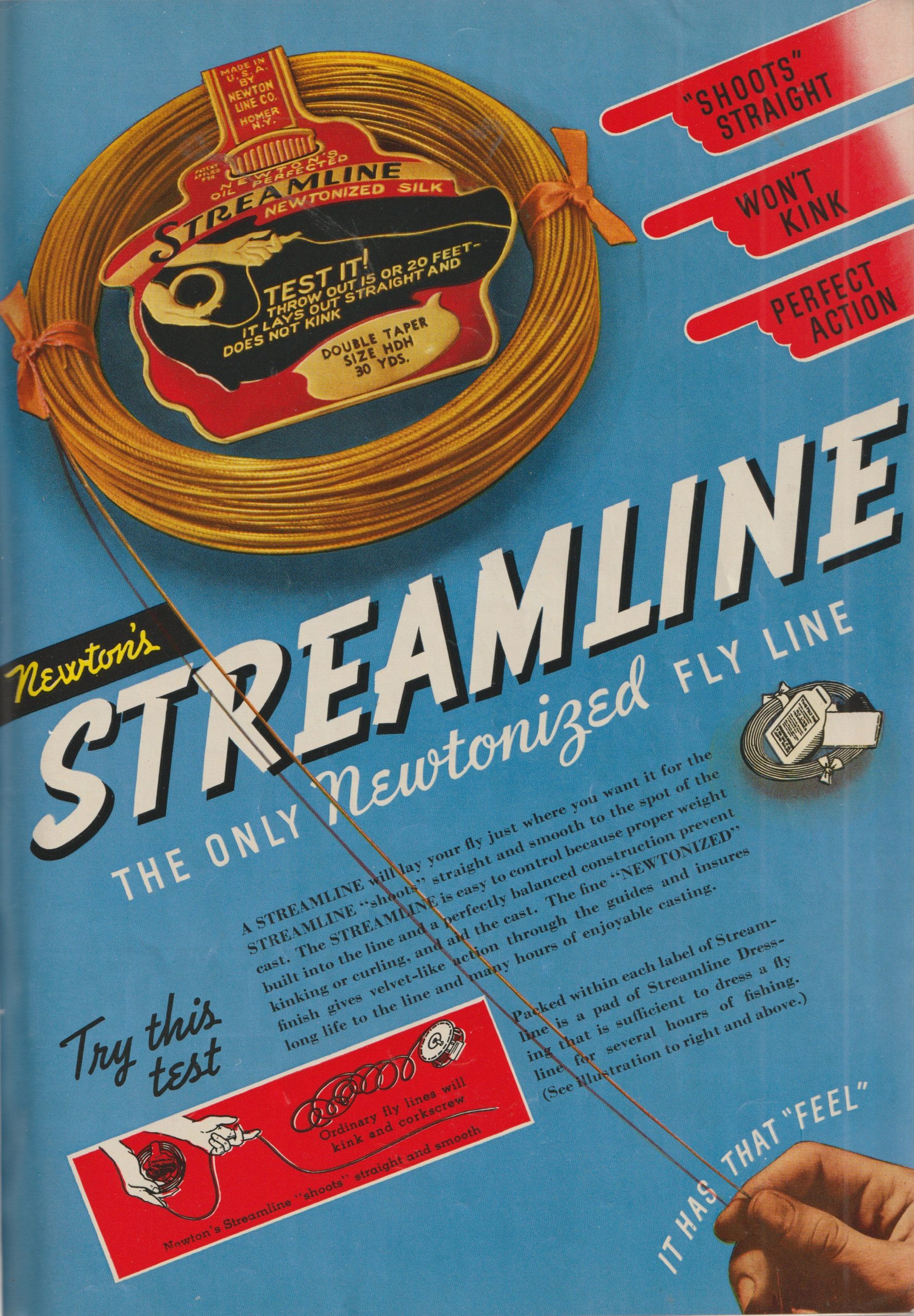
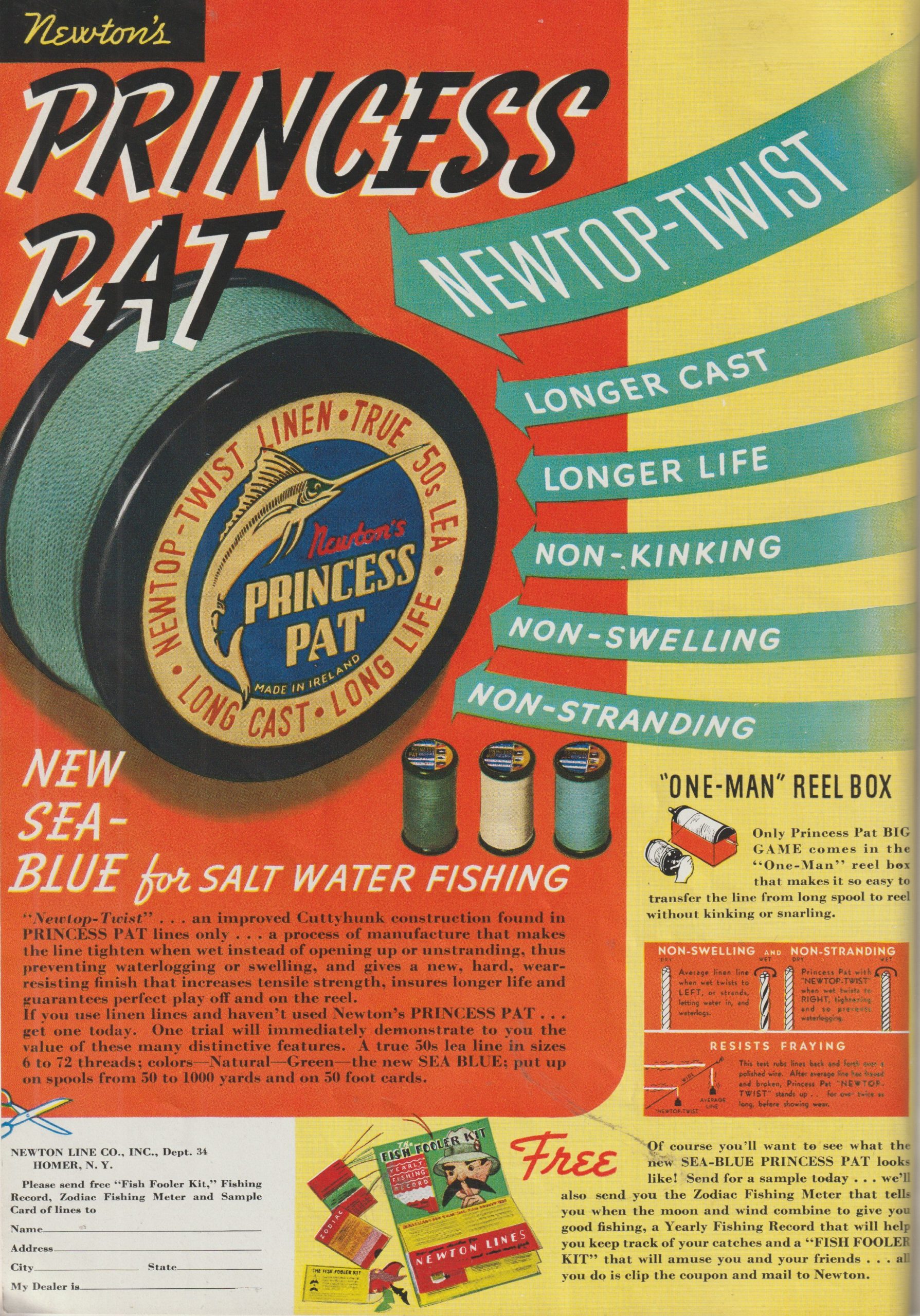
I’m saving some of the other ads for those future articles that explore other writers in this Fishing Annual, but one that I will share here that I found to be quite interesting is a double-sided full page, and the only full color ad in the interior of the magazine (excepting the outer and inside cover ads). It’s for Newton’s fishing line. One side features Newton’s Streamline Fly Line, “the only Newtonized fly line.” The other side of the page shows the company’s Princess Pat Salt Water Line, ballyhooing all of this line’s features and benefits. I thought it curious that the only company that had such a strong visual presence in the magazine was a line company, not a bait company, and that they featured a fly line and a salt water line, not a bait casting line.
We hope you enjoyed this partial look at the 1940 Sports Afield Fishing Annual, and Robert Page Lincoln’s article on the then-new pop-fishing technique that was arguably moving across the country. More stories from other writers coming in the next few weeks.




The Sports Afield Fishing Annuals are one of the best sources for tracking changes in the sport of freshwater fishing. I have a complete run of them from 1st until last and I enjoy and treasure every one of them,
That’s pretty cool, Bill. I completely agree. I only have a few copies, but looking through those issues it is great to see how bait company ads change through the years, seeing what writers were popular, and to get an idea of fishing trends. I’d love to see your collection some time. Take care!