One of the great stories of baitcasting reels is the utter takeover of the industry by Swedish manufacturer AB Urfabriken – aka ABU. Prior to 1954, bass anglers had several choices for reels – companies like Shakespeare, Pflueger, Langley, and South Bend, to name a few. Then in 1954 a former Swedish watch company broke into the U.S. market and changed the world of baitcasting reels. Today in The Evolution of ABU Casting Reels in the U.S. – 1954 to 1983, we’re going to take a deep dive into the company and its reels over the three decades they ruled the baitcasting world.
Early U.S. ABU Ads
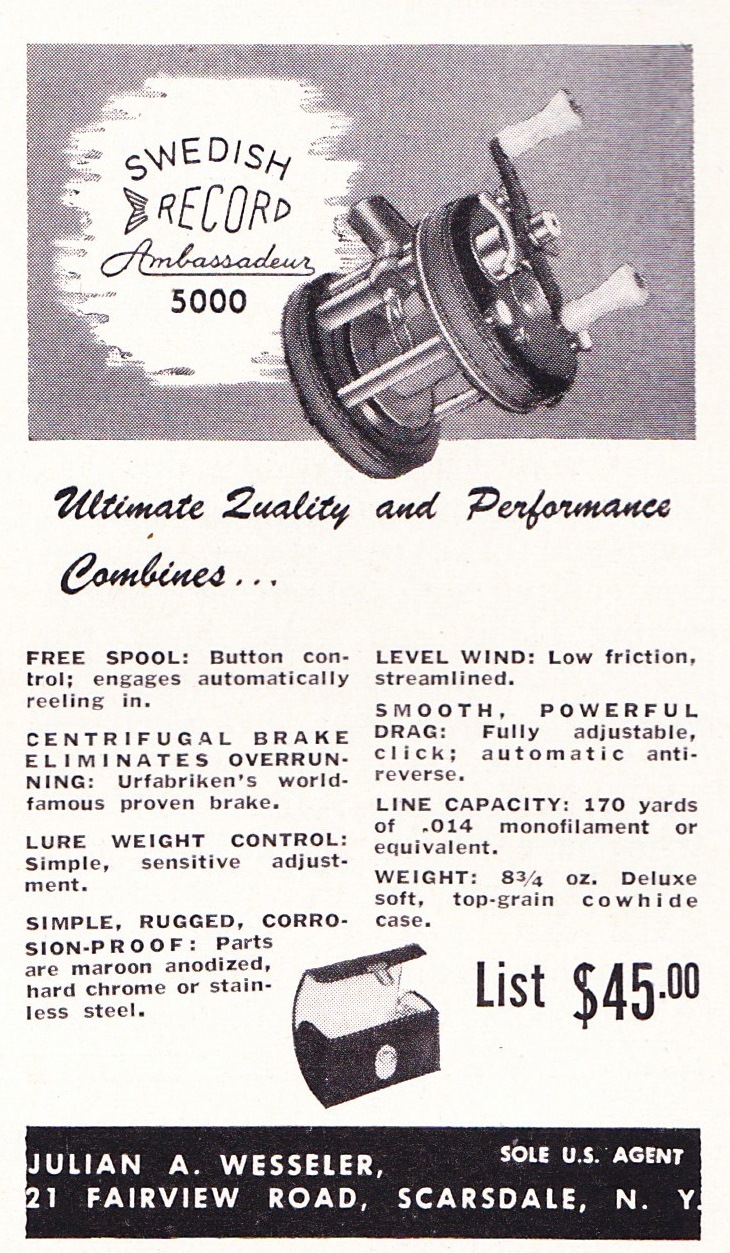
We’ve previously written about the first ABU reel ad that was placed in the U.S. The ad was found in the June 1954 issue of The Fisherman magazine and along with it was a product review by editor Art Hutt.
The curious thing about the ad was the company that was repping the reel. It wasn’t Garcia Corp who was the wholesaler but Julian A. Wesseler, Importer who landed the contract. It is understood that Garcia Corporation was offered the contract but Tom Lenk, president of Garcia, declined the offer. Within a year, Lenk realized his mistake and went back to ABU. By 1956, ABU would be represented by Garcia, starting a three-decade relationship with the company.
AB Urfabriken – What’s in a Name
There’s a lot to be said about a name. And there’s a lot to be learned by the acronym ABU. The company was started in 1921 by Carl August Borgstrom, a watchmaker from Svangsta, Sweden located on the river Morrum.
As suggested, Borgstrom initially started out making watches, parking meters, and taximeters. This is where the company name is derived from. AB doesn’t stand for August Borgstrom. It stands for “Limited Company”. And Urfabriken stands for “Clock Factory”.
In other words, ABU means Clock Factory Limited Company.
How does one get reels from this?
From Watch Making to Reel Manufacturer
World War II killed the watch and meter business and ABU had to figure out how to stay in business. That turned out to be an easy answer as the family pastime had been fishing salmon on the Morrum River for generations. So, the Borgstroms turned from watchmaking to fishing reel manufacturing and never looked back.
An interesting side note about this decision is it was the watchmakers of Kentucky who designed and built the first baitcasting reels in the early- to mid-19th century. Watchmakers such as Snyder, Meek, and Milam developed what would become known as Kentucky Reels. Designed specifically for casting bait to bass, these reels were the cornerstone of the reels we use today.
Back to ABU.
In 1939, with his company on the verge of bankruptcy, Carl Borgstrom tooled up his plant and began manufacturing their first baitcasting reels, the Record 1500, 1600, 1700, and 1800.
The switch put ABU on the map with their high-quality reels and soon every serious angler in Europe was using the Swedish ABU reel.
Innovation
Reel sales in Europe were brisk. By 1943 the company had grown from 15 employees to over 100 and were moving from handmade reels to production manufacturing. Moving to high-volume manufacturing didn’t mean low-quality, though. Borgstrom maintained his requirement of only producing the highest quality reels.
Borgstrom was also an innovator.
Champion tournament casters were always customizing their reels to get longer distances. Basic physics provided the answer to longer casts. Decrease the weight of the spool, increase the distance of the cast. So, in the 1920s, tournament casters started using lighter materials for their spools. Aluminum was an easy answer but some of the best casters were turning to magnesium an even lighter metal.
So, in 1945, when ABU decided to enter the casting tournament industry, they took that thought and developed their first reel specifically for distance casting. The Record Sport 2100 was the first production reel to incorporate a magnesium spool.
But they didn’t stop there. Again, using physics, they developed the first centrifugal braking system. A feature that is still included on nearly every reel made today.
Then, in 1952, ABU developed what would become their flagship reel, the Ambassadeur 5000. This reel featured floating bushings, a lightweight spool, centrifugal brakes, and a no-tool take down of the reel in order to change spools easily in the field. At this time the brand also changed from Record to Ambassadeur, although Record was still placed on the early 5000s and 6000s.
The new Ambassadeurs were heavier than comparable Pflueger or Shakespeare reels, which turned a lot of people off at first. Champion caster Stan Fagerstrom’s first impression of the 5000, as told to me, was, “I thought it’d make a good steelhead and salmon reel at first. It wasn’t until I casted it that I realized this reel was far superior to any reel I’d ever cast, even with light weights.”
The U.S. Market
The next goal for the company was to find a rep in the U.S. In 1954, ABU presented their reels at the American Fishing Tackle Manufacturers Association (AFTMA) show in Chicago. AFTMA was the predecessor to the current ICAST show.
It was at AFTMA that ABU showed Garcia’s Tom Zenk their 5000 and 6000 baitcasting reels. Zenk was indifferent and declined. By the end of the show, ABU had contracted Julius Wesseler Importer to become their factory rep in the U.S.
This led to the ad and review in the June 1954 issue of The Fisherman magazine.
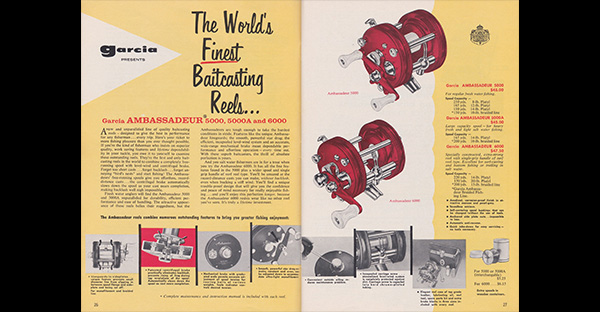
As stated above, Garcia Corp became the U.S. rep in 1956, and the new ABU reels showed up in their catalog in 1957. From 1957 through 1980, Garcia Corp was the sole proprietor of ABU casting reels in the U.S.
Bankruptcy and a Lack of Innovation
Then, in 1980, Garcia Corp was headed for bankruptcy. This prompted ABU to buy Garcia to keep their reels under the Garcia name. in 1984, they changed the name of the company to ABU Garcia.
Unfortunately, by this time, ABU was losing their market share worldwide. Fishing tackle upstart, Shimano, had released a full line of low-profile casting reels in 1978 based on Lew Childre’s Speed Spool reels and Daiwa was also hot on their heels with their own versions.
Bass pros in the U.S., who had predominantly been sponsored by Garcia in the 70s, were jumping ship to the Japanese companies. Their reels were lighter, faster, and more ergonomical. ABU was resting on their laurels and not keeping up with the times.
In 1981-82 ABU introduced their line of “low-profile” reels to compete with Shimano and Daiwa. Unfortunately, there was nothing low-profile about them. The reelfoot pillars were at the exact height of their round reels, which didn’t set the reel lower in the reel seat at all. These reels, the Ambassadeur 1000, 1000C, and the Ultra-Mag Series, were good reels but they were just more of the same minus the shape.
And speaking of the shape, the shape of the reel was an exact copy of the Shimano Bantam reels, just flipped upside down. I noticed this back in 1981 when tearing down one of the new 1000C reels we’d received in the shop to see how it was made and how it was different than their round reels.
ABU never recovered their market share and by the late 1980s, Shimano was the leader in baitcasting reel sales and innovation.
Below is a gallery of ABU reels sold in the U.S. from 1954 to 1983. For you ABU collectors out there, it’s full of information when new reels were introduced and when others were relegated.
Nearly three decades of time ABU controlled the baitcasting reel market while other companies played catch-up.
Gallery – ABU Reels 1954 to 1983
1954 to 1958
Swedish Record ad from the June 1954 issue of The Fisherman magazine. Not that Garcia Corporation was not the U.S. Rep company at this time. Image Terry Battisti.
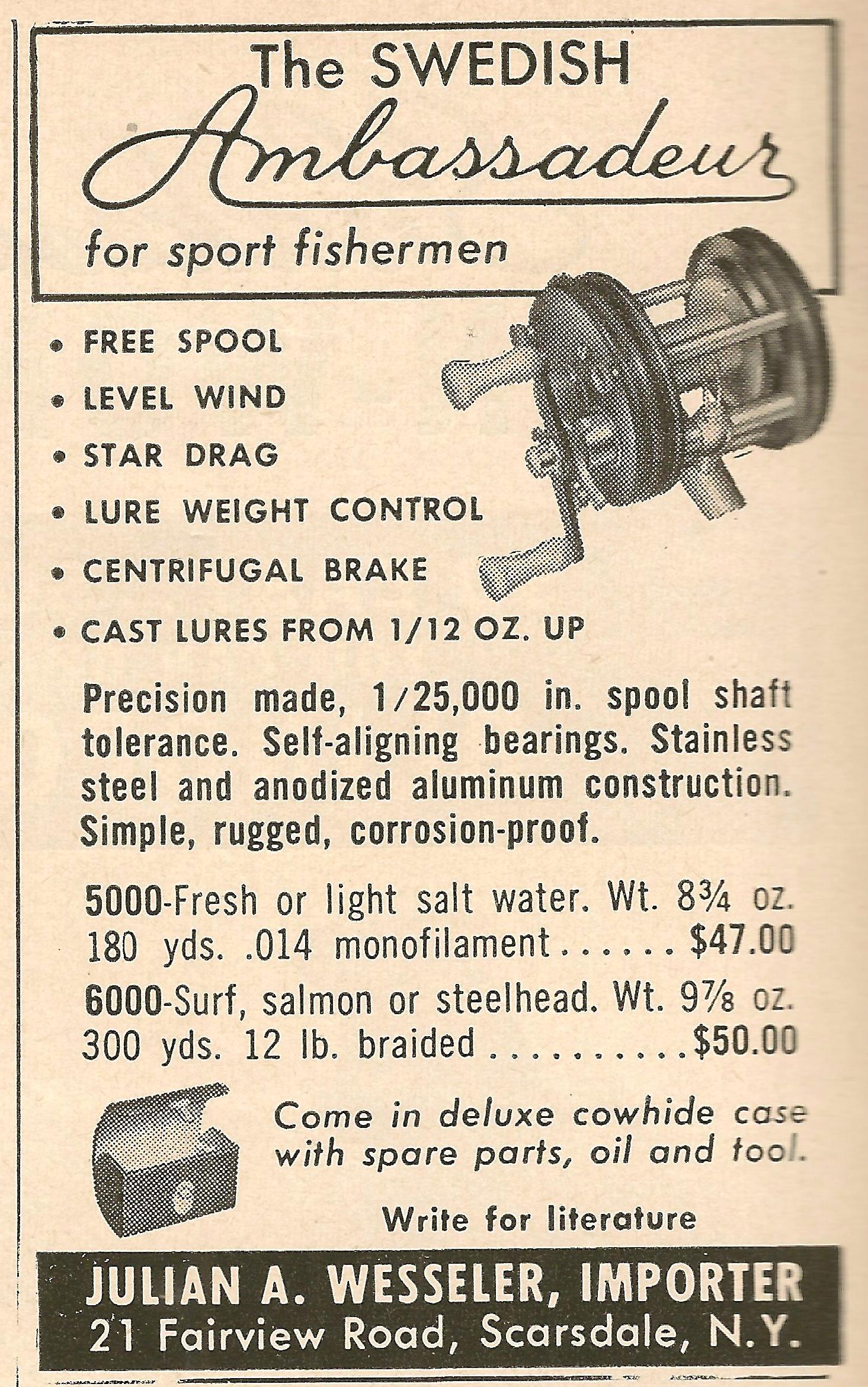
The Swedish Ambassadeur ad from the November 1955 issue of Field & Stream magazine. Julian A. Wesseler is still listed as the U.S. Jobber for ABU. Image Bill Sonnett.
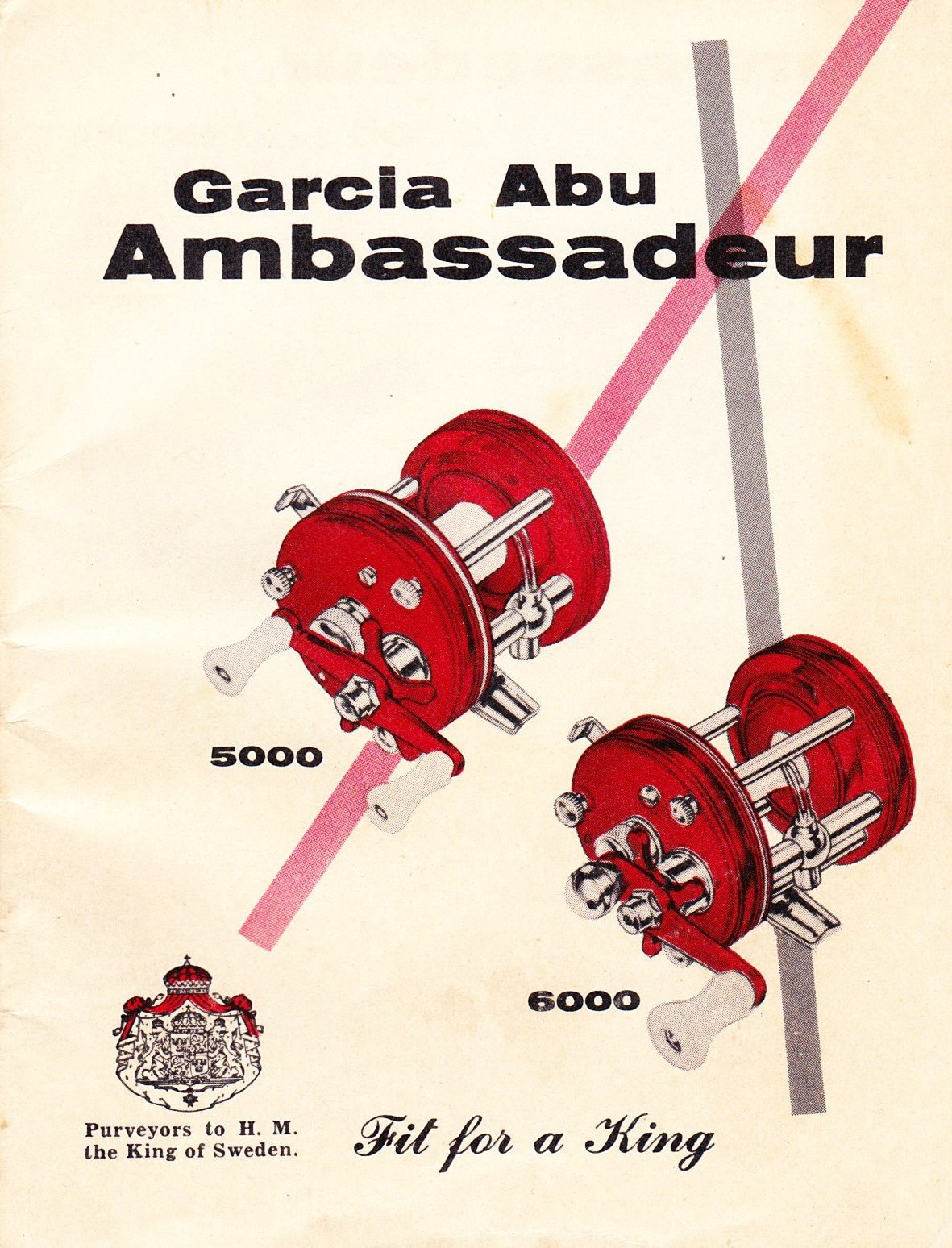
The cover of the Garcia ABU Ambassadeur Handbook. This small booklet was printed in 1957. Image Terry Battisti.
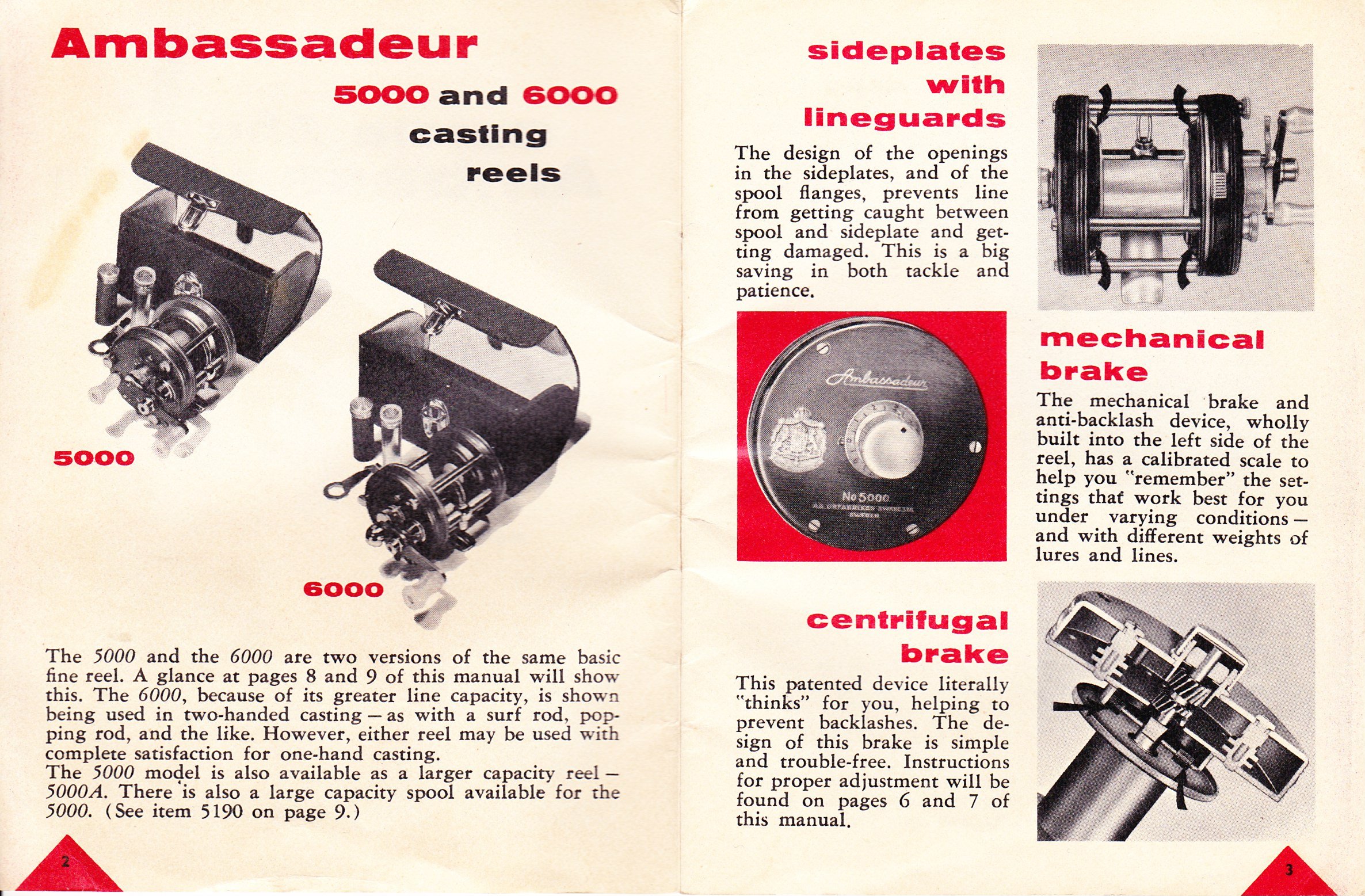
Pages 2 and 3 from the 1957-58 Garcia ABU Ambassadeur Handbook. Image Terry Battisti.
1960
The cover of the 1960 Garcia Fishing Tackle Annual. Image Terry Battisti.
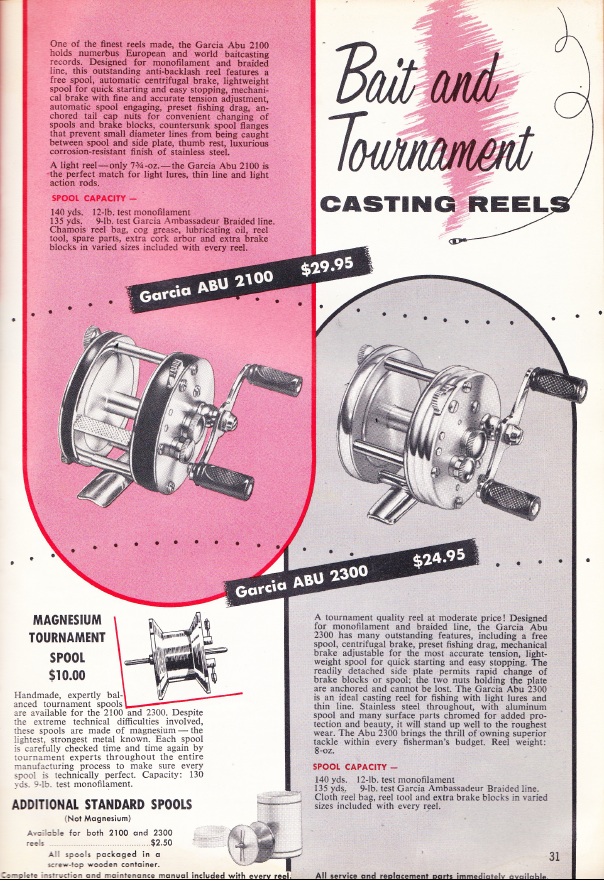
The Garcia ABU 2100 and 2300 Tournament Casting reels. 1960 Garcia Fishing Tackle Annual. Image Terry Battisti.
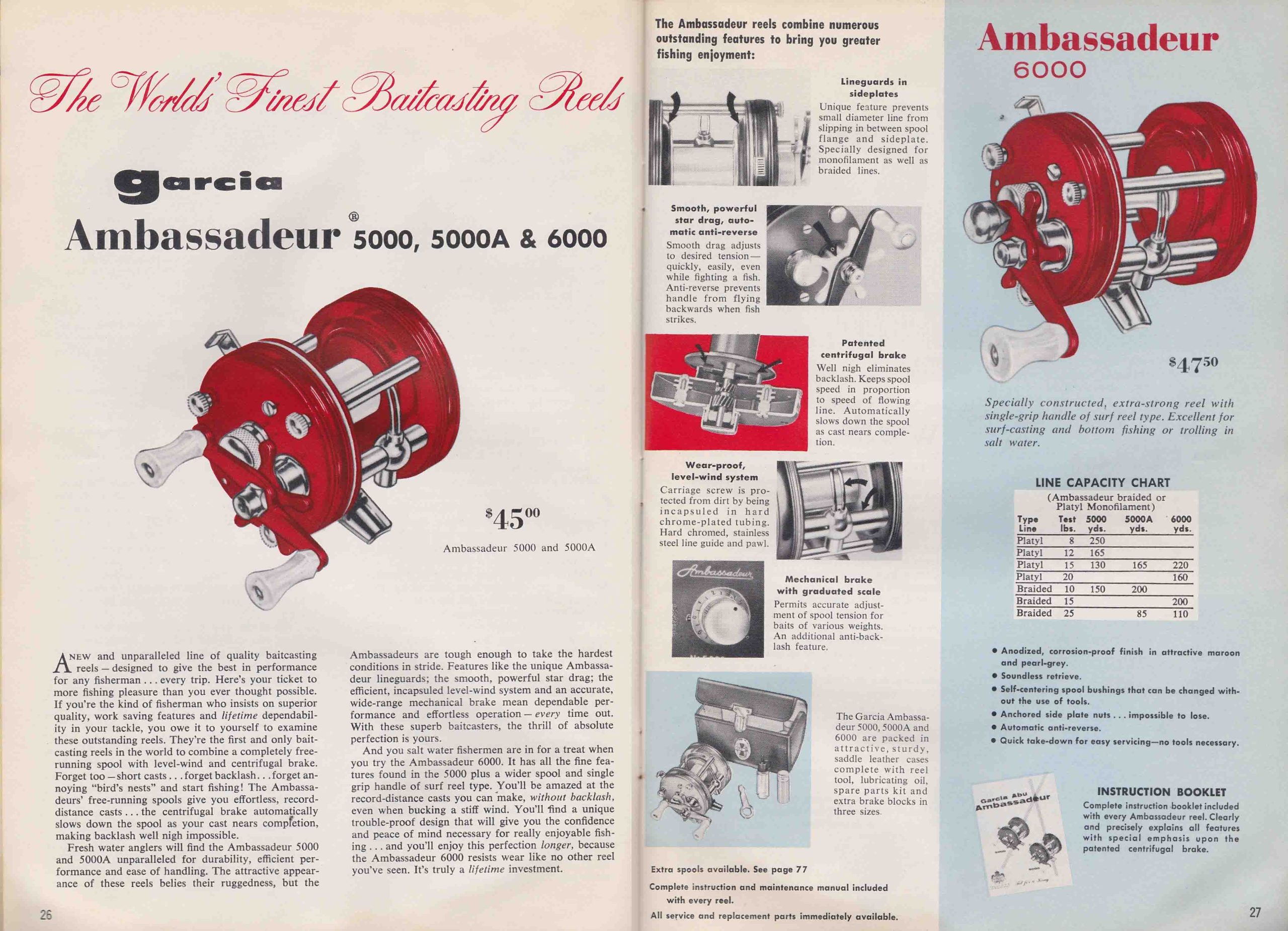
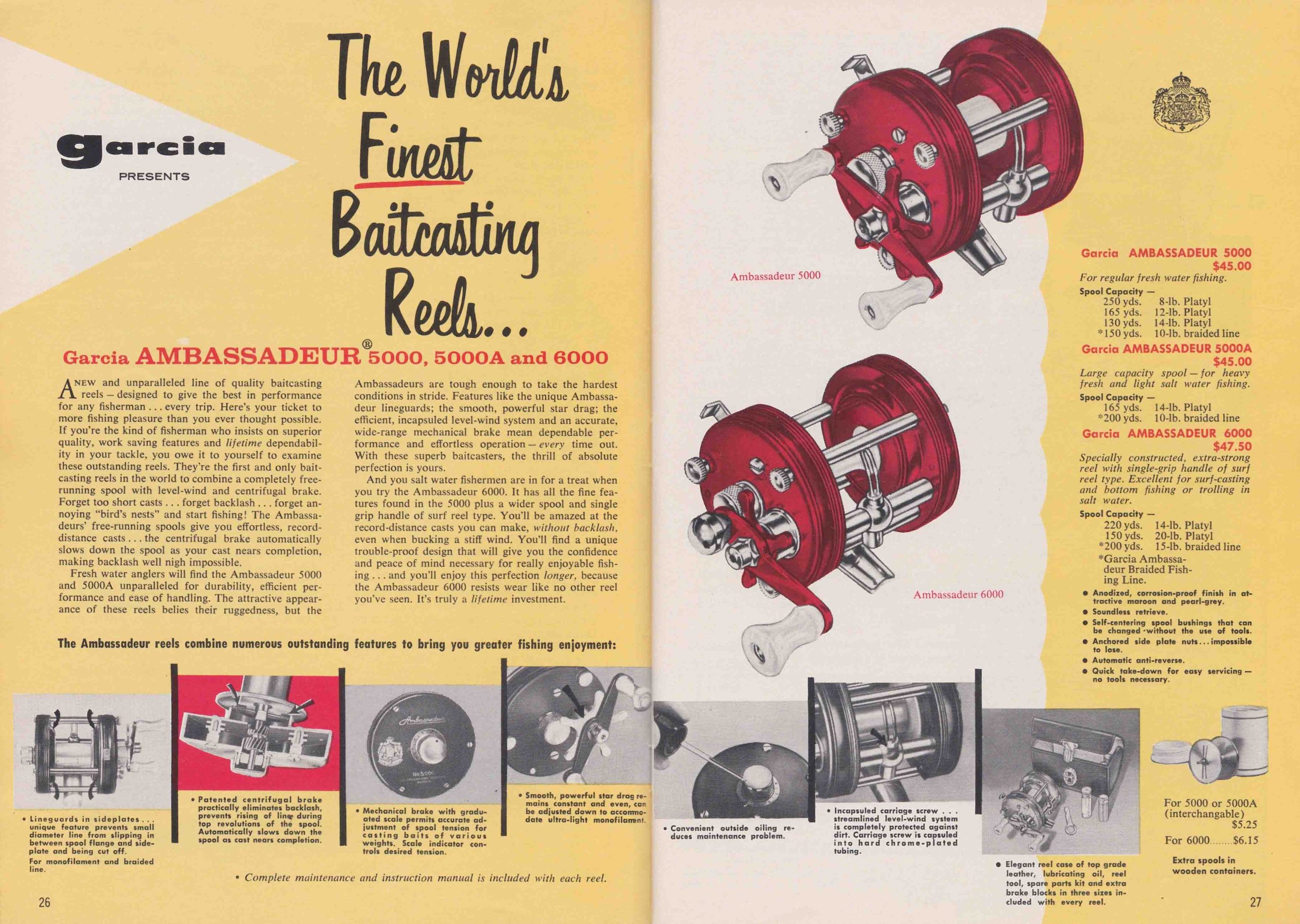
The Garcia Ambassadeur 5000, 5000A, and 6000 reels by ABU. 1960 Garcia Fishing Tackle Annual. Image Terry Battisti.
1961
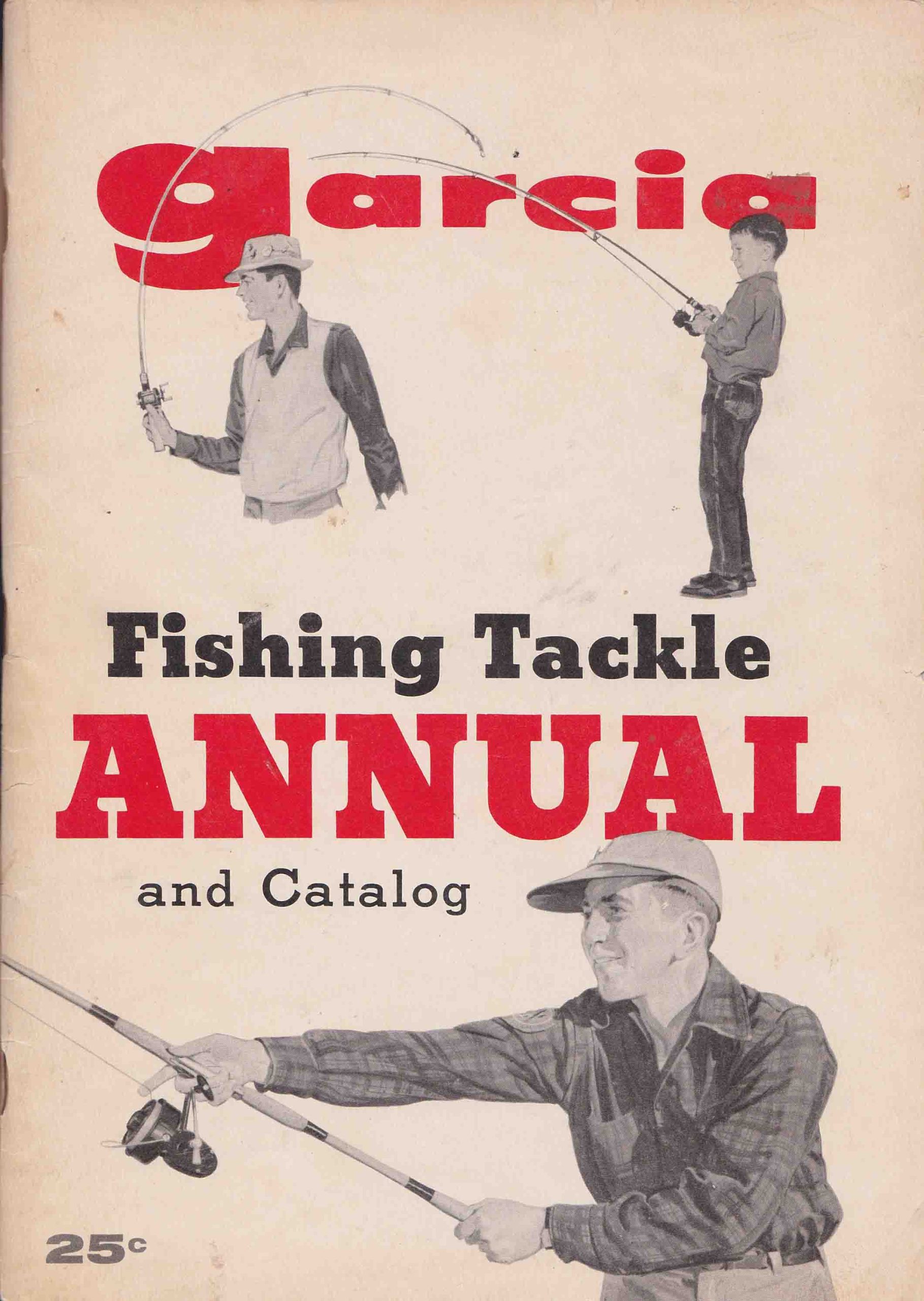
The cover of the 1961 Garcia Fishing Tackle Annual. Image Terry Battisti.
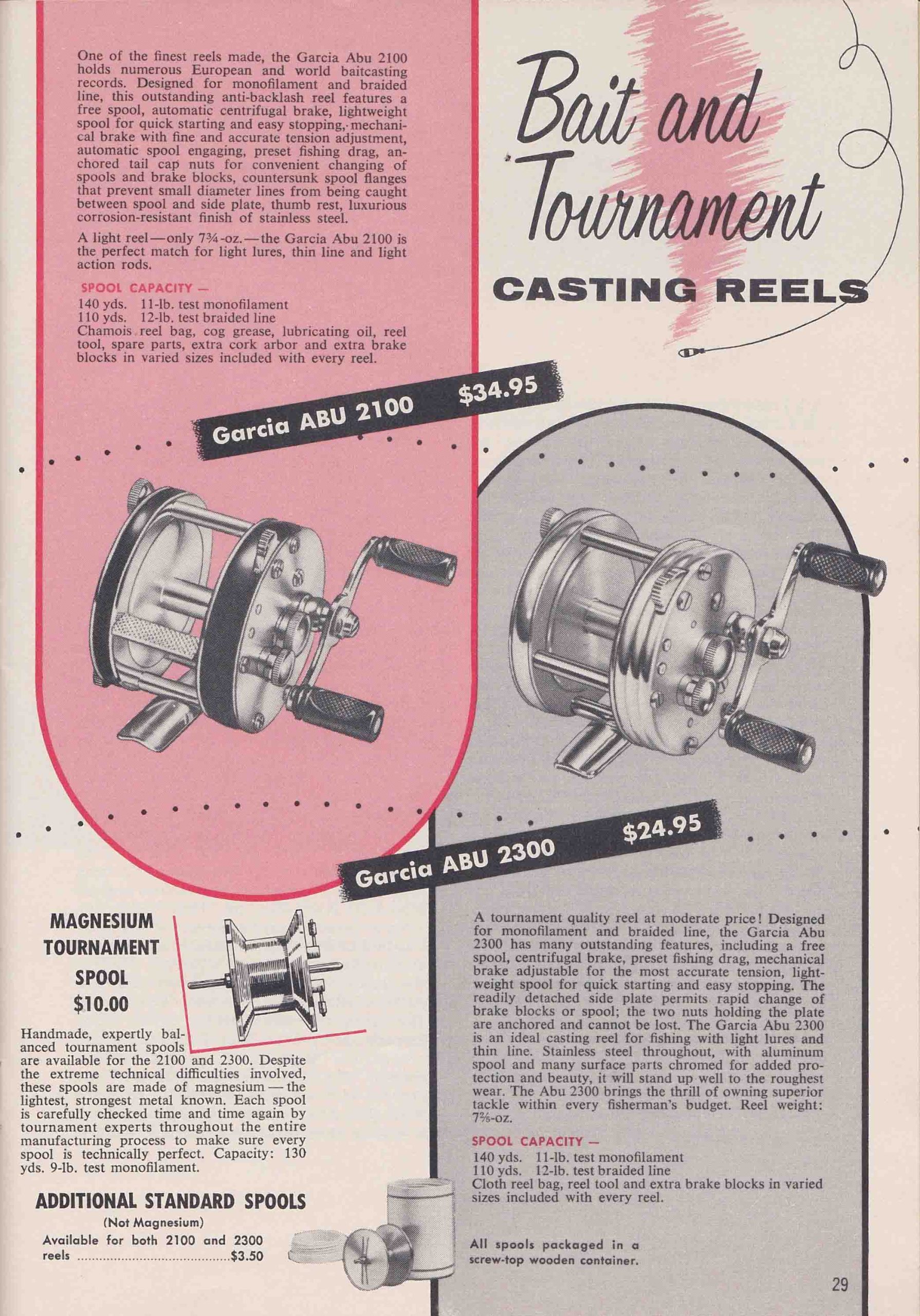
The Garcia ABU 2100 and 2300 Tournament Casting Reels. 1961 Garcia Fishing Tackle Annual. Image Terry Battisti.
The Ambassadeur 5000 and 6000 reels by ABU. Image 1961 Garcia Fishing Annual.
1962
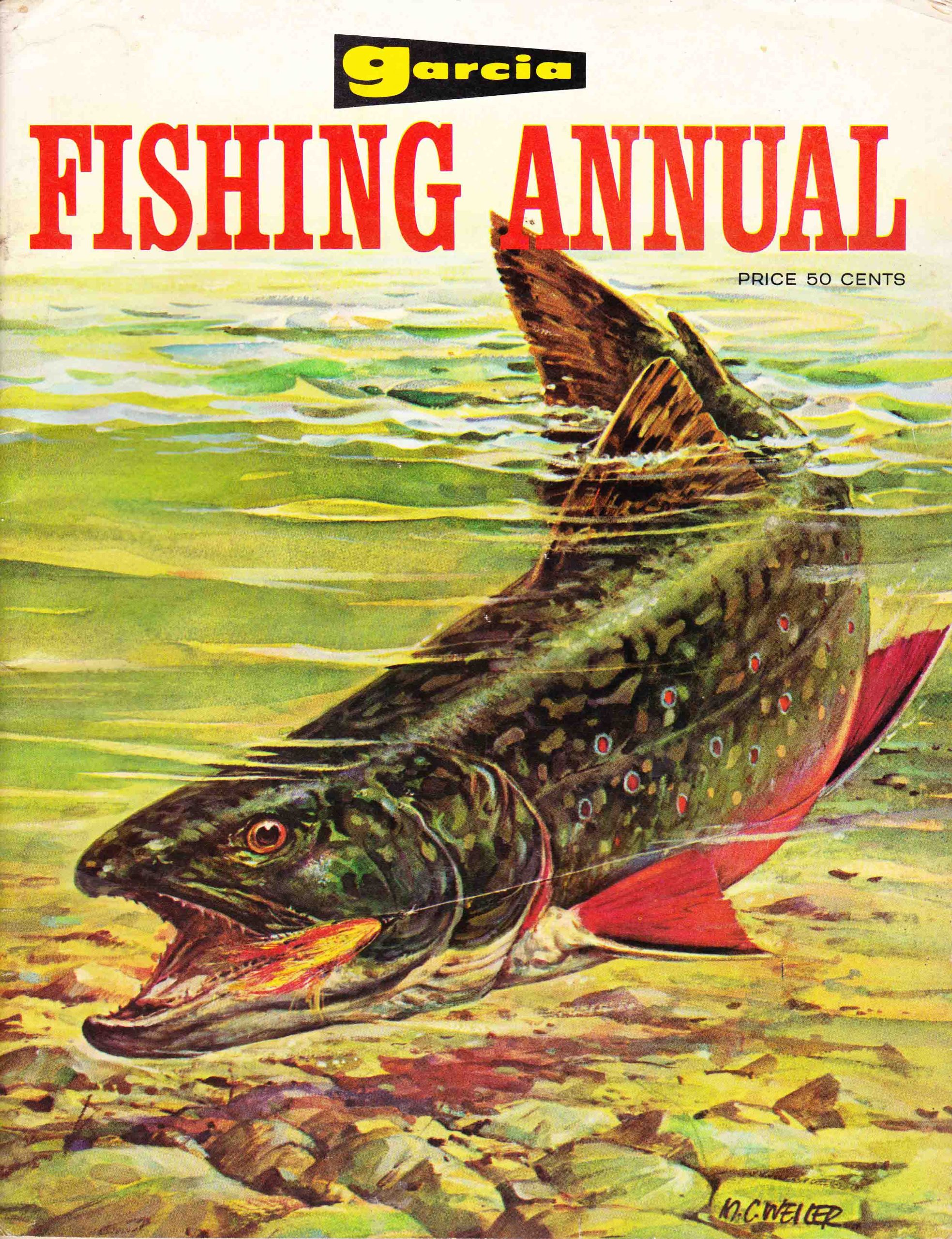
The cover of the 1962 Garcia Fishing Annual. Image Terry Battisti.
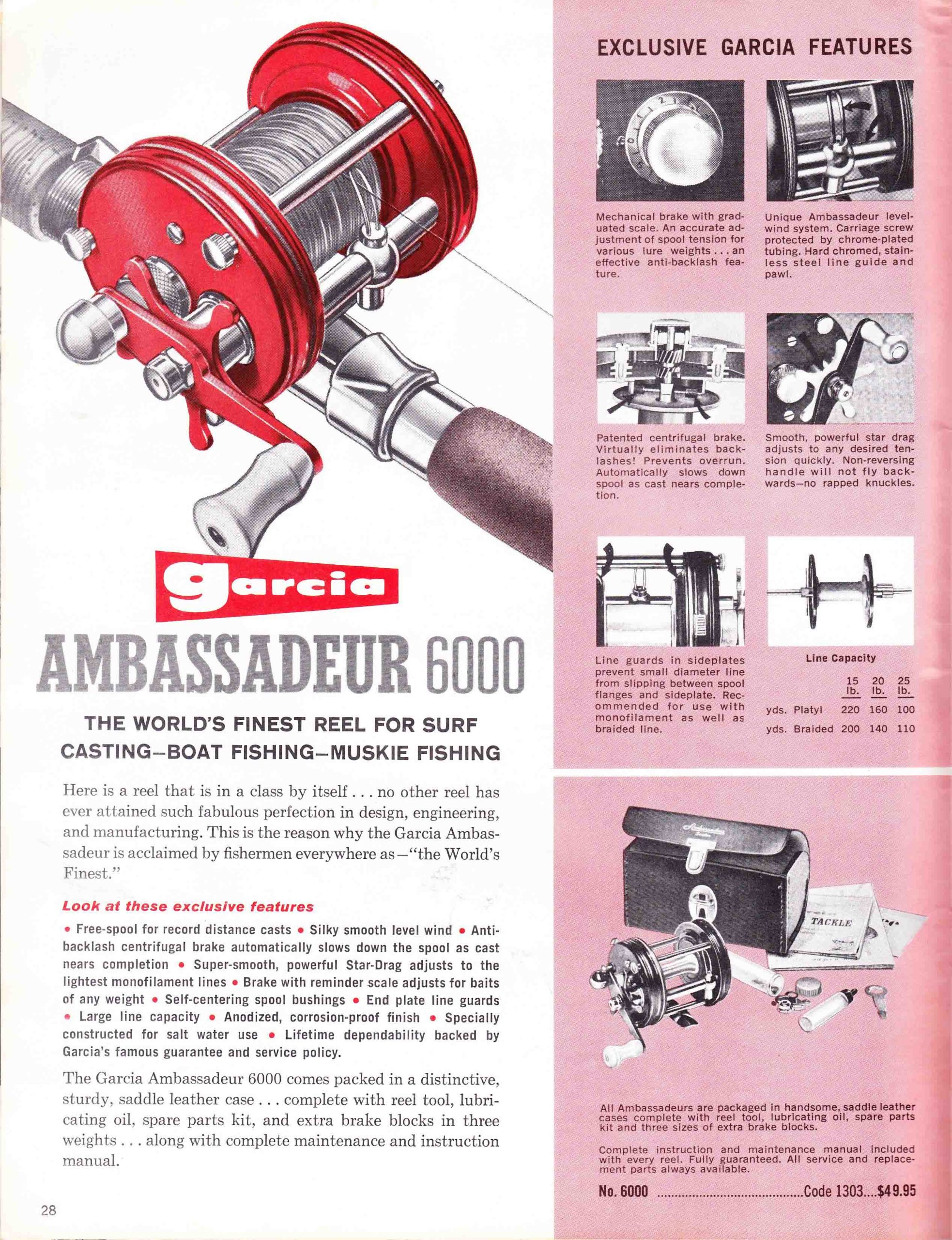
The Garcia Ambassadeur 6000. 1962 Garcia Fishing Annual. Image Terry Battisti.
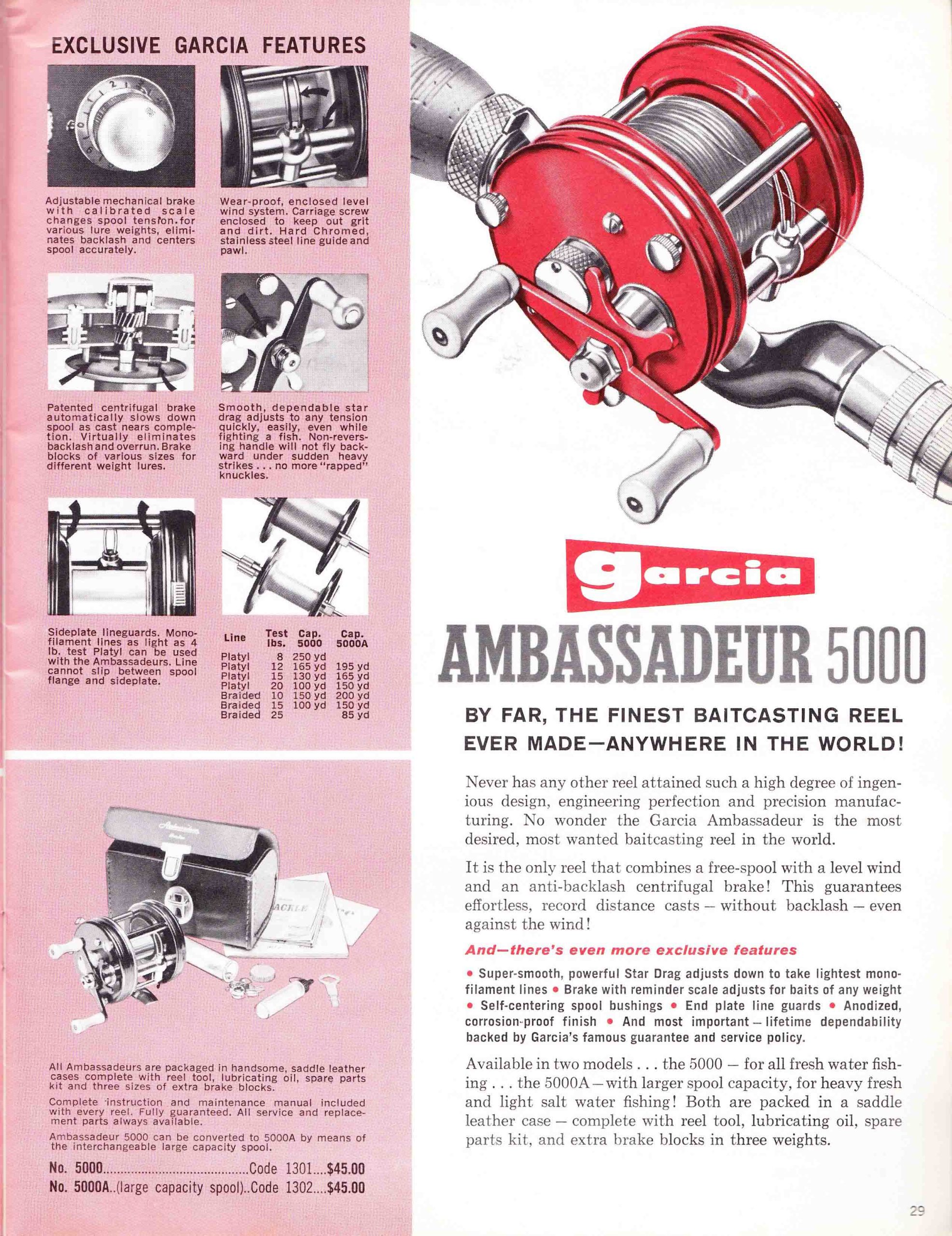
The Garcia Ambassadeur 5000. 1962 Garcia Fishing Annual. Image Terry Battisti.
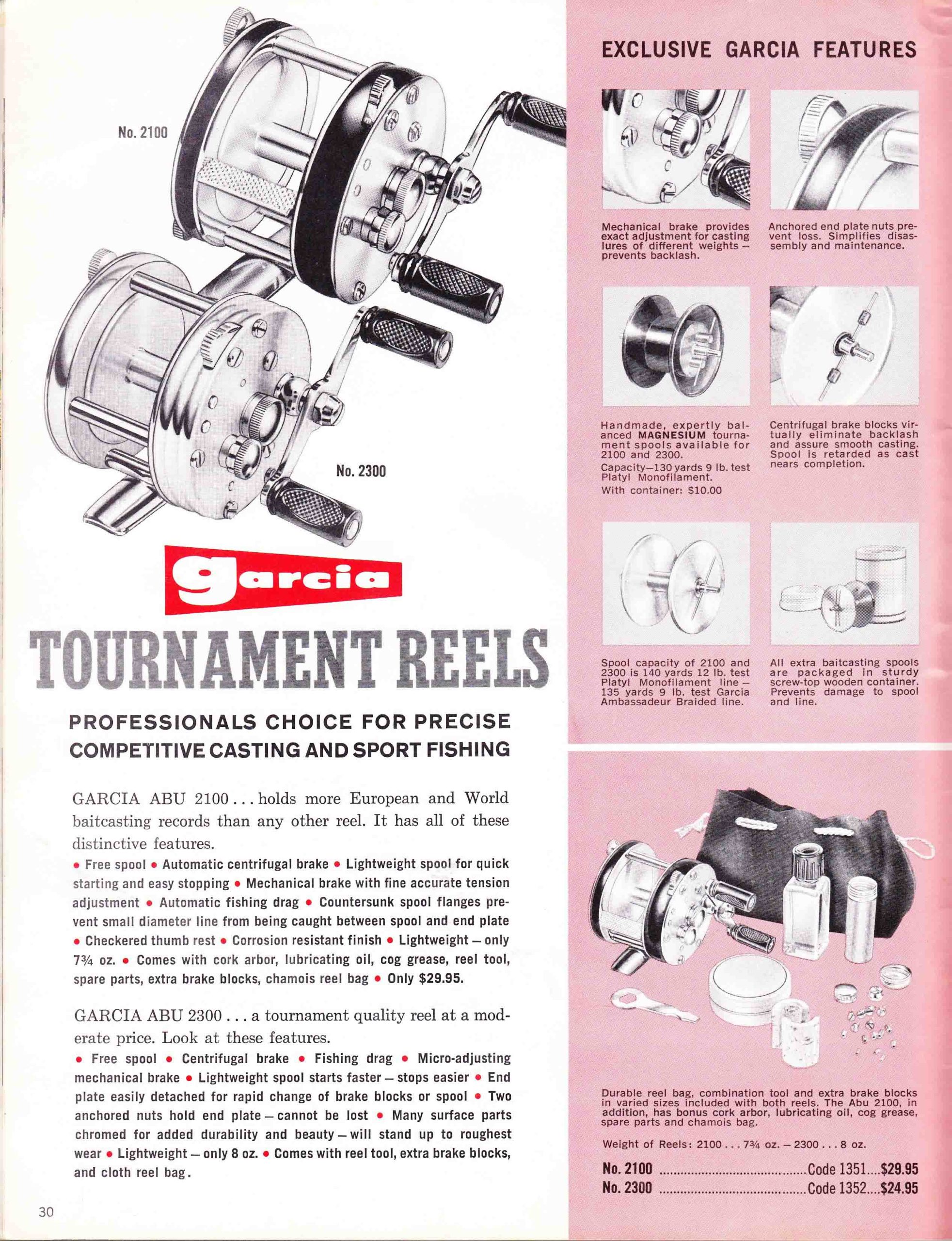
The Garcia 2100 and 2300 Tournament Reels. 1962 Garcia Fishing Annual. Image Terry Battisti.
1963
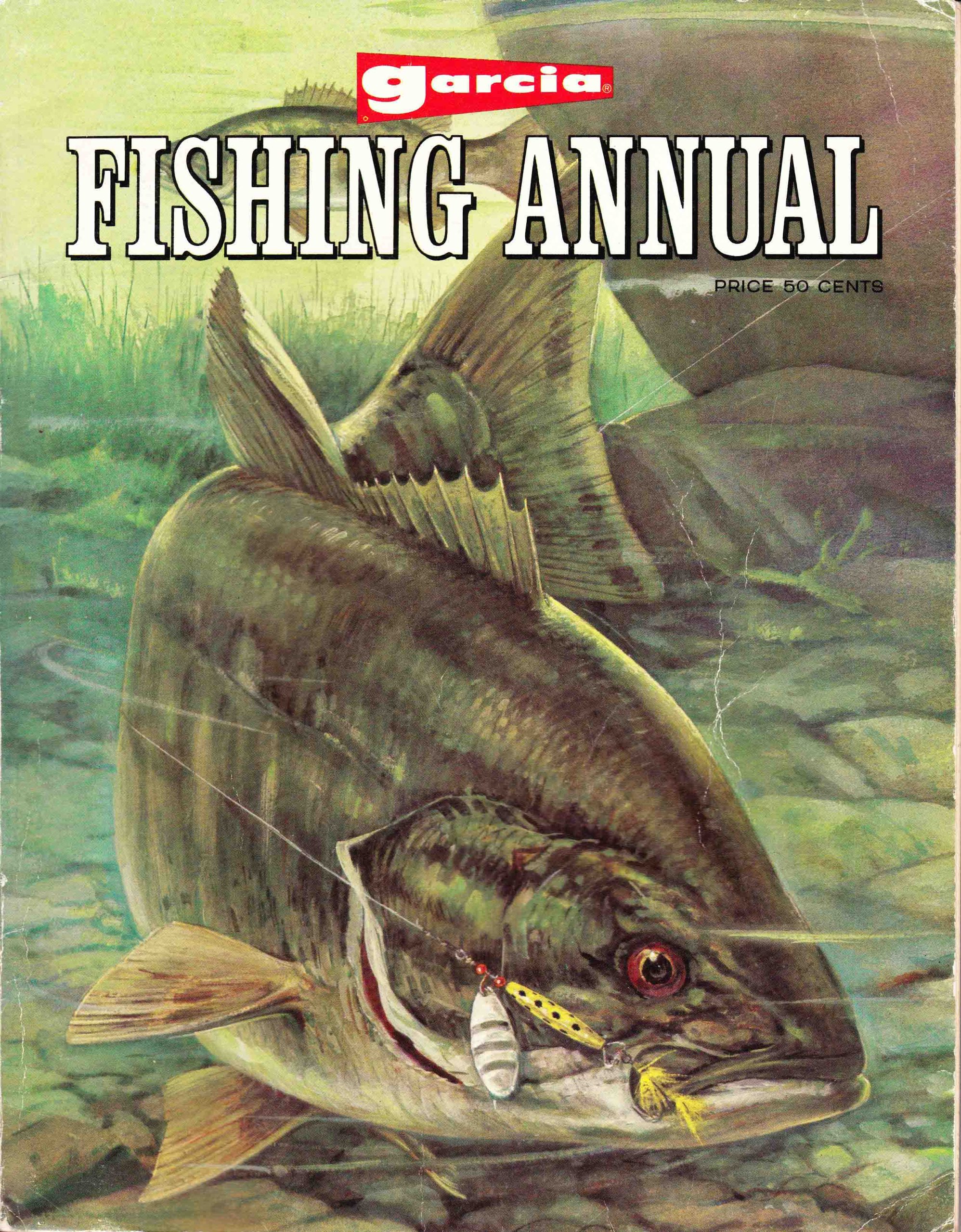
The cover of the 1963 Garcia Fishing Annual. Image Terry Battisti.
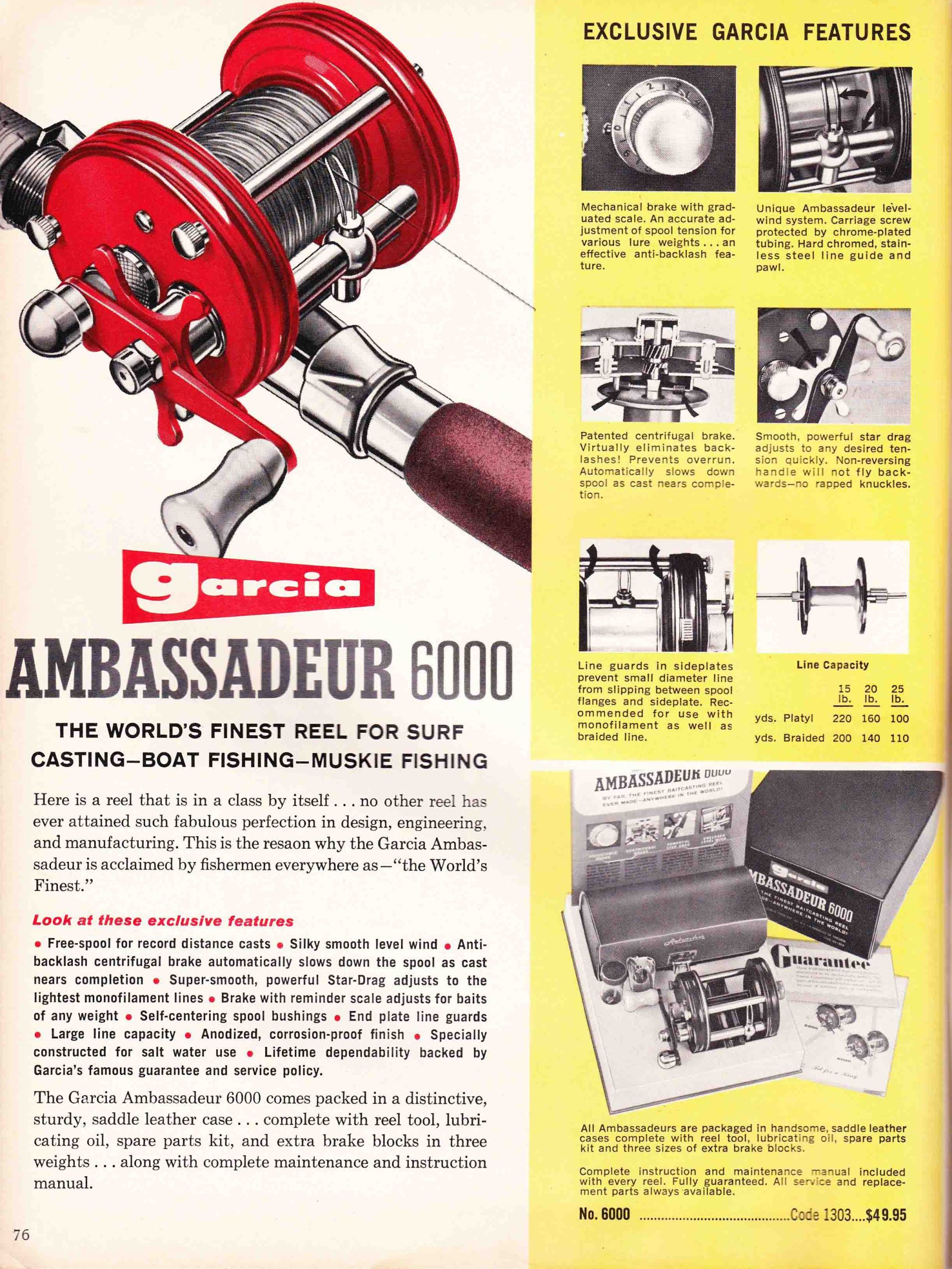
The Garcia Ambassadeur 6000. 1963 Garcia Fishing Annual. Image Terry Battisti.
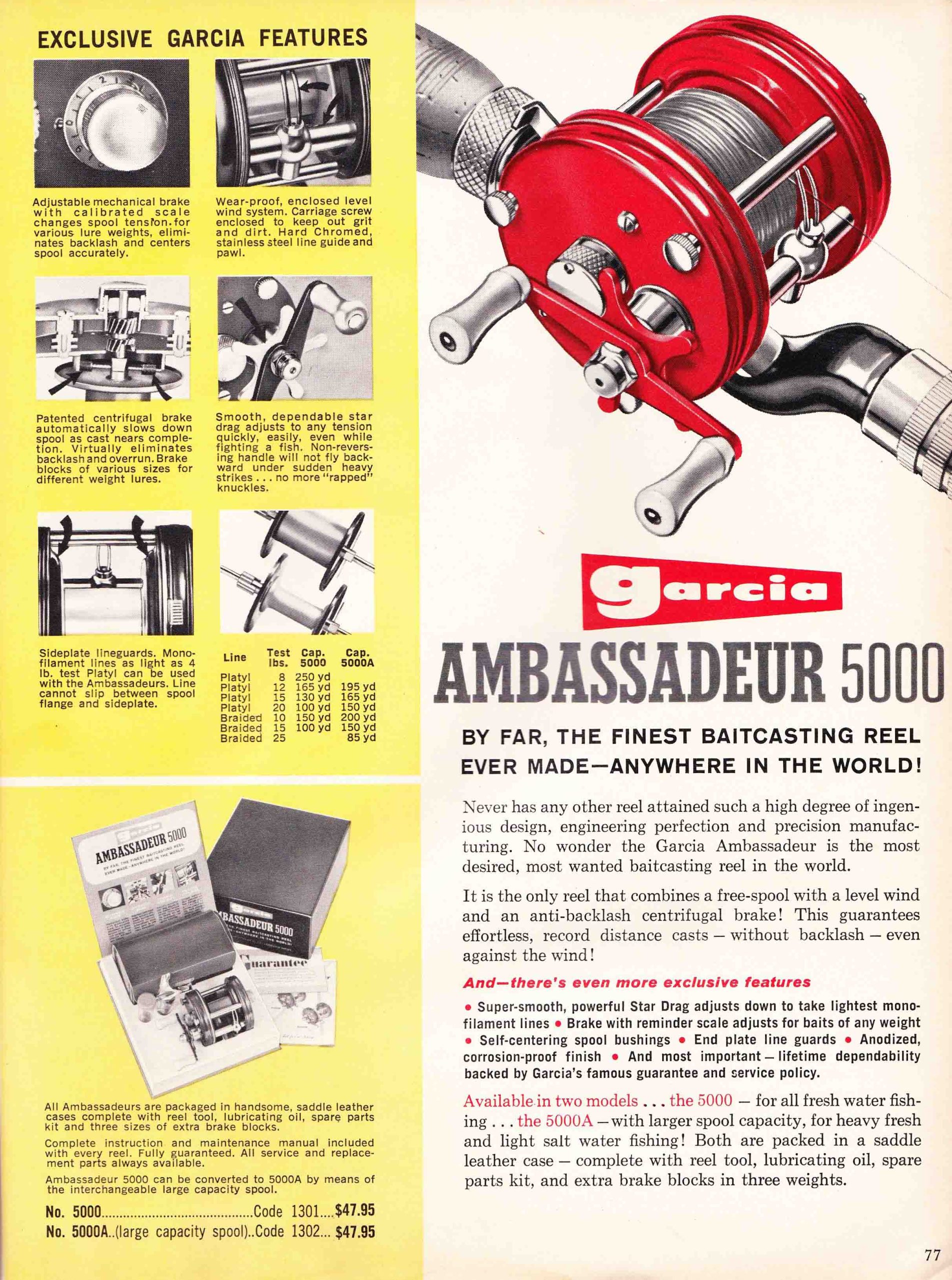
The Garcia Ambassadeur 5000. 1963 Garcia Fishing Annual. Image Terry Battisti.
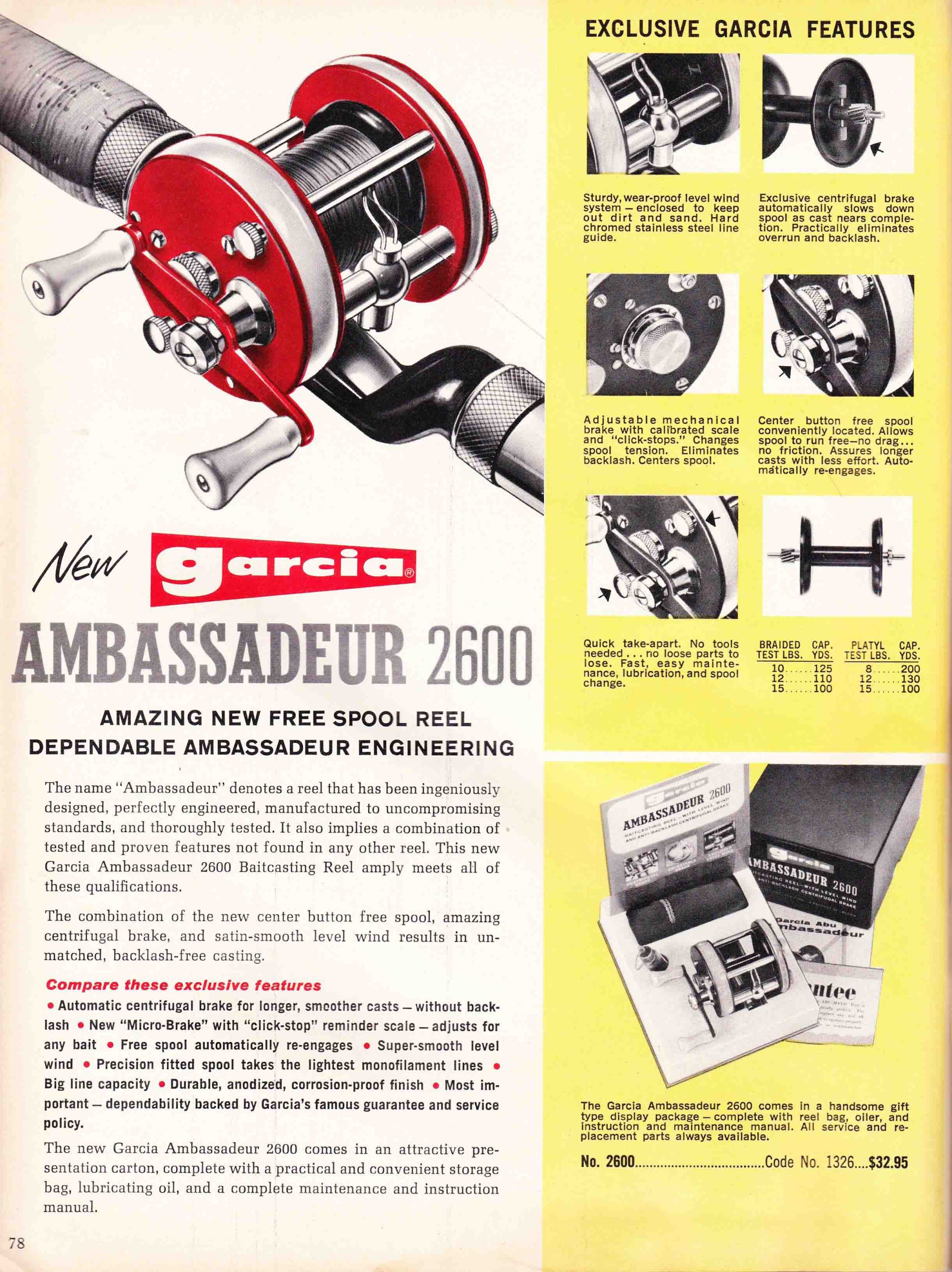
The Garcia Ambassadeur 2600. 1963 Garcia Fishing Annual. Image Terry Battisti.
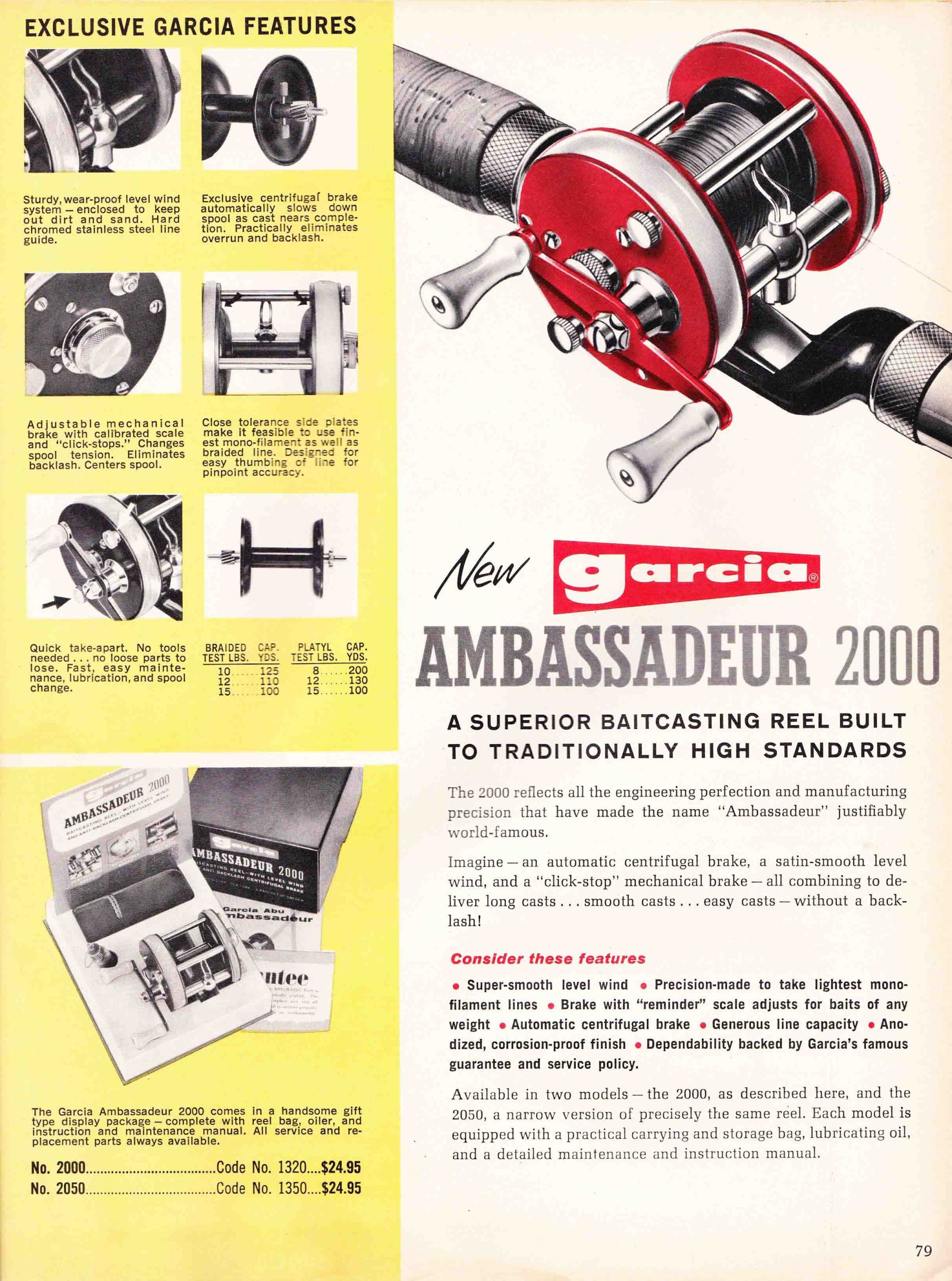
The Garcia Ambassadeur 2000. 1963 Garcia Fishing Annual. Image Terry Battisti.
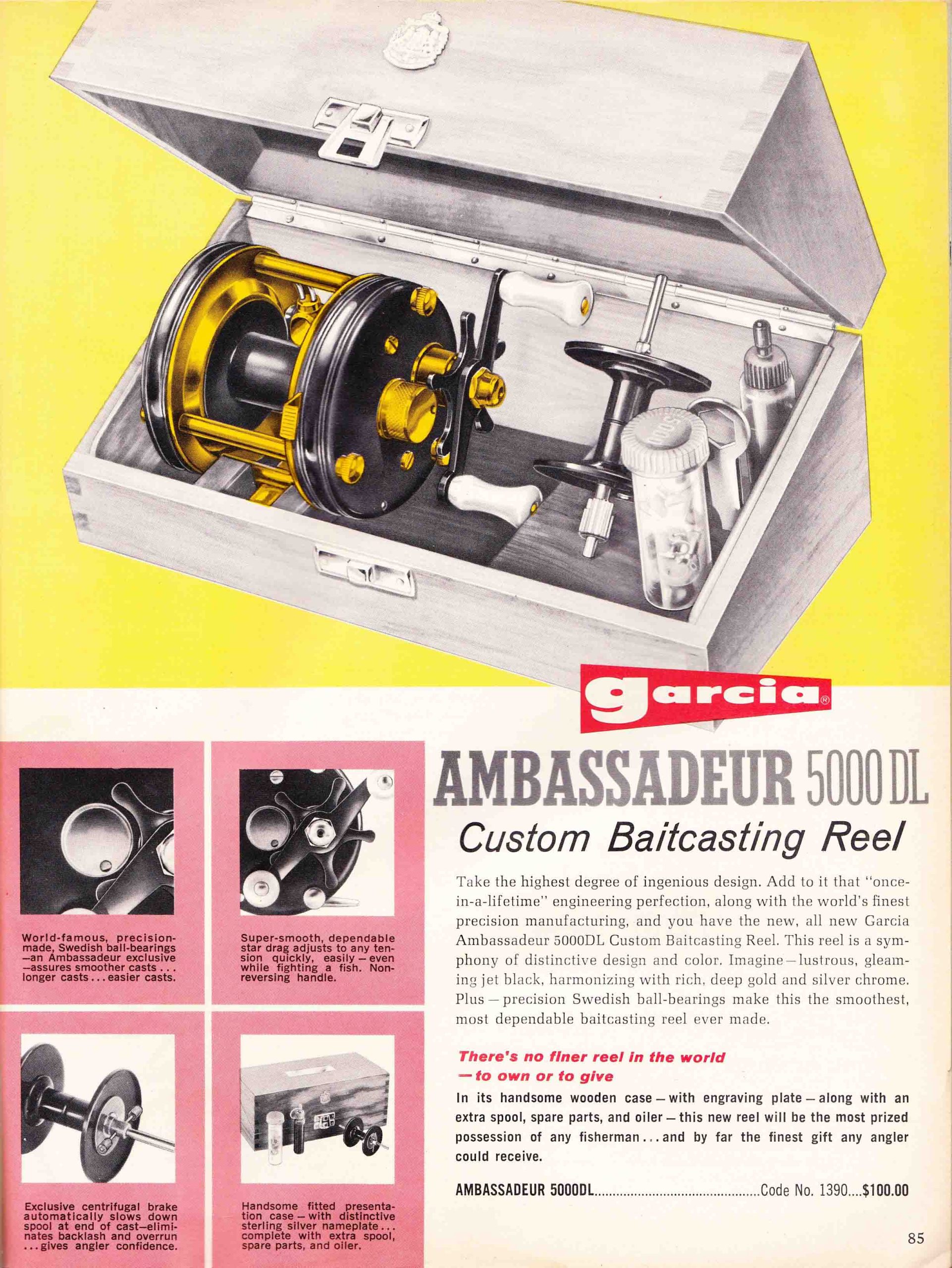
The Garcia Ambassadeur 5000 DL. 1963 Garcia Fishing Annual. Image Terry Battisti.
1964
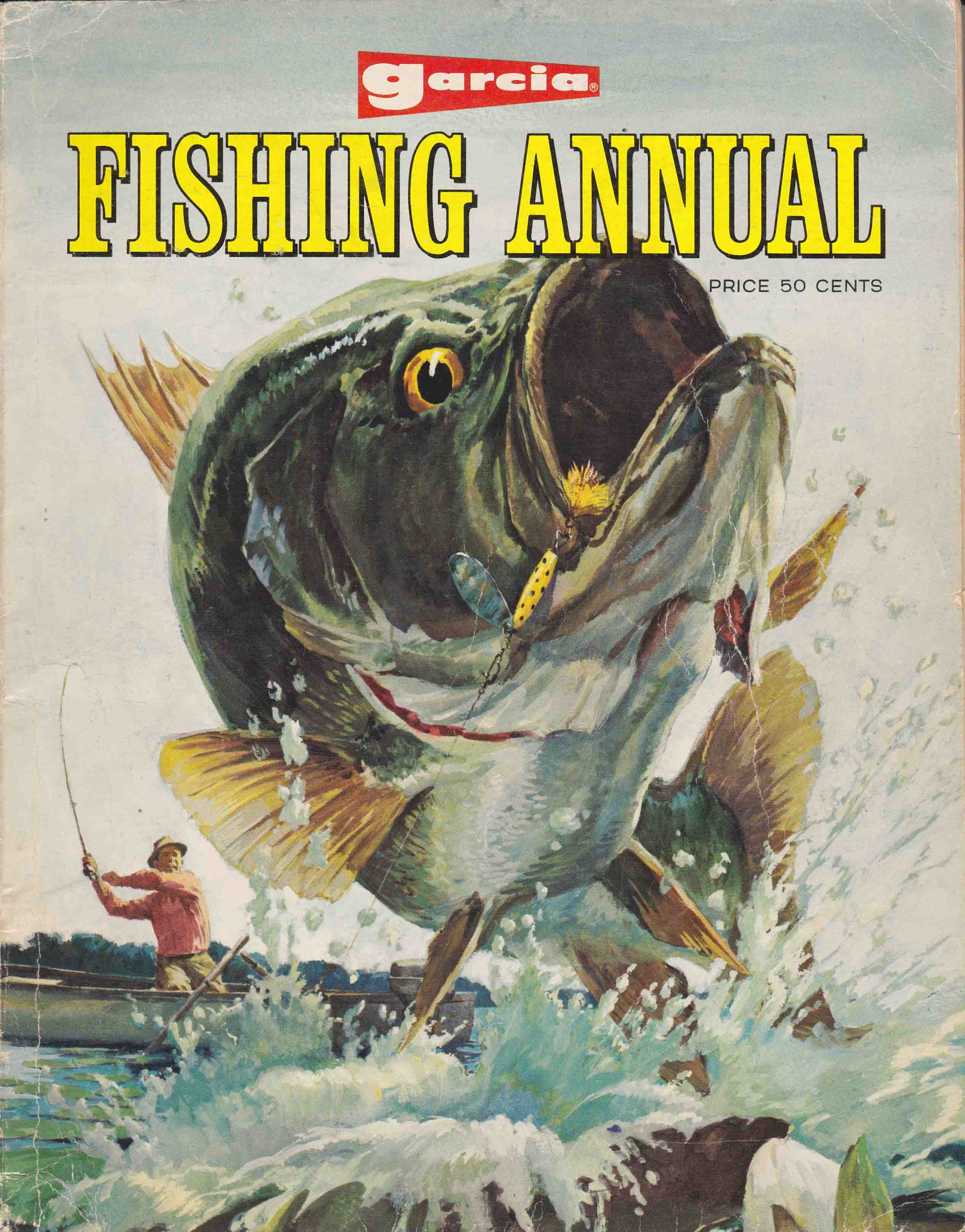
The cover of the 1964 Garcia Fishing Annual. Image Terry Battisti.
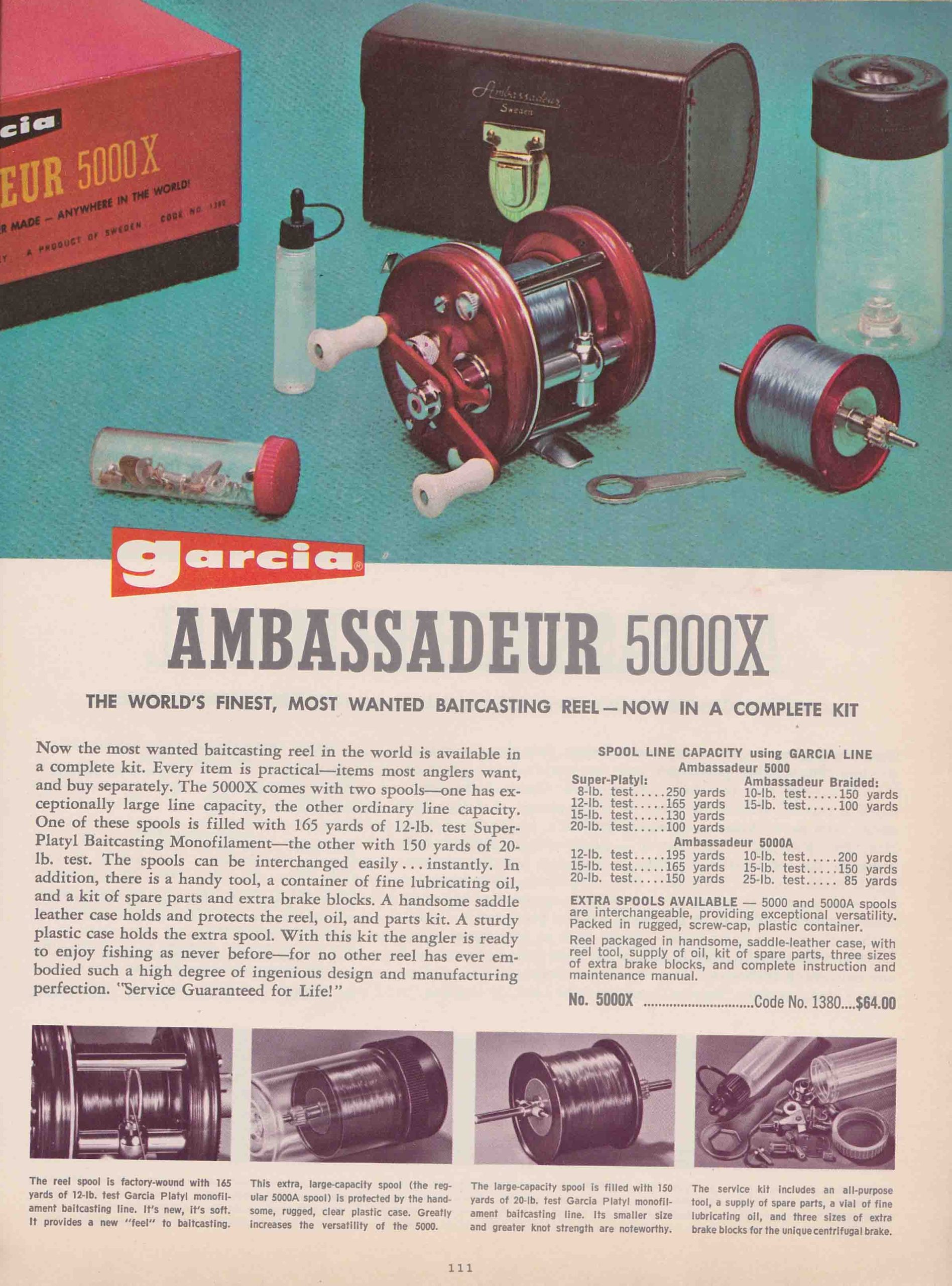
The Garcia Ambassadeur 5000X Reel Kit. 1964 Garcia Fishing Annual. Image Terry Battisti.
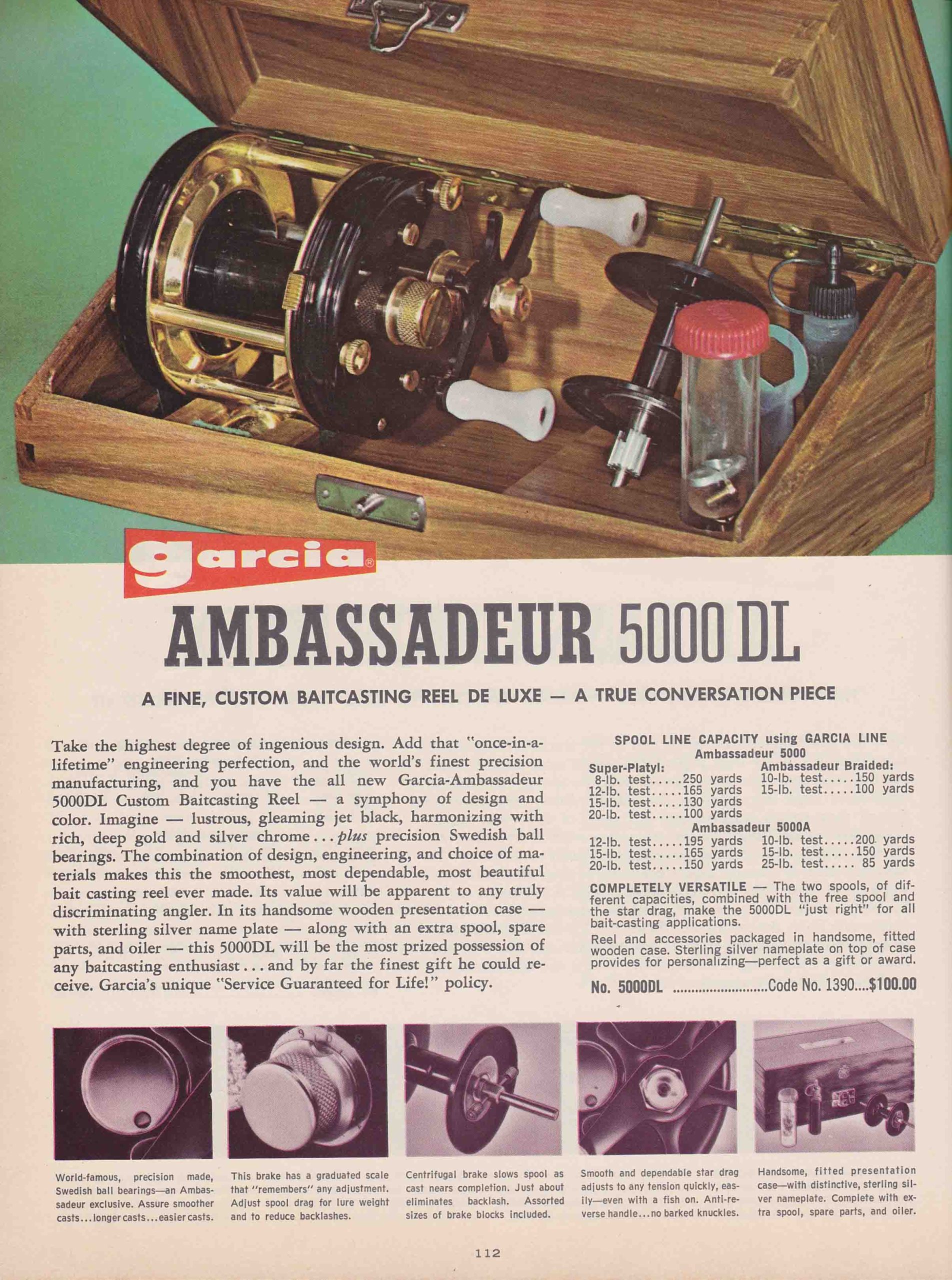
The Garcia Ambassadeur 5000 DL Presentation Reel. 1964 Garcia Fishing Annual. Image Terry Battisti.
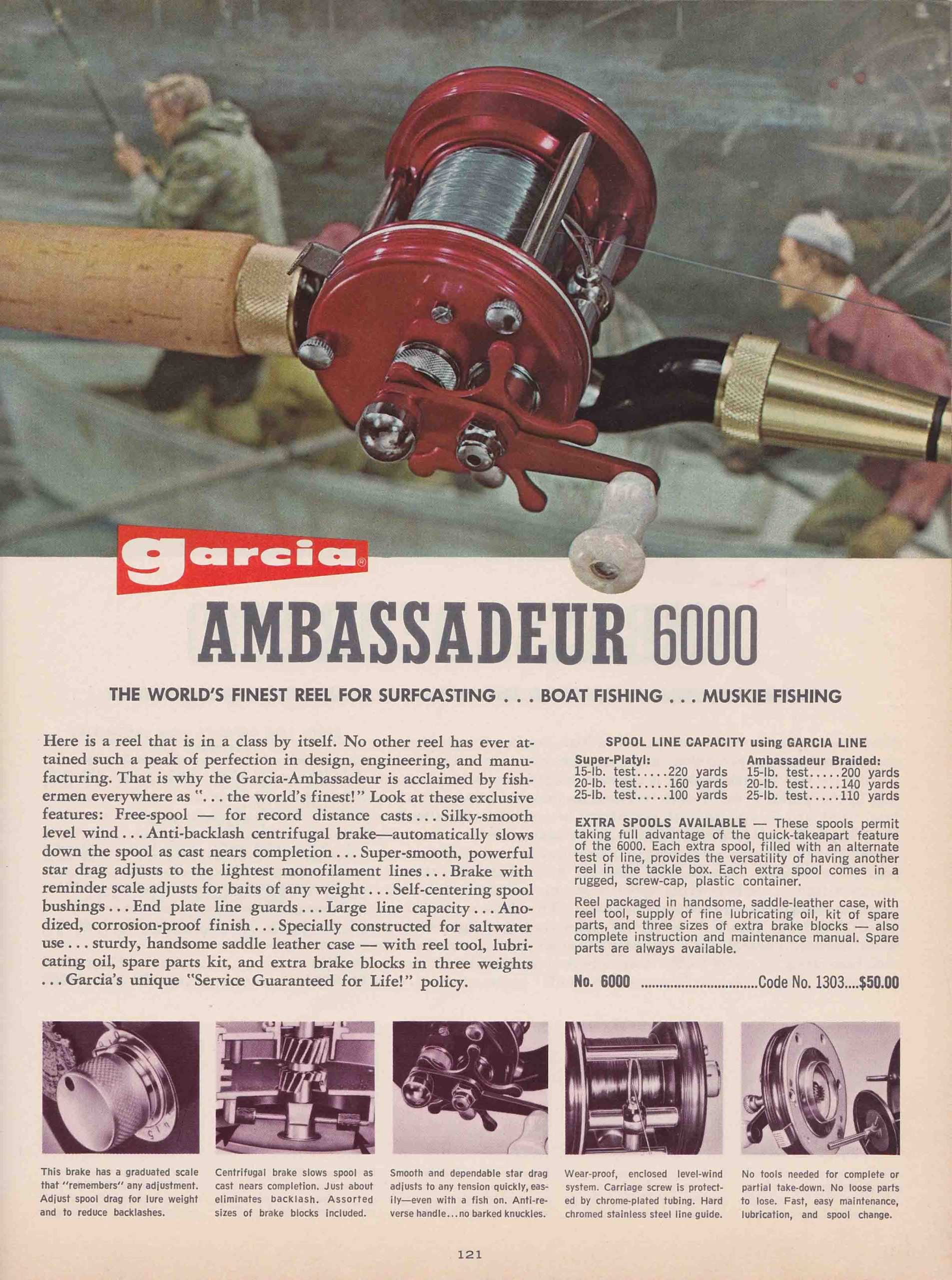
The Garcia Ambassadeur 6000 Reel. 1964 Garcia Fishing Annual. Image Terry Battisti.
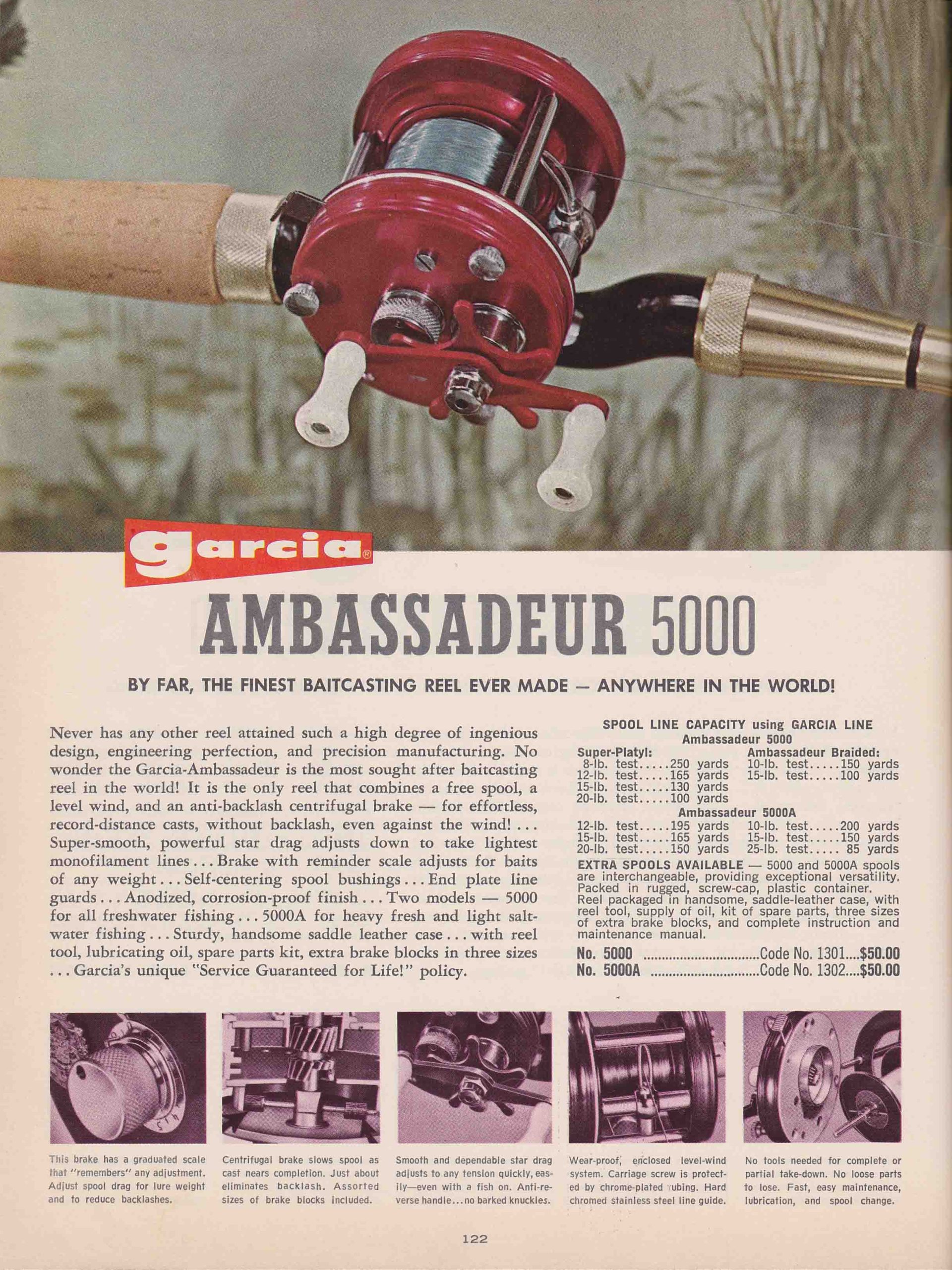
The Garcia Ambassadeur 5000 Reel. 1964 Garcia Fishing Annual. Image Terry Battisti.
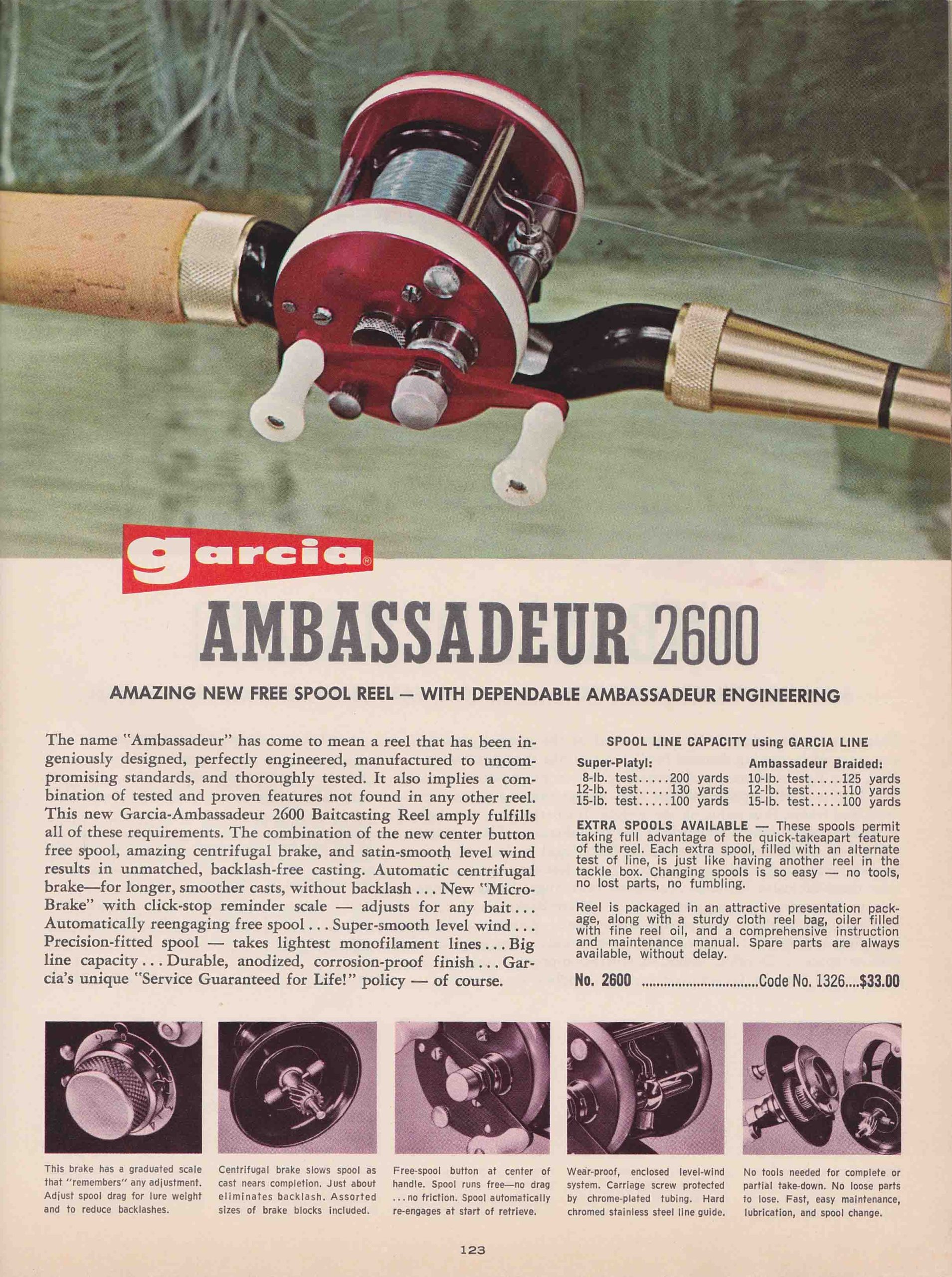
The Garcia Ambassadeur 2600 Reel. 1964 Garcia Fishing Annual. Image Terry Battisti.
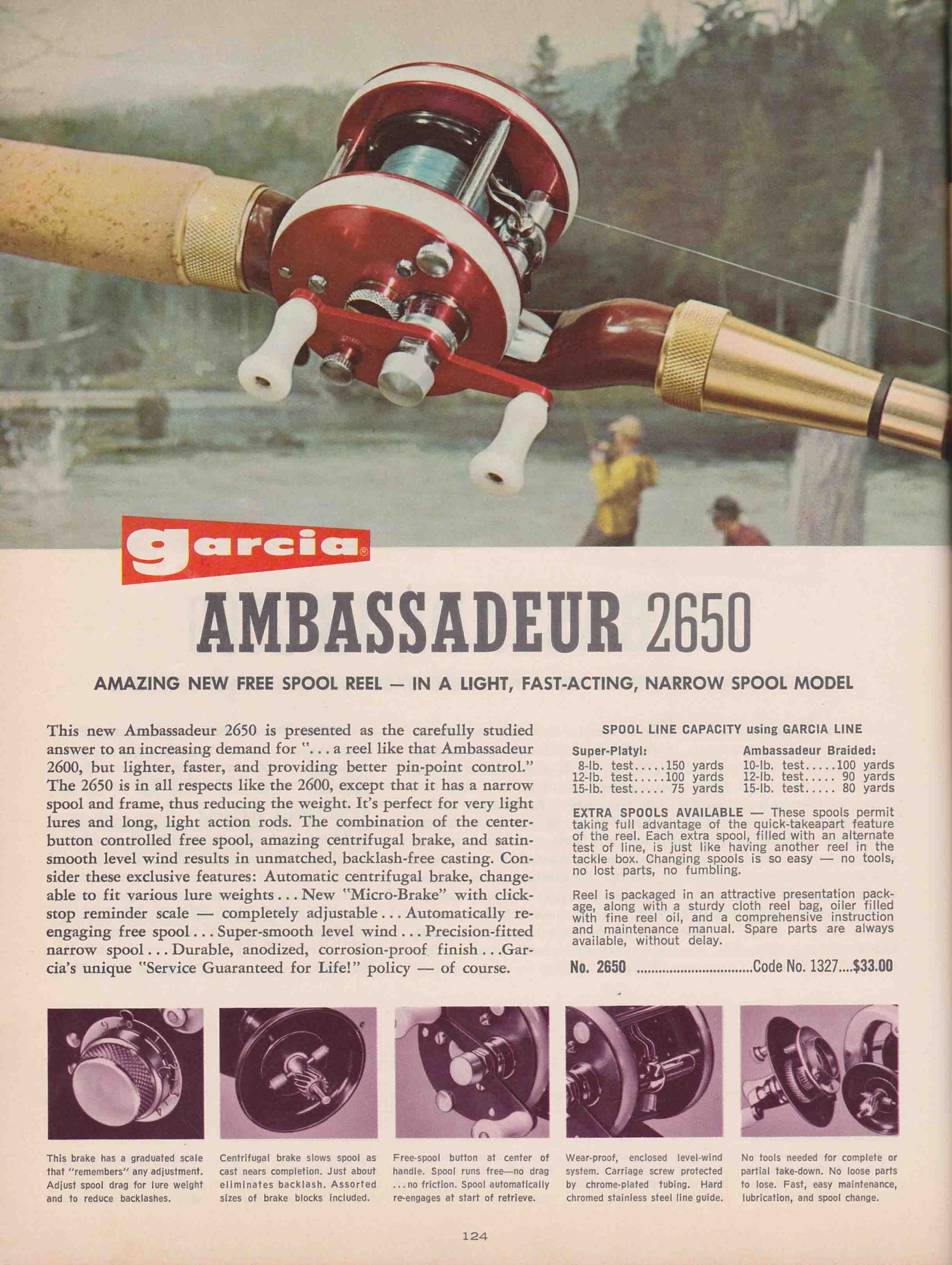
The Garcia Ambassadeur 2650 Reel. 1964 Garcia Fishing Annual. Image Terry Battisti.
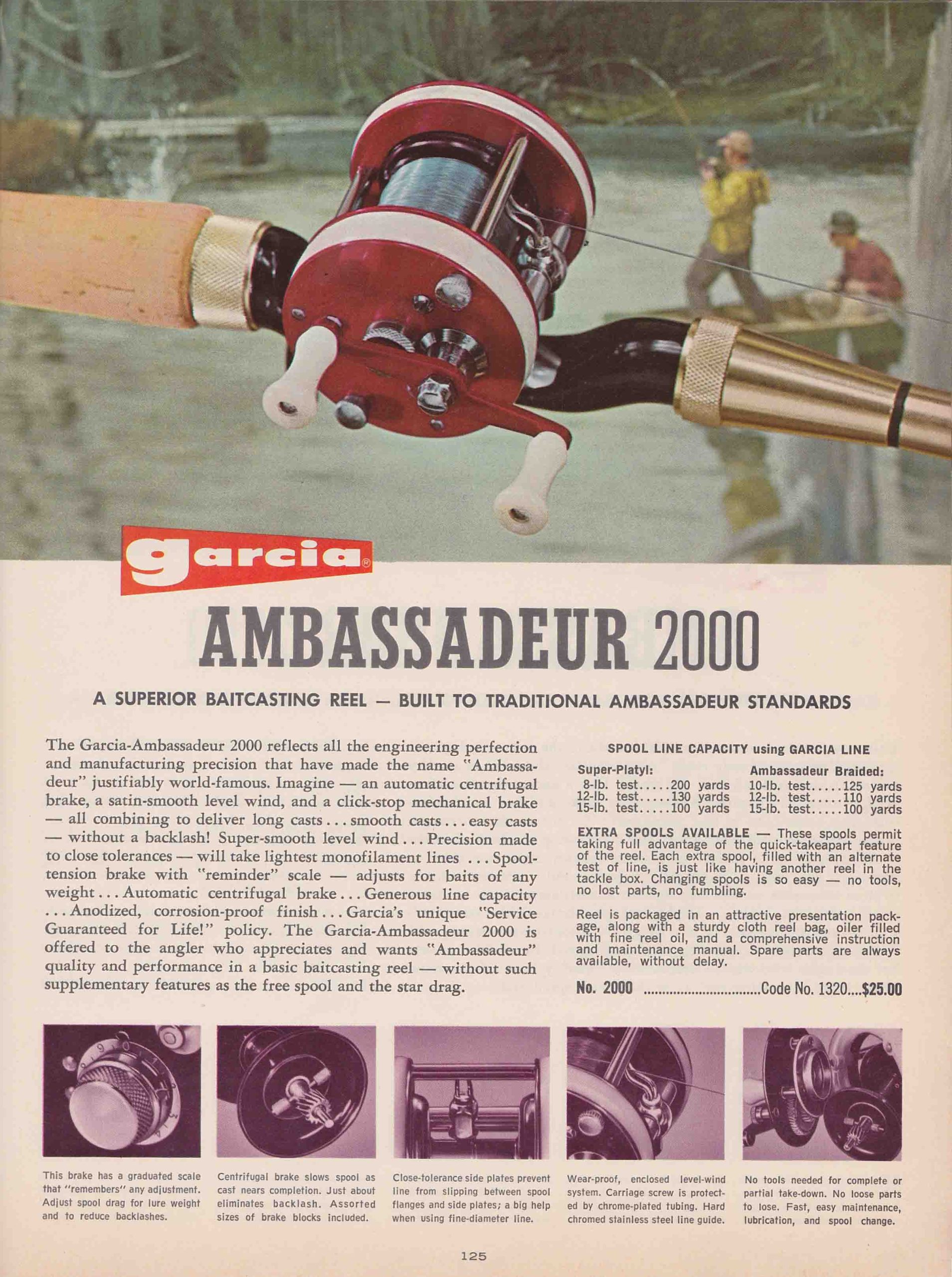
The Garcia Ambassadeur 2000 Reel. 1964 Garcia Fishing Annual. Image Terry Battisti.
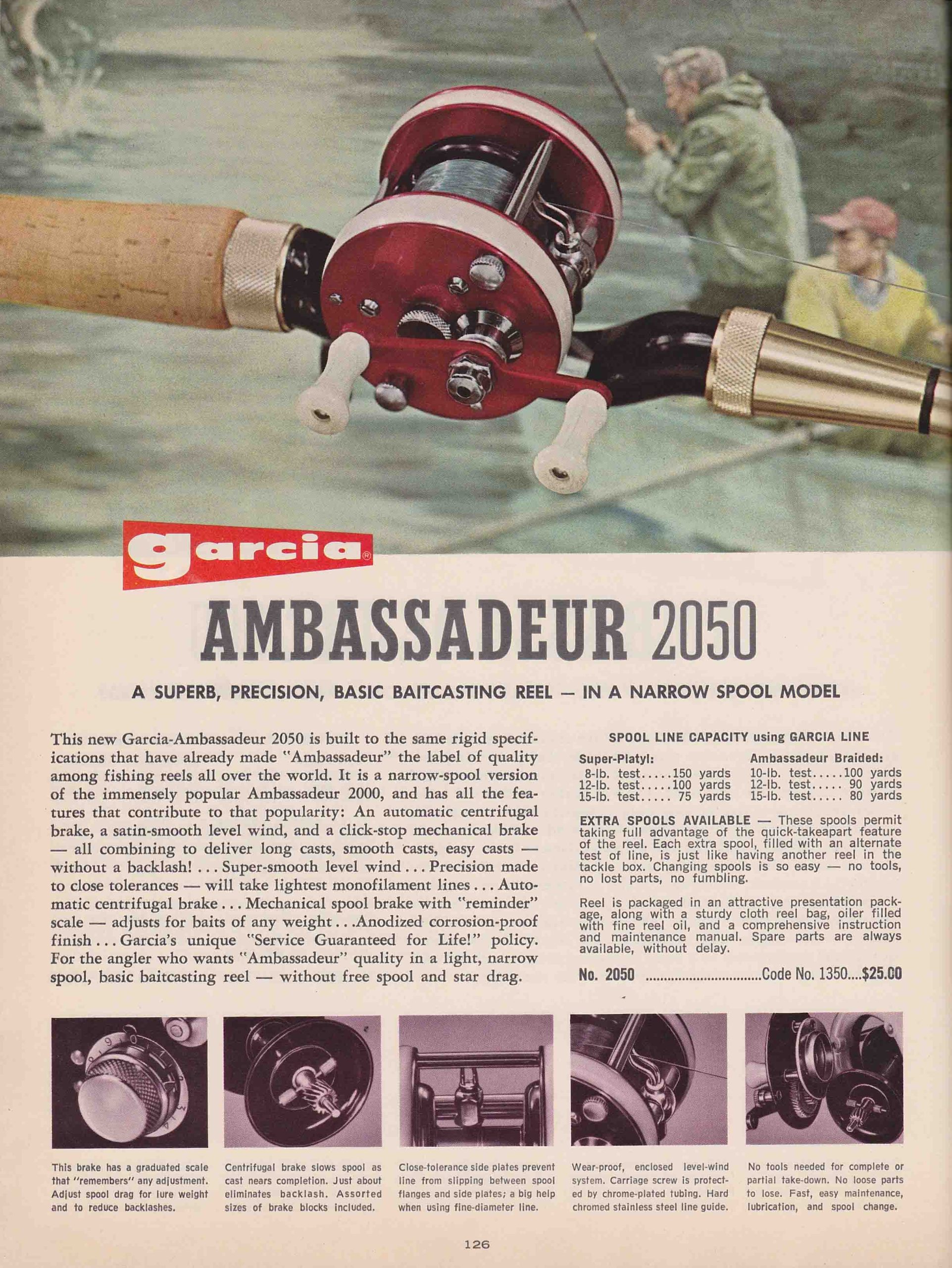
The Garcia Ambassadeur 2050 Reel. 1964 Garcia Fishing Annual. Image Terry Battisti.
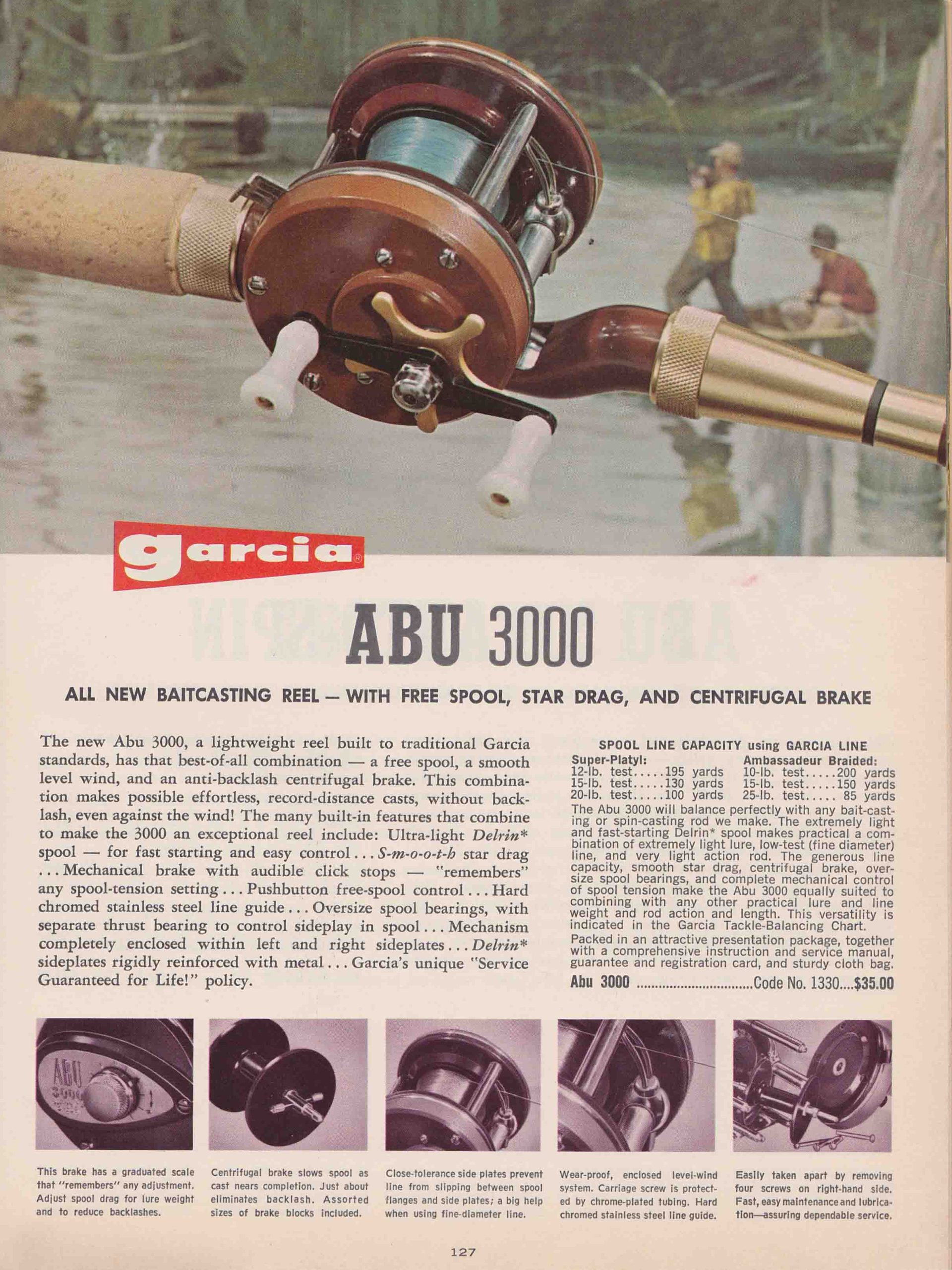
The Garcia Ambassadeur 3000 Reel. 1964 Garcia Fishing Annual. Image Terry Battisti.
1965
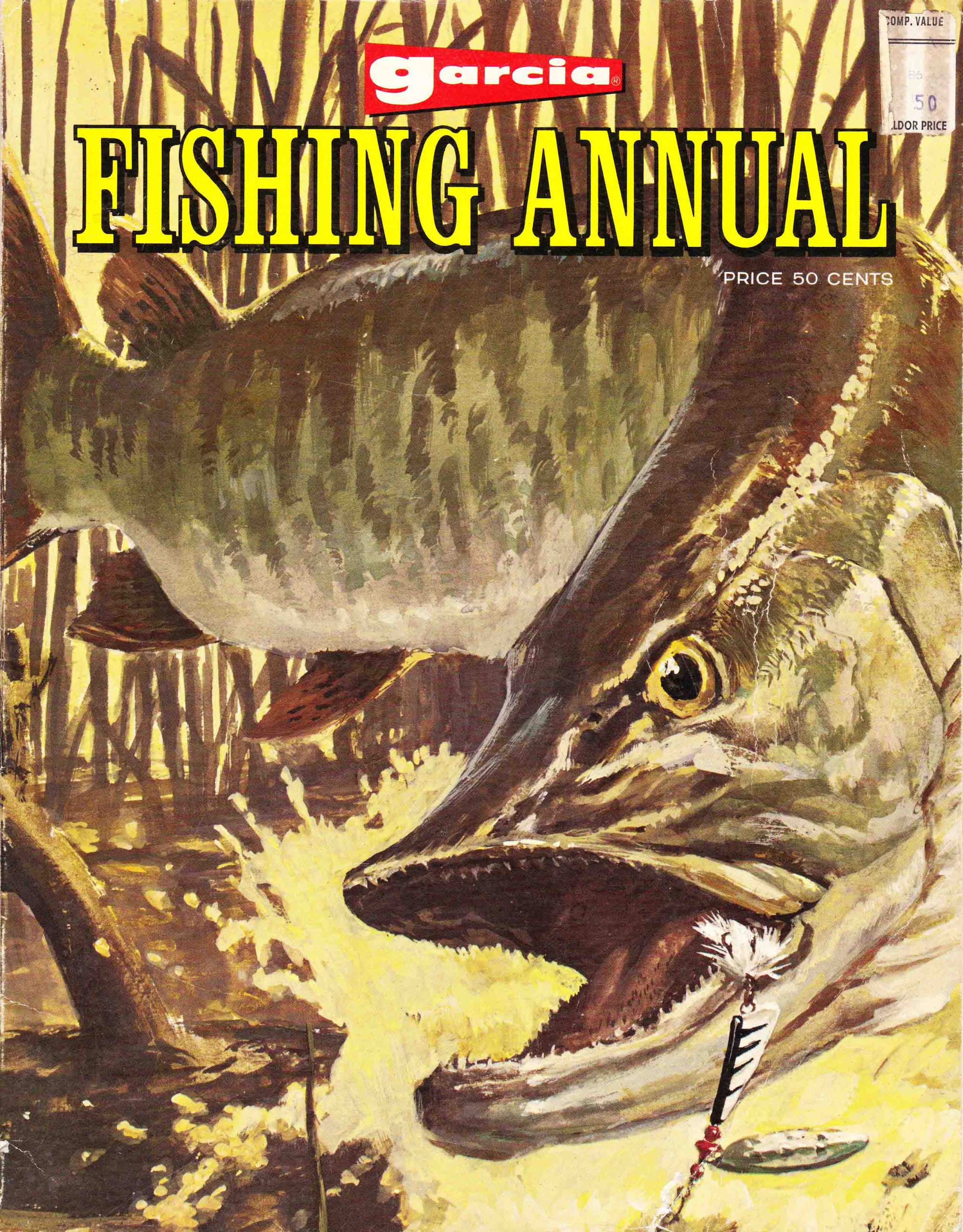
The cover of the 1965 Garcia Fishing Annual. Image Terry Battisti.
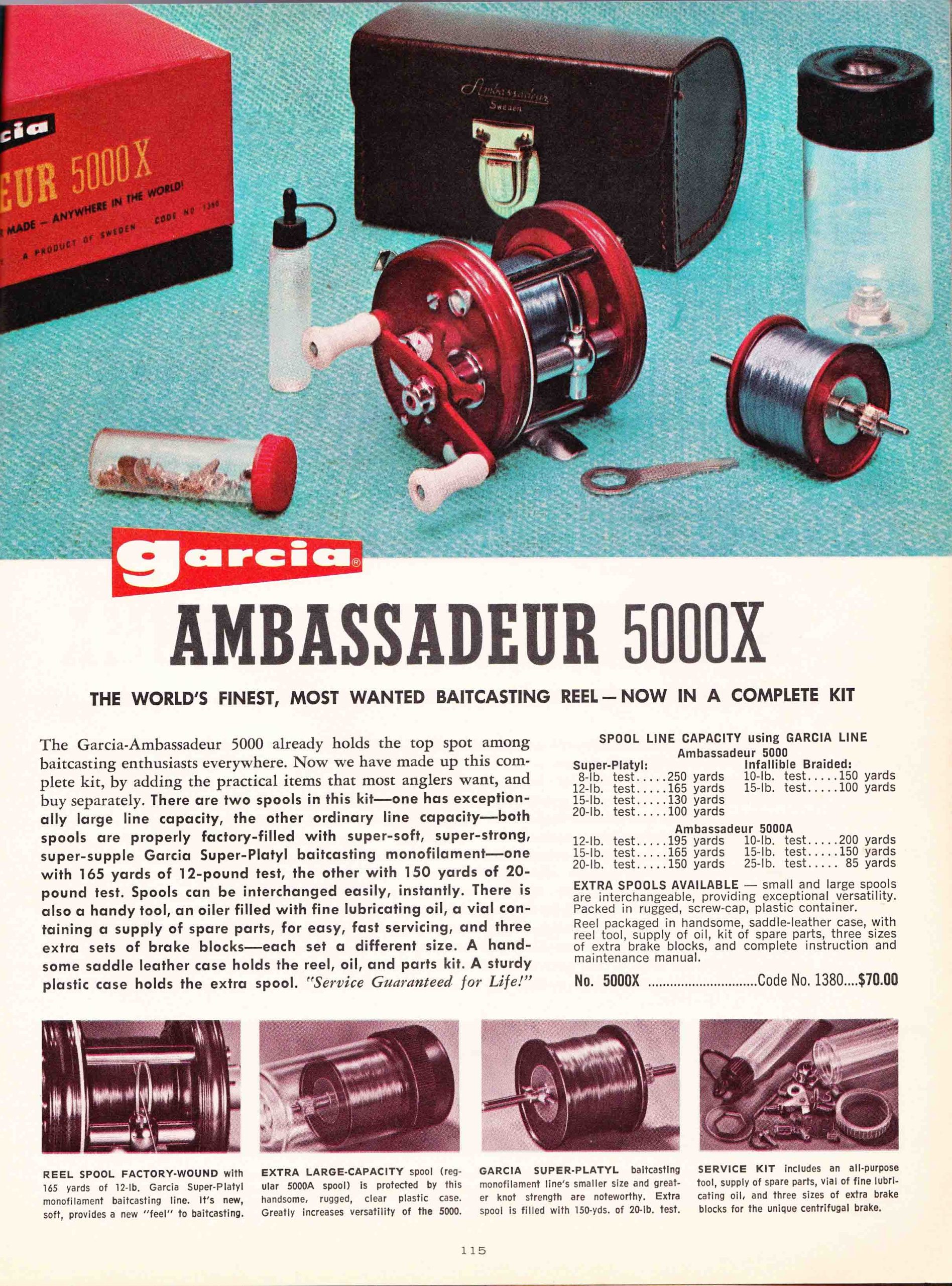
The Garcia Ambassadeur 5000X Reel Kit. 1965 Garcia Fishing Annual. Image Terry Battisti.
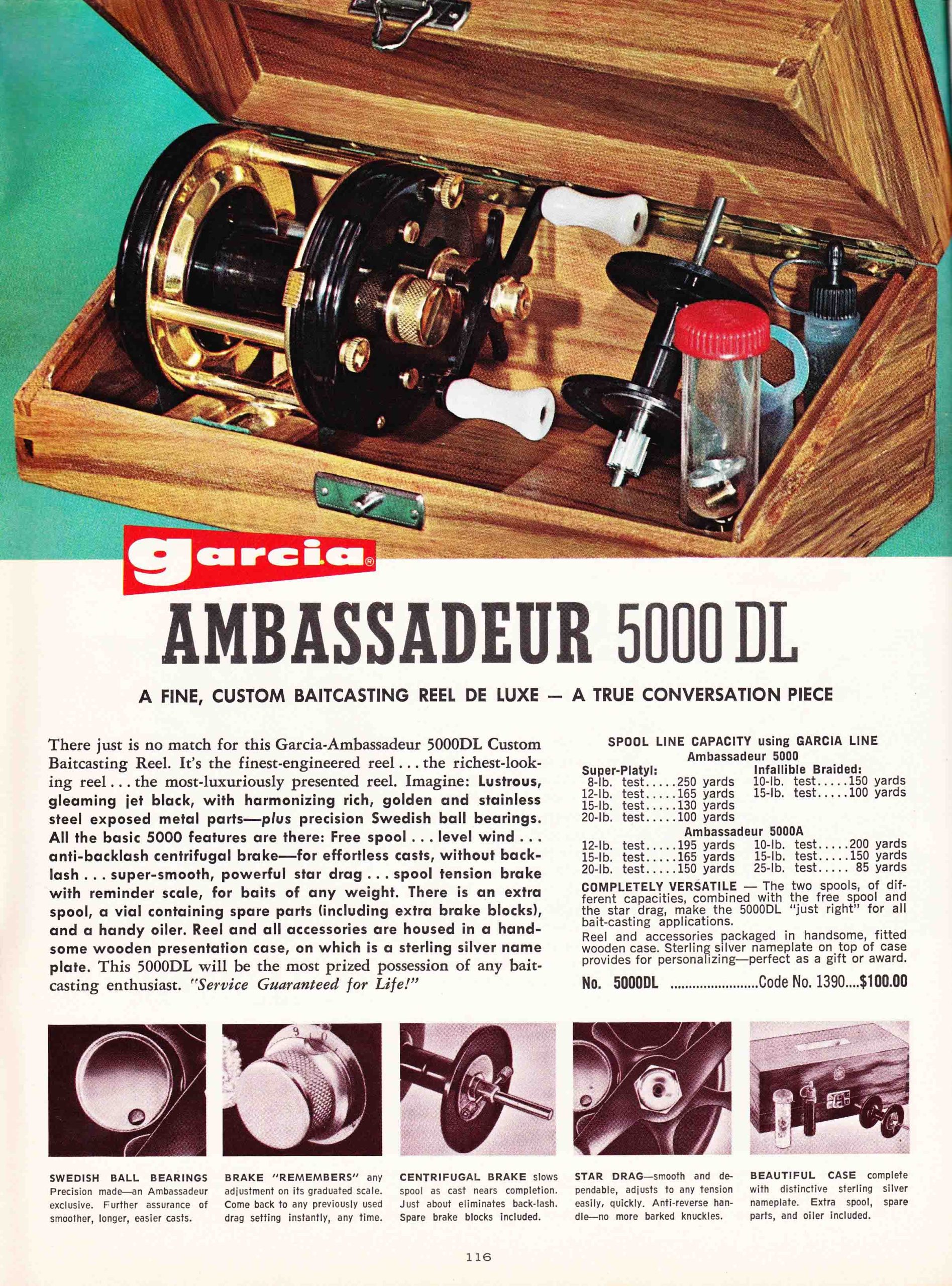
The Garcia Ambassadeur 5000 DL Presentation Reel. 1965 Garcia Fishing Annual. Image Terry Battisti.
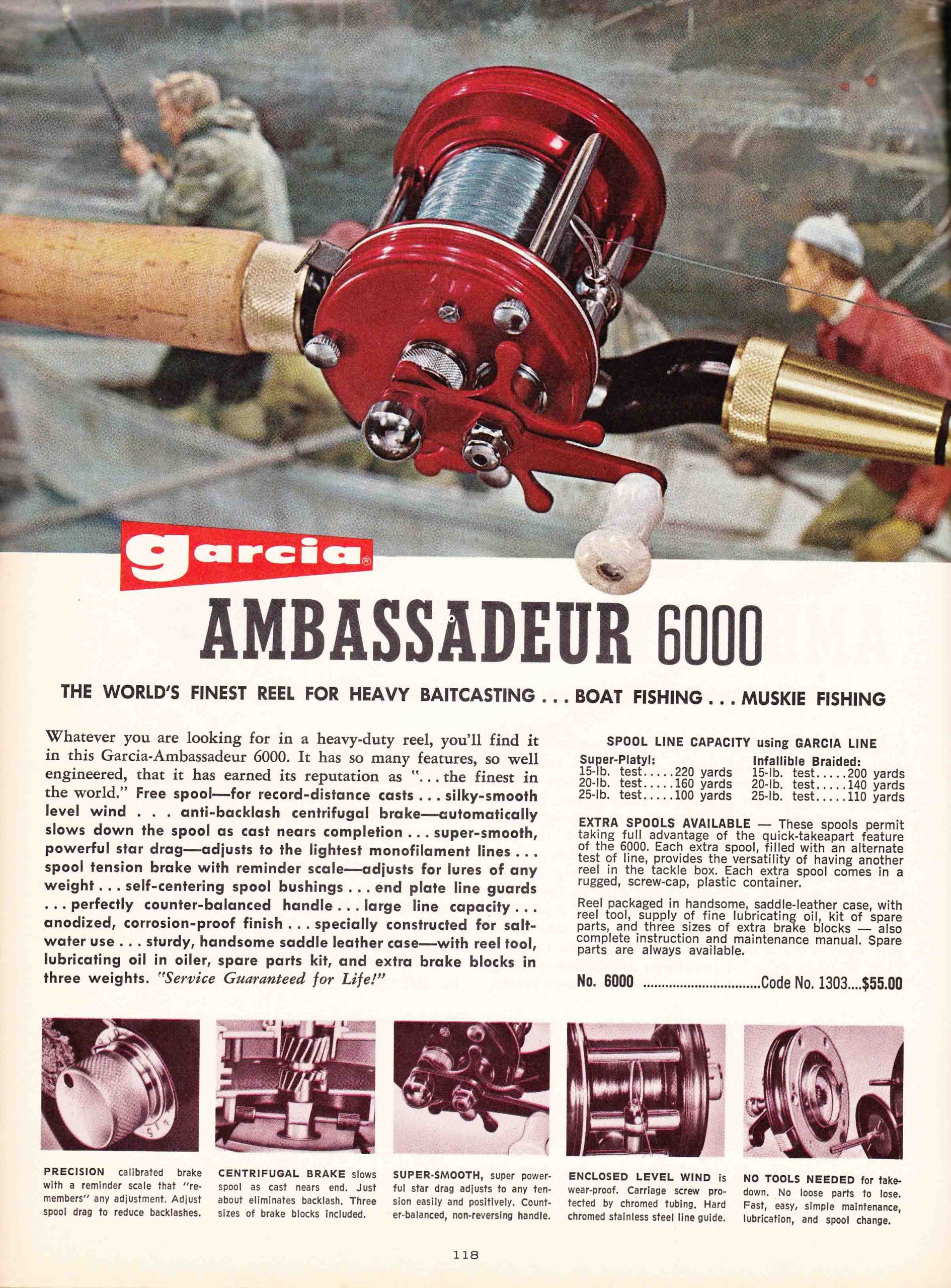
The Garcia Ambassadeur 6000 Reel. 1965 Garcia Fishing Annual. Image Terry Battisti.
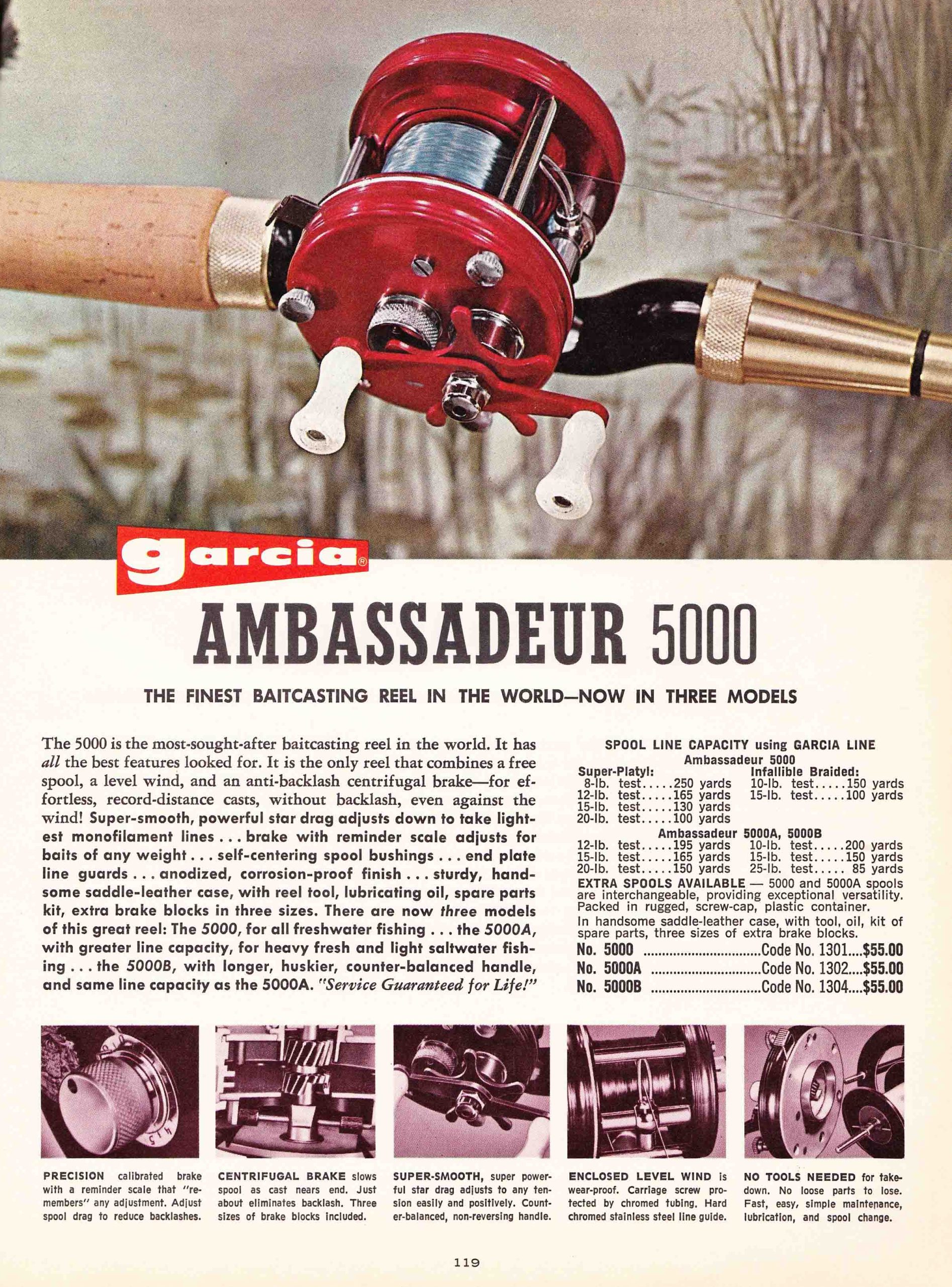
The Garcia Ambassadeur 5000 Reel. 1965 Garcia Fishing Annual. Image Terry Battisti.
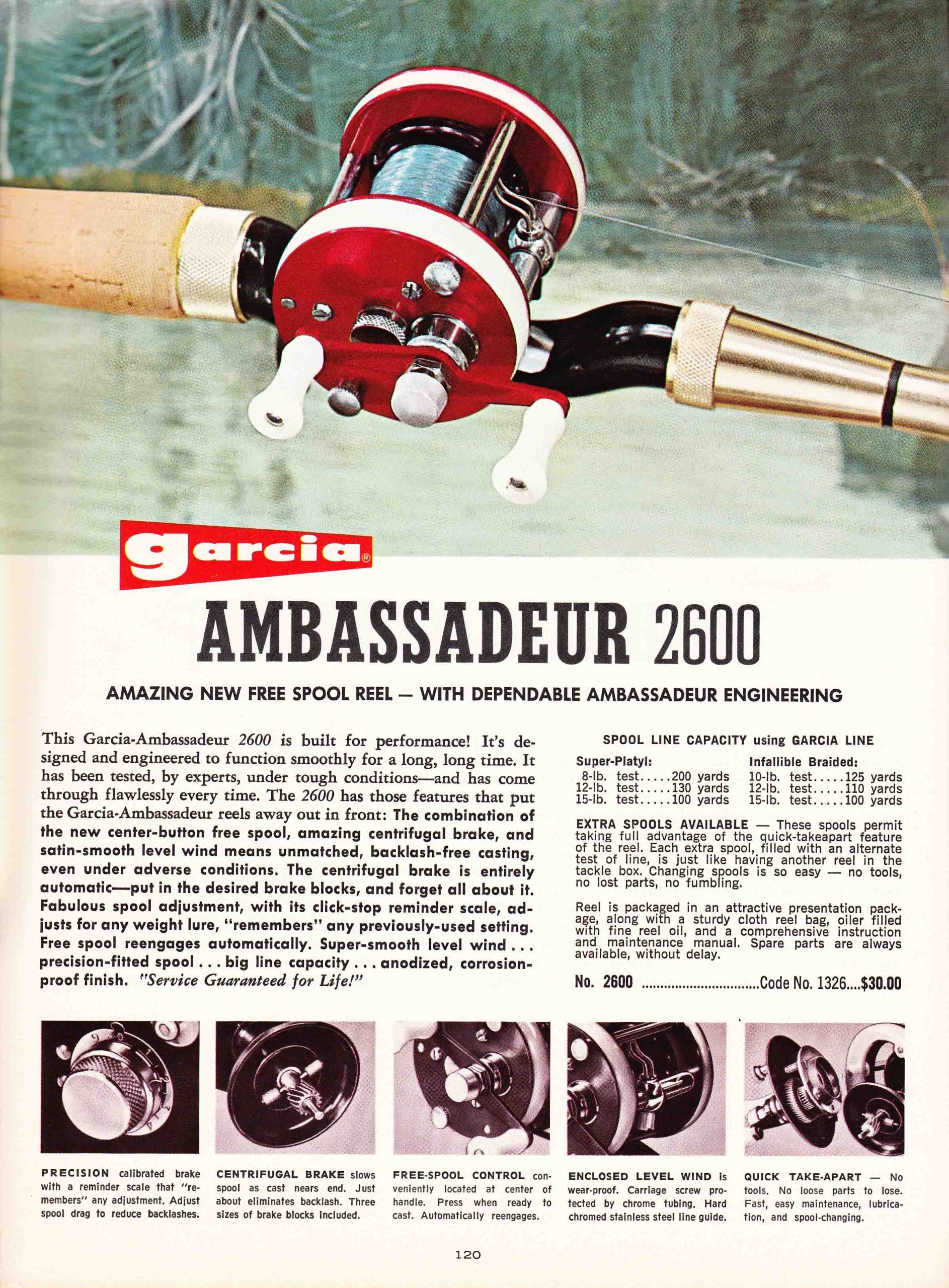
The Garcia Ambassadeur 2600 Reel. 1965 Garcia Fishing Annual. Image Terry Battisti.
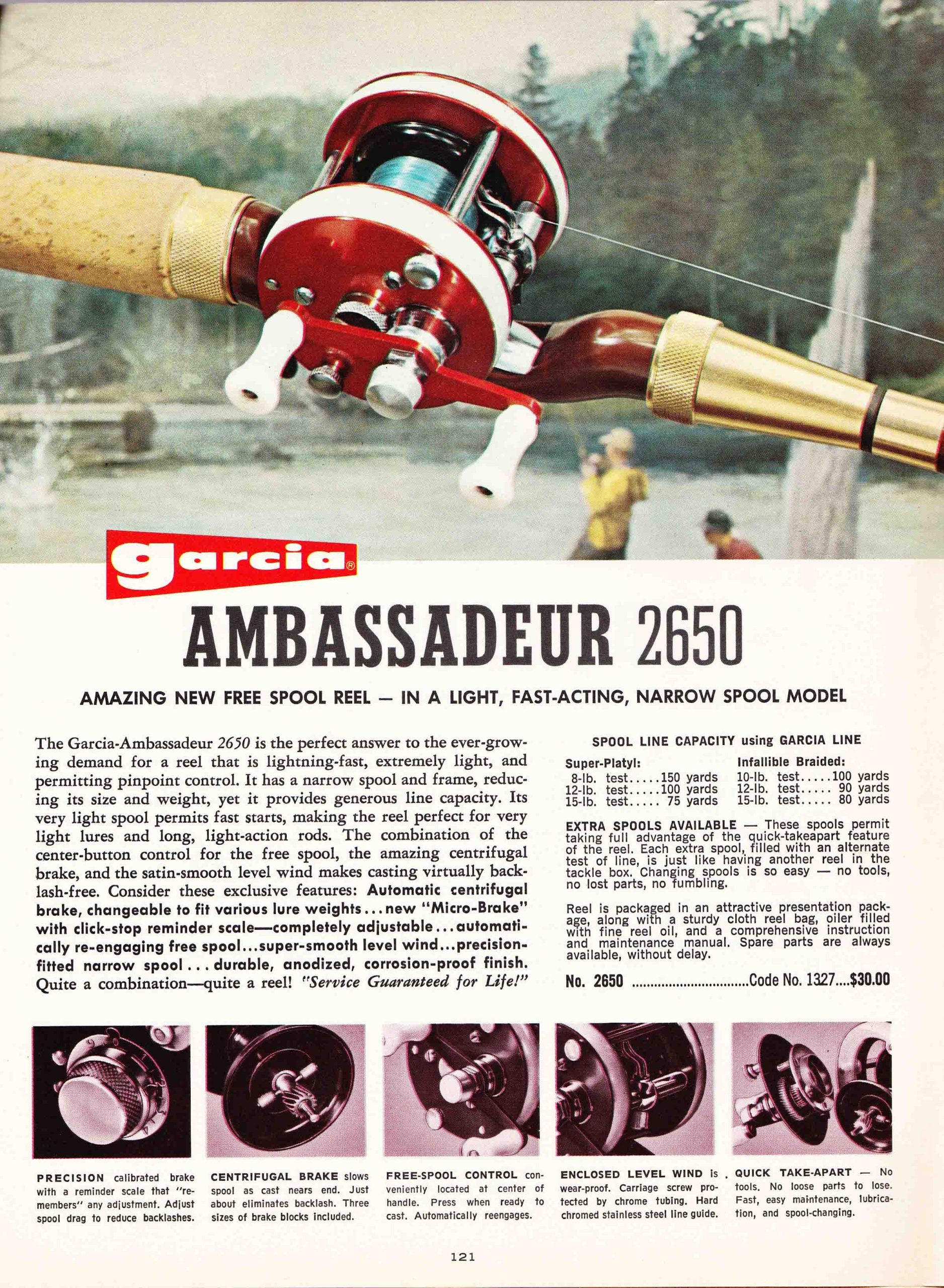
The Garcia Ambassadeur 2650 Reel. 1965 Garcia Fishing Annual. Image Terry Battisti.
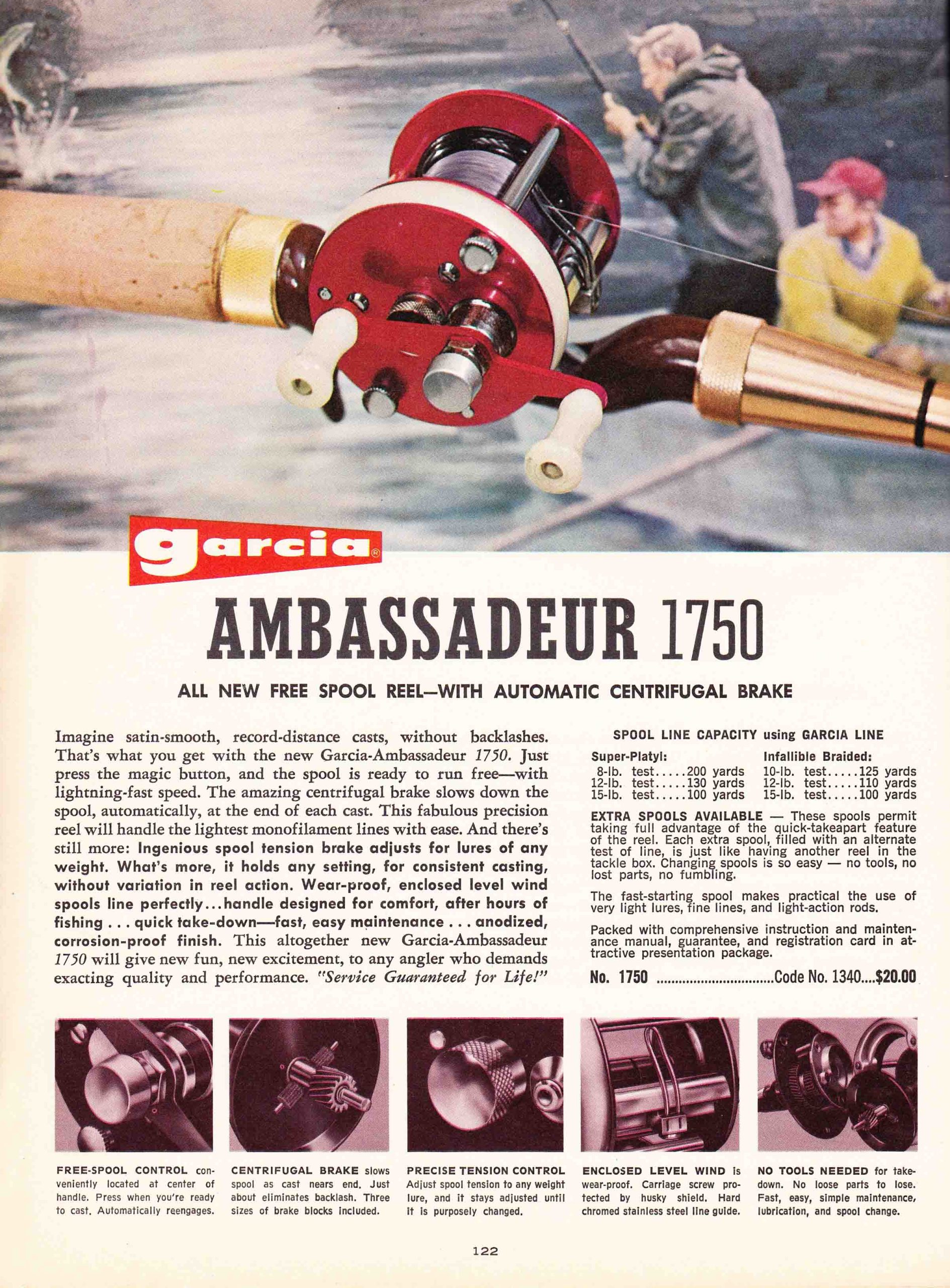
The Garcia Ambassadeur 1750 Reel. 1965 Garcia Fishing Annual. Image Terry Battisti.
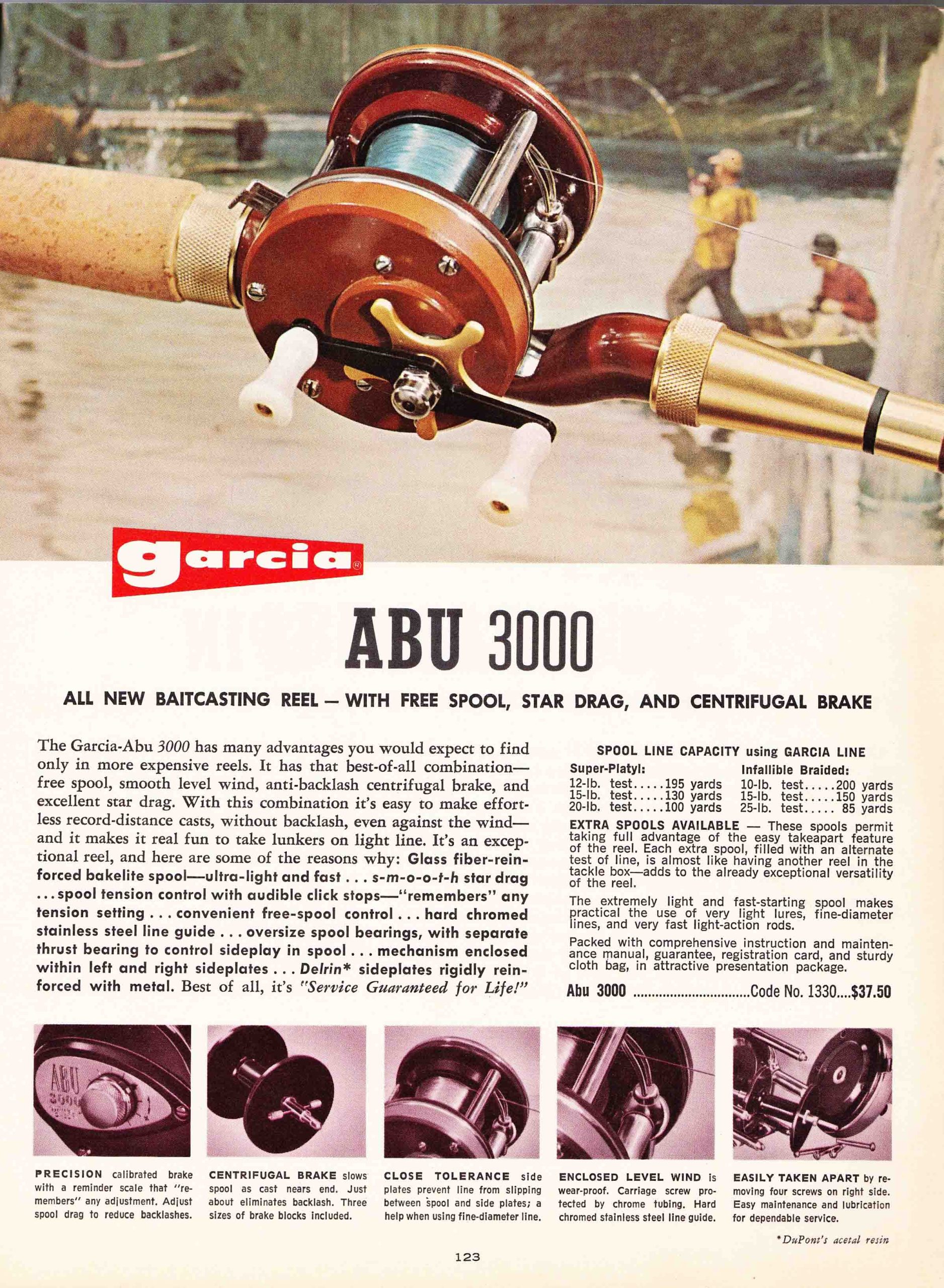
The Garcia Ambassadeur 3000 Reel. 1965 Garcia Fishing Annual. Image Terry Battisti.
1966
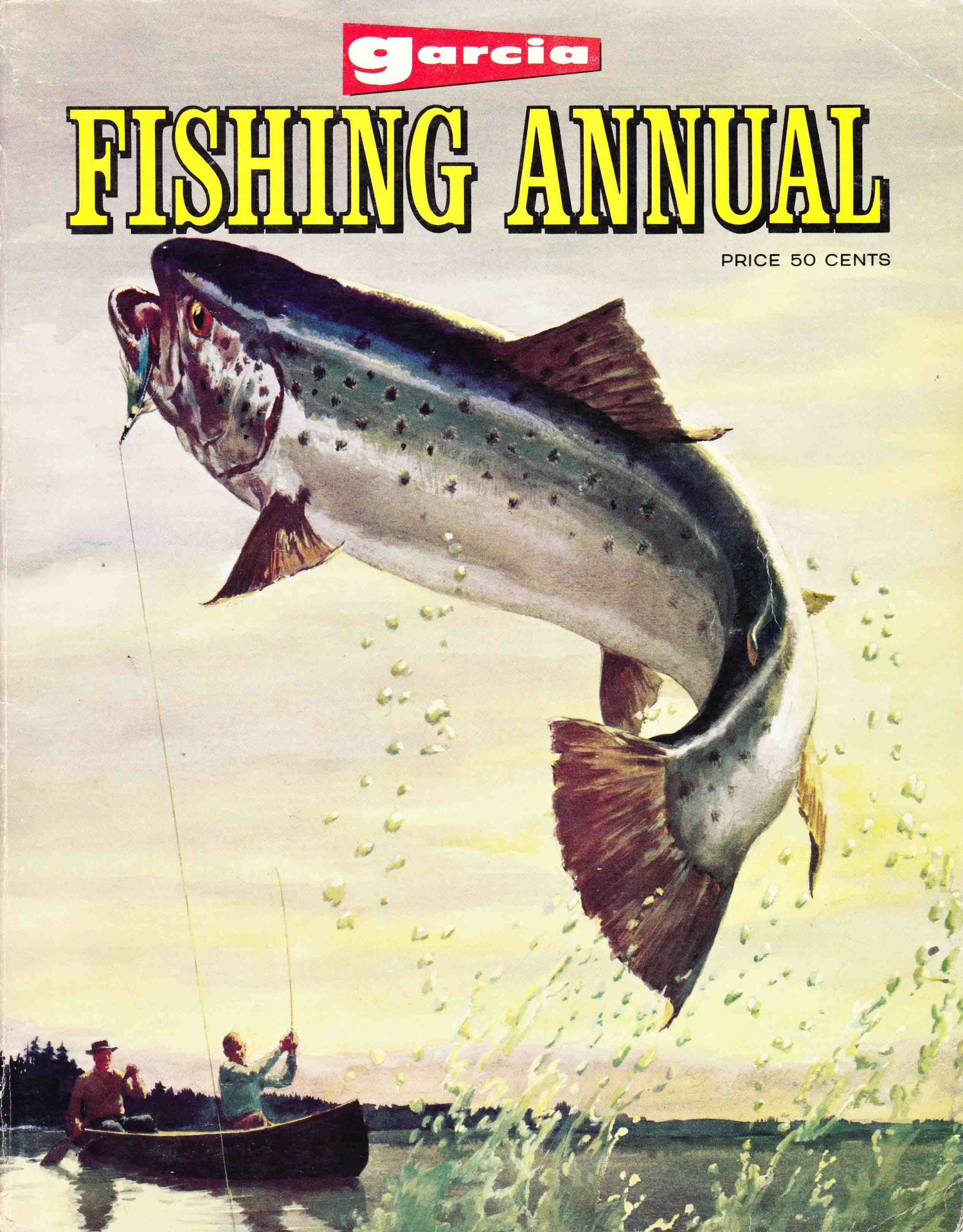
The cover of the 1966 Garcia Fishing Annual. Image Terry Battisti.
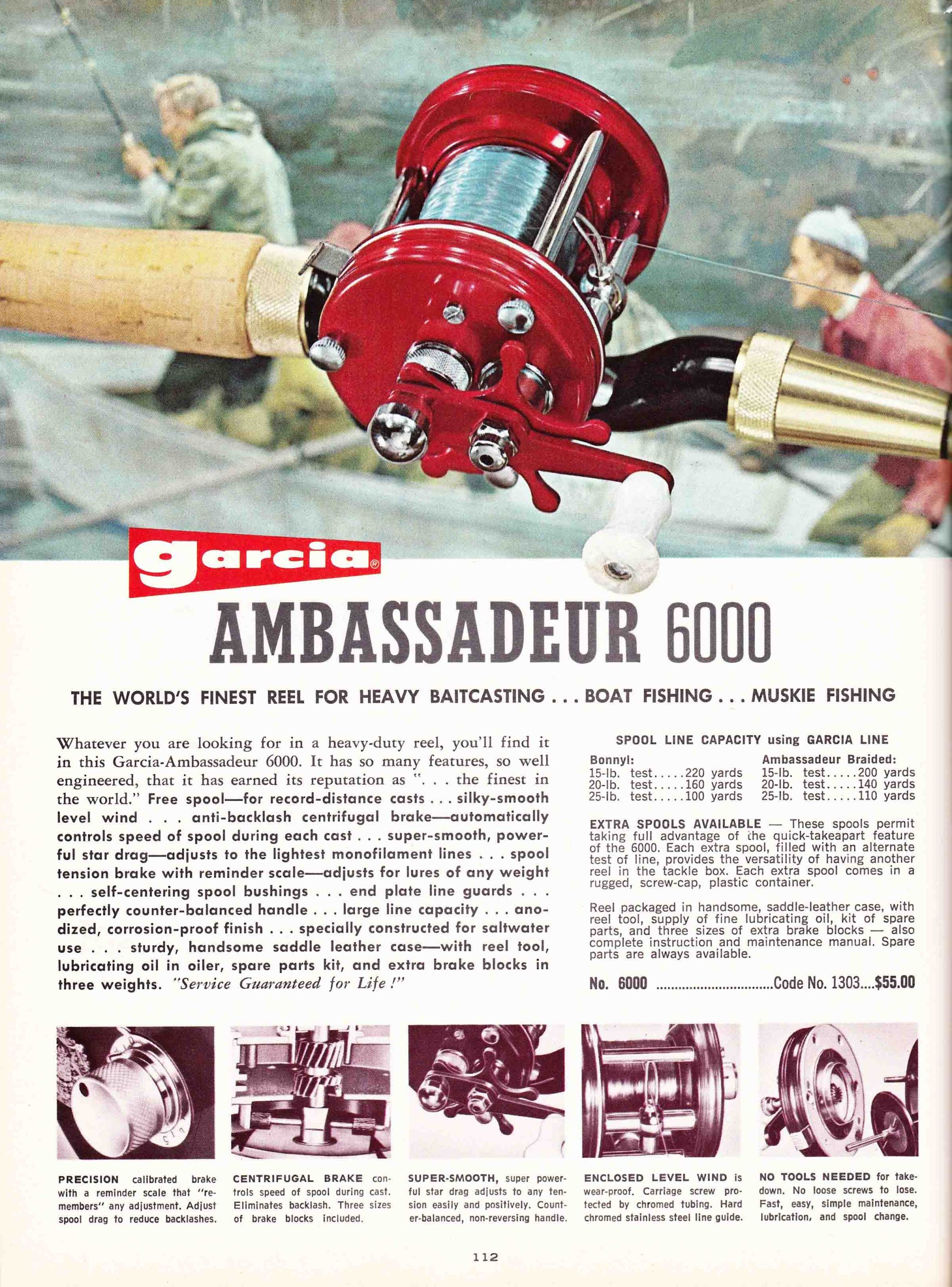
The Garcia Ambassadeur 6000 Reel. 1966 Garcia Fishing Annual. Image Terry Battisti.
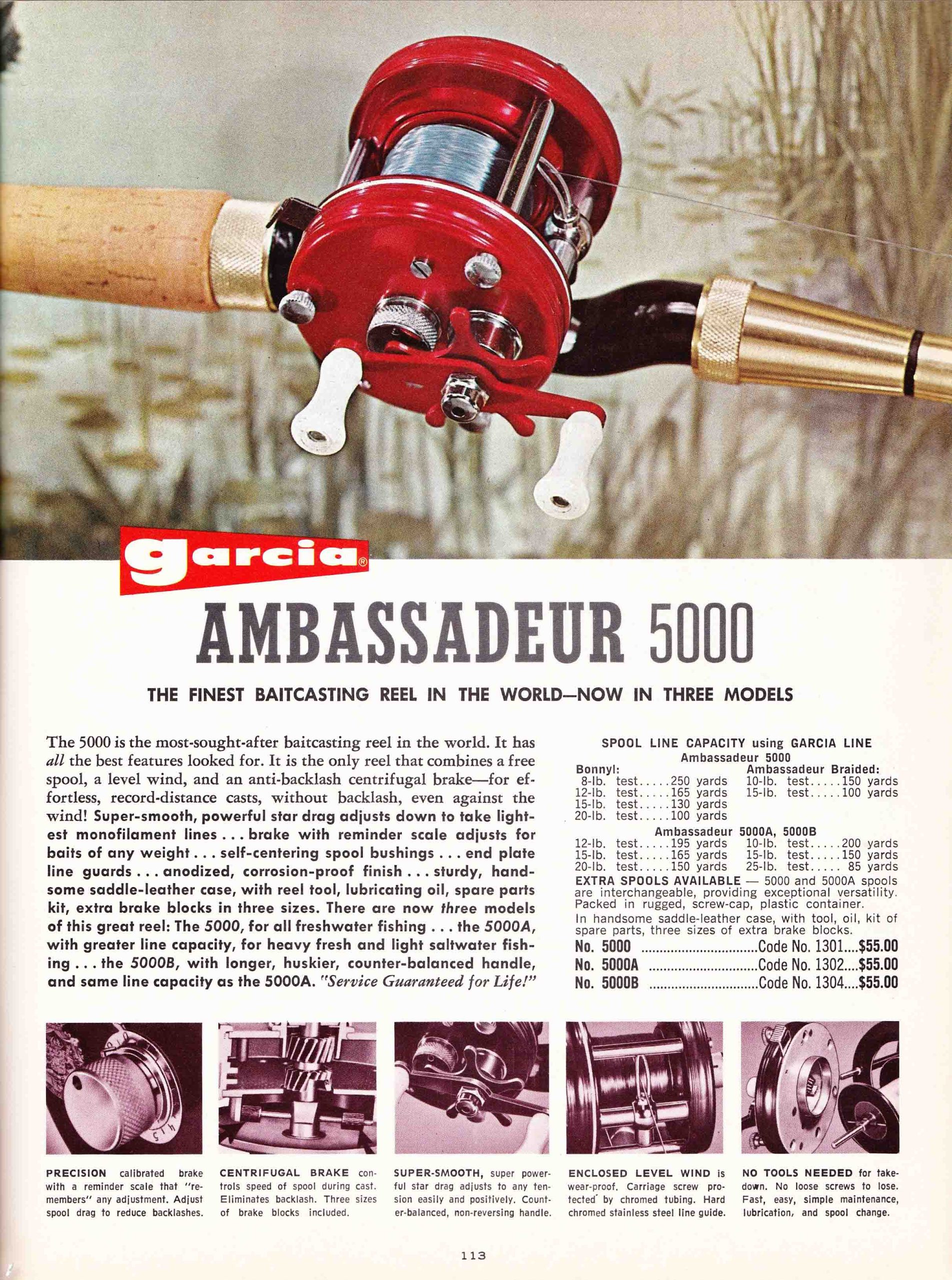
The Garcia Ambassadeur 5000 Reel. 1966 Garcia Fishing Annual. Image Terry Battisti.
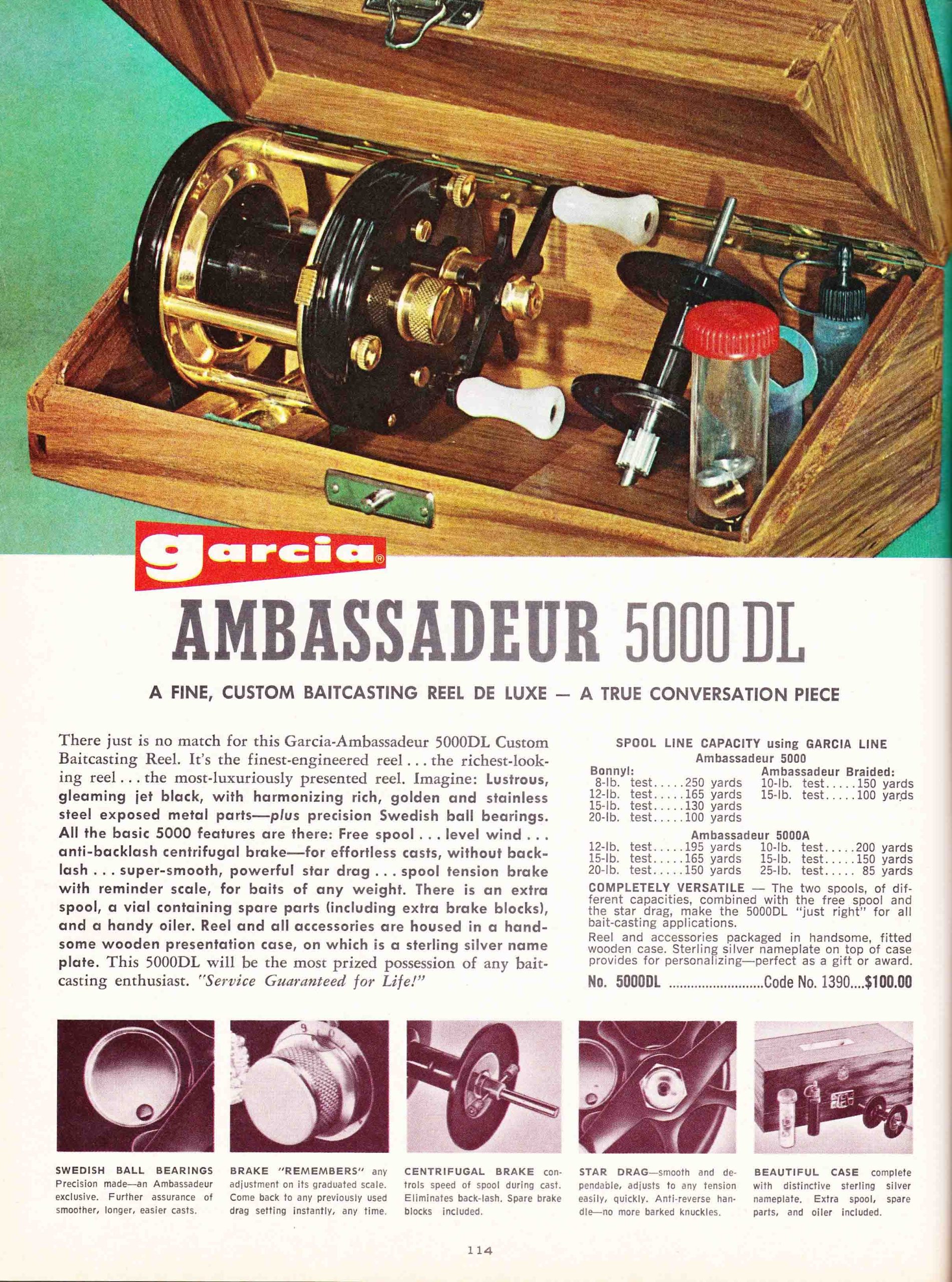
The Garcia Ambassadeur 5000 DL Presentation Reel. 1966 Garcia Fishing Annual. Image Terry Battisti.
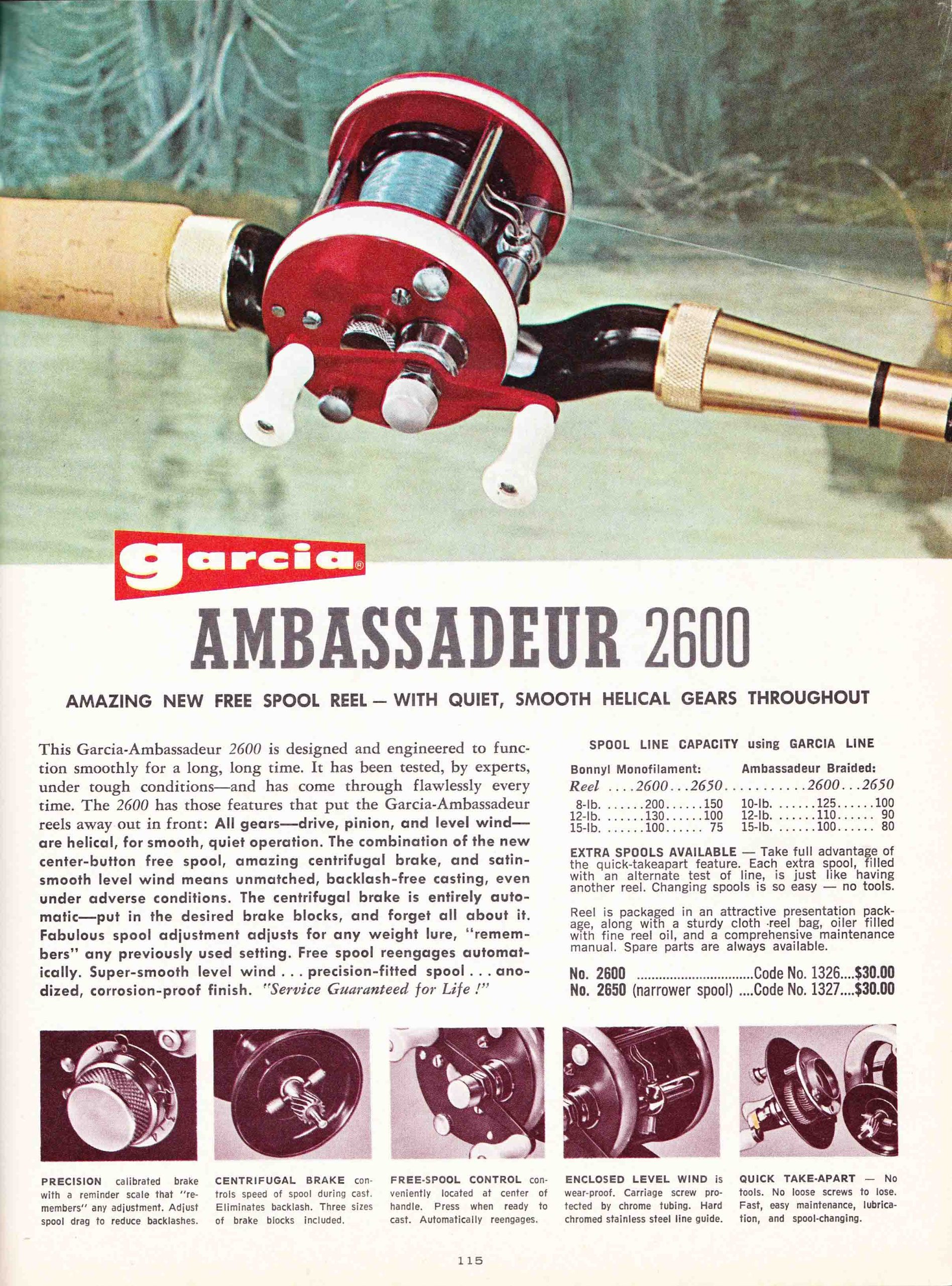
The Garcia Ambassadeur 2600 Reel. 1966 Garcia Fishing Annual. Image Terry Battisti.
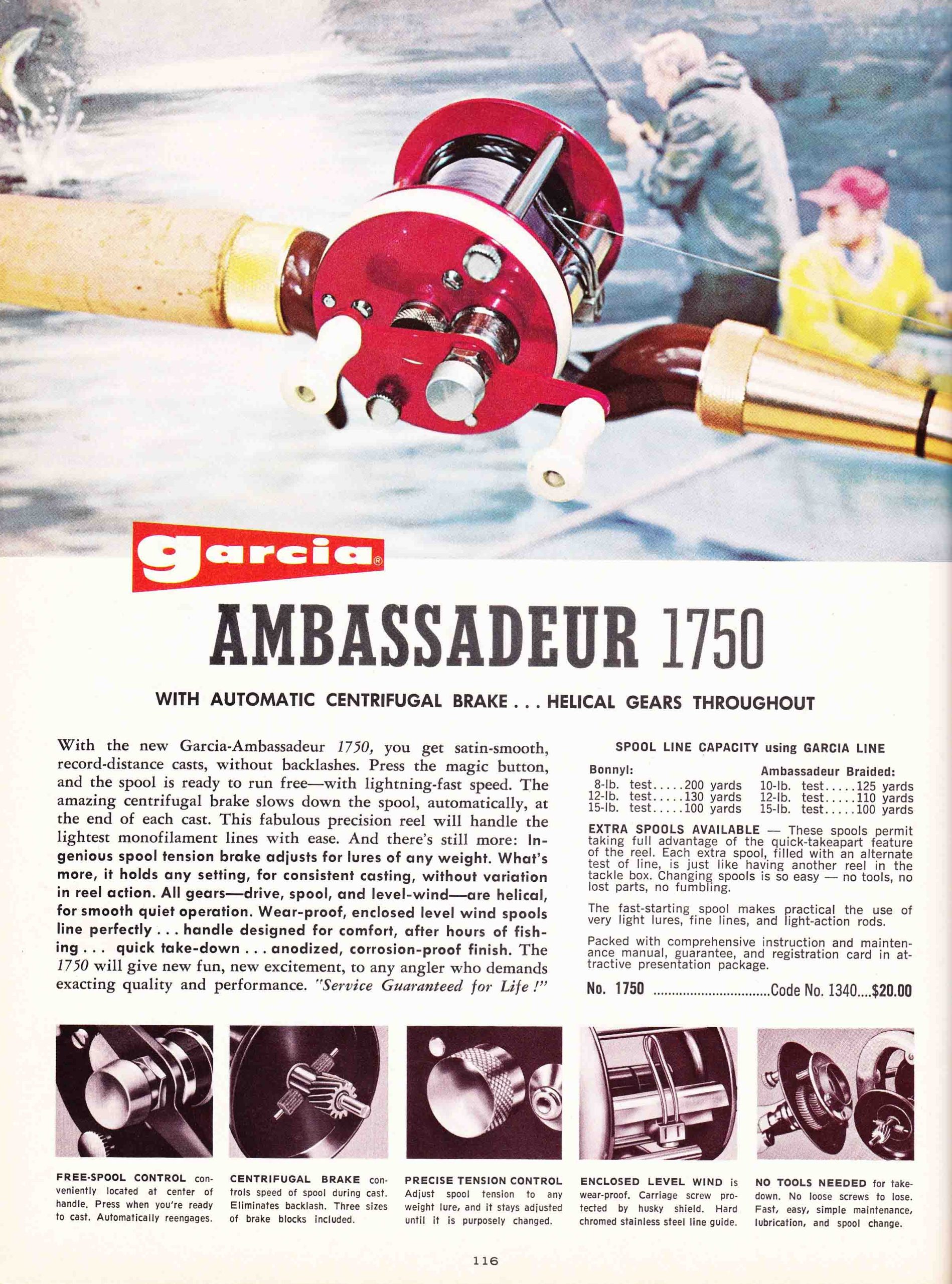
The Garcia Ambassadeur 1750 Reel. 1966 Garcia Fishing Annual. Image Terry Battisti.
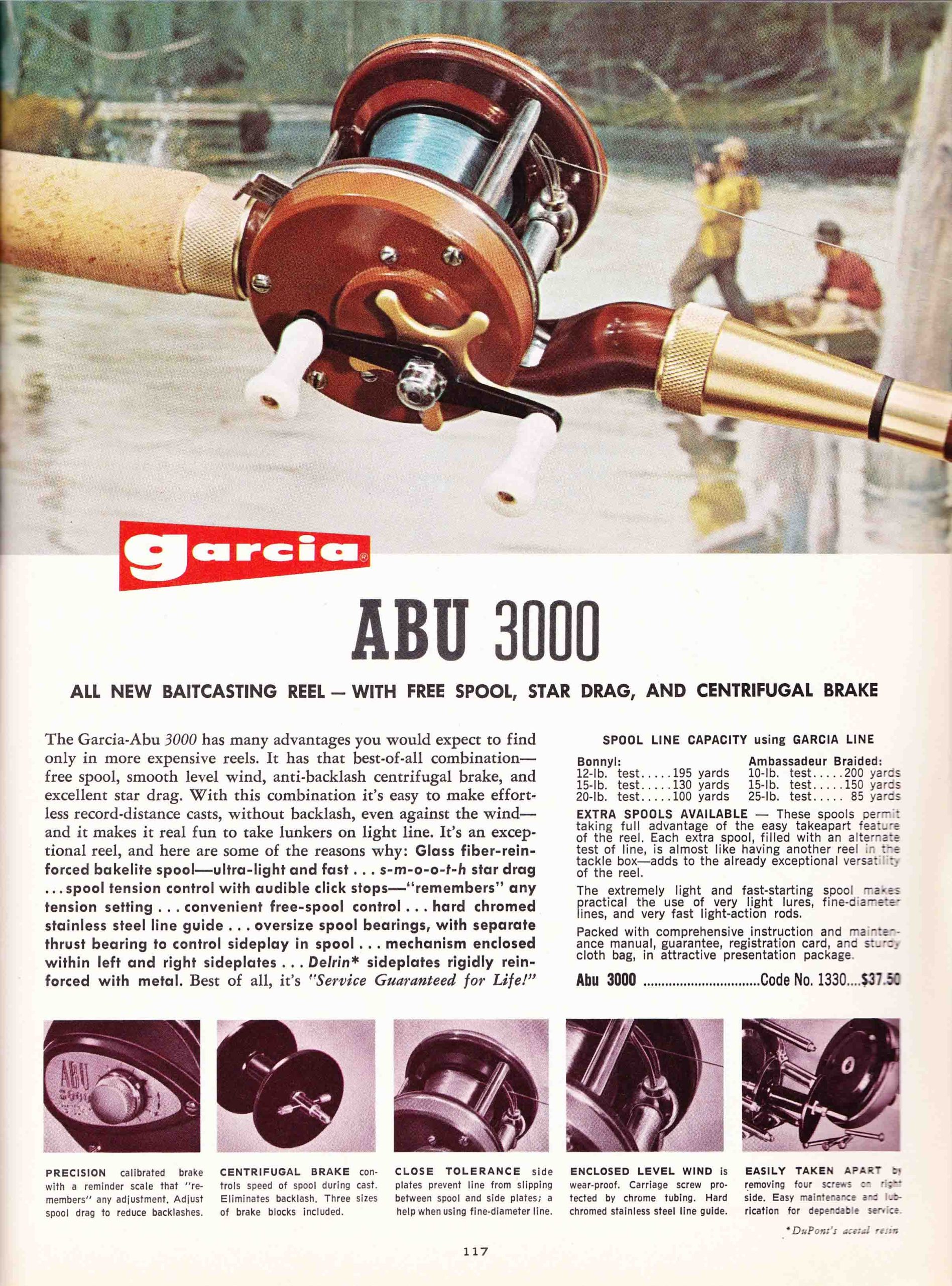
The Garcia Ambassadeur 3000 Reel. 1966 Garcia Fishing Annual. Image Terry Battisti.
1967
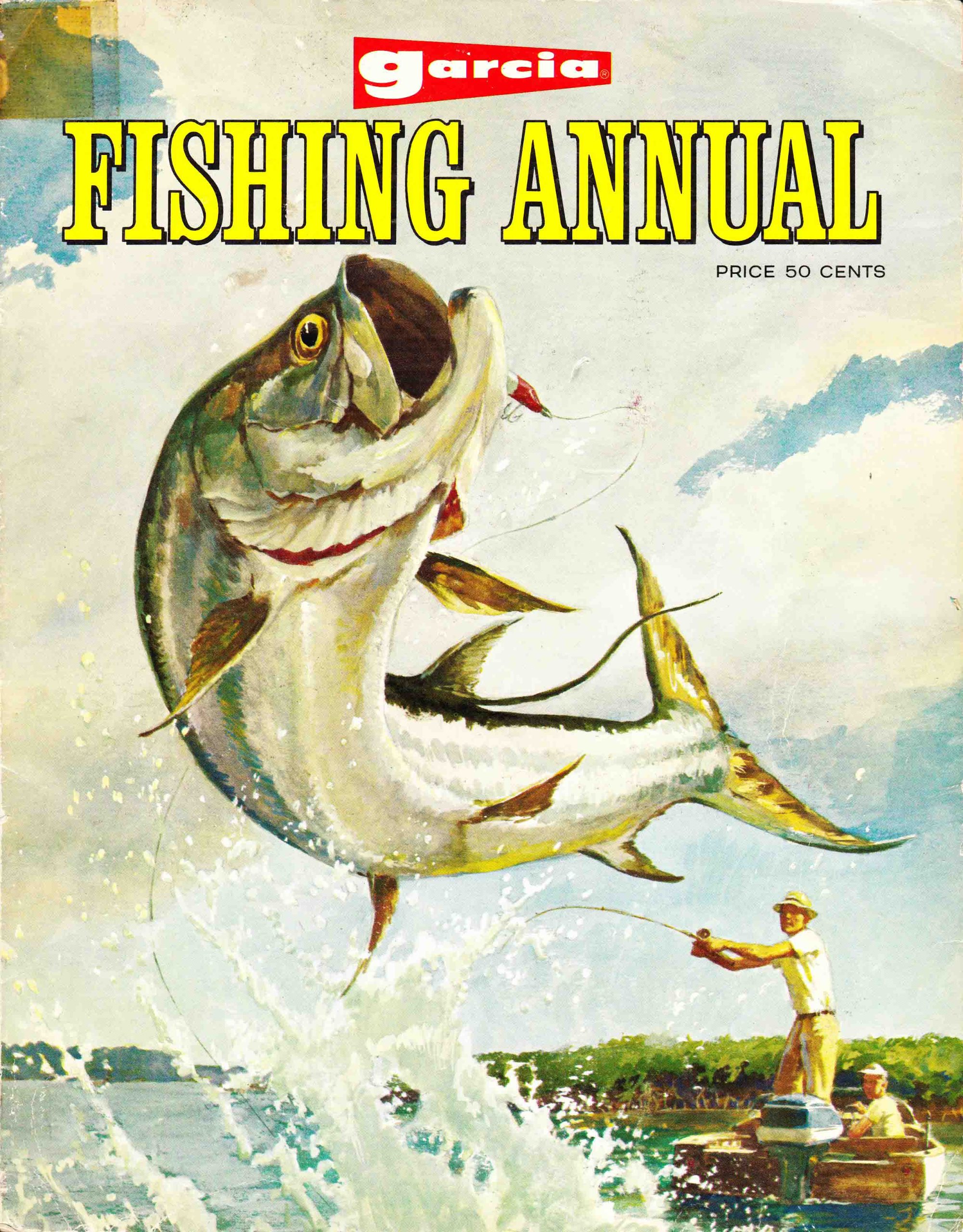
The cover of the 1967 Garcia Fishing Annual. Image Terry Battisti.
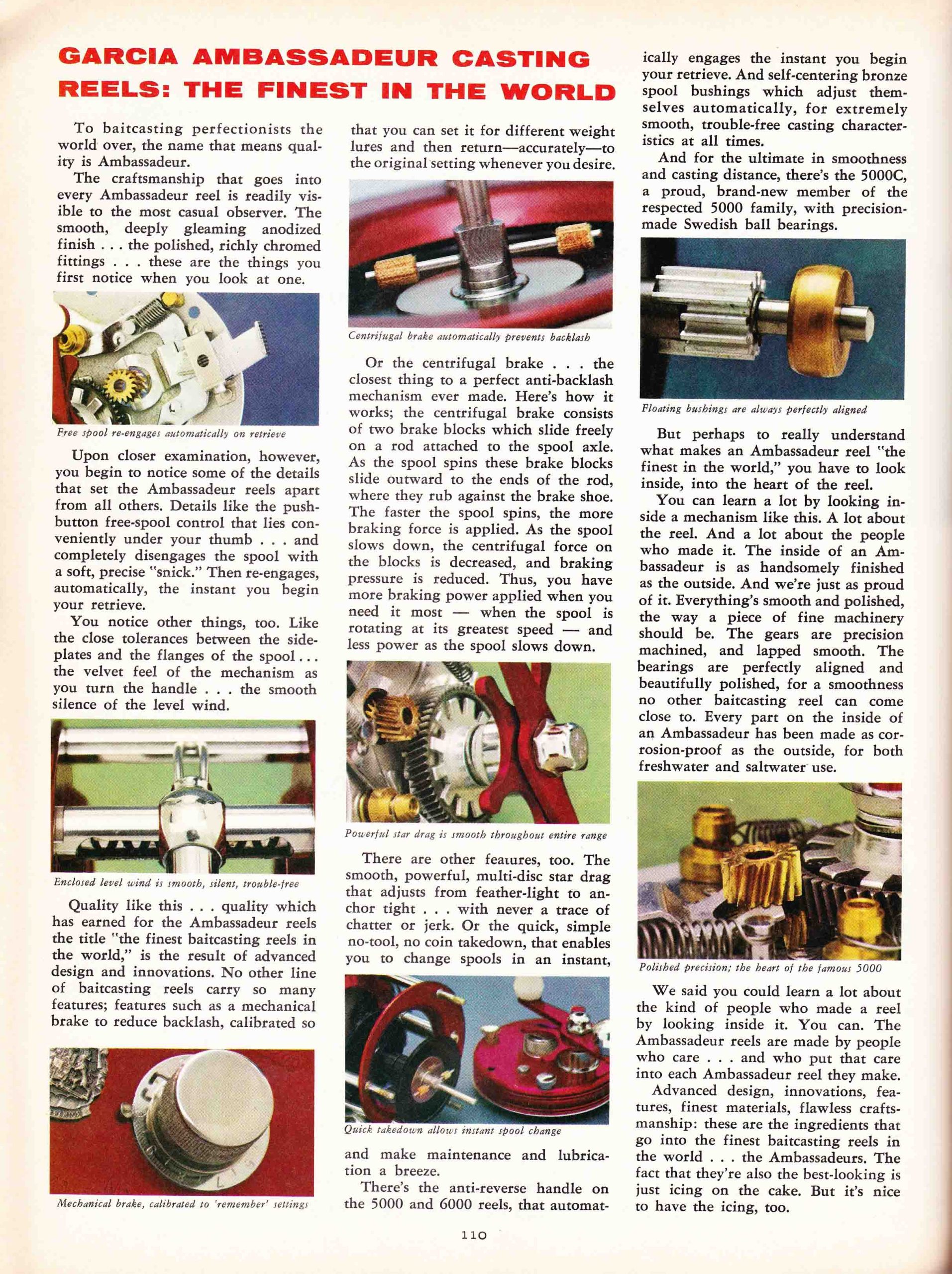
The engineering and mechanics behind Ambassadeur Reels. 1967 Garcia Fishing Annual. Image Terry Battisti.
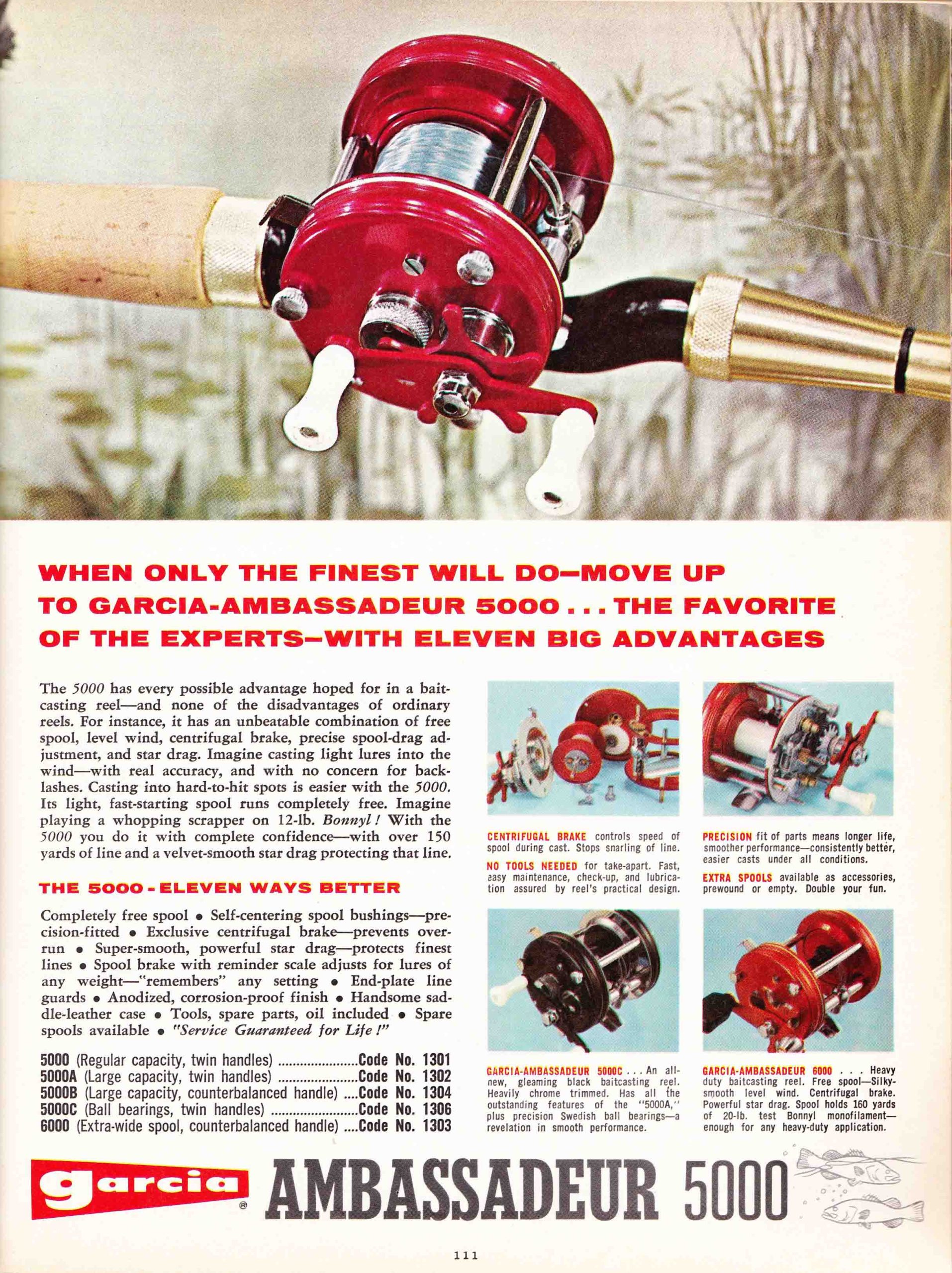
The Garcia Ambassadeur 5000 Series Reels. 1967 Garcia Fishing Annual. Image Terry Battisti.
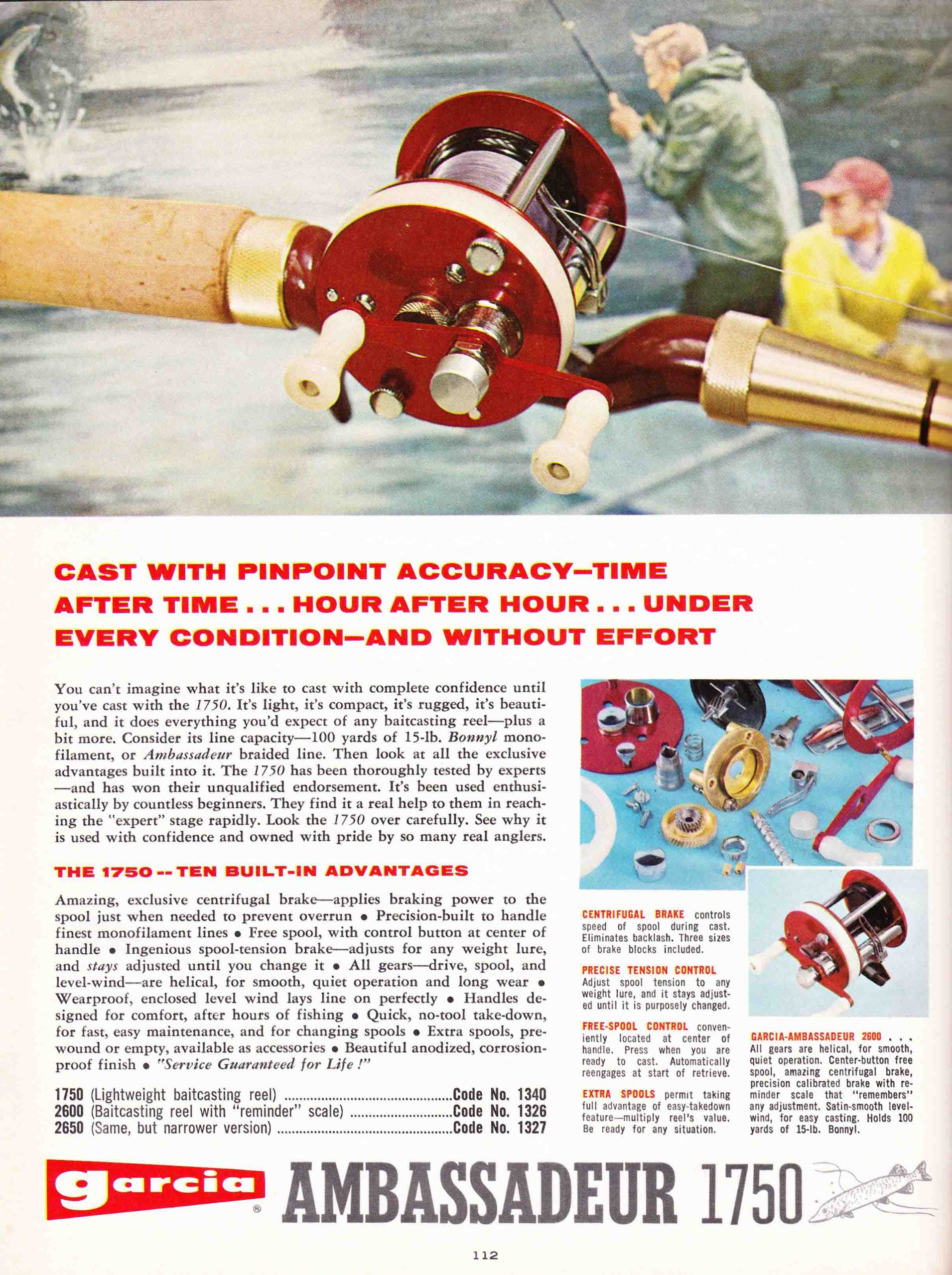
The Garcia Ambassadeur 1750 Reel. 1967 Garcia Fishing Annual. Image Terry Battisti.
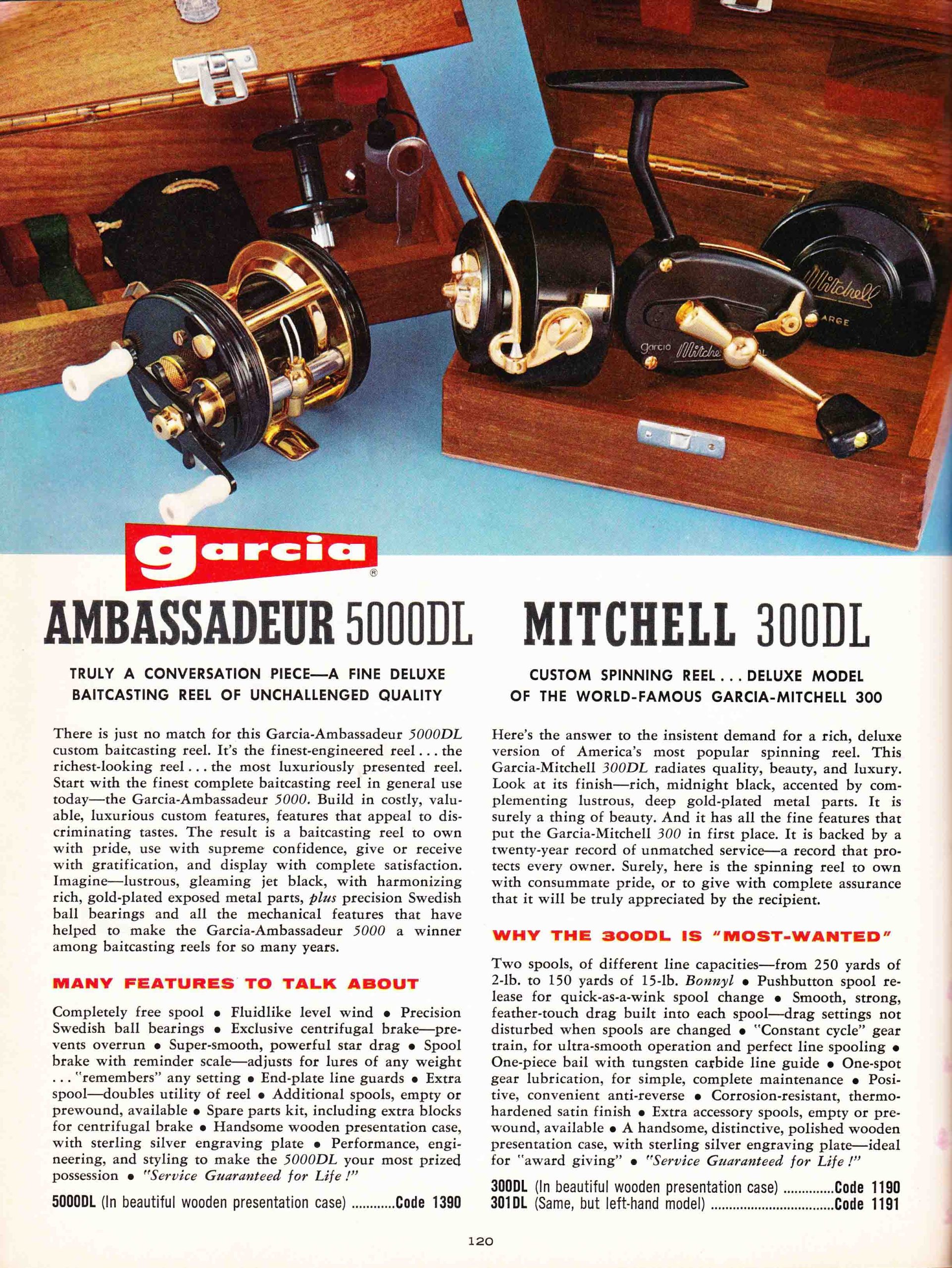
The Garcia Ambassadeur 5000DL and Mitchell 300DL Presentation Reels. 1967 Garcia Fishing Annual. Image Terry Battisti.
1968
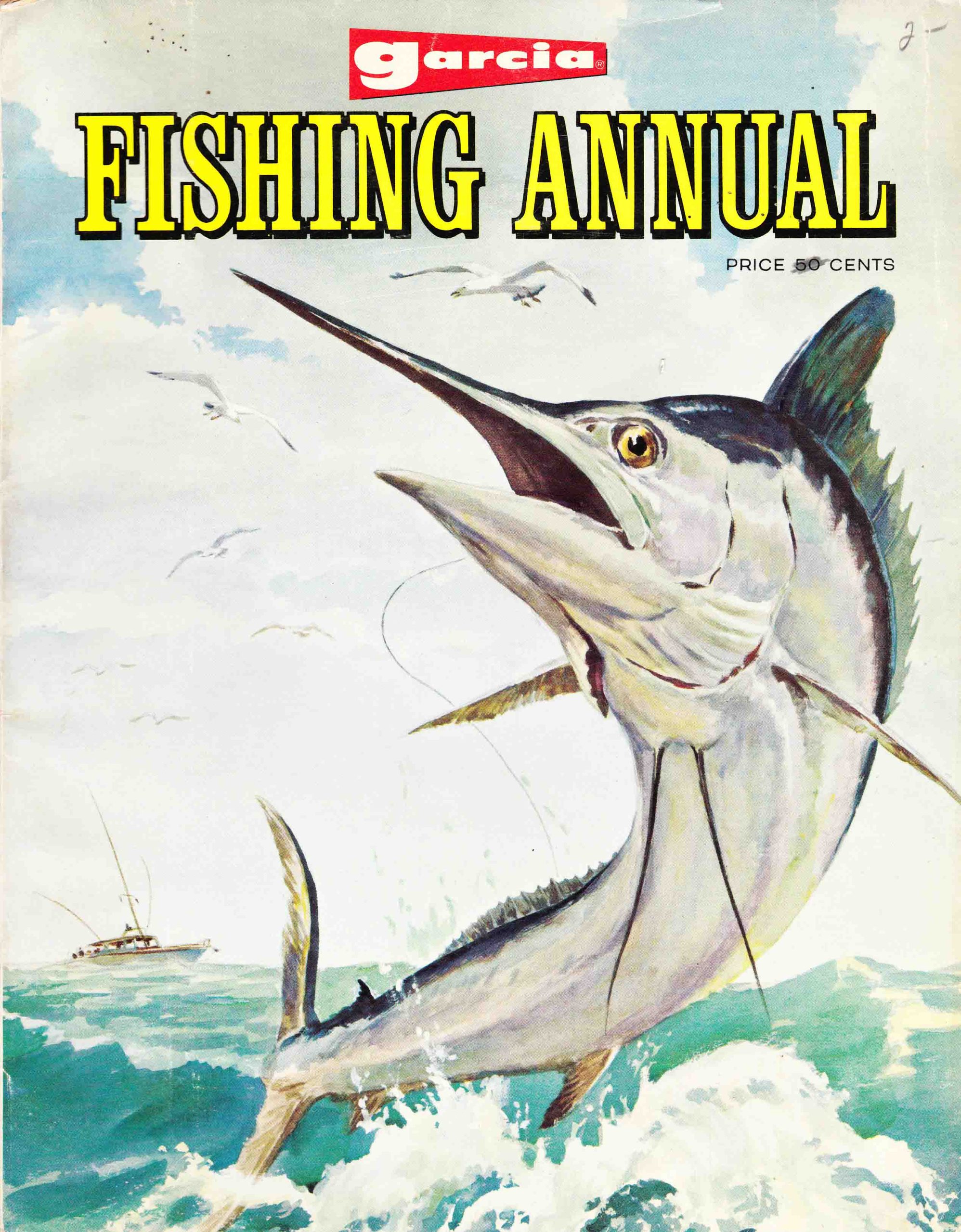
The cover of the 1968 Garcia Fishing Annual. Image Terry Battisti.
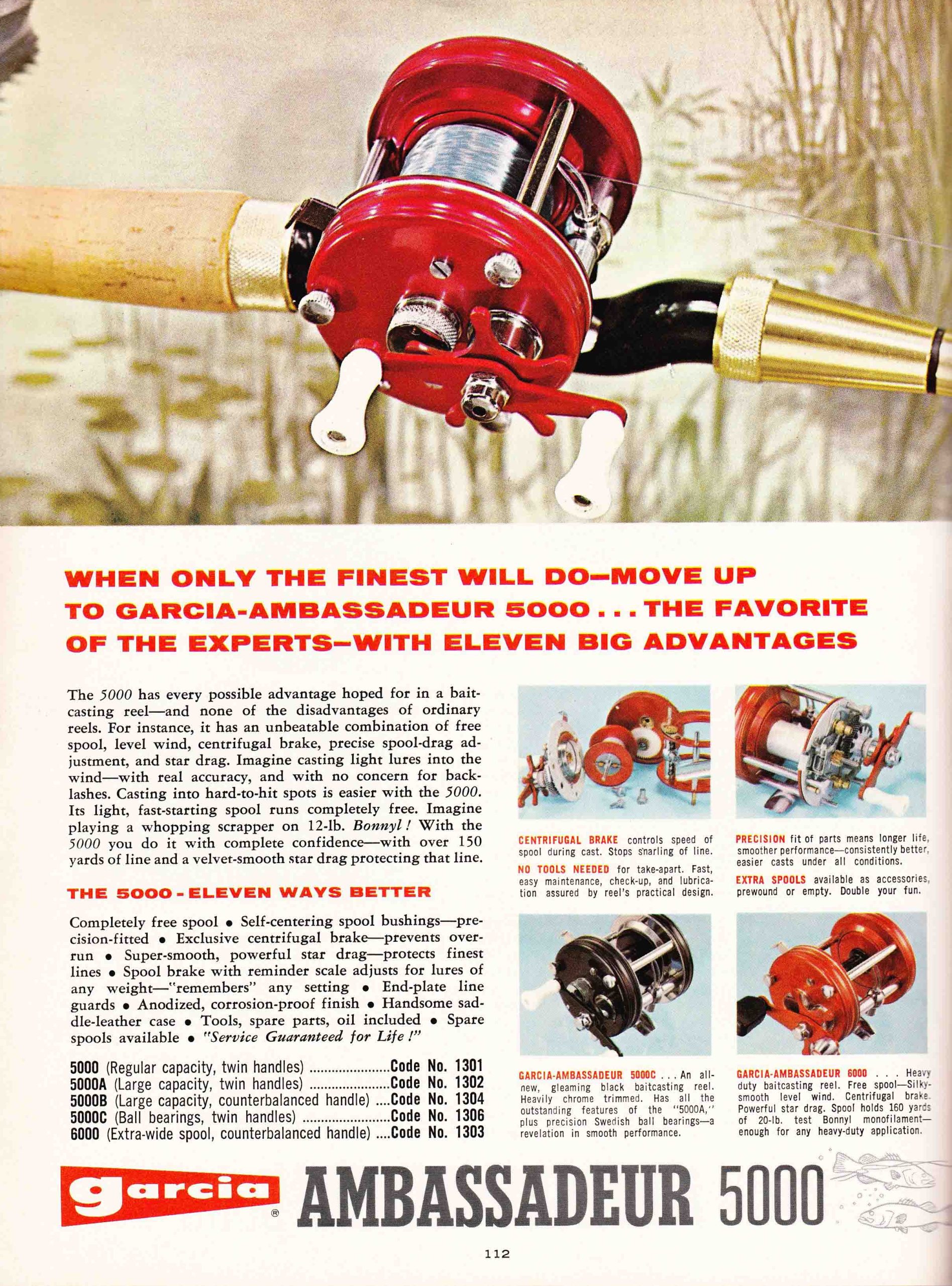
The Garcia Ambassadeur 5000 Series Reels. 1968 Garcia Fishing Annual. Image Terry Battisti.
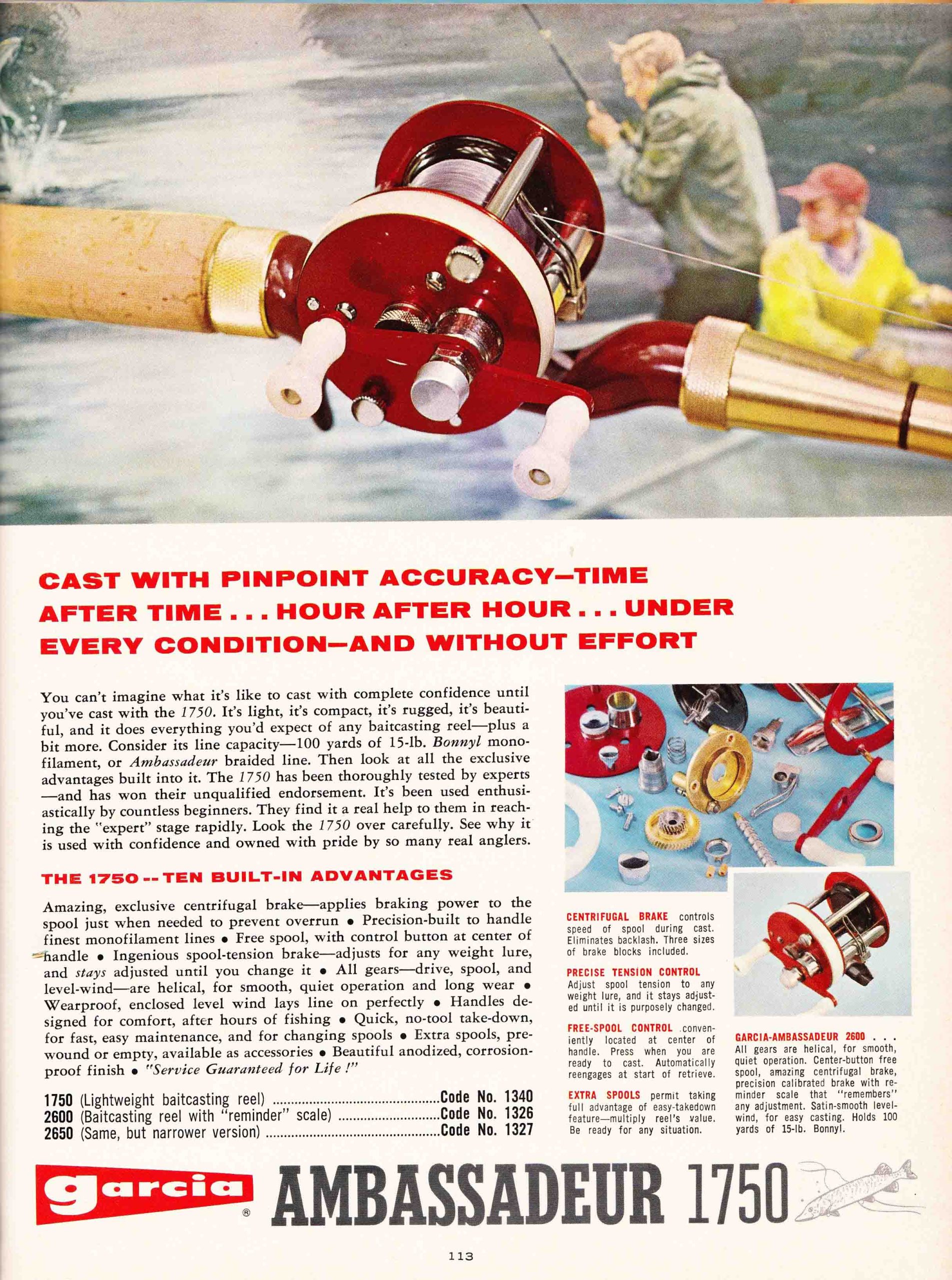
The Garcia Ambassadeur 1750 Reel. 1968 Garcia Fishing Annual. Image Terry Battisti.
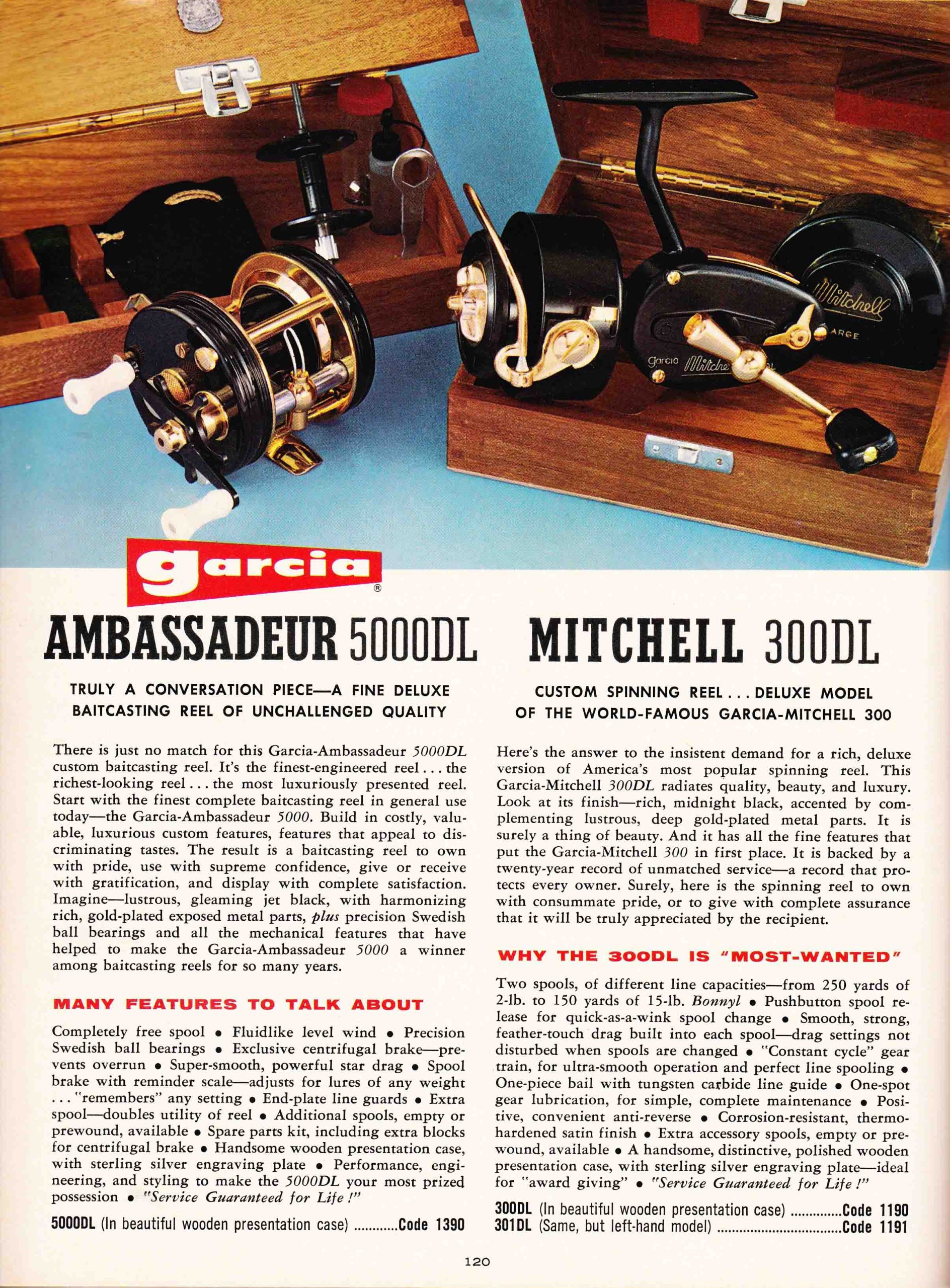
The Garcia Ambassadeur 5000DL and Mitchell 300DL Presentation Reels. 1968 Garcia Fishing Annual. Image Terry Battisti.
1969
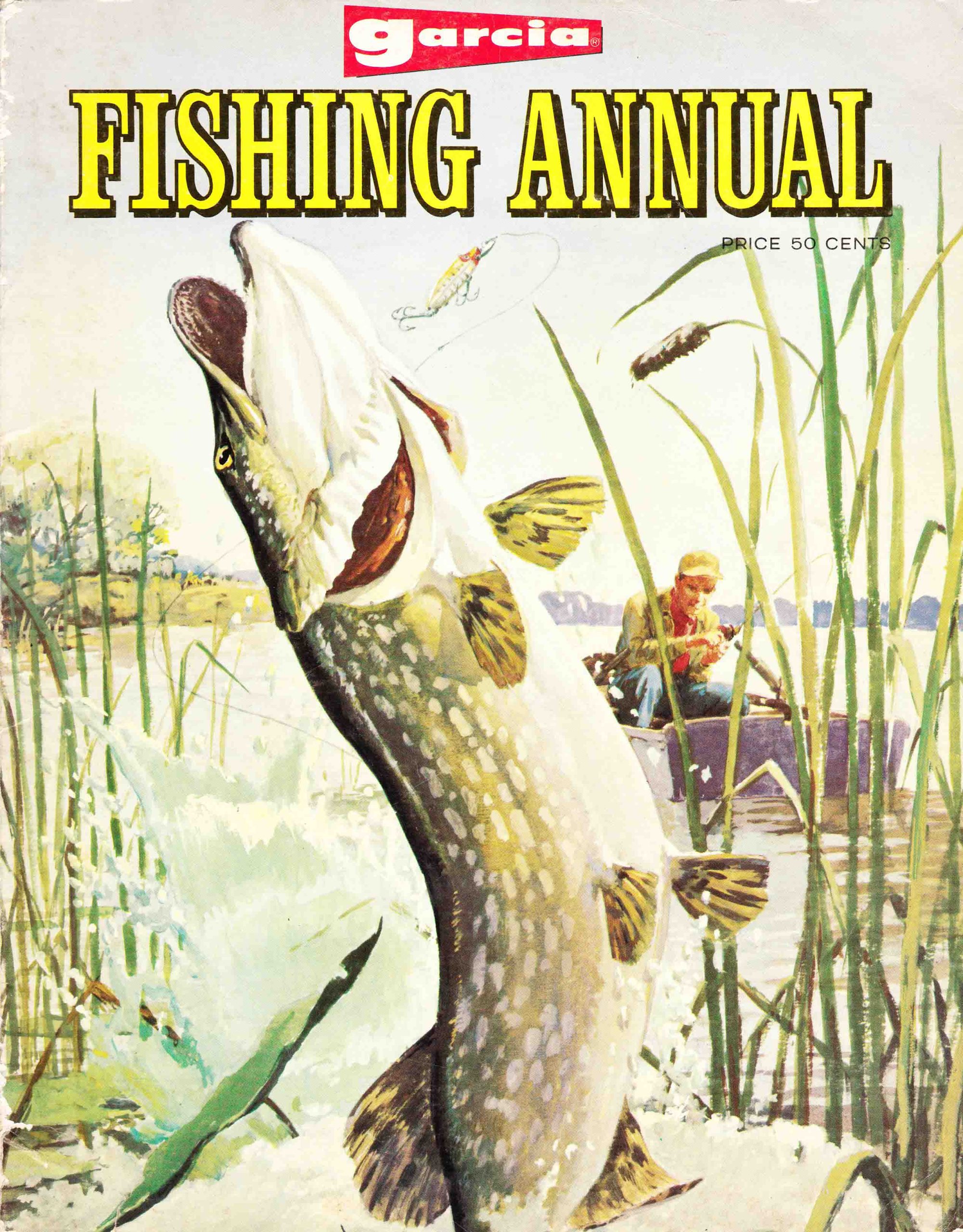
The cover of the 1969 Garcia Fishing Annual. Image Terry Battisti.
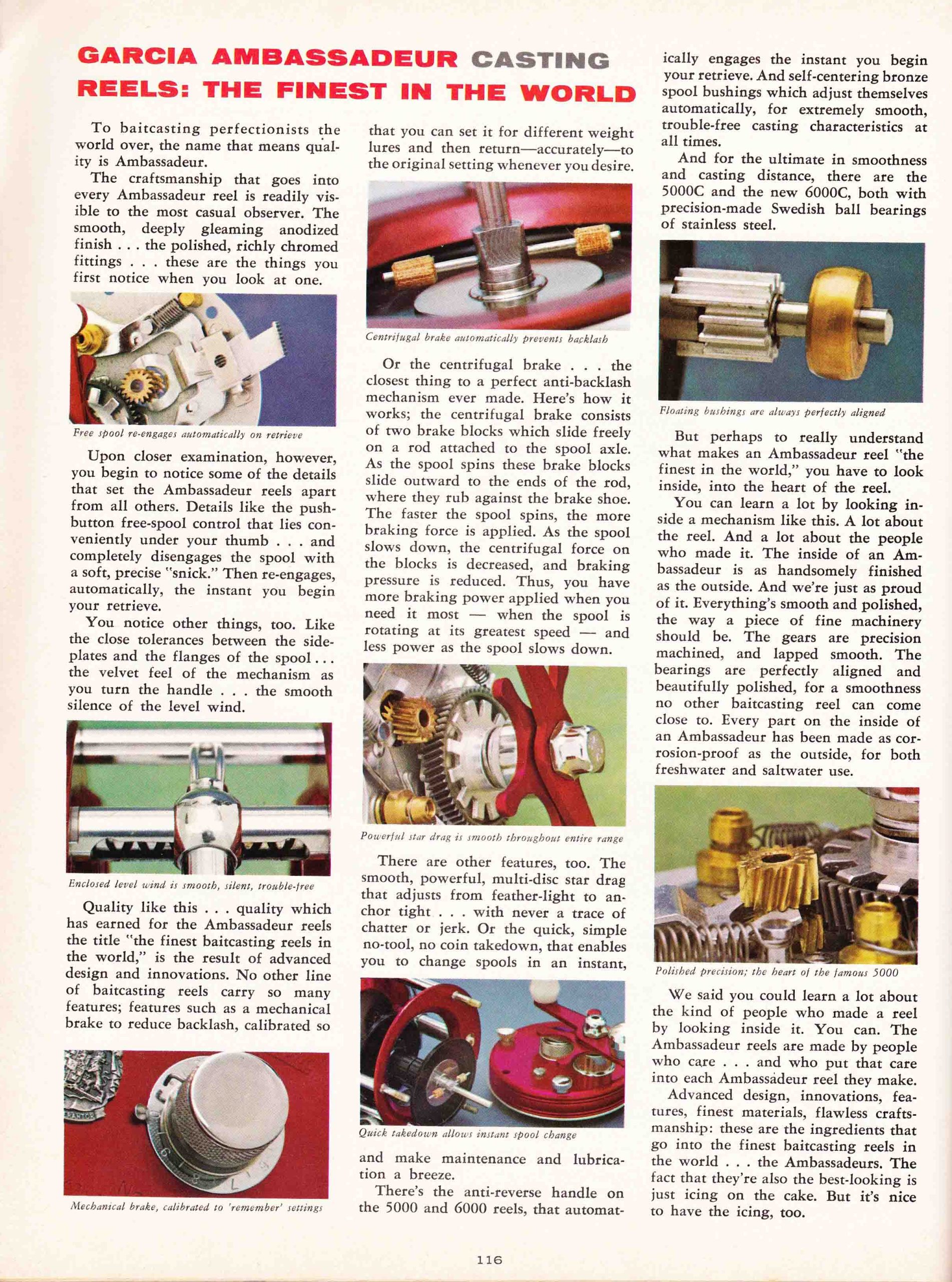
The engineering and mechanics of the Ambassadeur Reels. 1969 Garcia Fishing Annual. Image Terry Battisti.
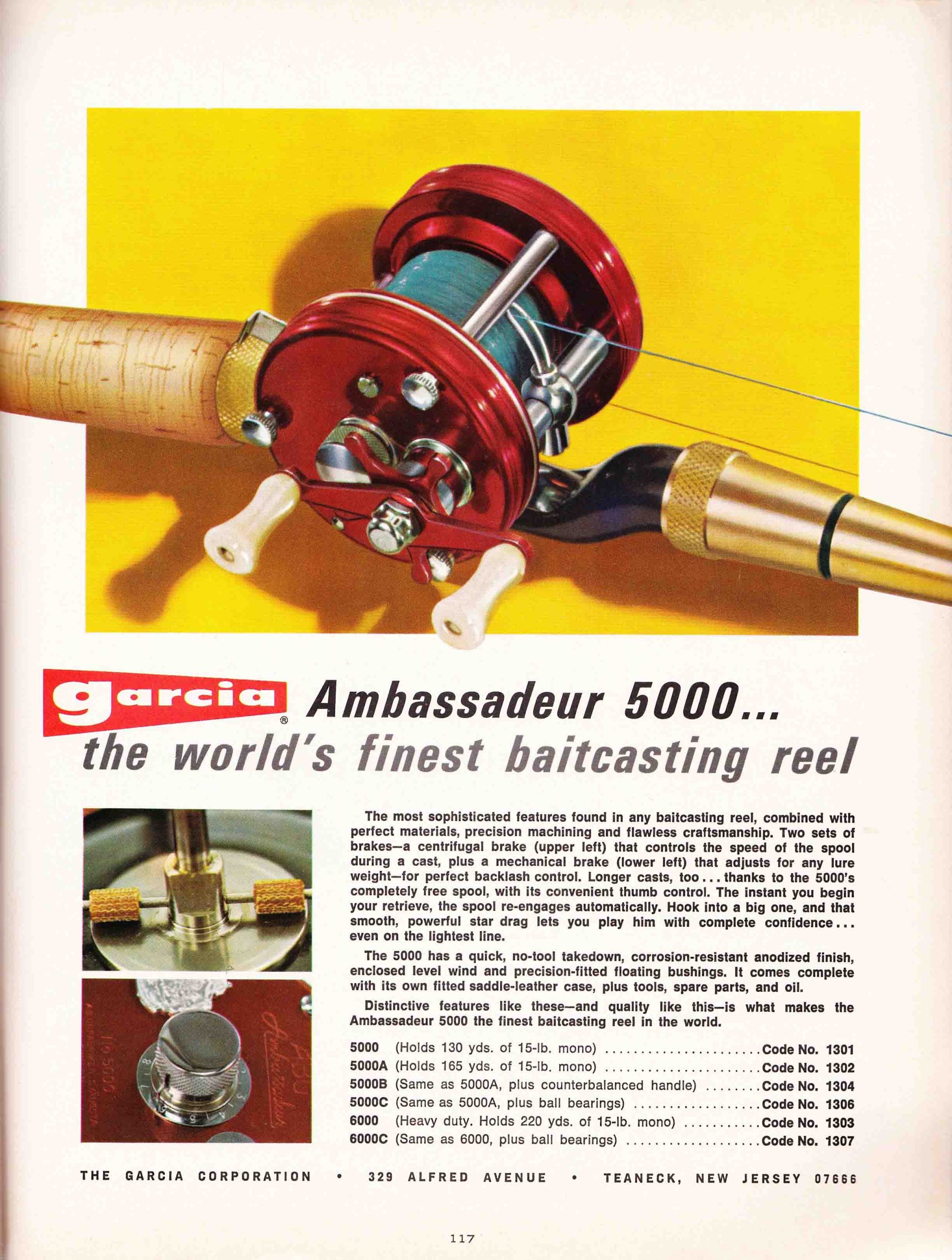
The Garcia Ambassadeur 5000 Series Reels. 1969 Garcia Fishing Annual. Image Terry Battisti.
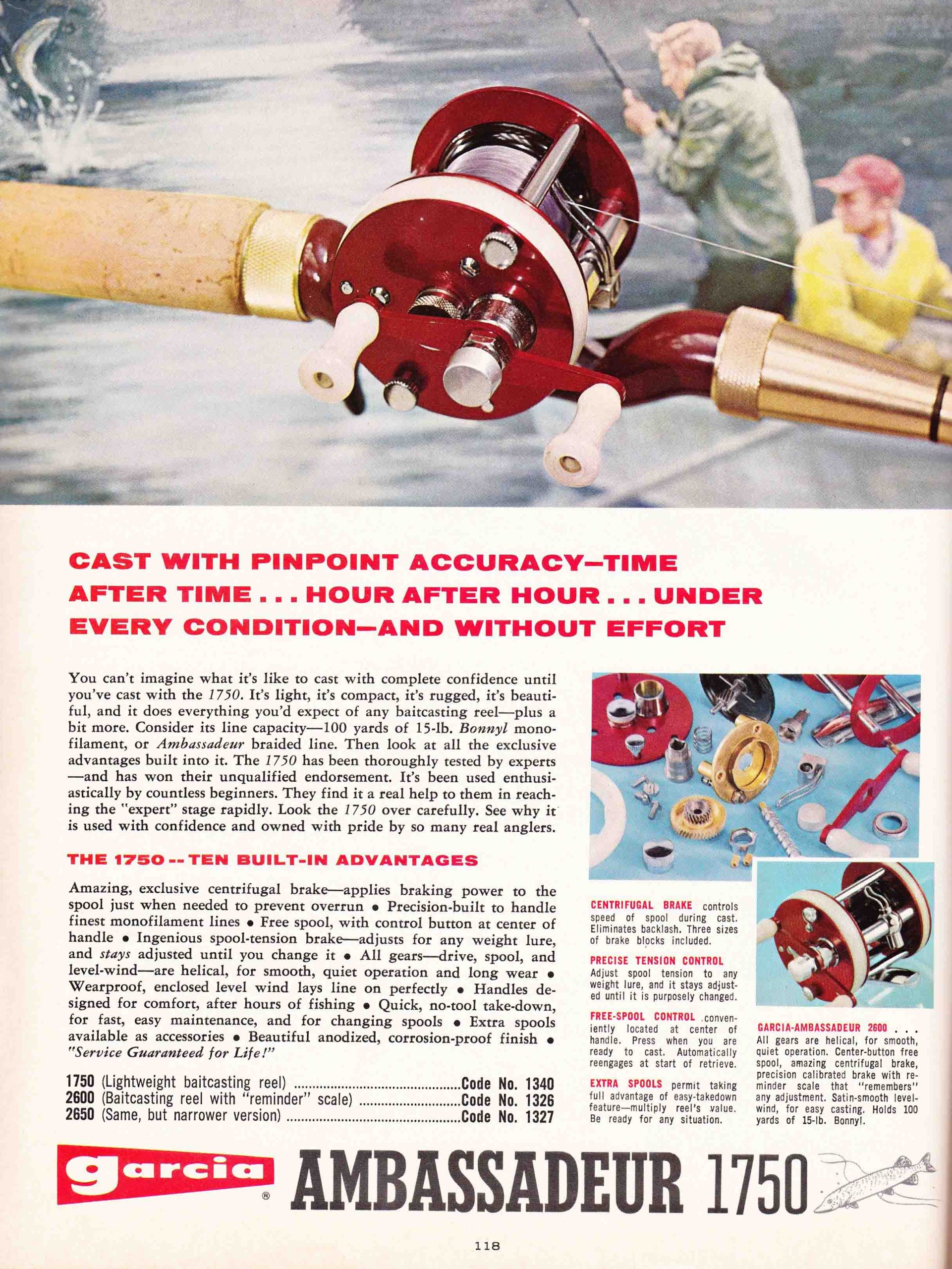
The Garcia Ambassadeur 1750 Series Reel. 1969 Garcia Fishing Annual. Image Terry Battisti.
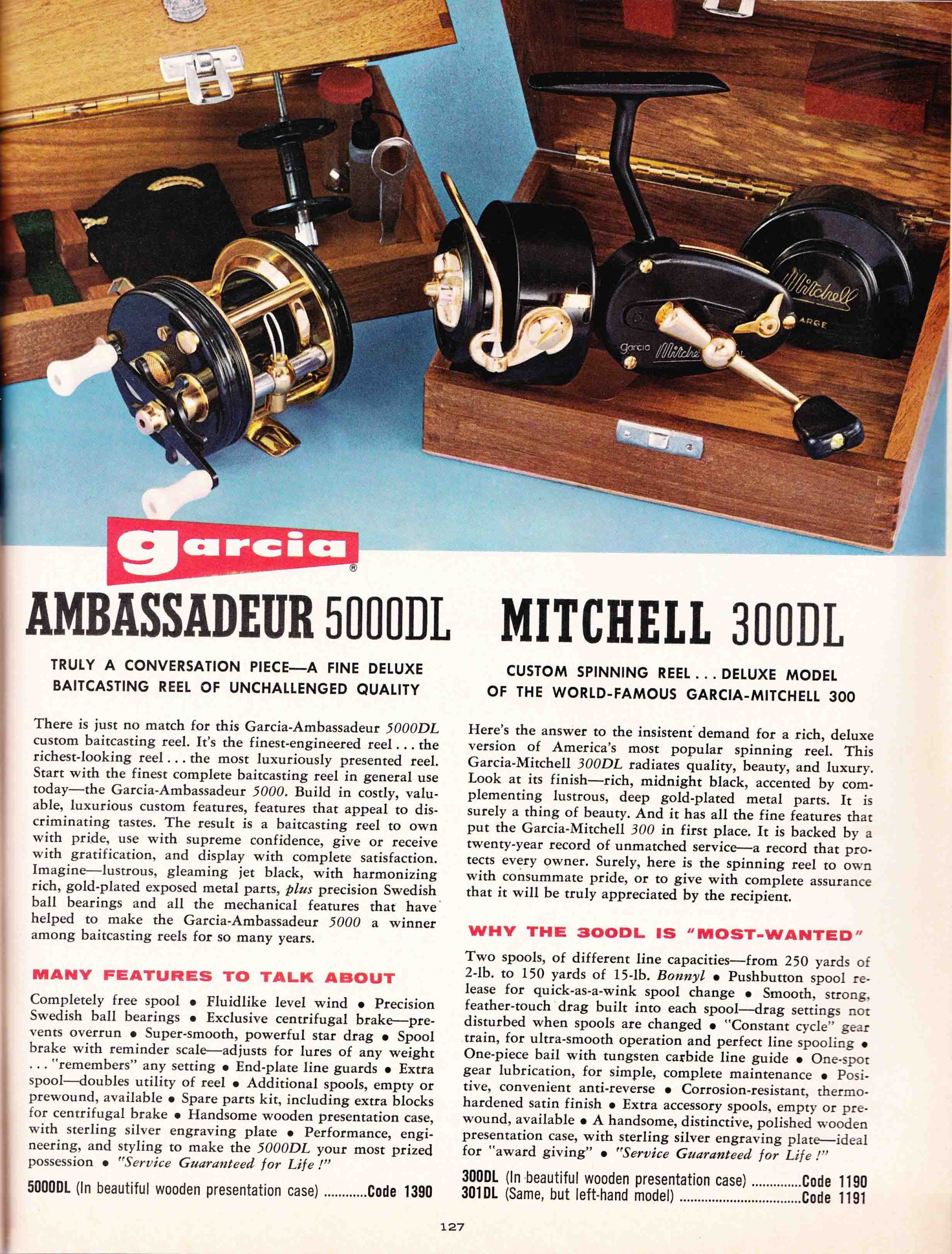
The Garcia Ambassadeur 5000DL and Mitchell 300DL Presentation Reels. 1969 Garcia Fishing Annual. Image Terry Battisti.
1970
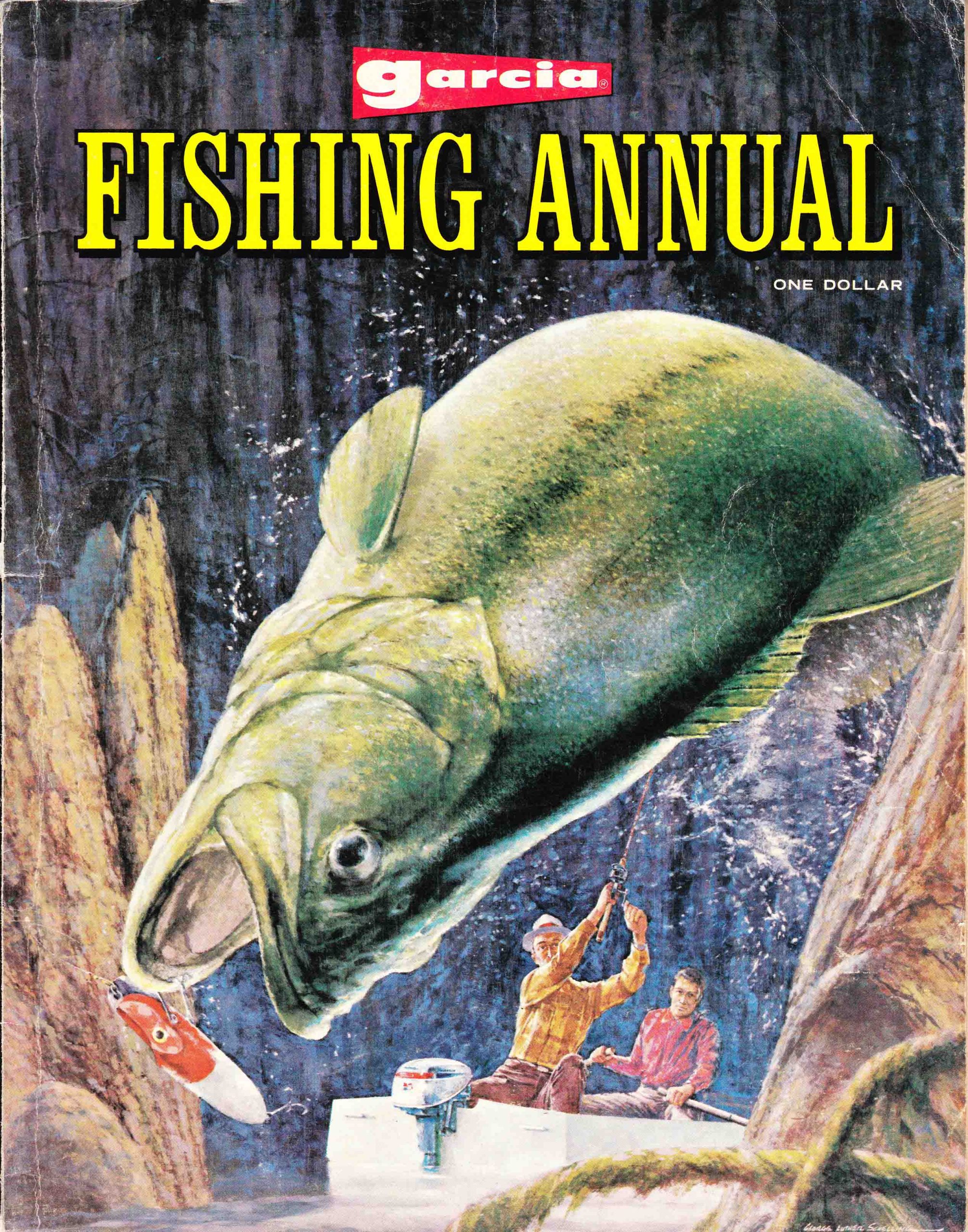
The cover of the 1970 Garcia Fishing Annual. Image Terry Battisti.
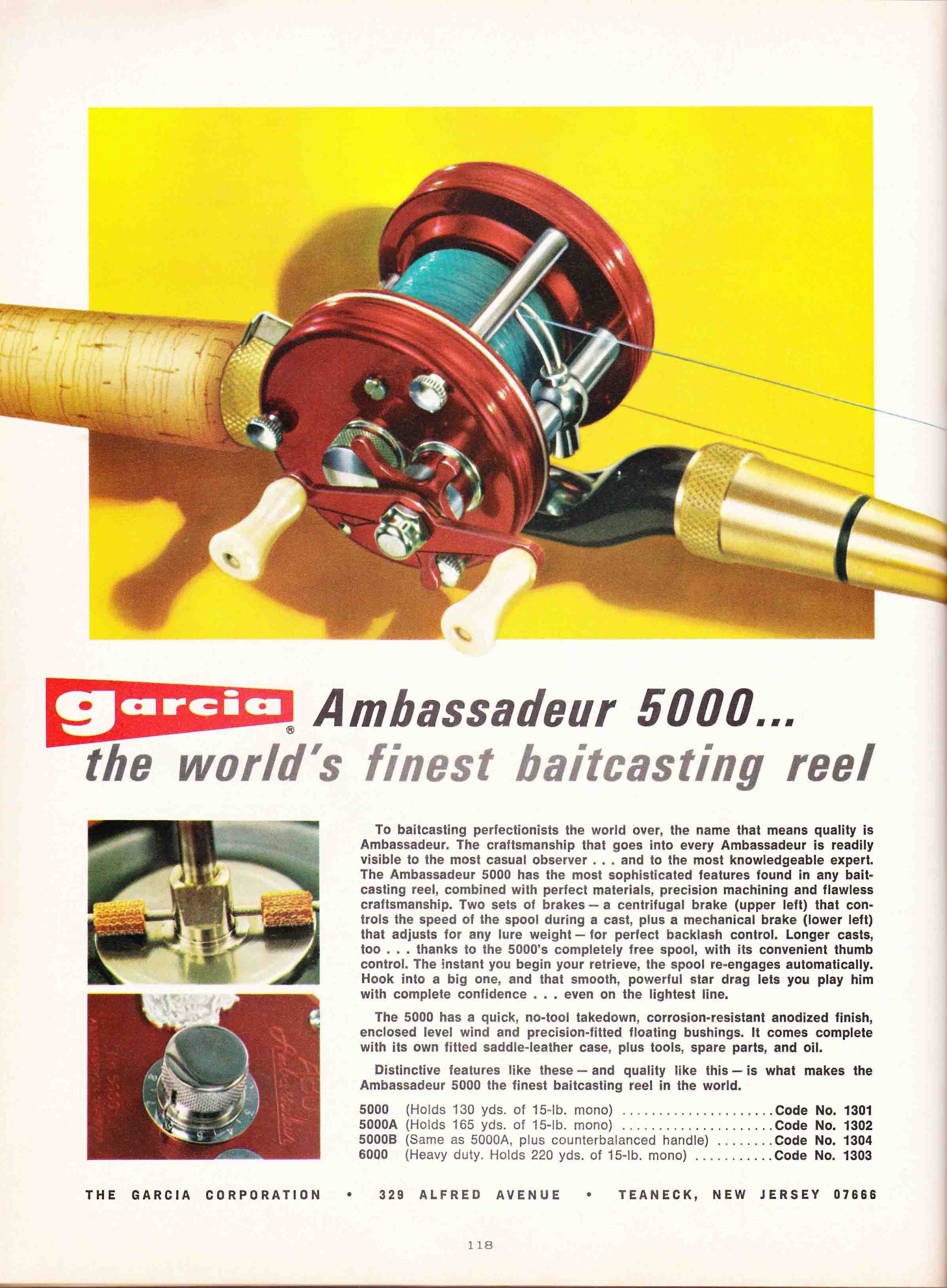
The Garcia Ambassadeur 5000 Series Reels. 1970 Garcia Fishing Annual. Image Terry Battisti.
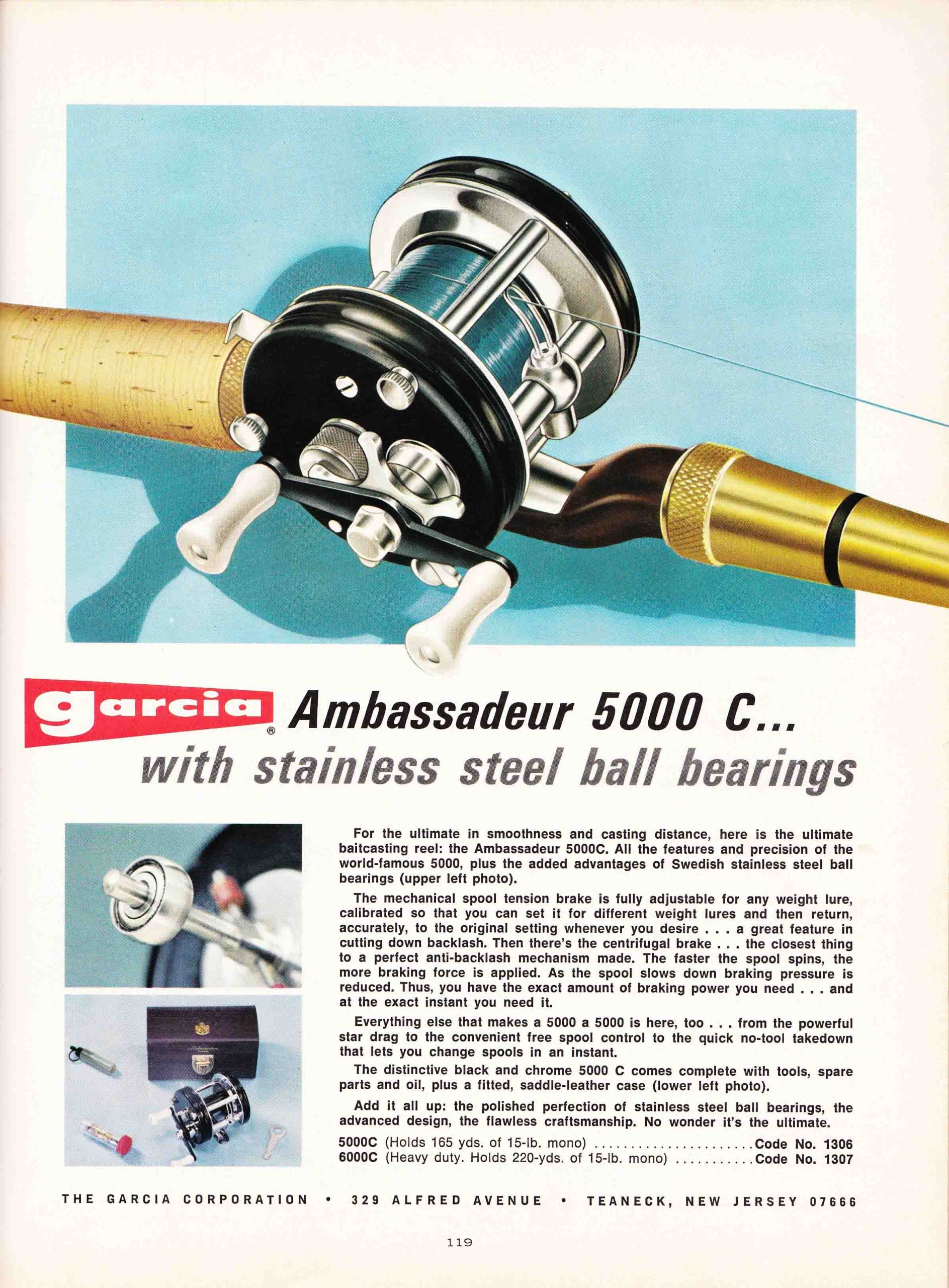
The Garcia Ambassadeur 5000C and 6000C Stainless Steel Ball Bearing Reels. 1970 Garcia Fishing Annual. Image Terry Battisti.
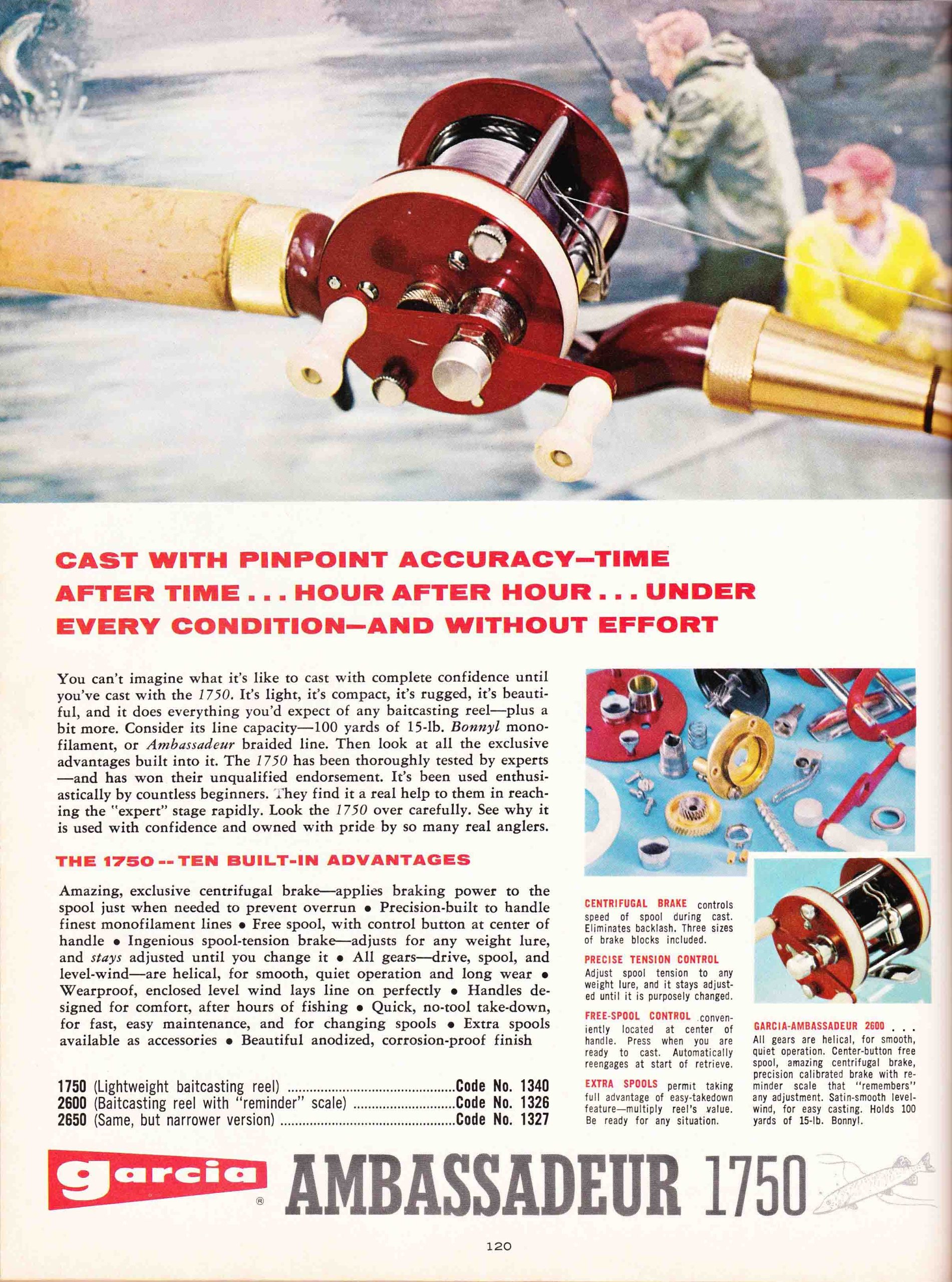
The Garcia Ambassadeur 1750 Reel. 1970 Garcia Fishing Annual. Image Terry Battisti.
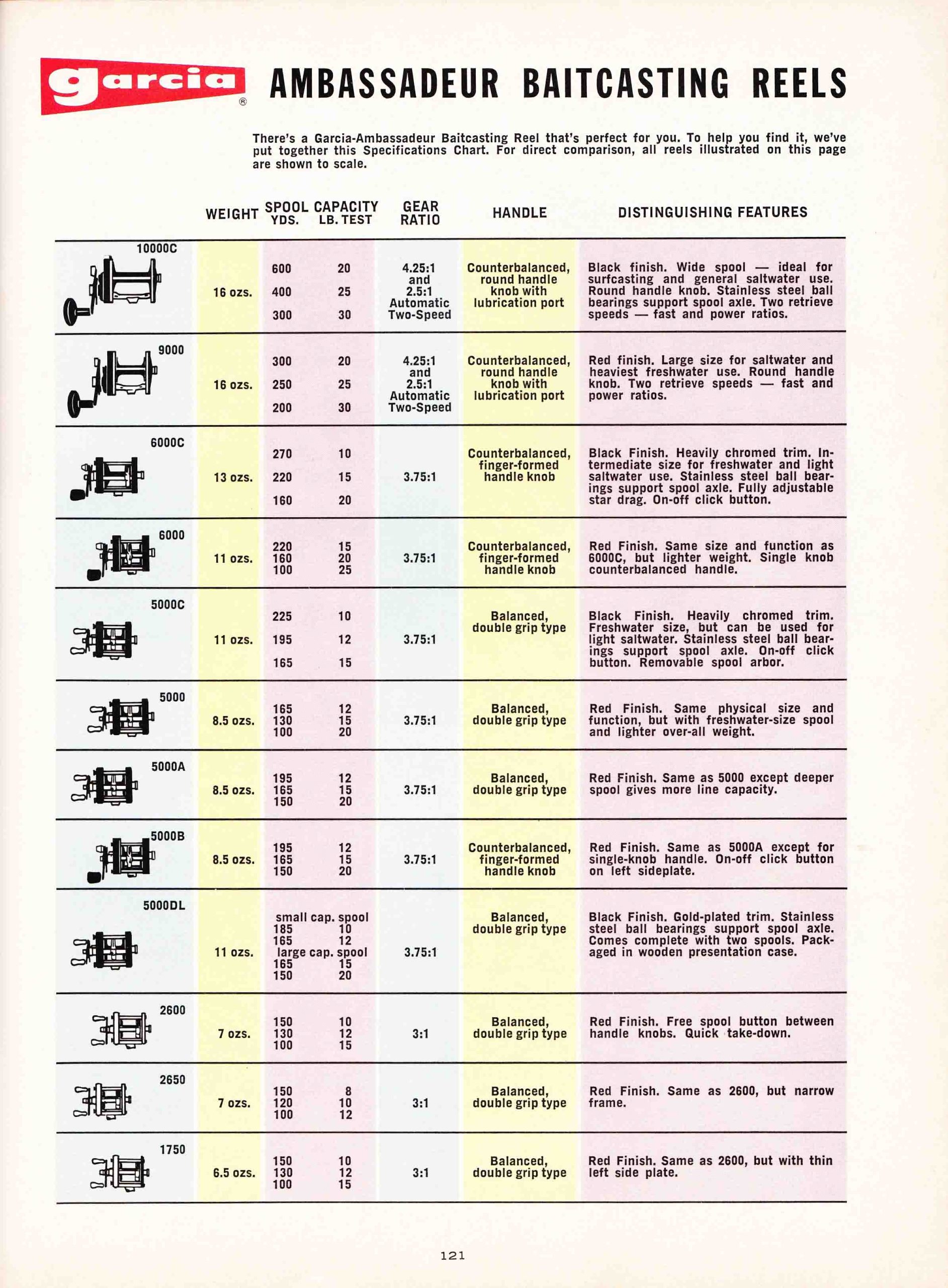
Spec Chart for all ABU baitcasting reels. 1970 Garcia Fishing Annual. Image Terry Battisti.
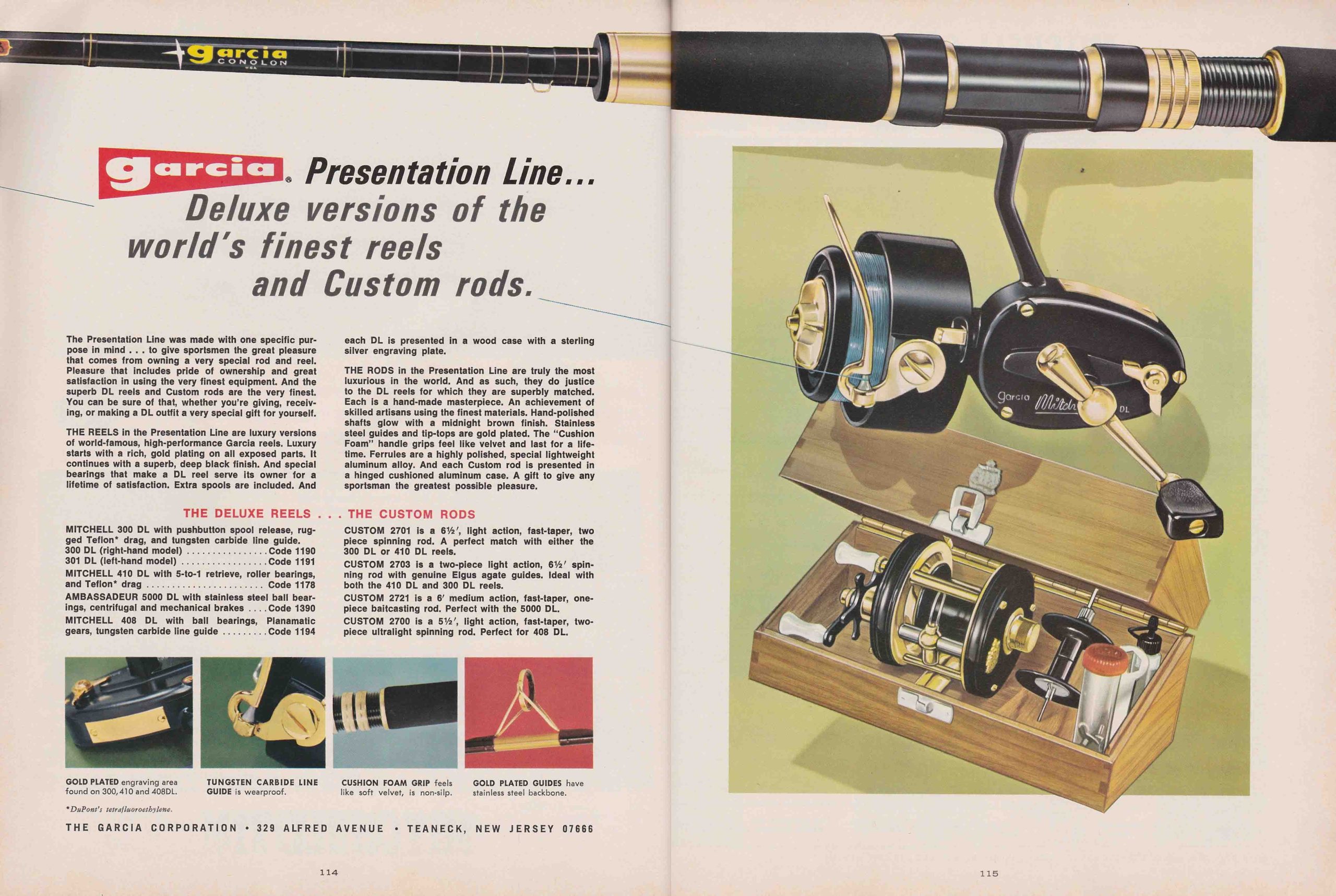
The Garcia Ambassadeur 5000DL and Mitchell 300DL Presentation Reels. 1970 Garcia Fishing Annual. Image Terry Battisti.
1971

The cover of the 1971 Garcia Fishing Annual. Image Terry Battisti.
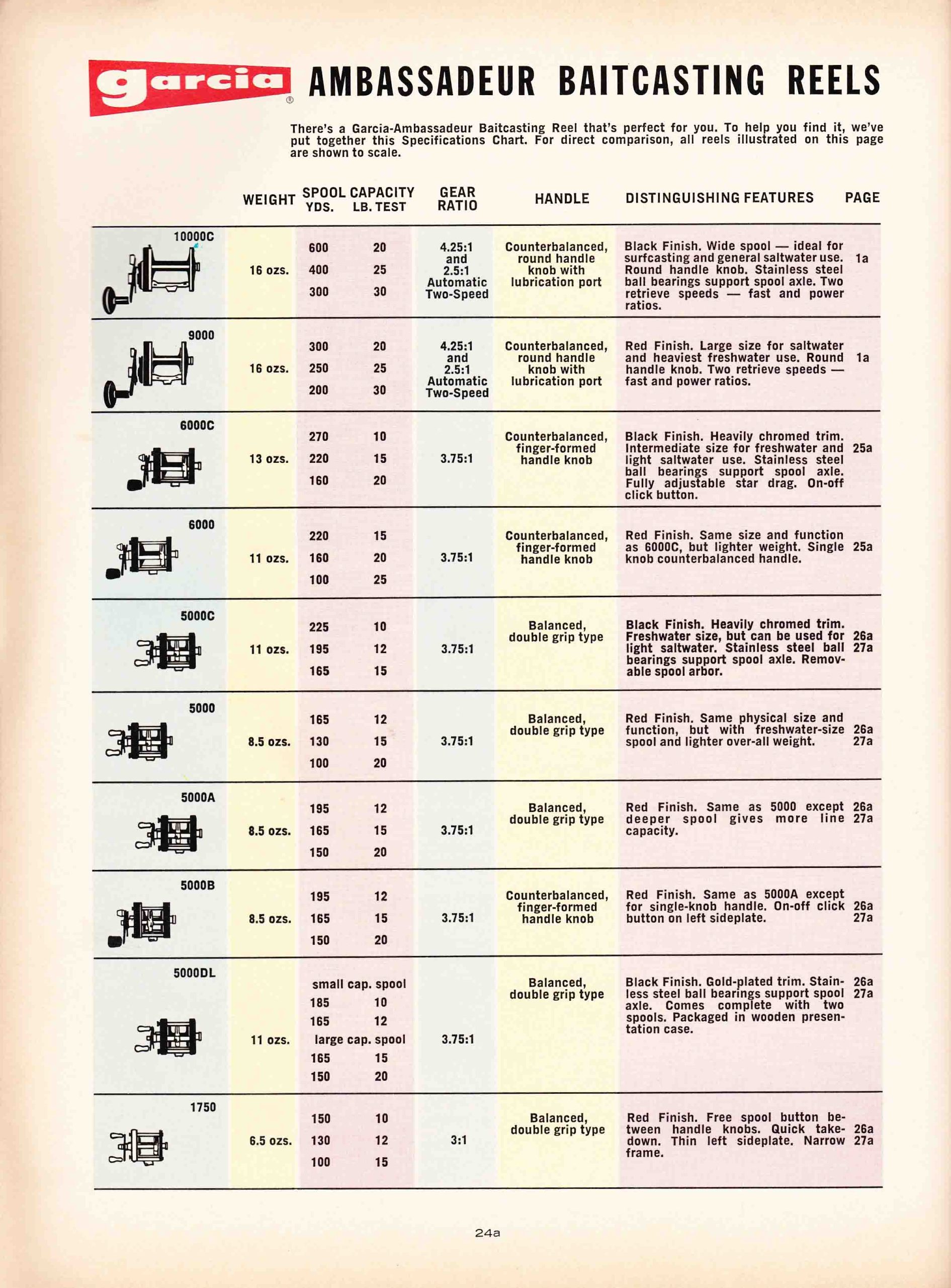
The spec. chart for Garcia Ambassadeur baitcasting reels. 1971 Garcia Fishing Annual. Image Terry Battisti.
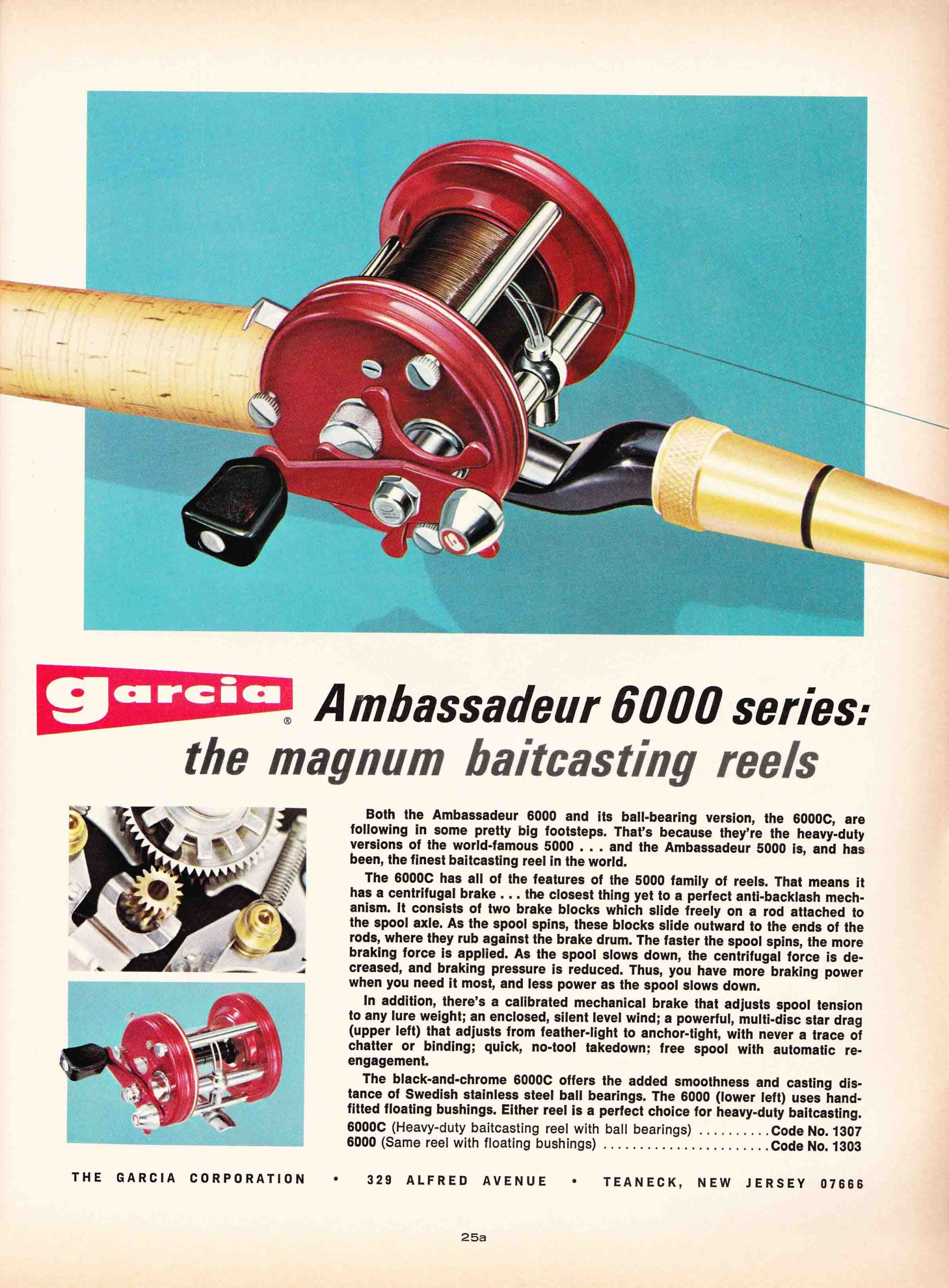
The Garcia Ambassadeur 6000 Series Baitcasting Reels. 1971 Garcia Fishing Annual. Image Terry Battisti.
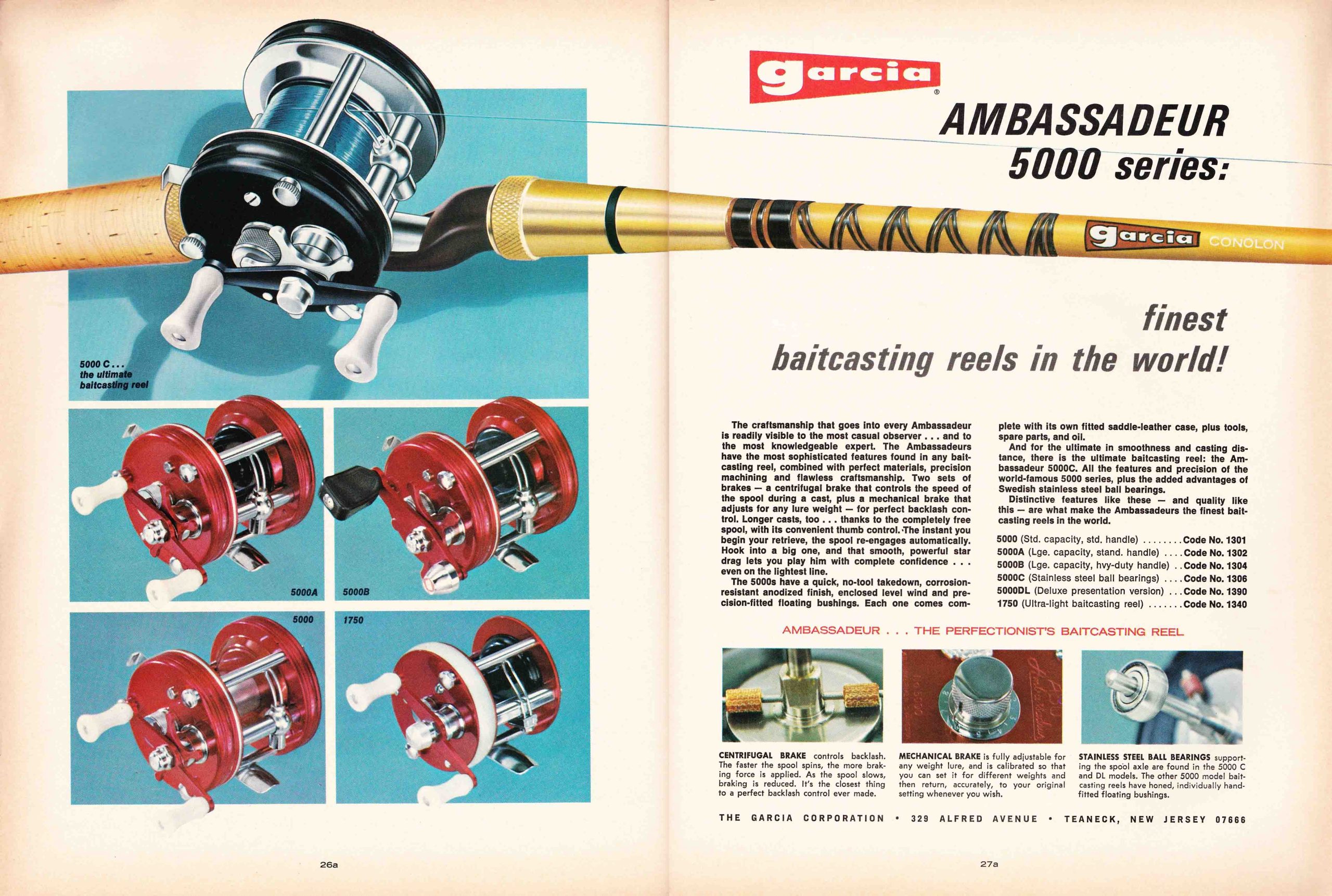
The Garcia Ambassadeur 5000 Series Baitcasting Reels. 1971 Garcia Fishing Annual. Image Terry Battisti.
1972
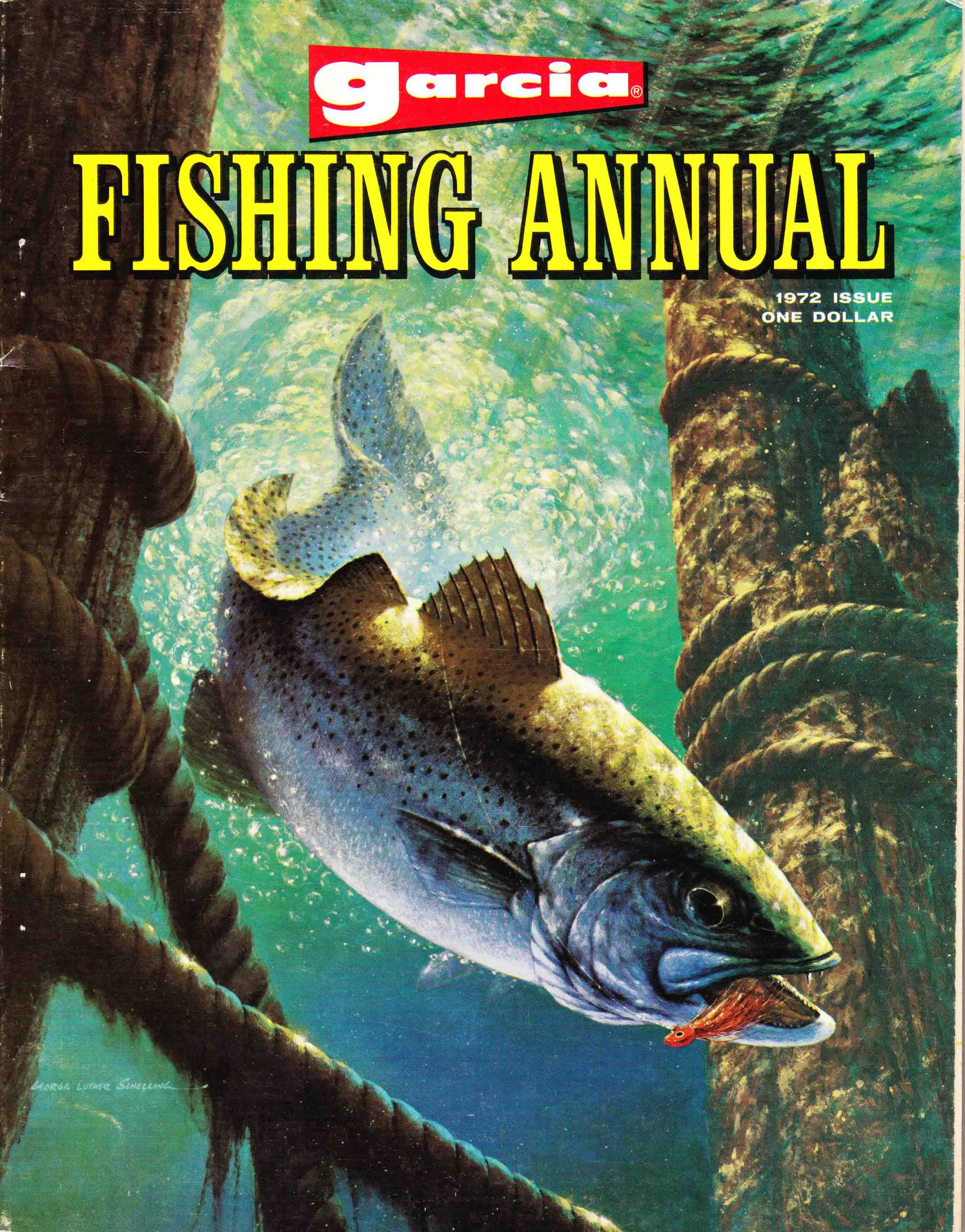
The cover of the 1972 Garcia Fishing Annual. Image Terry Battisti.
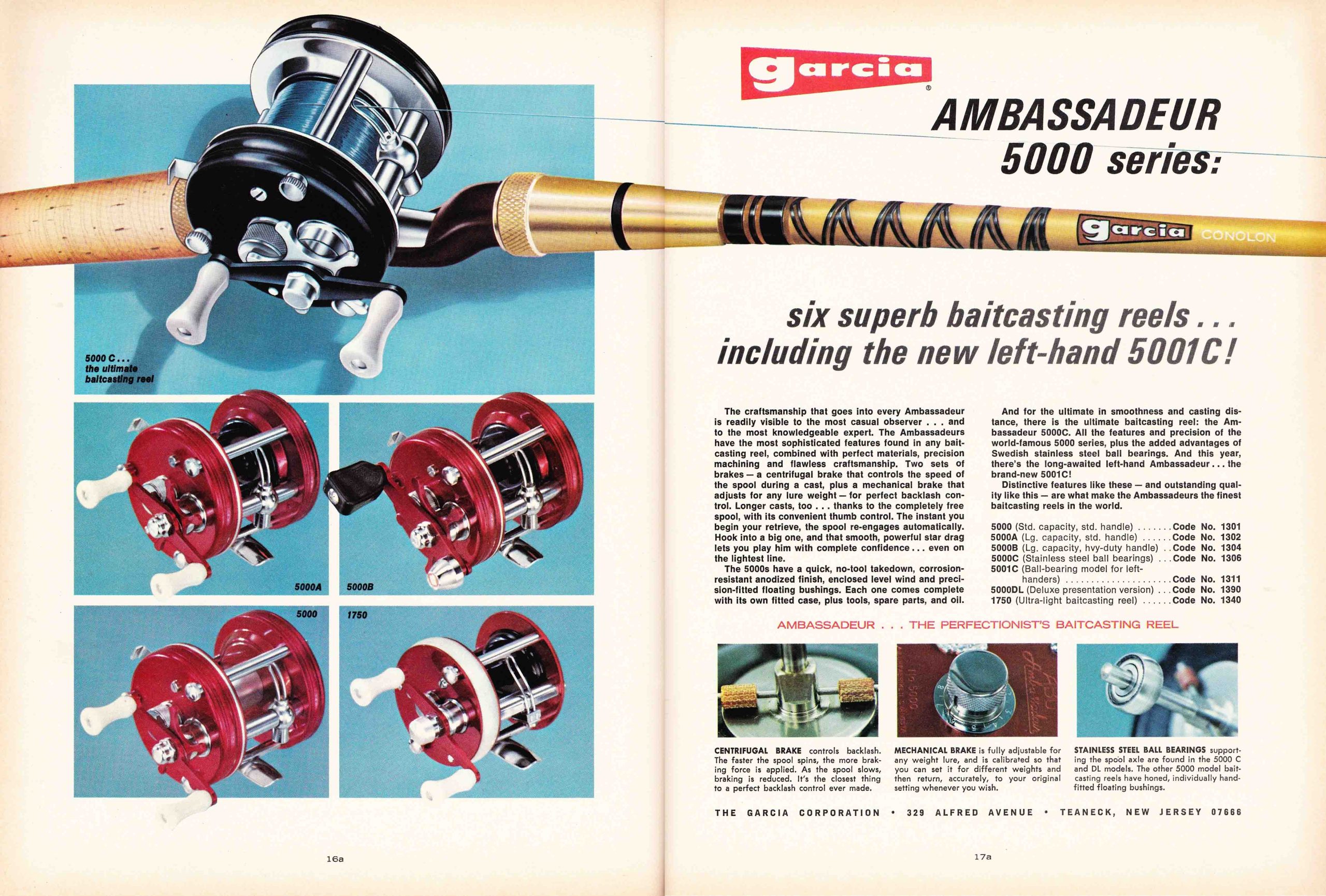
The Garcia Ambassadeur 5000 Series Reels. Introducing the 5001C. 1972 Garcia Fishing Annual. Image Terry Battisti.
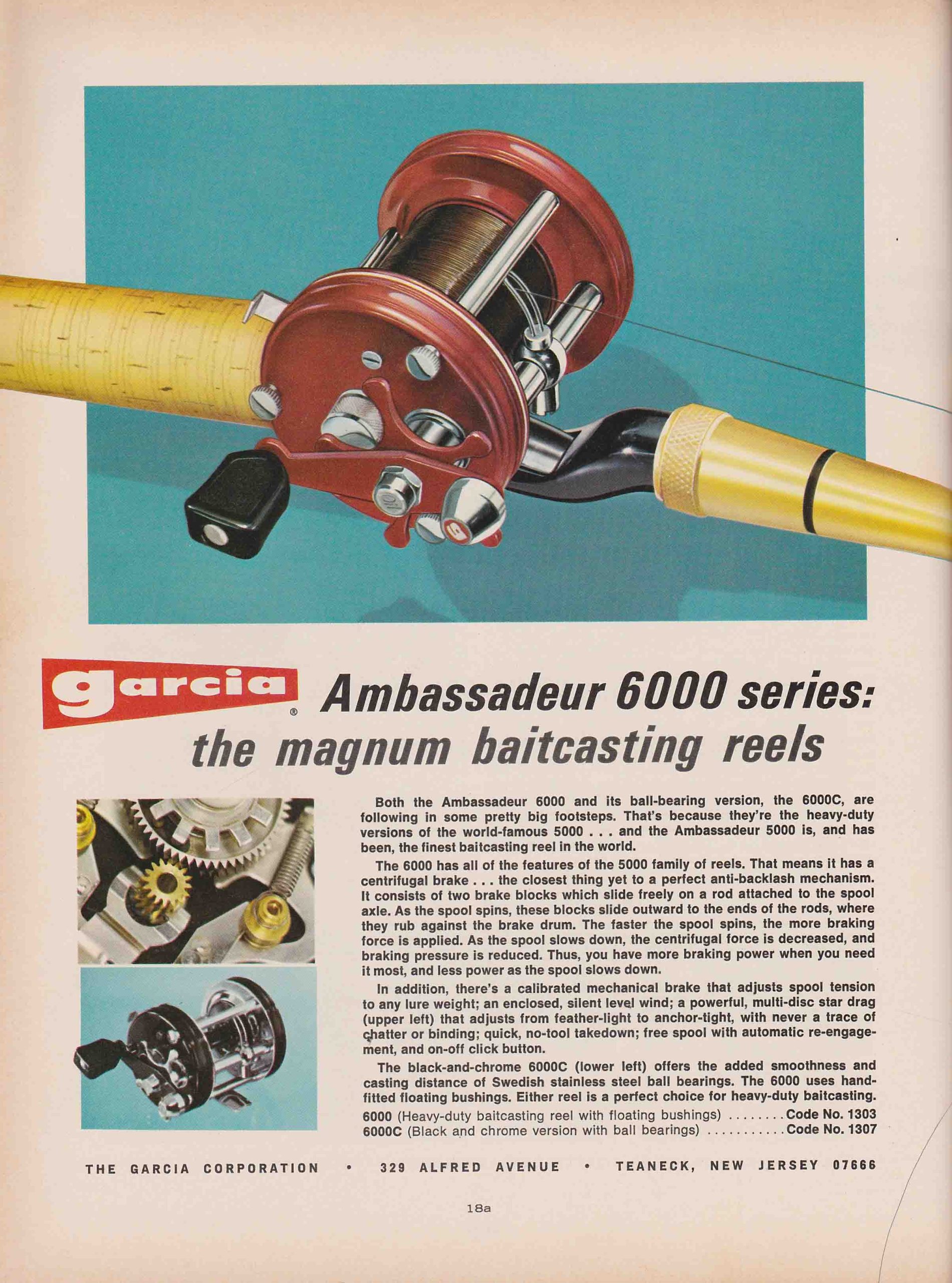
The Garcia Ambassadeur 6000 Series Reels. 1972 Garcia Fishing Annual. Image Terry Battisti.
1973
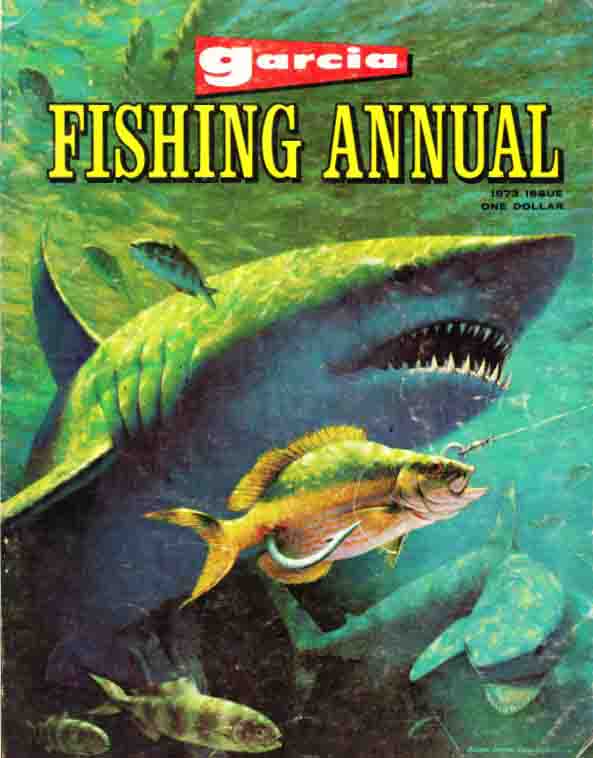
The cover of the 1973 Garcia Fishing Annual. Image Terry Battisti.
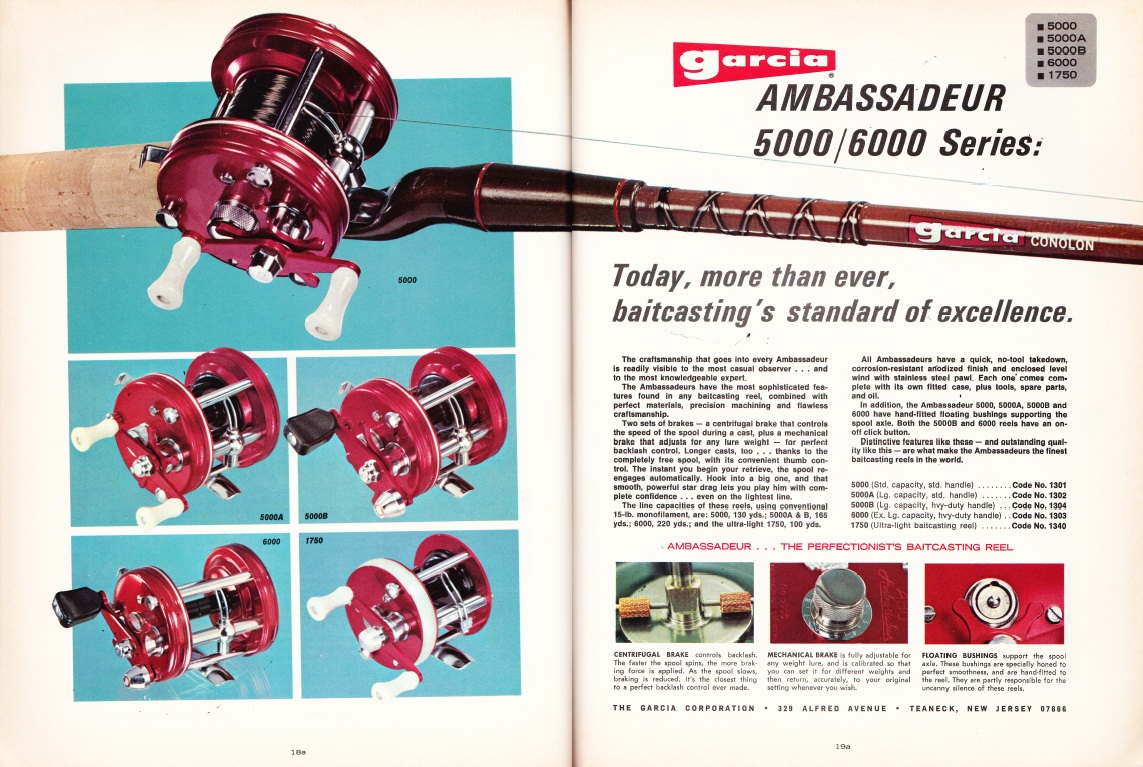
The Garcia Ambassadeur 5000/6000 Series Reels. 1973 Garcia Fishing Annual. Image Terry Battisti.
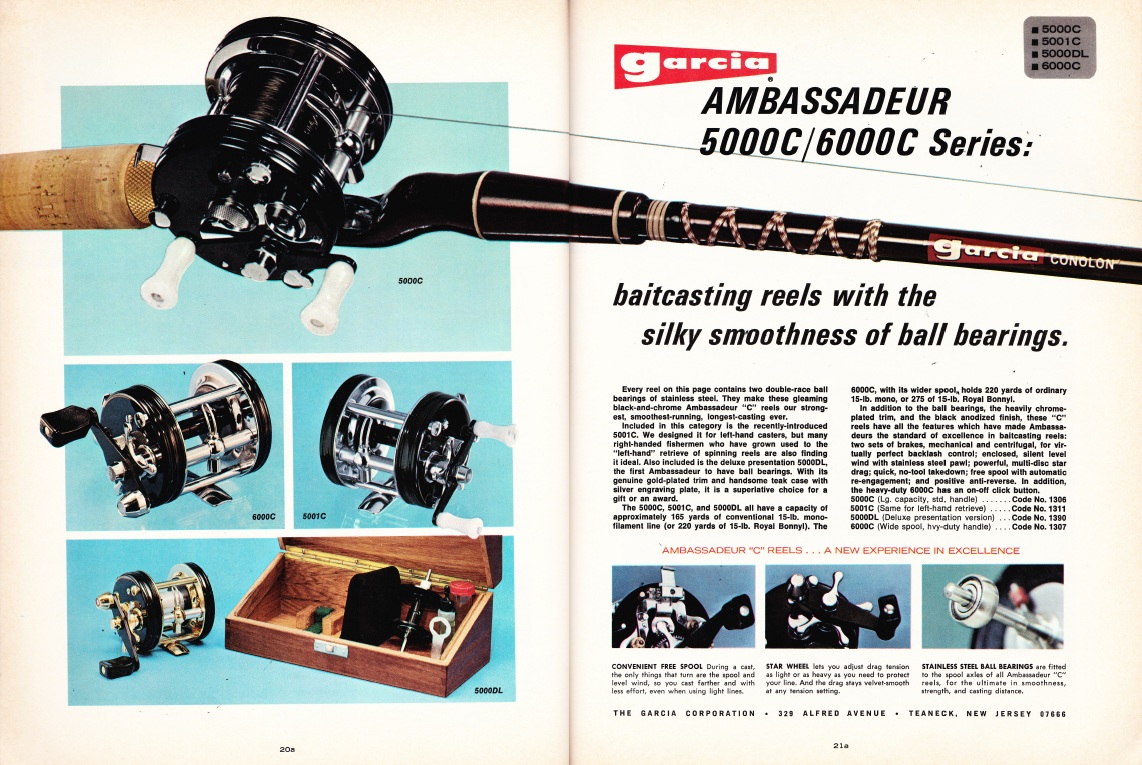
The Garcia Ambassadeur 5000C/6000C Series Reels. 1973 Garcia Fishing Annual. Image Terry Battisti.
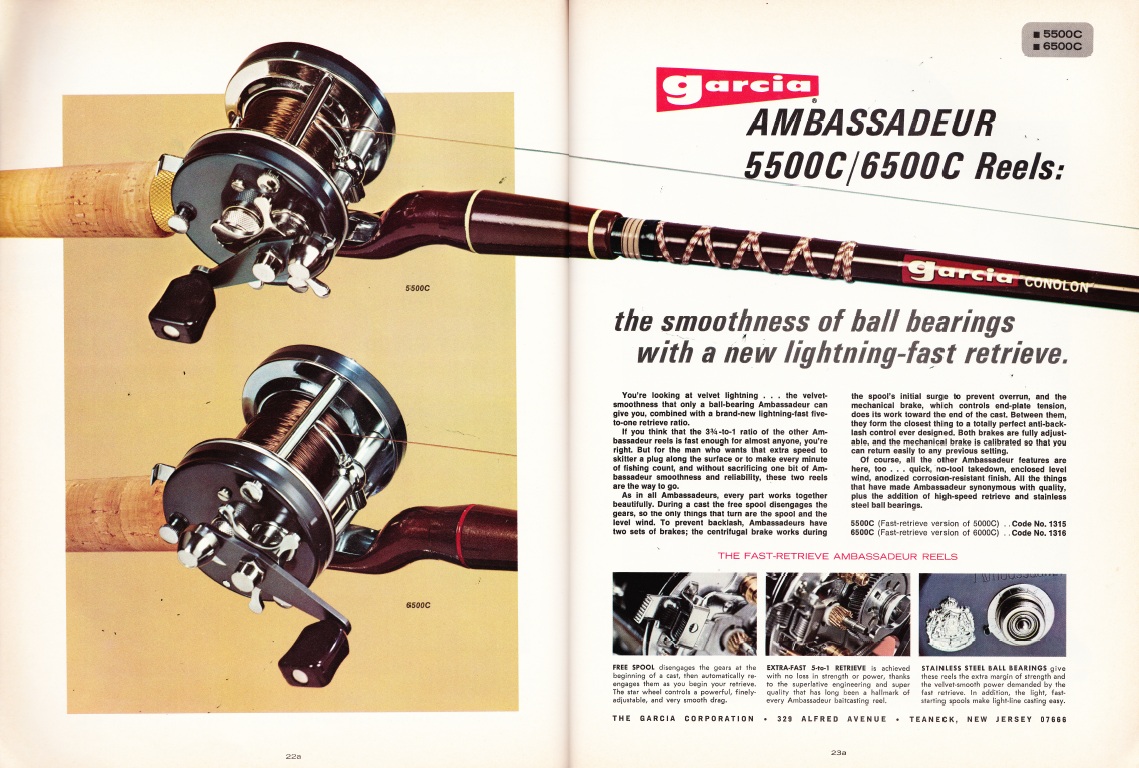
The Garcia Ambassadeur 5500C/6500C High-Speed Series Reels. 1973 Garcia Fishing Annual. Image Terry Battisti.
1974
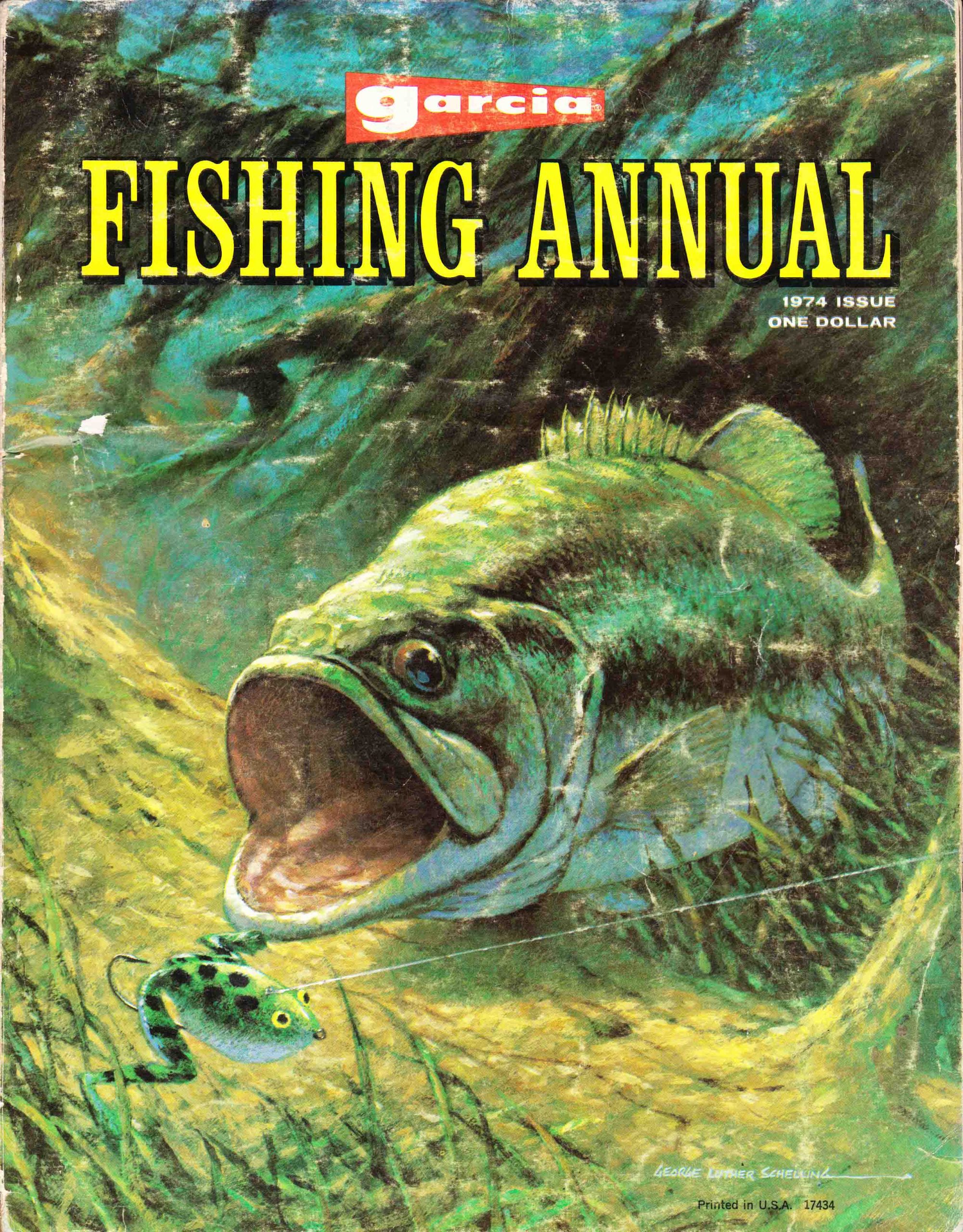
The cover of the 1974 Garcia Fishing Annual. Image Terry Battisti.
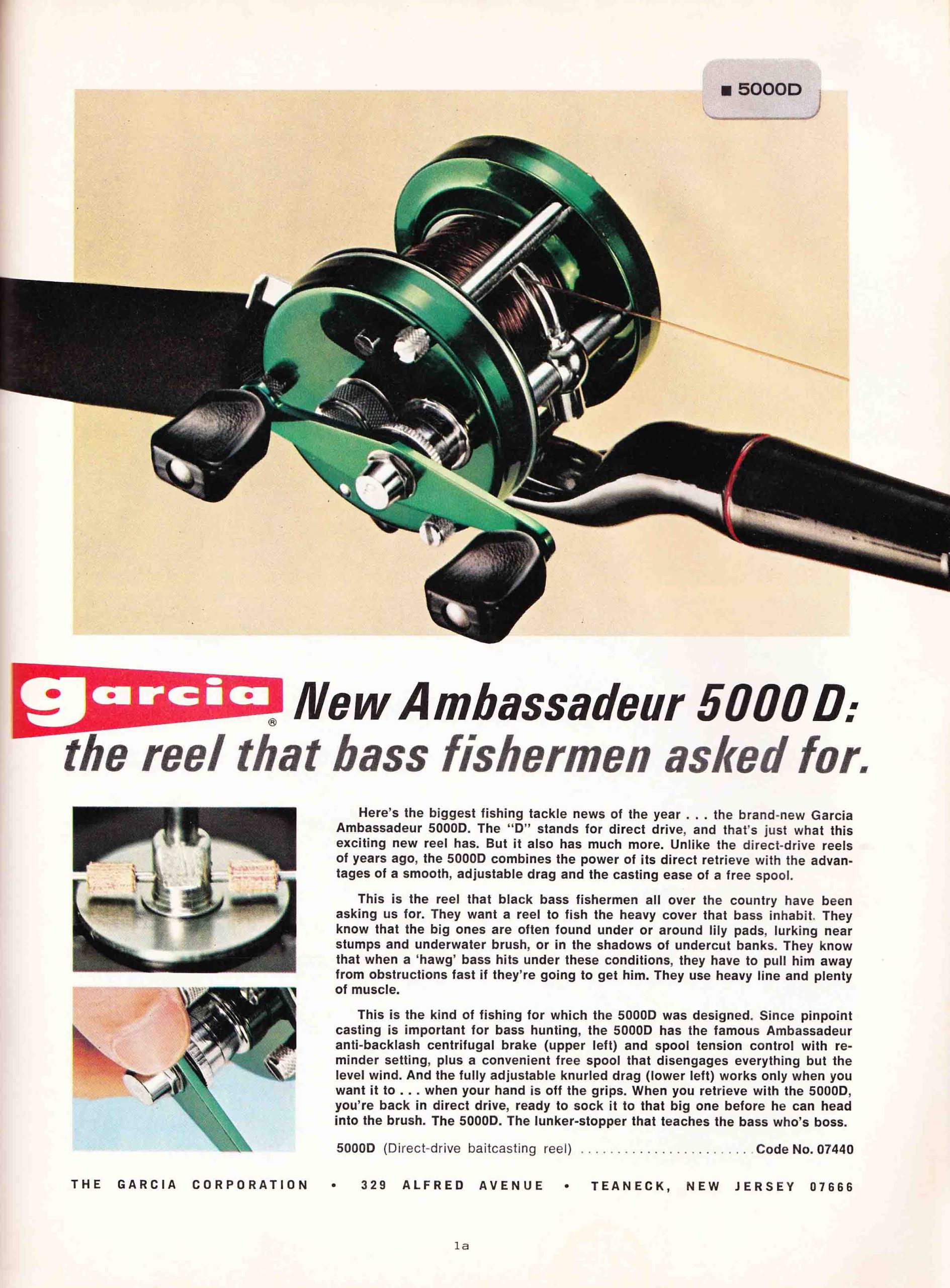
Introducing the Garcia Ambassadeur 5000D Direct Drive Reel. 1974 Garcia Fishing Annual. Image Terry Battisti.
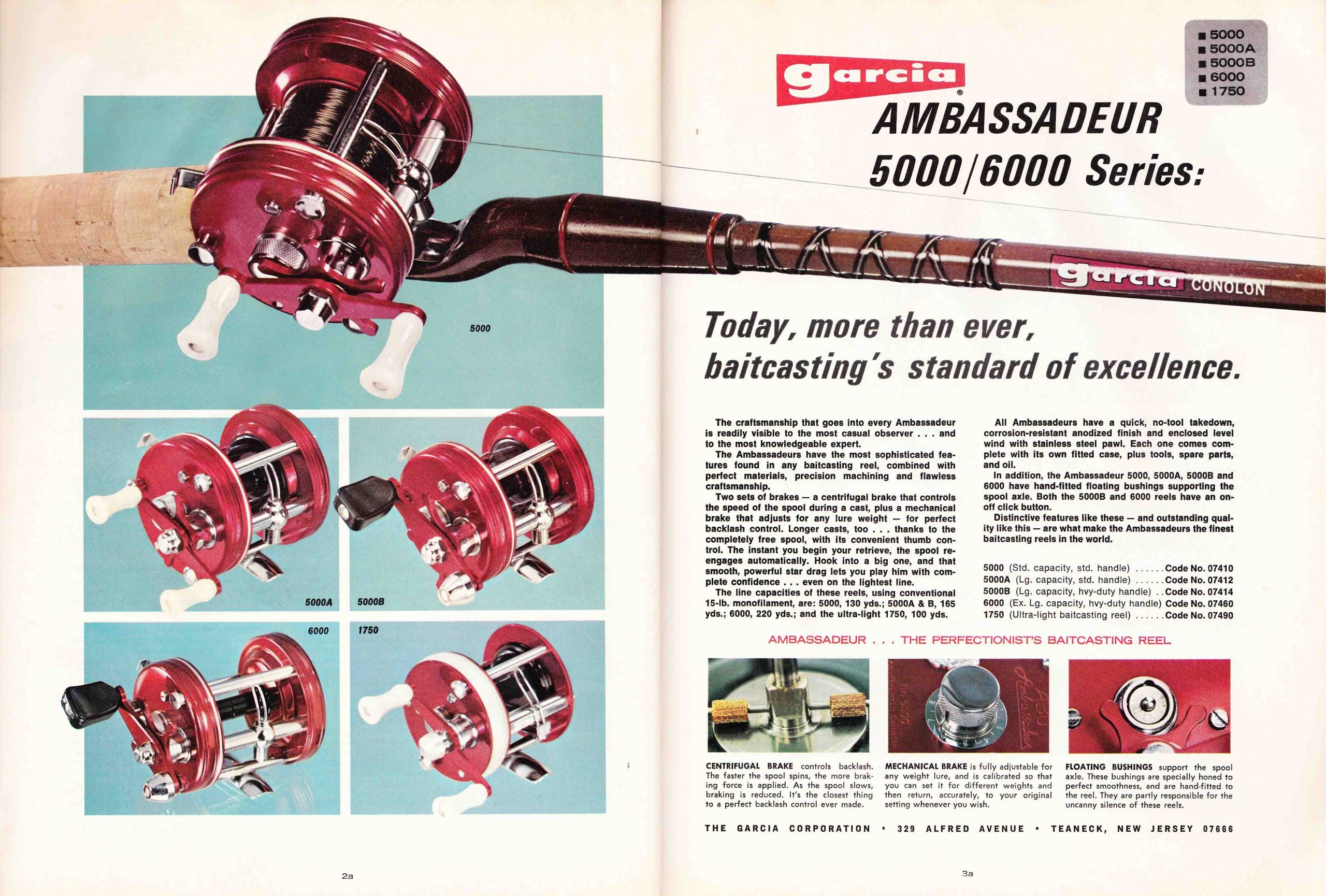
The Garcia Ambassadeur 5000/6000 Series Reels. 1974 Garcia Fishing Annual. Image Terry Battisti.
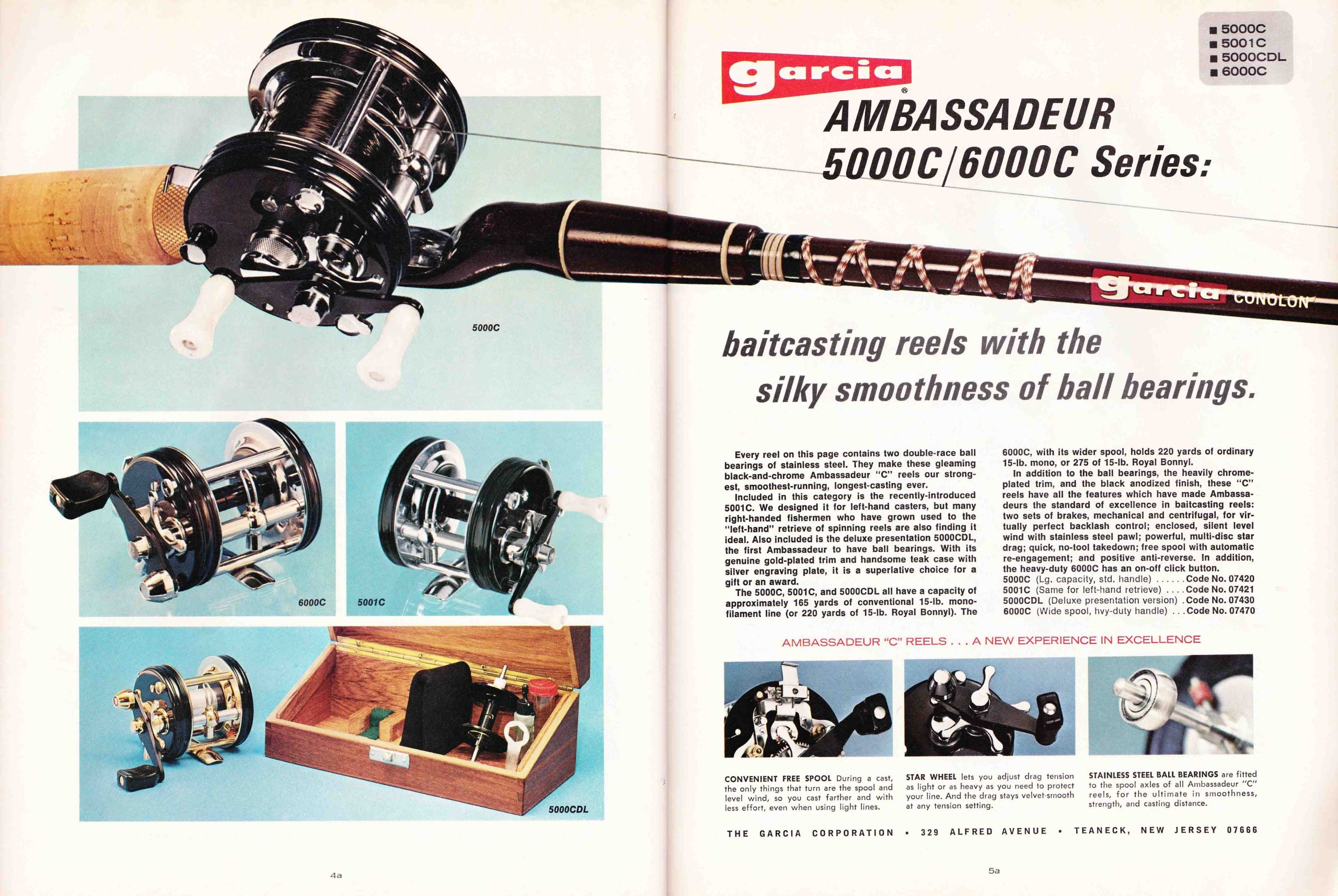
The Garcia Ambassadeur 5000C/6000C Series Reels. 1974 Garcia Fishing Annual. Image Terry Battisti.
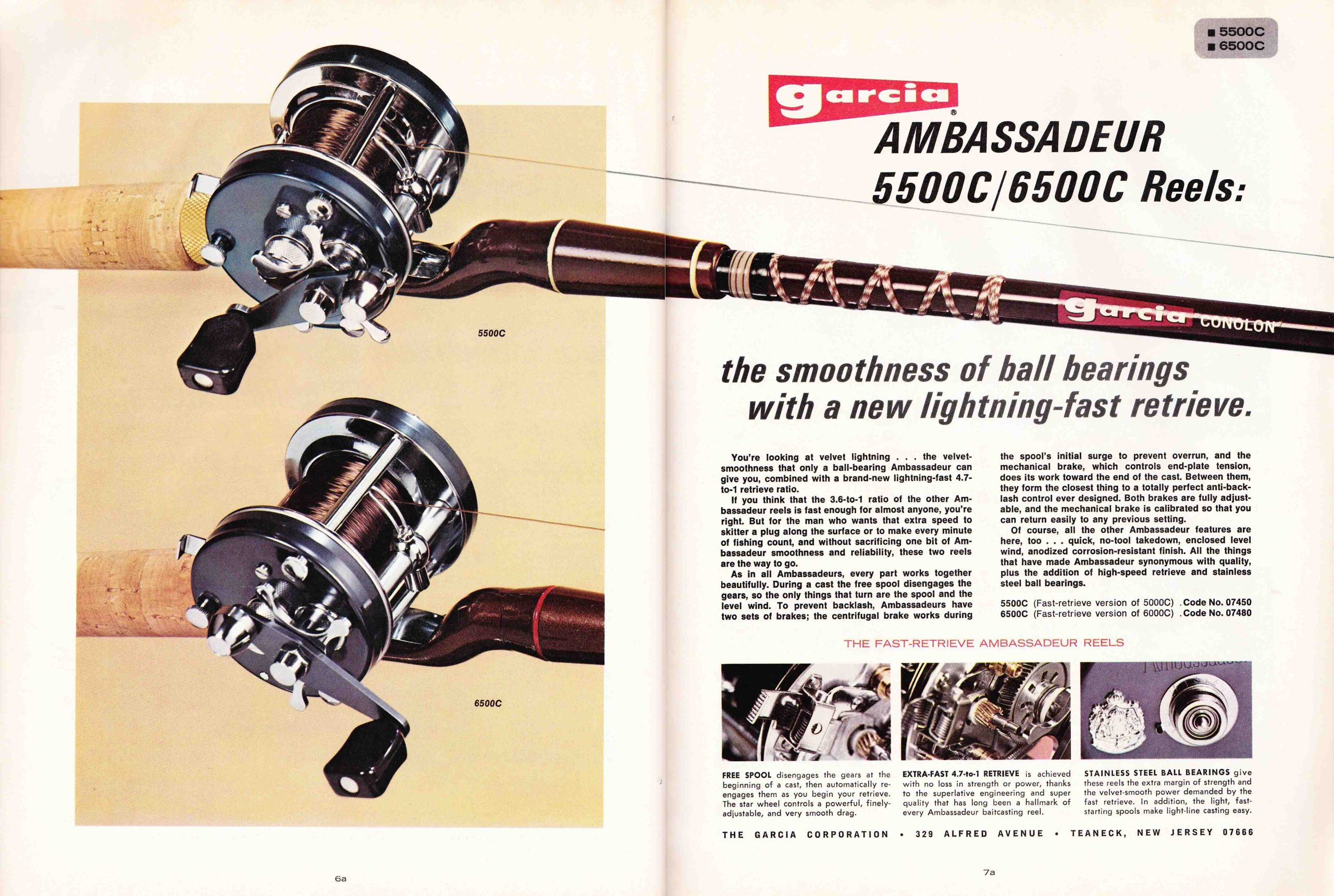
The Garcia Ambassadeur 5500C/6500C High-Speed Series Reels. 1974 Garcia Fishing Annual. Image Terry Battisti.
1975
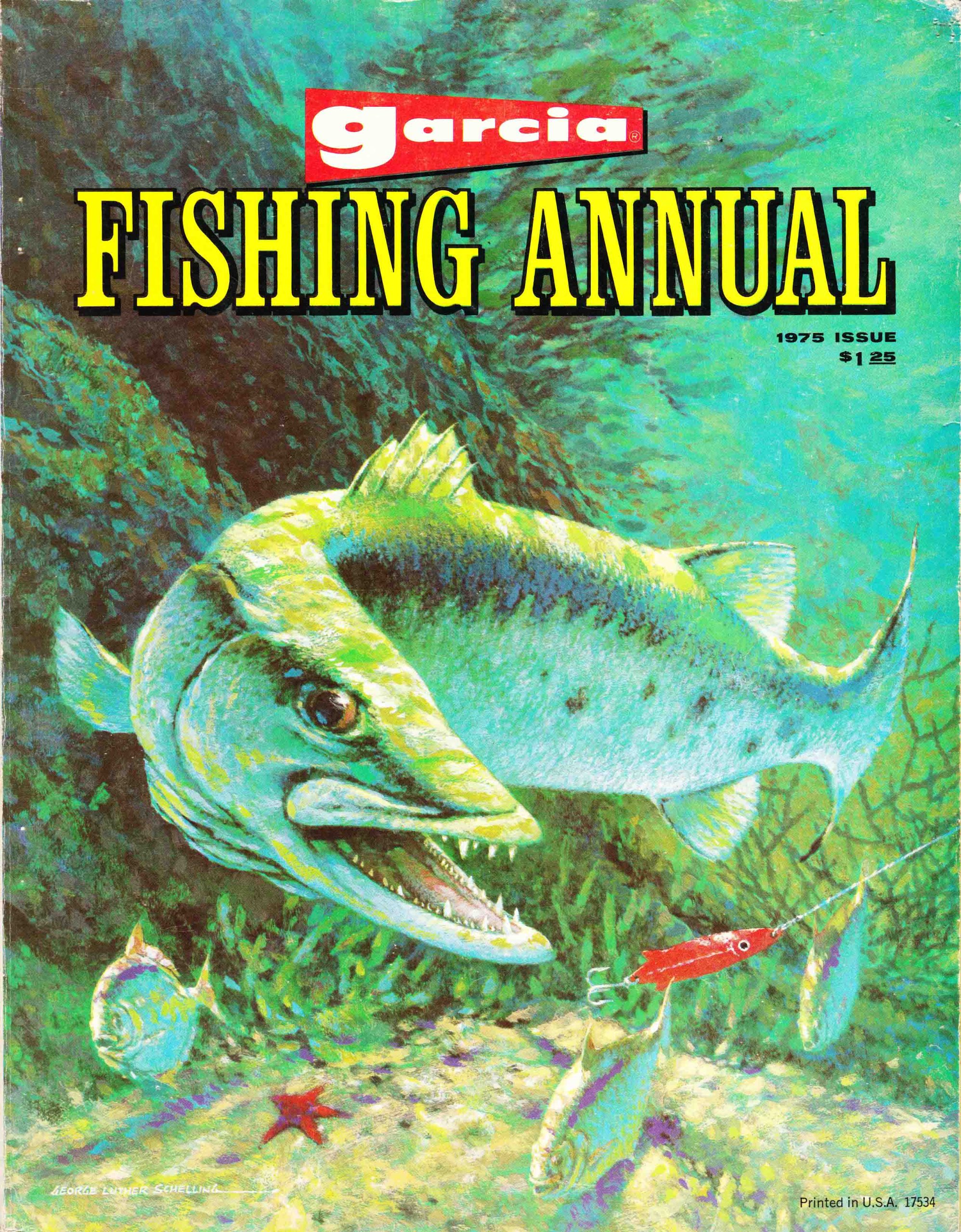
The cover of the 1975 Garcia Fishing Annual. Image Terry Battisti.
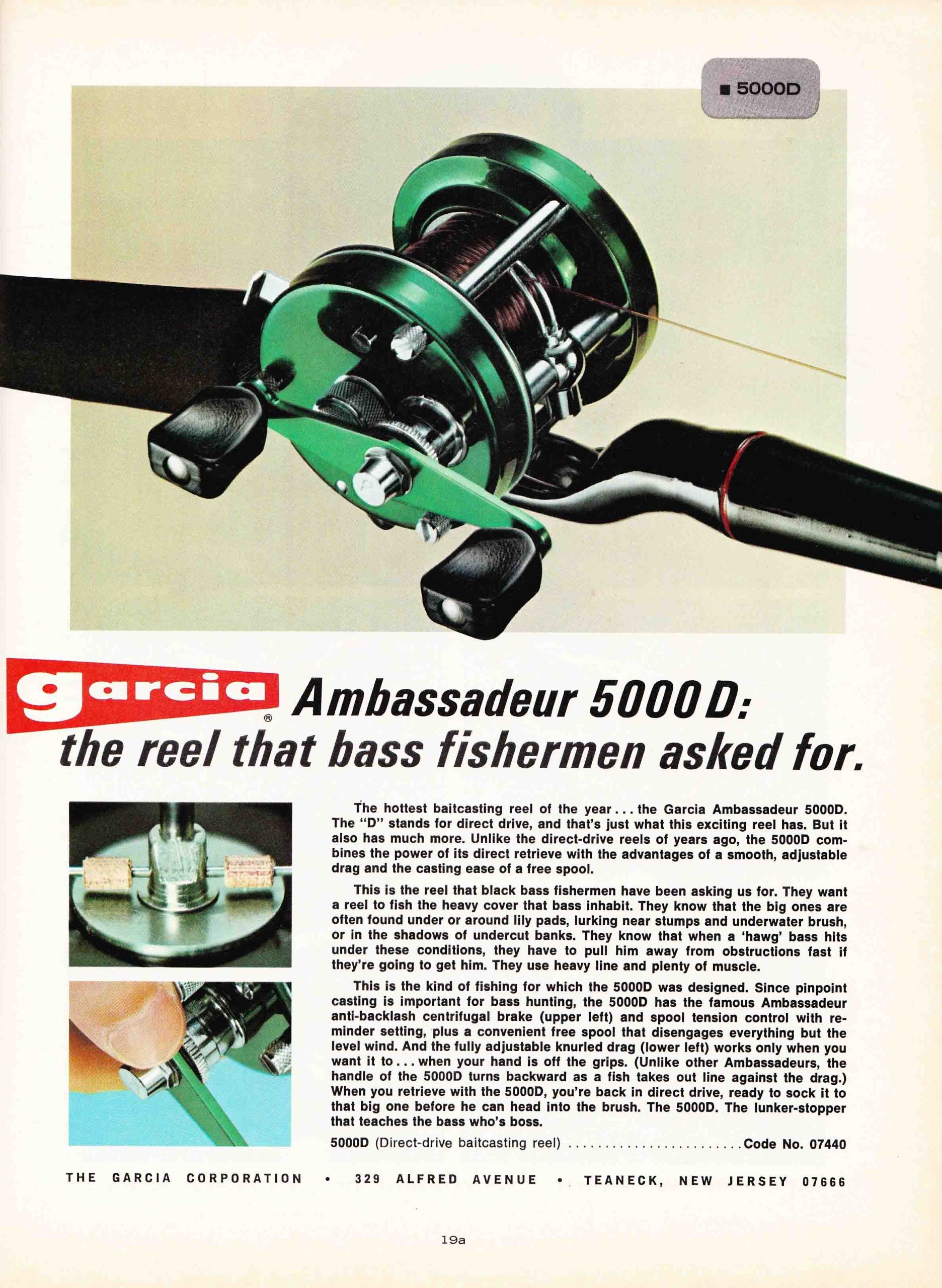
The Garcia Ambassadeur 5000D Direct Drive Reel. 1975 Garcia Fishing Annual. Image Terry Battisti.
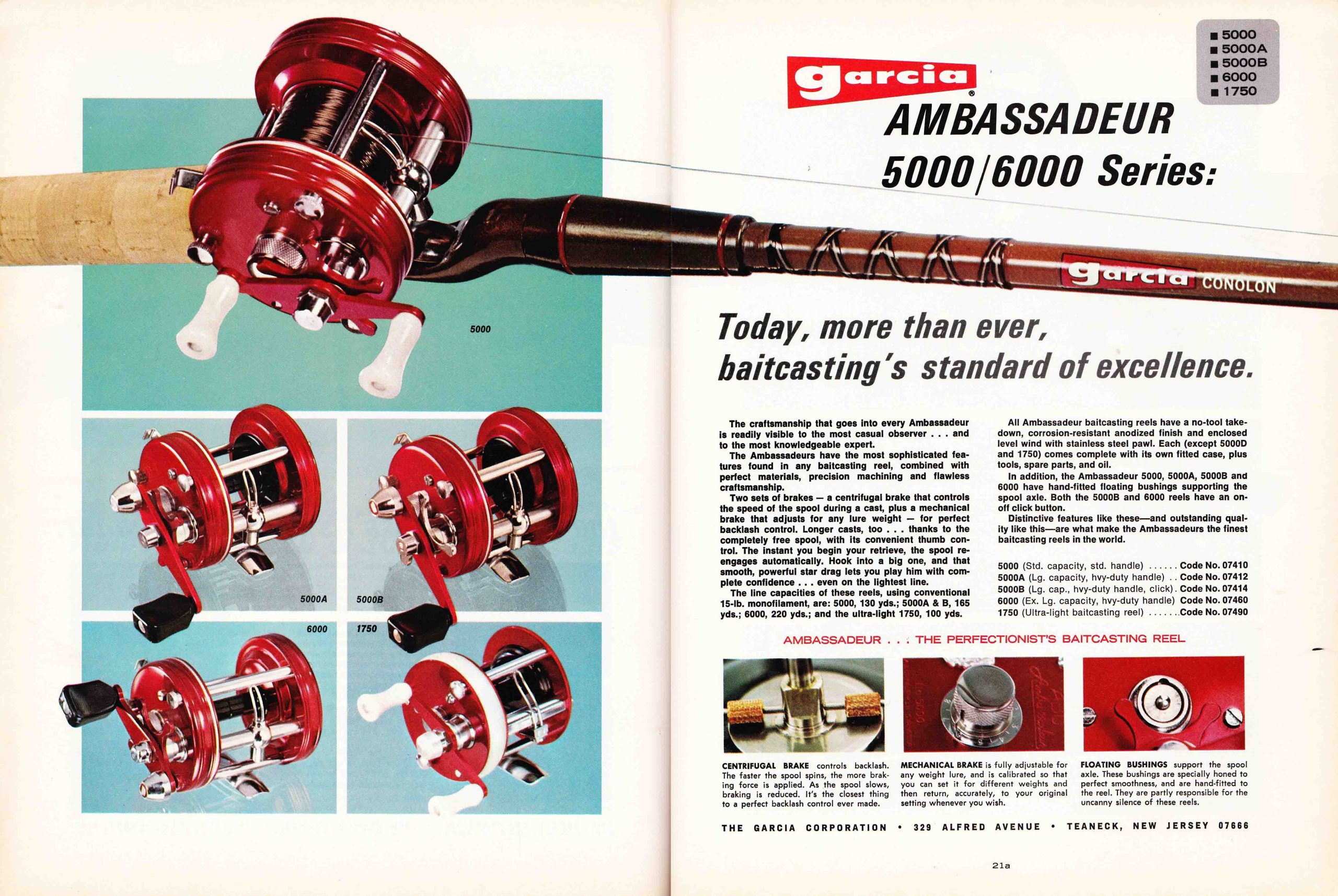
The Garcia Ambassadeur 5000/6000 Series Reels. 1975 Garcia Fishing Annual. Image Terry Battisti.
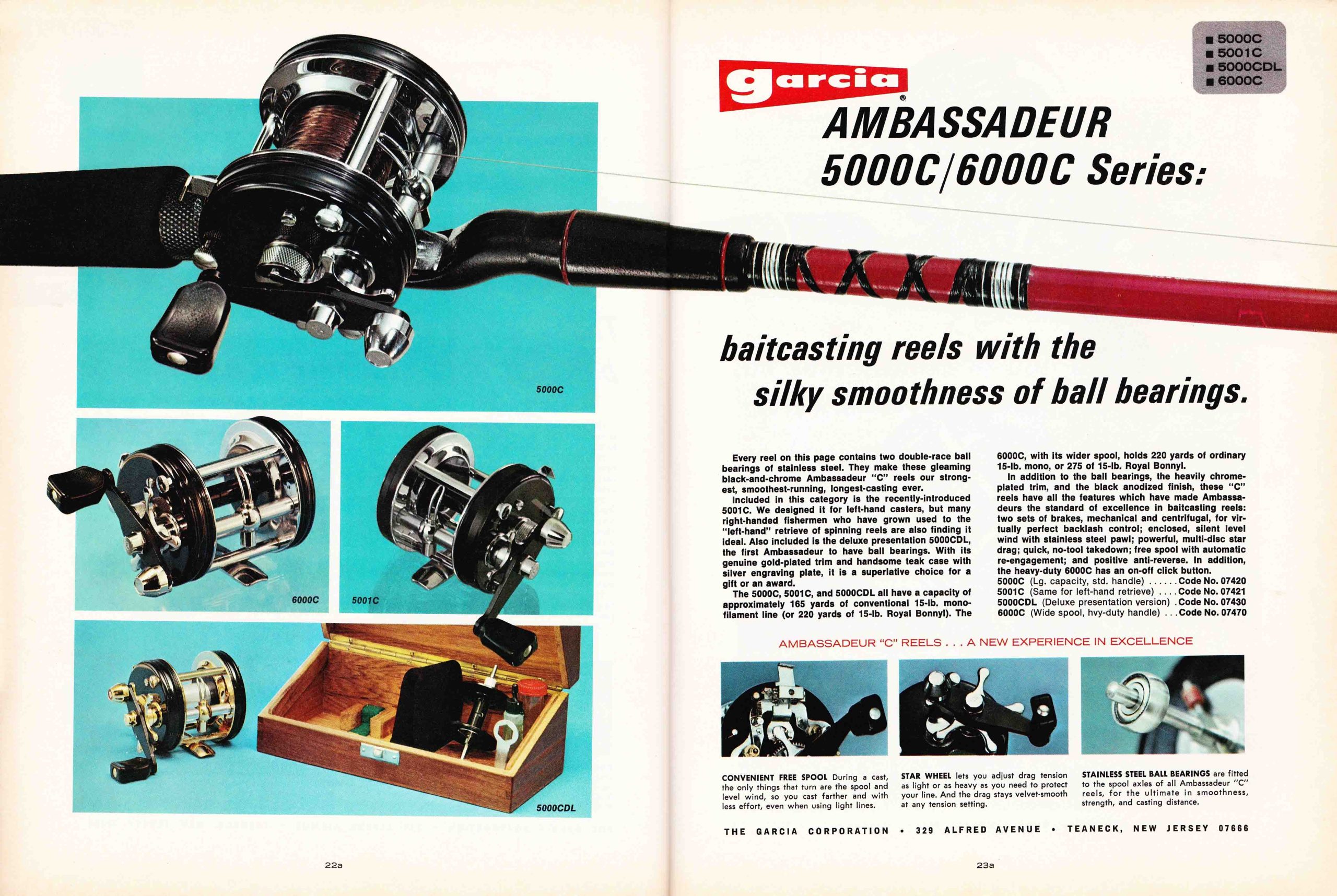
The Garcia Ambassadeur 5000C/6000C Series Reels. 1975 Garcia Fishing Annual. Image Terry Battisti.
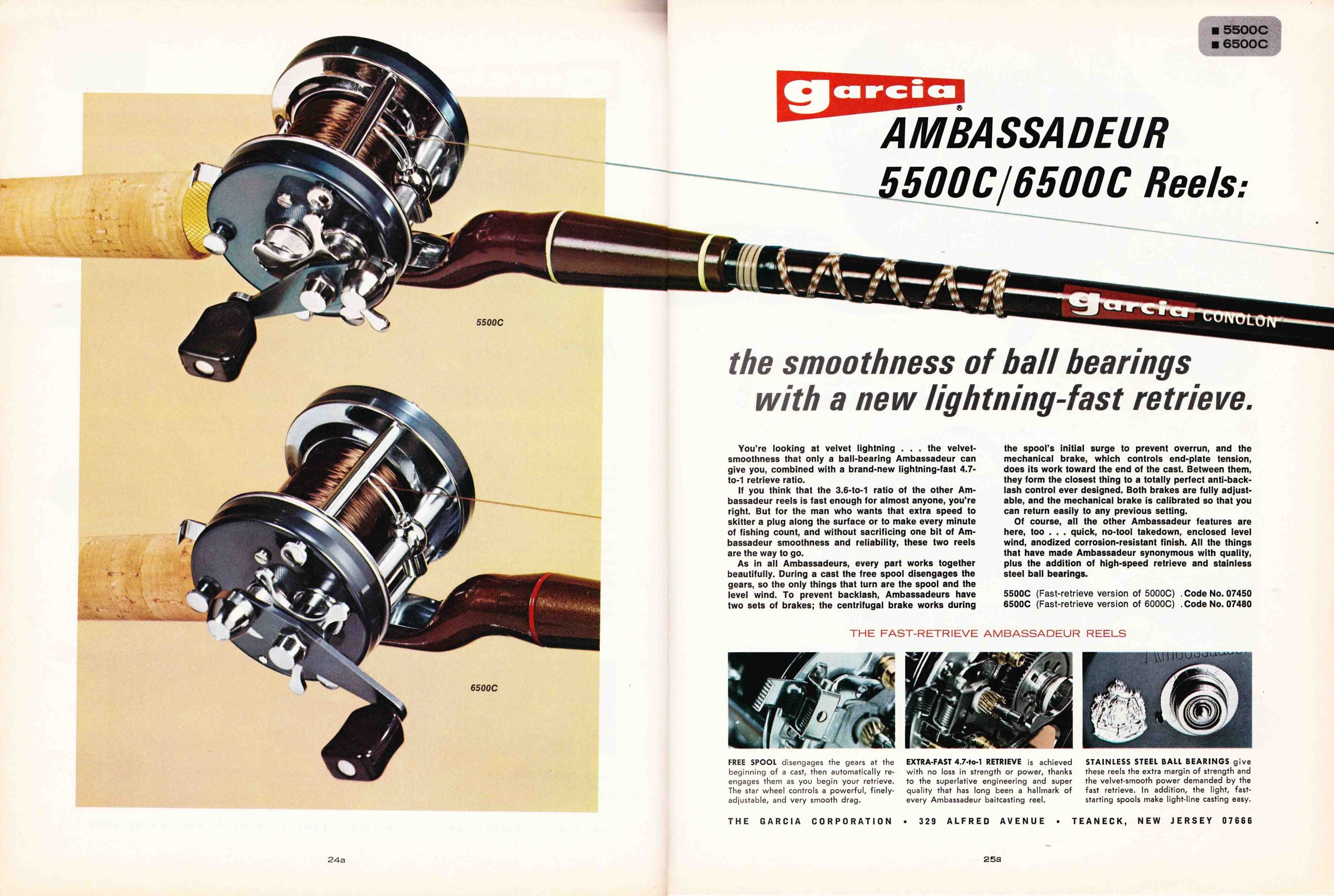
The Garcia Ambassadeur 5500C/6500C High-Speed Series Reels. 1975 Garcia Fishing Annual. Image Terry Battisti.
1976
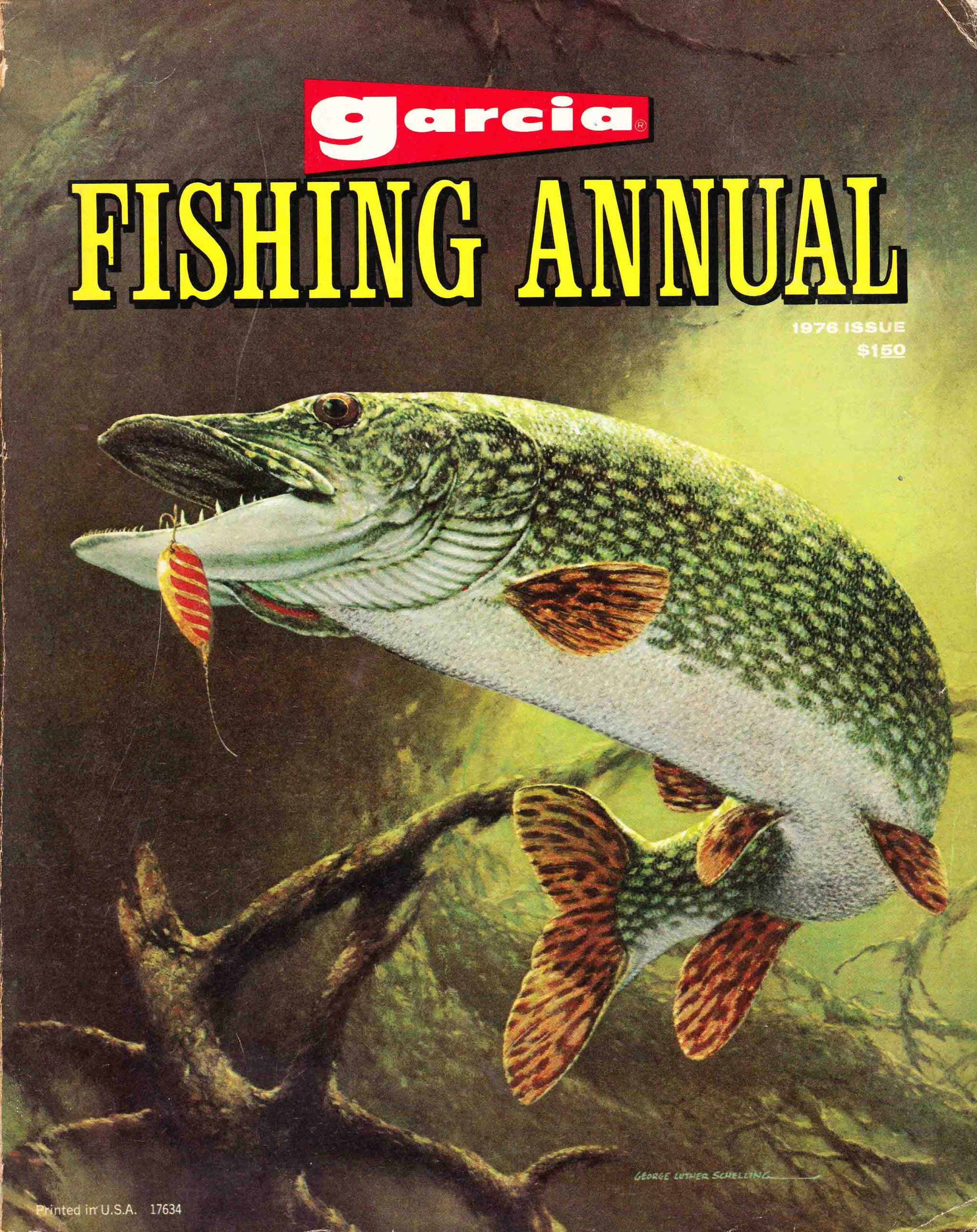
The cover of the 1976 Garcia Fishing Annual. Image Terry Battisti.
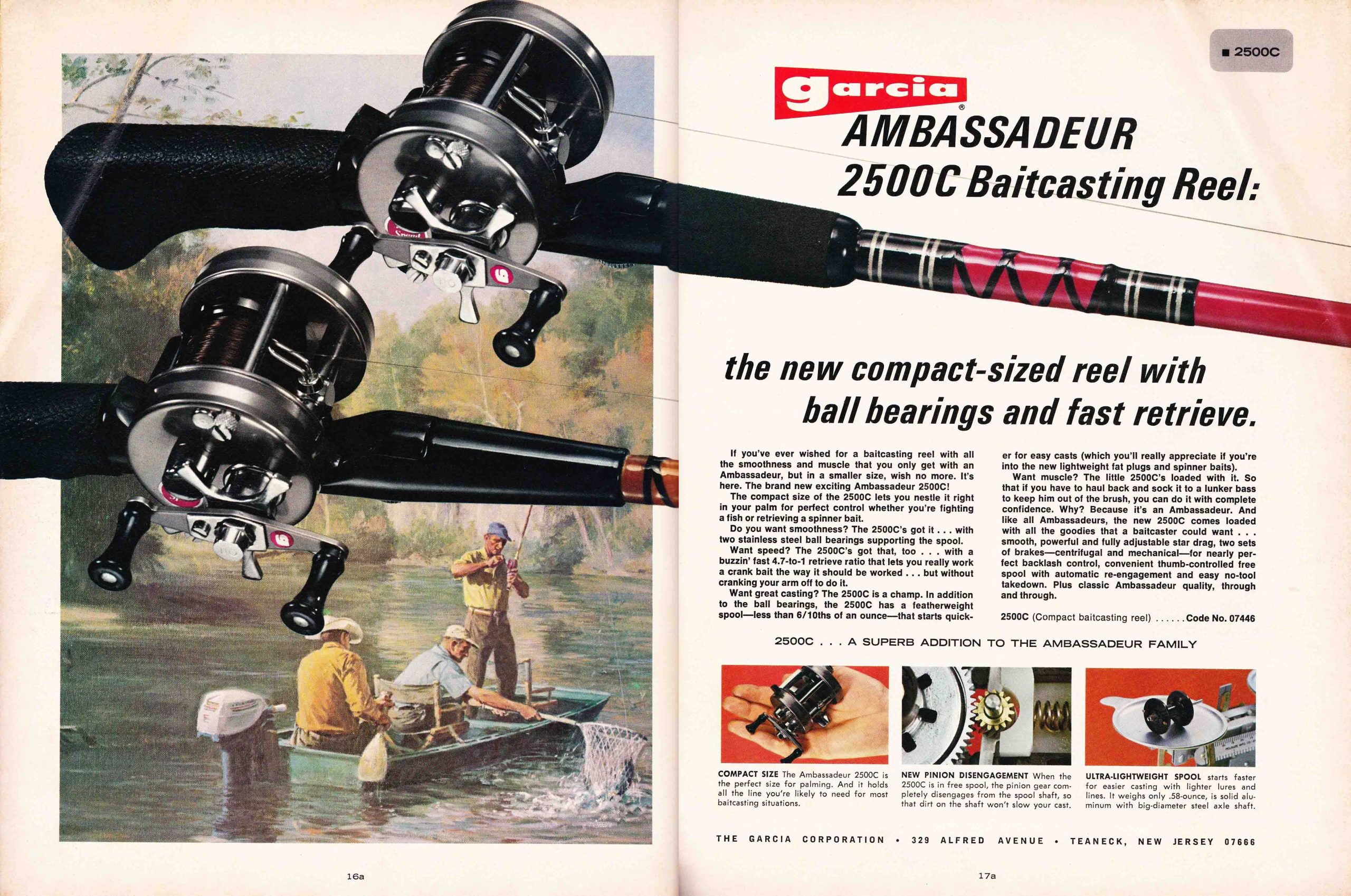
Introducing the Garcia Ambassadeur 2500C reel. 1976 Garcia Fishing Annual. Image Terry Battisti.
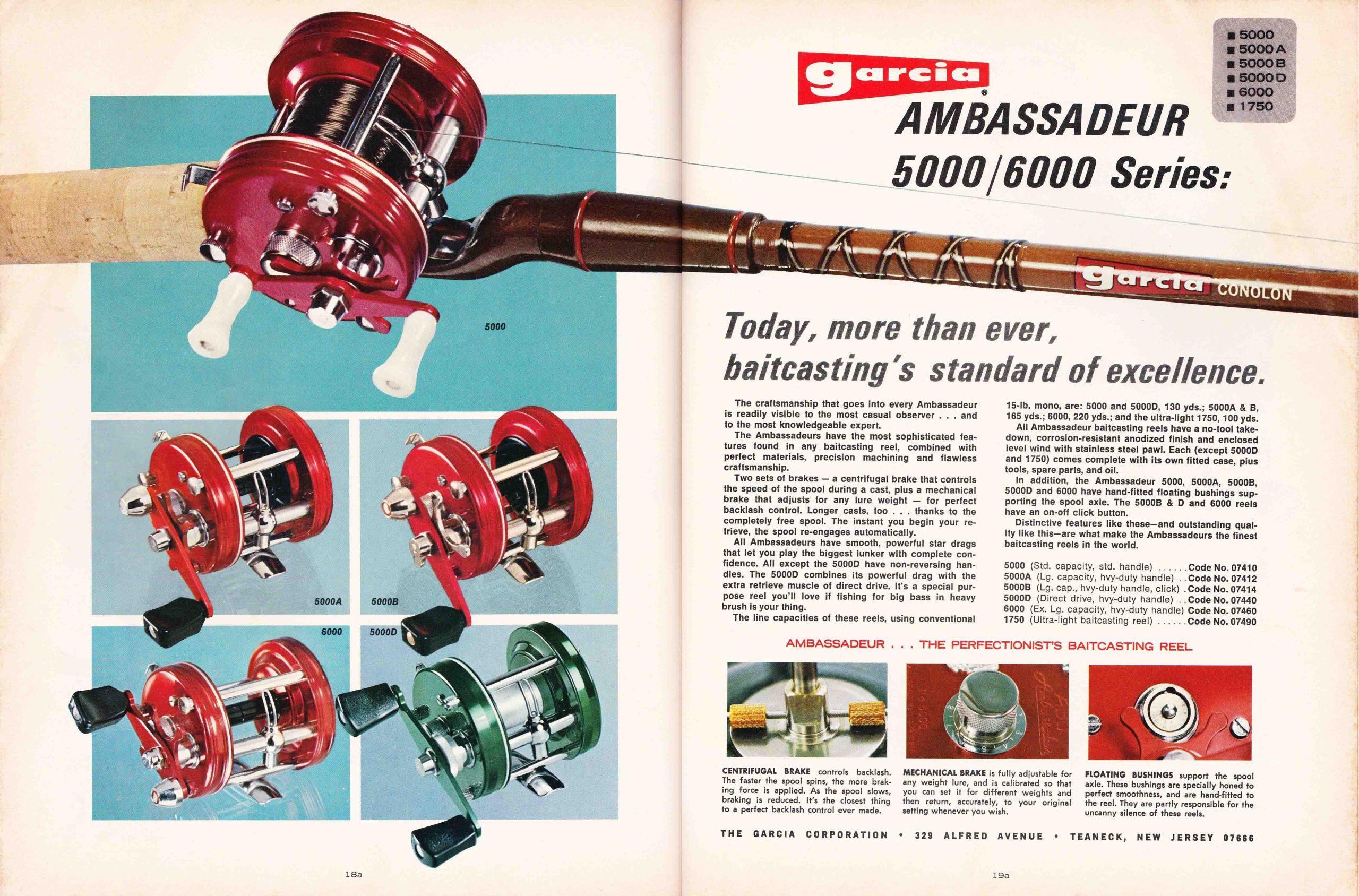
The Garcia Ambassadeur 5000/6000 Series Reels. 1976 Garcia Fishing Annual. Image Terry Battisti.
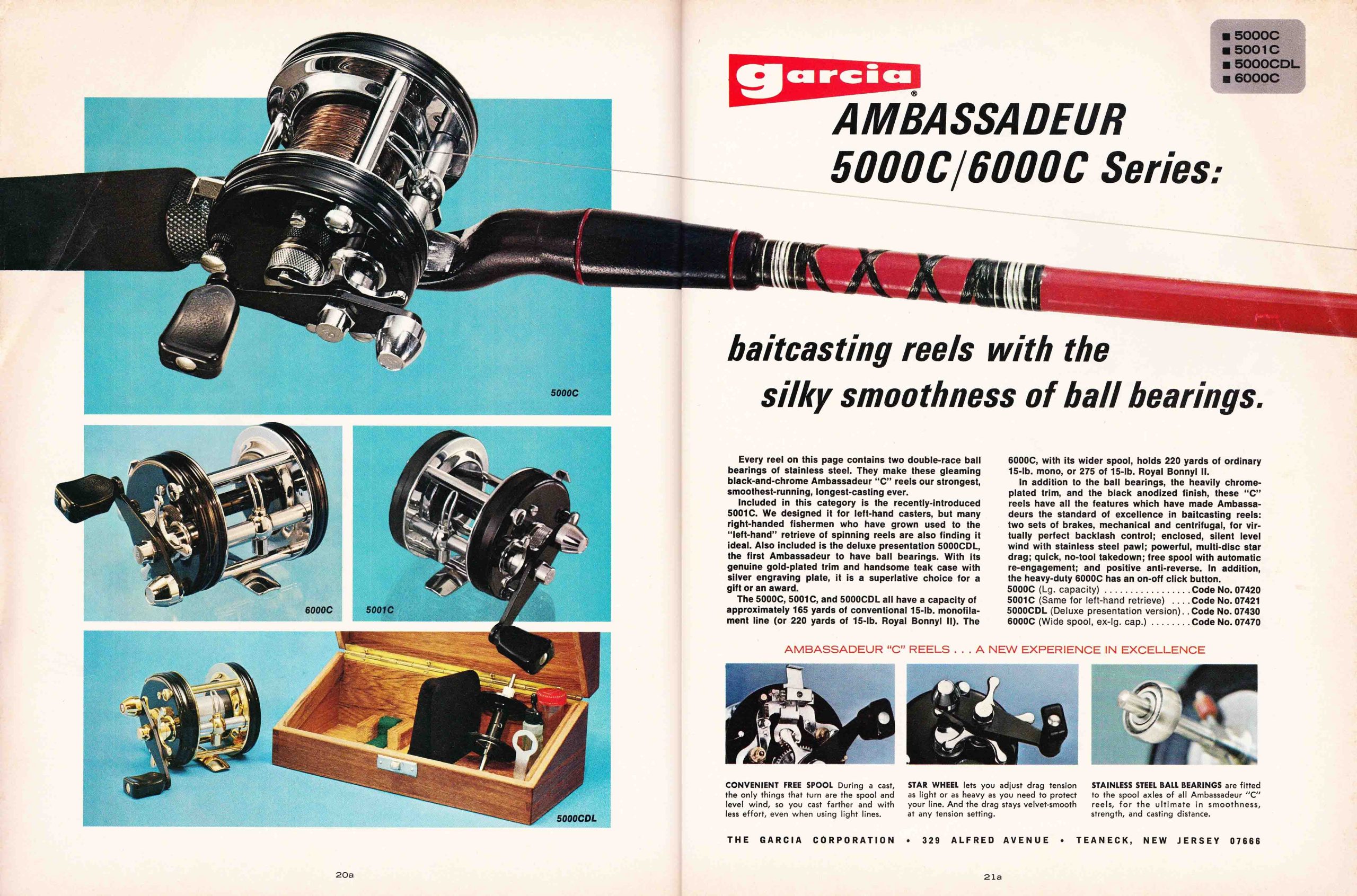
The Garcia Ambassadeur 5000C/6000C Series Reels. 1976 Garcia Fishing Annual. Image Terry Battisti.
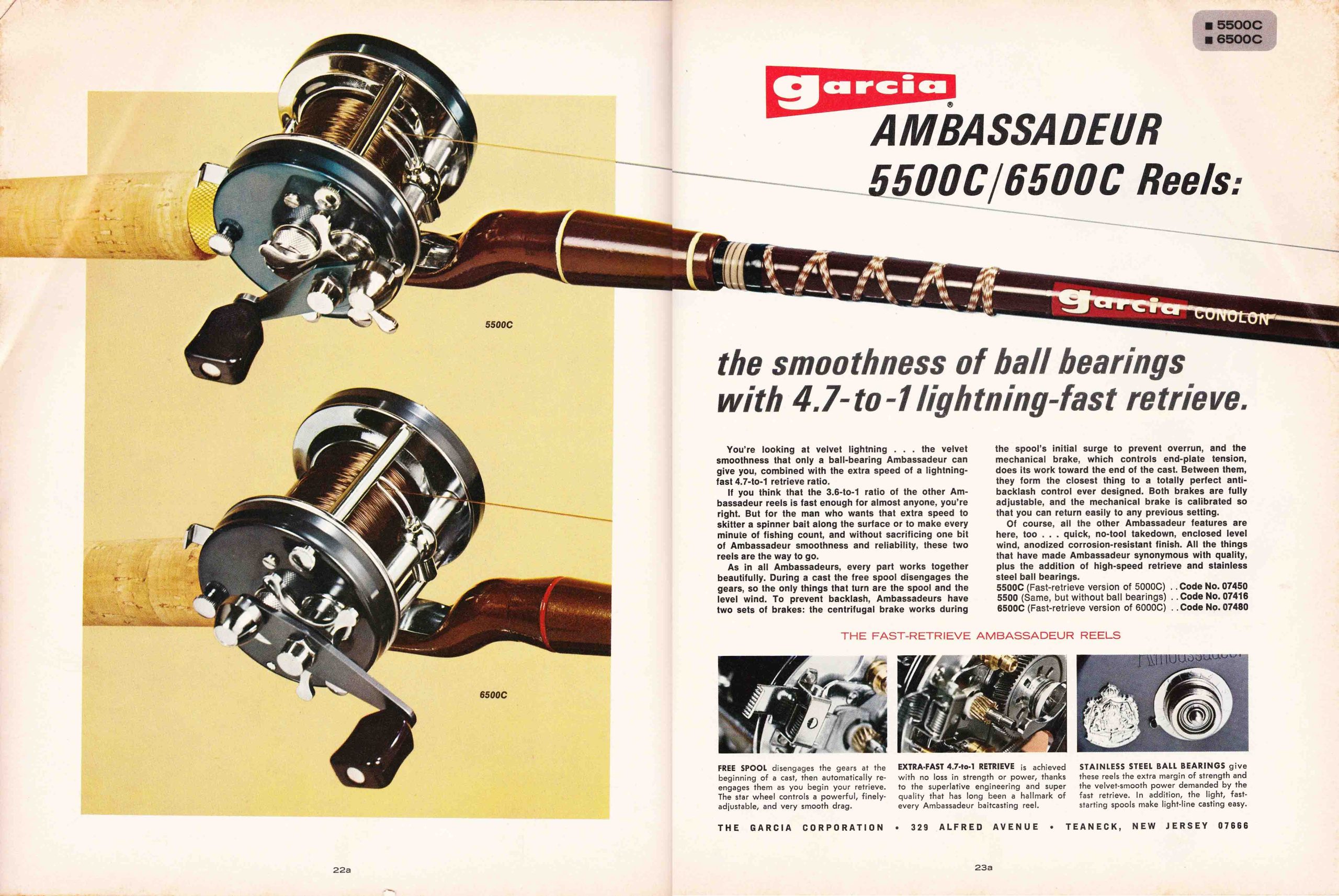
The Garcia Ambassadeur 5500C/6500C High-Speed Series Reels. 1976 Garcia Fishing Annual. Image Terry Battisti.
1977
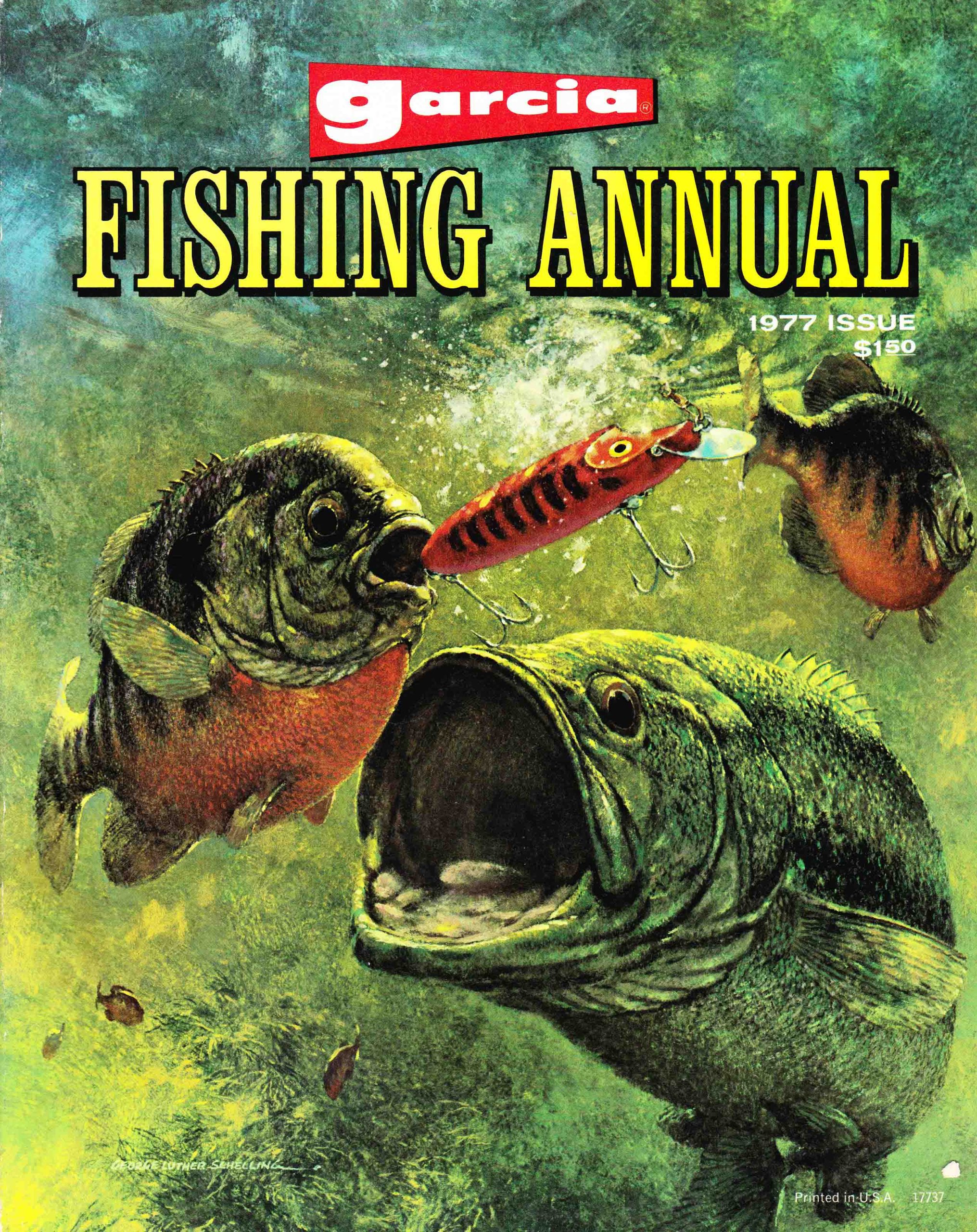
The cover of the 1977 Garcia Fishing Annual. Image Terry Battisti.
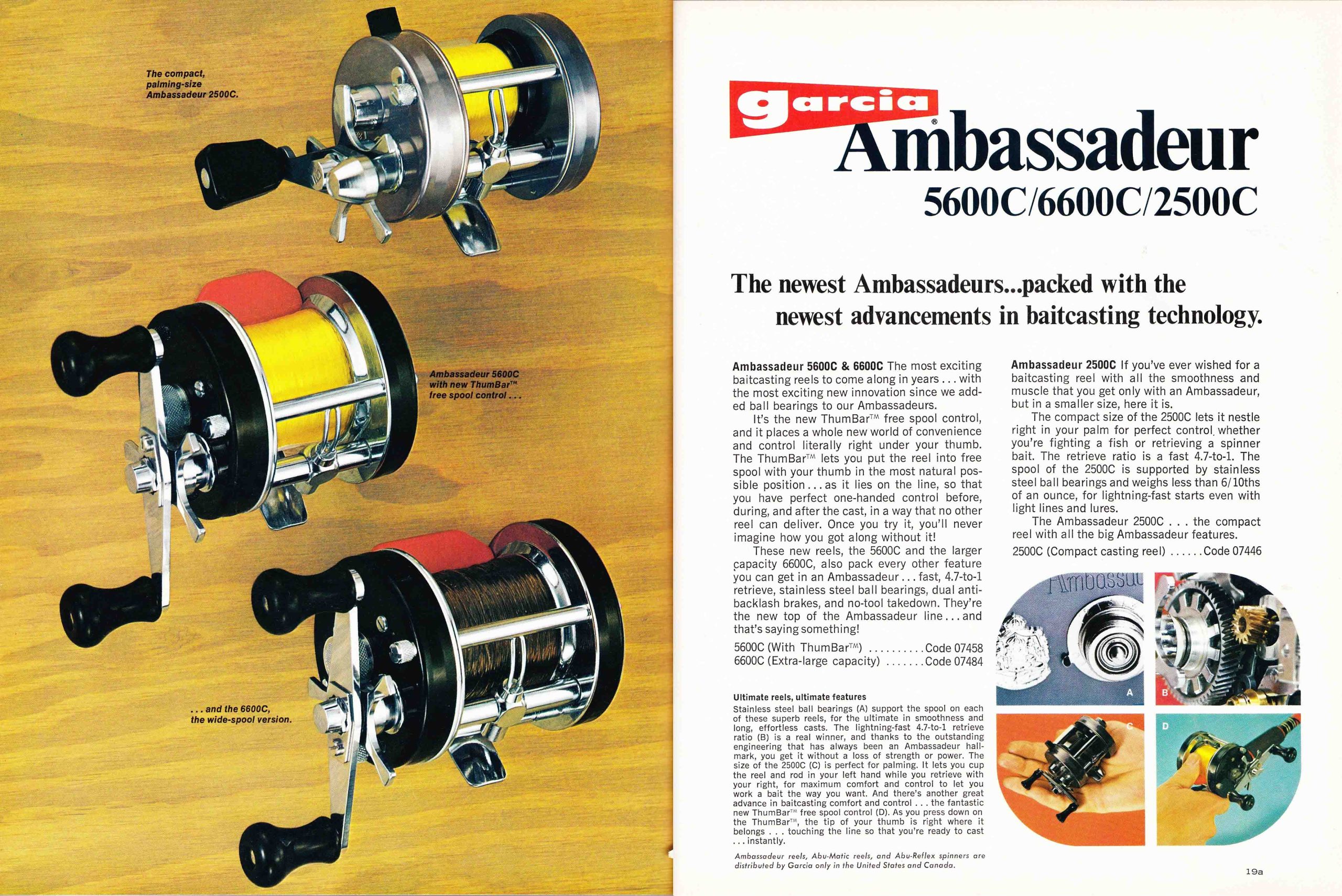
The Garcia Ambassadeur 5600C and 6600C ThumBar Reels. 1977 Garcia Fishing Annual. Image Terry Battisti.
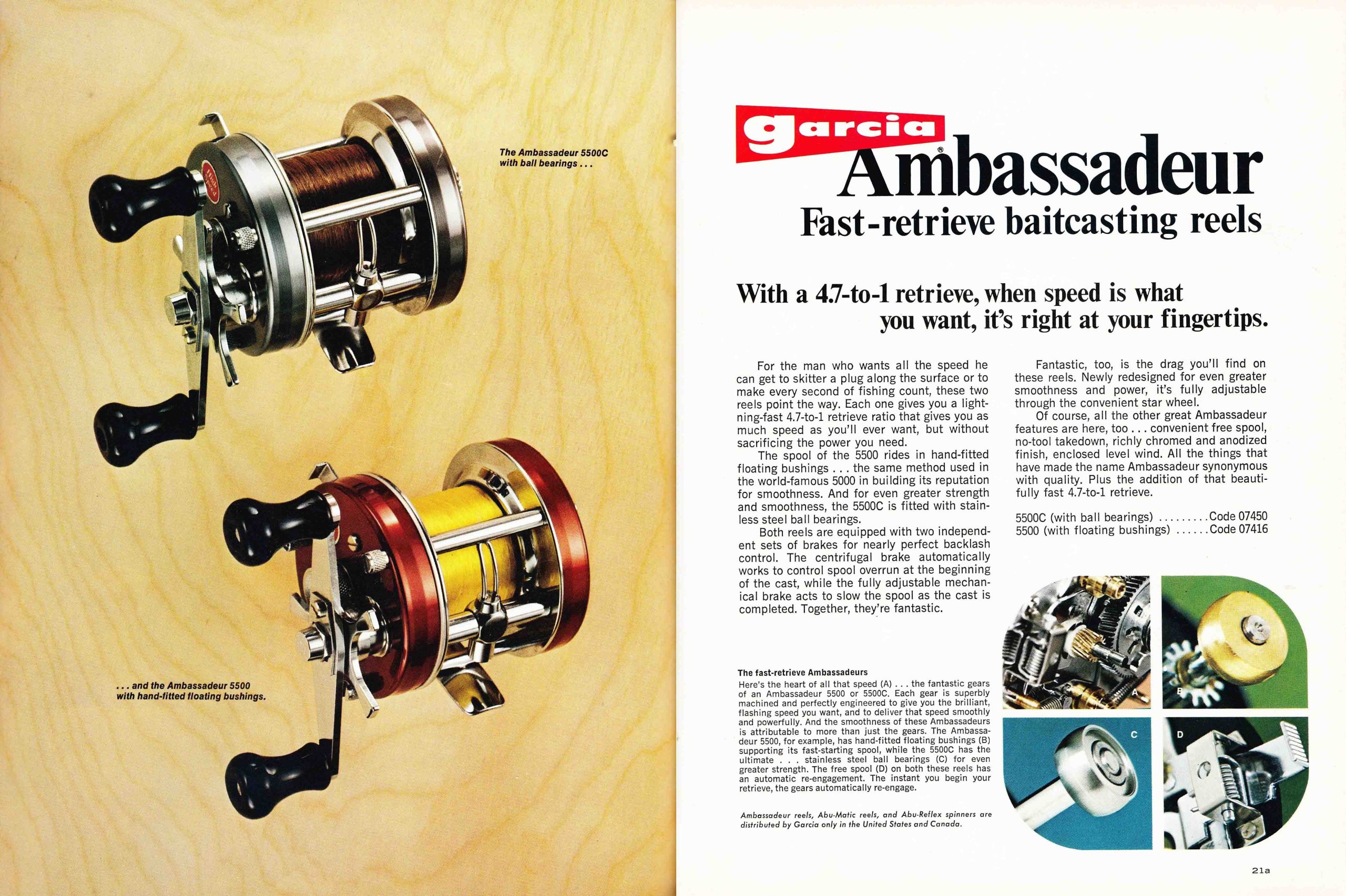
The Garcia Ambassadeur 5500 and 5500C High-Speed Reels. 1977 Garcia Fishing Annual. Image Terry Battisti.
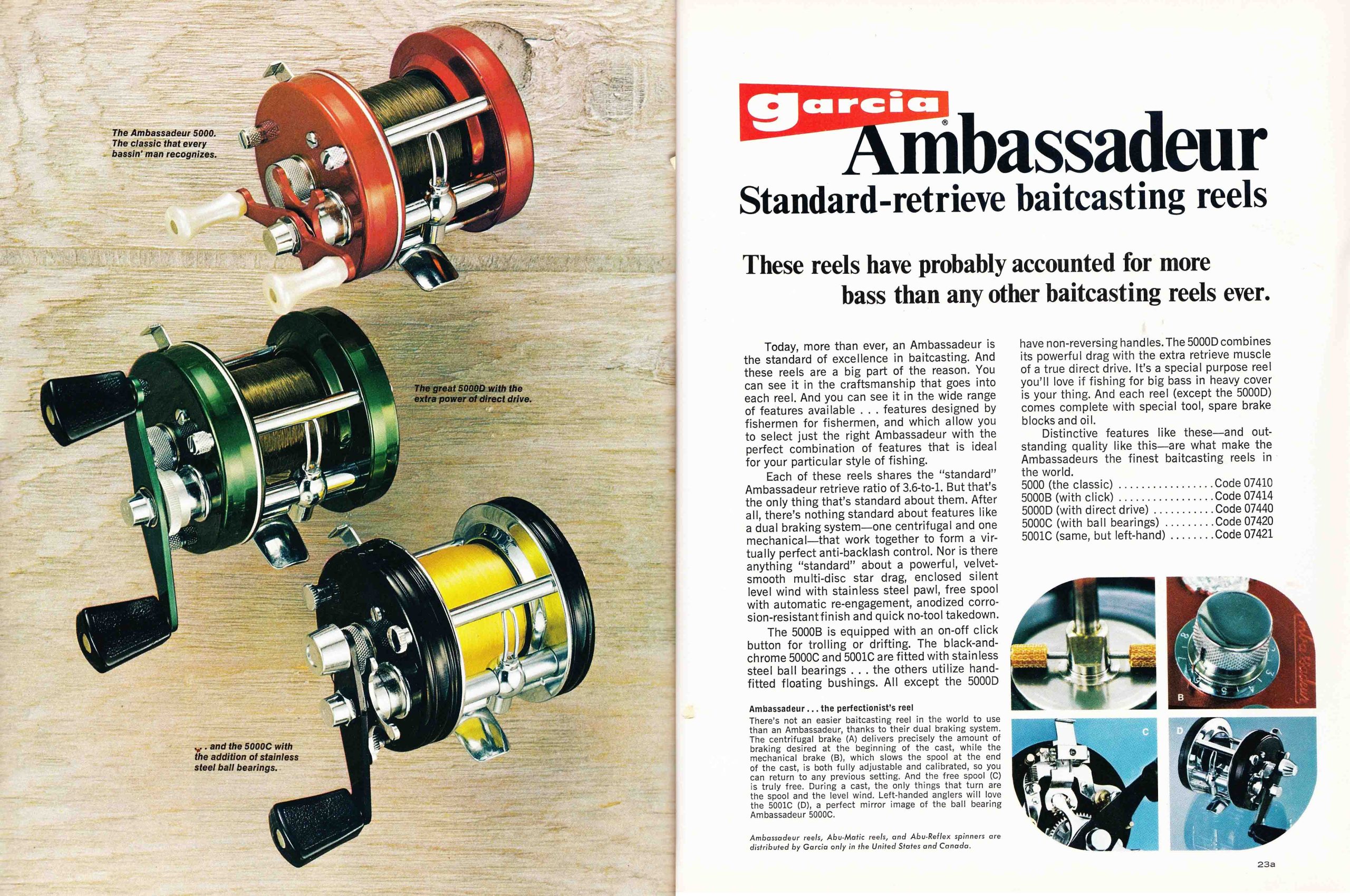
The Garcia Ambassadeur 5000, 5000D, and 5000C Standard Retrieve Reels. 1977 Garcia Fishing Annual. Image Terry Battisti.
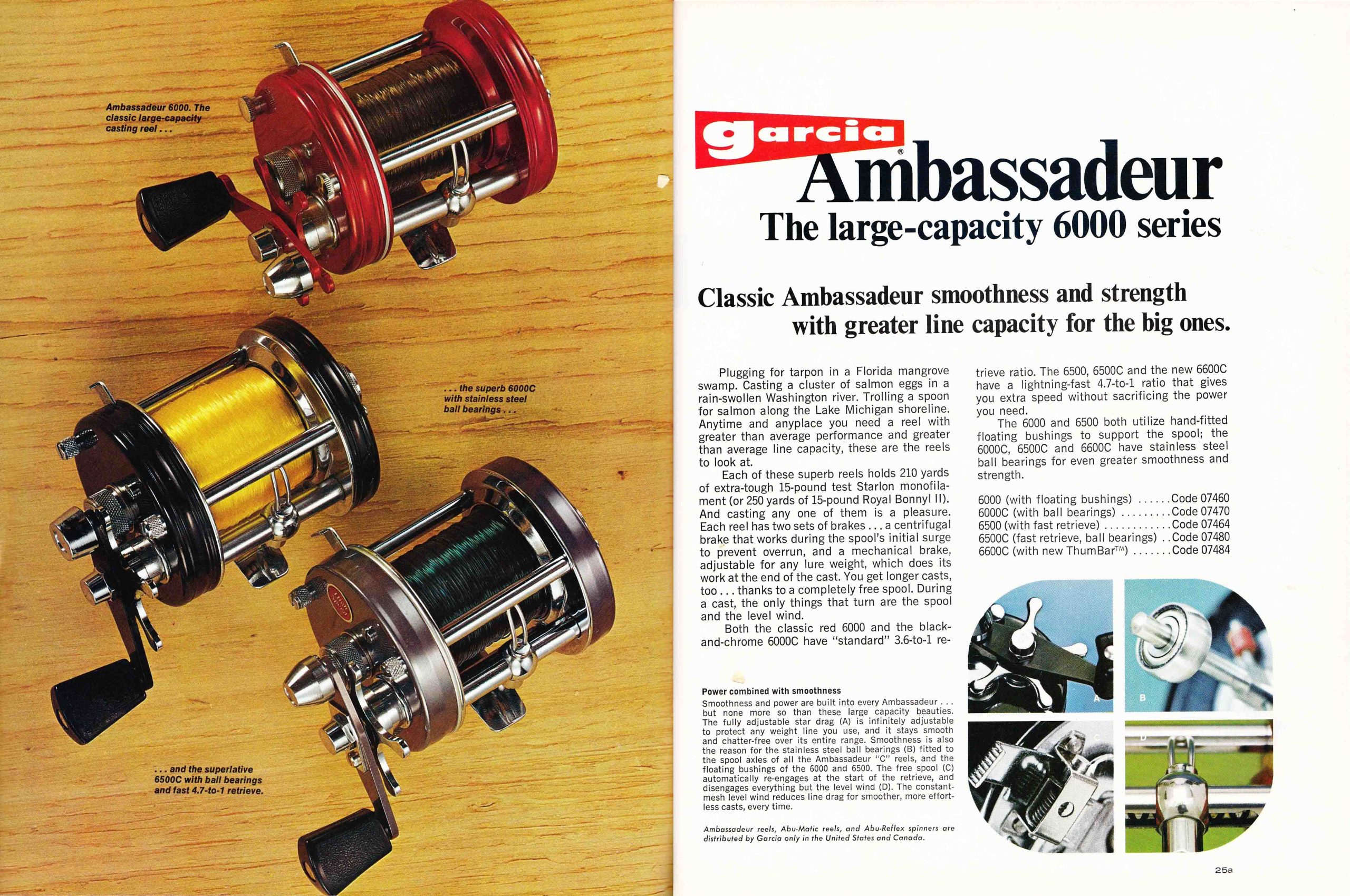
The Garcia Ambassadeur 6000, 6000C, and 6500C High-Capacity Reels. 1977 Garcia Fishing Annual. Image Terry Battisti.
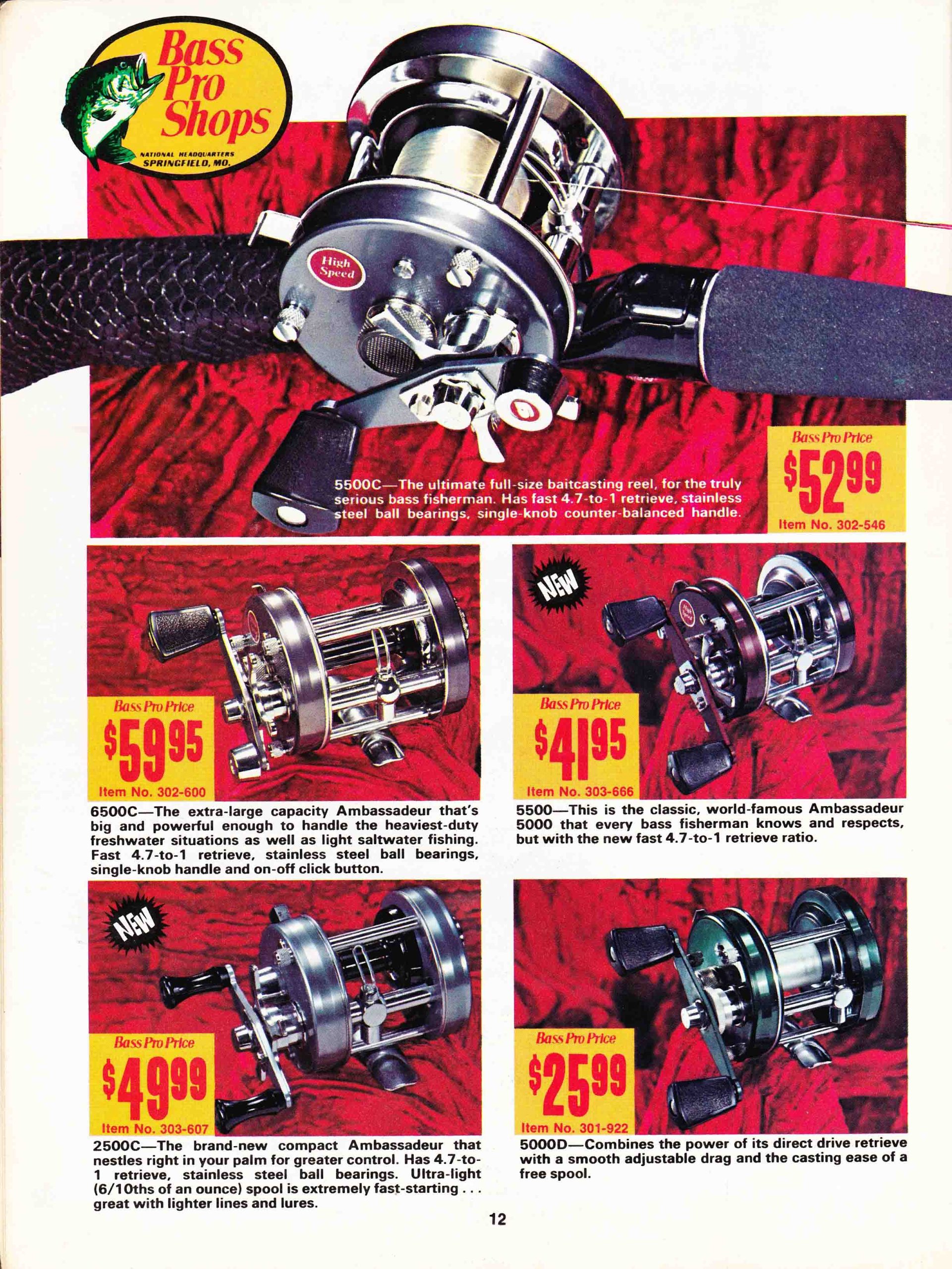
1977 Bass Pro Shops catalog page featuring Garcia Ambassadeur Reels. Image Terry Battisti.
1978
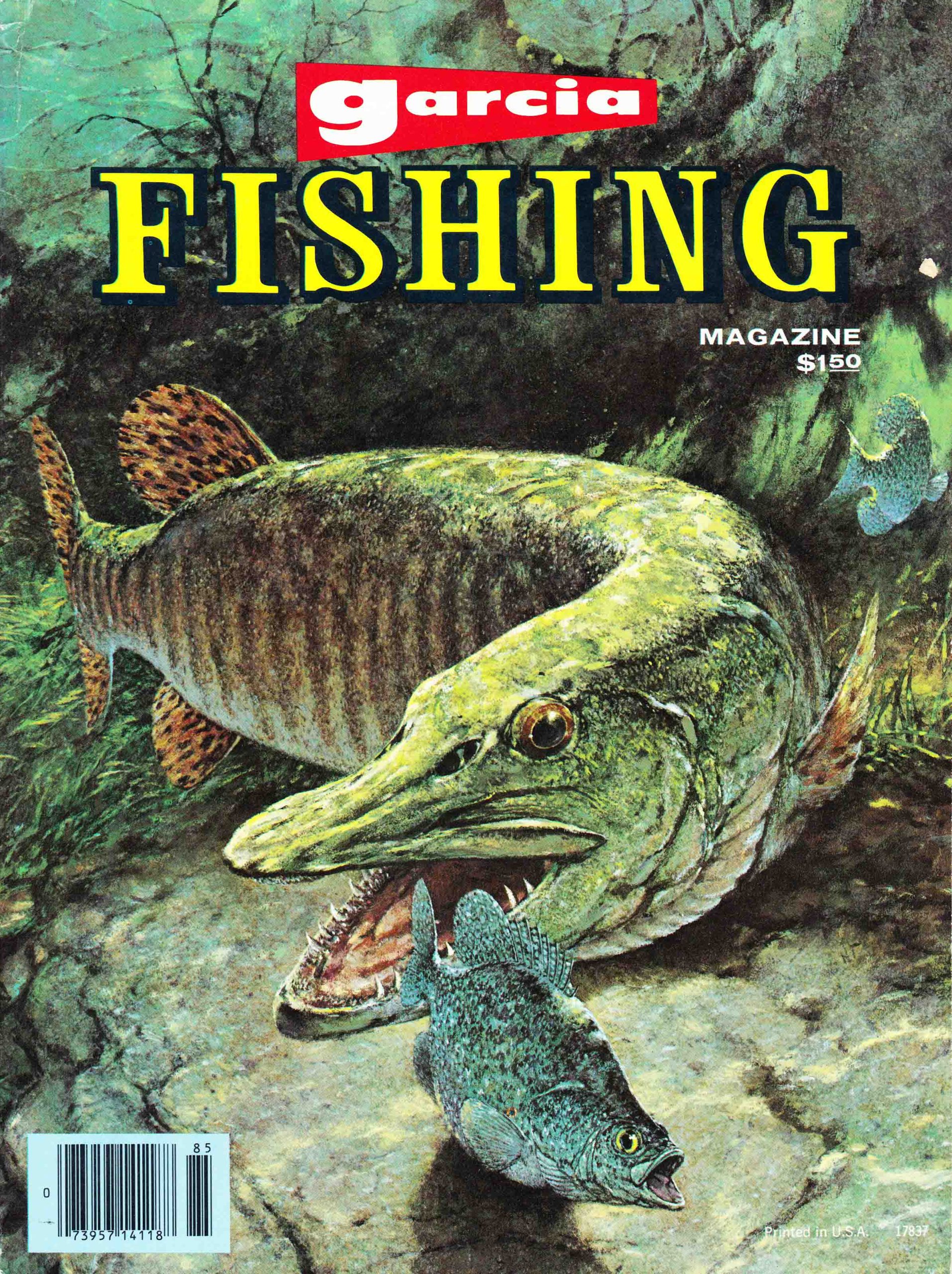
The cover of the 1978 Garcia Fishing Annual. Image Terry Battisti.
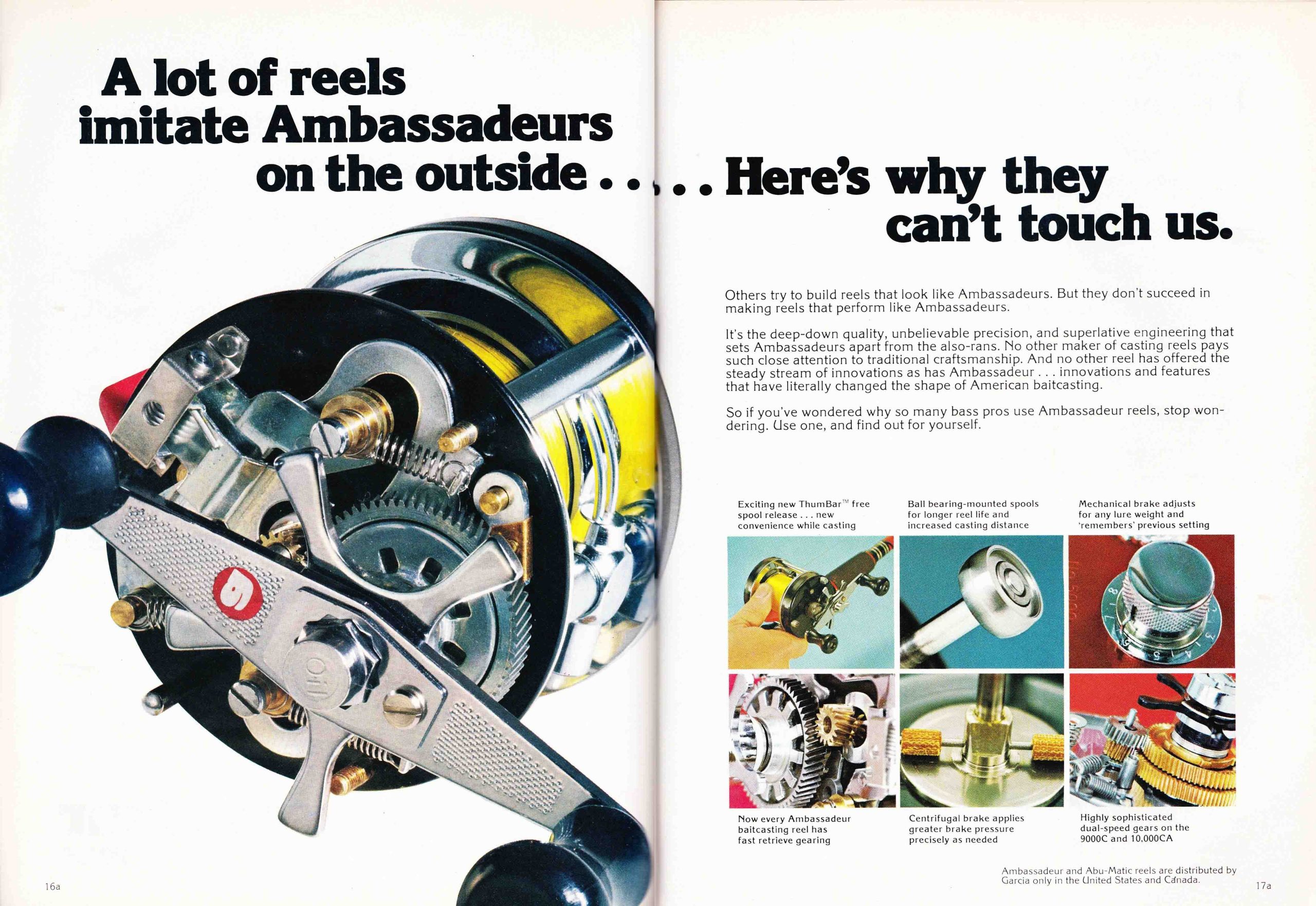
The engineering and mechanics of the Garcia Ambassadeur Reels. 1978 Garcia Fishing Annual. Image Terry Battisti.
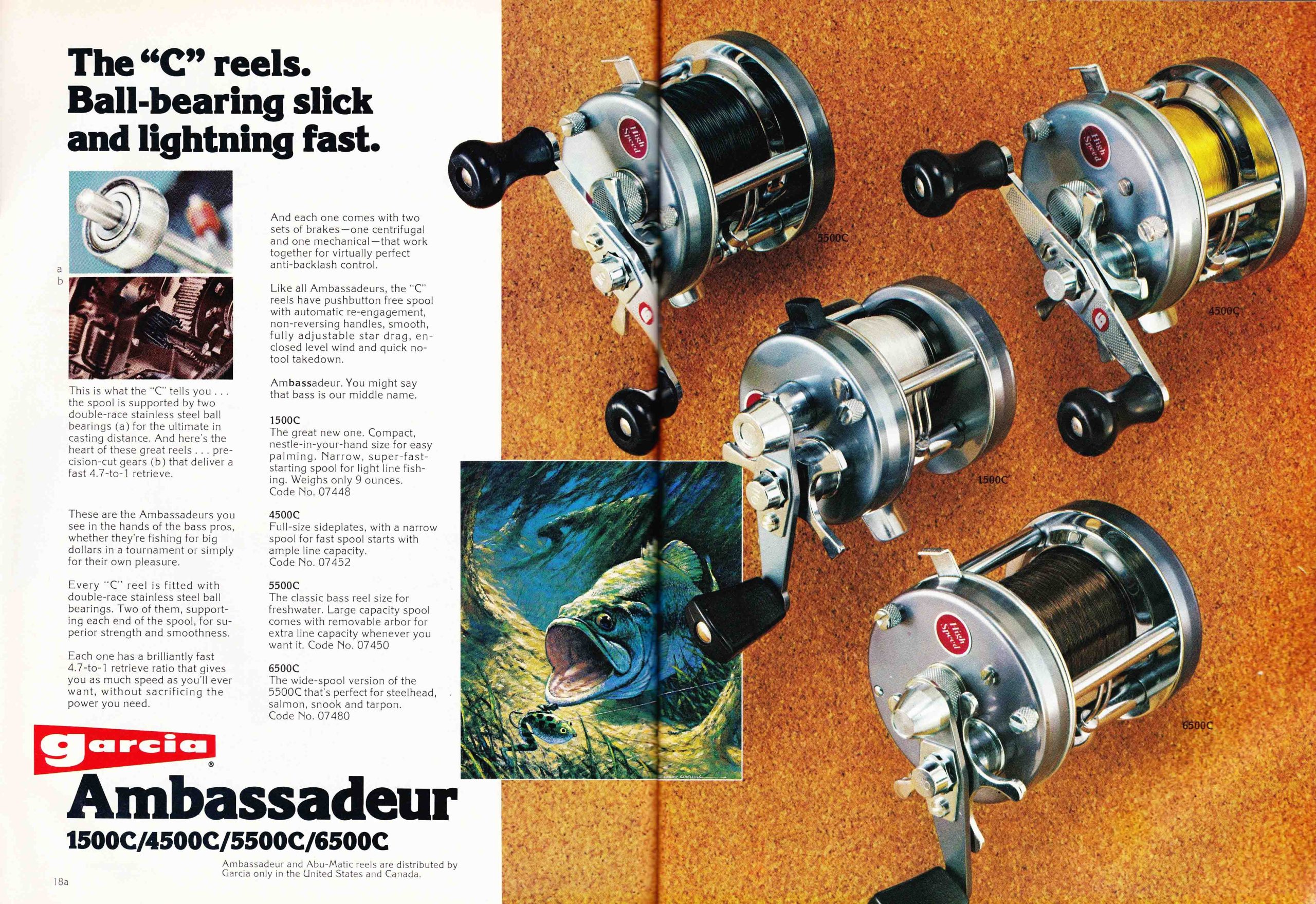
The Garcia Ambassadeur “C” Reels. 1978 Garcia Fishing Annual. Image Terry Battisti.
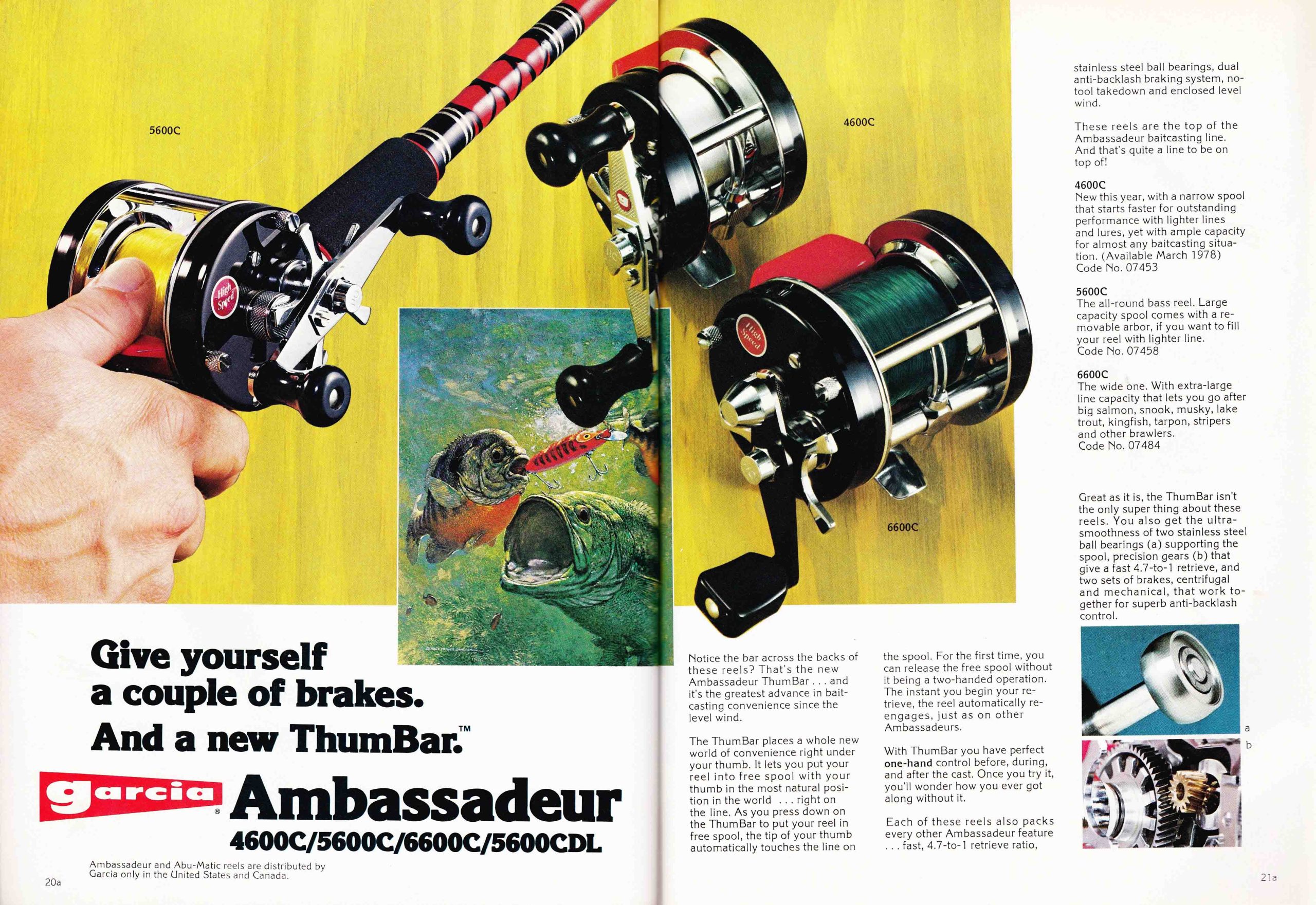
The Garcia Ambassadeur ThumBar Reels. 1978 Garcia Fishing Annual. Image Terry Battisti.
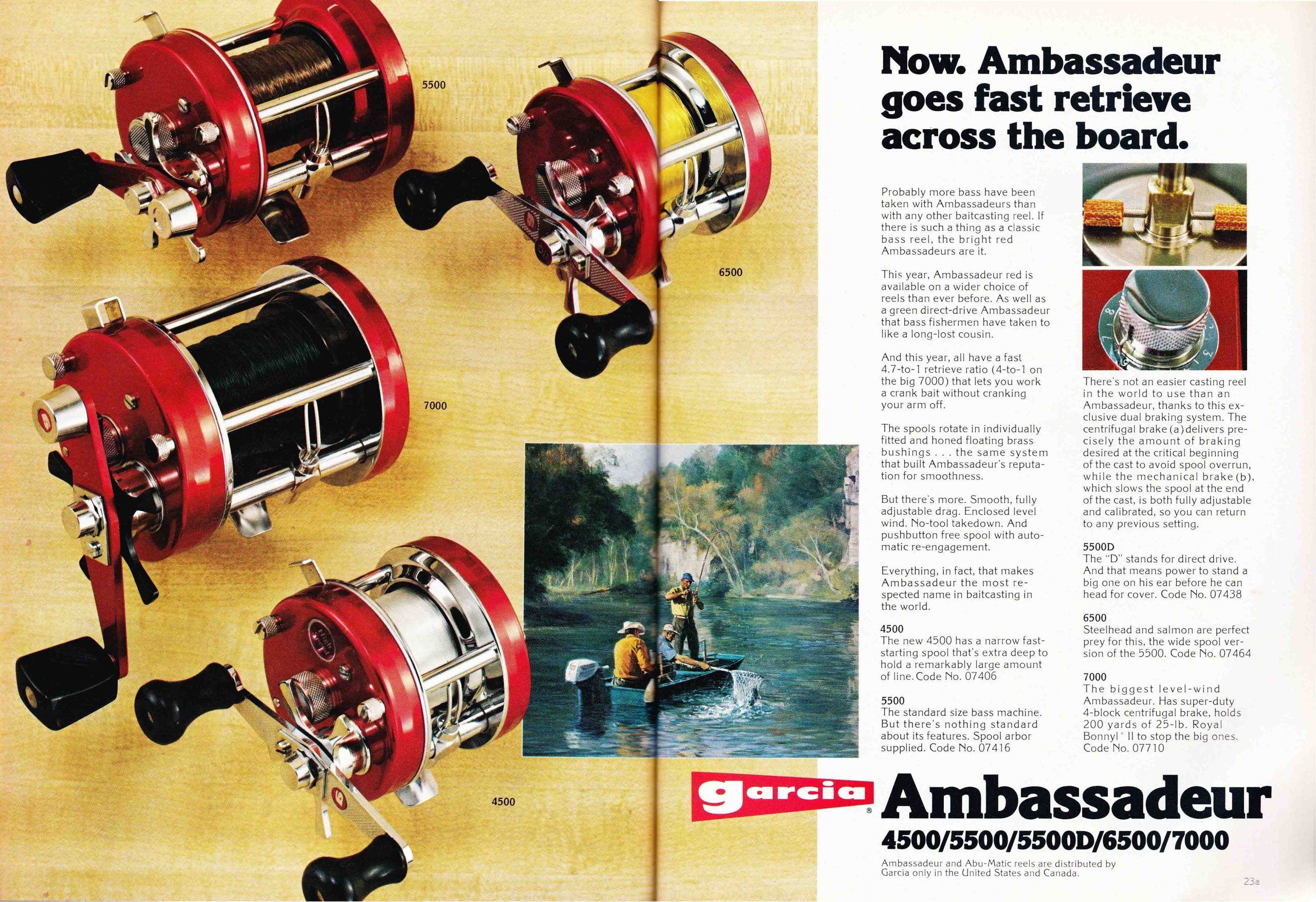
The Garcia Ambassadeur High-Speed Bushing Reels. 1978 Garcia Fishing Annual. Image Terry Battisti.
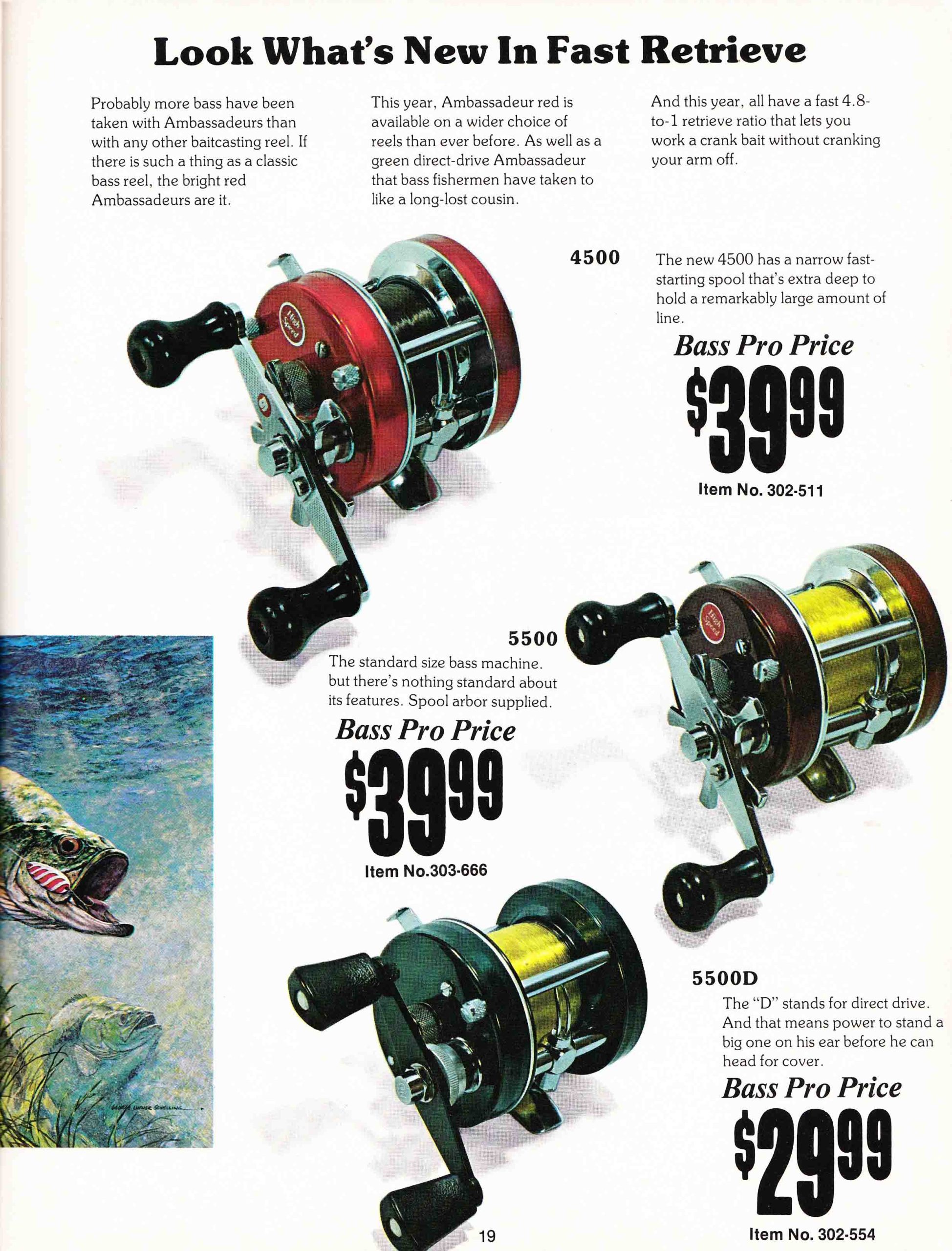
1978 Bass Pro Shops Catalog ad for Garcia Ambassadeur Bushing Reels. Image Terry Battisti.
1979
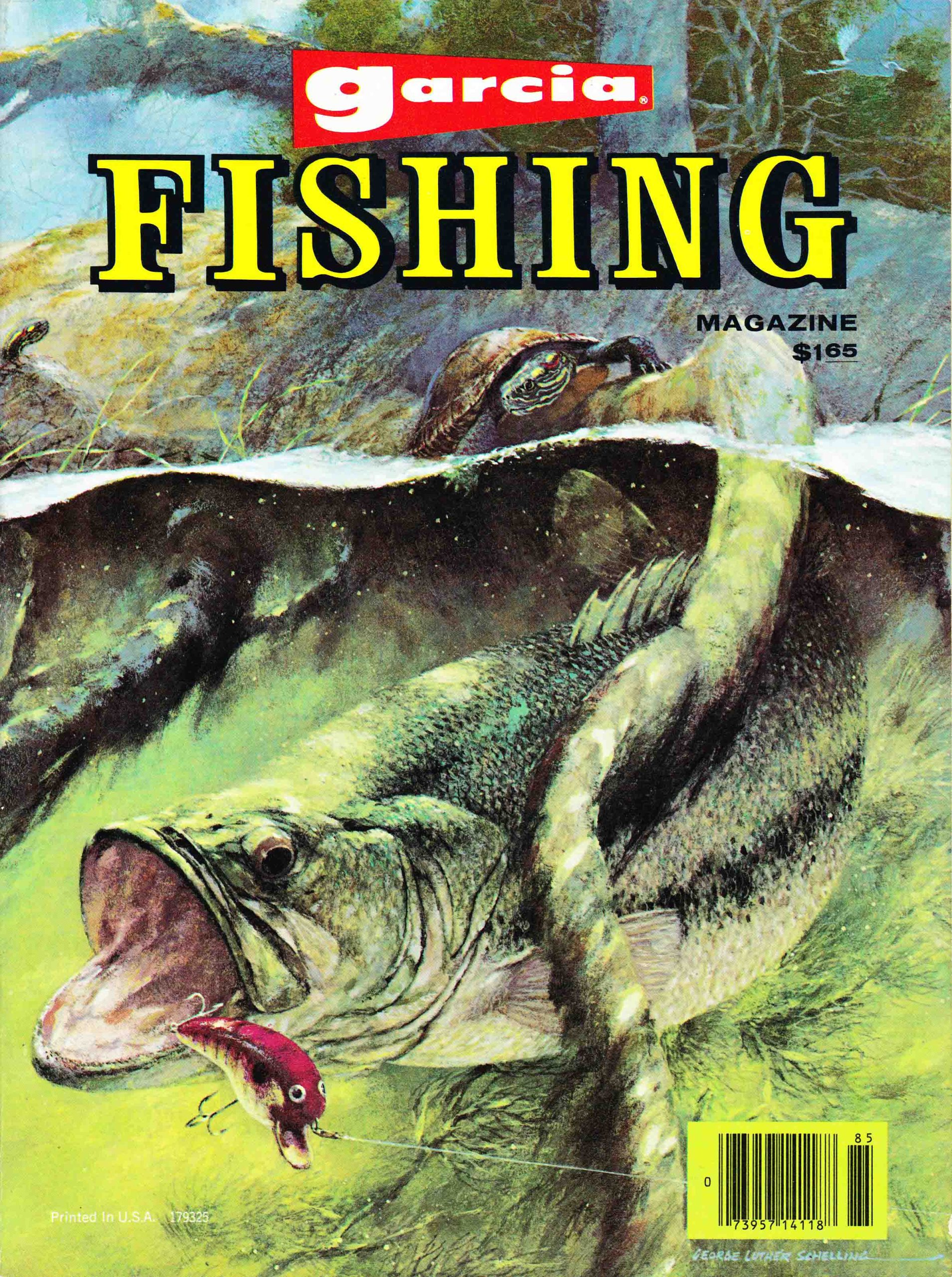
The cover of the 1979 Garcia Fishing Annual. Image Terry Battisti.
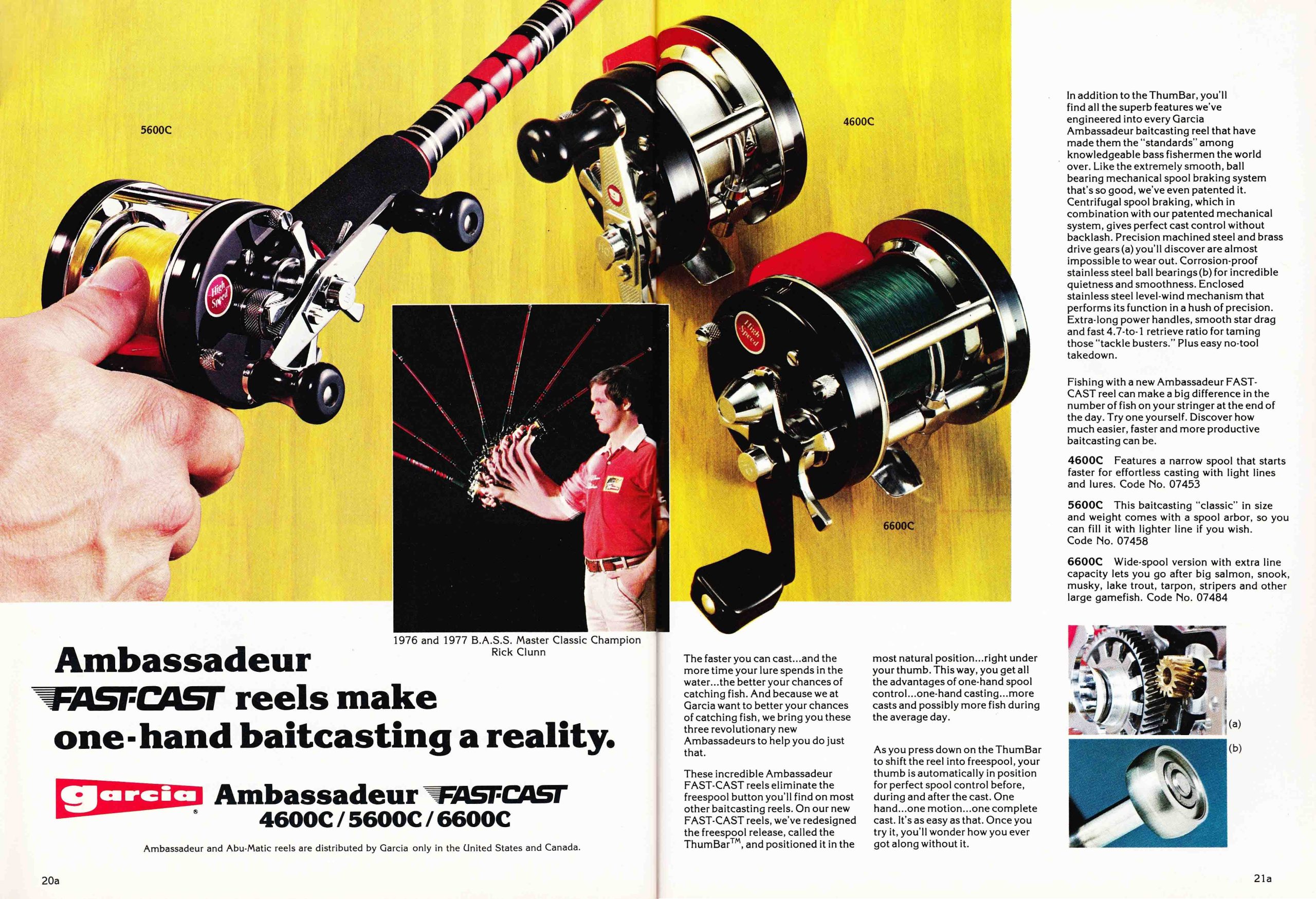
The ThumBar reels have been renamed the Fast-Cast Reels. 1979 Garcia Fishing Annual. Image Terry Battisti.
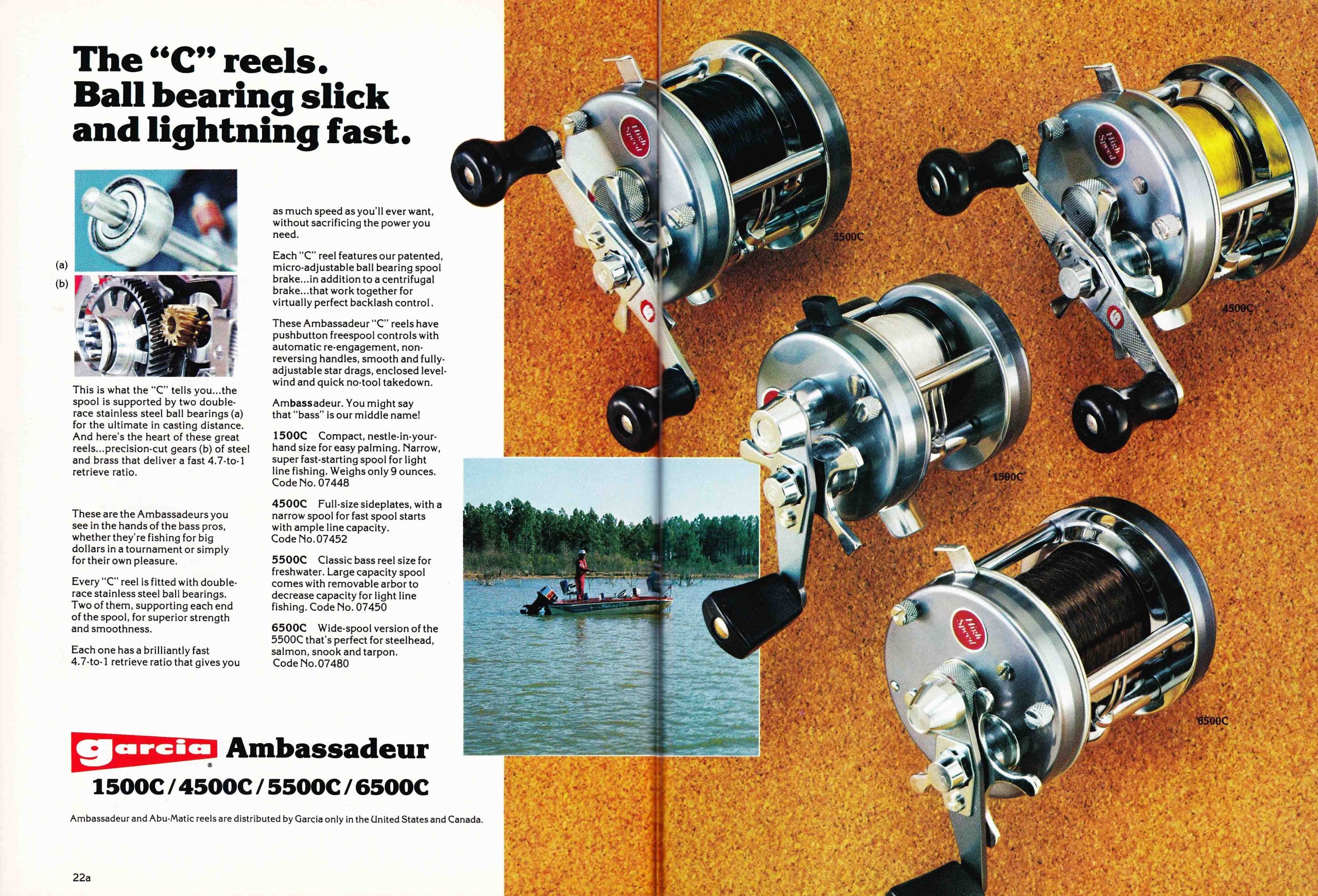
The Garcia Ambassadeur “C” Reels. 1979 Garcia Fishing Annual. Image Terry Battisti.
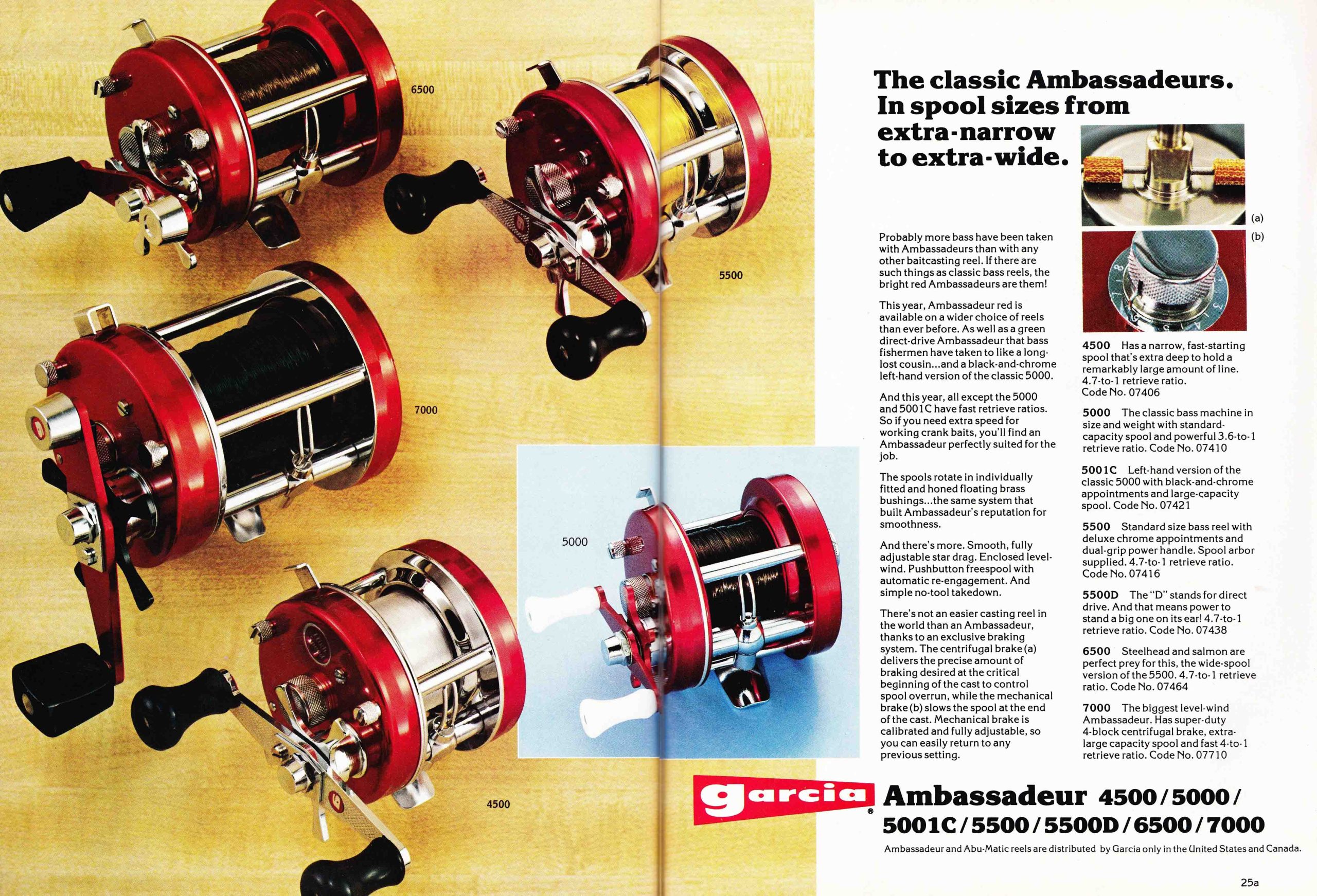
The Garcia Ambassadeur Bushing Reels. 1979 Garcia Fishing Annual. Image Terry Battisti.
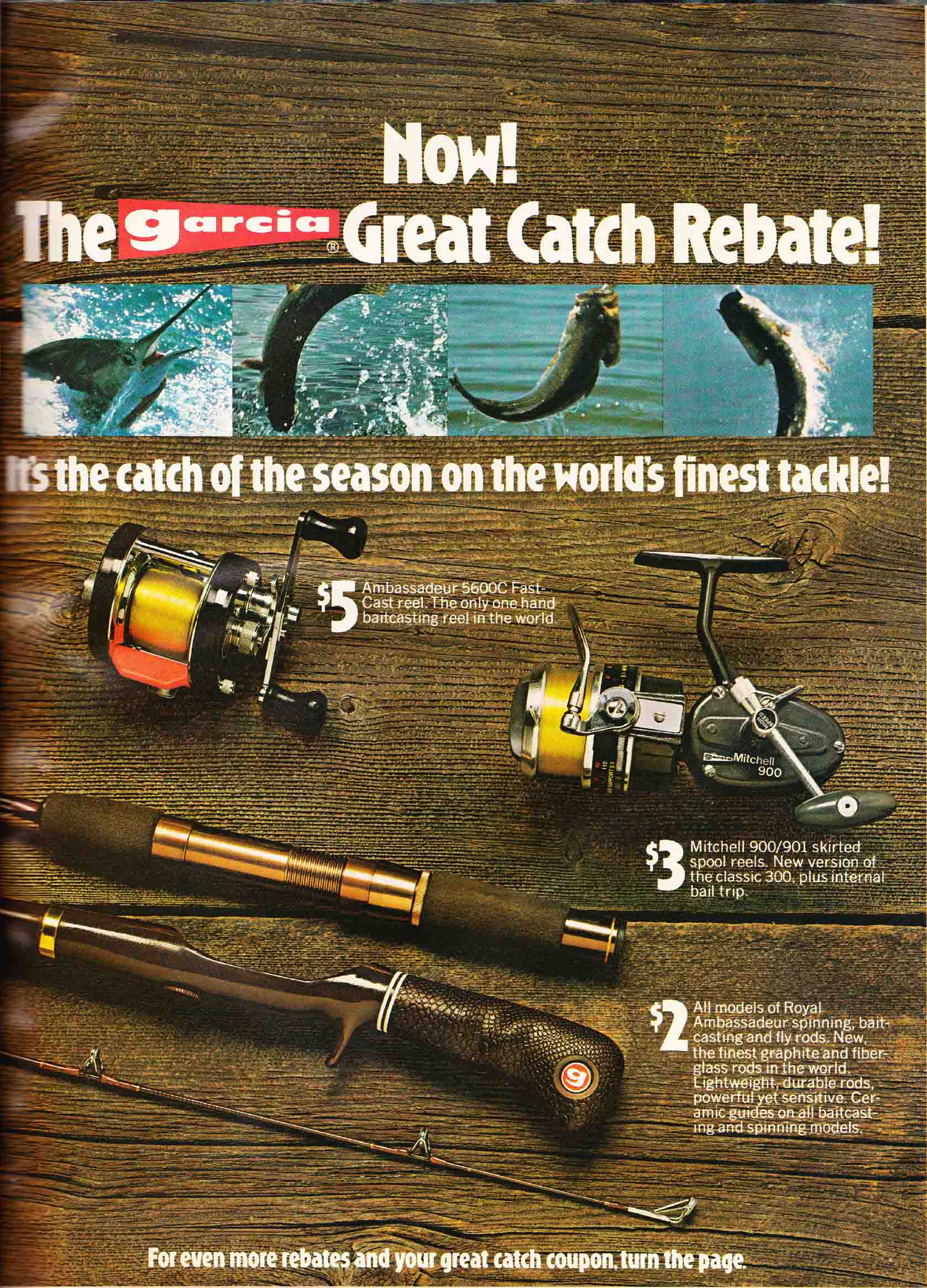
Garcia ad from the Mar/Apr 1979 issue of Bassmaster Magazine featuring a spread for Garcia Ambassadeur Reels. Image Terry Battisti.
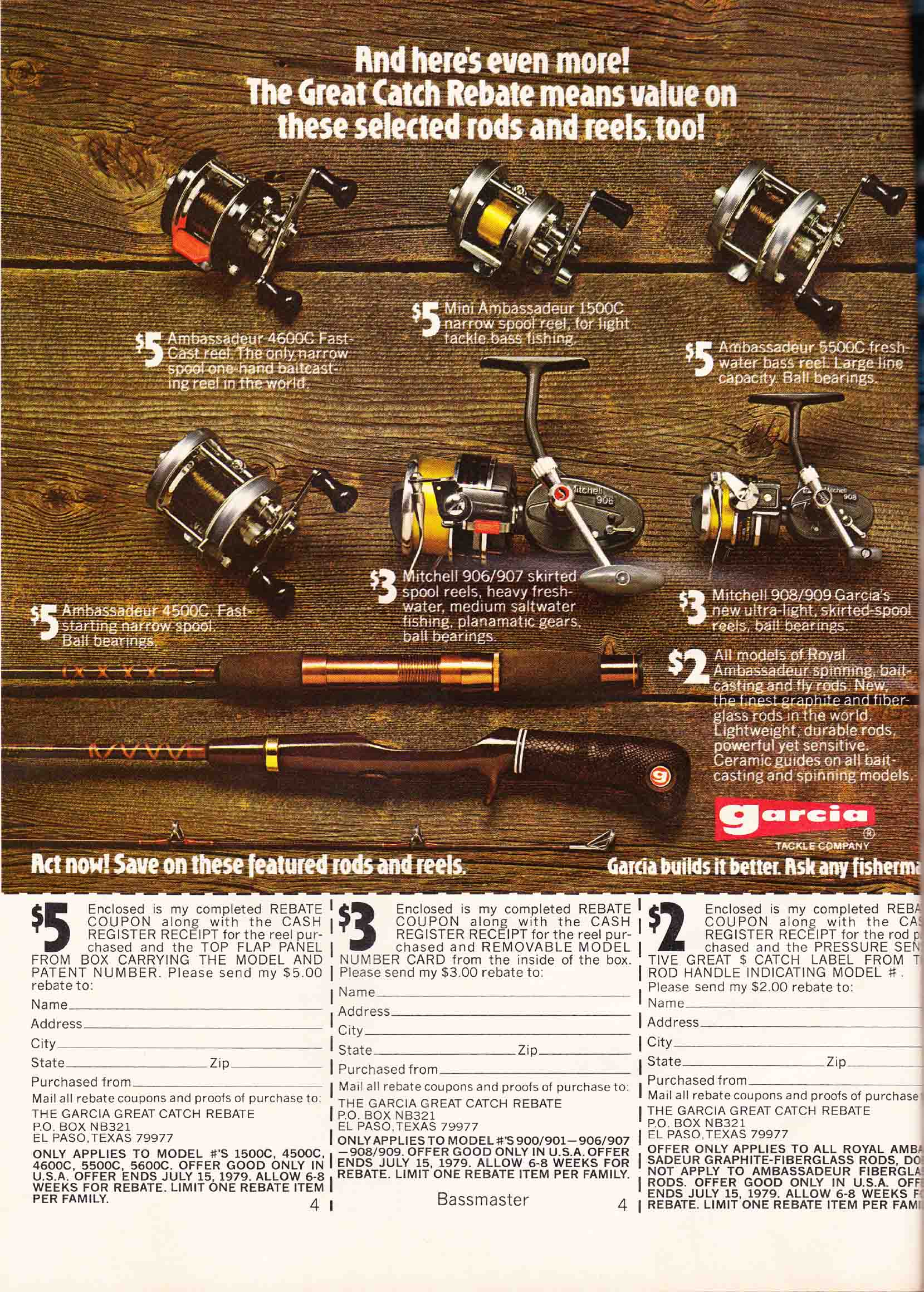
Garcia ad from the Mar/Apr 1979 issue of Bassmaster Magazine featuring a spread for Garcia Ambassadeur Reels. Image Terry Battisti.
1980
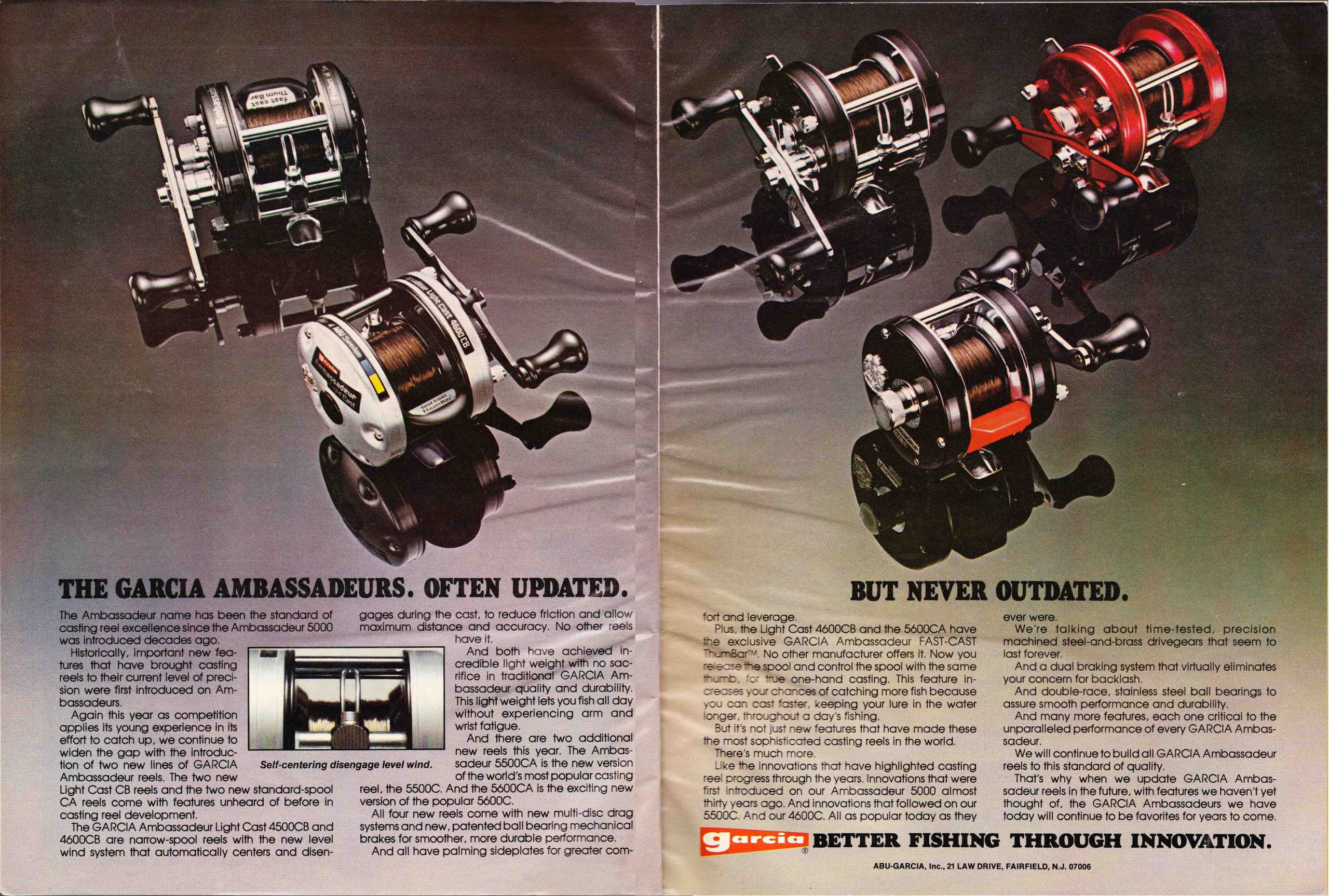
1980 Garcia ad from the May/Jun issue of Bassmaster Magazine. Image Terry Battisti.
1982
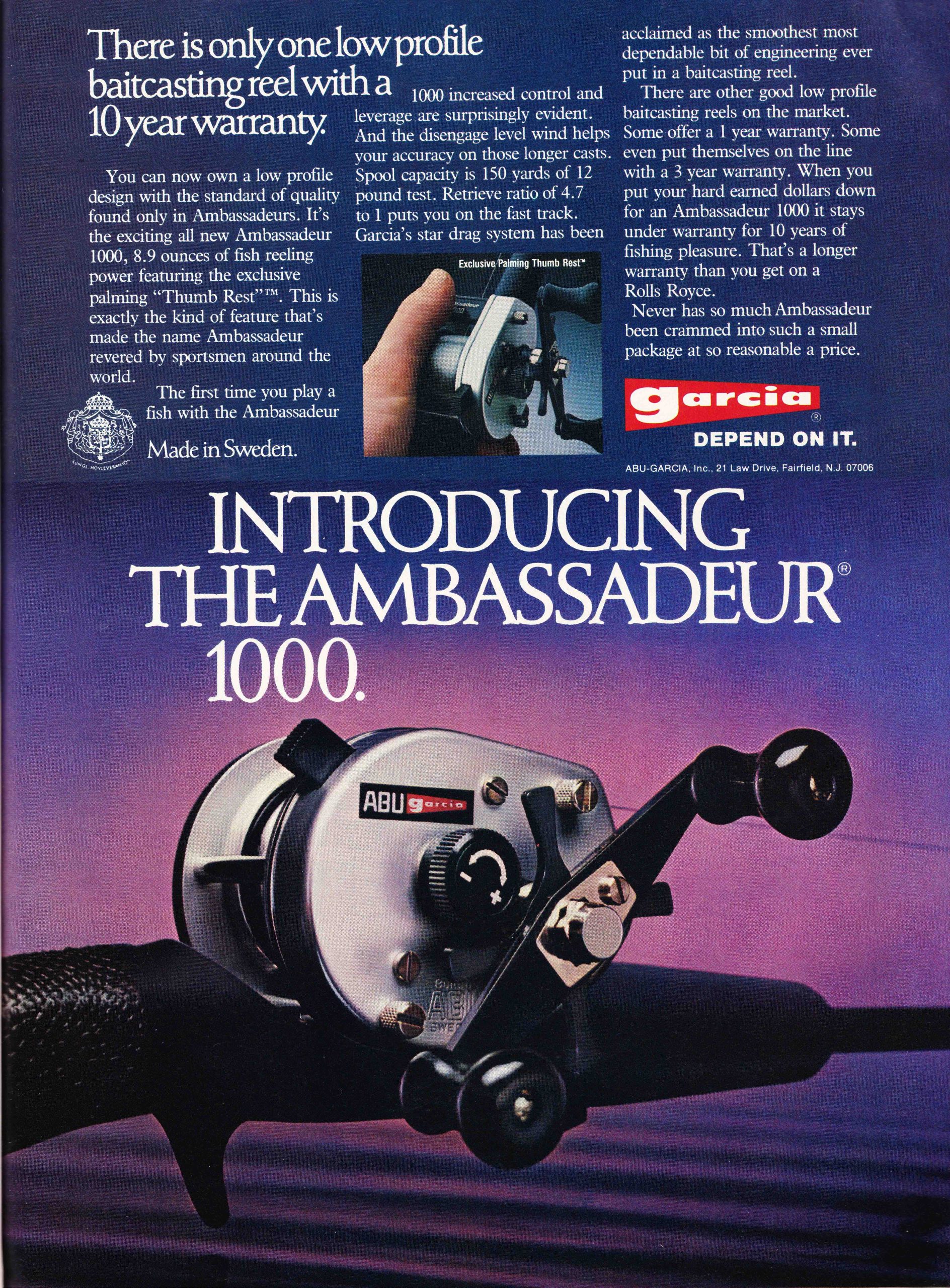
1982 Garcia ad from the May/Jun issue of Bassmaster Magazine featuring the new Ambassadeur 1000. Image Terry Battisti.
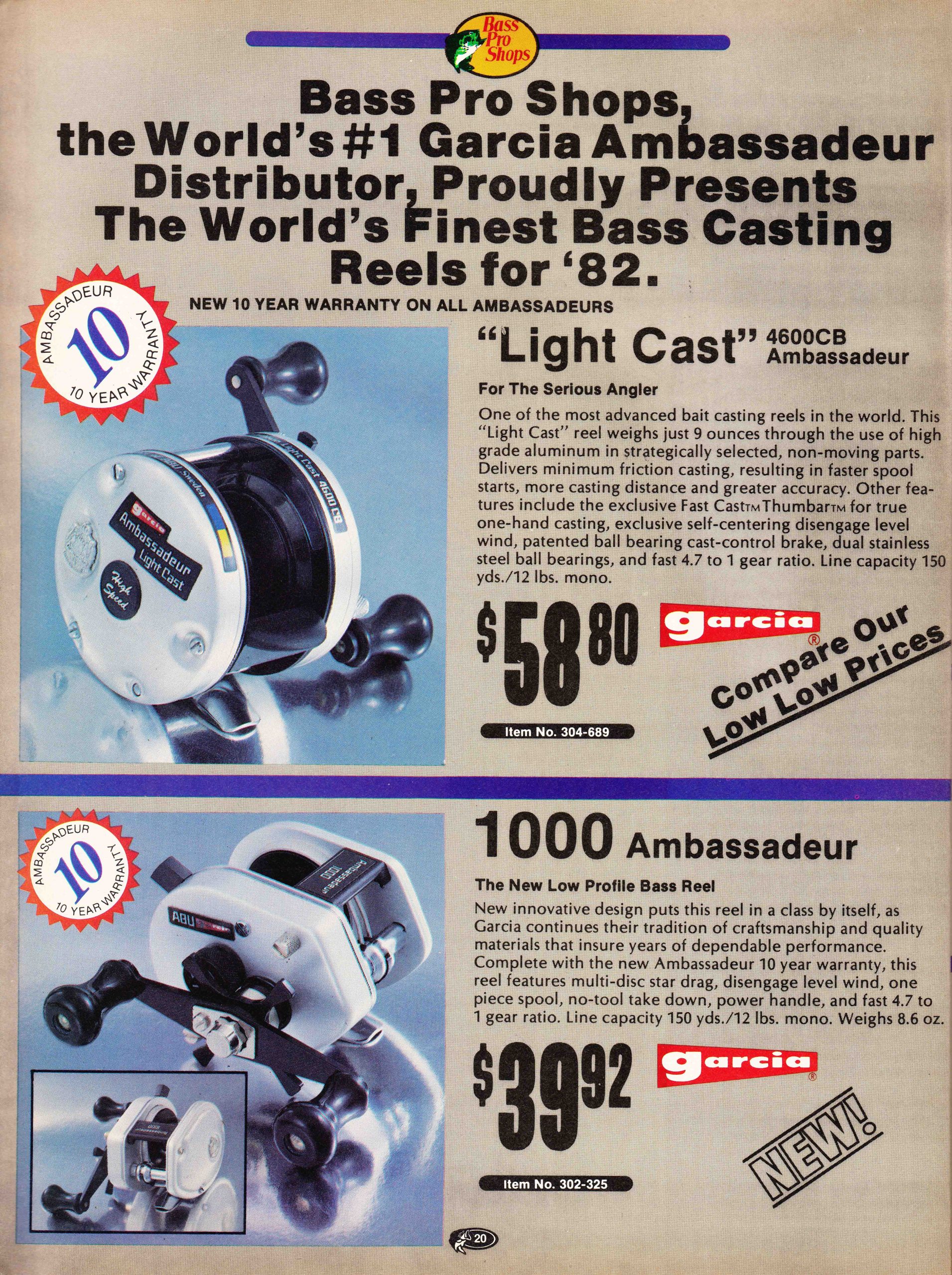
Garcia Ambassadeur spread from the 1982 Bass Pro Shops catalog featuring the new 4600CB Light Cast and the Ambassadeur 1000 Reels. Image Terry Battisti.
1983
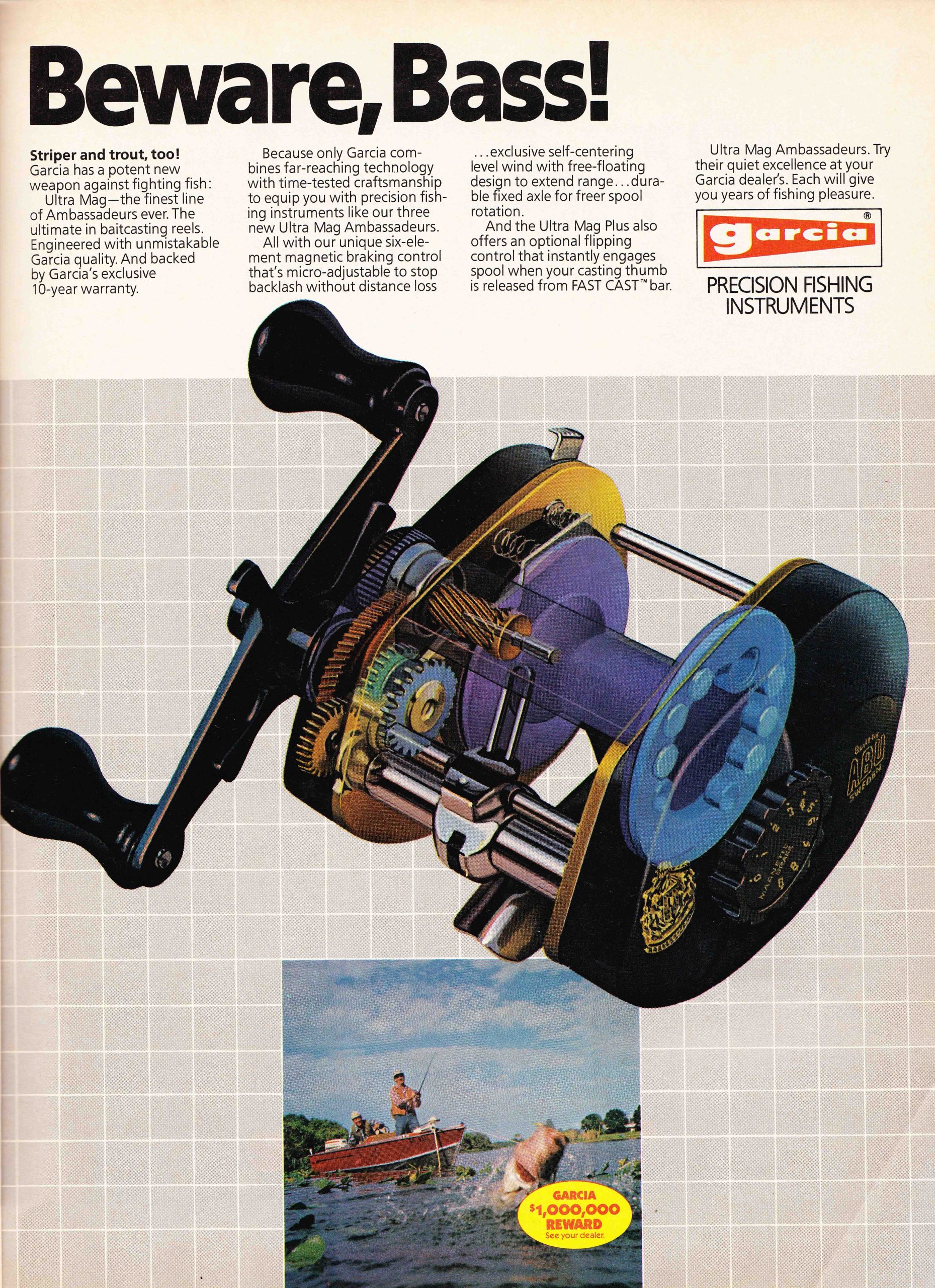
Garcia ad from the May-June 1983 issue of Bassmaster Magazine featuring the new Ultra Mag Reel. Image Terry Battisti.
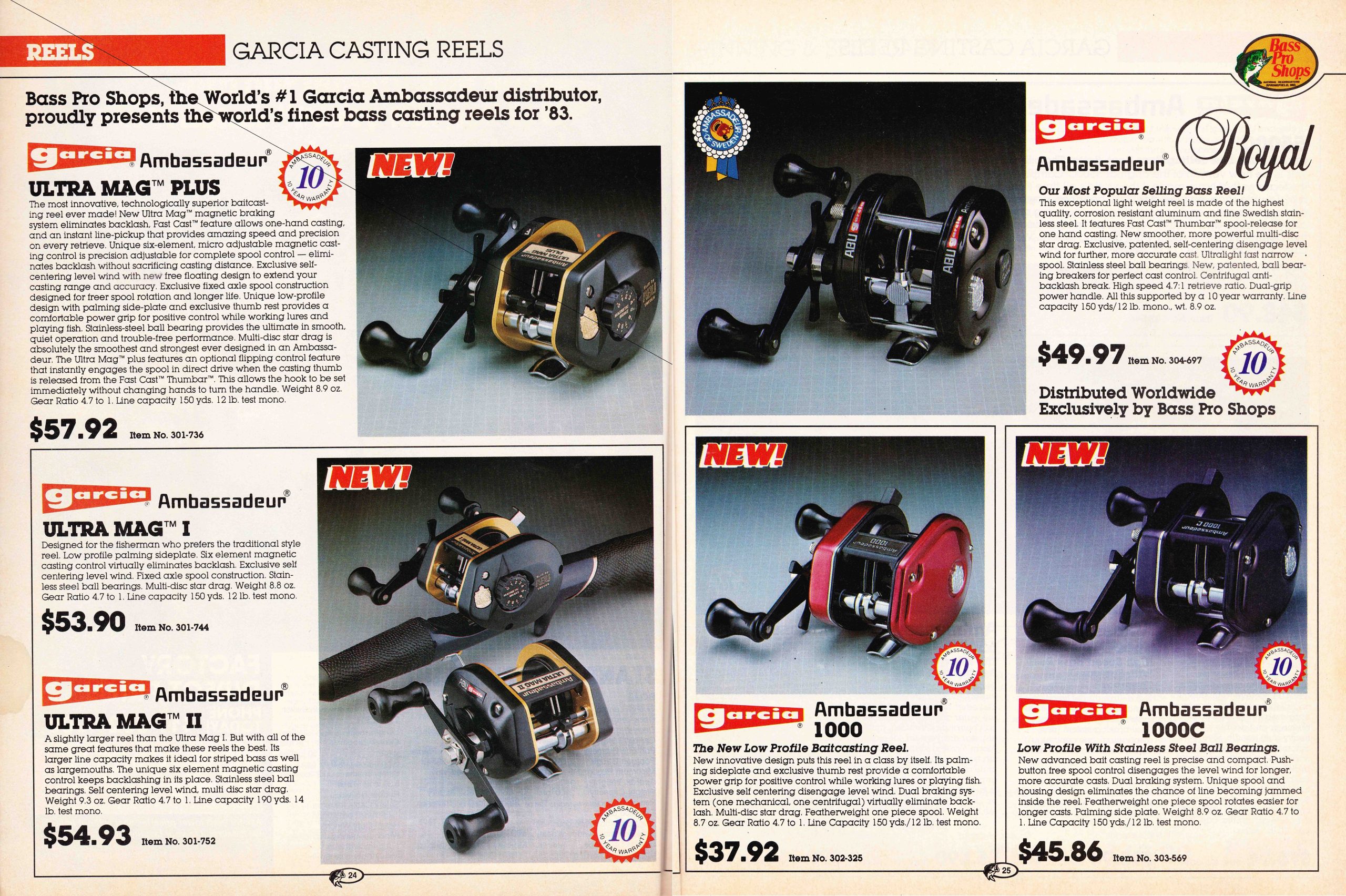
Two-page spread of garcia Ambassadeur reels from the 1983 Bass Pro Shops catalog featuring the new Ultra Mag Reels and the 1000 and 1000C reels.. Image Terry Battisti.