Introducing Bill McEwen
Bass anglers are tinkerers – always trying to build a better bait. Bill McEwen was no different. He was one of the best anglers in west Tennessee and always looking for ways to catch more and bigger bass. McEwen’s tinkering led to a bait that worked and next thing you know, every angler in the region was clamoring for one. Weekly fishing reports exploded with news of big catches being made on McEwen’s new bait. McEwen Tackle Company aka Strike King, was born.
I first heard of Bill McEwen from Bill Dance about twenty-five years ago while interviewing him for an article. At that time not much was said about McEwen, but I always kept the info in my mind, you know, just in case I needed it for some sort of bass fishing trivia game.
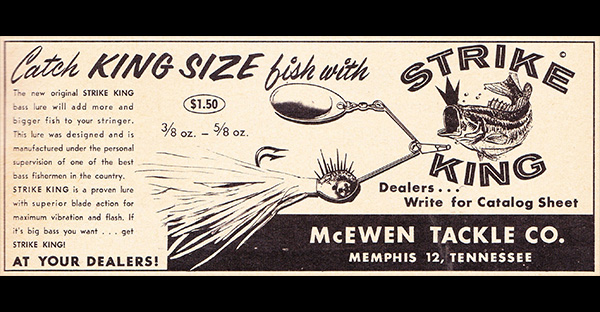
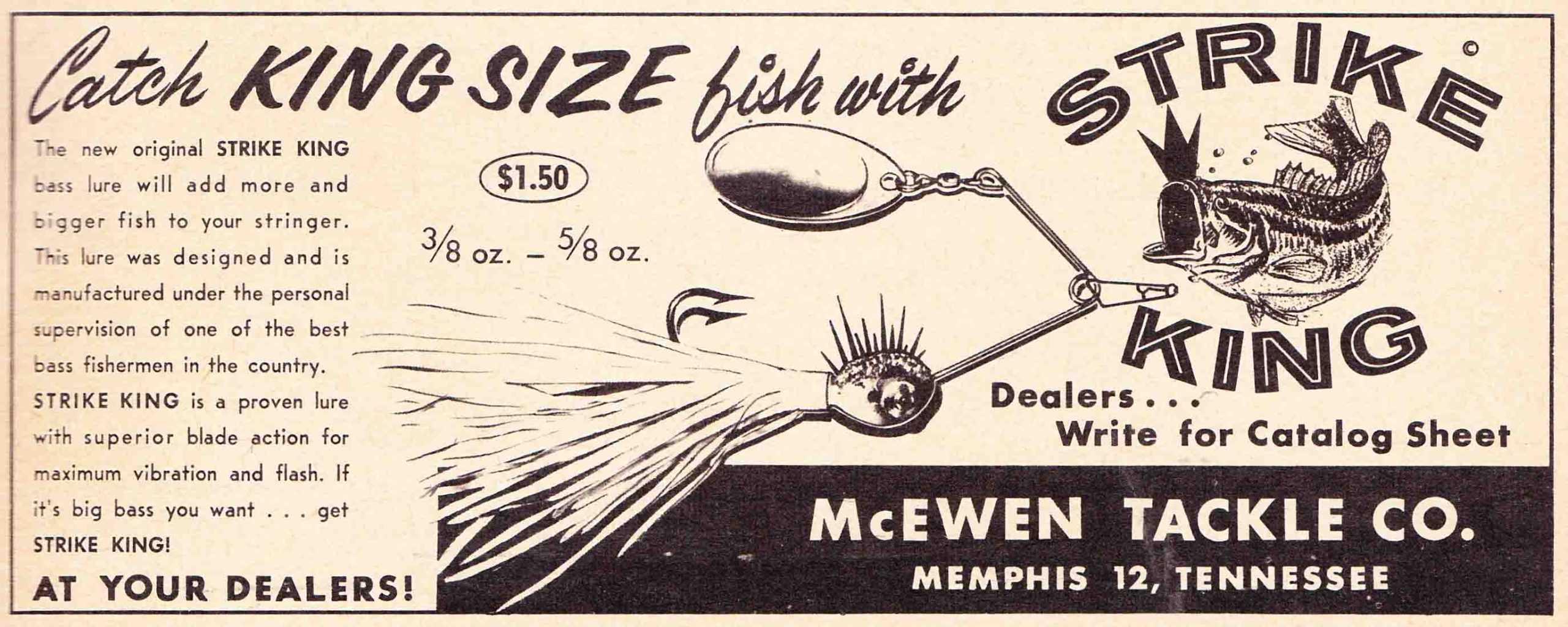
Then, back in 2012 I was thumbing through a 1964 issue of Don Fuelsch’s Southern Angler’s and Hunter’s Guide and came across the ad you see at the top of this post. It was the Strike King logo that caught my eye initially, but when I really examined the ad, I noticed it said McEwen Tackle Co. at the bottom.
It was then I recalled what Bill Dance told me a few years prior about McEwen being the guy who started Strike King. The next time I had a chance to talk with Bill one-on-one about McEwen was in his studio, interviewing him for a made-for-tv documentary series in 2022. I had Dance’s side of the story, but I needed to find out more about Bill McEwen.
What transpires from here is a short biography of Bill McEwen and how Strike King came to be. Some of this story comes from Bill Dance while the rest comes from newspaper clippings dating from 1949 through 1968. Unfortunately, the early history on the Strike King website doesn’t mention any of this and they have some of the facts wrong.
Bill McEwen – The Early Years
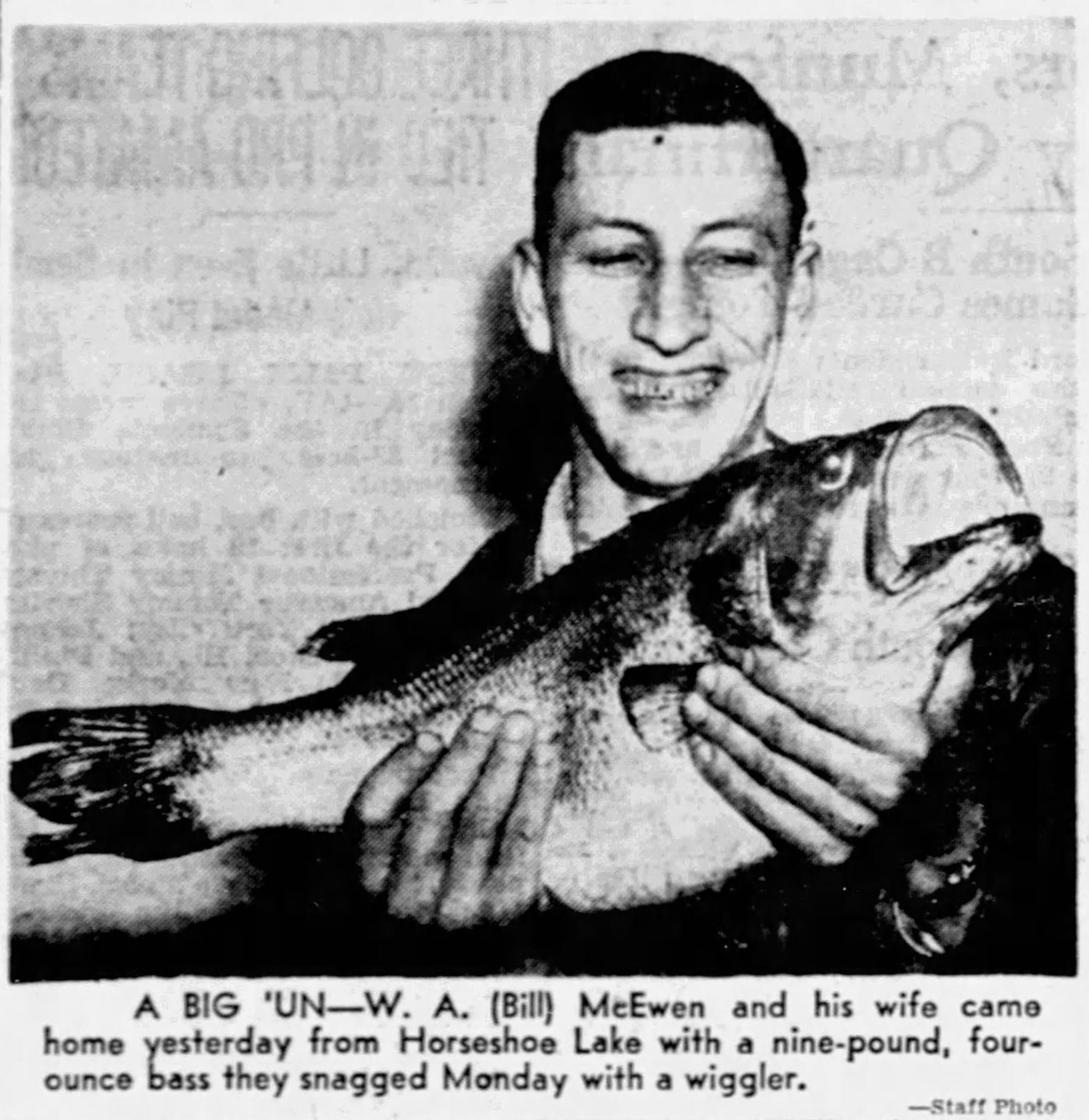
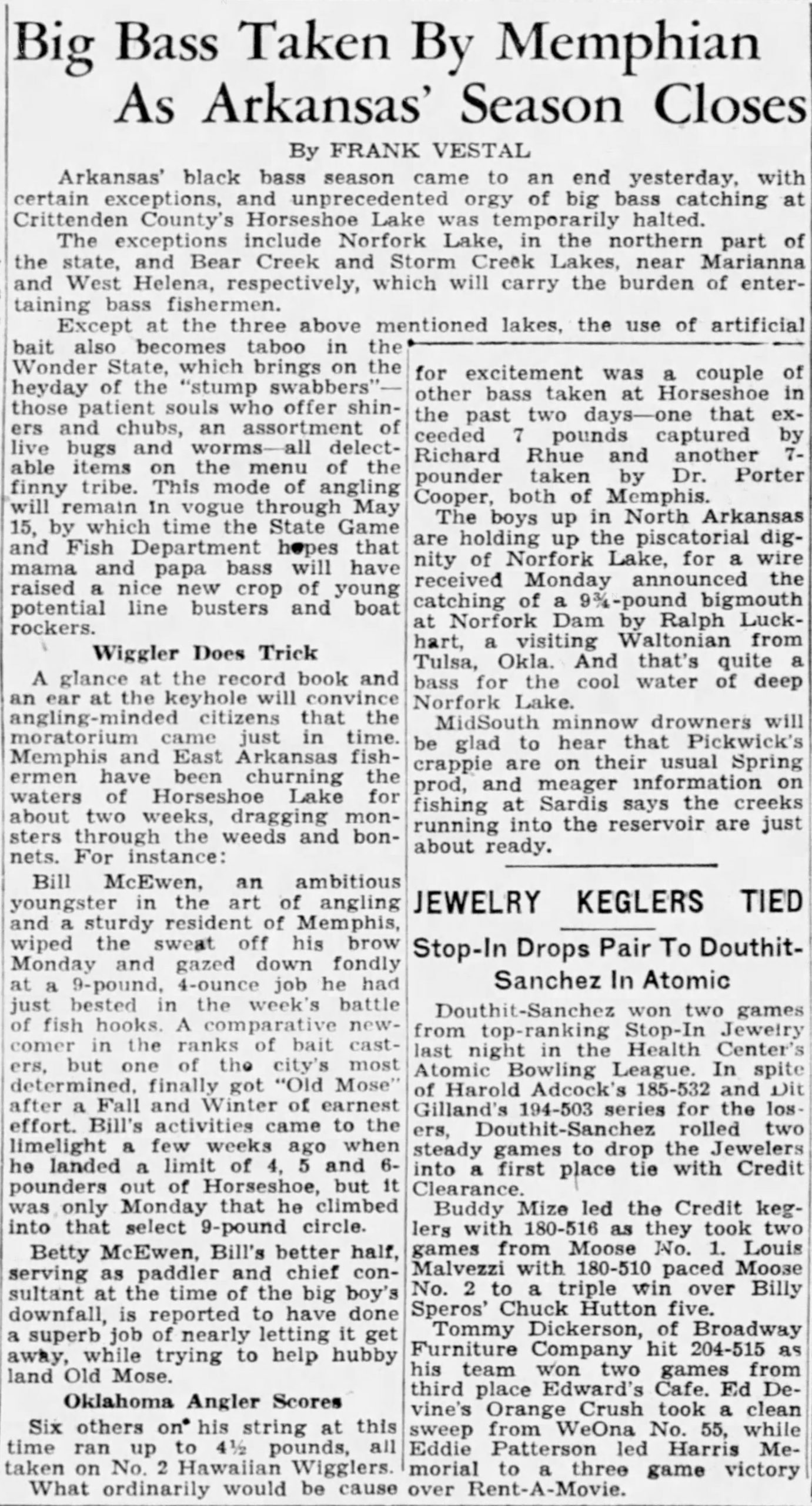
The first story I was able to dig up on McEwen was from the March 16, 1949 morning issue of The Commercial Appeal newspaper out of Memphis Tennessee. Bill is front and center on page 26 holding a 9-pound, 4-ounce largemouth he’d caught from Horseshoe Lake in eastern Arkansas. At the time, McEwen was 25 years old and referred to by columnist Frank Vestal as an up-and-coming bass angler.
Back at this time, it was the newspaper reporters, specifically the outdoor reporters, who knew all the great anglers and hunters within their surrounding area. Vestal was no different.
In this report, Vestal mentioned that McEwen had just weeks before brought in a limit of bass between 4 and 6 pounds. That put him on the radar. The day he caught his 9-pounder, he had a limit, with the other fish between 2 and 4-1/2 pounds. In the eyes of Vestal and the other Memphis-area writers, McEwen had become one of the respected anglers in the region.
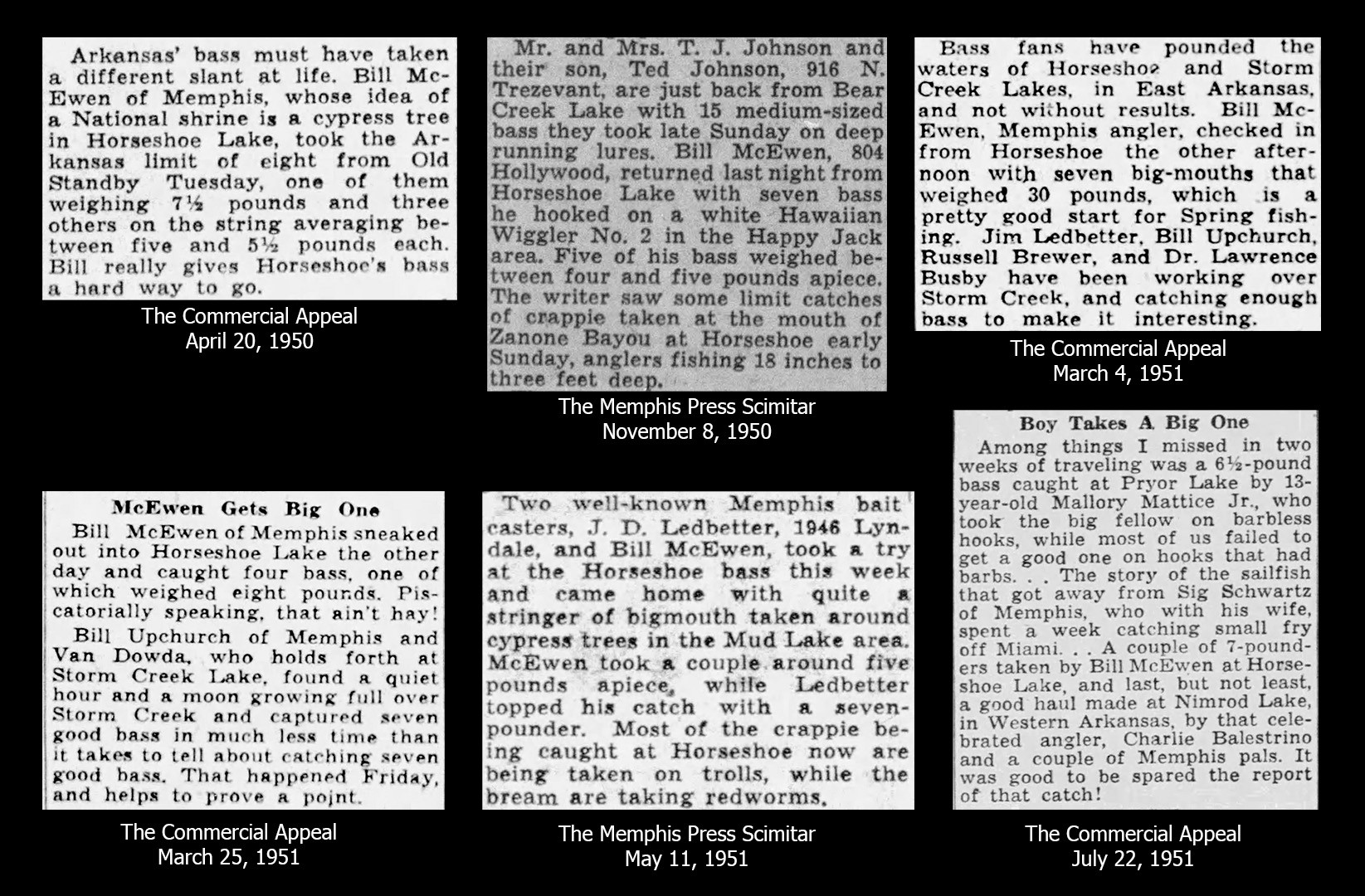
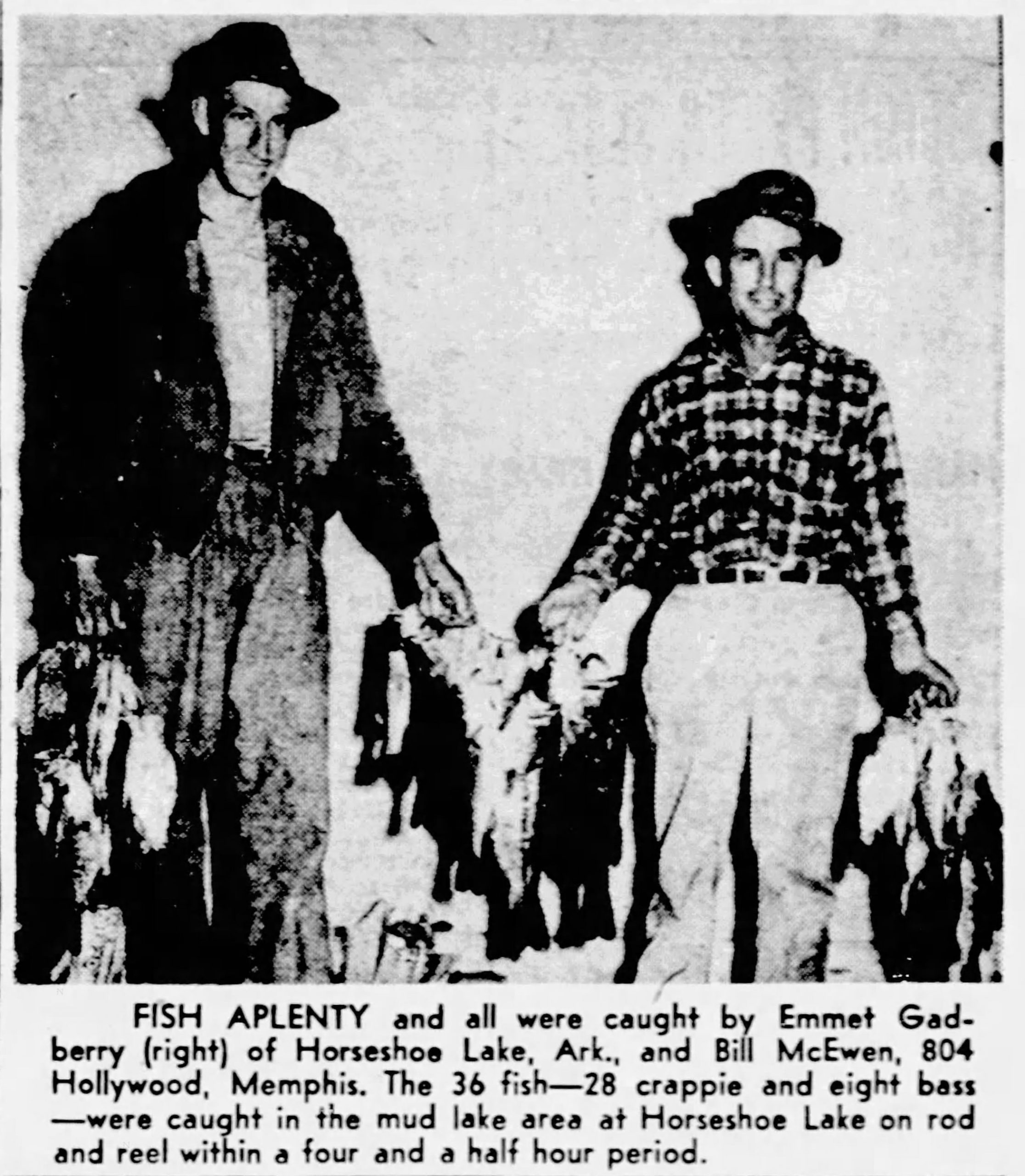
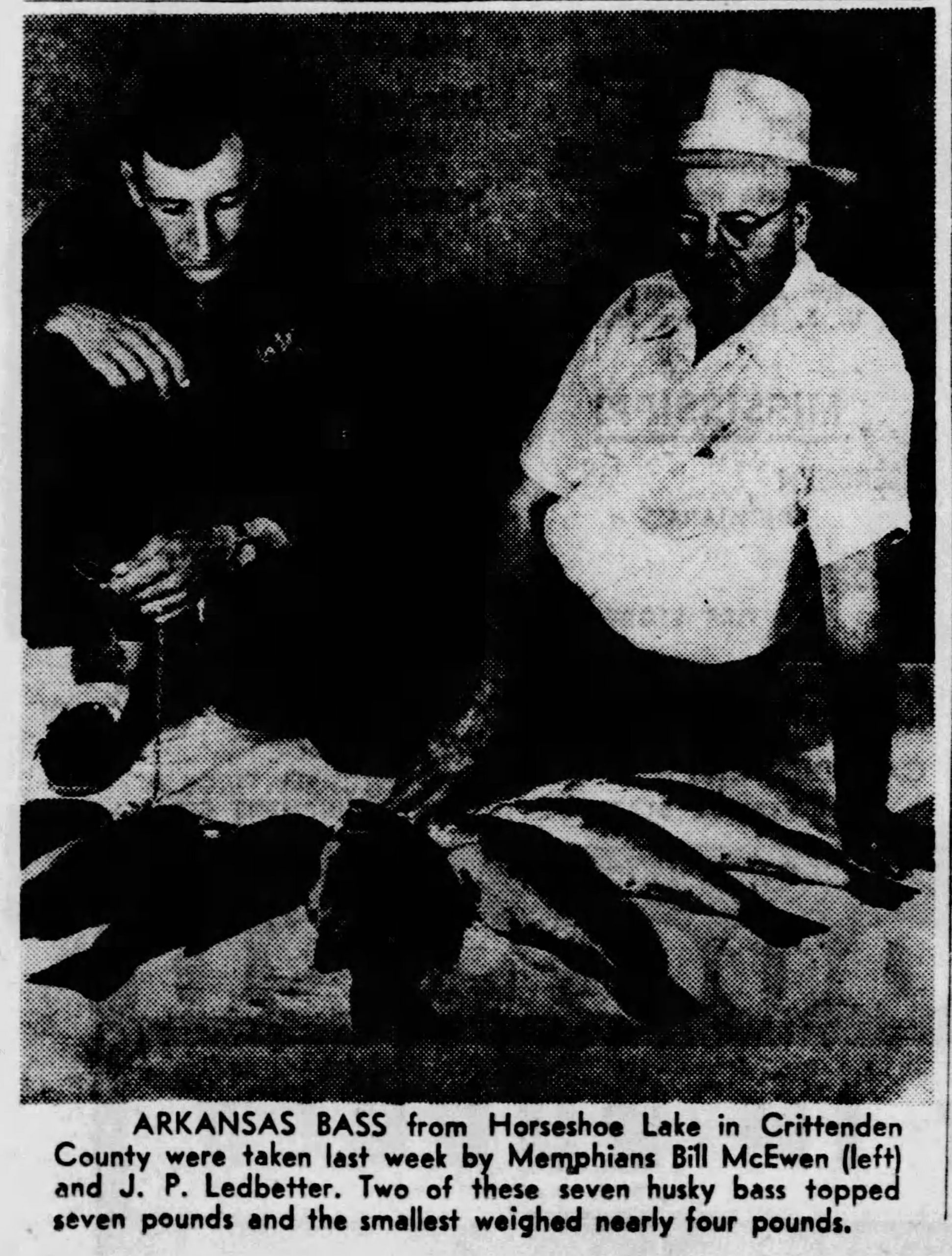
From that first write-up in 1949, McEwen’s name was constantly in the fishing reports of both The Commercial Appeal and The Memphis Press Scimitar. The reports were filled with bass catches from 5 to 8 pounds and fish caught on a variety of baits. This showed that McEwen wasn’t just a one-trick-pony, he was an accomplished angler who was versatile.
Billy meets Bill
Talking with Bill Dance about his youth and how he got into fishing, he told me the story of how his grandmother would drop him off at Kamp Karefree on Horseshoe Lake everyday during the summer. Dance was so eaten up with fishing, he’d fish the dock and surrounding shorelines from sunup to sundown. Dance was around 10 years old at the time, and he got to know the owner of the camp, Bob Wood, quite well.
One day, Dance was in the dock house drinking a soda when a gentleman by the name of Bill McEwen came in. McEwen asked Dance if he’d caught anything and Dance
said, no. McEwen then invited him to go fishing with him. This encounter would become a pivotal point in Bill Dance’s early fishing career.McEwen took the young Dance out and showed him the intricacies of throwing a spinnerbait and over time taught him about seasonal patterns and other baits. Bill (Dance) told me later that McEwen was the most influential angler of his early years.
McEwen’s tutelage of Dance wasn’t a one-off, though. There were other kids he took under his wing, teaching them the sport of bass fishing.
Bushwhacking with the Bushwhacker
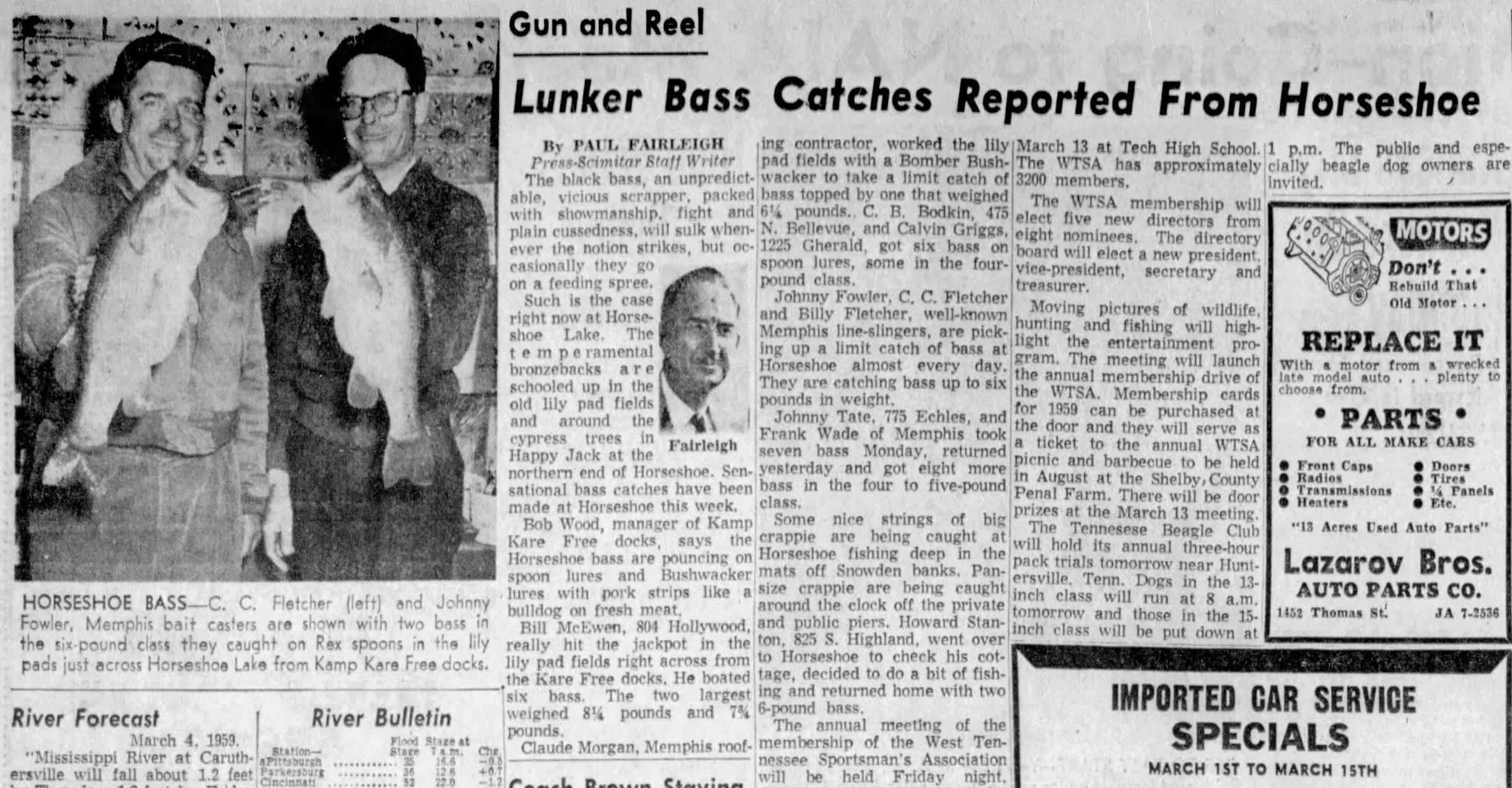
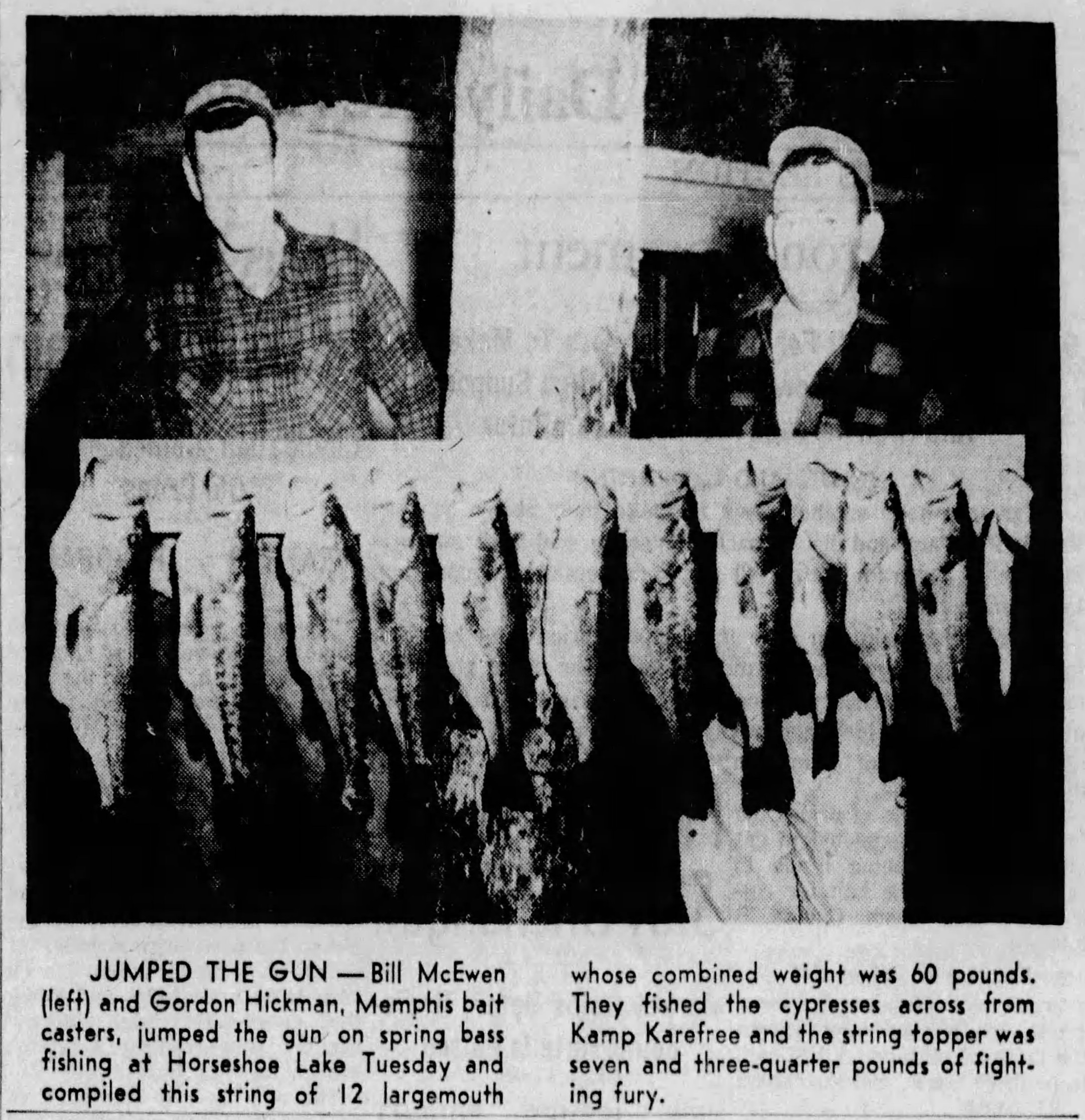
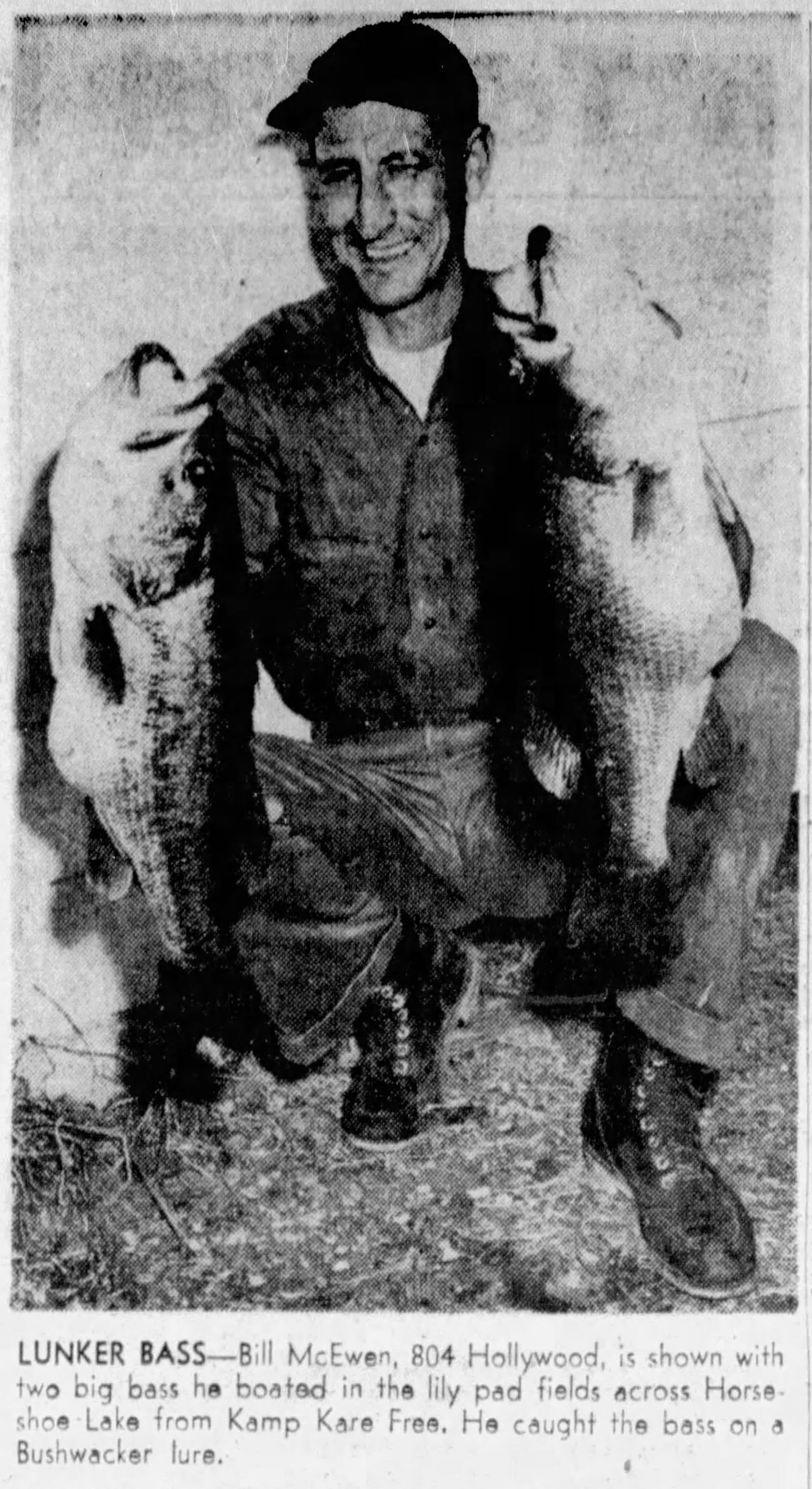
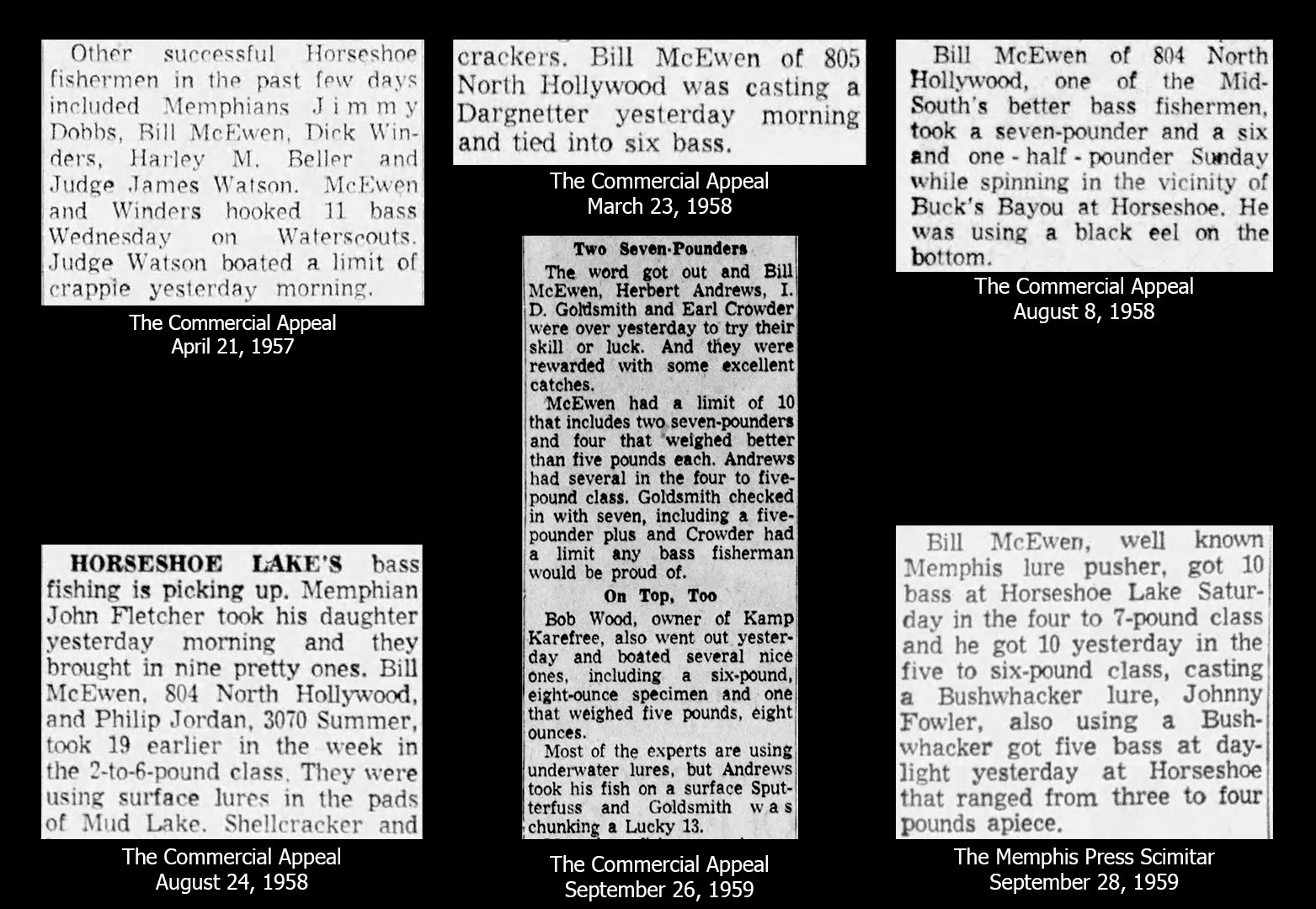
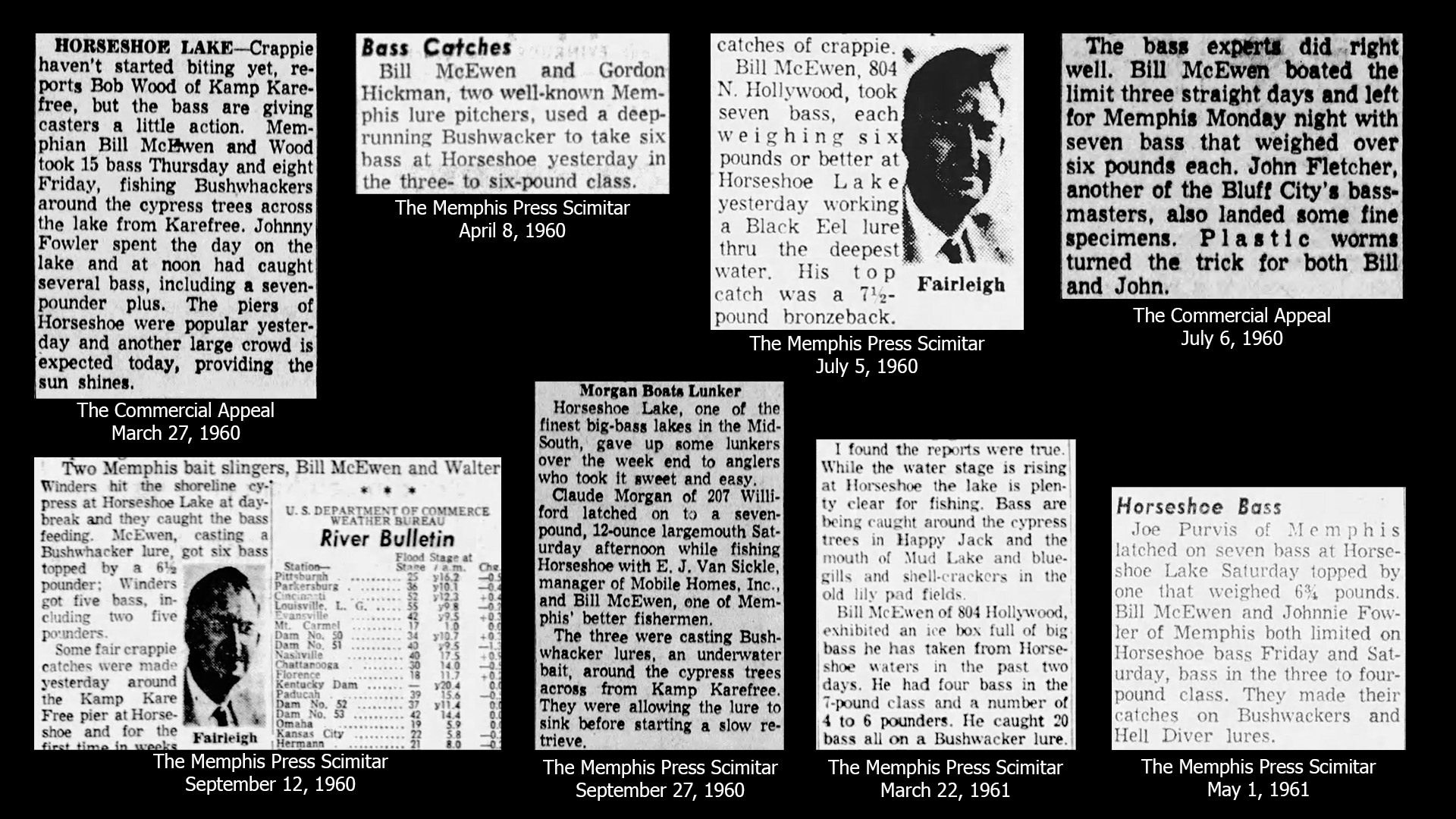
Throughout the reports, you read of McEwen catching big bass on a myriad of baits. Some of these included the Clark’s Water Scout, a jig and eel, Arbogast’s Hawaiian Wiggler, plastic worms, surface lures, Bombers, and a Bomber Bushwhacker.
From his first entry, where he caught the 9-pound, 4-ouncer on a No. 2 Hawaiian Wiggler, you can imagine his versatility based on the time of year and the baits he chose. Then around 1958/59, the reports began to change.
At this point in time, McEwen and his fellow anglers started reporting most of their big catches on a couple new lures; The Dragnetter, Houser Hell Diver, and Bomber Bushwhacker, a spinnerbait that Bomber released between 1958 and 1959. Going through the reports, the Dragnetter and Hell Diver were only mentioned once each where the Bushwhacker was mentioned hundreds of times. Images of each bait are provided for clarity.
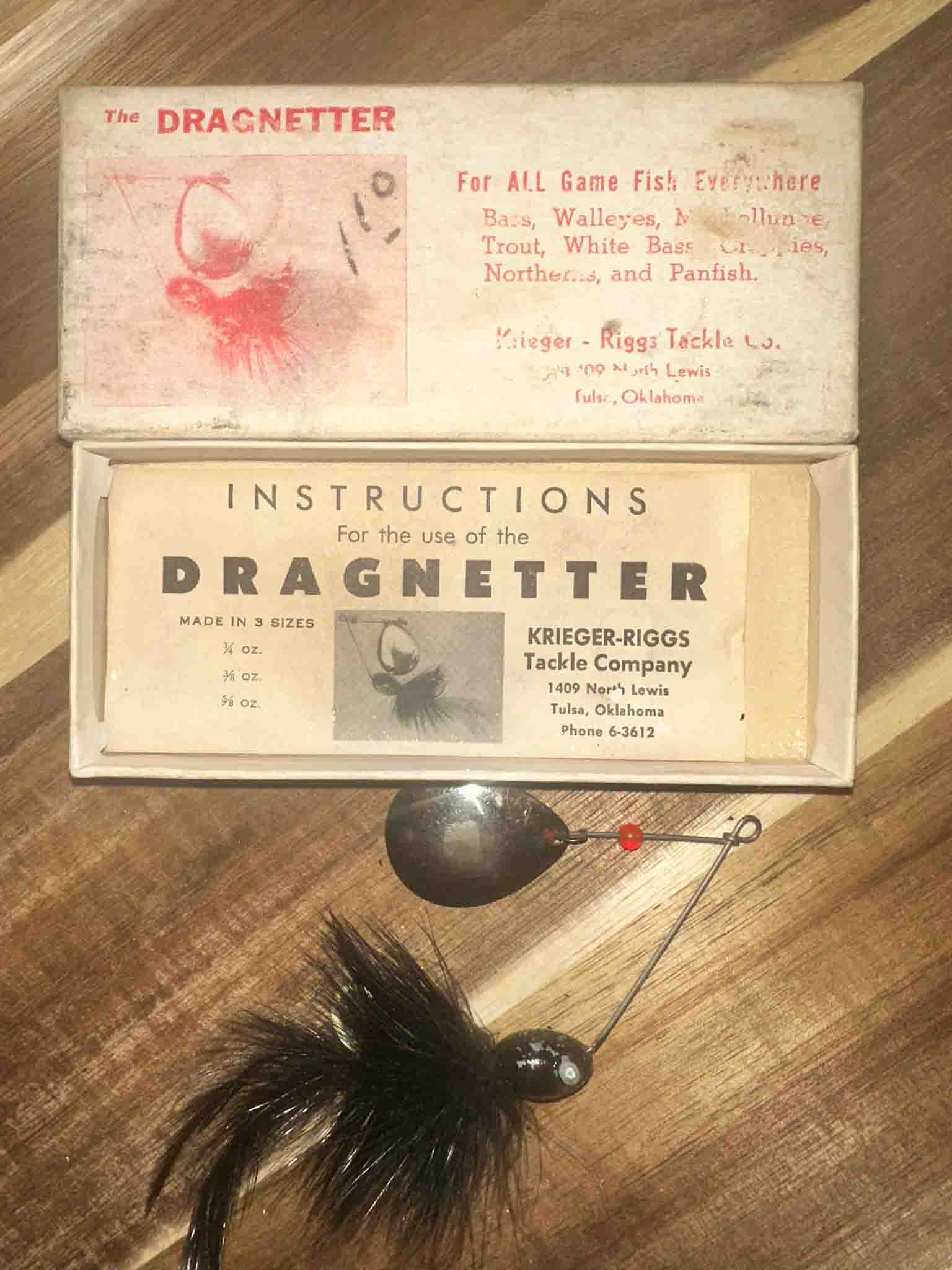
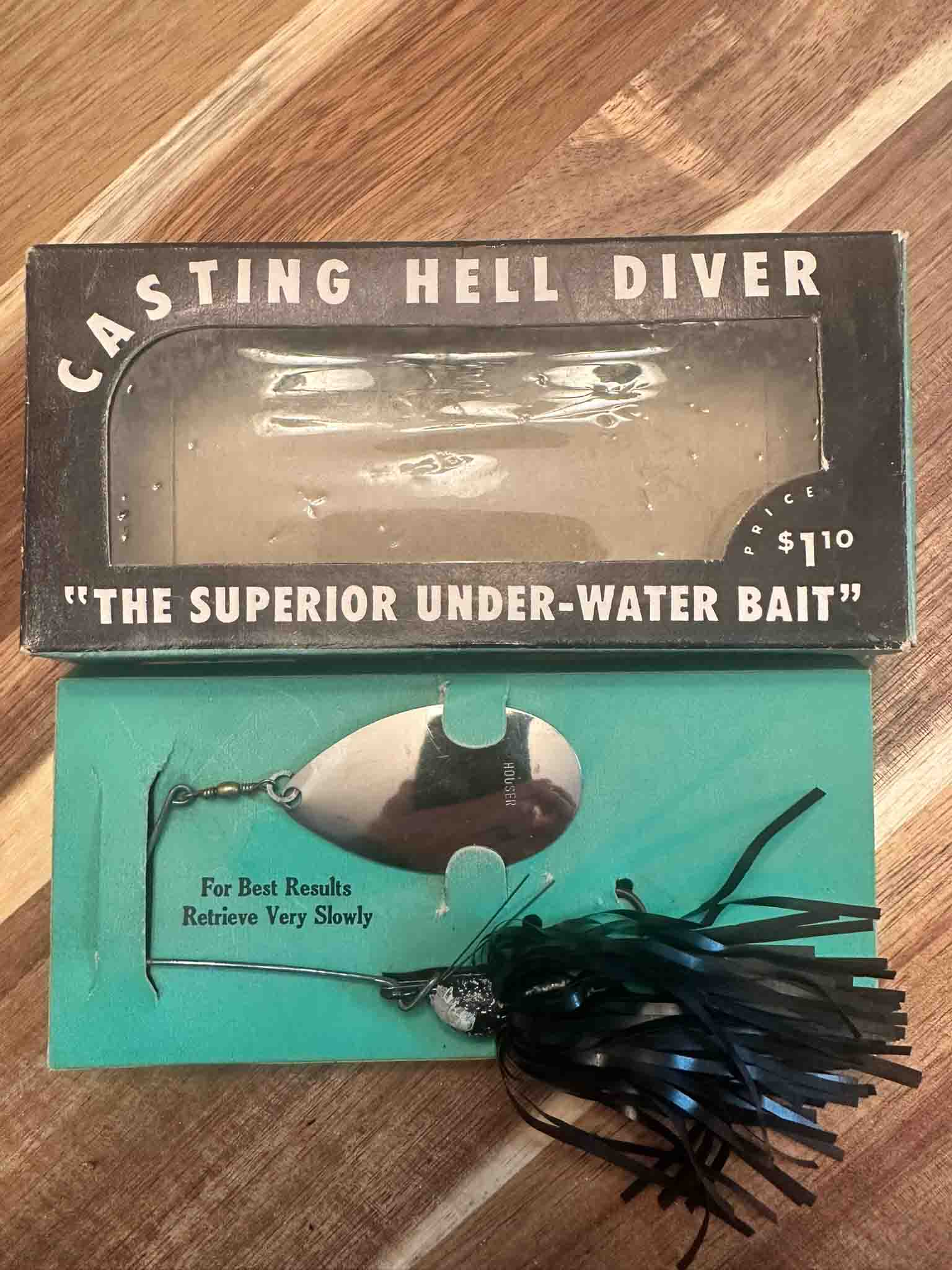
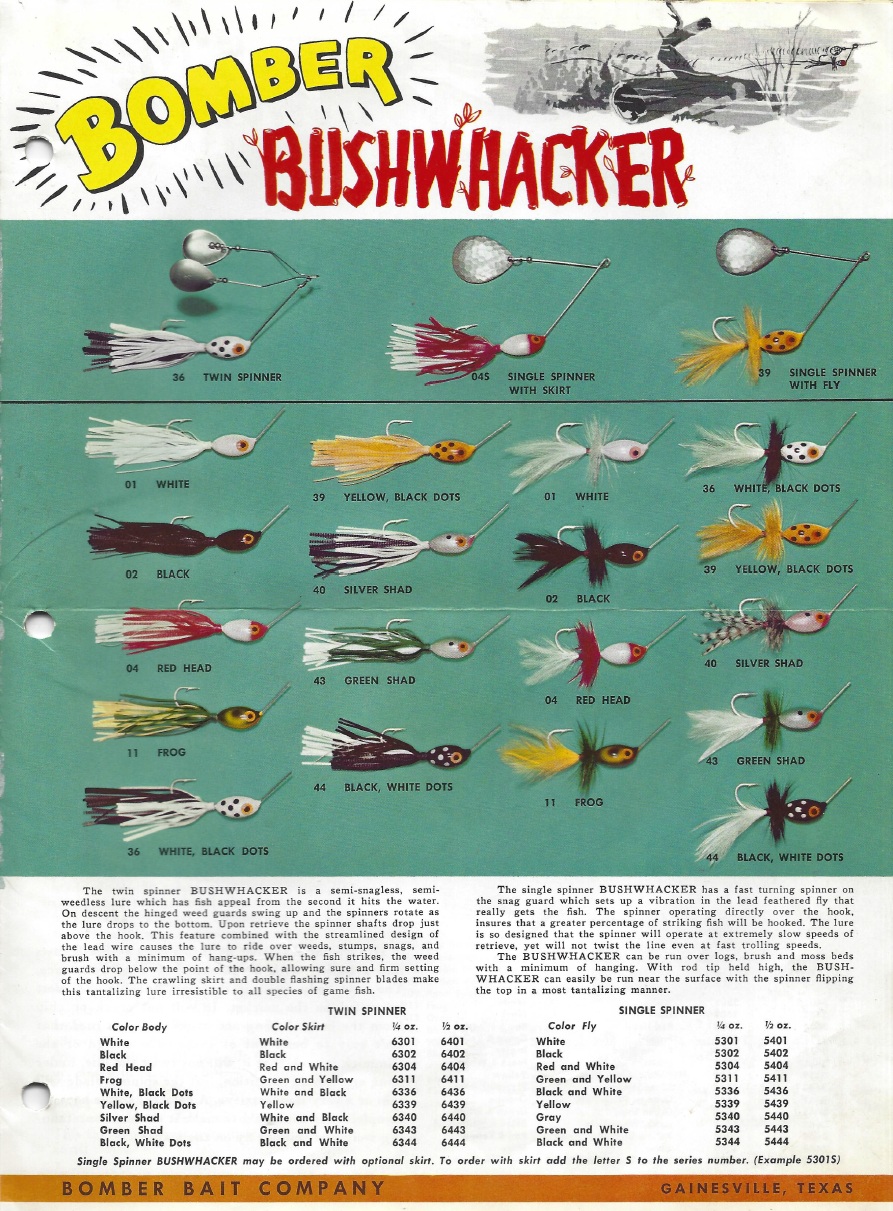
The Dragnetter and Hell Diver were both short-arm spinnerbaits that came in both single and double spin configurations. They were dressed with either hackle, flat vinyl skirts, or flat rubber Hula Skirts. The Bushwhacker was available in single and tandem spins as well as a true twin spin. Which baits he primarily used is a mystery, but I assume he used all three.
This brings up another question – when McEwen and his fishing friends mentioned they got their big fish on black eels fished deep, were they stretching the truth and using a spinnerbait? Black spinnerbaits were big back at the time and could be construed to resemble an eel. Or, they could have been attaching a black pork eel on the bait, I’ve done this a lot, and just mentioned the eel to throw others off track. Nah, anglers don’t fib about what they’re using, right?
Anyway, in several of the reports, McEwen and other anglers stated they let the bait fall to the bottom and worked it back to the boat. Essentially what we call slow rolling. Read the instructions on how to use the Dragnetter and Houser Hell Diver and they explicitly say to fish it slow and deep.
But, McEwen had also reported throwing it into and around shallow cypress stumps and fish it near the surface. It’s obvious that McEwen and the other savvy anglers knew the versatility of the spinnerbait as a multi-depth lure.
Taking a quick humorous tangent, one of the columns that Bill Dance was interviewed mentioned a comment from one of his partners. He complained that when Dance would fish the spinnerbait, he’d go so far back in the wood, he couldn’t fish because there was no room for him to cast. Dance, a custom rod maker too, used a very short baitcasting rod for these instances.
Striking the Strike King
In the March 20, 1962, issue of The Commercial Appeal, McEwen reported that he caught his latest fish on a “souped-up Bushwhacker” he’d made. Then, as written in the September 23rd, 1962 column, McEwen had given columnist Henry Reynolds three of the new baits. There was no mention of a bait name.
This is where Bill Dance reenters the story.
In one of my conversations with Dance, he told the story of how he, his wife Diane, and the McEwens would assemble baits in the McEwens’ kitchen. Sales of the bait had gotten to the point McEwen couldn’t keep up with his day job at American Airlines and his other moonlighting job of taxidermy.
One day, while assembling baits, McEwen said he was trying to come up with a name for the lure. He’d already decided to call his company McEwen Tackle Company but needed a name for the bait. He asked Dance for his opinion.
Dance said, “We should call it Strike King, since the fish are striking at the bait.” The name stuck and McEwen had a name for the bait.
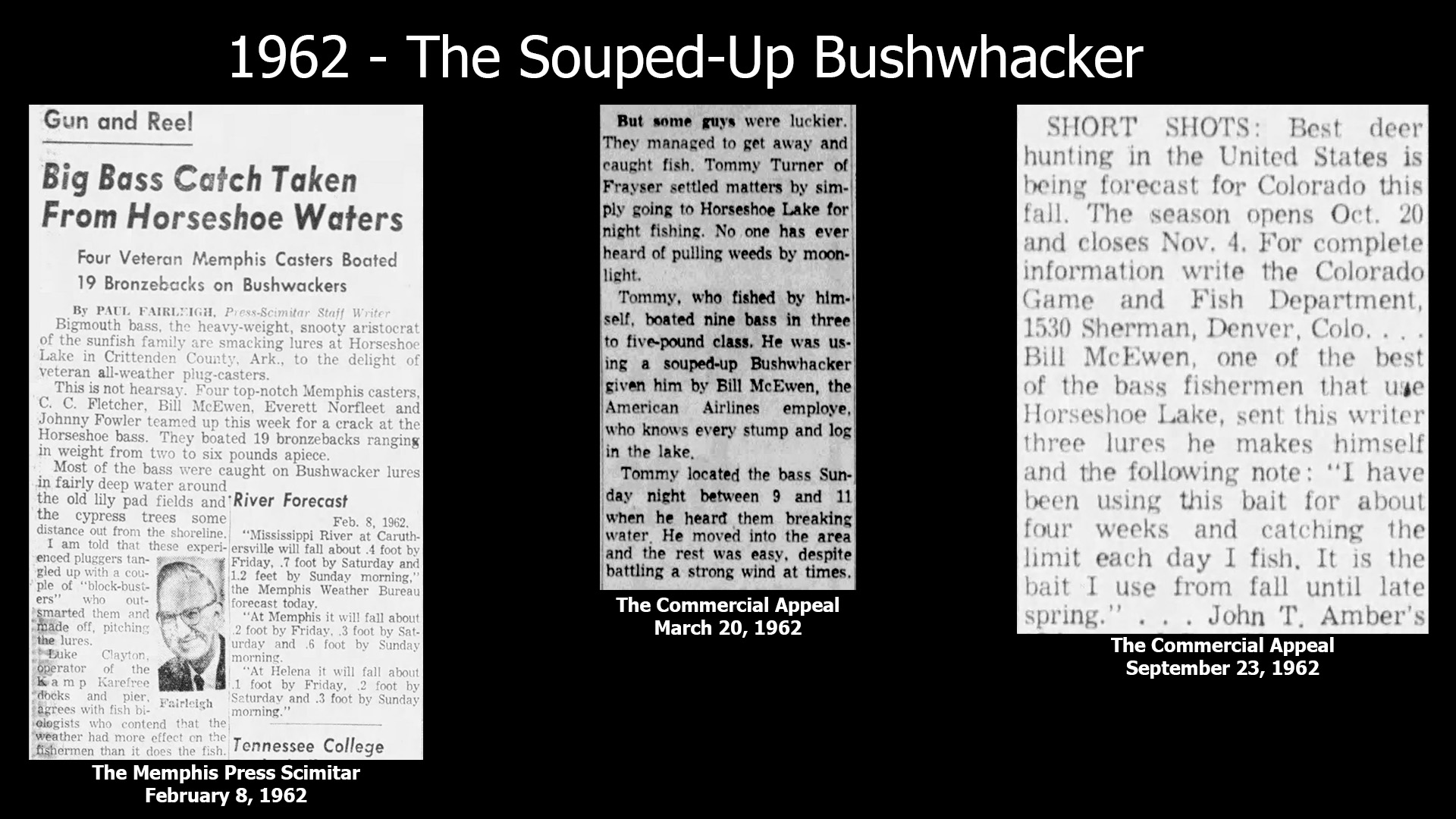
Moving on to the morning issue of the March 23, 1963, The Commercial Appeal, Reynolds said that he would be fishing with McEwen that morning and they’d be using his new “Strikeking” [sic] baits.
The next day, Reynolds reported that he and McEwen caught a few fish, topped by a 7-pounder, all on his new “Strikeking” [sic].
So, the naming of the bait happened sometime between September 1962 and March 1963.
McEwen Tackle and Taxidermy
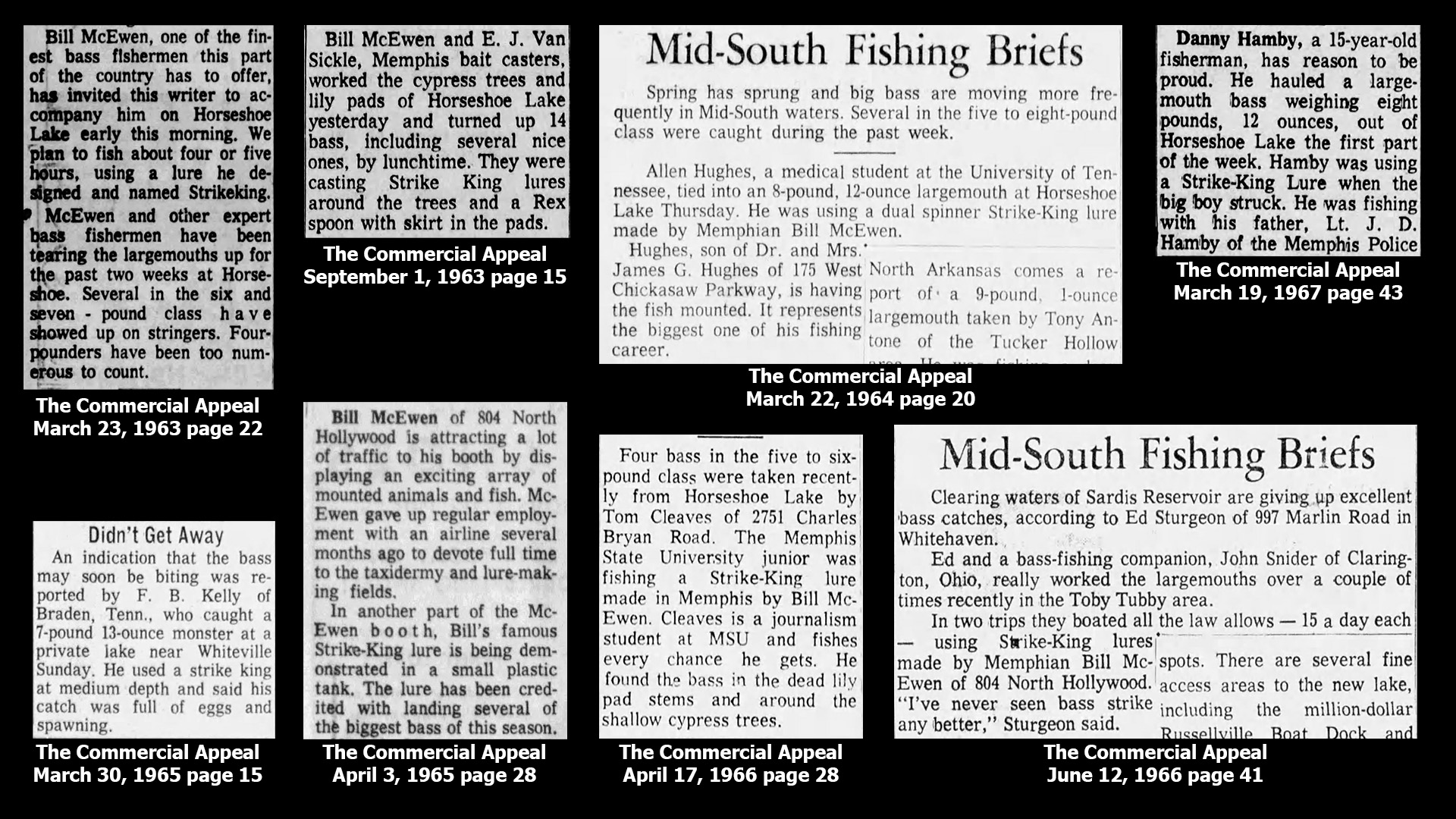
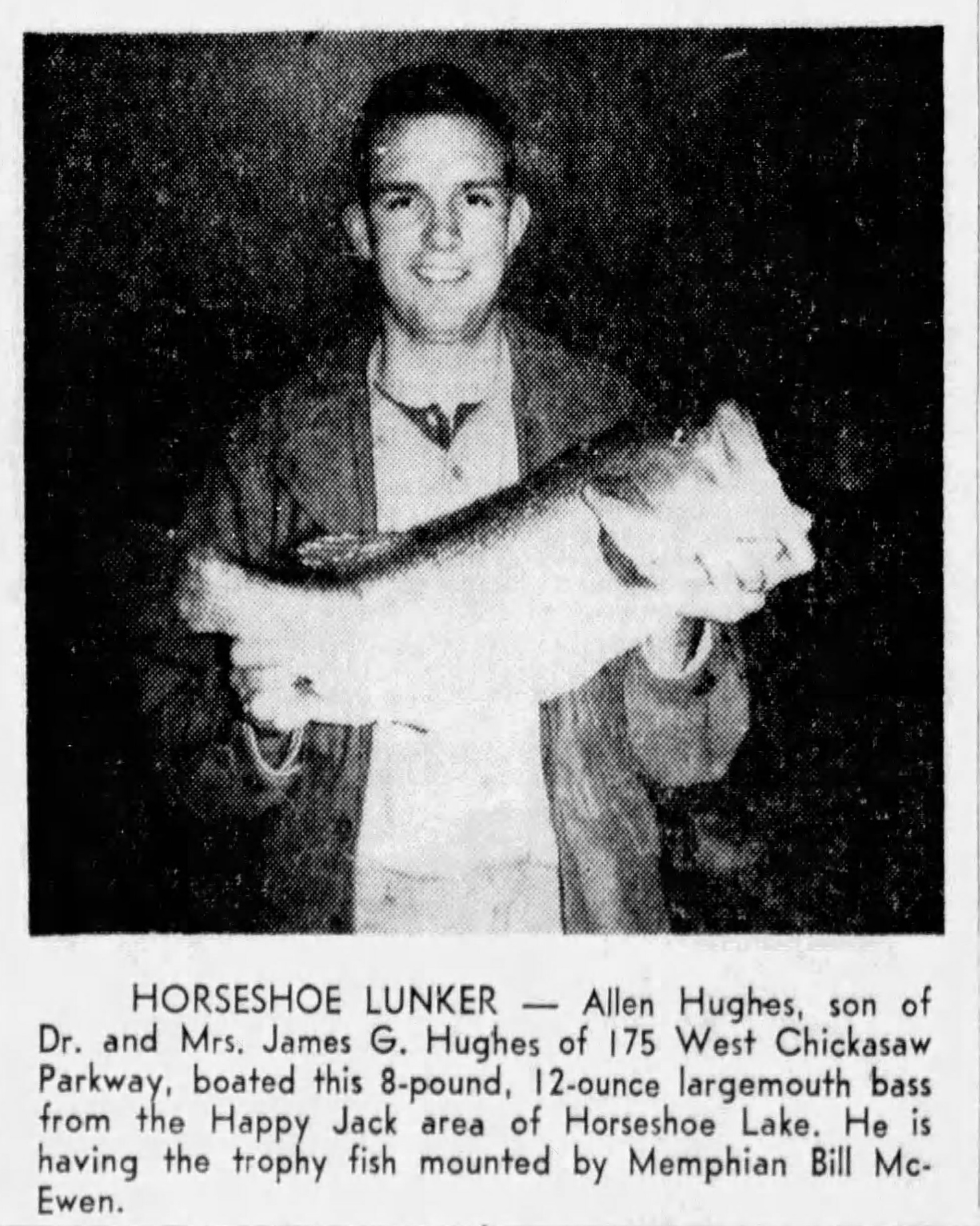
As mentioned above, McEwen worked for American Airlines in fleet service but also did taxidermy on the side. With the bait business booming and more fish and animals to mount, something had to give. McEwen decided to terminate his 19-year employment with American Airlines and concentrate on bait making and taxidermy full time. This happened sometime between 1963 and 1964.
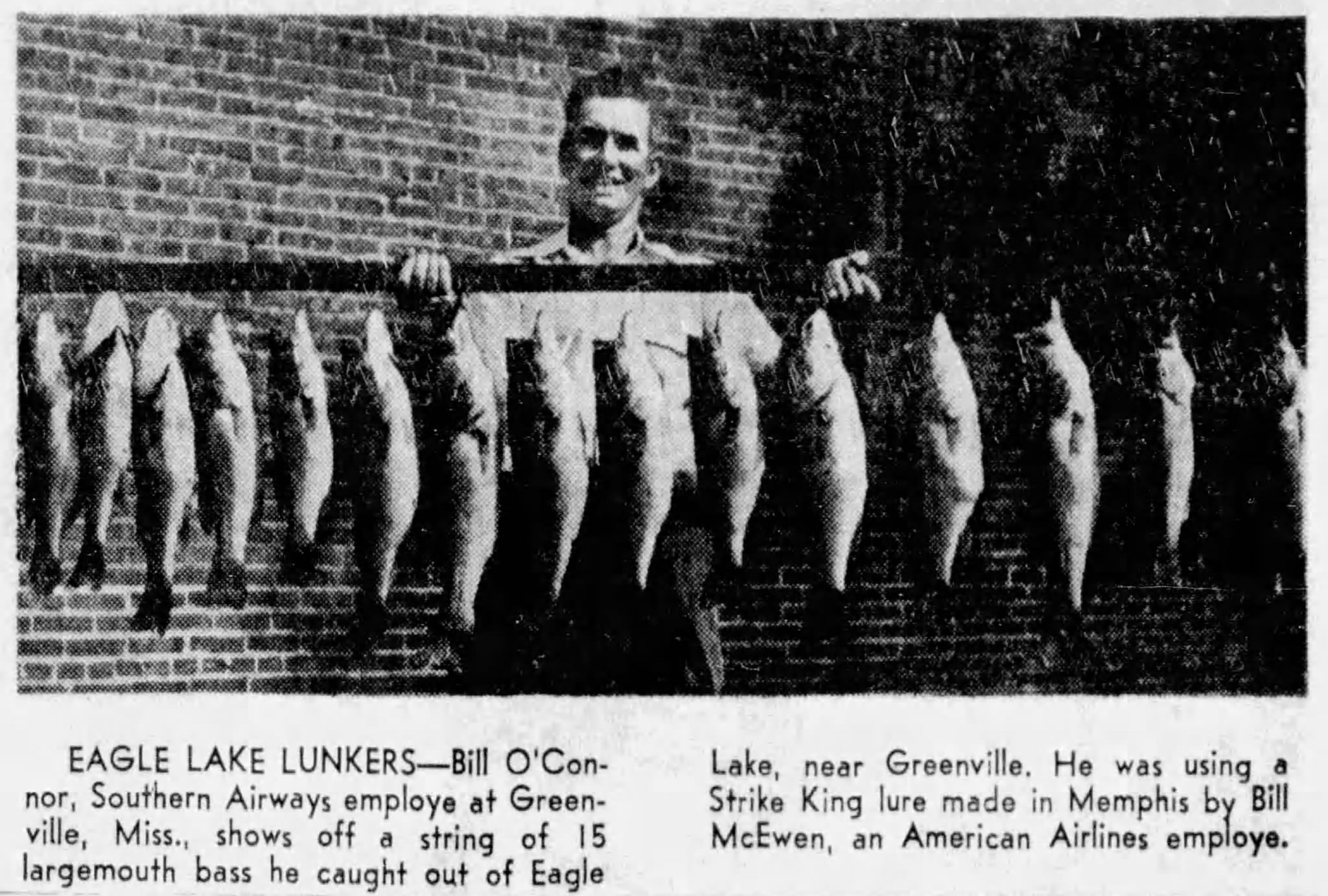
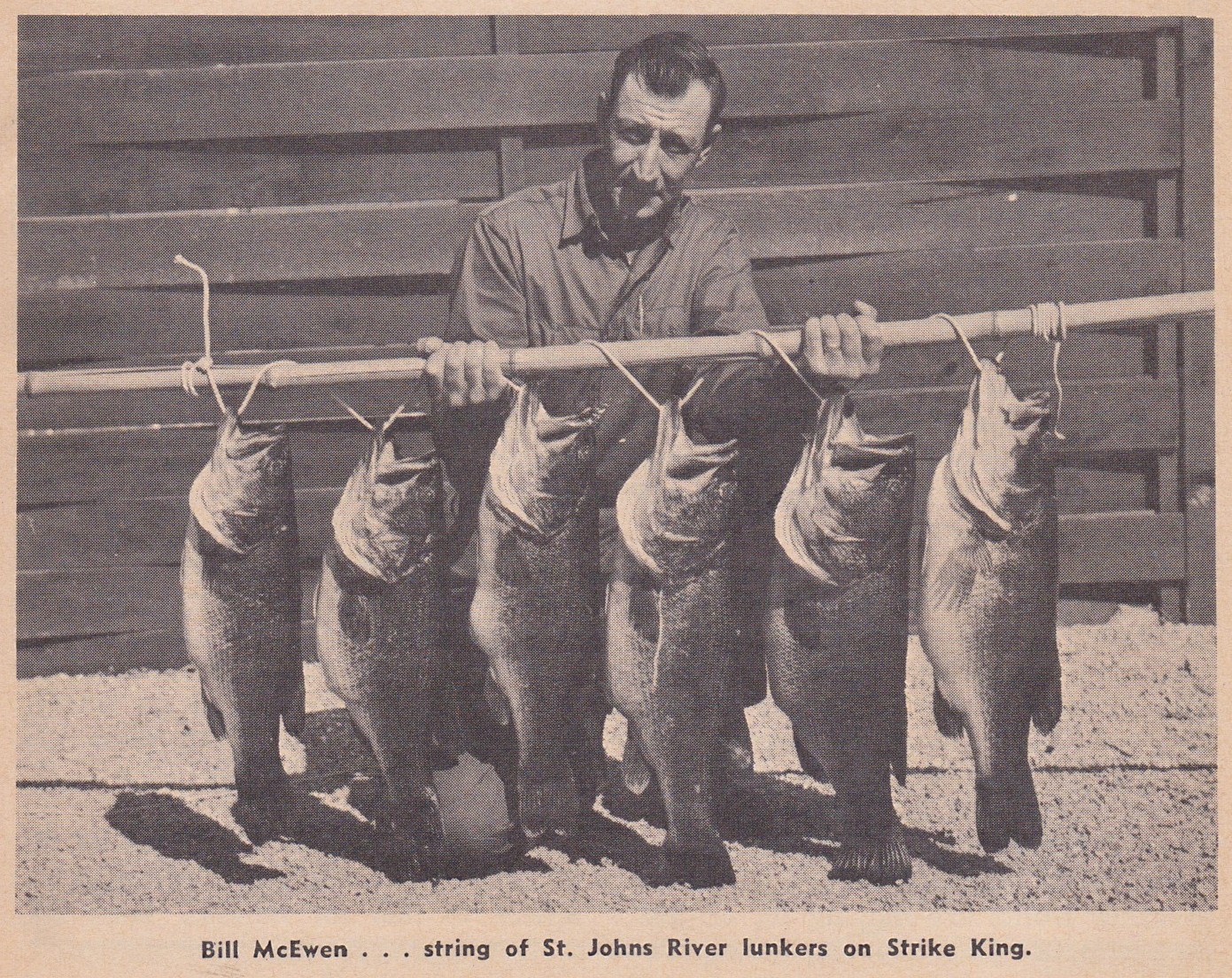
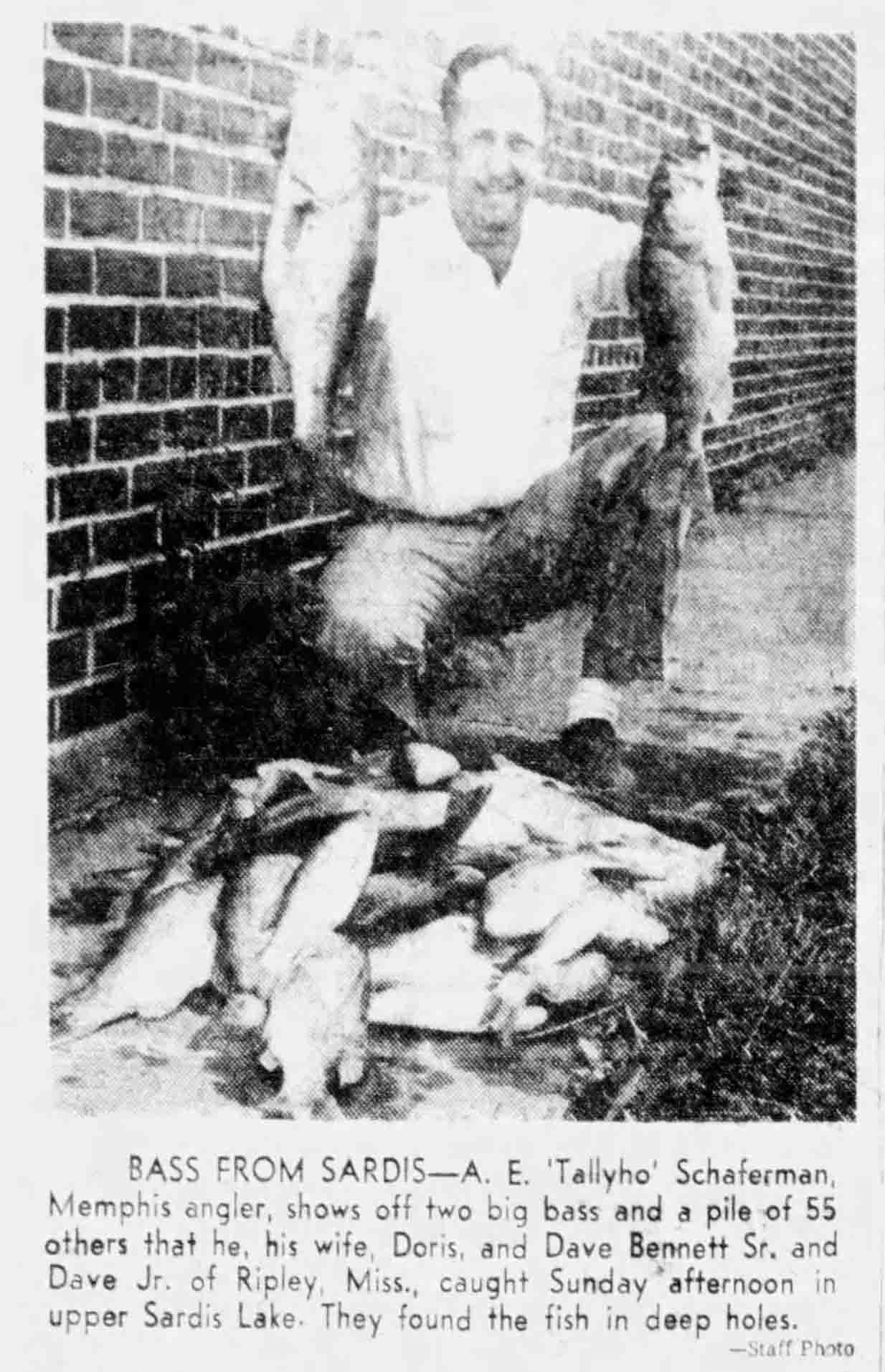
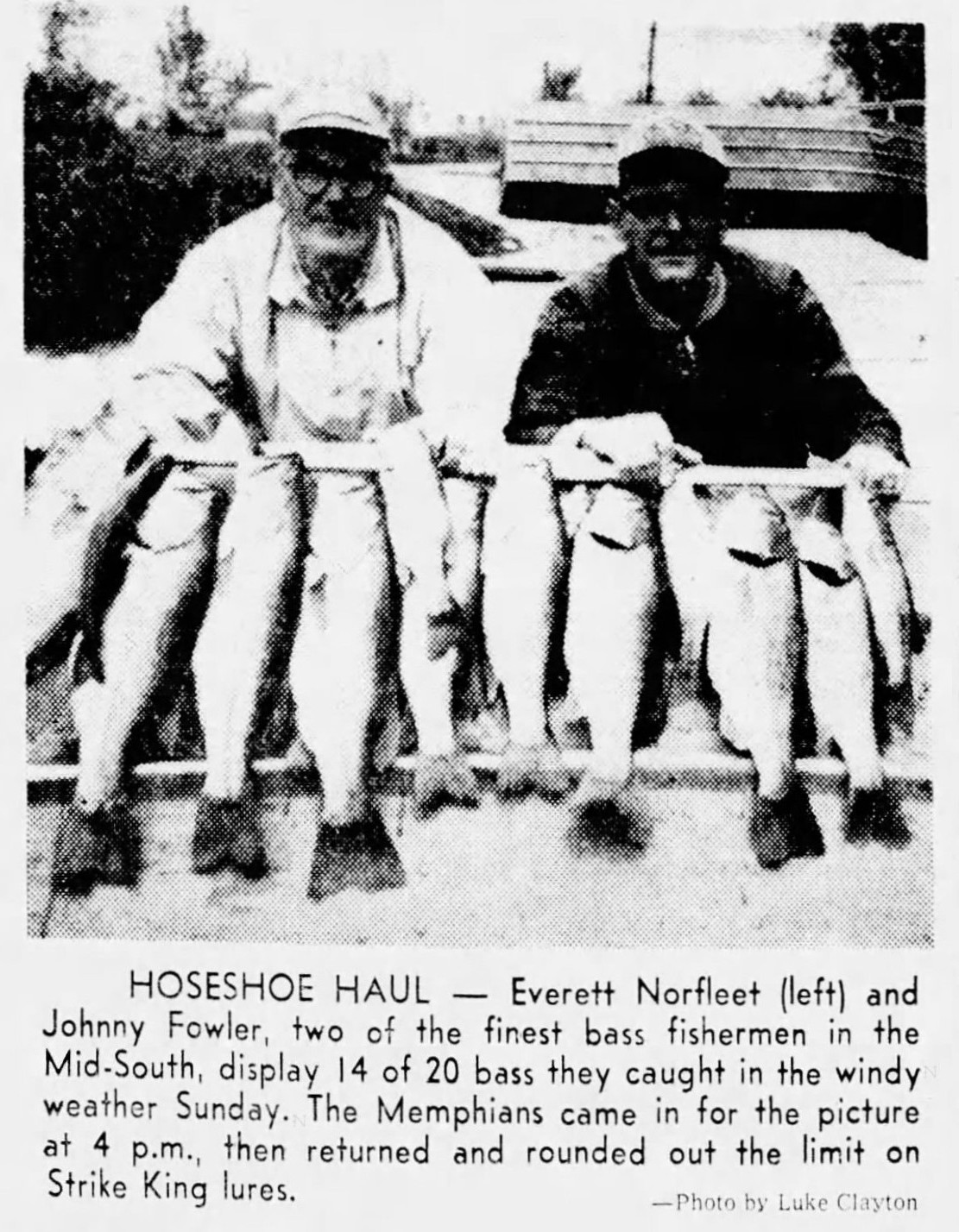
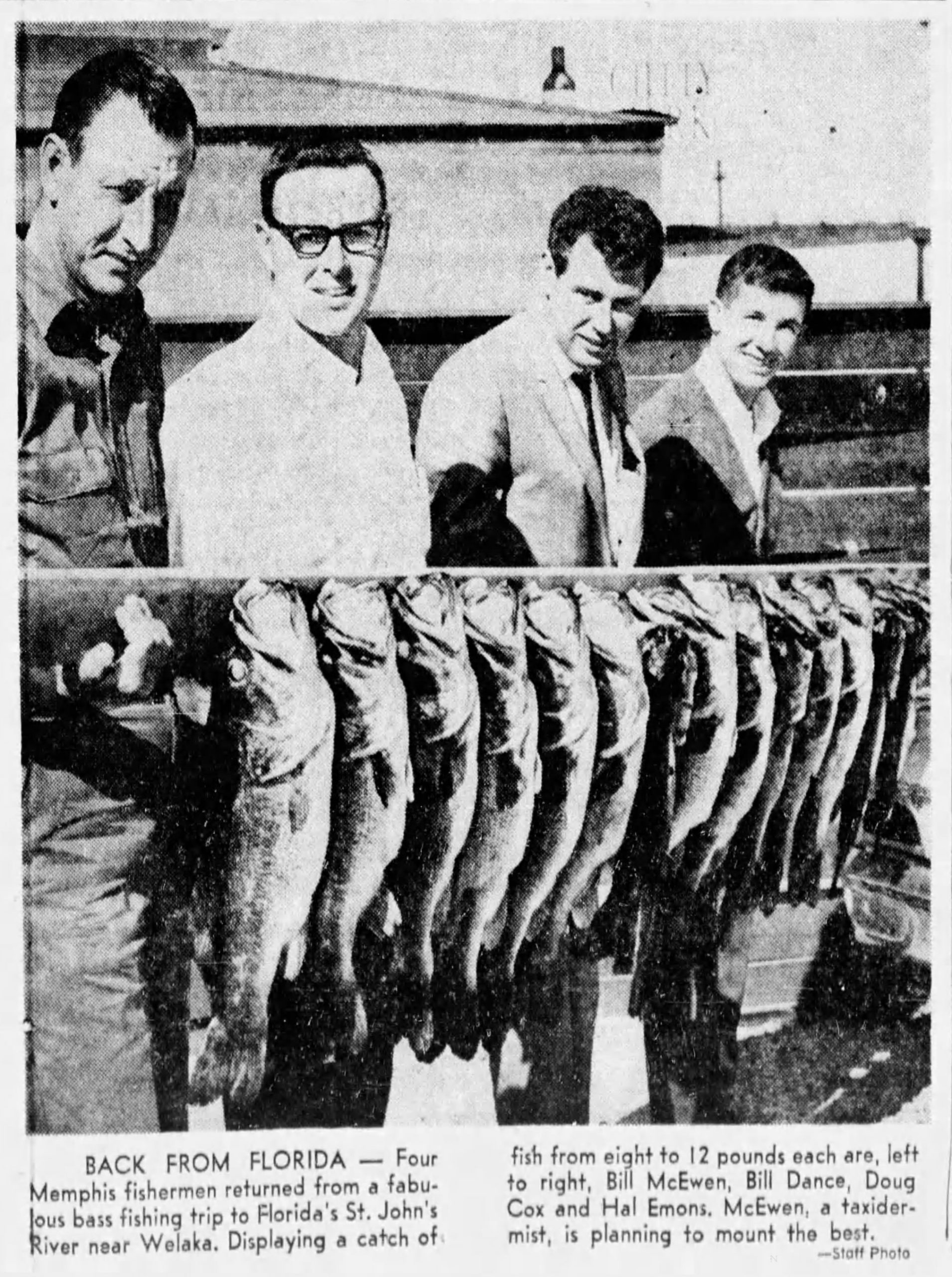
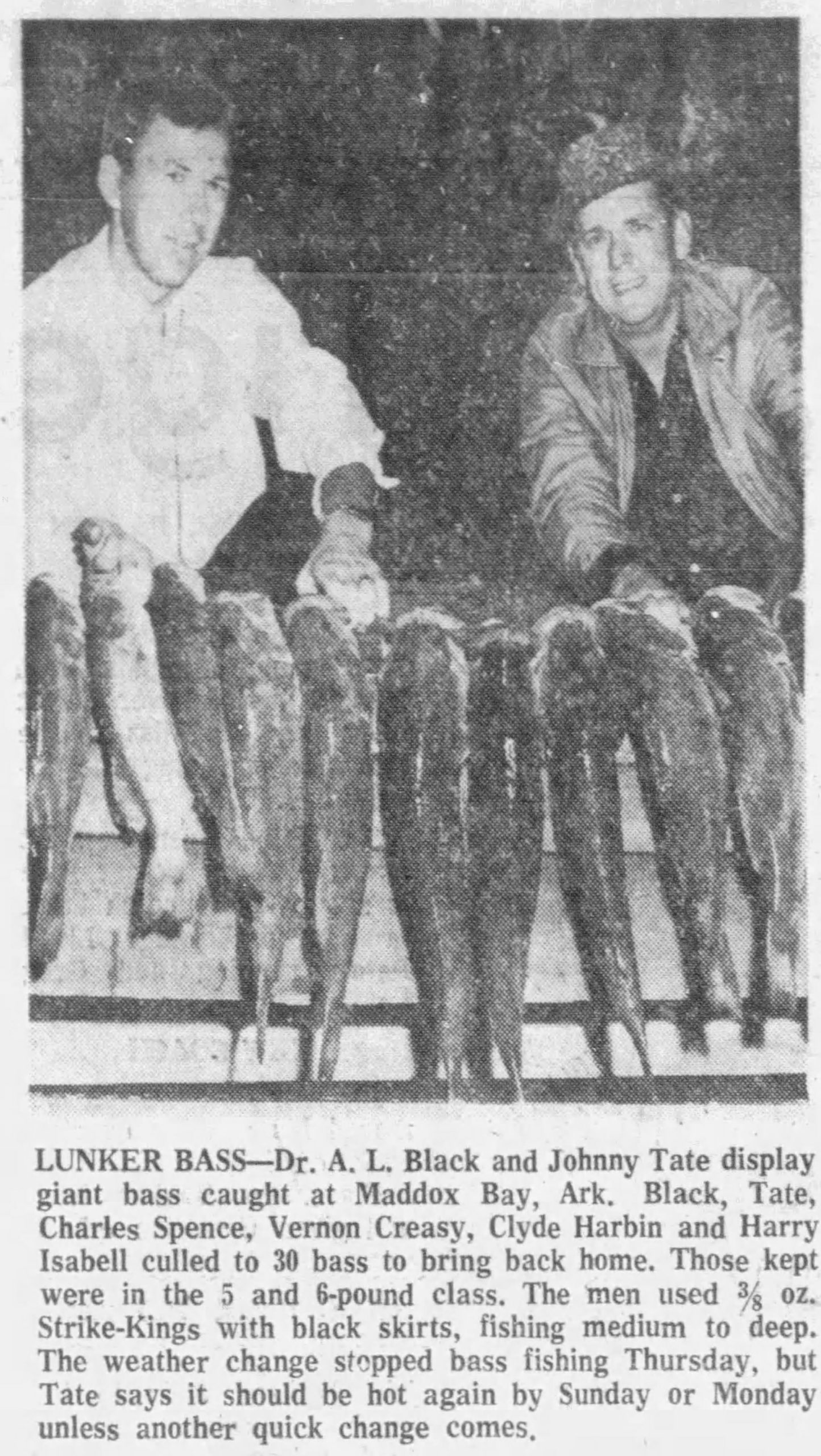
By the end of 1963, nearly all the big fish mentioned in The Commercial Appeal and The Memphis Scimitar columns had been taken on the Strike King. Not just catches from McEwen at Horseshoe Lake, but anglers all over the Mid-South.
The next three years put the McEwen Tackle Company on the map. The Strike King spinnerbait was the hottest big fish lure in the area, and this also bolstered his taxidermy business with big bass to mount.
McEwen Makes a Decision to Sell
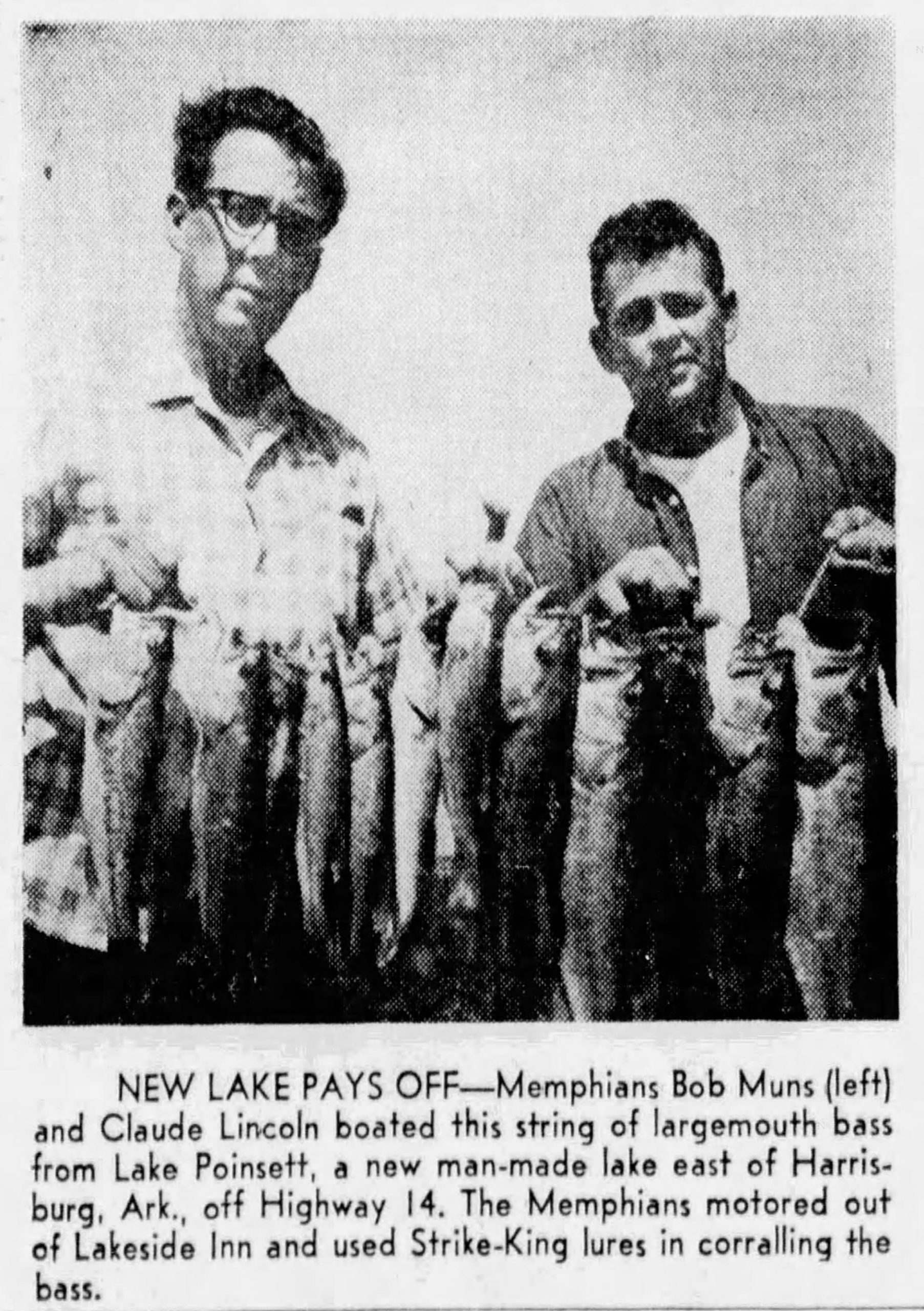
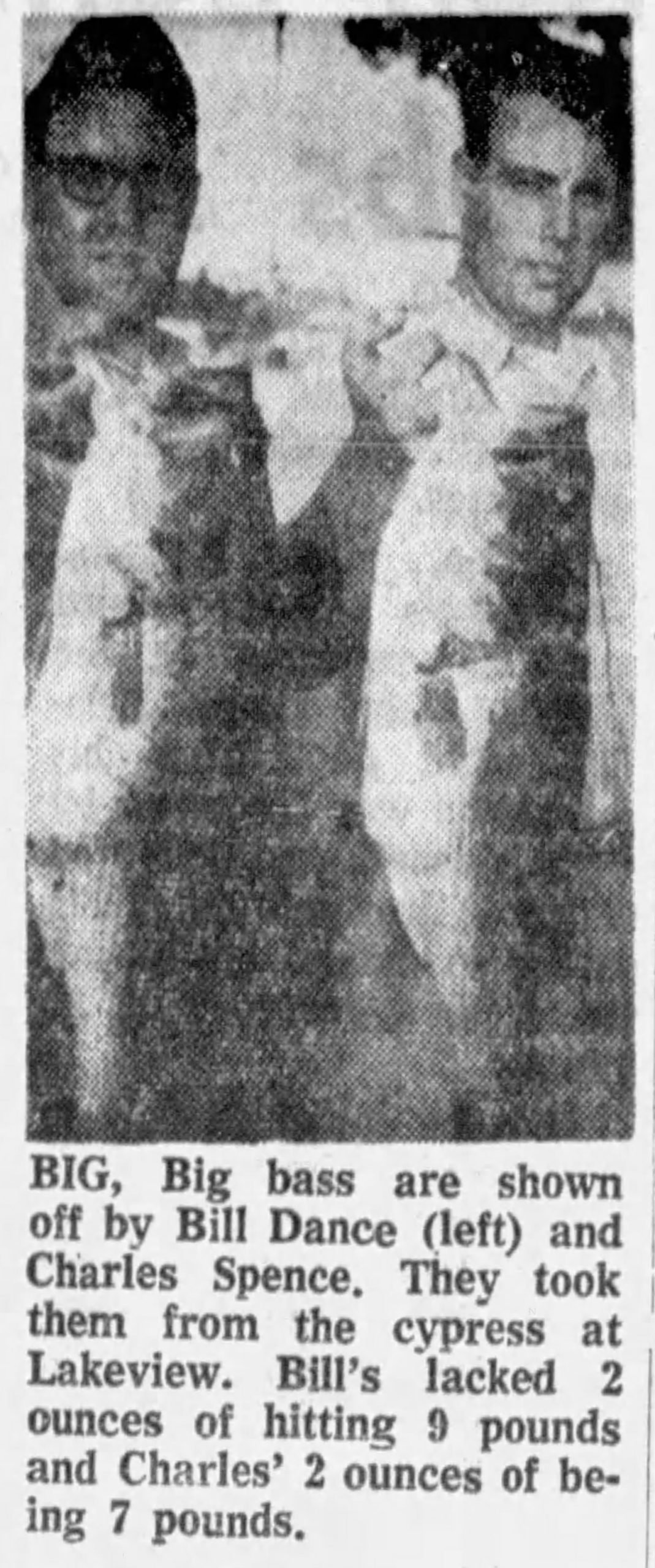
Then in mid-1967, McEwen had to make another tough business decision. One of the businesses had to go. I’m not sure what drove him to his decision, but in July 1967 he sold McEwen Tackle Company to 25-year-old Charles Spence and 27-year-old Bill Dance. Spence, like Dance, was another student of McEwen’s and had spent years helping McEwen with the spinnerbait company.
For around $3,000, Spence and Dance walked away from McEwen’s home with a cardboard box full of molds, wires, saftety pins, hooks, skirts, and dreams of making it big. They already had a winner when it came to the bait. But they needed a name for the company. That was easy. They named it after the name of the bait, Strike King.
The first year Spence took the company from $3,000 investment to over $12,000 in sales. Dance became the promotions guy, and another close friend, Ray Murski, helped with sales.
McEwen Sheds a Secret
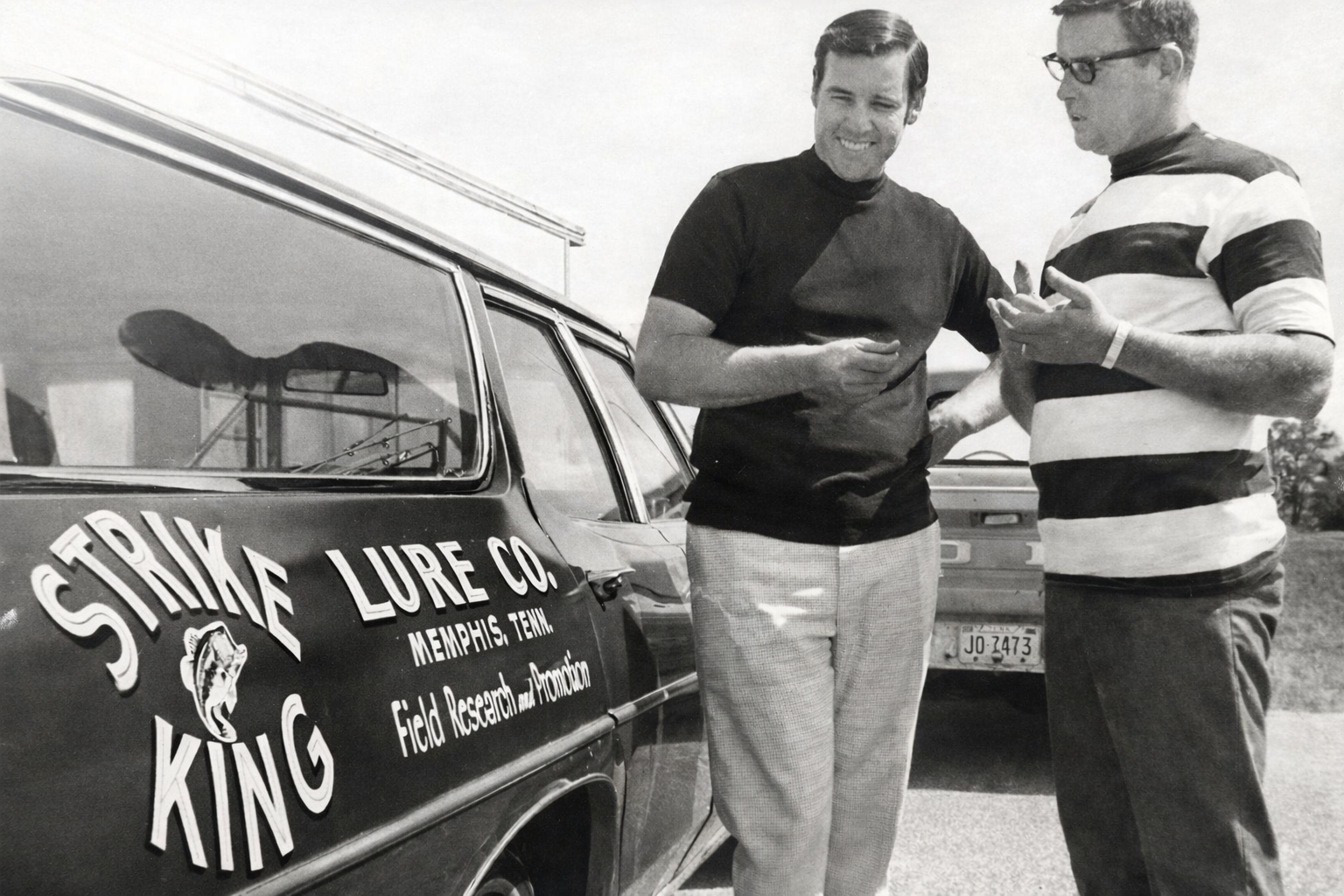
Shortly after the sale of McEwen Tackle company, The Memphis Press Scimitar columnist Buck Patton asked McEwen if he’d patterned his Strike King spinnerbait after the Bomber Bushwhacker. McEwen said he’d patterned it after The Dragnetter made by Clyde Smith in Tulsa, Oklahoma. McEwen had been given one by a friend of his who got it from his uncle in Oklahoma. It looks to me as if The Dragnetter wasn’t available so the only thing for McEwen to do was take the Bushwhackers and tweak them into the shape of the Dragnetter. It’s just a guess.
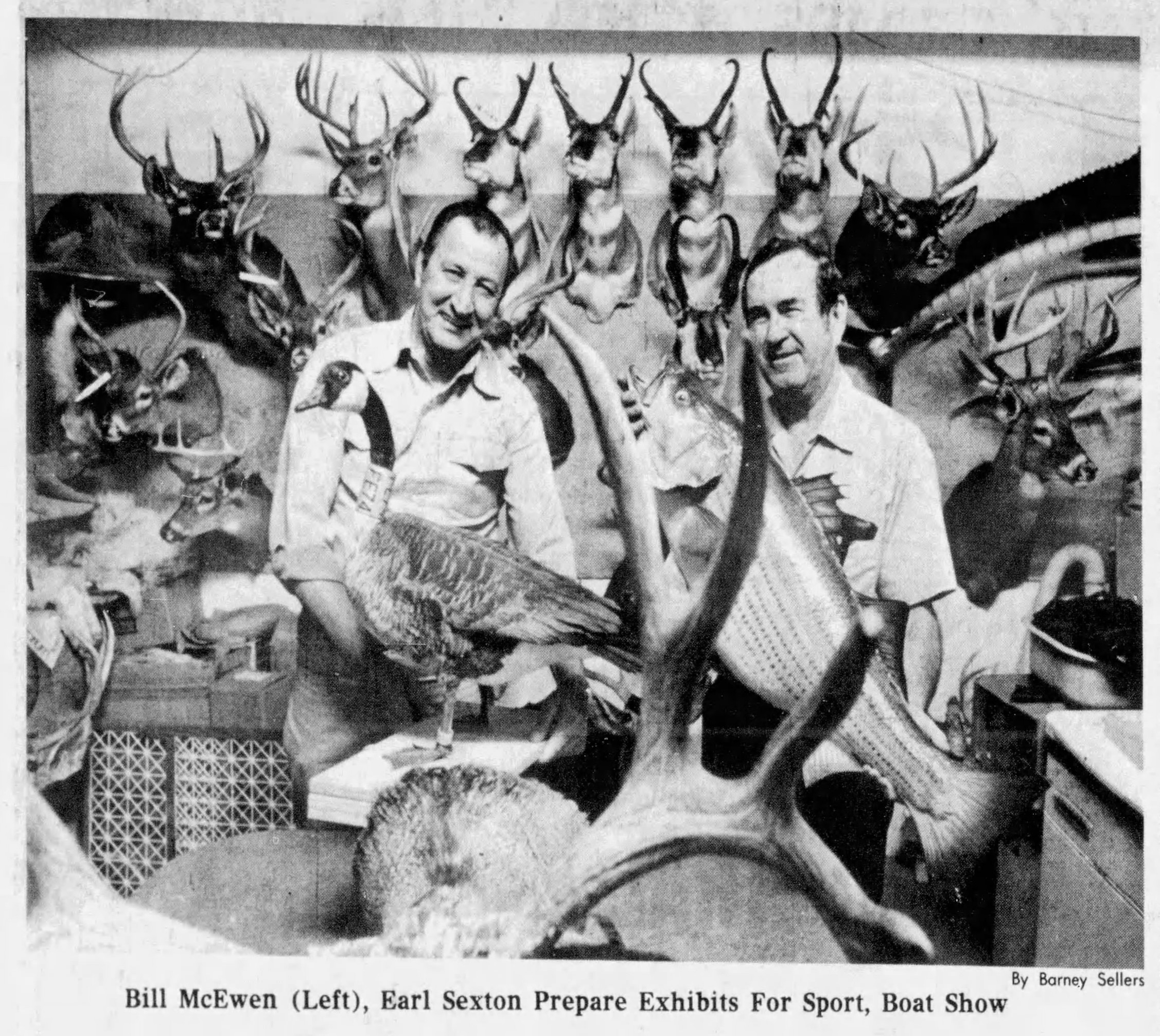
In the meantime, Bill McEwen built his taxidermy shop to a point where he took on another well-known taxidermist by the name of Earl Sexton. McEwen-Sexton Taxidermy was a full-service taxidermy shop specializing in everything that swam, flew, and walked. In 1982, McEwen and Sexton sold the company and retired. The McEwens moved to Edgewater, Florida to be closer to their daughter and grandchildren.
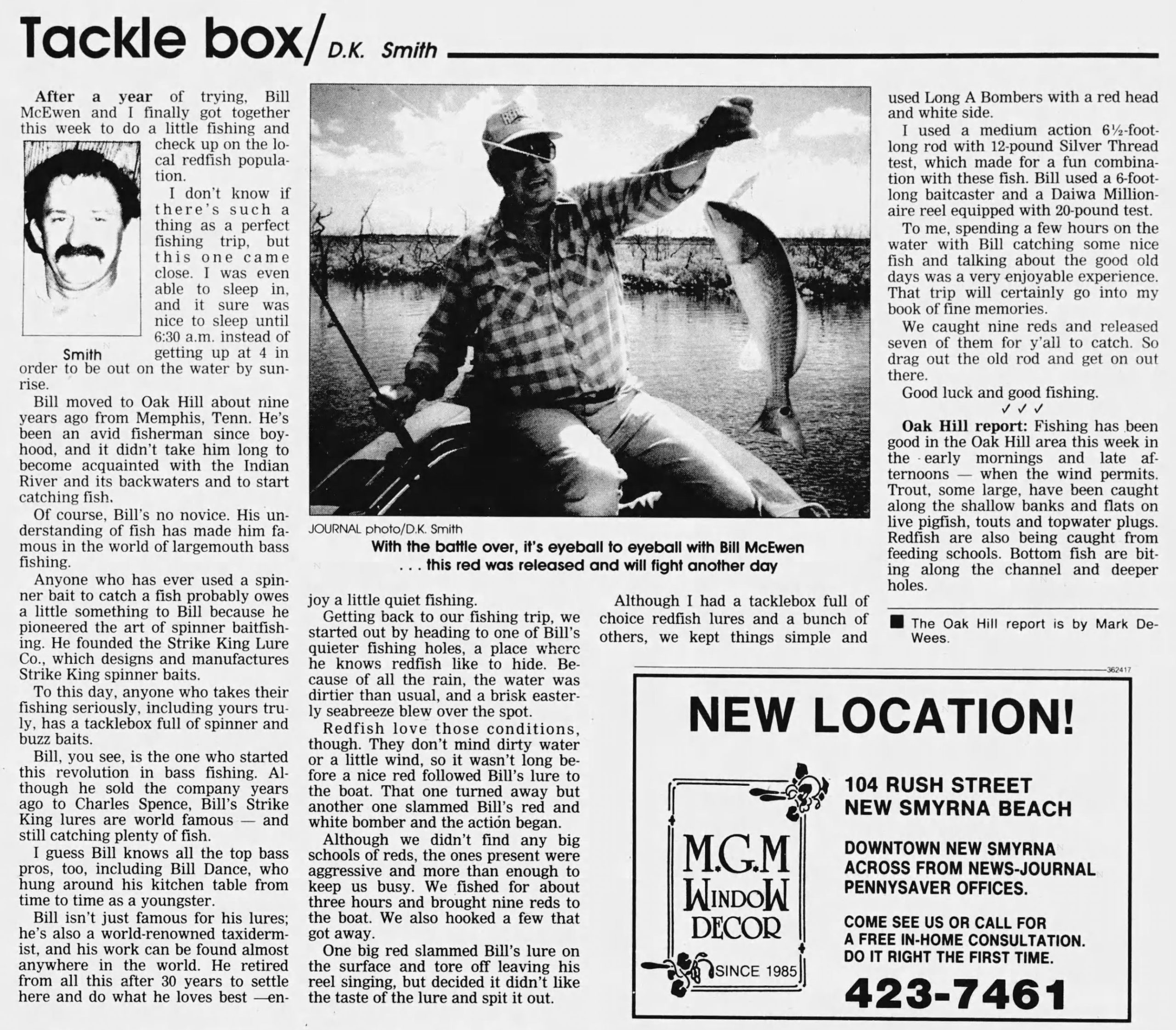
Outdoor writer D.K. Smith, of The Daytona Beach News, caught up to McEwen in June 1991 and got the chance to share a boat with him, fishing reds. It’s a great article that sums up McEwen’s life of taxidermy, Strike King, and fishing.
It’s hard to say whether McEwen gave up the bait business because he didn’t think it would be a money maker or if he liked taxidermy that much more. What is apparent, McEwen loved to fish for fun and loved to come up with new baits. He didn’t think professional tournament angling was good for the sport and from what I can tell, he never participated in any events.
Although McEwen didn’t compete formally, when Bill Dance tells me he was one of the best anglers he’s ever known, I take that to heart.
Bill McEwen, inventor of the Strike King spinnerbait, passed away in March 1996 in Edgewater, Florida. He didn’t invent the spinnerbait, but he left us with a better spinnerbait.





This is fantastic. What a great piece, Terry. I especially like it when I learn something new, and I didn’t know anything about Bill McEwen before this (or, frankly, the history of the Strike King company). A pretty thorough and engaging story, for sure. I like that he eschewed tournament fishing, not necessarily because I’m opposed to that, but because it just goes to show that a lot of really brilliant anglers aren’t or weren’t tournament anglers. I think sometimes that gets lost in the conversation. I also really like his love of taxidermy. As a young guy I thought about pursuing taxidermy as a vocation. And just for the record, the D.K. Smith mentioned in the story is not me! LOL.
DKS? LOL. I had no clue! Is your middle name Karen? :-) Thanks as always David. I was blind to McEwen until 2012 when I found the original ad from 1964 in Don Fuelsch’s Southern Angler’s and Hunter’s Guide. Back then I sent the ad to my friend, Allan Ransom at Strike King to get the background. He told me he’d never seen it and asked if they could put it on their site. LOL. Of course I said yes. Then I talked with Bill Dance about it. He gave me a lot of information that I used in this post. Like his childhood and his meeting McEwen at the boathouse that day. Talking to Bill is always such a good time.
Evidently he was an amazing taxidermist. I just wonder what would have happened to Strike King, or more correctly the McEwen Tackle Company, if he’d kept it instead of the taxidermy business. He already had Charles and Bill working for him. Would it have become the Strike King we know today?
Fantastic article Terry. Love the backstories and History. Old school is way cooler! keep up the good work.
Mike, Thank You for the kind words. This was a fun project. The crazy thing is I only posted about 50% of the write-ups and images I found on McEwen and anglers using Stike King from the local Memphis papers. I struggled as to which ones I should post for the longest time. Maybe some day I’ll put everything up in some sort of scrap book.
What a great piece, Terry. I heartily agree with the other comments. Such a well researched, thorough and fascinating look into the beginnings of the Strike King lure company. So much historical information that I was not aware of regarding the origins of this great company and it’s original founder, Bill McEwen. Outstanding post!
As an aside, the Houser Hell Diver spinnerbait mentioned in the initial part of the article is purported to be the lure that caught the Missouri state record bass of 13 pounds, 14 ounces at Bull Shoals lake in the early sixties.