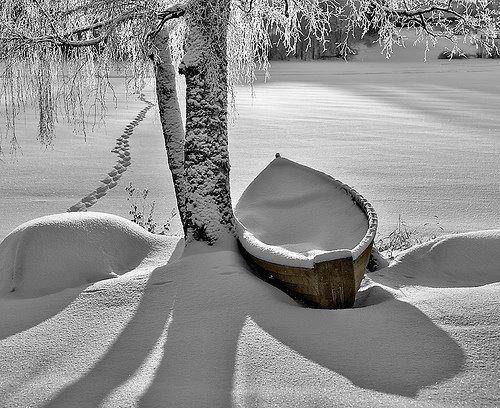
Seeing my barber’s picture on the internet recently as winner of a local ice fishing tournament, gave me a chance to reflect on how things have changed in the ice fishing world over the past 65 years. I started ice fishing around 1955 and as no one in my family ice fished, I had to learn by observing old-timers who were fishing through the ice on the lake in Ohio where my grandfather lived.
Things were very different then. Most folks sat on a five-gallon steel bucket rather than in a comfy “ice shanty” and those few who did have a “shanty” or “coup” had ones that were homemade of lumber scraps and appeared in every shape, size, and color with a small wood burning stoves inside.

Ice fishing rods tended to be a bit longer then and were often made from cut down rods. My own was made from the tip of a bamboo fly rod fitted with a section of broom handle as a grip and a couple of nails on which extra line was wound. Sounds crude but at the age of 18, I landed a six-and-one-half-pound walleye on the rod while fishing for crappies with small minnows and a tiny cork float. The tussle took quite some time, and I received much unsolicited advice from a growing crowd of older ice fishermen that quickly surrounded me. I took the fish a short distance to my grandfather’s house and buried it in the snow.
Soon a Conservation Officer came by and asked me if I was the one who landed the big walleye everyone was talking about. I said yes, then he asked me to see it and measure it. I led him to the fish with my heart in my throat.
In Ohio at that time, one did not need a fishing license until they turned 18 and I had turned 18 five days earlier but did not buy a fishing license as new ones would be required the 1st of March. It was late in the ice fishing season and a week or two at the most would bring the end of safe ice. The cost of a license that would only be good for those few days was $2.25 (a major expenditure in my eyes) so I decided to take the chance. As the young conservation officer measured my fish, I practically blacked out waiting for him to ask to see my license. He did not ask and from that day until the present, I have never gone fishing without a valid license. I still get nervous remembering my stress during his examination of the fish!
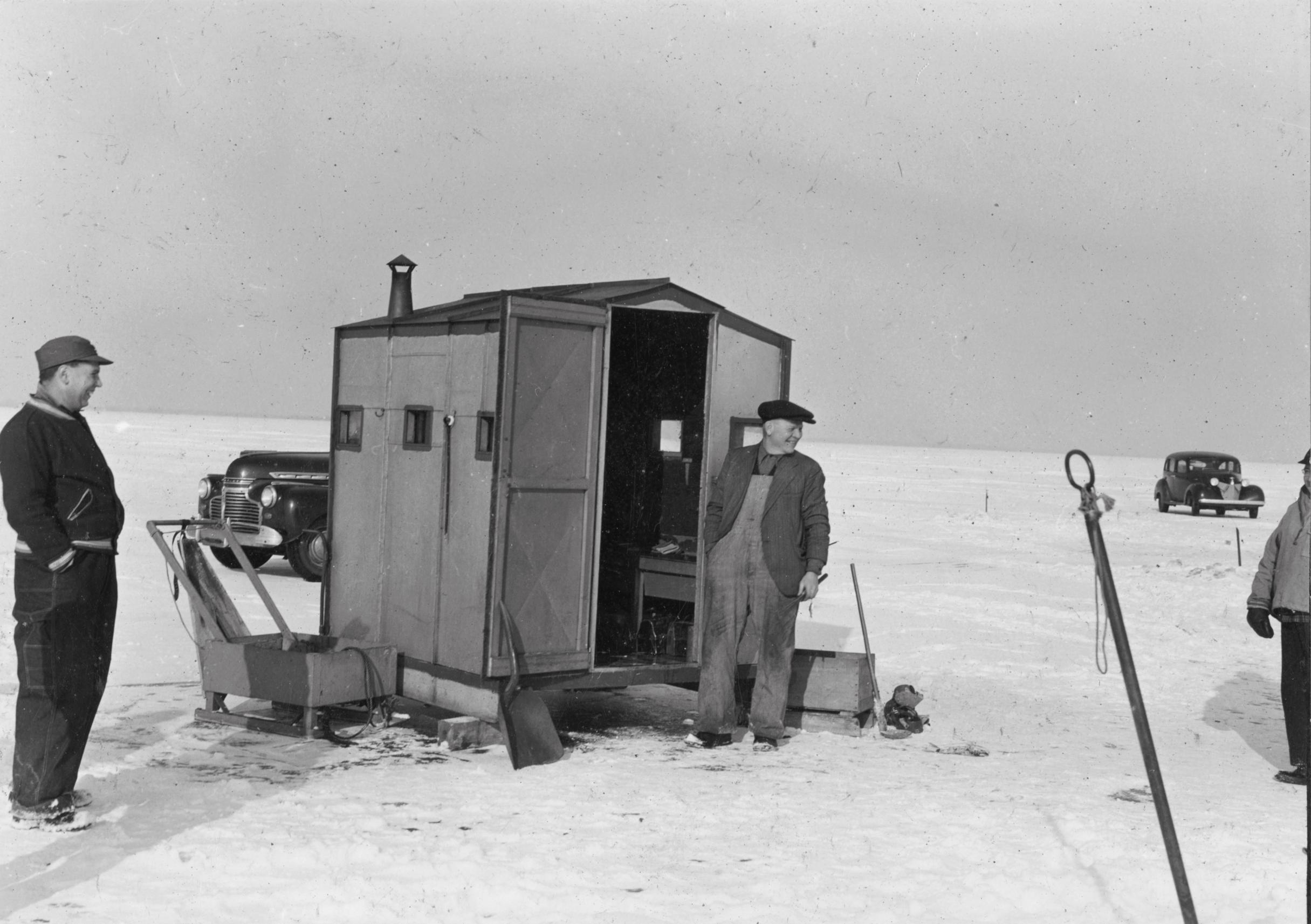
Some time ago a friend made the comment that he was “old enough to have used a “hand auger” when he went ice fishing. That remark made me feel really old as when I started to ice fish most fellows including me used an axe to chop a hole in the ice. This actually works fairly well until water runs into the hole after which every swing splashes ice and water all over the fellow with the axe.
About the time I was in high school (1959) my fishing partners and I decided to move up in the ice fishing world and procure a “spud bar” which is what ice chisels were called in our area. No one produced or sold them commercially in our area of Ohio so like most others we had a local welder build us one.
When we picked up the finished product (the cost was $2) he mentioned that we might want to temper the blade as it was fairly soft iron. I got an ancient book somewhere that talked about tempering metal. It mentioned that blacksmiths often dipped red hot iron into horse urine to temper it. My high school buddies and I did not have access to a horse but we did have access to plenty of urine.
After a “group effort” we had a coffee can full and built a wood fire in a friend’s backyard burning barrel. It was a wet, foggy, winter day with 6 inches of wet snow on the ground and the temperature was around 40 degrees. After heating the business end of the “spud bar” to a bright cherry red, 4 or 5 of us stood around in a tight circle to watch the red-hot iron plunge into our “tempering agent”. The backyard was instantly enveloped in an acrid-smelling fog that remains sharp in my mind to this day. This was followed shortly thereafter by the mother of the household coming out of the back door and asking in loud and agitated terms. “What the H*** is going on out here?”
Later I moved to Michigan and the hard winters of the 70s brought on as much as 20 inches of ice. Time to buy one of those new Swedish spoon-shaped augers. It worked great as long as it was kept sharp and not abused.
I quit Ice fishing about 40 years ago and by then most folks had moved on to the drill style of hand-operated ice auger as one didn’t need to stop and clean out the hole periodically while drilling, as was required with the Swedish Spoon. About 15 years ago I had occasion to drill a hole in the ice for some folks who were all in their early 20’s. When I showed up with my Swedish Spoon and a spud bar, they looked at me as if I had just stepped out of a history book!
My only advice when it comes to “spud bars” is never to lend one that you cannot afford to lose. At least four of mine are on the bottom of lakes after being borrowed by folks who had never used one. They did not take my strong warning that it is always wise to tie the handle to your wrist while hammering away at the ice!
Today it seems that most would not think of going ice fishing without a snowmobile or 4-wheeler and a power auger, to say nothing of a collapsible shelter. It worries me that youngsters today get the impression that one cannot go fishing without a large “bassboat” powered by an over-sized engine or that all this mechanized equipment is necessary to go fishing through the ice. For me the charm of ice fishing is being that lone fisherman walking across a snow-covered lake, dragging a small sled behind containing everything I am going to need and hearing only the soft crunch of snow beneath my feet.
Tight Lines
Wild Bill
To read more of Bill’s Sunday Sonnetts, please click this link.




Great reflection on the time honored tradition of ice fishing. Sometimes the simple way is the best way. Thanks for sharing, Bill. (Beautifully serene intro photo as well!)
I remember well the decade I lived in Madison, Wisconsin, in the 1980s, a few blocks from Lake Medota. I had a great little portable ice fishing shanty that my Dad made for me for Christmas one year. It had a canvas, zippered upper section that folded down when not in use, and was framed by several hollow pipes, and a heavy lumber bottom. And trust me, it was heavy! But I pulled that thing over the ice out onto the lake, along with a chunky kerosene heater, a hand-powered auger, spud bar and all my gear. I got my exercise in the winter pulling that kit over the snow and ice. I’m grateful for the lightweight power drill augers and light-weight tent shanties of today, but I do remember those old days with fond nostalgia.