
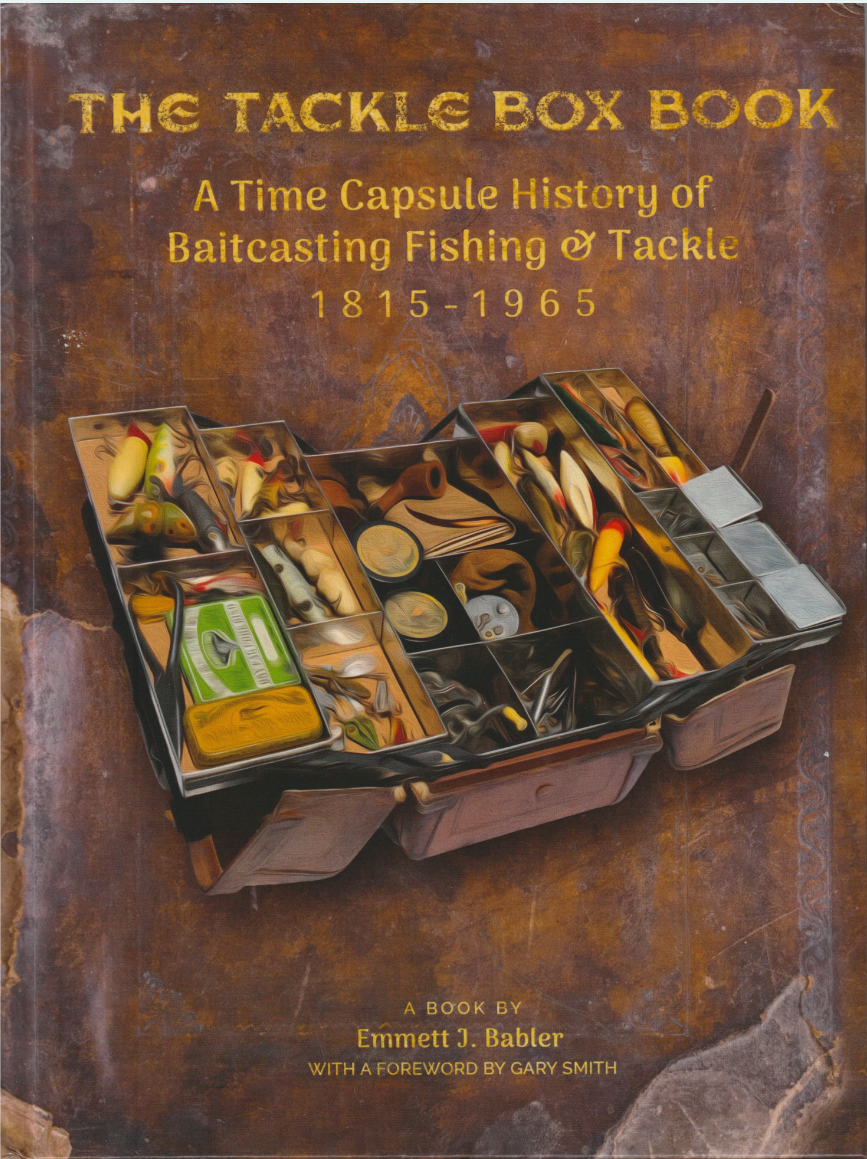
Early last year, in April of 2024, I wrote a review of Emmett J. Babler’s book, A History of Baitcasting in America. That book is a deep dive into the evolution of baitcasting along with the concurrent growth of the railroad, industrialization, technologies, and new ideas on conservation and the environment. It is a serious study on the parallels of the evolution of both baitcasting and America. Emmett Babler has written another historical volume titled The Tackle Box Book, that is also a sport fishing history, but one that takes a novel approach to examining that history. The subtitle is “A Time Capsule History of Baitcasting Fishing & Tackle, 1815-1965.”
Before Babler gets to the fun, “time capsule” part of the book, he presents a solid history of the development of the sport from the 1800s. He lays a solid foundation in the first chapter. The phrase “time capsule” is appropriate, because Babler compares specific tackle boxes and their contents through several periods from the late 1800s through the mid-20th century. He treats each tackle box as a time capsule, identifying and explaining how the box and its contents are emblematic of what was going on in the development of baitcasting and sportfishing at the time, as well as how they relate to the larger American society of the time. It is really a unique and fascinating way to explore the history of sportfishing. By taking this approach Babler is able to bring general historical concepts into a very personal, individual focus. These tackle boxes belonged to individual anglers, and their contents reflect the choices the anglers made in stocking them, how they fished, what was popular and practical at the time, and even the ethics of the angling community at different periods in history.
Let’s look at a couple chapters highlighting the tackleboxes of their respective eras. The first kit we’ll take a quick look at is one from the late 1800s. It’s a small copper tackle box with relatively few compartments. Babler says that “tackle boxes in this vintage…were often only carryalls for moving tackle from the angler’s home to the fishing camp. …most often, the tackle box did not go into the boat.” That is something I found very interesting, and very unlike their later counterparts. It would be unheard of for an angler from the 1930s or 1940s onward to not haul their tackle box with them wherever they went with rod in hand. As he does with every kit in the book, Babler goes into great detail on the type of rod, reel and line used by the angler who would have carried the tackle box. This in itself is an education on the development of these components, and I found his discussion of the move from bamboo to steel to glass rods as the book progressed to be extremely interesting.

As you might imagine, the contents of a late 1800s box contained little in the way of variety of lures, and had rather more hooks, floats or bobbers, snelled rigs, line and harnesses. Live bait fishing was still the predominant baitcasting fishing method at this time. But there were a few lures, mainly a variety of spinners and spoons, along with a couple of metal plug-like lures, and Babler describes each one in detail as well as providing historical tidbits of information concerning the makers. The accessories associated with each kit are especially fascinating. From the small oil can to the ornate metal match case to the crocheted minnow net on a copper frame and handle, the accessory items included in this tackle box are just plain cool. Imagine your mother or grandma crocheting the net portion of your minnow net! This was during a time when the women hand-stitched many items in a home. How wonderful!
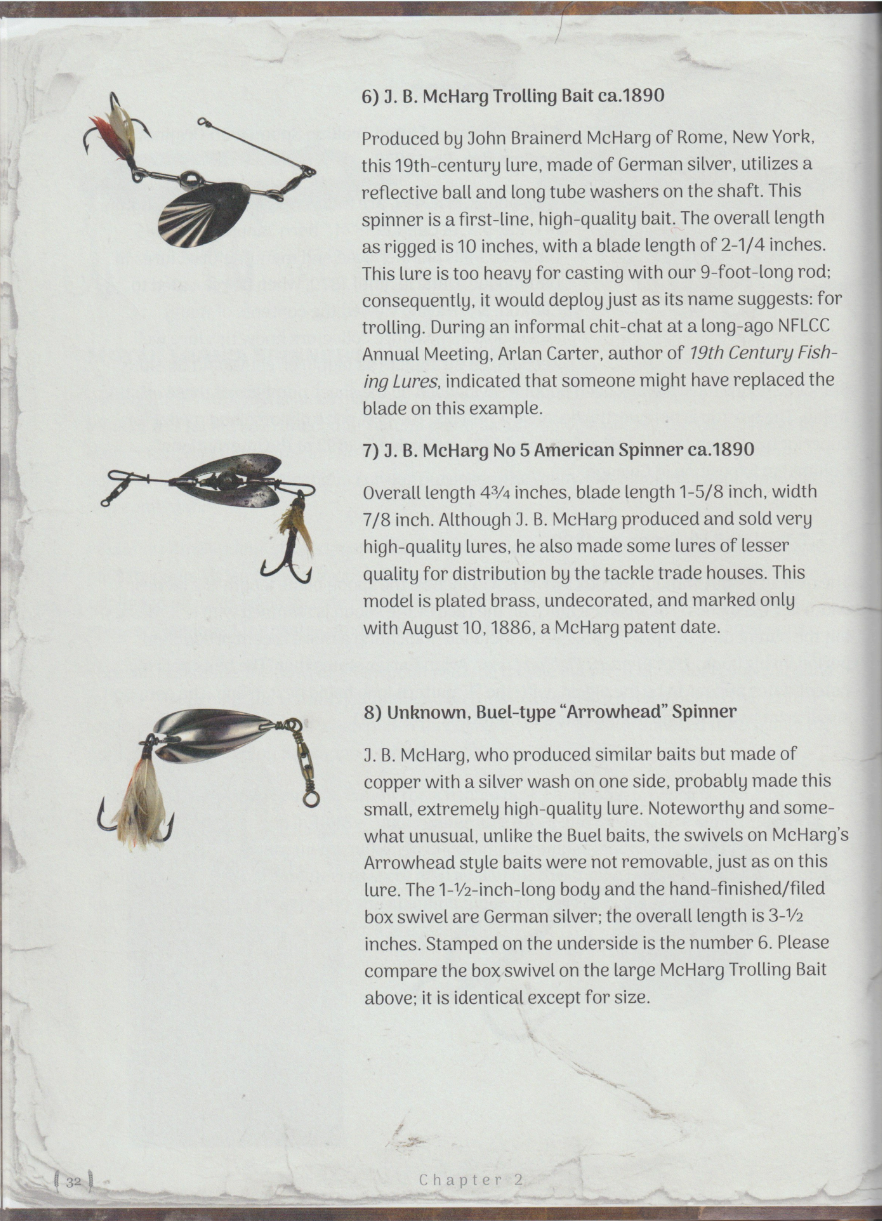
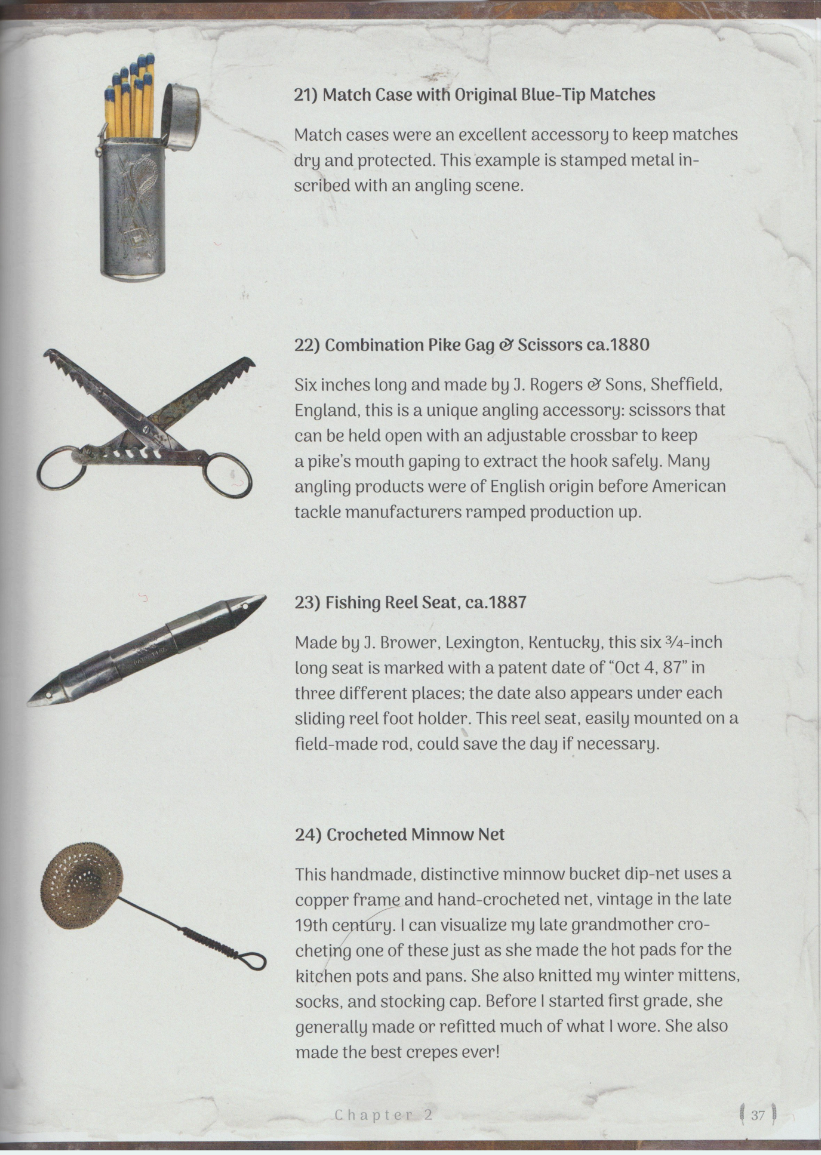
The Tackle Box Book is profusely illustrated, with over 300 images of tackle boxes, rods and reels, lures and more. It’s an attractive book, one that you’d be happy to place on a coffee table or night stand. But it’s more than just a “coffee table” picture book. Babler put plenty of research into this volume, and the bibliography is extensive. He told me that there were some issues that delayed publication of the book, which ultimately turned out to be advantageous, as the delays allowed him to do more research.
Another chapter that we’ll glance at focuses on a later tackle box, this one dated from 1946 to 1967. This kit is especially interesting because it belonged to Babler’s father, John F. Babler. Emmett says that this tackle box was assembled by his Dad upon his return from WWII. Babler also discusses a few other tackle boxes belonging to WWII veterans, and his discussion of this period in America is my favorite part of the book. He writes with a thoughtfulness and warmth about these men and their fishing kits that filled me with appreciation and nostalgia.
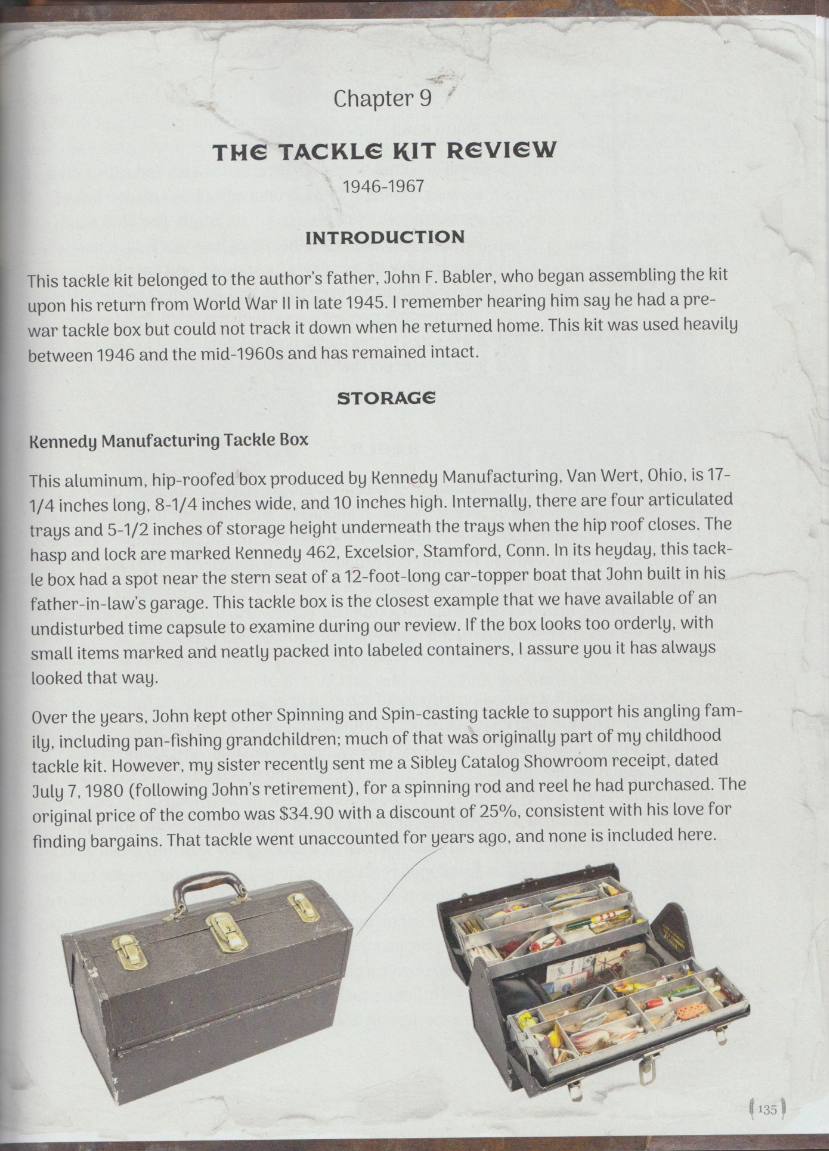
As you might imagine, Babler’s discussion of his father’s gear and fishing style is pretty thorough and detailed. For example, John Babler had a few small packets of fish hooks in his tackle box, which virtually every older box contains. These would generally be a forgettable or minor item in a tackle box, seeing as they are so common and nondescript. But he gives a thorough, though brief, history of these hooks under the heading “Kahle Horizontal Fish Hook, ca. 1950s.” Babler begins his history of the hook with background on the inventor:
“This kit includes early examples of the famous Horizontal Kahle Fish Hook, patented in January1953 (Pat. 2624146) by Victor C. Kahle, a St. Paul, Minnesota, area hook maker. Originally from Belle Plaine, Minnesota, about 50 miles southwest of the Twin Cities, Kahle had been a well-known athlete and sportsman. He was a Belle Plaine High School baseball player and later played locally on amateur teams. Kahle studied theology at a seminary in St. Paul (his baseball uniform comes from Luther Seminary) but discontinued his studies after being drafted by the Chicago White Sox. His first professional debut was at Mitchell, SD, in the Dakota League. Kahle subsequently resided in South St. Paul, Minnesota, where in 1948, he invented the Horizontal Fish Hook, which he initially marketed from his home.”
Babler goes on for another lengthy paragraph about the continued history of Kahle’s enterprise. It’s these kinds of personal, biographical stories that give life the history of our sport, and is very much appreciated by those of us who are into the study.
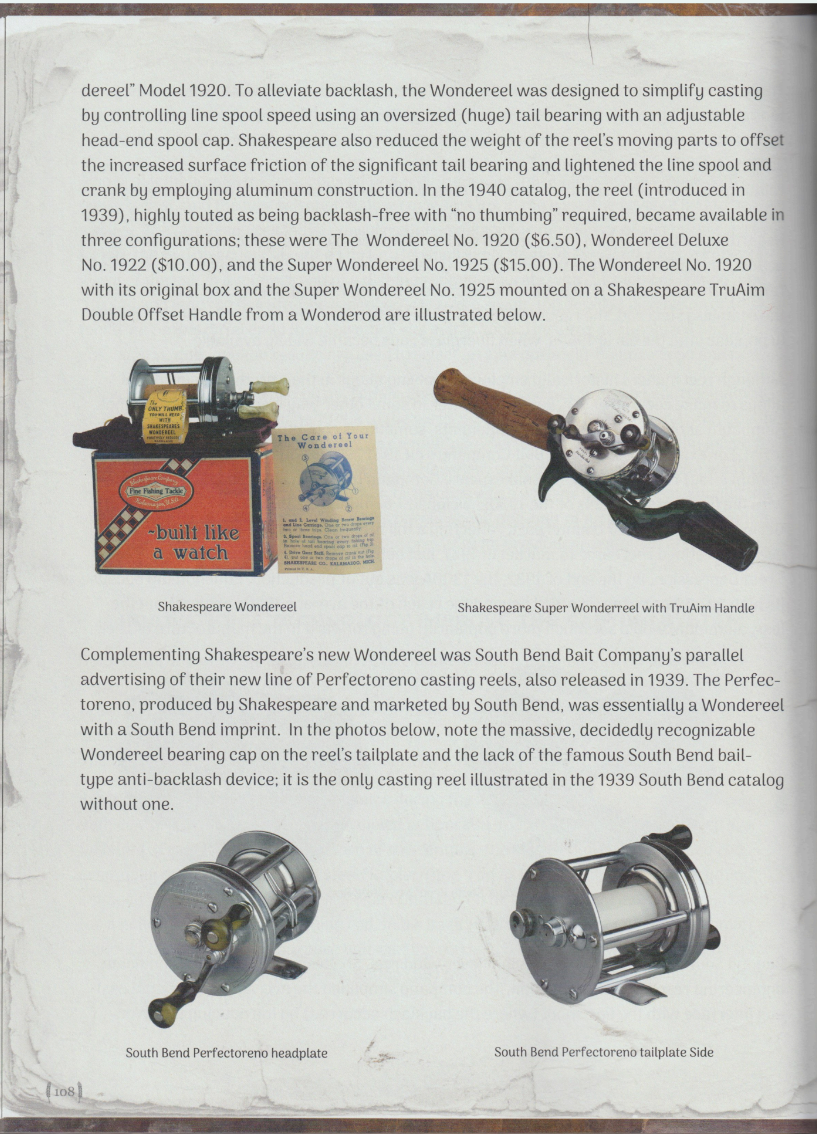

The lures in John’s tackle box – Jitterbugs, Crazy Crawlers, Lazy Ikes, Creek Chub Pikie Minnows, etc. – are familiar to all of us. Babler spotlights specific lures in these later chapters and provides historical background on the companies that produced them. His discussions of some of the lure companies and their offerings during WWII – the Arbogast Jitterbug and the Creek Chub Dive Bomber, for example – is fun reading.
In short, Emmett Babler’s The Tackle Box Book is enlightening and a joy to both read and look at. It’s loaded with little bits of history which a lot of us were probably unaware of (like the Kahle Horizontal Hook); has a ton of great images; presents a logical, chronological journey through time on the development of sportfishing and its tools; and offers a creative path – looking at various historical tackle boxes – to guide the reader along that journey. If you do acquire a copy of The Tackle Box Book I predict you’ll turn to it again and again, sometimes for information and sometimes just to enjoy the images it contains. You can get the book at this amazon.com link for $40.





Nice review of an interesting book, David. Looks like I will have to put this on my bookshelf sometime soon. I have always been a big fan of tackle boxes and have a couple of vintage brown metal hip proof Kennedys, and a very nice dual cantilever silver aluminum My Buddy. I also have a massive brown Umco 10 tray tacklebox from the 1970’s. All are filled with vintage lures……..
Same here, Mike; I too have a fondness for old tackle boxes. Have a big UMCO Possum Belly that I inherited from my Dad, along with several other old boxes, both metal and plastic I got from him. Also have an old metal hip roof box I was given by a friend that her grandpa used. And a month or so ago I picked up one I had never heard of before, a square-ish “Fish n’ Chum” box. I bought a few rolls of cork and have started cutting and inserting the cork into the trays of my tackle boxes; I really like the warm look of that cork and the softer bottom it provides for old lures.