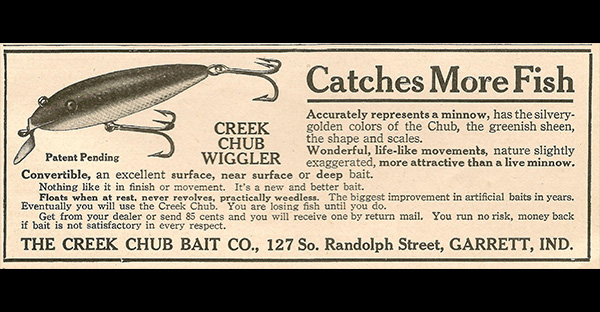
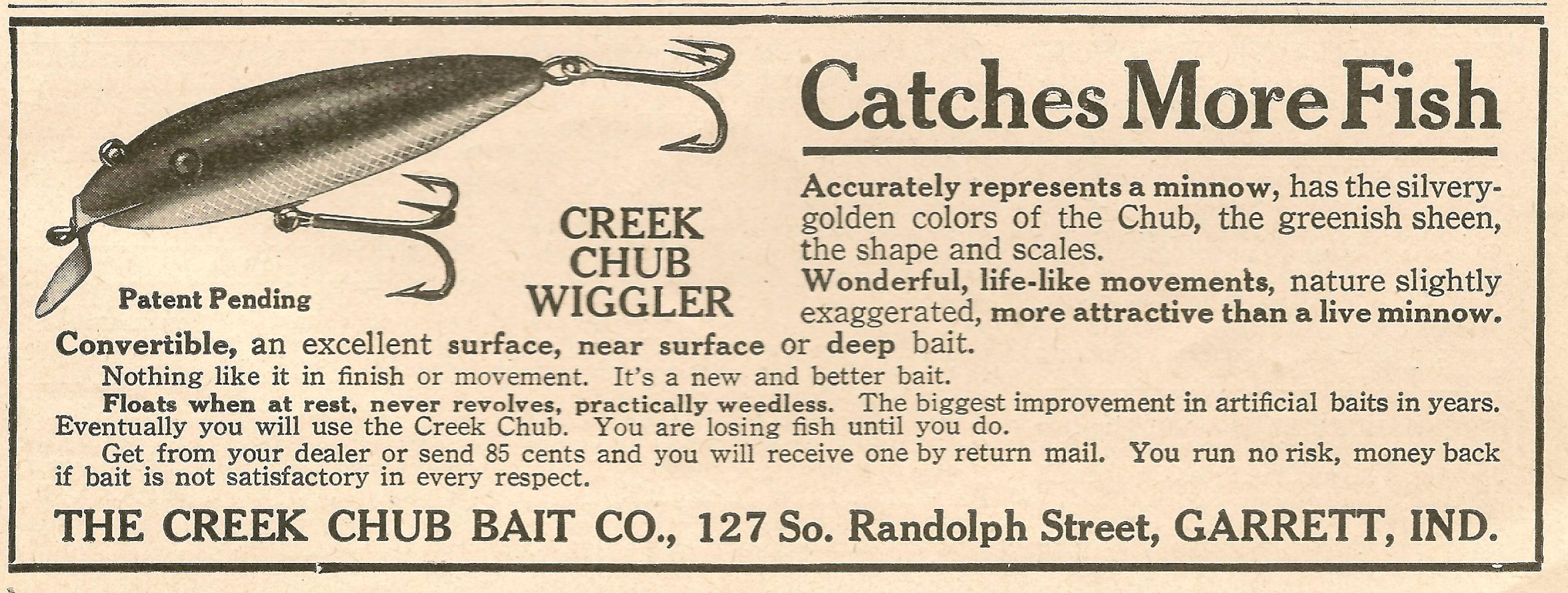
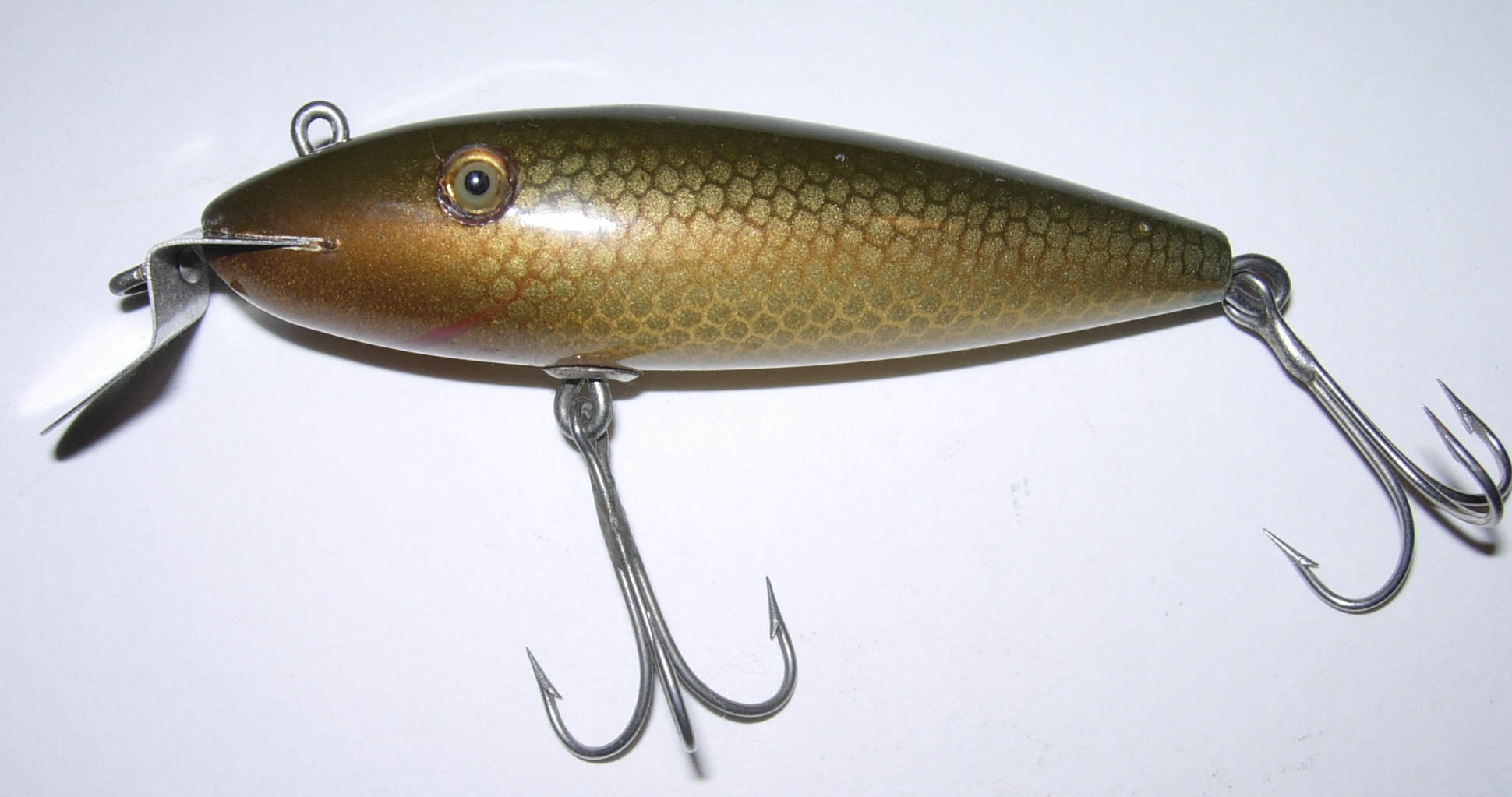
In the Spring of 1917, the following ad from the Creek Chub Bait Company appeared in National Sportsman Magazine. Among other features it mentions that this bait has “scales”. This scale finish was brand new in the world of wooden baits and it did not take long for other companies to take notice and figure out how the scale pattern was applied.
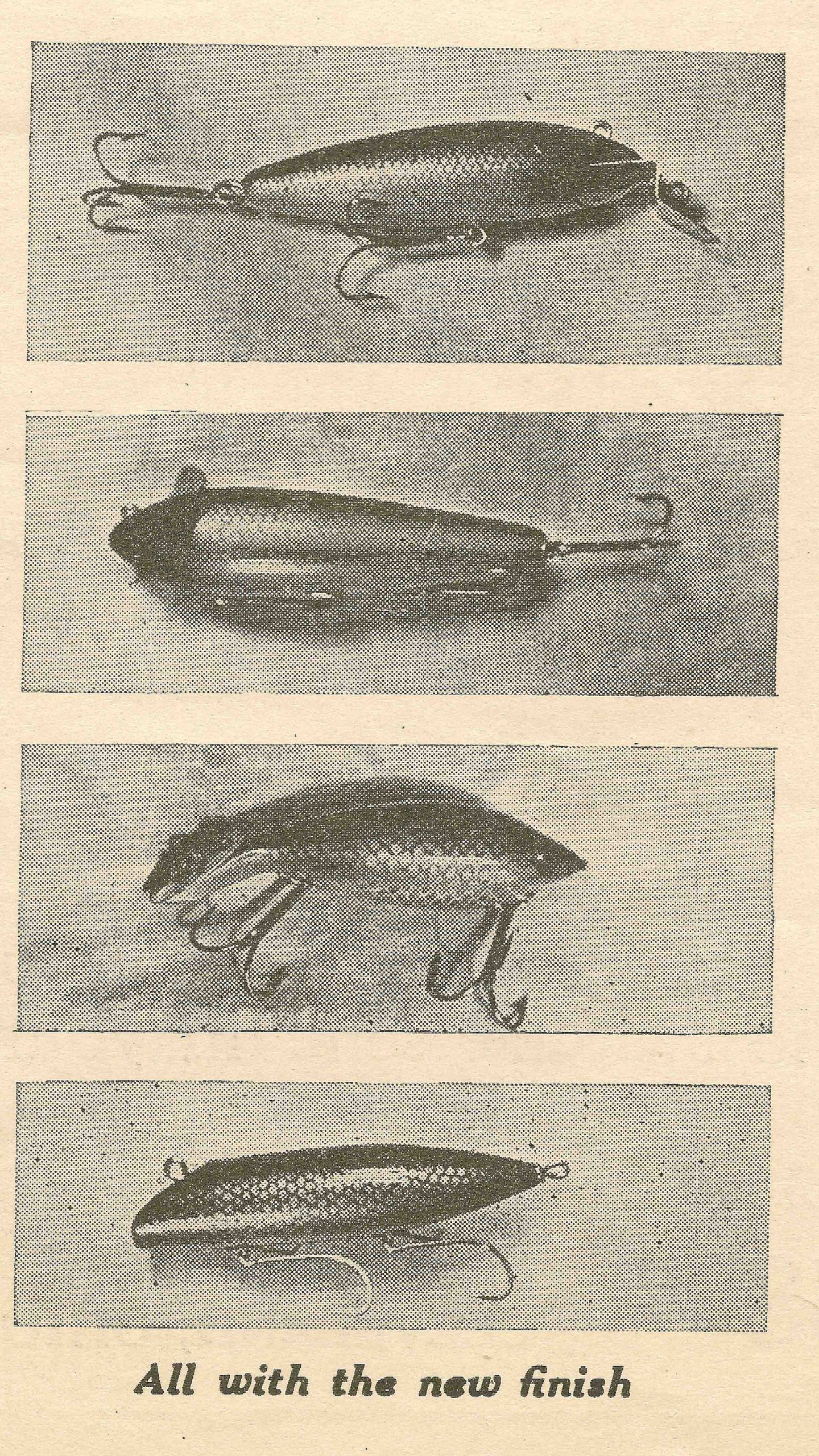
The following year in the May 1918 issue of Outer’s Recreation Magazine there appeared an article by the Fishing Editor, Sheridan R Jones entitled “The New ‘De Luxe’ Scale Finish”. Along with the article, the following picture appeared of four plugs in this “new” scale finish. They are from the top down: the Creek Chub Bait Company’s 100 Wiggler, the Jamison Deluxe Mascot, the Heddon Tadpolly, and the South Bend Bass-oreno.
The process for applying the scale finish had been invented by the Henry S Dills one of the co-founders of the Creek Chub Bait Company in Garrett, Indiana, and consisted of stretching what we would refer to today as “mosquito netting” over the bait when spraying on the final colored coat thereby using the netting as a paint mask to create the illusion of scales. This process reminds me of the wheel in that once you see it, it is hard to imagine that no one had thought of it before.
Though eventually it would become one of the largest producers of wooden baits in the world, the Creek Chub Bait Company was very small and very young at that time, having been founded in 1916. They knew they were on to something very good with the scale finish as fishermen and fishing editors all gave it great reviews and sales were good.
However, even if they filed for a patent and it was granted, Creek Chub had none of the resources required to defend it against the much larger companies who were using it with impunity. The solution was simple. As long as you are going to have a guard dog you might as well have the biggest, meanest one around.
Creek Chub approached the largest company producing wooden baits at the time, James’ Heddon’s Sons, with a proposition that would be hard to turn down. They would assign one-half the patent rights to the scale finish to Heddon for one dollar and in turn, Heddon would defend the patent in court and agree to pay the full cost of that defense.
There were many smaller provisions in the agreement which in the end proved to be of minor importance. I have covered them in a more detailed article entitled Scale Wars which appeared in the December 1999 issue of the NFLCC Magazine. The agreement was signed by the two companies on April 22, 1918.
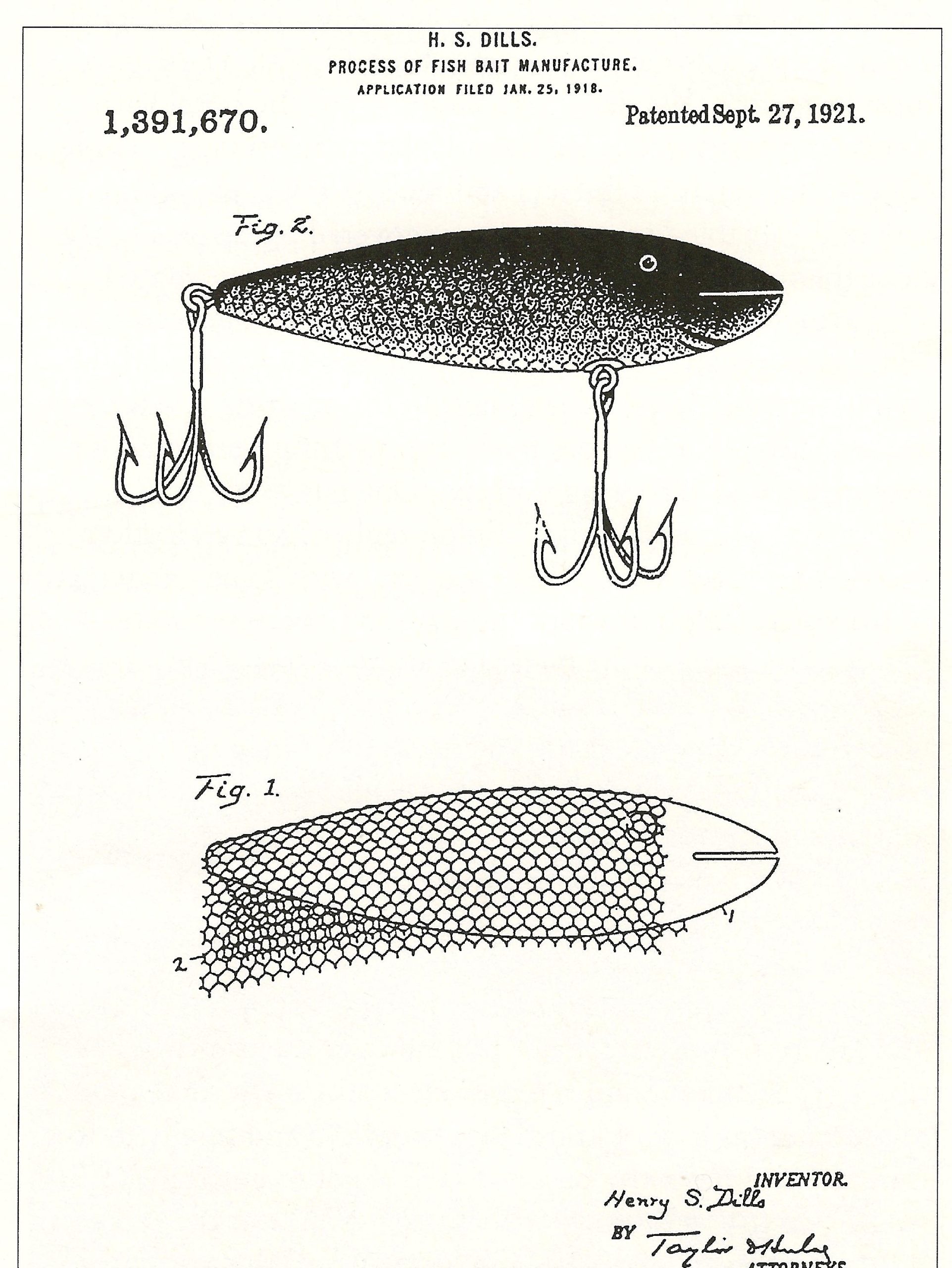
Some Companies saw the writing on the wall and discontinued the scale pattern. South Bend was not one of them. When the patent was approved in September of 1921 Heddon went after South Bend with a vengeance, eventually forcing them to pay Heddon $20,000 damages for past use of the process and two and one-half cents for every bait they used it on in the future.
South Bend was also required to pay a minimum annual payment of $1500 no matter how many baits they sold with the scale finish. This only covered one-half of South Bend’s problems as they then had to negotiate with Creek Chub for past damages as well as permission to use Creek Chub’s half of the rights to the scale pattern in the future.
Records indicate that eventually, Heddon was also able to collect damages or negotiate royalty agreements with Pflueger, Moonlight, and Outing among others.
Talk about a return on a one-dollar investment!





Wow. I had no idea. I make fishing lures and use this technique, as I know a lot of other lure makers do as well, and I’d bet dollars to donuts that none of us know the history of how and when this technique started. Absolutely fascinating!