
Talk about hollow-body frogs and images of Bobby Barrack, Ish Monroe, and Dean Rojas instantly come to mind. Today in Williams the Frog Master, we’re going to go back in time to the man who created the contemporary frog phenomena, Alfred Williams.
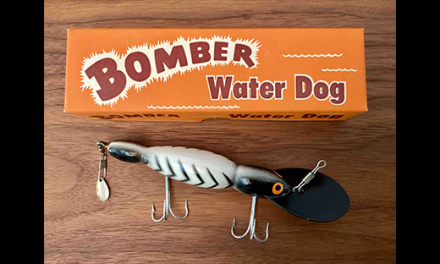
Frog imitations have been around since the dawn of bass fishing with baits like the Heddon Luny Frog (1927), Paw Paw’s Wotta Frog (1941), the Jenson Frog (1950s), Bill Plummer’s Super Frog (1959), and of course Snag Proof’s hollow body frog (1960). Most of the early baits were made from either wood or early hard plastics. Some were fished on the surface, while others dove under retrieve. It can also be argued that Fred Arbogast’s Jitterbug and Hula Popper are frog imitating lures.
Prior to 1983, anglers fished the amphibious fake, but few utilized it in tournament settings. Talking with Bobby Barrack about his early use of the Snag Proof Frog, he said, “There were a lot of fish lost in those first few years we used the frog. We had way less than a 50% hook-up-to-land ratio and that was really frustrating. We knew we could win almost any event we entered if we could just figure out how to get these fish in the boat.”


Because of this lousy hook-up ratio, anglers steered away from the frog in tournament settings. That is all but one angler by the name of Alfred Williams.
Williams frog of choice was the Snag Proof Frog because it had a hollow body and legs. He’d amputate the legs at the knee and run a spinnerbait skirt through the holes in the legs. The skirt would become his new legs.
Williams didn’t stop there, though. Before installing the skirt, he’d insert rattles and sometimes split shot to increase the weight and provide a little noise. The added weight allowed him to cast the light lure better in the wind and made the bait sit lower in the water, providing a better hook-up ratio.
Williams’ and his custom frog would go on to start a whole new genre of frog bait.
In 1983, Williams enlisted his frog to qualify for the Mississippi State Federation team and a shot at the 1983 BASS Masters Classic. He then won the Federation Divisional on Ross Barnett to clinch his spot in the 1983 Classic, on the modified frog.
Williams would go on to place 10th at the 13th BASS Master Classic on the Ohio River. Not a bad finish for a rookie.
The Williams version of the Snag Proof Frog would go on to become a new product for the company shortly after his success. This would spawn another bait, the Mann’s Rat, which garnered a lot of hype on Guntersville.
But fishing the Hollow-Body Frog and Rat still had some issues. For one, the hook was too small and dull, and the line of the day wasn’t appropriate for pulling fish out of the muck. Then, in 1993 Spectra braid was introduced to the industry.
Spectra braid, unlike nylon braid before it, didn’t cut into itself on the spool on the hookset and it didn’t stretch. The braided line was also very good at cutting aquatic weeds. These new braided lines changed the face of frog fishing.
The next issue to address was the hook. Snag Proof had custom hooks made by Gamakatsu, hooks that were sticky sharp and sized right for the frog. Now hook-up-to-land ratios skyrocketed.
Today it seems every tackle manufacturer offers a frog in their lineup of lures. The popularity of the bait has gone from Williams and a handful of anglers using them in the mid-1980s to legions of anglers throwing them today.
Alfred Williams may not have invented the frog, but he is the guy who put it on the map.
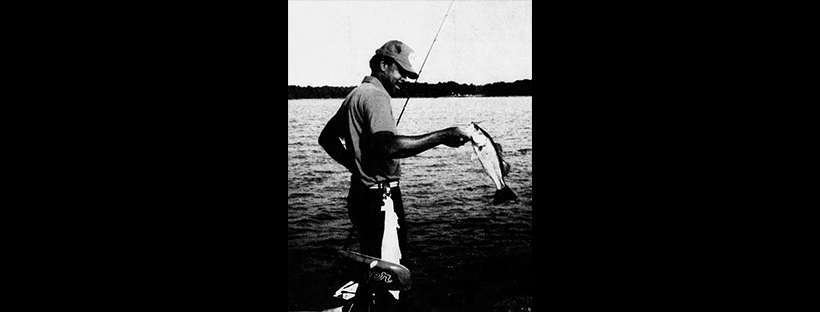
The article that started me down the path to write this piece is shown below. It was printed in the July 1, 1984 issue of the Clarion Ledger.