

I always cringe a bit when I hear a Bass Fisherman on Television use the term “Spook” as in, “I sometimes like to throw a ‘Spook’ when they’re hitting on top.” I have come to realize that they are using the term to describe a Zara Spook by Heddon.
Over the years, the term “Spook” has changed meaning. When it was used by Heddon it simply meant a semi-transparent, plastic lure as opposed to wood. Starting with Heddon’s earliest plastic baits there always seemed to be an internal tussle at Heddon about whether to use the term “Spook” or “Fish Flesh” to describe transparent plastic lures with what they liked to call a “Ghostly Appearance.” As an example, the 1932 Heddon catalog saw the plastic-lipped Vamp 9500 introduced with the term “Fish Flesh” prominently featured.
In the end “Spook” won out as the “Fish Flesh” phrase gradually receded into the background in Heddon advertising.
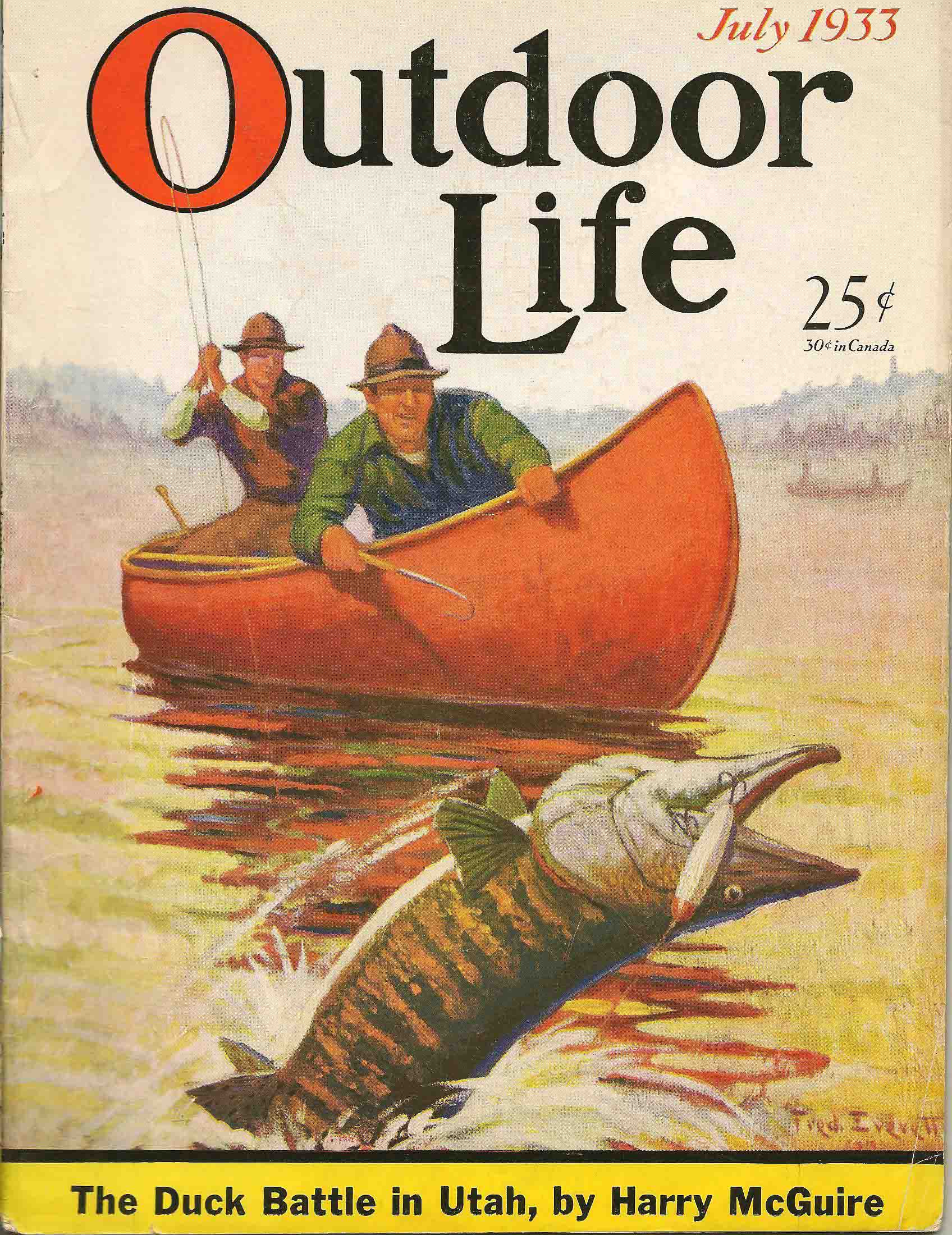
The advertisement shown here comes from the July 1933 issue of Outdoor Life and illustrates several changes in the “Spook” story. It is apparent in the ad that the new “Vamp-Spook” 9700 features a metal lip. In addition to the pictured “Vamp-Spook” and the “River-Runt-Spook”, it is mentioned that two other long-time wooden favorites also are now being produced in plastic as the “Basser-Spook” and the “Torpedo-Spook”. Several others were to follow as counterparts to Heddon’s line of wooden baits including the Zara-Spook in 1939 as the plastic version of the Zaragossa.
The statement in that advertisement that these new lures are “guaranteed to outlast a dozen wooden lures” would, in the end, prove to be wrong. Beginning in 1933, “Spook” baits were made of a new blend of plastic that soon started to deteriorate. Today, plastic baits from that era, 1933-1939, can be very hard to find. Baits such as the “Jr Basser Spook”, the 9180 “Wounded Spook” and the first version of the “Zara-Spook” (usually a three-hooker) are almost never seen and when they are, they are invariably shrunken almost beyond recognition.
Unstable plastics and the economy of the “Great Depression” meant that few were sold and very few of those survived. Recognizing the problem, Heddon sent a notice to dealers not to put the baits in display windows in the sunlight as it hastened their demise. They also promised to replace any decomposed baits.





I for one am glad that they went with Spook over Fish Flesh. It’s a much better term that easily rolls of the tongue. The cover art for that 1933 Outdoor Life is absolutely brilliant. Fred Everett, the illustrator of that fine piece, did quite a number of interesting wildlife, cowboy, western and mystery works, and a number that were for magazines like Outdoor Life. Everett was born after my own favorite American artist, Frederic Remington, and his signature looks like he was at least a little influenced by Remington. This cover is frameworthy.