Every vintage reel collector knows the name J. A. Coxe. From big-game saltwater anglers to freshwater bass anglers, Coxe revolutionized reel construction in the 1920s and carried it on through the early 1940s. But there’s more to his story than that. Today in The Early History of J. A. Coxe, we’ll talk about that history and introduce the first catalog put out by Bronson-Coxe in 1939.
The Ocean Expert and Wildlife Pioneer
Long before he manufactured a reel, Joe Coxe was celebrated as one of the finest deep-sea anglers on the Pacific Coast. An absolute expert ocean angler, his intimate understanding of the marine environment was so respected that in 1913, the California State Fish and Game Commission officially appointed him to lead a high-profile maritime investigation.
Tasked with documenting the rapid depletion of local marine life due to over-commercialized harvesting, Coxe sounded the alarm on the destruction of local abalone and spiny lobster populations. He aggressively pushed the state for strict gear restrictions, even though it put him squarely in the crosshairs of powerful commercial fishing lobbies of the era. Coxe proved himself as a visionary conservationist who deeply valued protecting the resources he fished.
By the 1920s, Coxe translated his deep ocean expertise into building massive, handcrafted big-game reels. The vom Hofes of the day were known to break under the strain of the giant Pacific swordfish and tuna, so he set out to design and build reels that would stand the test.
Operating out of Los Angeles, he built the biggest reels of the day. These robust nickel-silver masterpieces were used by elite clients like President Herbert Hoover and author-adventurer Zane Grey, who used Coxe’s over-engineered machinery to shatter world records. His reels, second to none, retailed between $150 and $1,500 in the early 1920s. Yet they were coveted by the best saltwater anglers on the planet.
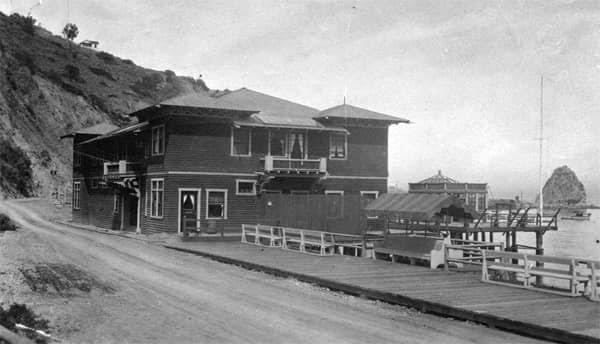
Coxe’s devotion to the sport eventually earned him the presidency, seven consecutive terms, of the world-famous, ultra-exclusive Tuna Club of Santa Catalina Island in Avalon.
A Shrouded Departure and the Move to Michigan
Like many legendary figures, Coxe’s history features a complicated, human chapter. Around the early 1930s, financial discrepancies were discovered in the Tuna Club’s treasury during his leadership. This coupled with him claiming he invented the star drag also put a sour taste in his contemporaries’ mouths.
The fallout within the tight-knit club was swift: Coxe was expelled, and the board made the painful decision to strip his name and world records from their presidential records and historical catch logs.
Facing immense personal and financial pressure during the onset of the Great Depression, Coxe chose to leave Southern California behind. He sold his business, patents, and name to the mass-production powerhouse Bronson Reel Company and relocated to Michigan.
While the circumstances of his departure were tough, the move proved to be a blessing in disguise for the angling world. It saved his revolutionary patents from being lost to time and set the stage for an incredible second act.
The 1939 Catalog: A Masterclass in Rebranding
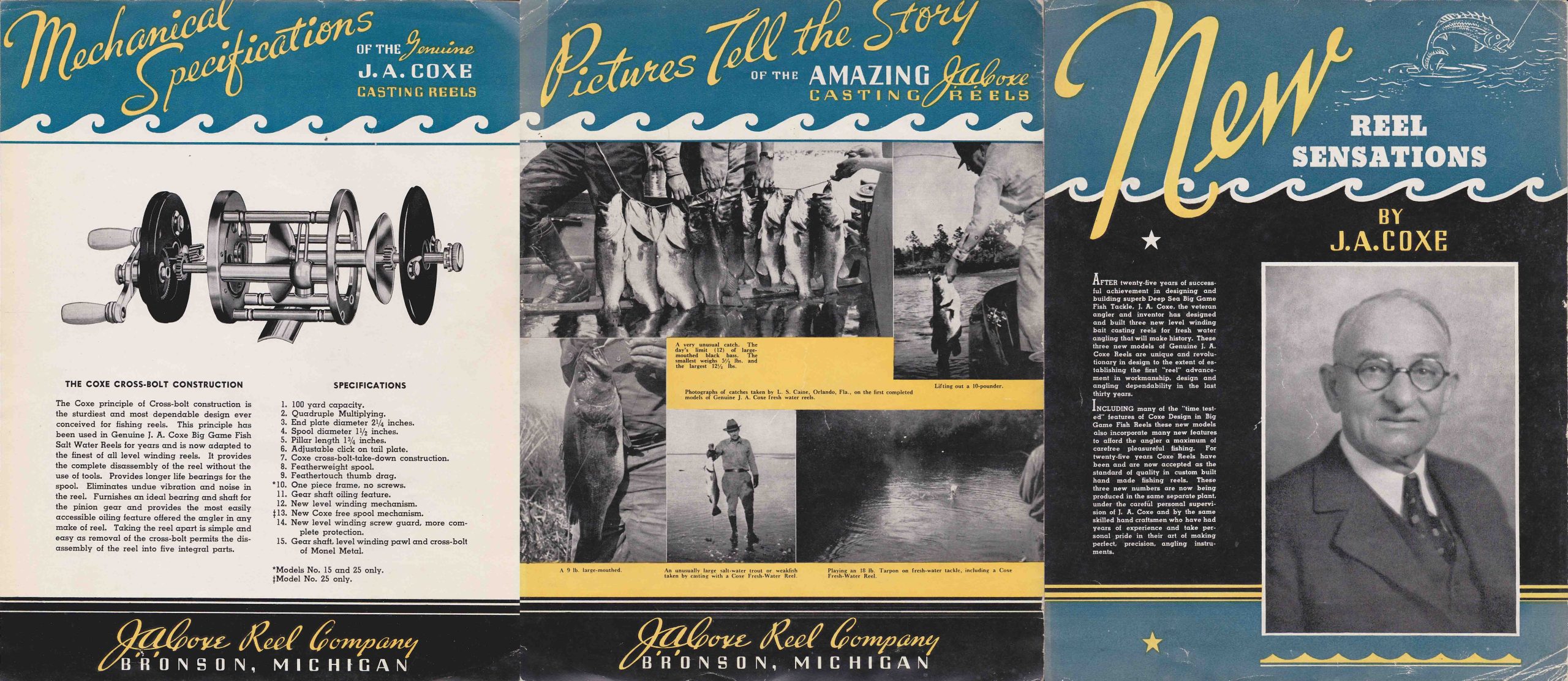
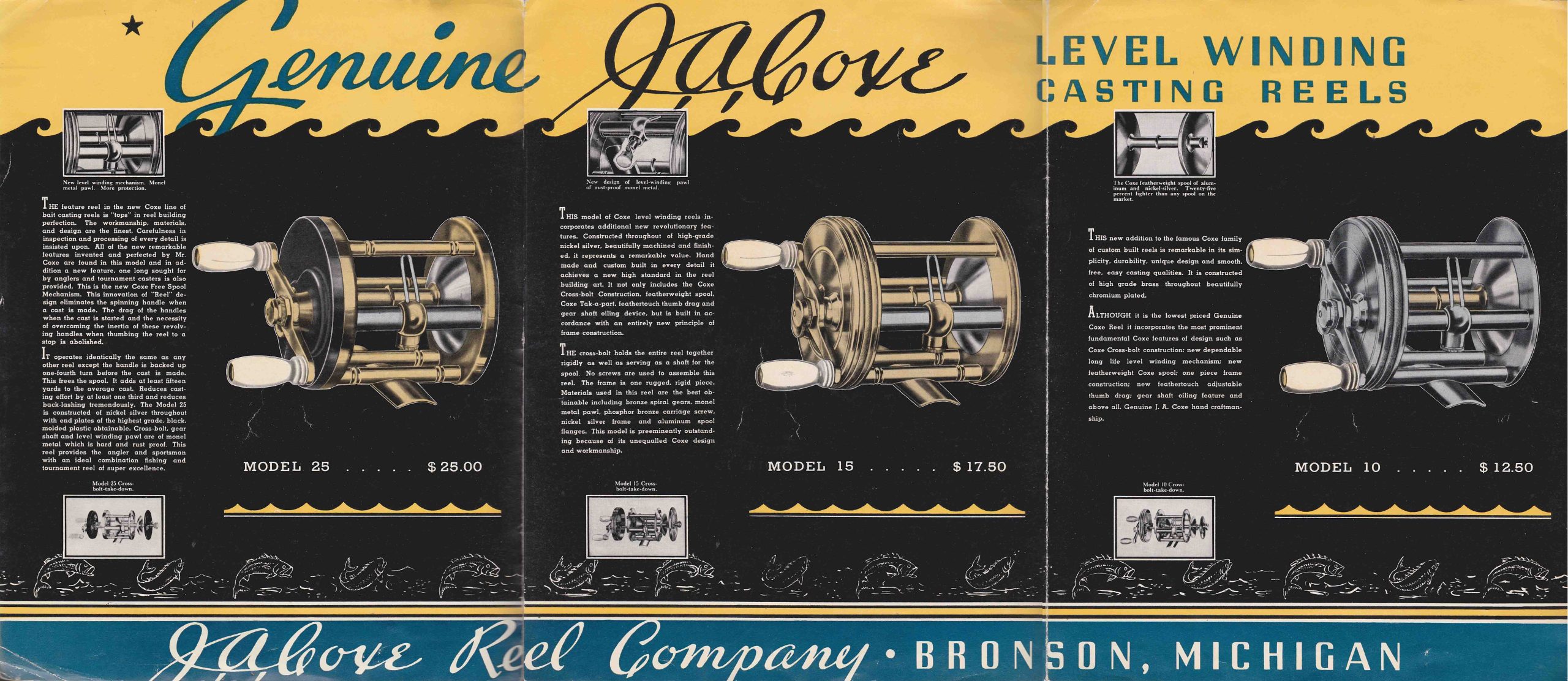
By 1939, Bronson was ready to show the world what happens when West Coast big-game engineering meets Midwestern manufacturing efficiency.
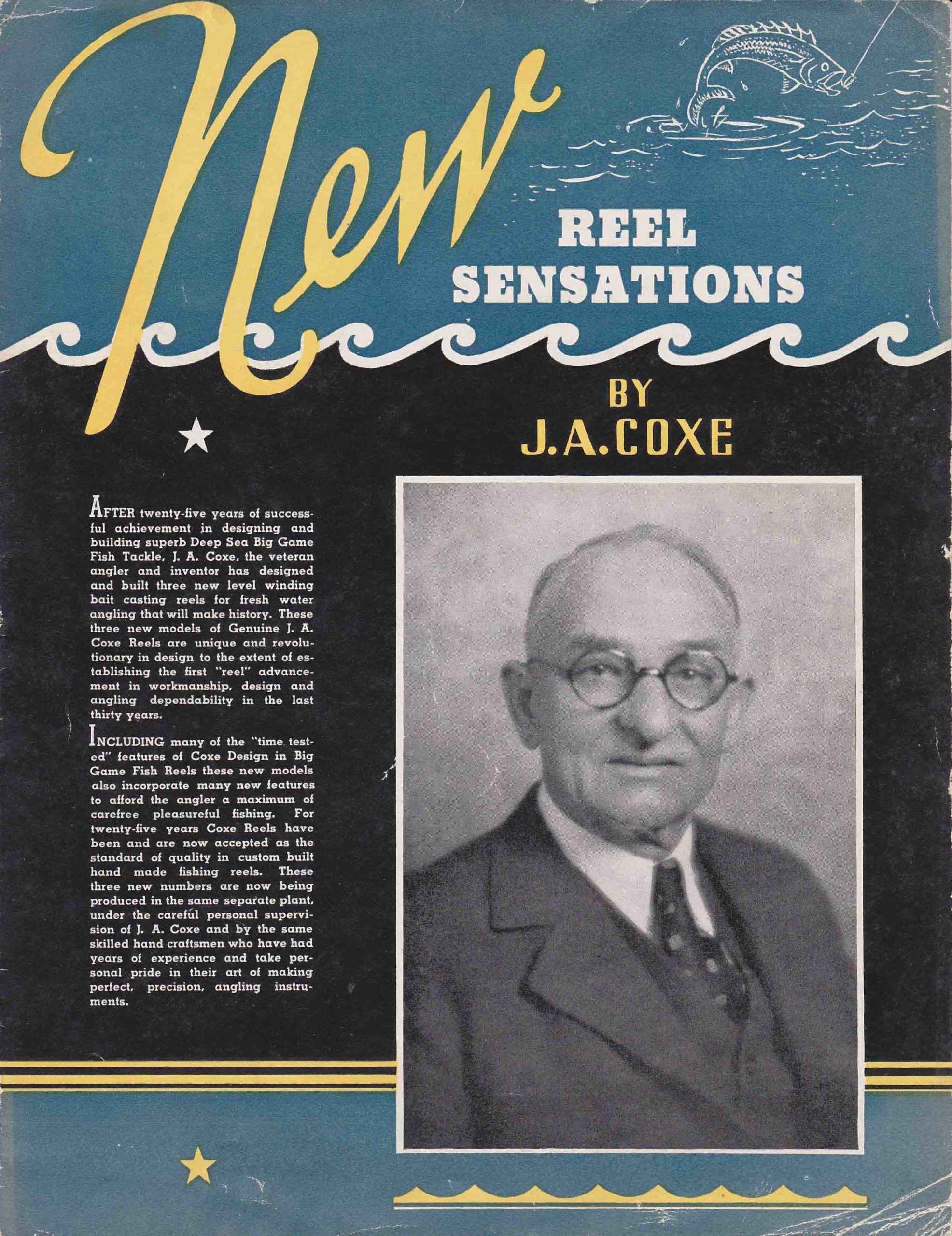
The catalog design beautifully honored Coxe’s saltwater roots, decorating the borders with stylized ocean waves and leaping fish. Yet, it practically pivoted to the freshwater market, showcasing stunning largemouth bass catches taken in Orlando, Florida. Bronson assured buyers that these high-end reels were being produced “under the careful personal supervision of J. A. Coxe,” keeping his legendary commitment to quality at the forefront of the brand.
Deconstructing the 1939 Lineup
Bronson translated Coxe’s high-end engineering into three distinct freshwater tiers. Looking closely at the technical breakdowns provided in the catalog, we can see exactly how Coxe’s innovations were scaled down for the everyday angler:
The Flagship: Model 25 ($25.00)
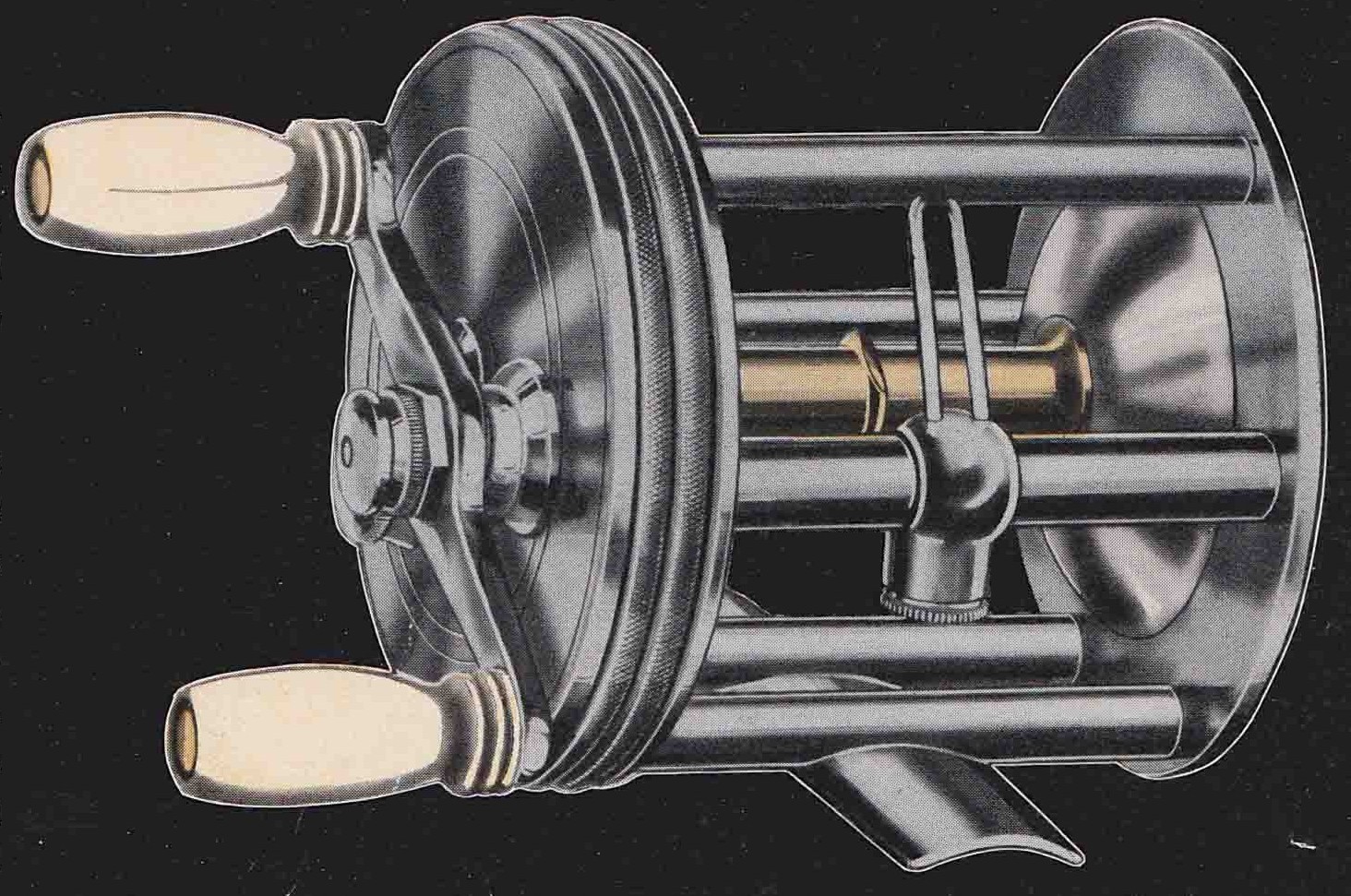
Equivalent to roughly $560 today, this was the crown jewel of the introductory lineup. It was constructed of premium nickel silver with sleek, black molded plastic end plates.
The Model 25’s true selling point was the Genuine Coxe Free Spool Mechanism. By turning the handle backwards a quarter-turn, it placed the reel in freespool, completely eliminating handle spin and reducing backlash. I’ve cast this reel and getting used to flipping the reel handle backwards takes about two casts. As I bring the bait to the tip and begin my backcast, a simple flip with my left land slaps the reel handle back and I’m in freespool in one smooth motion.
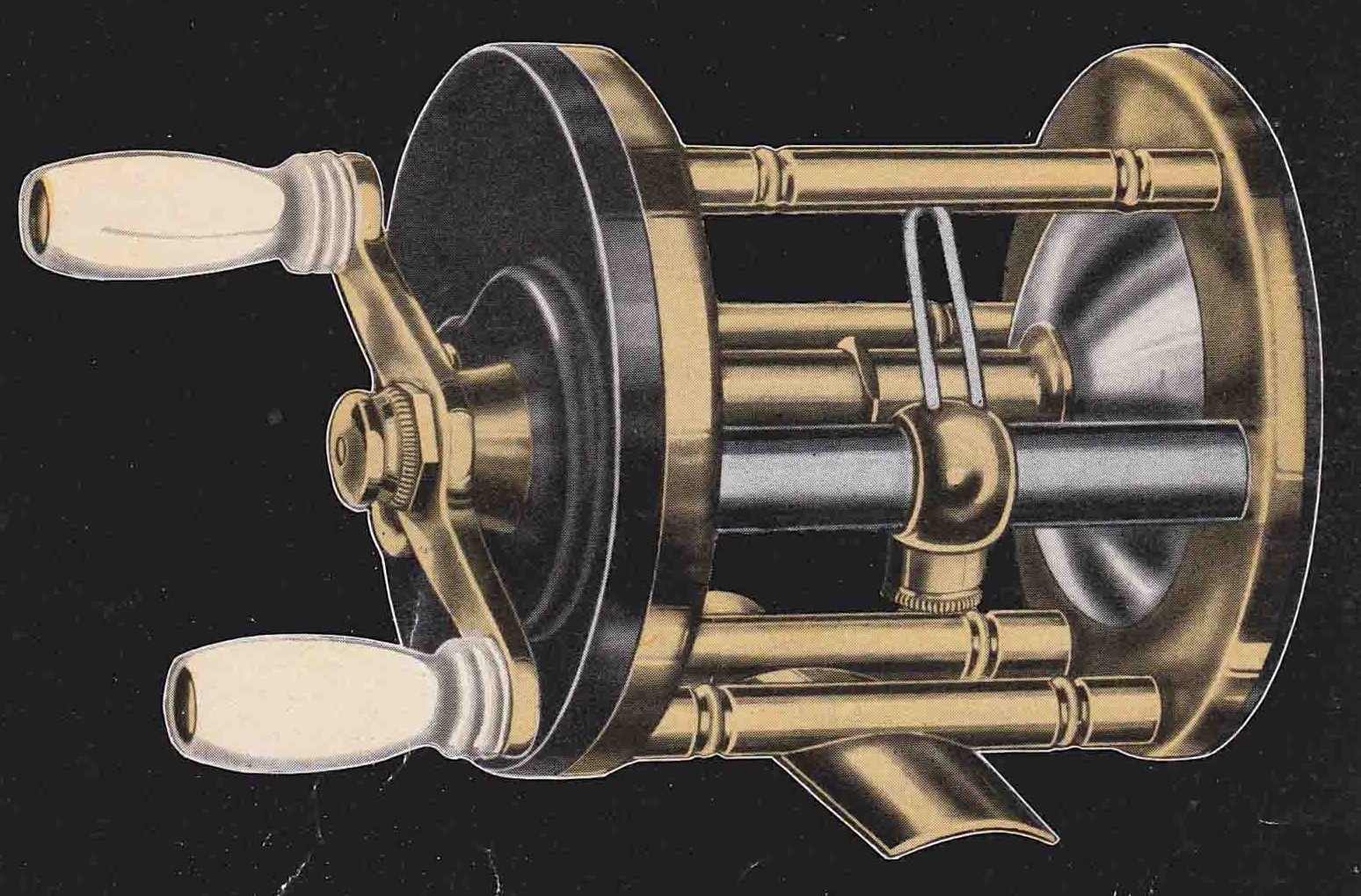
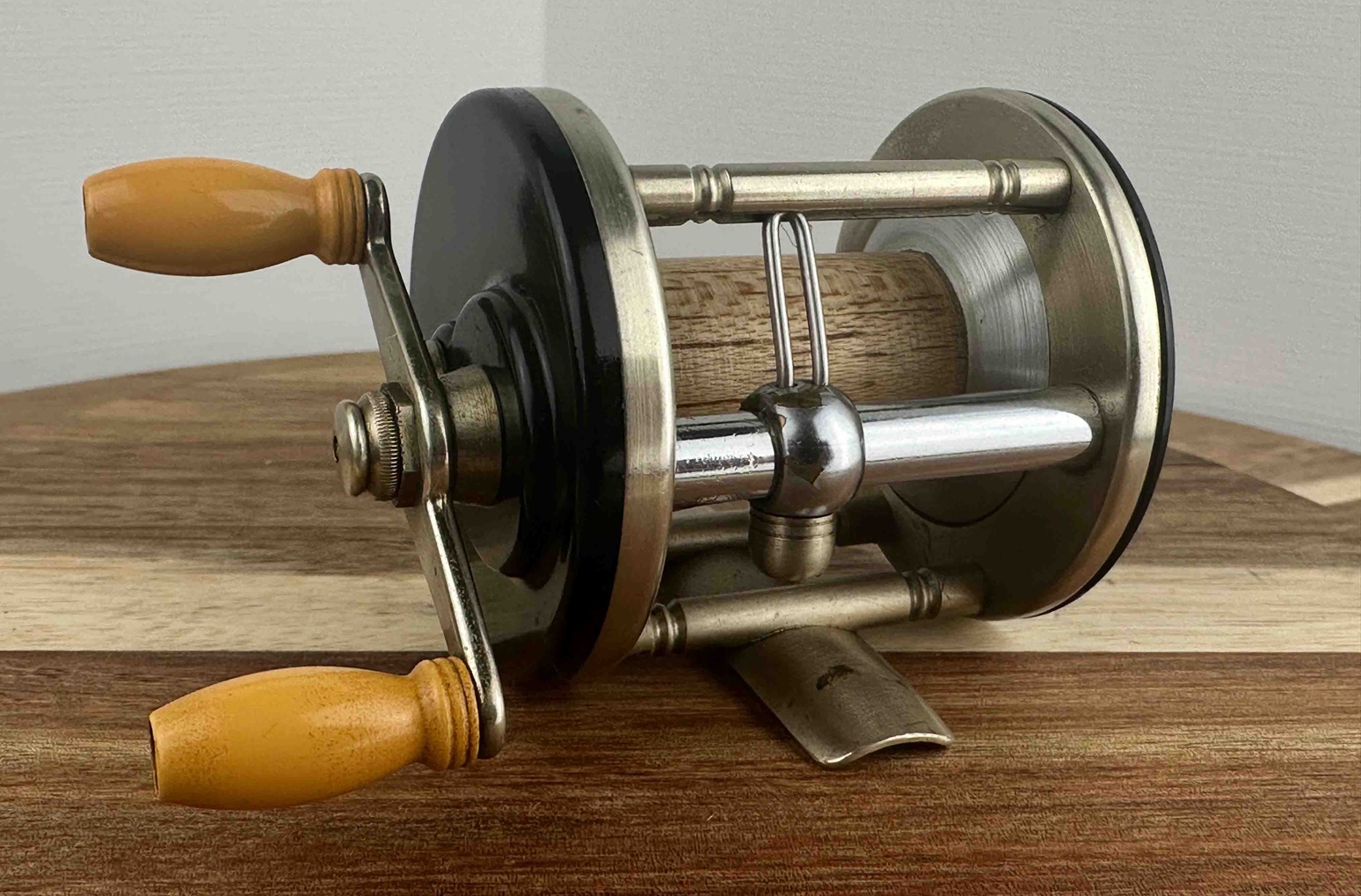
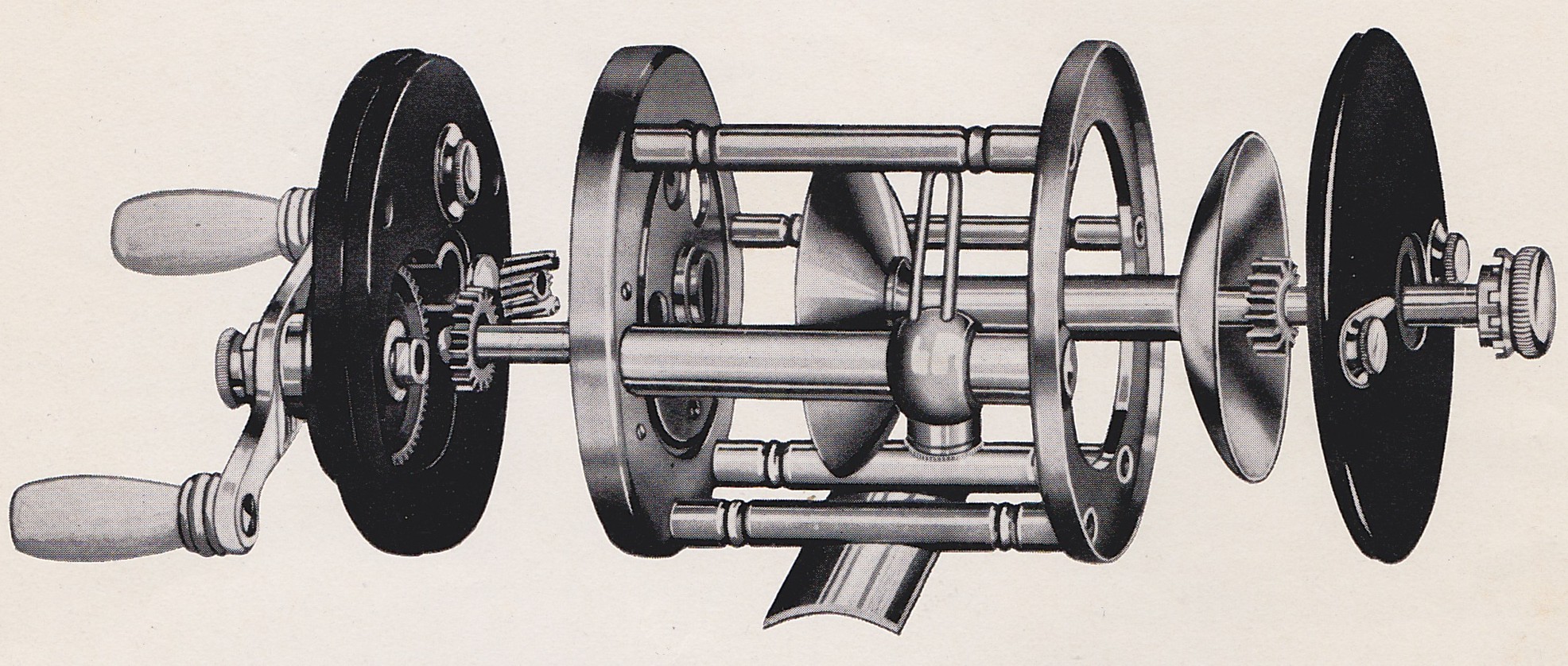
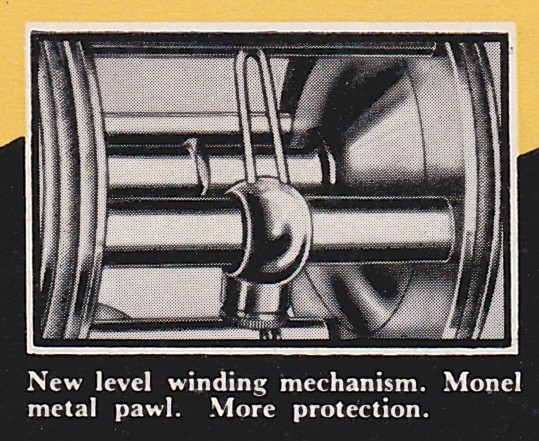
The Model 25 also featured the cross-bolt technology found in many of his saltwater reels, wherein no tools were need to tear down the reel. The spool floated on this cross bolt thus taking the weight of a standard spool shaft away from the spool. This also increased casting distance and ease.
The Mid-Tier: Model 15 ($17.50)
The Model 15 offered excellent value. It featured a high-grade nickel silver frame and end plates and utilized lightweight aluminum spool flanges to decrease weight. It also featured the cross-bolt technology, monel levelwind pawl, and thumb drag. It didn’t come with the freespool feature. These reels are extremely hard to find and bring good money for those that find them.
This is one of the few Coxe reels I don’t have in my collection so if you know anyone who might have one in the garage or old tacklebox collecting dust, I know someone who might just have a good home for it.
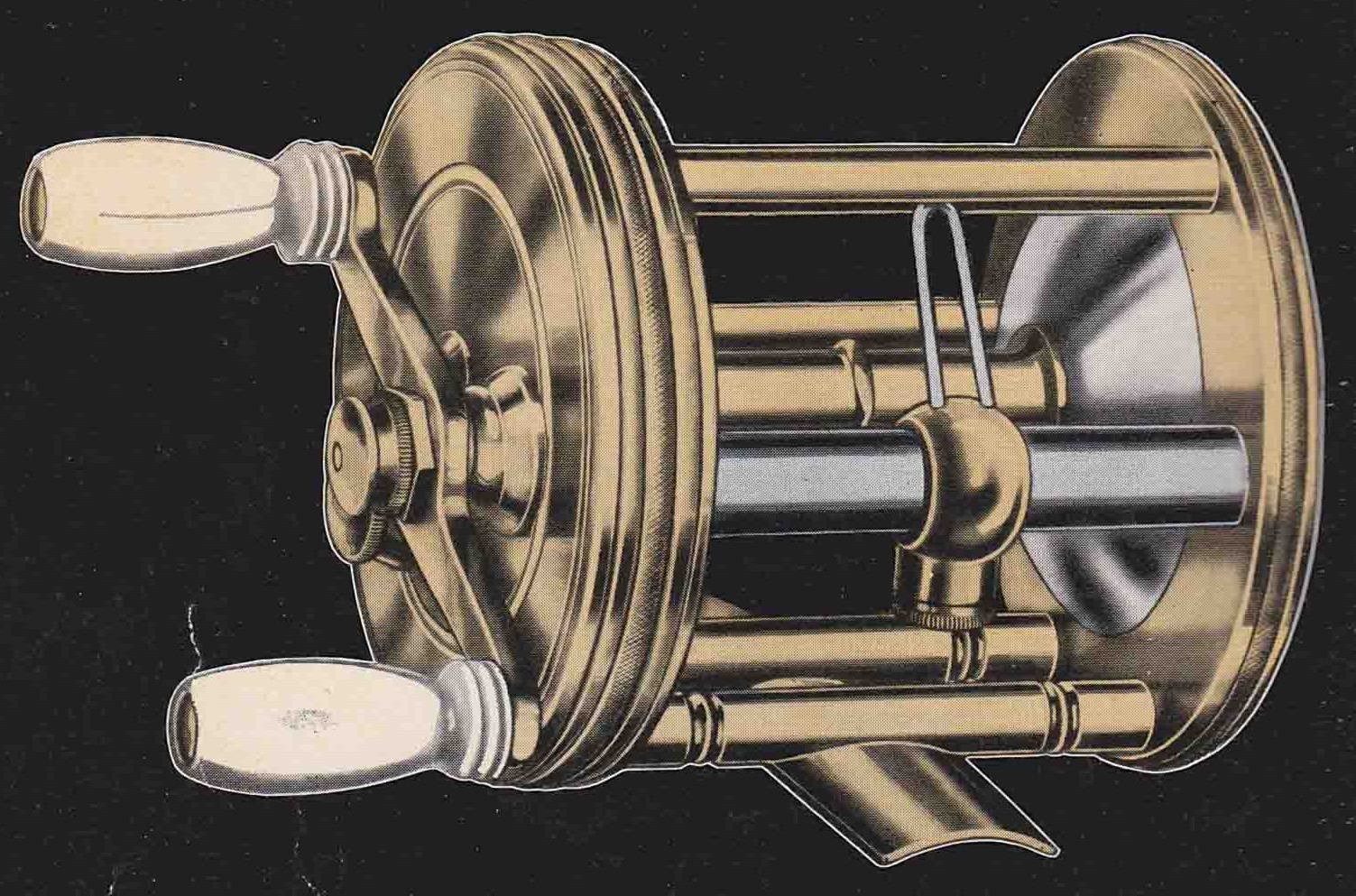
The Budget Entry: Model 10 ($12.50)
To capture the mass market, the Model 10 stripped away the costly nickel silver, utilizing a high-grade brass chassis that was beautifully chrome-plated. It had Coxe’s monel levelwind pawl, thumb brake, the Featherweight spool, cross-bolt construction, and a one-piece frame.
I have several of these reels and they cast beautifully even with a 3/8-ounce casting weight. And, even at the low price of $12.50, that was at the high end for a comparable Shakespeare or South Bend at the time.
It’s a solid reel and when you find one, even with a little boat rash, they’re worth cleaning up and keeping.
Engineering Decades Ahead of Its Time
While the man had his human flaws, Joe Coxe’s mechanical brilliance was undeniable. Bronson leaned heavily on his hallmark innovations to set a new standard for freshwater tackle:
The Featherweight Spool: A meticulous combination of aluminum and nickel silver, making it 25% lighter than any competing spool on the market for unparalleled casting distance.
The Coxe Cross-Bolt Take-Down: A masterful design that allowed an angler to completely dismantle the reel into five integral pieces without a single tool, making field cleaning effortless.
To appreciate just how advanced Coxe’s engineering truly was, one only has to look at how major tackle manufacturers handled similar concepts decades later. For instance, Coxe pioneered the design where the spool revolved independently on a completely stationary crossbar.
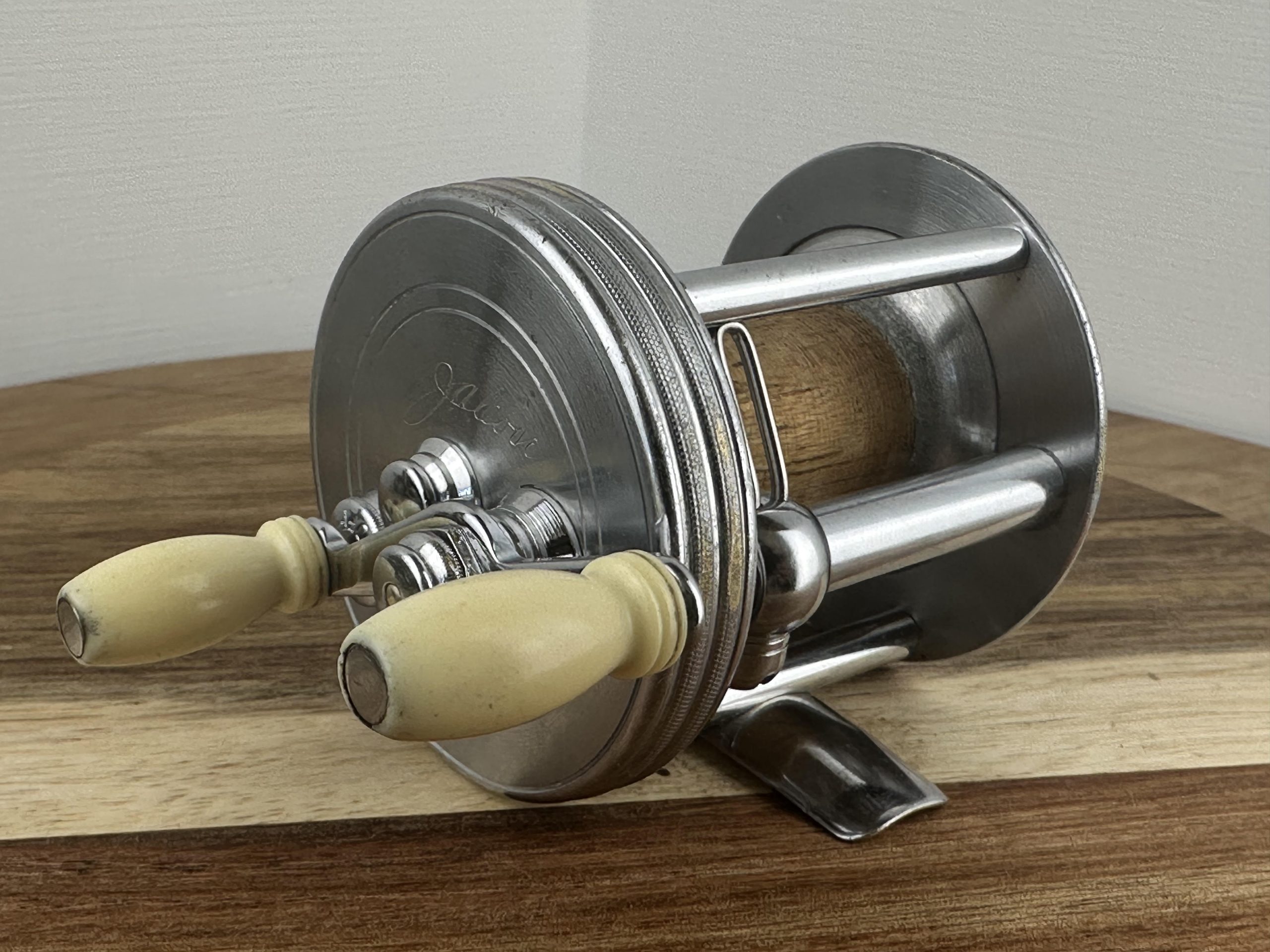
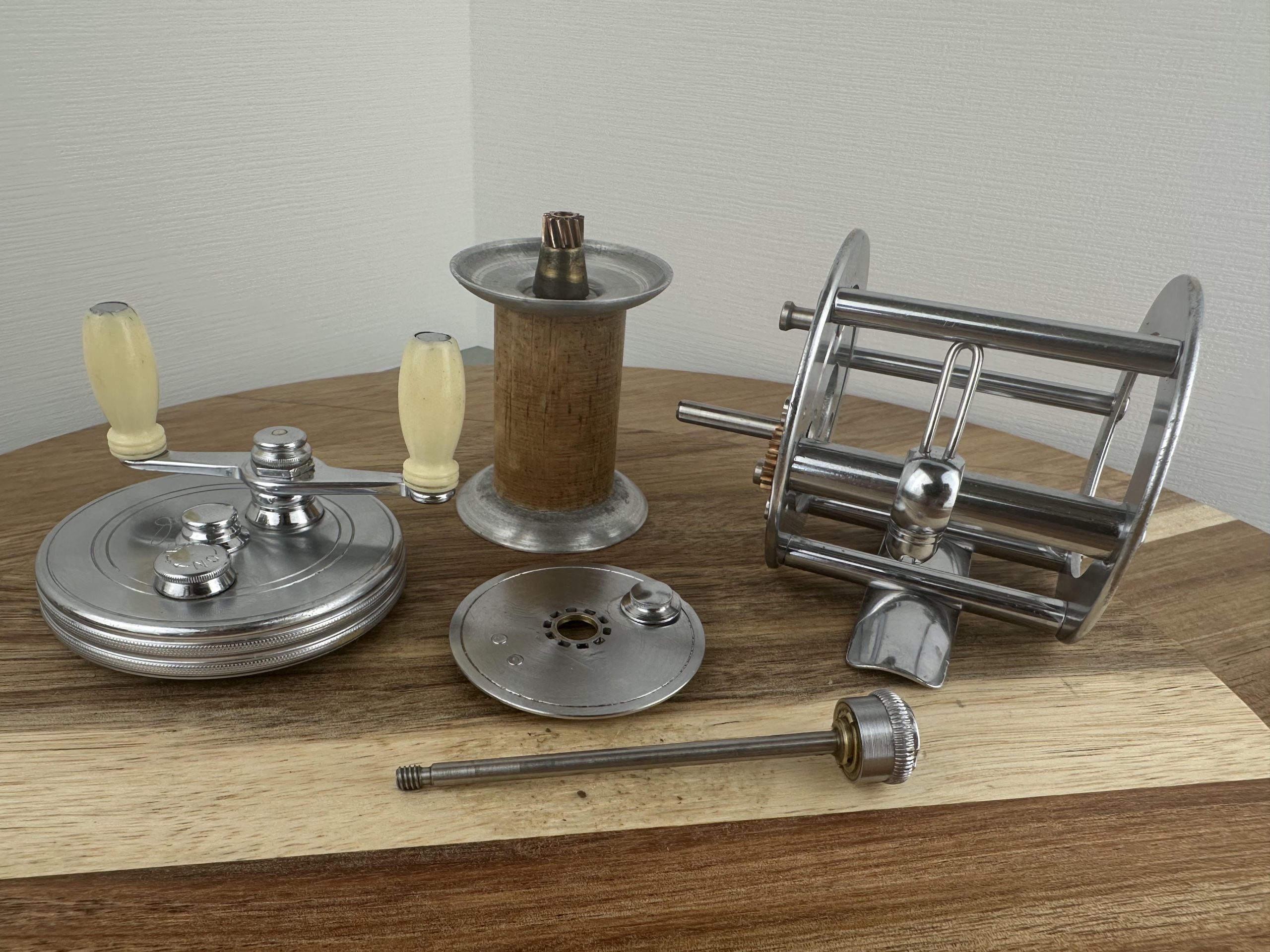
When ABU reintroduced a stationary axle system in the early 1980s for their celebrated Ultra Mag series of reels, they heavily marketed it as a cutting-edge breakthrough called the “Fixed Axle” design. True to corporate form, ABU’s marketing materials treated the physics of a stationary axle as a brand-new milestone—never once mentioning that a master craftsman from Southern California had already successfully scaled and integrated independent spool mechanics into production frames a half-century earlier. Furthermore, while ABU adopted the spool-on-crossbar concept, they completely missed out on Coxe’s accompanying genius—failing to use it as a toolless takedown system for the reel itself.
The Legacy Restored
When you hold a 1939 Bronson-Coxe reel today, you aren’t holding a monument to a scandal; you are holding a monument to resilience and mechanical genius. Joe Coxe may have faced a dark hour on the Pacific coast, but through his partnership with Bronson, his life’s work as a conservationist, master angler, and brilliant inventor was preserved, redefined, and placed into the hands of millions of American anglers for generations to come.
Gallery – The Bronson – J.A. Coxe Reel Catalog 1939
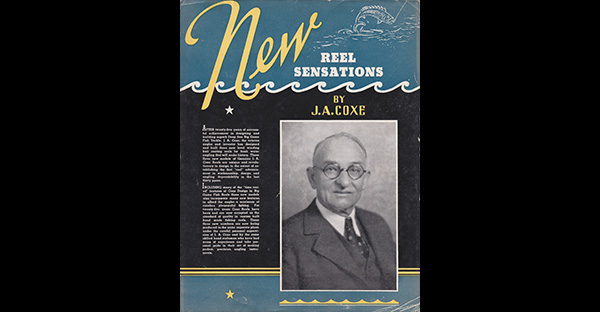
The cover of the first Bronson-Coxe Reel catalog, 1939. Image Terry Battisti.
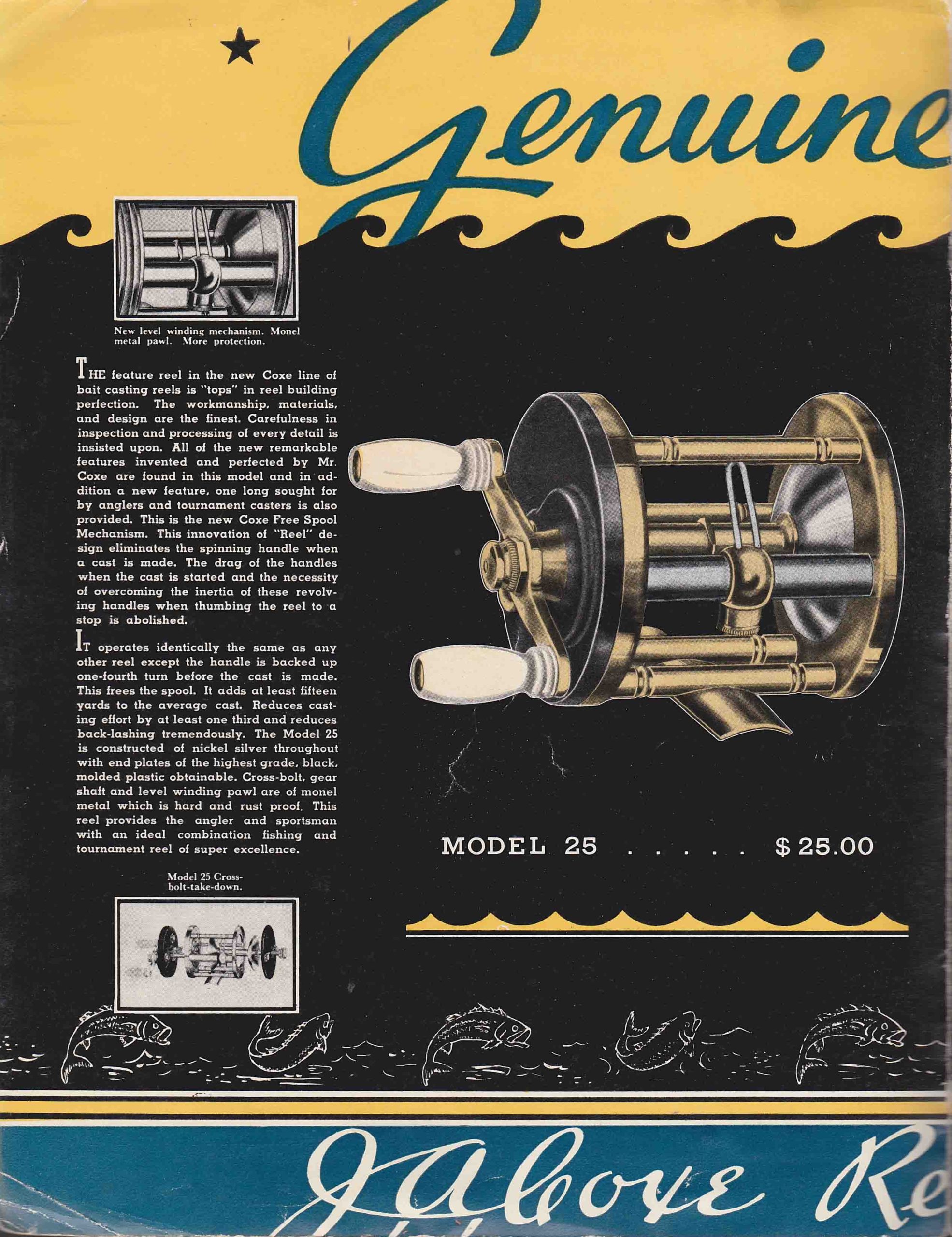
Bronson – J. A. Coxe Catalog Page 1. Image Terry Battisti.
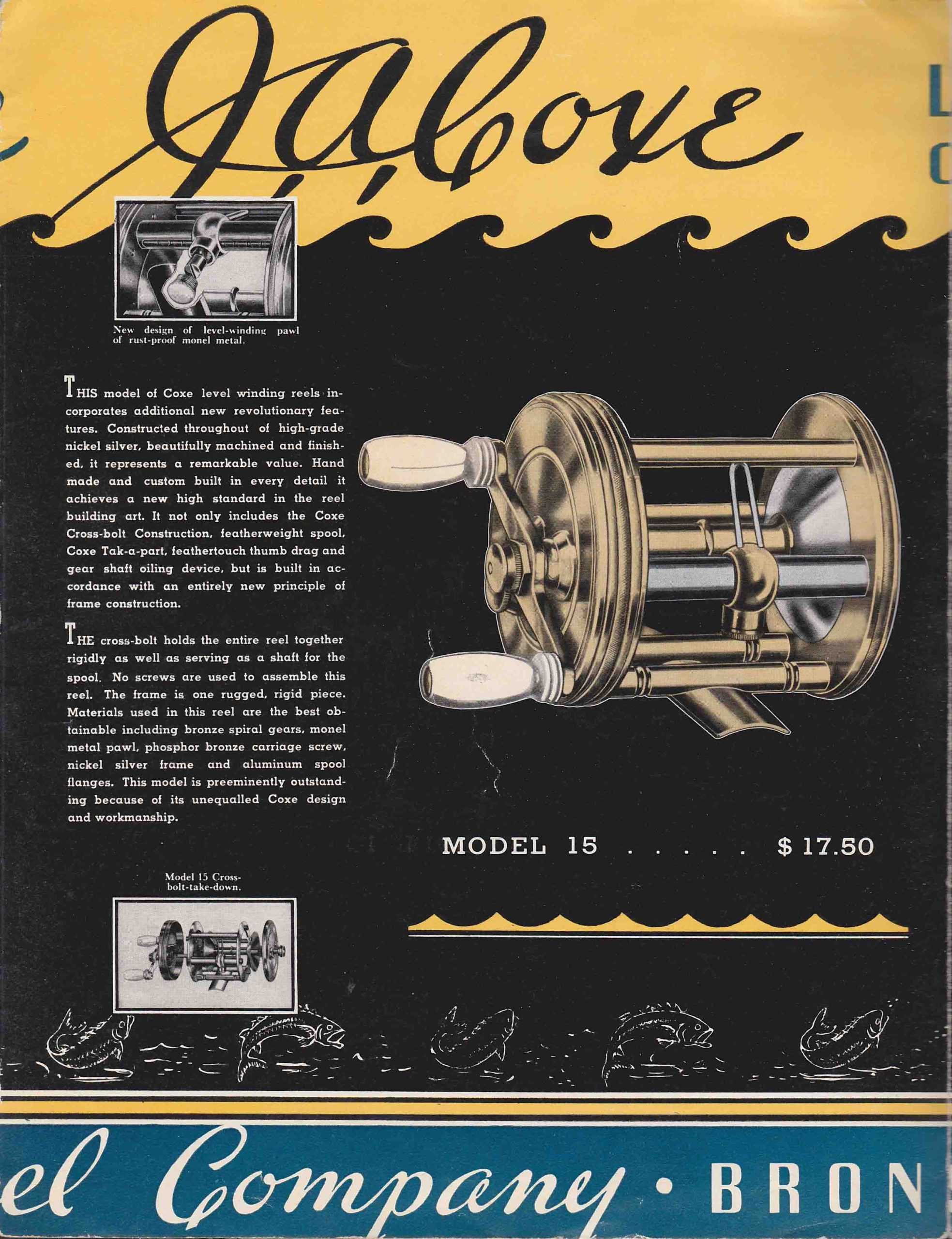
Bronson – J. A. Coxe Catalog Page 2. Image Terry Battisti.
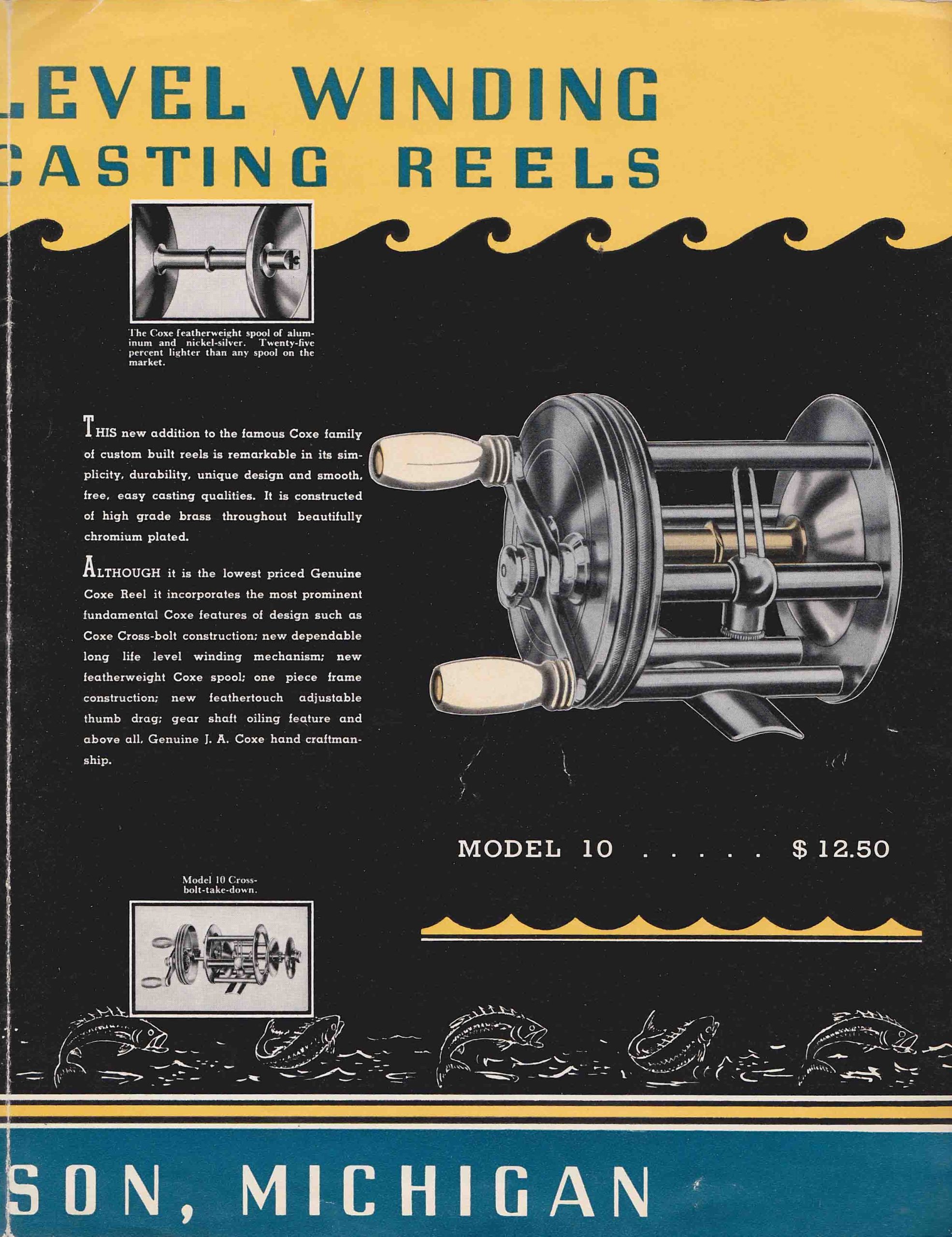
Bronson – J. A. Coxe Catalog Page 3. Image Terry Battisti.
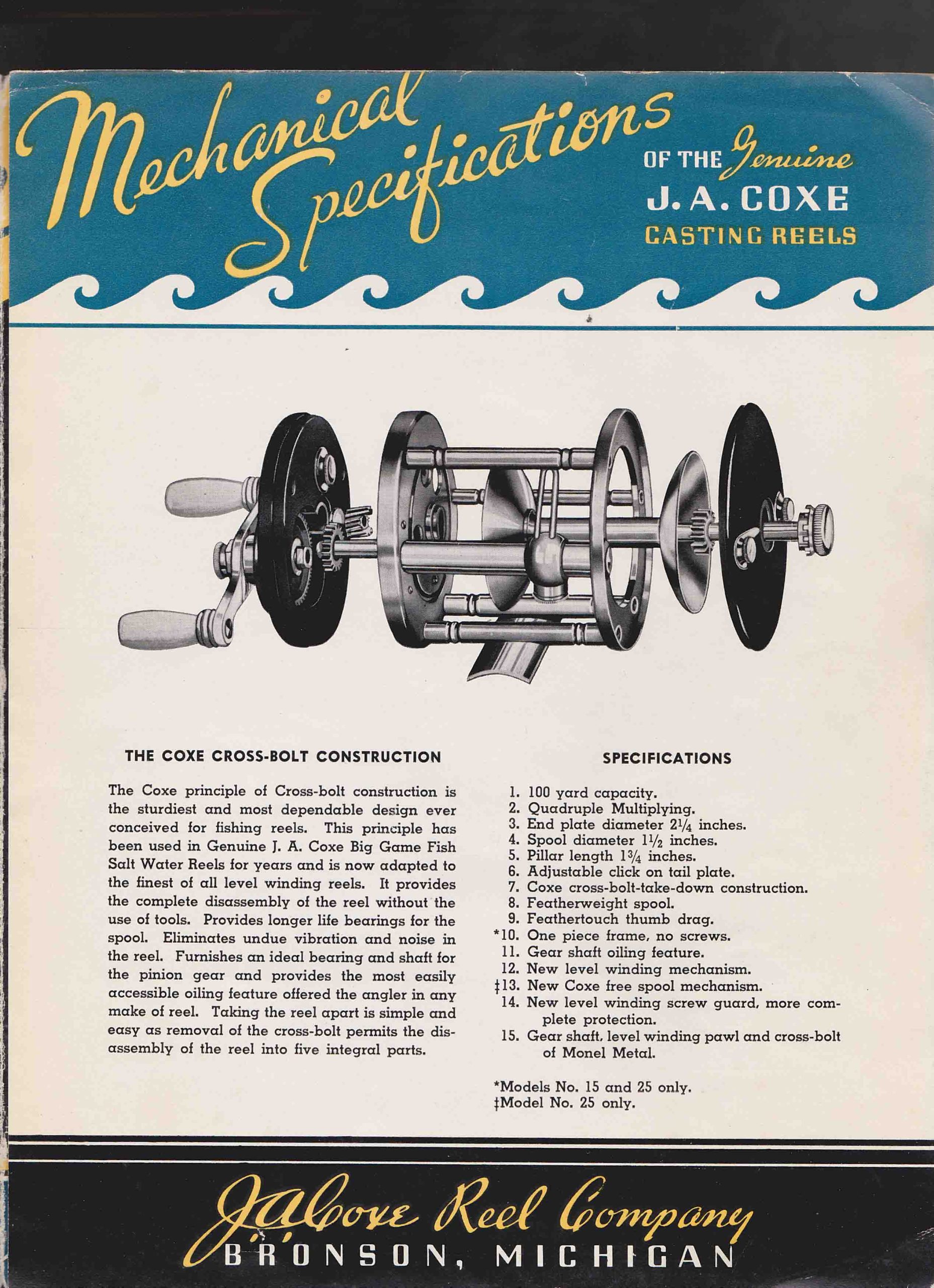
Exploded view of the Coxe Model 25 showing the cross-bar, no tool take-down. Bronson-Coxe Reel catalog, 1939. Image Terry Battisti.
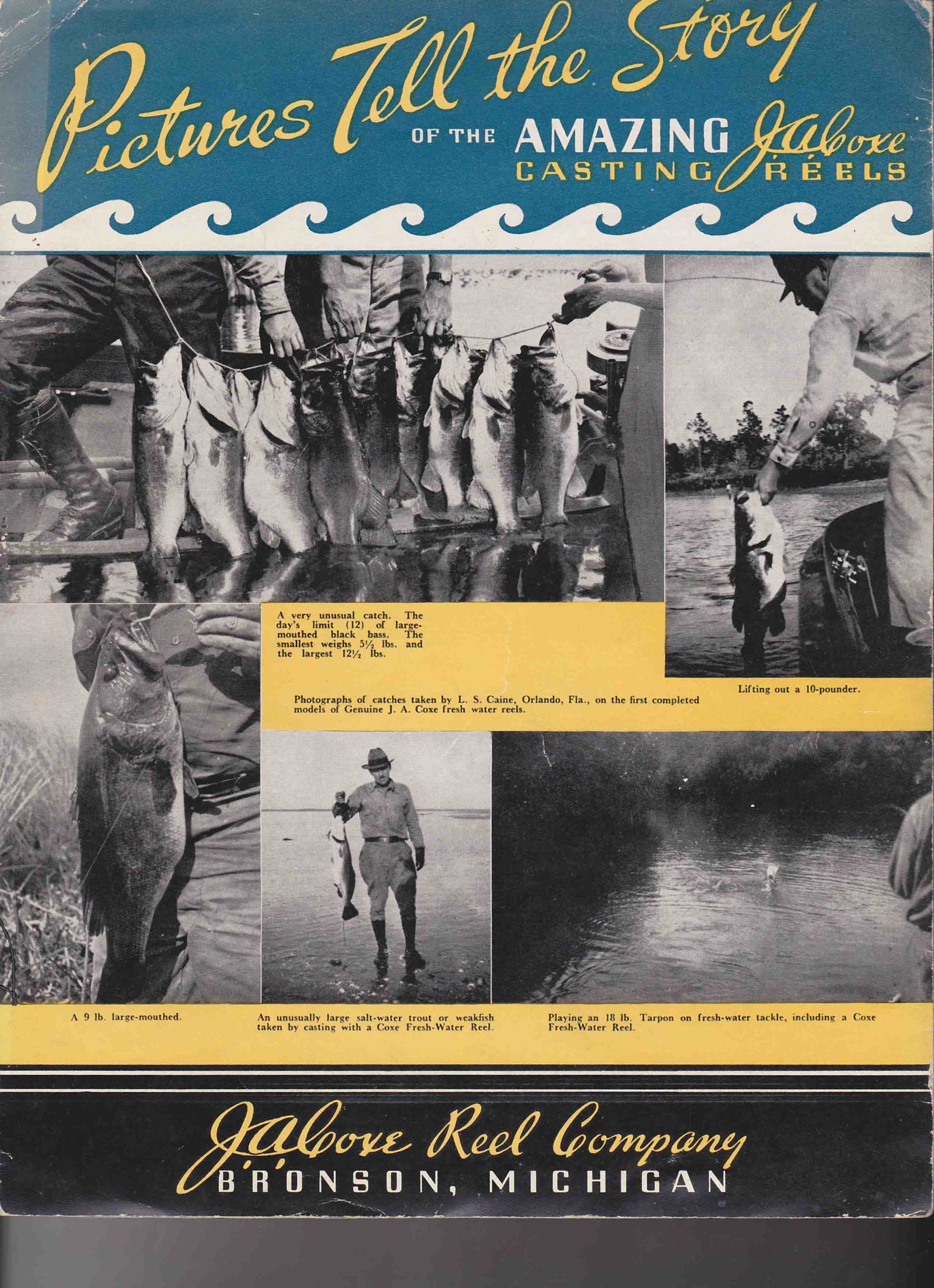
The back cover of the first Bronson-Coxe Reel catalog, 1939. Image Terry Battisti.




A fitting tribute to the man and his impact on the field and sport. I quite like how you break down and differentiate each reel in this short catalog, which, as you mentioned, is quite aesthetically pleasing with a structured layout and appealing graphics. I’d like to know more about Coxe’s brouhaha with the California club (their decision to scrub his name seems like an extreme measure, so he must have really pissed some people off…there’s surely more to this story!), as well as his working relationship with Bronson in the Midwest. The culture shock that Coxe must have met in going from giant saltwater game to smaller Midwest bass, pike and walleye must have been significant. I wonder if there are any interviews with him out there in the ether where he talks about this transition. You’ve done it again, Terry! Written a well-crafted piece that is both entertaining and informative, and that has whetted the appetite of the reader to learn more.
Thanks David! Yeah, there is a lot more to the story. Word is that Coxe helped fund and was in charge of rebuilding the Tuna Club after the fire in 1915. Because he had such an impact on that and he was lauded as one of the best anglers on the west coast, they made him presdident from 1917 through 1923, or there about.
Then some money came up missing from the Club coffers and they traced it back to Coxe. At around the same time, Coxe had participated in a book project with Ralph Bandini called; “Men, Fish and Tackle: The Story of J. A. Coxe,” as told to Ralph Bandini. In that book, Coxe took full credit for inventing the star drag system for reels, when there were two others involved, one of them being one of the vom Hofe brothers.
The Club didn’t like it so they bannished him from the club and that was that. Or so the story goes. I’d love to find out more…..