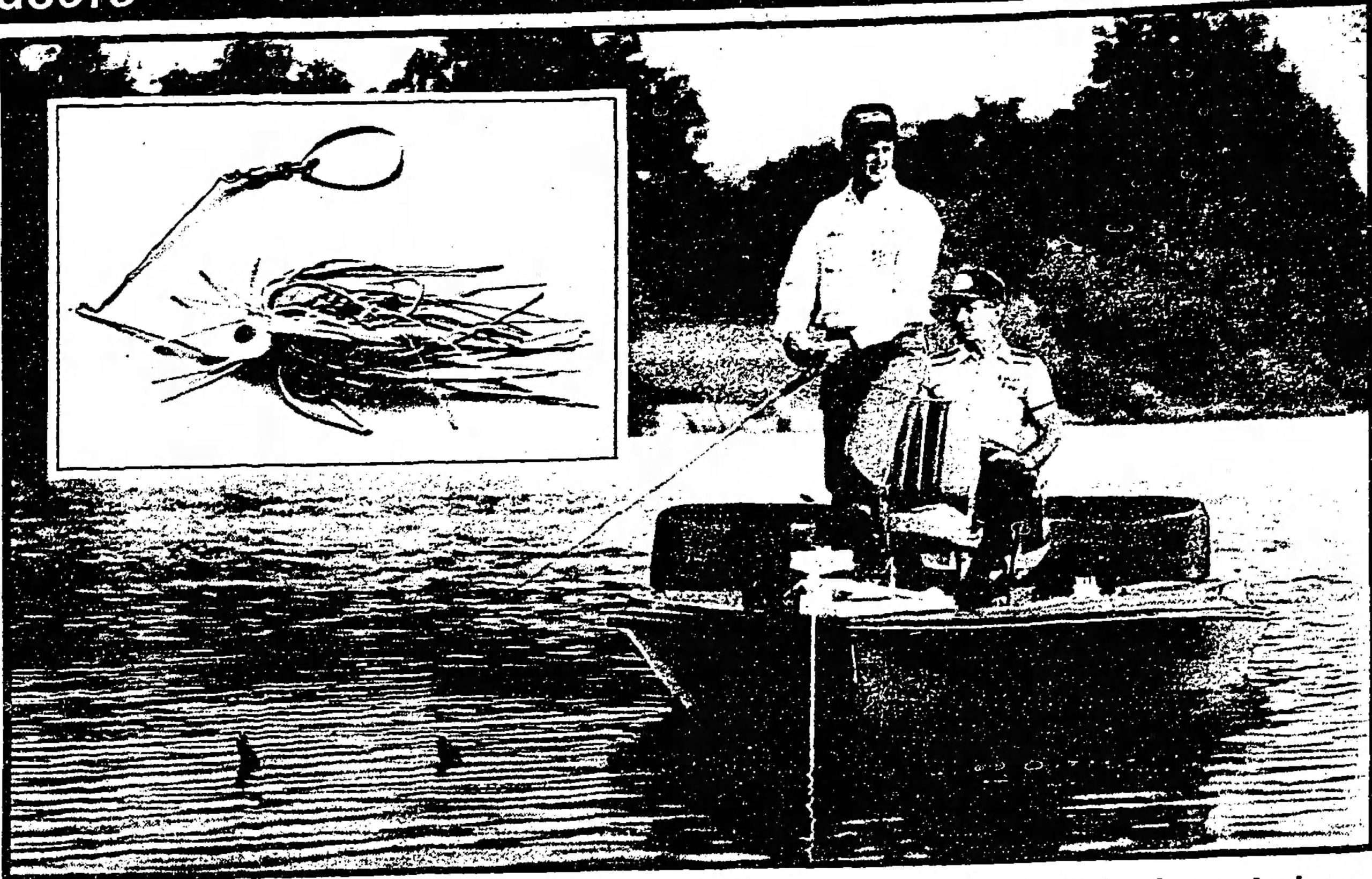
Today’s Thursday Throwback historical photo, “There’s just no skirting the issue,” dates to 1987 and features Rick Clunn who was interviewed about spinnerbaits in clear water, featuring Stanley Jigs’ then revolutionary new spinnerbait skirts.
In the story, featured in The Daily Oklahoman, Rick explained, “Most spinnerbaits don’t look like anything a bass would normally eat. They’re not so much a food imitator as they are an instinctive strike producer.
“They work out well in water with a bit of color to it because the bass don’t always get a good look at the bait. They strike the flash and vibration. In clear water, though, they have plenty of time to study the bait, and a lot of times they’ll turn it down. Another factor with clear water bass is that they generally prefer a more subtle, naturally appearing bait, and this works against a lot of spinnerbaits, because their skirts are bulky and unnatural.”
Stanley Jigs had recently introduced new silicone skirts that were translucent with reflective metallic flake in them. They were more reminiscent of the metalflake colors you’d find in plastic worms than the more solid-colored living rubber skirts of the time.
Clunn had used a hand-built prototype to achieve his record setting second victory in the U.S. Open utilizing just such a spinnerbait. In fact, according to the article, “before the first one was offered to the public, the prototypes issued to professional anglers won over $200,000 in tournament competition.”
Rick went on, “These new translucent skirts make the spinnerbait much more deadly in clear water. We are able to achieve colors, and combinations of colors, that we haven’t been able to achieve before. They are subtle enough to appeal to clear water bass – they’re not bulky and intimidating – and it’s something the bass just haven’t seen before. That, in itself, can be an advantage, especially on waters that get a fair amount of angling pressure.”




Although there are some great spinnerbaits out today and I use my own that I build most of the time. The Stanley Vibro Shaft Spinnerbait is to me the best ever made. The colorado/indiana hybrid blade is absolutely my favorite and luckily I found a good supply for my own spinnerbaits. Still have some old and new Stanley’s and the hook size has definitely increased on the newer ones…lol.