
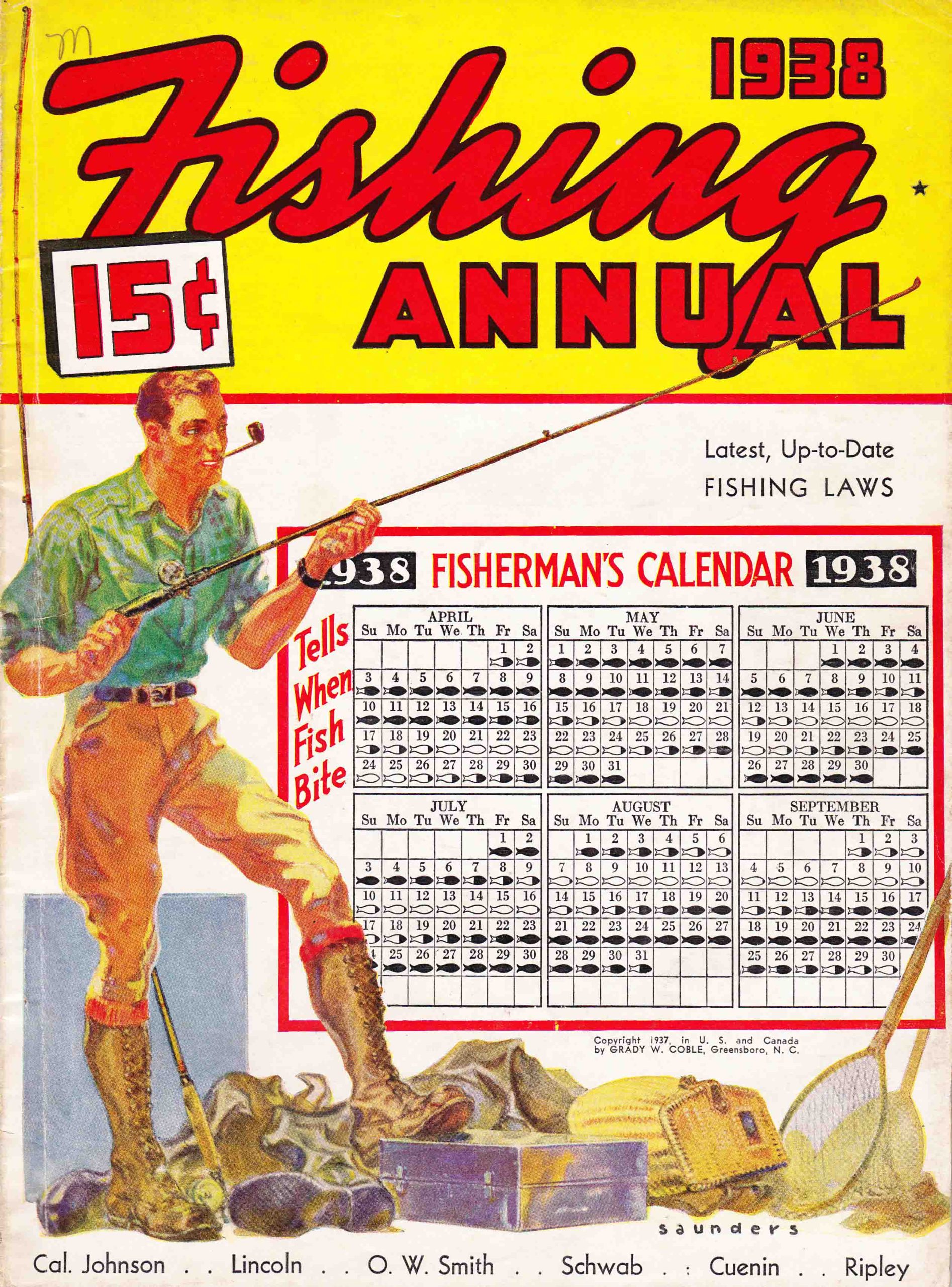
I recently received the Sports Afield 1938 Fishing Annual and over the weekend had a chance to check it out. I love these old annuals because they generally have some great ads in them and this one didn’t disappoint at all.
Out of 80 pages, there were 11 full-page ads plus several half and one-third page ads. Top that off with the standard smaller ads and there was a total of 29 ads I consider to be in the bass fishing market. That doesn’t count the hunting ads and other ads companies placed.
Since there are so many ads in this issue, I thought I would maybe talk about a few of them and let rest do the talking for themselves. I’ll also organize them into categories rather than scatter them about. So let’s start out with lures for the 1938 season.
Lures
I’ll start in alphabetical order with Fred Arbogast.
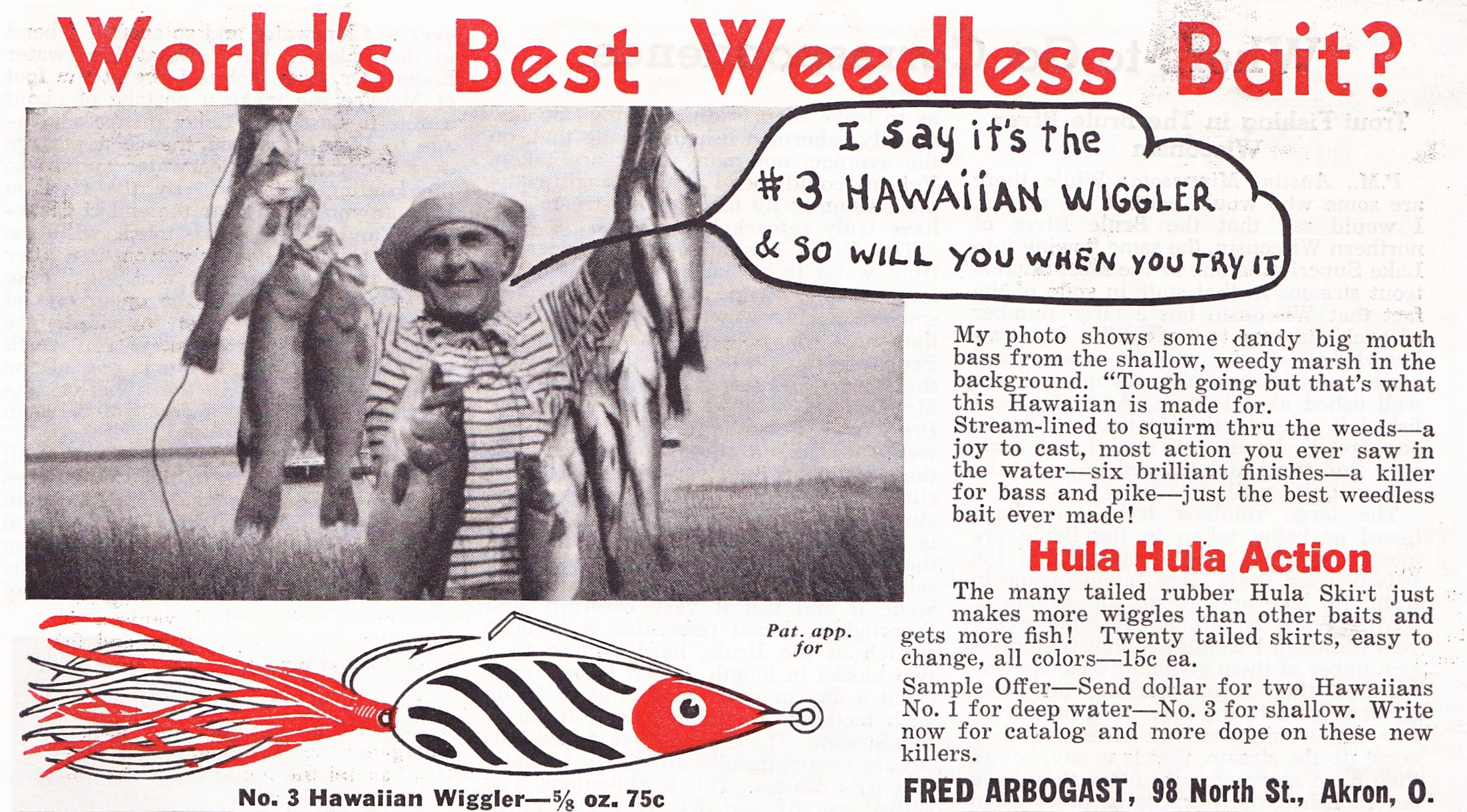
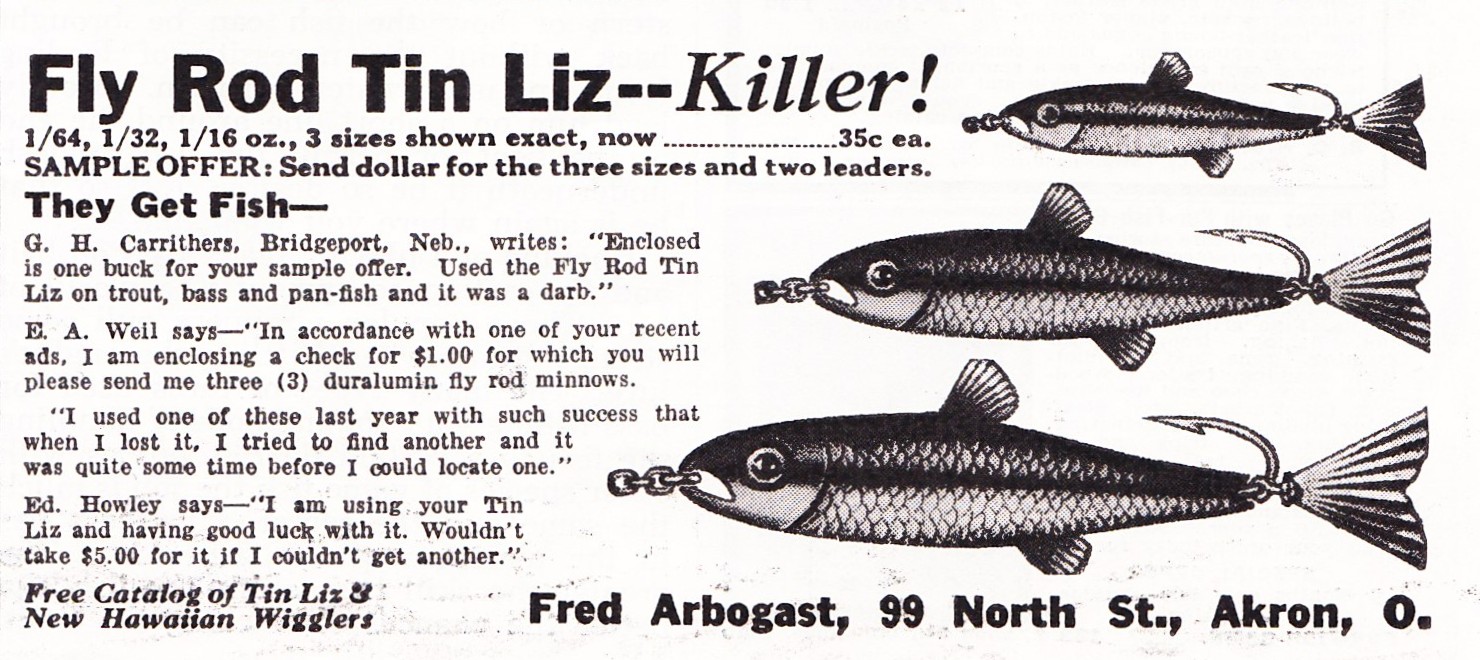
In 1938 Fred Arbogast didn’t have many baits with which to pimp. He had his series of Tin Liz baits, and his series of Hawaiian Wigglers. Both of these baits were winners and provided all of Arbogast’s sales from 1927 until 1939 when the Jitterbug took over the country’s bass anglers.
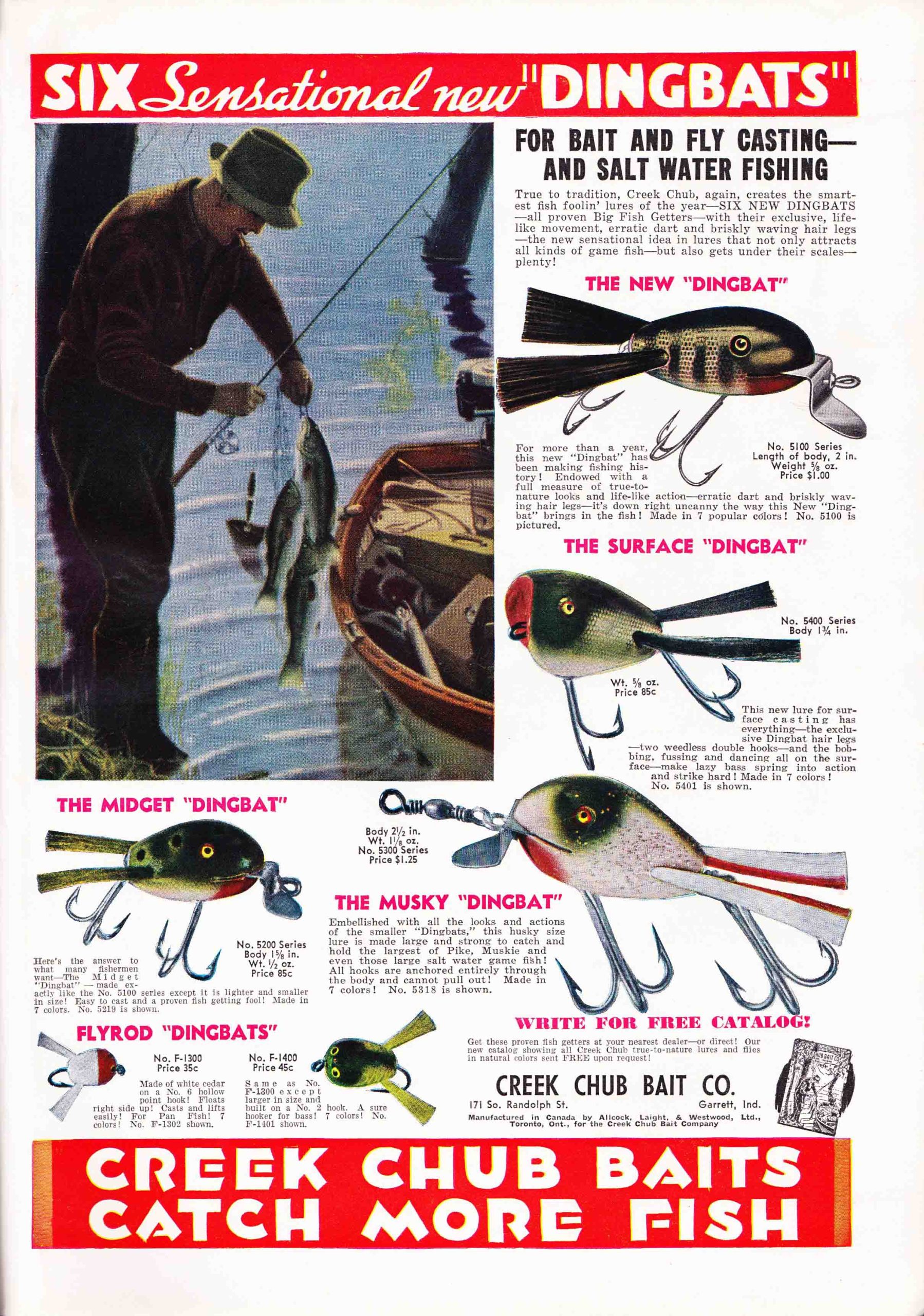
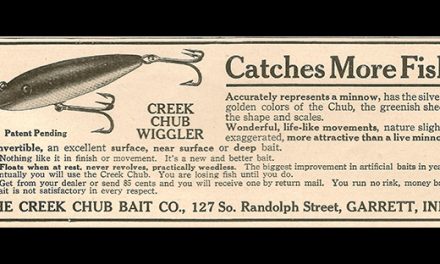
Next on the list is Creek Chub Bait Company and their New Dingbat. This bait hit the market and I’m not sure how well they caught fish, but they sure sold a ton of them based on the number of them you find at vintage tackle shows and even in the wild.
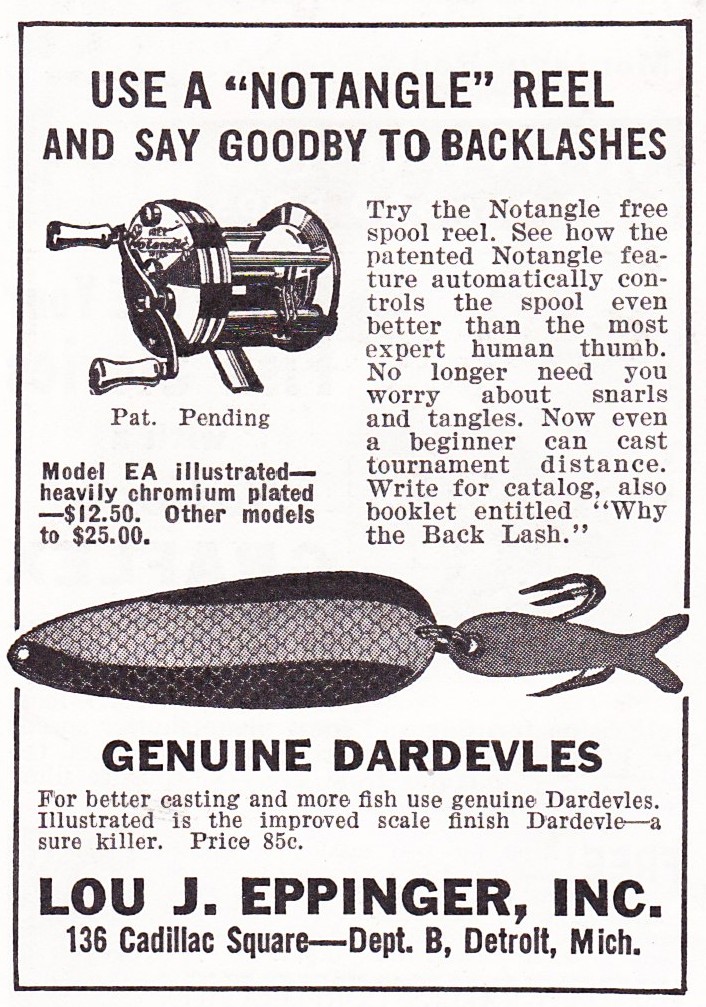
Eppinger was a household name by the time 1938 rolled around. Their Dardevle spoon was a constant amongst serious bass anglers all over the country. What this ad also has in it is their “Notangle” Free Spool reel. I recently acquired one of these gems. When I got it, it was fairly dirty as one would expect from a piece of machinery that was nearly 100 years old. But I’ve taken reels that looked like they’d never function again, cleaned them up and cast them a mile. Unfortunately, that wasn’t the case with this reel.
There was nothing wrong with the reel other than it was caked with 90-year-old grease and grime. That all came away easily and then it was time to put it back together with fresh oil and try it out. The problem with this reel, and I don’t mean the reel in my hands, is it had a backlash break that worked against the free spool mechanism. It doesn’t cast more than 30 feet even with the spool tension backed all the way off.
To call this reel “Notangle” is right. But I think a better name would have been “Nocast” as if you’re not able to cast it, you obviously aren’t going to be able to tangle it.
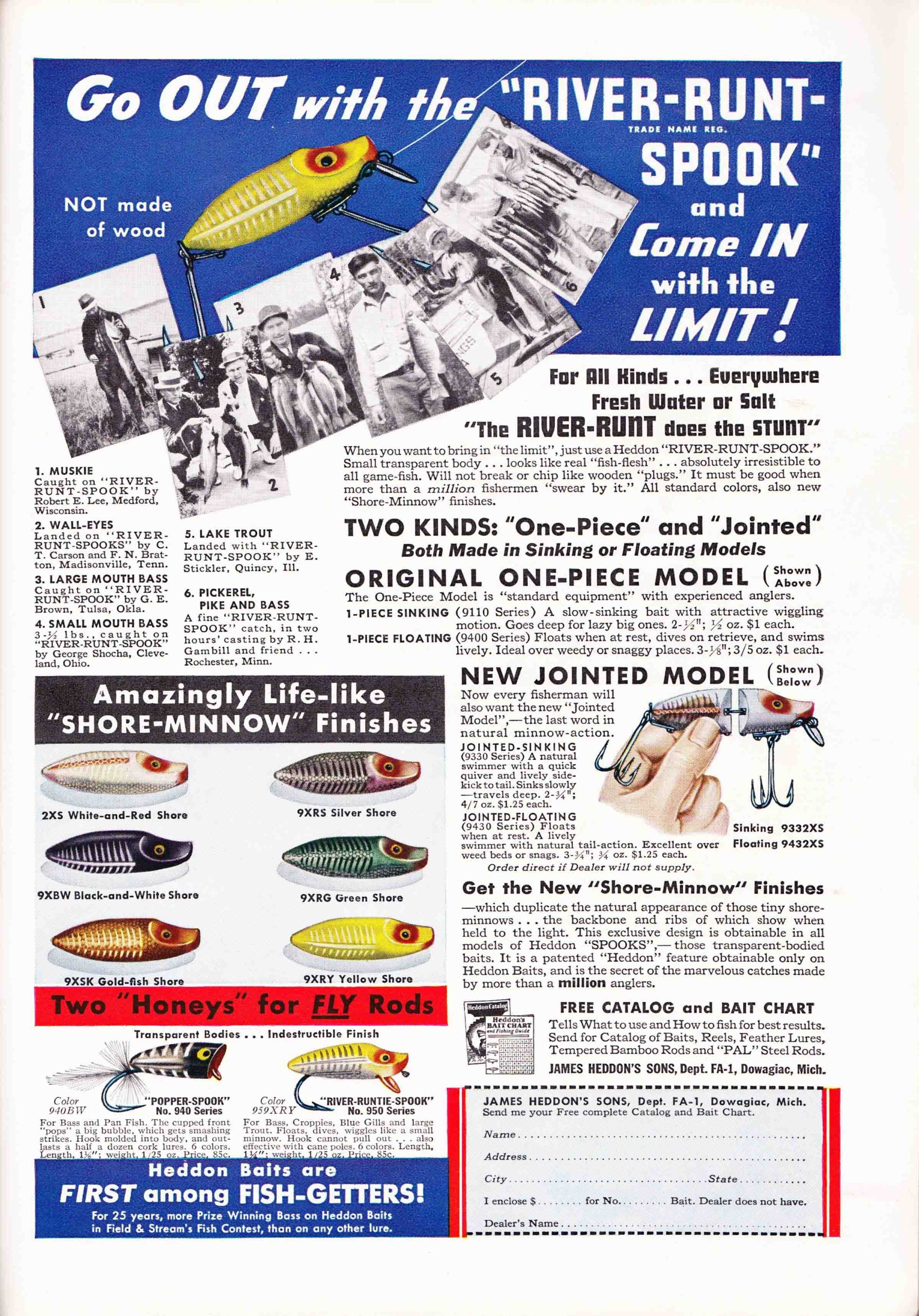
Next there was Heddon peddling one of their most famous baits in a full page, full color ad – the River Runt Spook. Of course, today “Spook” means Zara Spook, but back in the day “Spook” meant the bait was see-through plastic and nearly all of Heddon’s baits came in this plastic “Spook” version.
William Jamison was another early innovator in the bass world bringing his Coaxer to the public in 1905. In 1910 he won what is regarded as the first bass tournament in history when he fished against Anson B. Decker on Congress Lake, Ohio.
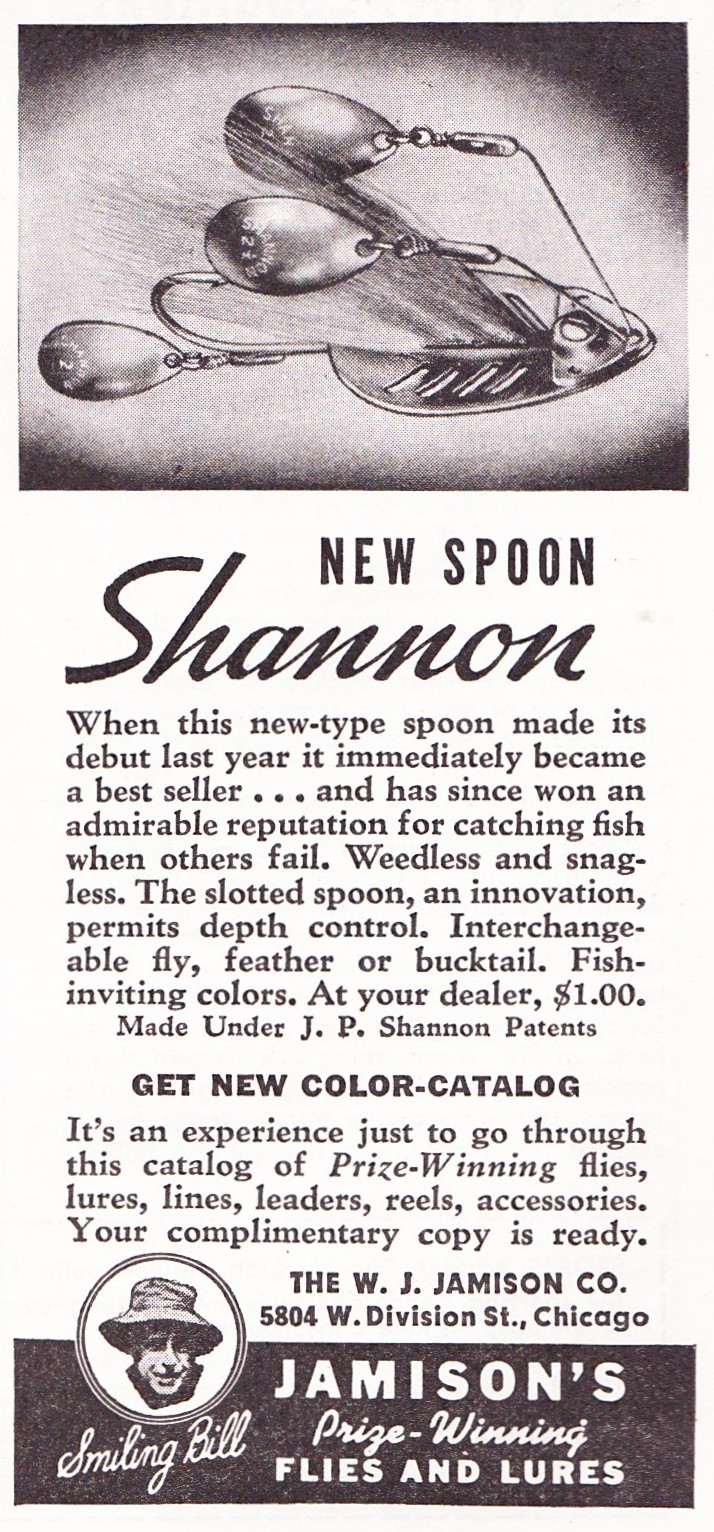
But Jamison didn’t just sell his own designs, he had license to sell the designs of Jesse Shannon’s baits. Most famous of Shannon’s baits was the Shannon Twin Spin. But in 1938 Shannon, and Jamison, were touting the new lure, the Shannon Spoon as seen in this ad.
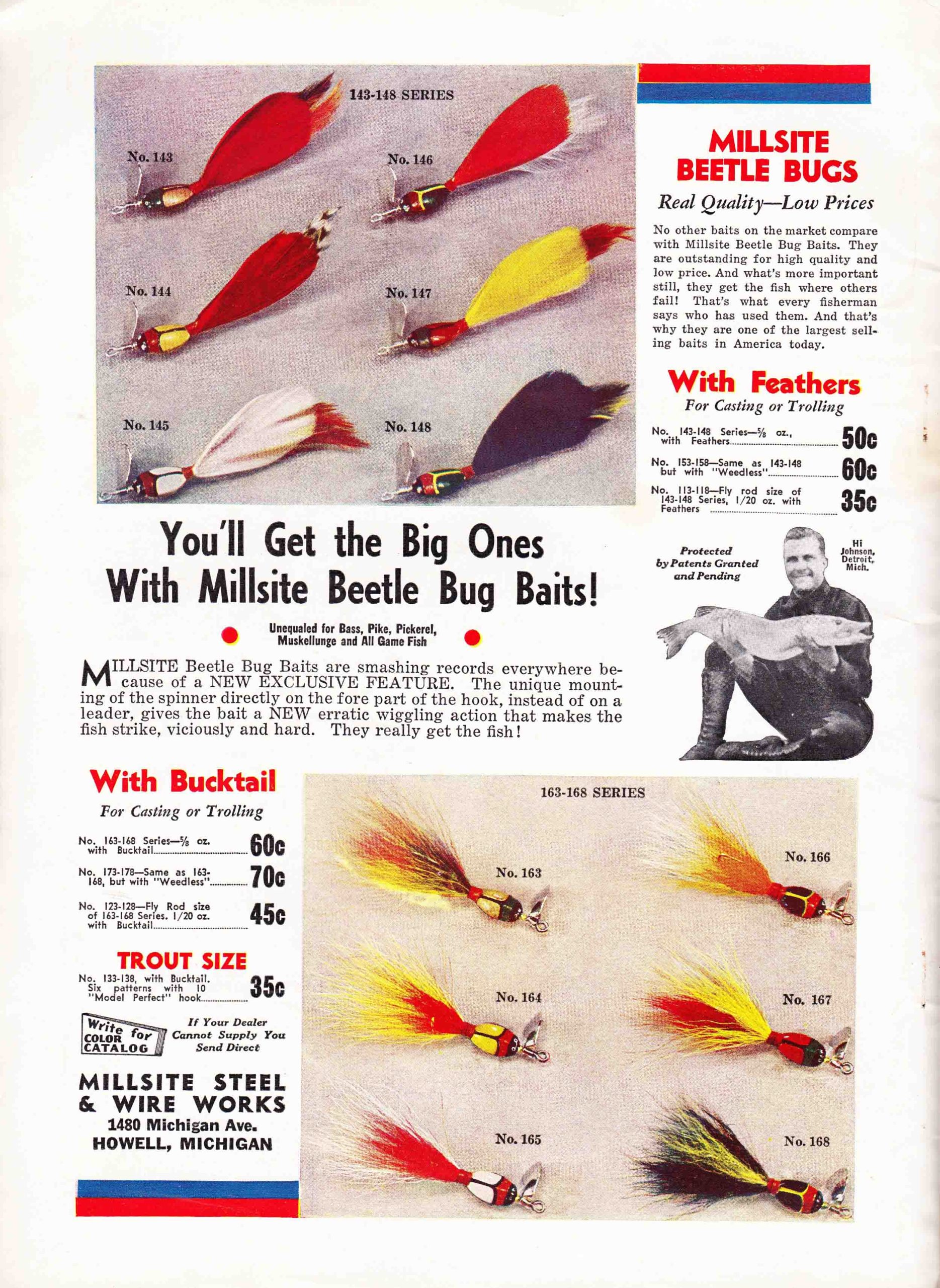
Millsite Steel & Wire had only been in the fishing business for a little over four years when this ad came out. They’d been producing fish stringers and a fly box until they purchased the Beetlebug Bait Company in 1938. With that purchase they got the Lur All Beetlebug lure. And it didn’t take them long to start advertising that they had a new bait to sell.
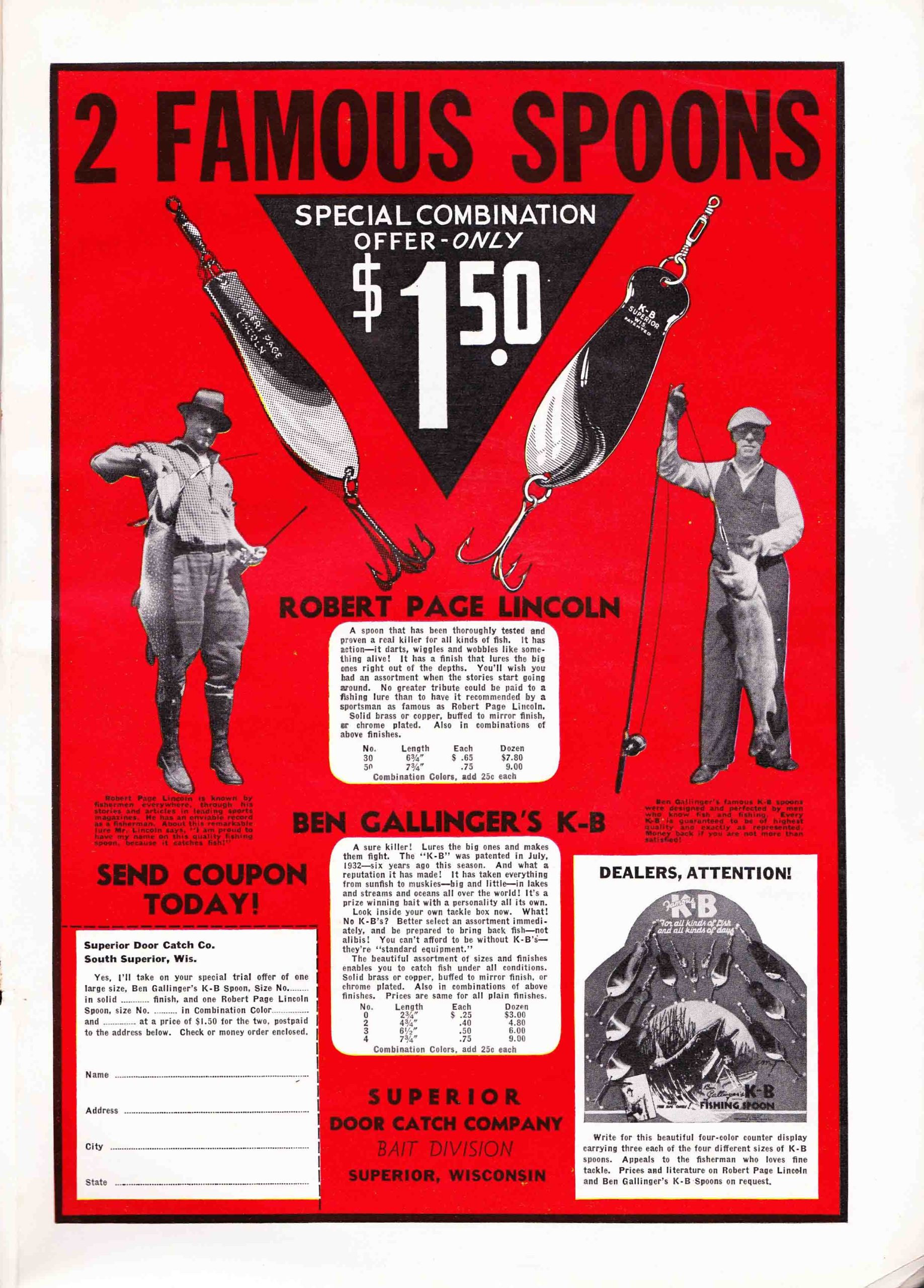
If you’re a frequent reader of the Bass Fishing Archives, there’s no doubt you’ve seen us talk about Robert Page Lincoln. Lincoln was one of the top writers and anglers of the day and was respected not only by readers but by his fellow experts.
Recently David Smith wrote a piece on a spoon he acquired, named after Lincoln. In fact, in that piece David also used this ad from the Sports Afield 1938 Fishing Annual.
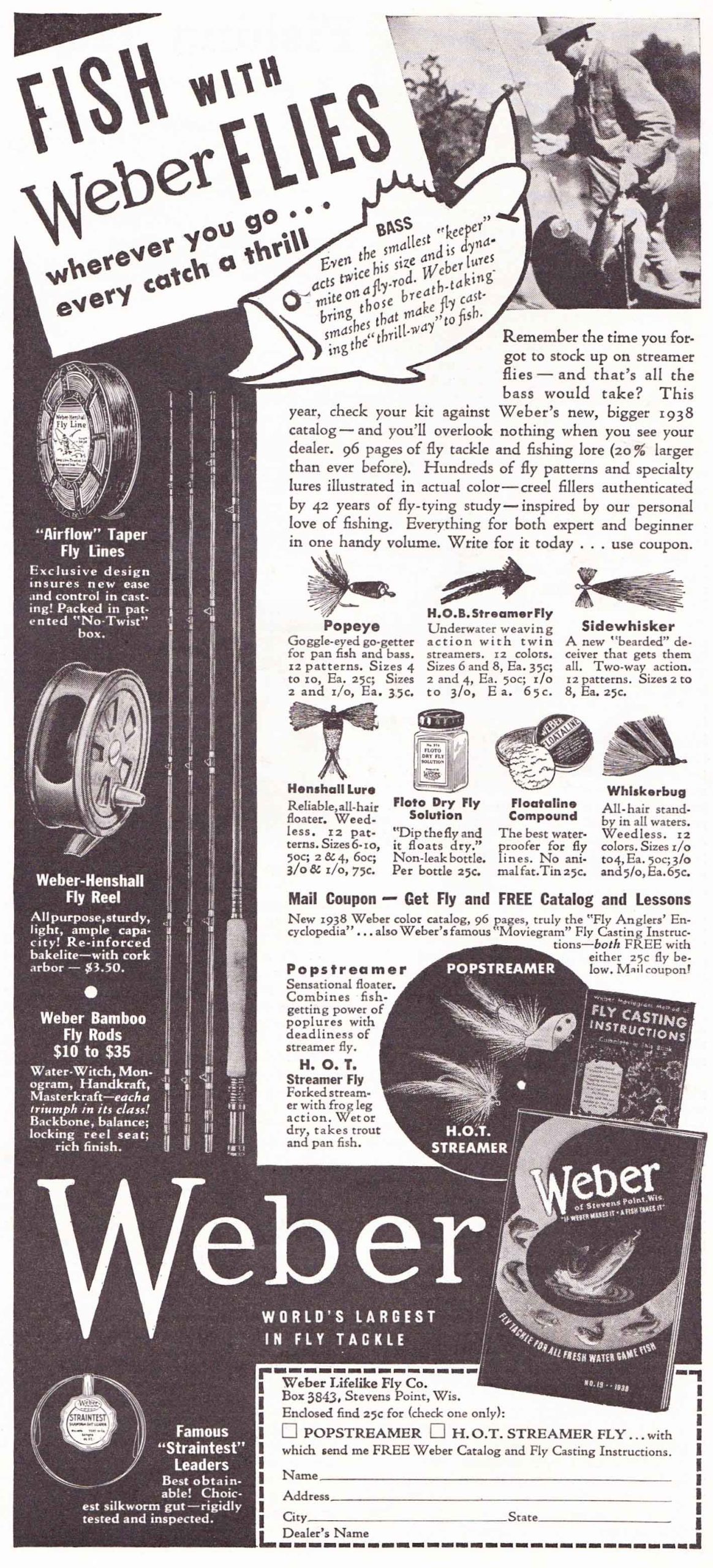
If you grew up in the 1970s and ‘80s, there is no doubt you remember the Weber Lifelike Fly Company. Fly fishing for bas was still semi-popular in the 70s and 80s but at the turn of the 19th century through the 1960s, every bass angler used a fly rod as part of their arsenal. In this ad Weber is catering to the bass angler with a selection of poppers and streamers designed to do the job.
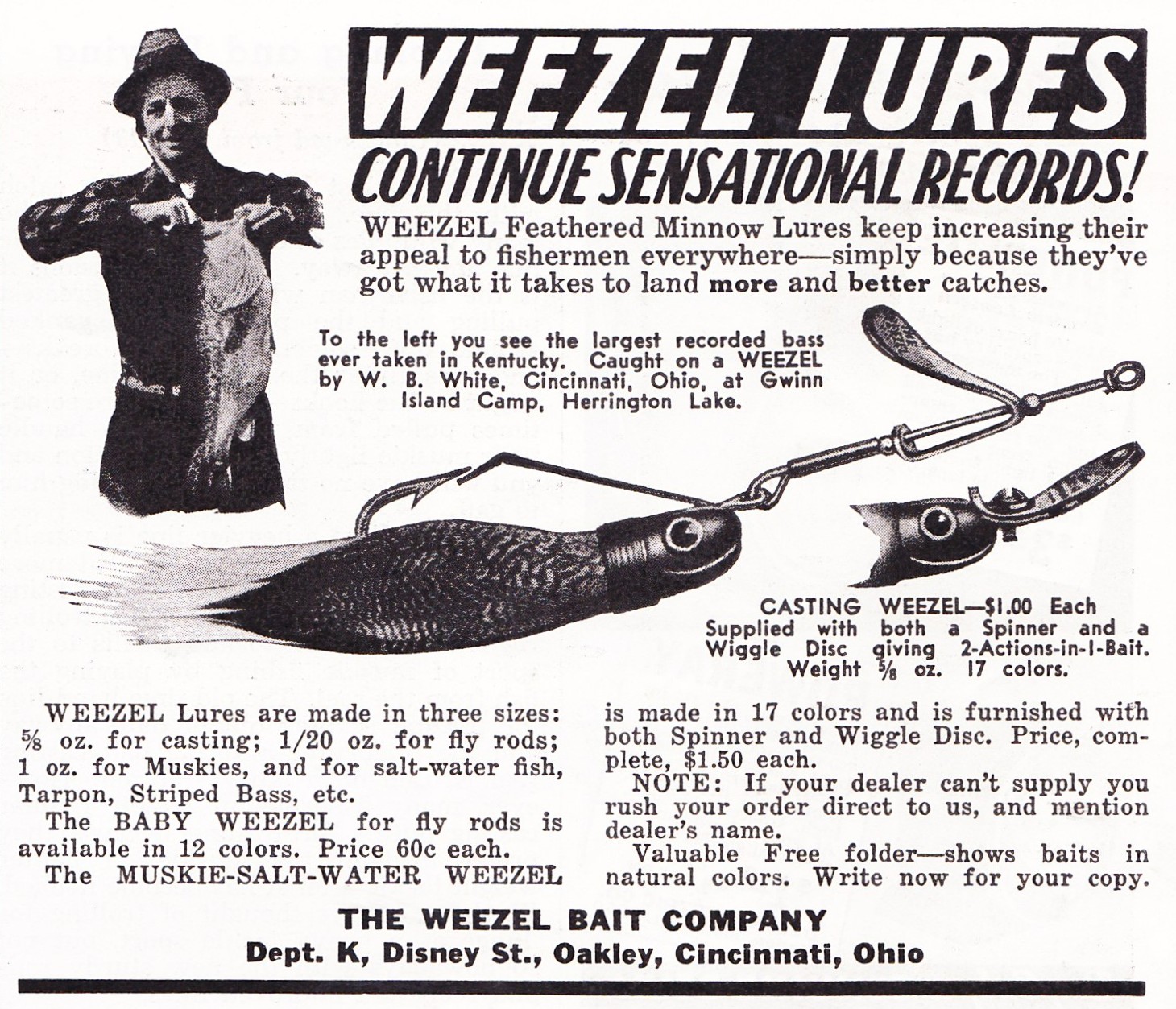
The final lure ad we have is from a company called Weezel Bait Company. Weezel made some interesting baits in the day, one resembling an inline buzzbait and the other looking awful close to a Chatterbait. But, in all actuality, they were the same bait. When you purchased the Weezel Feathered Minnow, you received both the buzzer wire and the blade. All for $1.00. That’s pretty cool.
Rods and Reels
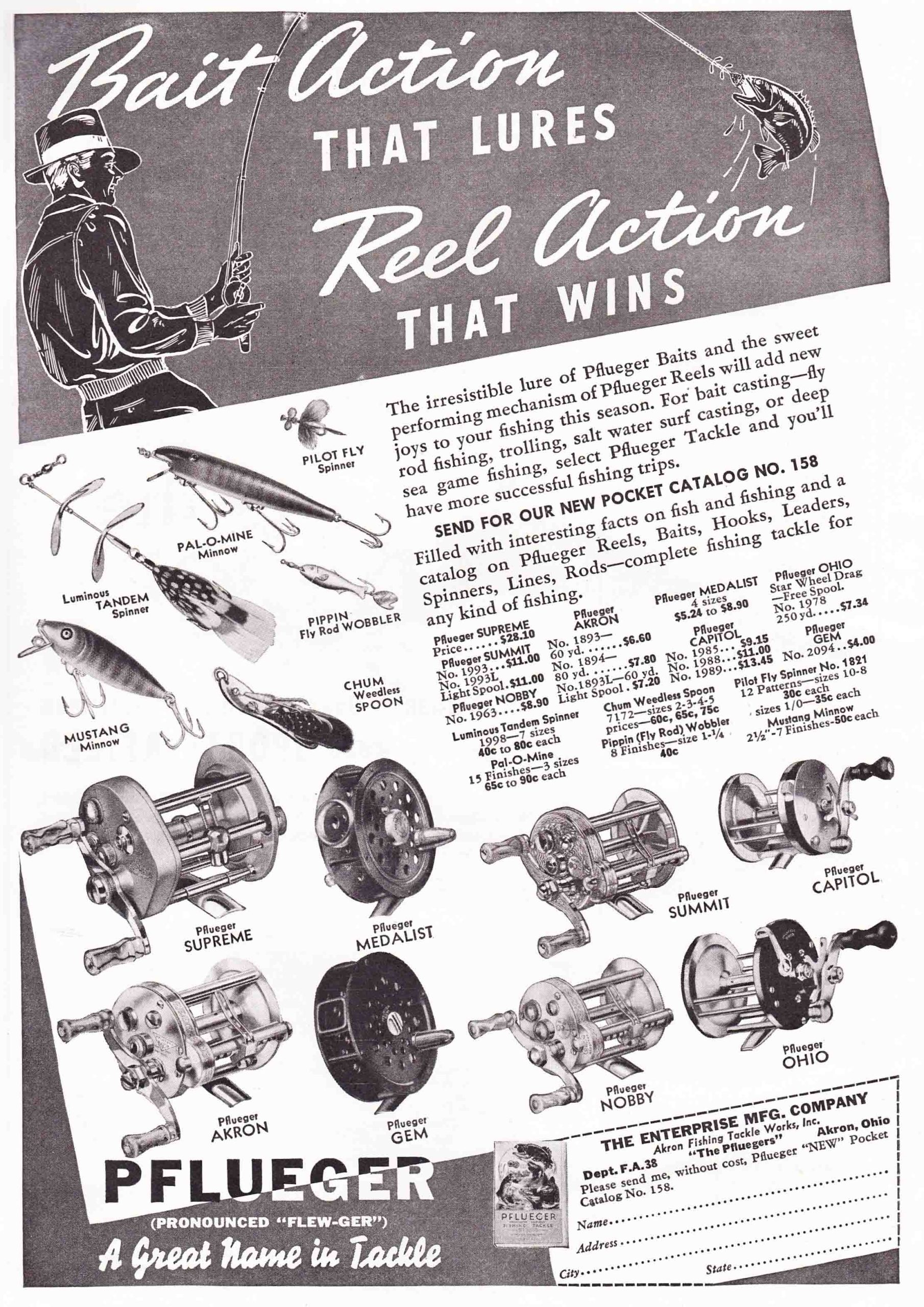
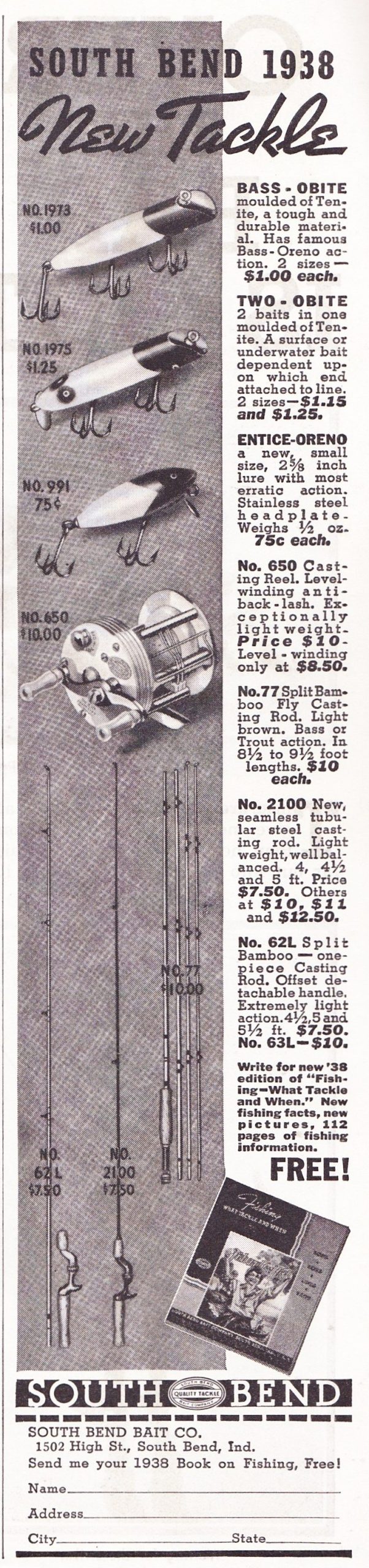
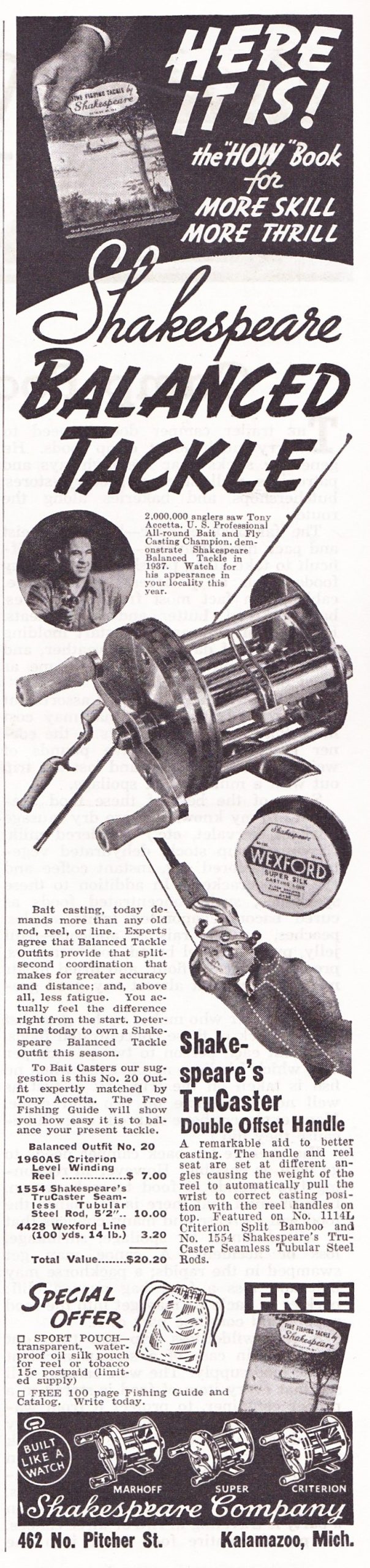
In this section on rods and reels we have all the big names of the day. Unfortunately, only three of these names exist today. Shakespeare and Pflueger are owned by Pure Fishing and South Bend is owned by Calcutta Outdoors. These were three of the biggest tackle companies in the world through the 1960s, producing high-end rods, reels, and baits. Today they have been relegated to a small part of their respective venture capital companies producing low-end gear.
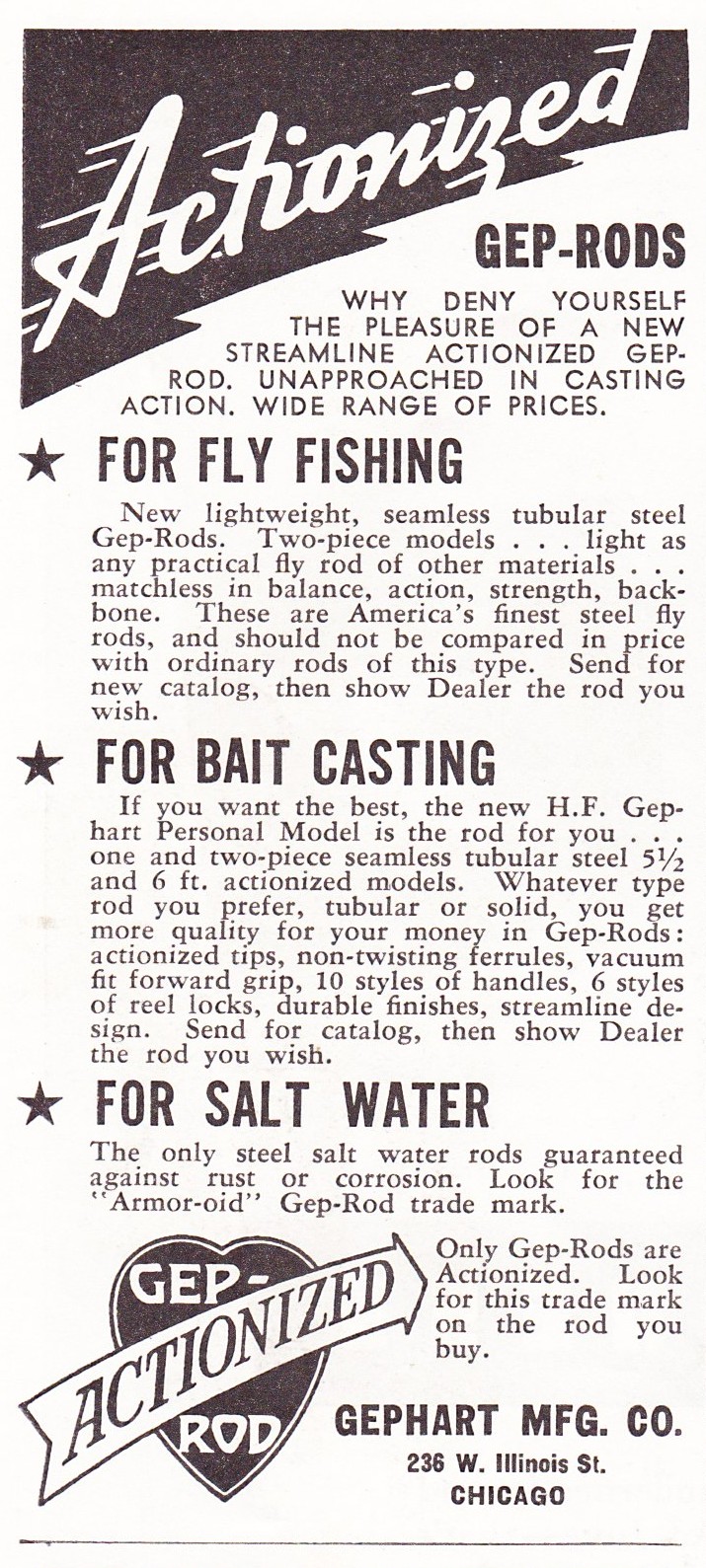
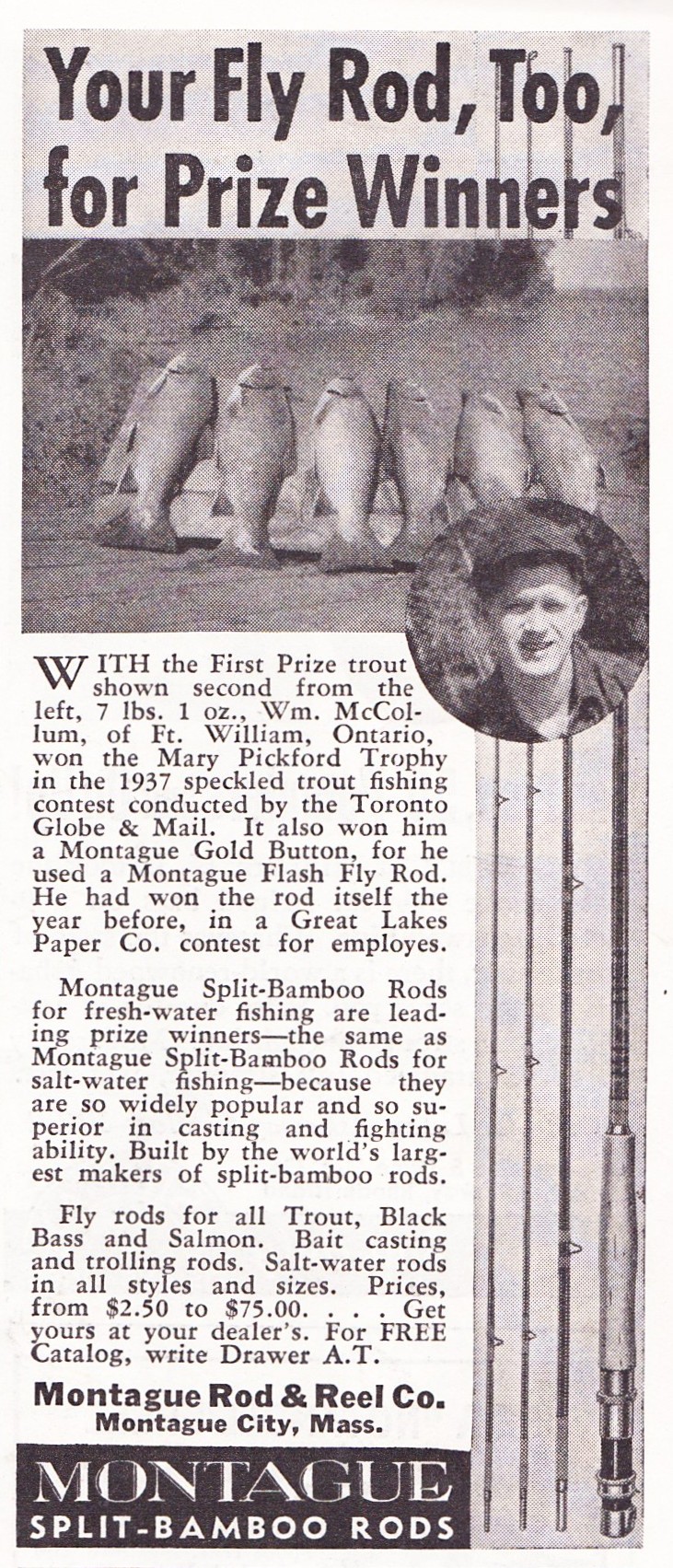
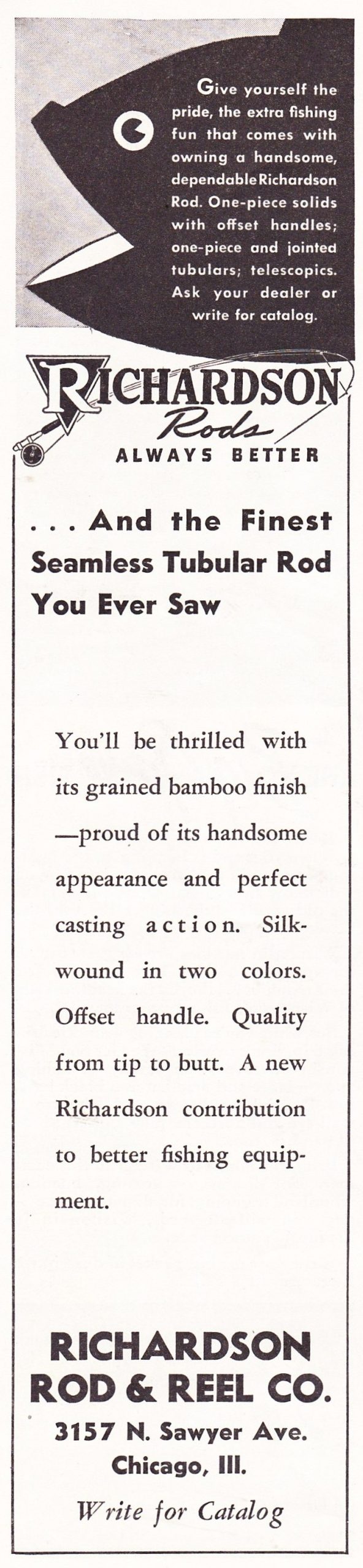
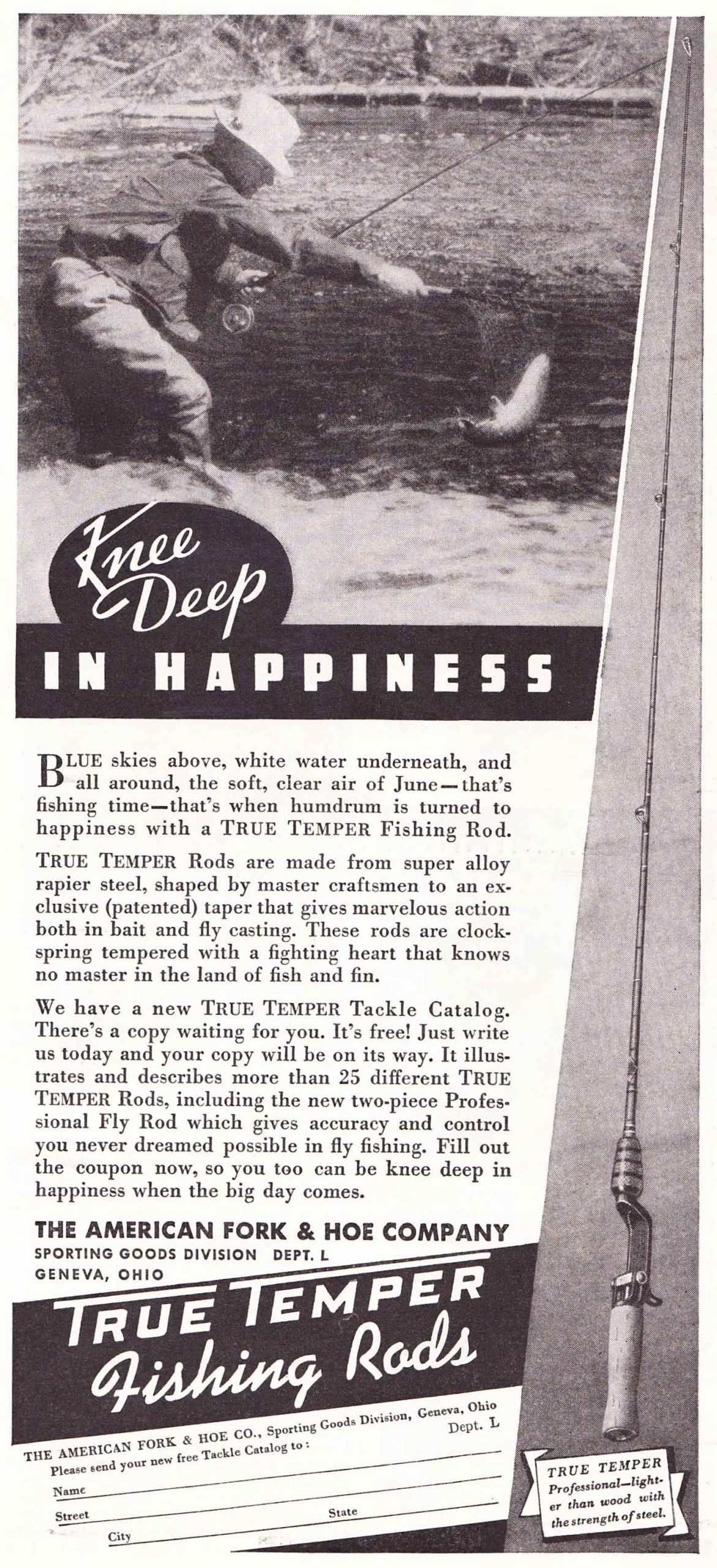
The other companies you’ll see here, GEP, Montague, Richardson, and True Temper all folded long half a century ago, yet they produced some of the finest rods and in some cases reels money could buy. Here are their ads.
Line
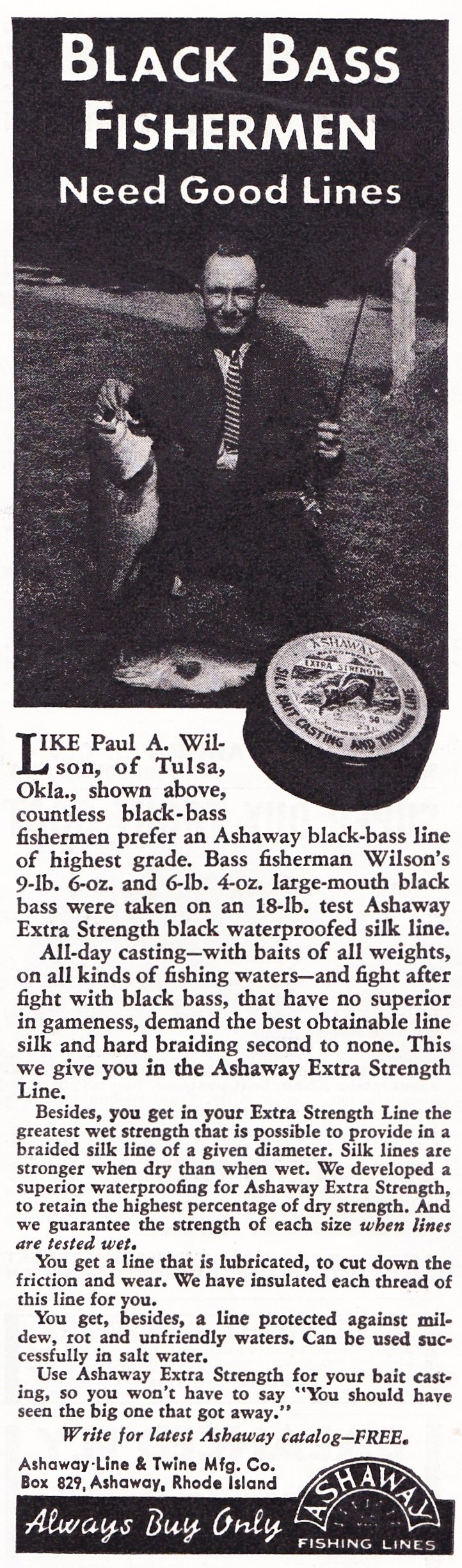
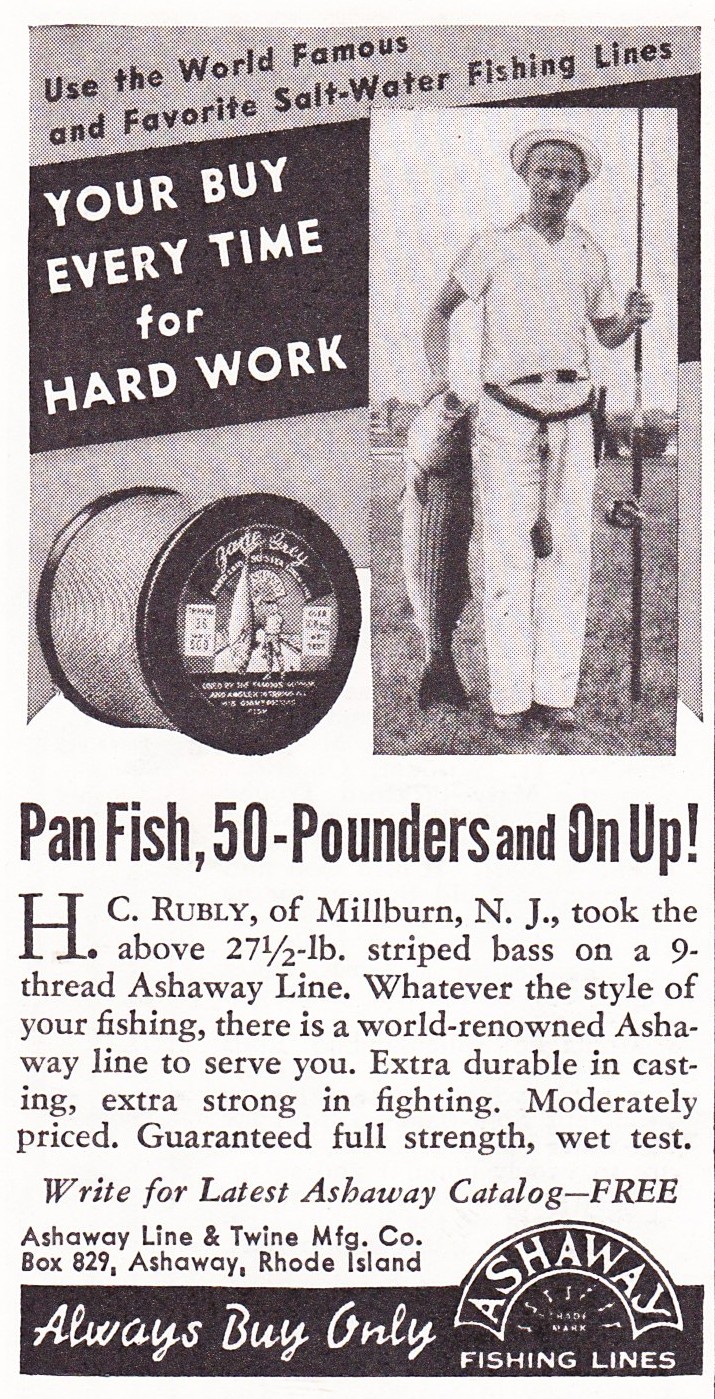
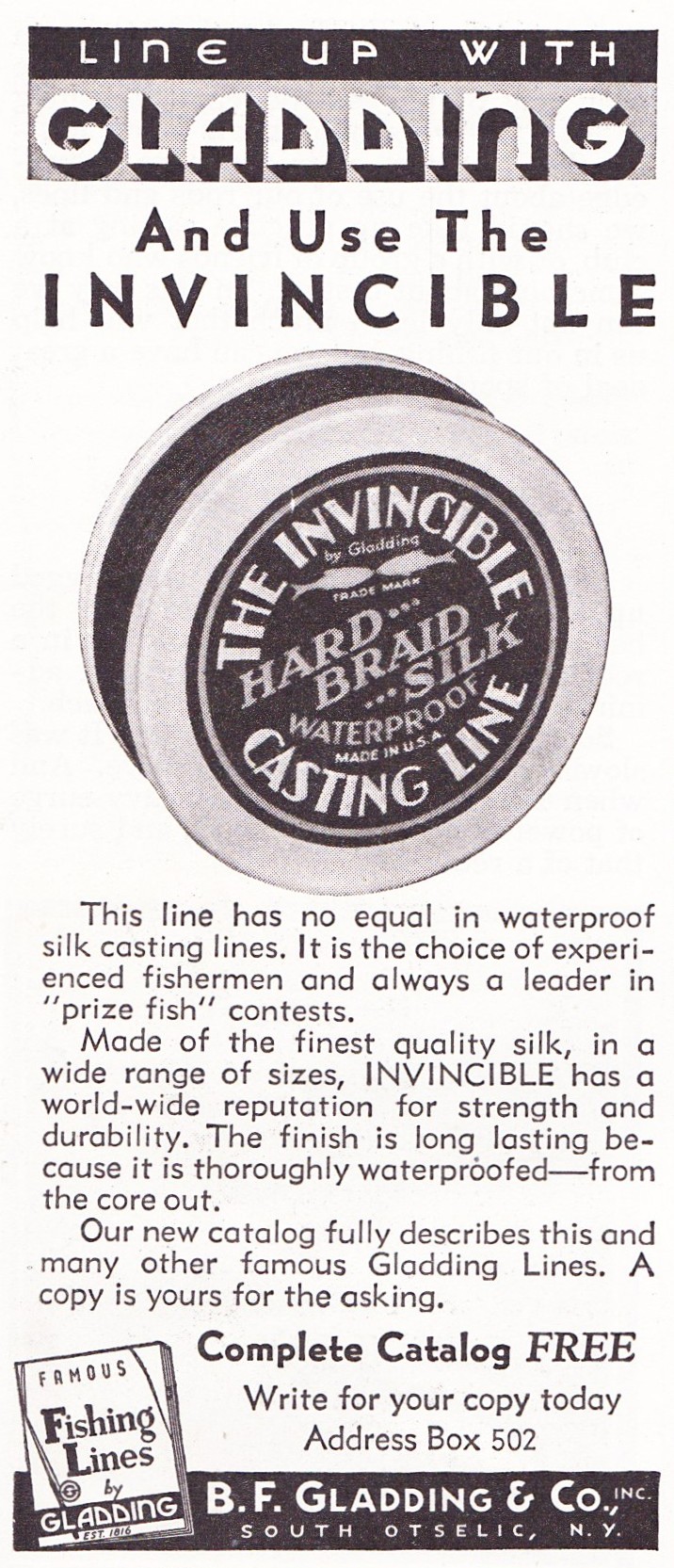
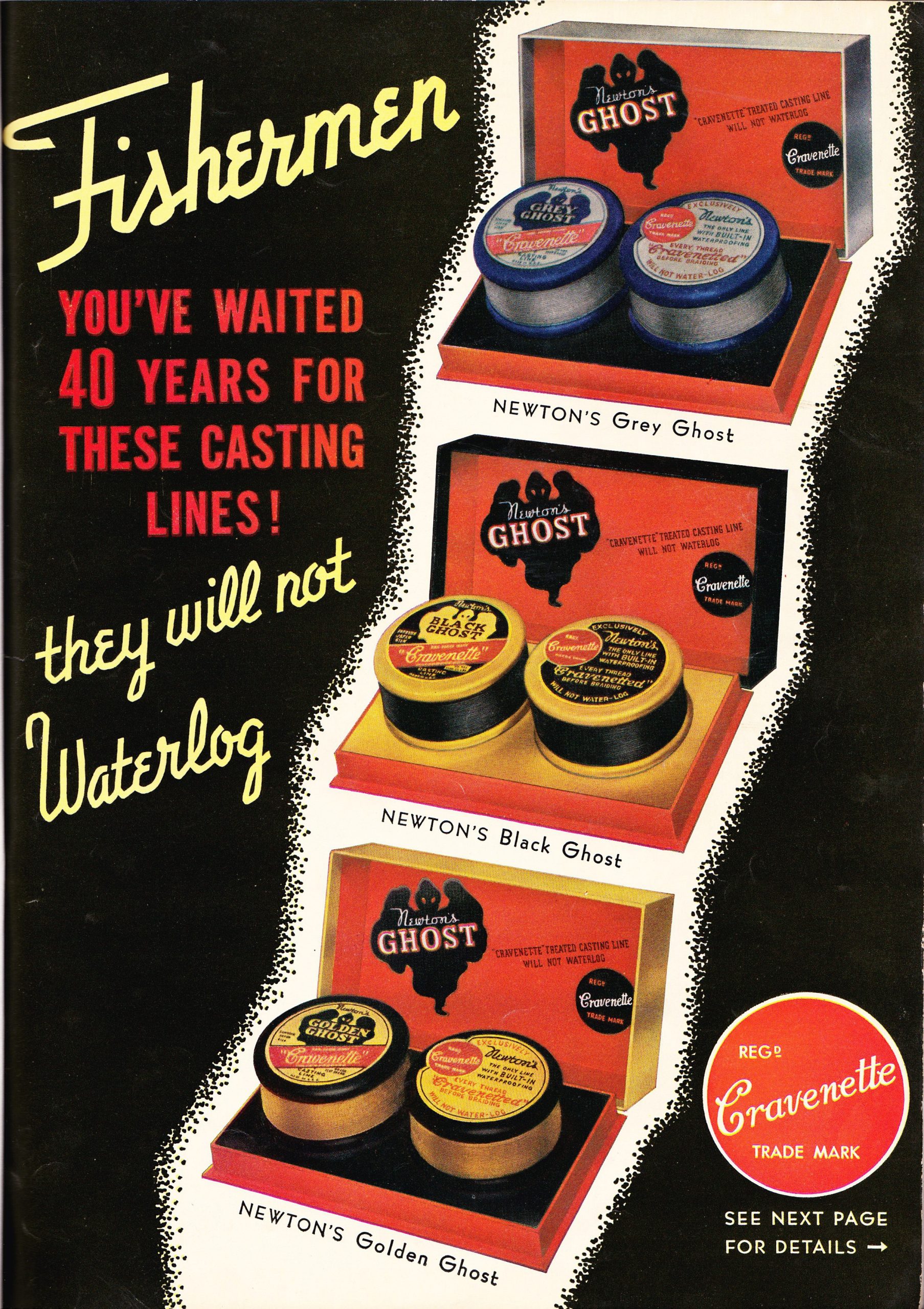
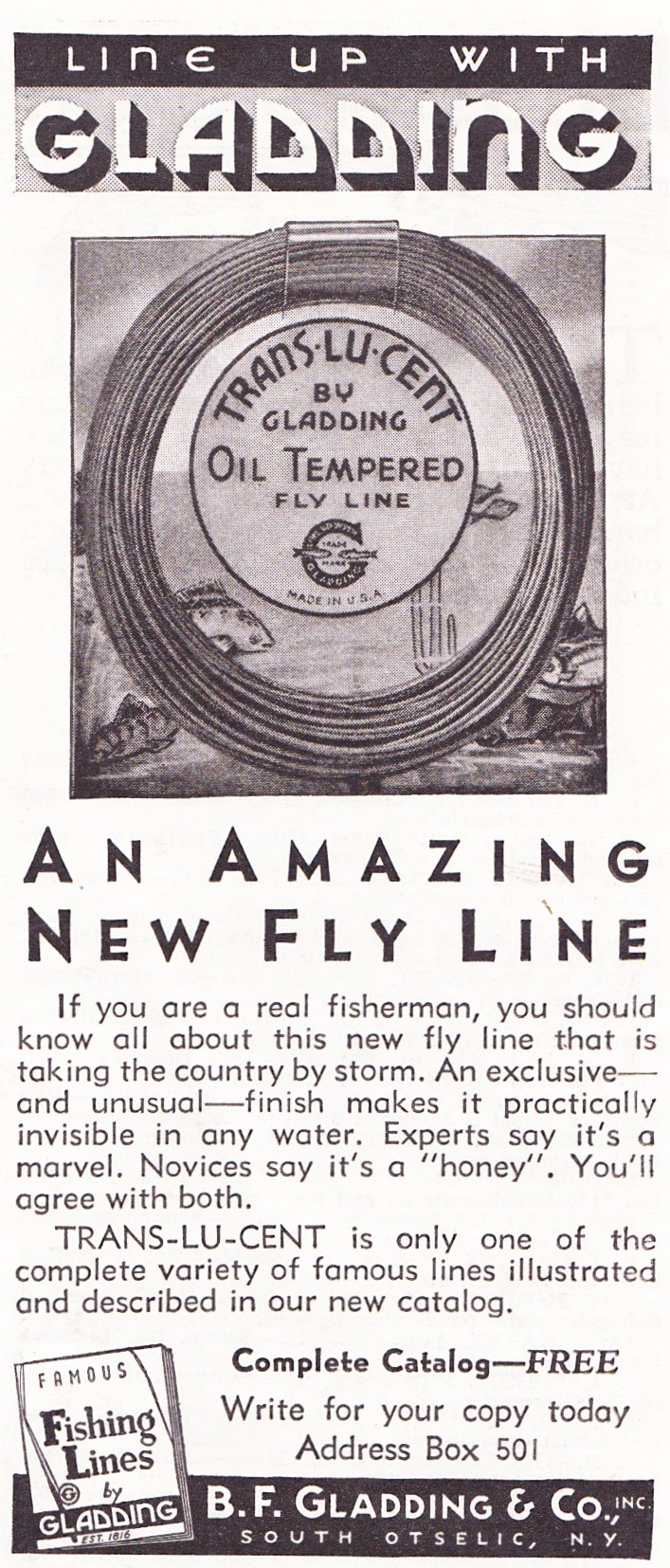
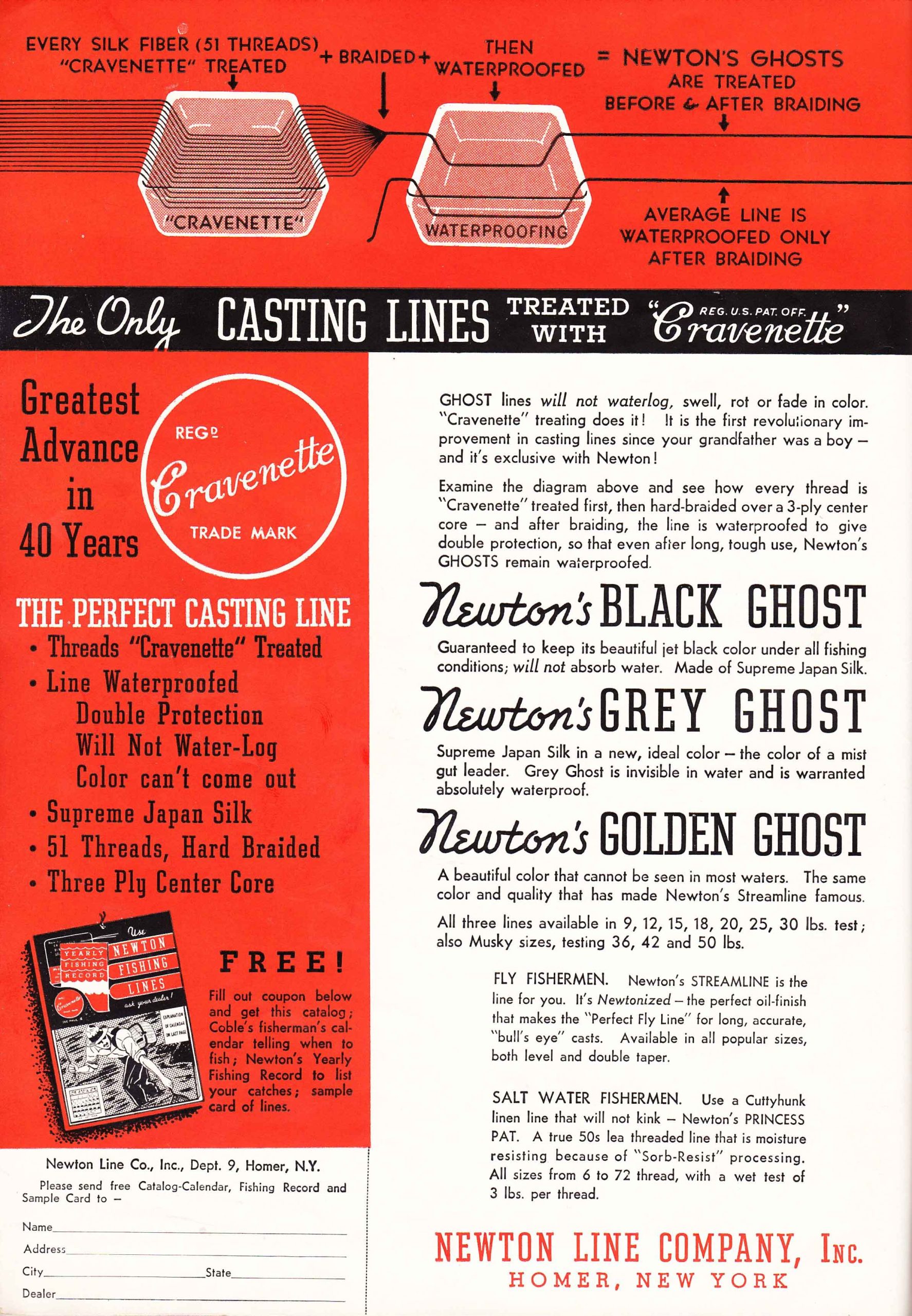
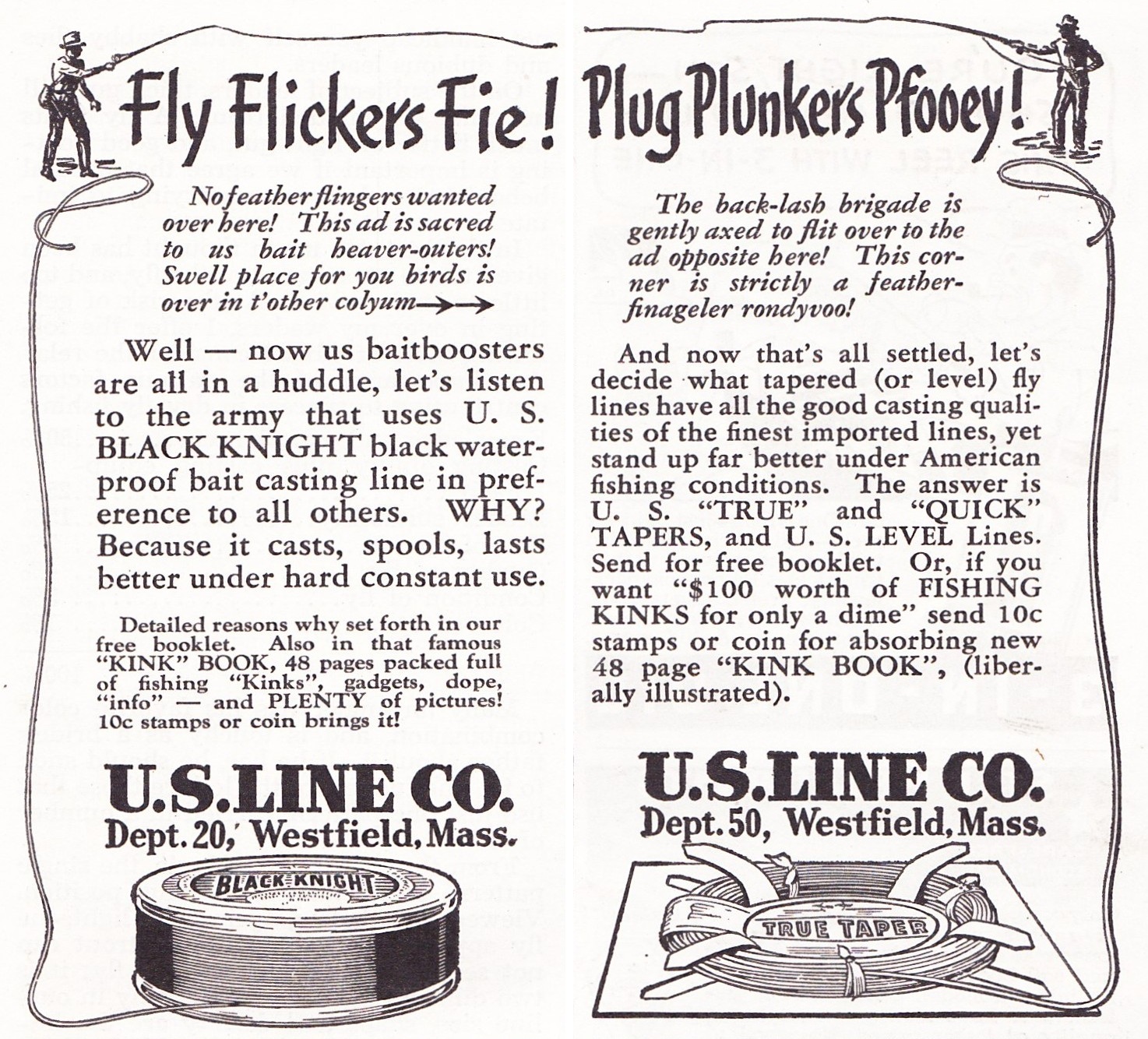
Prior to the Dupont Company discovering nylon and what it could be used for, most fishing lines were made from linen or silk. Here in the line ads from 1938, that’s all you’re going to see. And for those of you youngsters out there that think braided line is a new sort of technology, take a look at these ads. Braided lines have been around for over 100 years.
Motors
Just for kicks, I decided to also include the outboard motor ads from this fishing annual. You’ll most likely recognize at least one of the companies, maybe two if you’re over 40. But there’s one I haven’t heard of and I dive into a lot of old magazines. I was surprised that I didn’t see any ads from Thor, the name of Mercury before Carl Kiekhaefer bought the company in 1939.
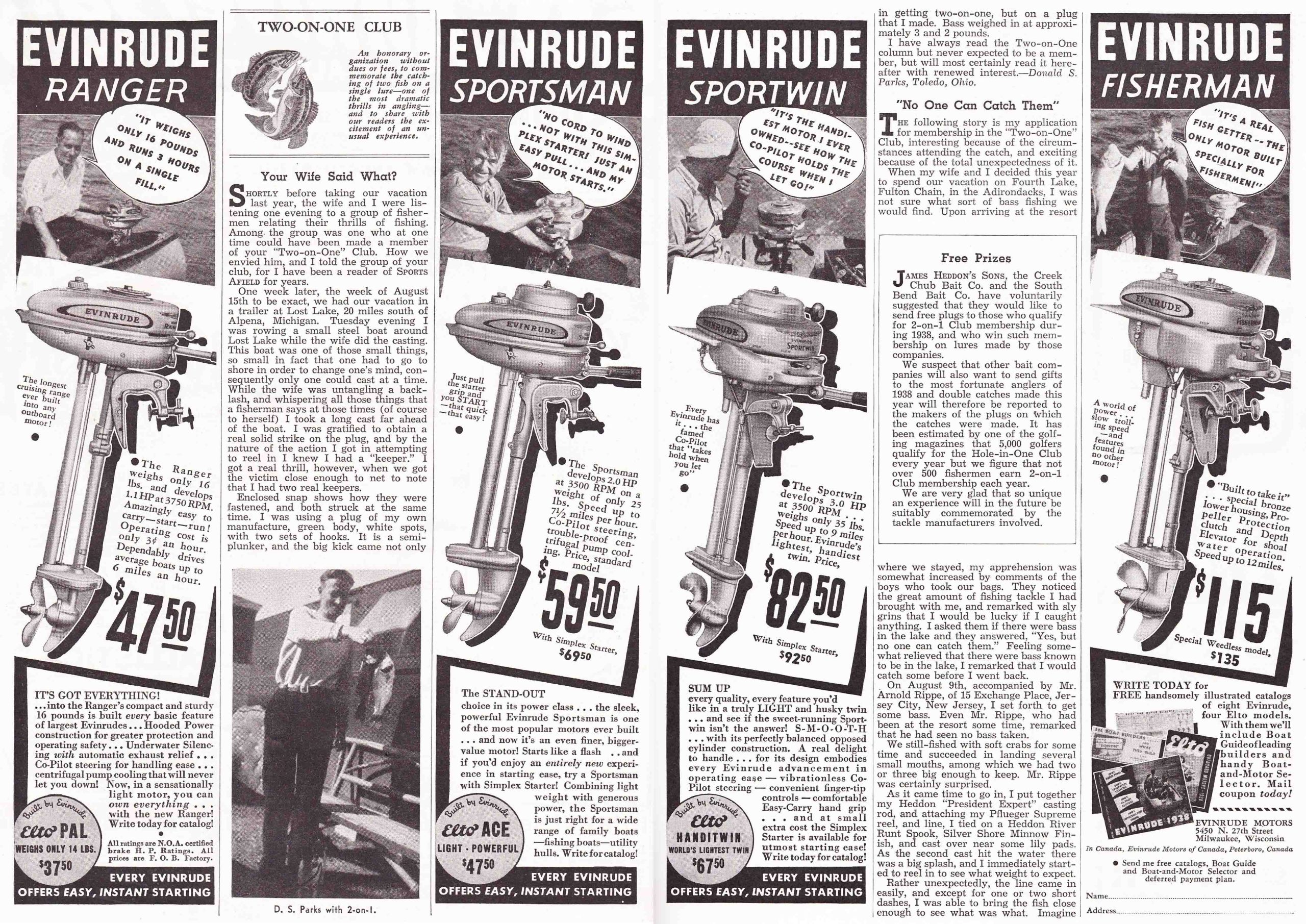
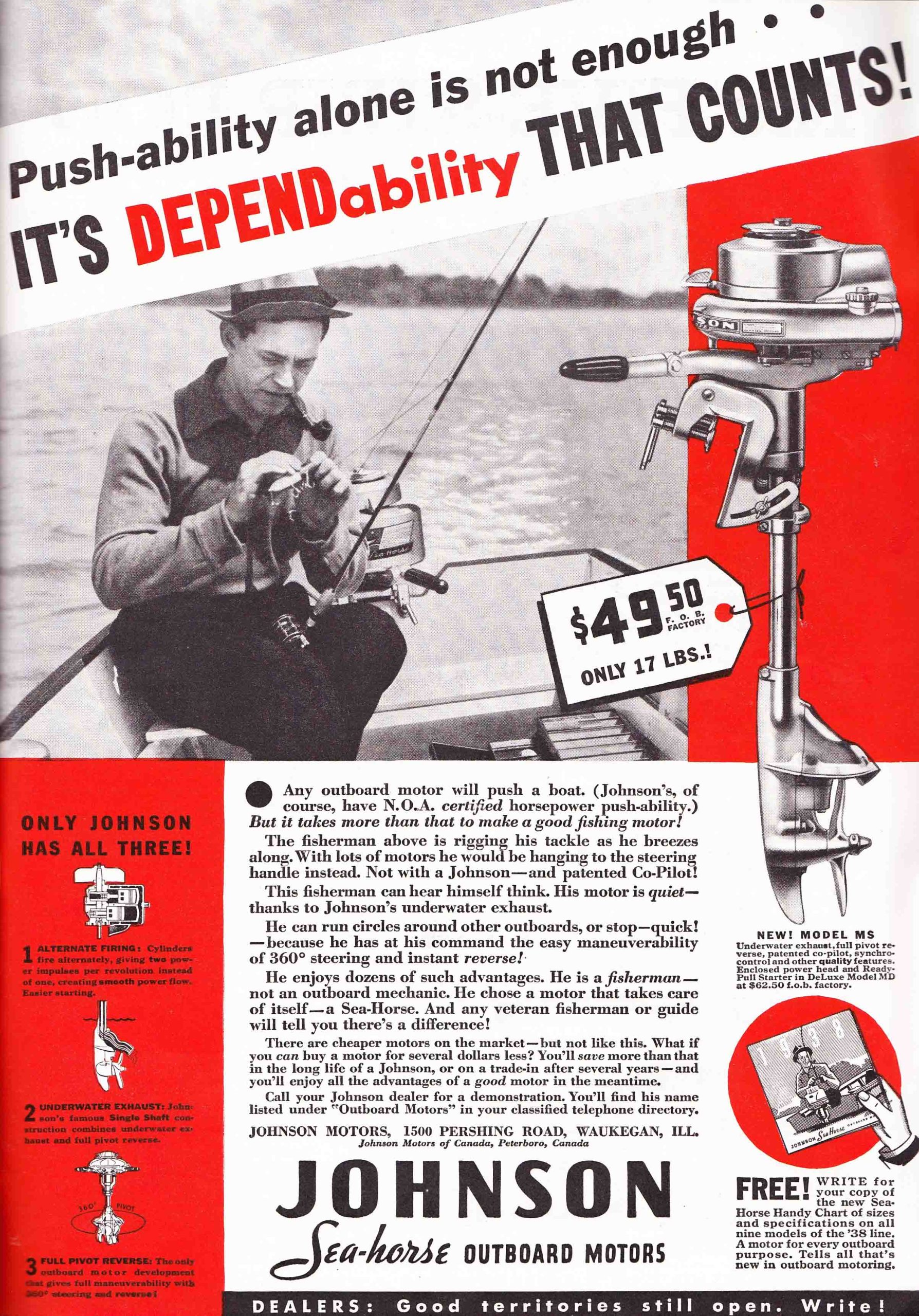






Love these peeks into old outdoor magazines. The ads are fantastic. Love the cover of the guy going through his gear with a pipe firmly clenched in his teeth. Note that both the Johnson and Evinrude ads also show anglers smoking pipes. I’m preparing to write a story on pipe smoking and fishing. The Shakespeare rod is also noteworthy, in that they highlight the off-set handle and Tony Accetta promoting their gear.