
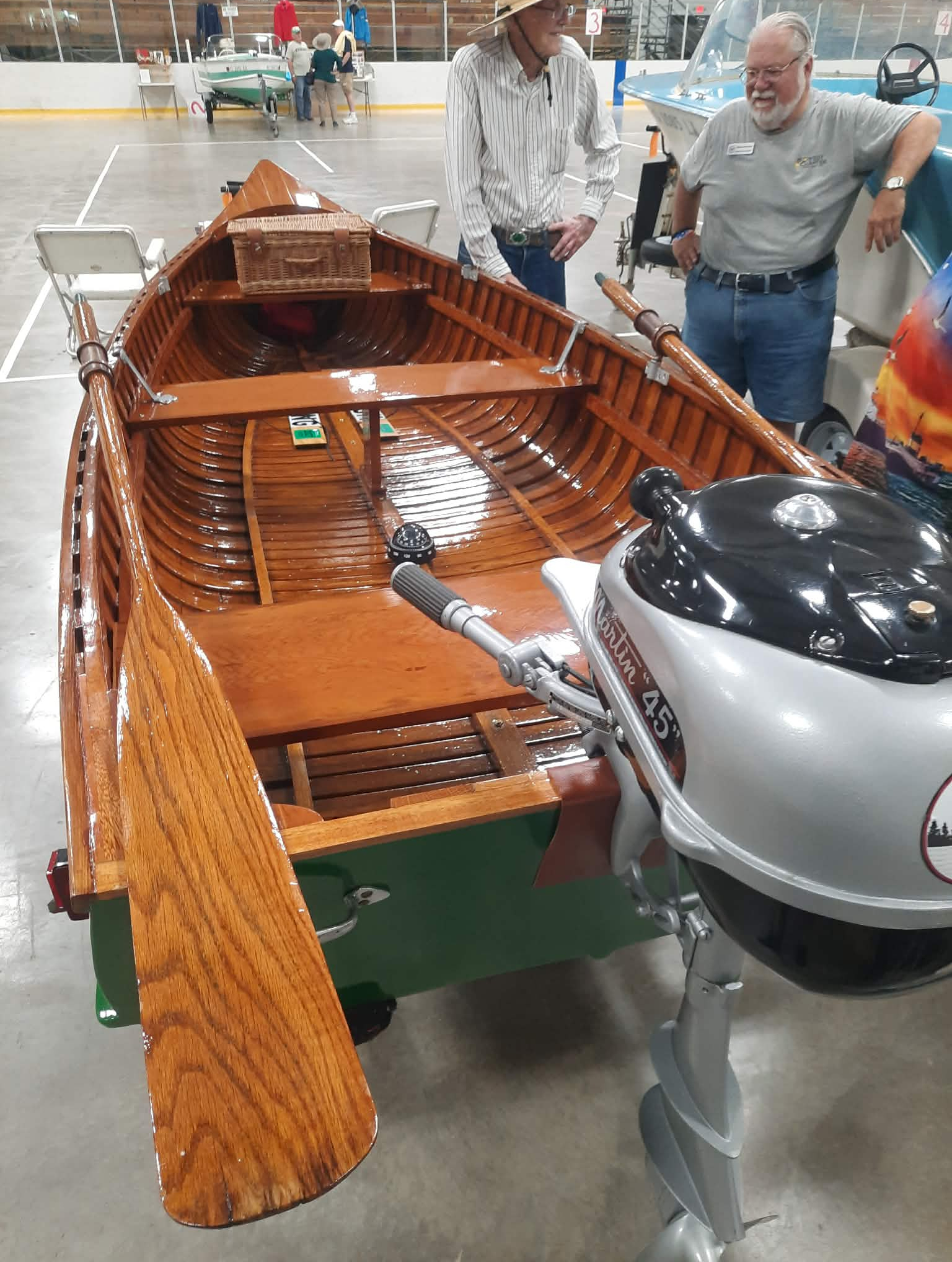
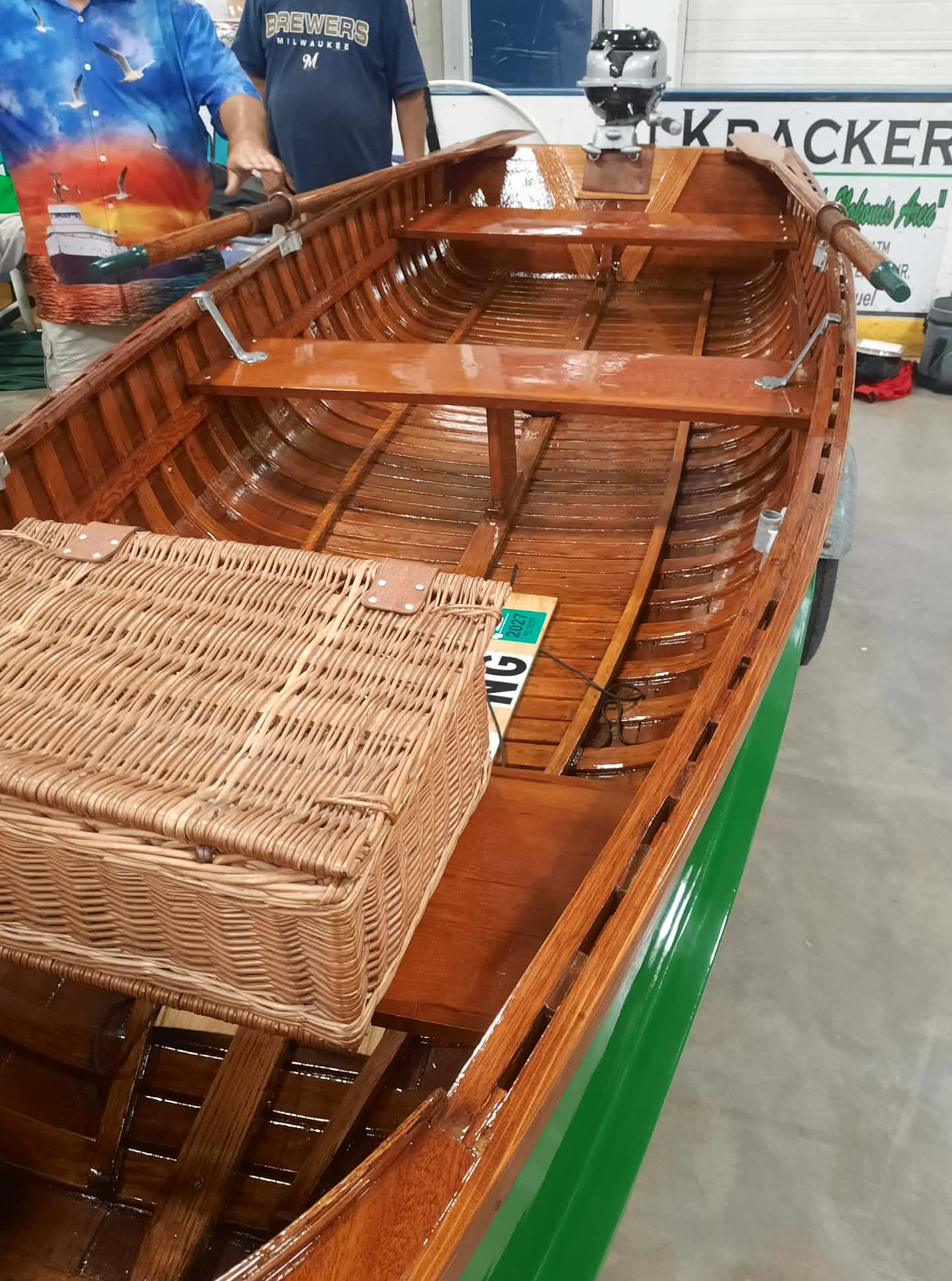
Earlier this month I once again traveled to Tomahawk, Wisconsin, to attend the annual Antique Outboard Motor Club’s 4-day Nationals show. This is an event that spotlights old outboard motors that run the gamut from beautiful to gnarly in design, but that are also innovative and creative in conception and build. The AOMCI event also includes boat and motor combinations that are judged and awarded place ribbons. Last week I shared images of some of the outboard engines I encountered and you can read that story at this link. Today I want to use an eye-popping boat and motor combination on display at the show as a jumping off point for a brief discussion on the history of both of those companies, Shell Lake Boats and Martin Motors. Below are several photos of the boat and motor as displayed in the hockey arena where the Nationals event was held. This will be a two-part story. Today we’ll explore the Shell Lake Boat Company and tomorrow we’ll look at Martin Motors.
Now that I’m back home from the show I really wish I had taken the time to talk with the owner of this wonderful boat and motor. At the time I was there he was chatting with other people about his prized boat, and I didn’t want to intrude. The only bit of conversation I could hear was when he told the folks he was chatting with that he had taken the boat out on the water. I truly appreciated that he actually used his vintage boat and motor and didn’t just keep it locked away in a garage. But as I said, I’m really just using this boat and motor as an excuse to shed some light on a couple of historic fishing industry companies, because that’s what we do here at Bass Fishing Archives!
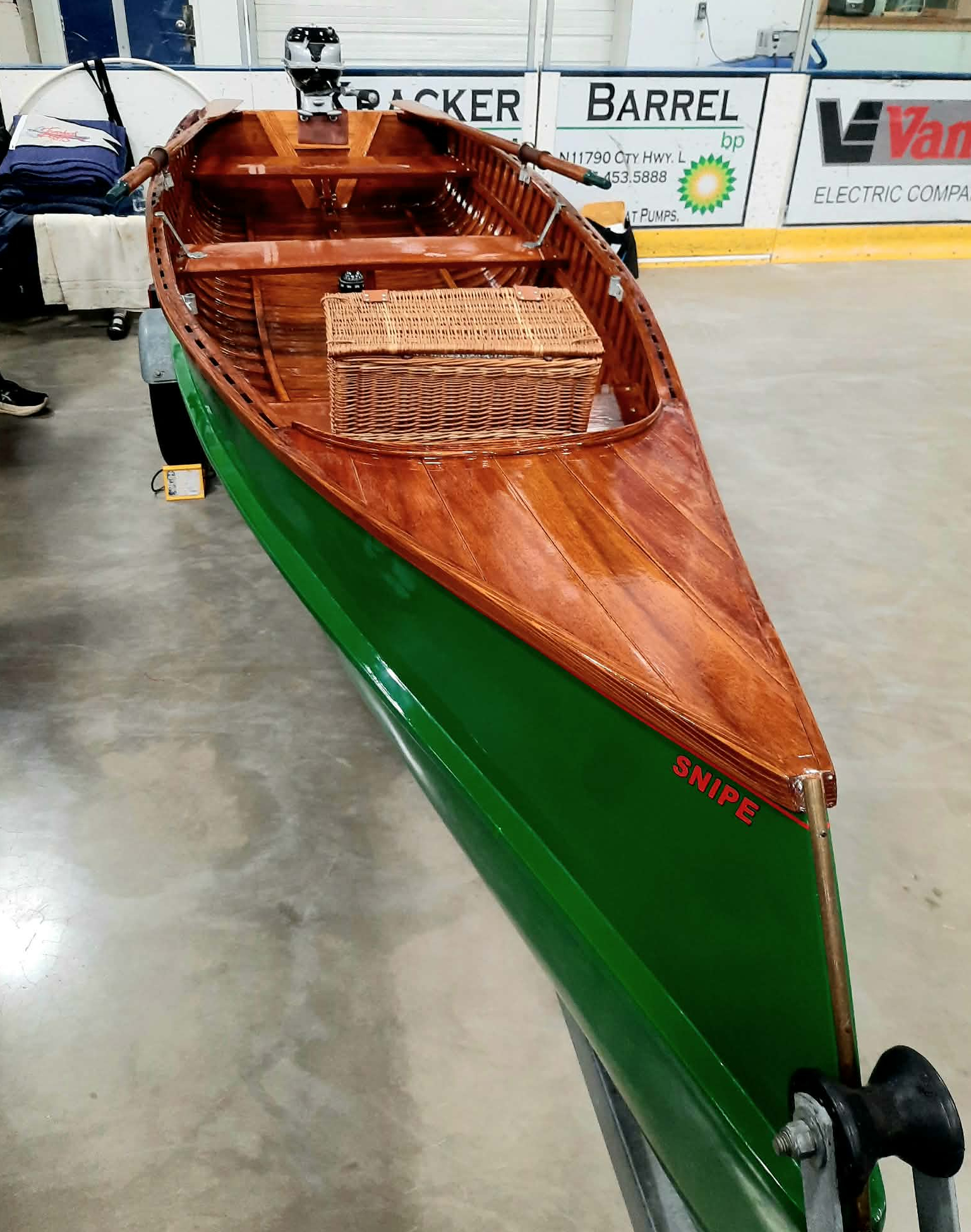
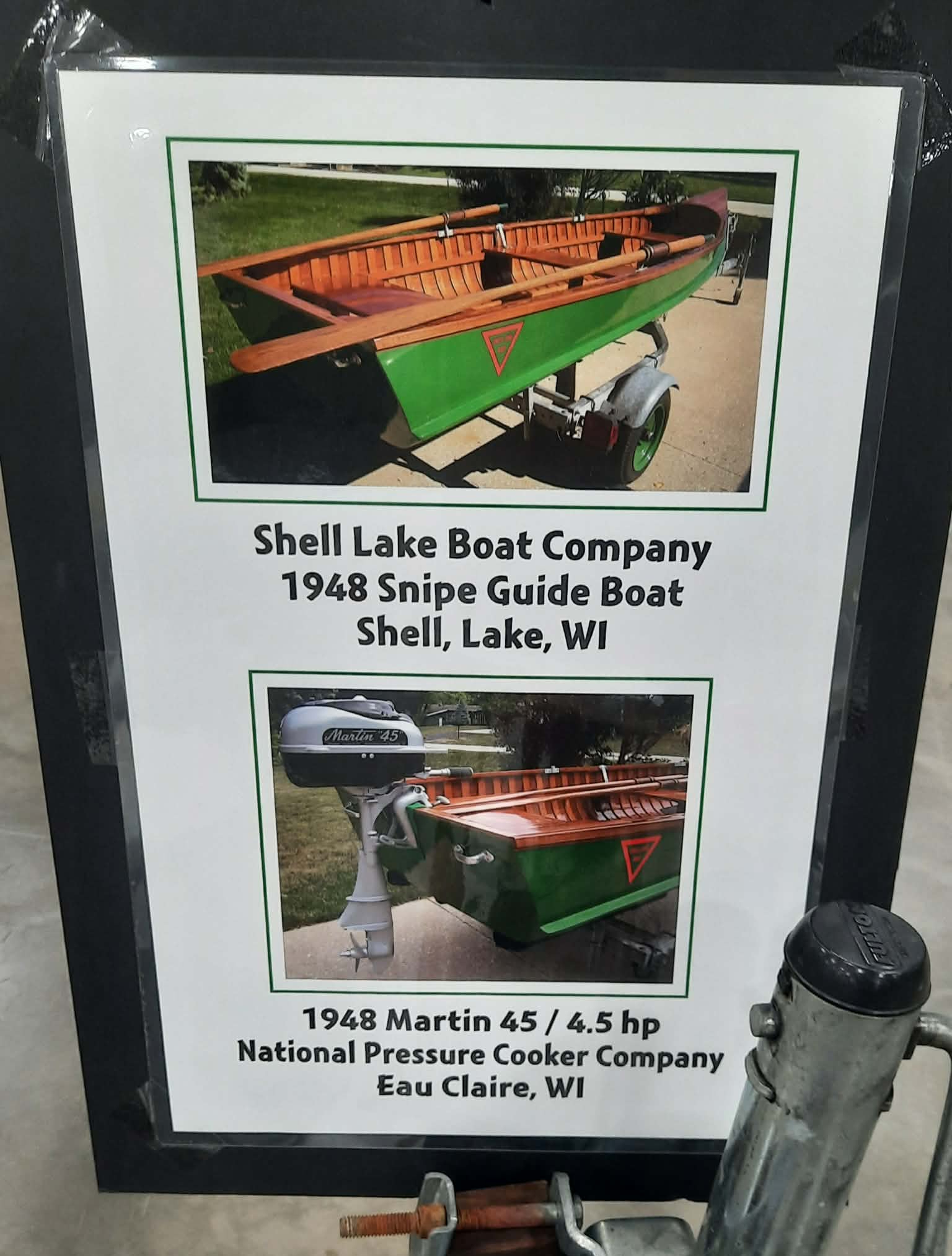
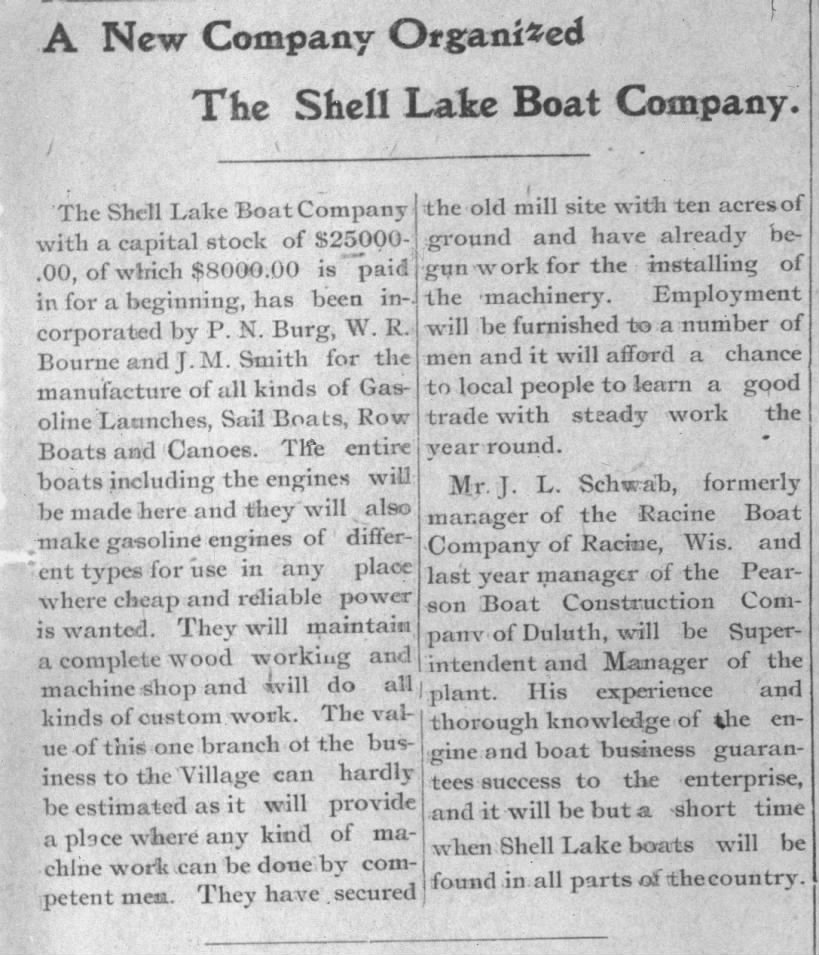
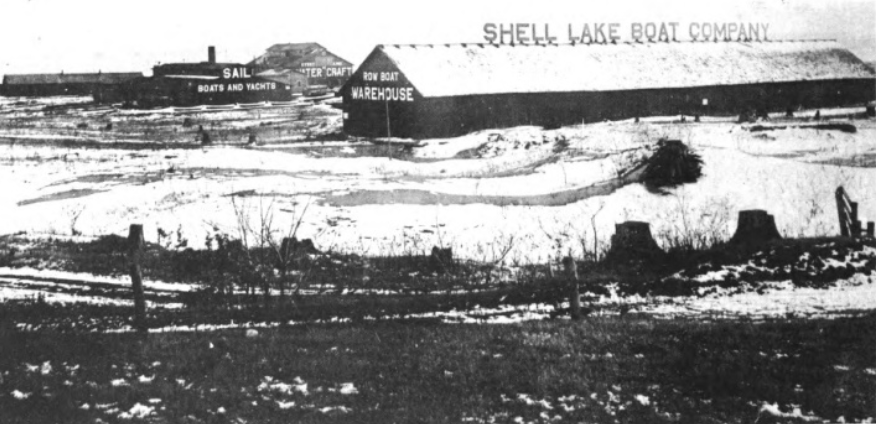
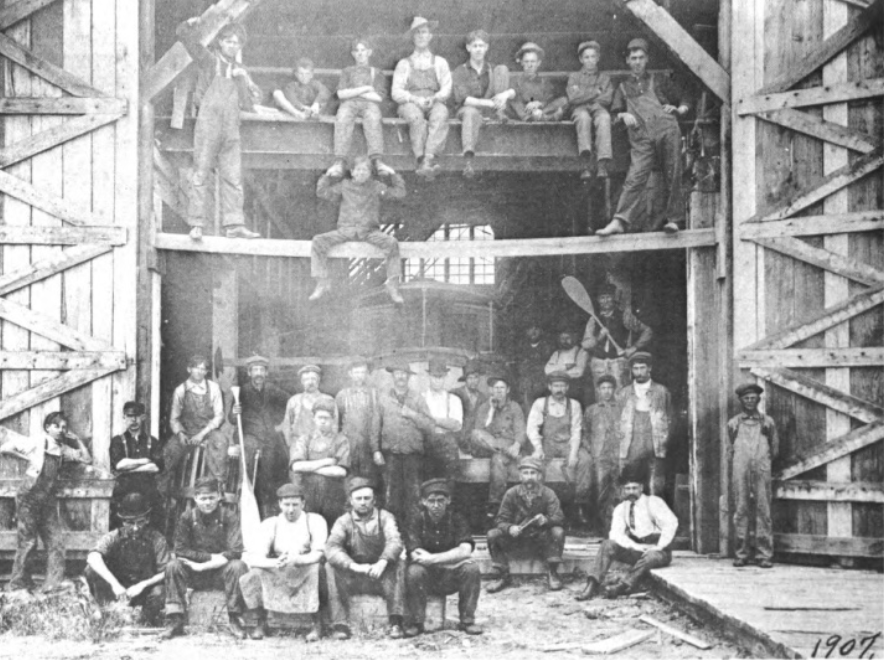
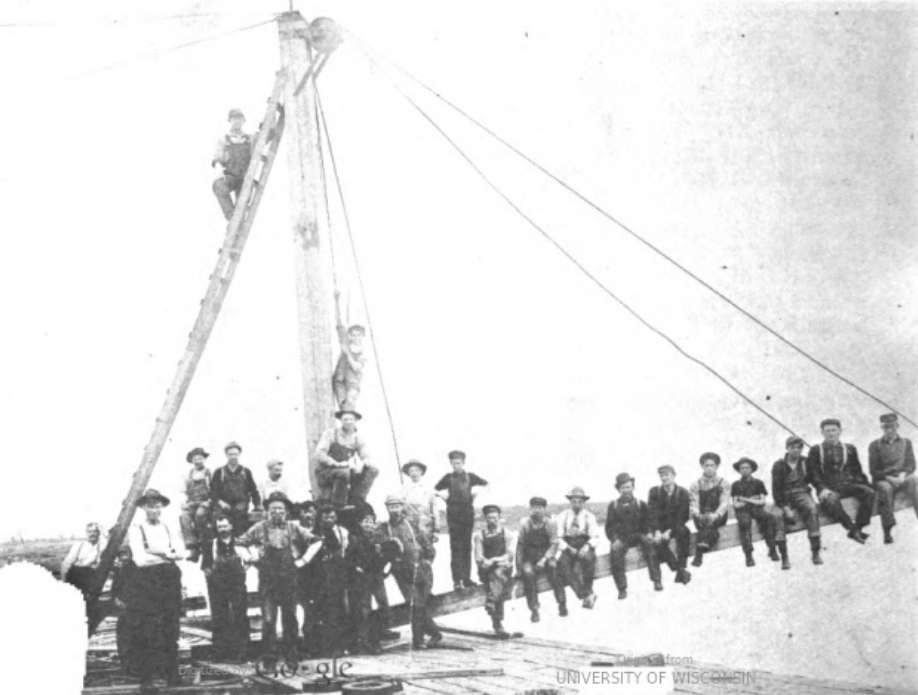
Shell Lake is located in Washburn County, Wisconsin, about 80 miles north of Eau Claire, 30 miles southwest of Hayward, and just a few miles south of Spooner, which basically places it smack-dab in the middle of the Northwoods in upper-west Wisconsin. In 1910 the population was under 1,000 residents. Today it’s not much bigger at around 1,400. The Shell Lake Boat Company was incorporated in December of 1904 with $25,000 starting capital. The company purchased and set up operations in a former lumber mill, which was advantageous for a boat building business, as they had ready access to woodworking tools and former workers in the area who were familiar with that trade. The company was sold, I believe, six times through 1959 until it was purchased by Lund Boats in the 1960s, before Lund shut the company down permanently sometime around 1980. Interestingly, another Shell Lake boat company formed in 1930, the Peterson Brothers Boat Company. The Peterson Brothers company was made up of former Shell Lake Boat employees, who decided to form their own company after Shell Lake sold out in 1929 (its third sellout since incorporating in 1904).
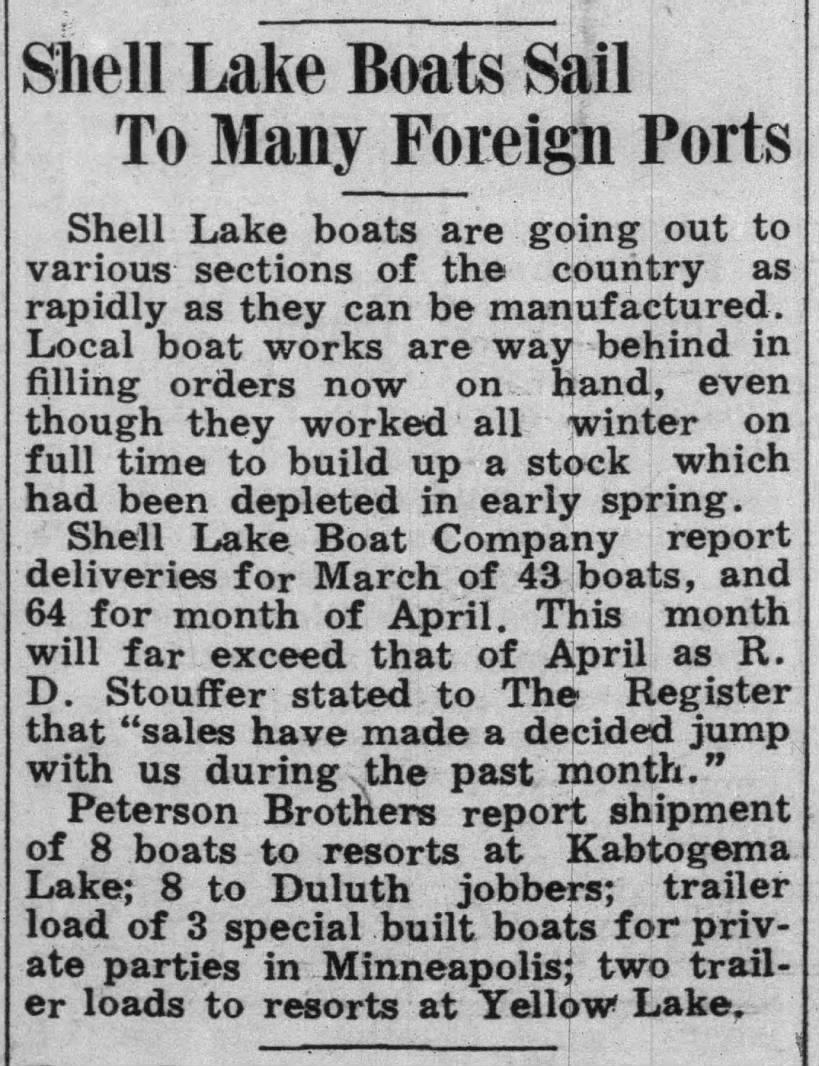
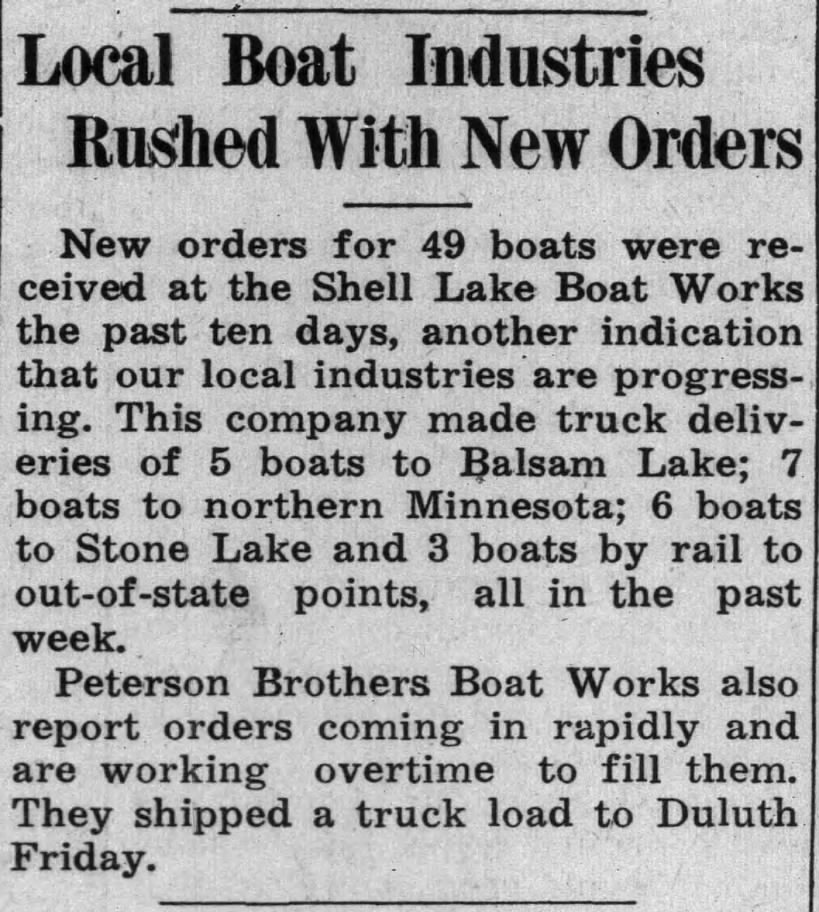
Shell Lake Boats manufactured canoes (until 1957), launches, sailboats, rowboats, and hunting and fishing skiffs. There is a brief mention in A.L. Stouffer’s history of Shell Lake that the boat company also manufactured engines of some sort, which raised an interesting and unlikely question that needed an answer. I have yet to find what kind of engines or what production dates these engines may have been made. Another mention of engine manufacture was hazily alluded to in an August, 1928 story in the Washburn County Register. It reads, “Whether it is in canoes, row-boats, duck-boats, outboard-motors or speed-boats, the product of the Shell Lake Boat Factory of F.W. Conselman stands as the hall-mark of class, quality and design in the boat industry world.” But a company burglary in April, 1953, sheds more light on the question. An April 16, 1953 story covering the theft in the Superior Evening Telegram mentions outboard motors being stolen from the “motor repair shop” and that “The regular motor repair mechanic who works in the shop had been working in the woodwork department so the theft had gone unnoticed until late Wednesday, when he returned. Most of the motors had belonged to patrons of the boat company who had stored them for the winter. Eleven new Johnson motors stored nearby in boxes were not touched.” Neither have I found any references to Shell Lake motors anywhere. It’s probably safe to assume that Shell Lake Boat manufactured no motors, but simply repaired and installed existing motors in their speed-boats and motor-boats.
Apparently there were a few similarities between Shell Lake boats, canoes in particular, and those built by the Thompson Brothers Boat Manufacturing Company of Peshtigo, Wisconsin. A Thompson Brothers boat was featured in my AOMCI story last week. The construction similarities were striking enough to warrant accusations that Shell Lake stole the Thompson Brothers’ designs. In spite of the company’s frequent lack of long-term stable ownership they did well, and grew markedly in the early 1950s, with nearly 60 employees on average in the shop and close to a half-million dollars in annual sales. Those numbers would grow to 120 employees by 1960, as would annual sales. A thorough, detailed and entertaining account of the life of the Shell Lake Boat Company can be found at fiberglassics.com. Titled “Shell Lake” and excellently researched and written by Andreas Jordahl Rhude, I’d recommend this piece to anyone who wants to dive even deeper into the history of this important boat company.
According to Rhude the company had 13 distributors and 400 retail outlets. Shell Lake boats were very well-made, with sturdy and attractive construction techniques. They were eagerly sought by pleasure boaters, and hunters and anglers throughout the country and even globally. Shell Lake boats were even offered as prizes on the television game shows The Price is Right and Say When in the early 1960s.
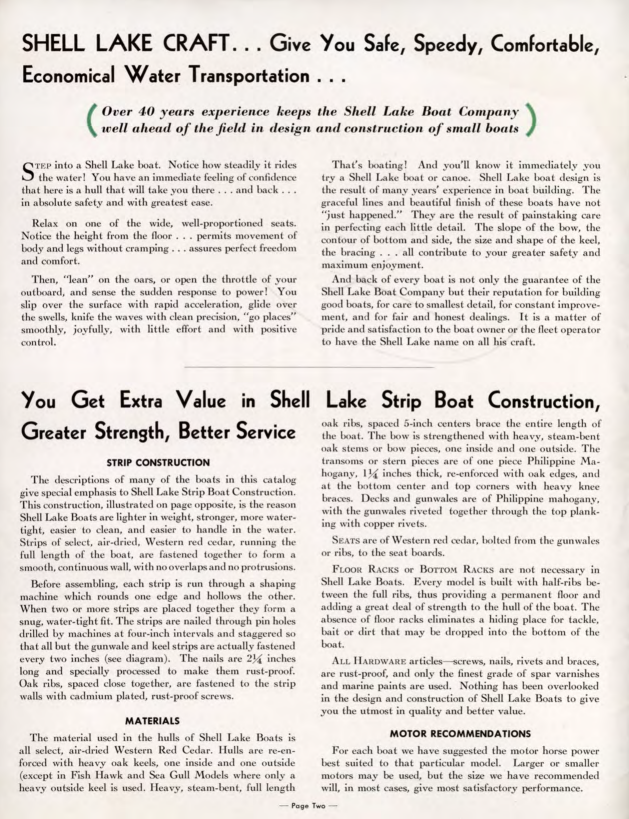
The opening pages of the Shell Lake catalogs from the early 1940s (and I assume throughout the life of the company) heralded the benefits, features, high-end materials and exacting construction methods employed in each of their boats. From the 1941 catalog:
Step into a Shell Lake boat. Notice how steadily it rides the water! You have an immediate feeling of confidence that there is a hull that will take you there…and back…in absolute safety and with greatest ease.
Relax on one of the wide, and well-proportioned seats. Notice the height from the floor…permits movement of body and legs without cramping…assures perfect freedom and comfort.
Then, “lean” on the oars, or open the throttle of your outboard, and sense the sudden response to power! You slip over the surface with rapid acceleration, glide over the swells, knife the waves with clean precision, “go places” smoothly, joyfully, with little effort and with positive control.
That’s boating! And you’ll know it immediately you try a Shell Lake boat or canoe…
They proudly discuss the materials they use to build their boats: Western red cedar, oak, Philippine mahogany. And the strip construction which results in a “lighter in weight, stronger, more water-tight, easier to clean, and easier to handle in the water” craft. In 1942 they began to also boast of their “Chemiseal” formulation that was used to impregnate and seal every piece of wood used in the construction. Chemiseal was a fungicide combined with oils, gums and resins that thoroughly penetrated the wood pieces that “controls decay, mold, mildew, stain, insects, and the contraction and expansion in wood.”
Chemiseal is the result of over nine years of experimental research and testing. It was specified and used by almost every division of the armed forces during the last war, and its use in small pleasure boats is being offered for the first time by us. It means longer life and more satisfactory service for Shell Lake Boats.

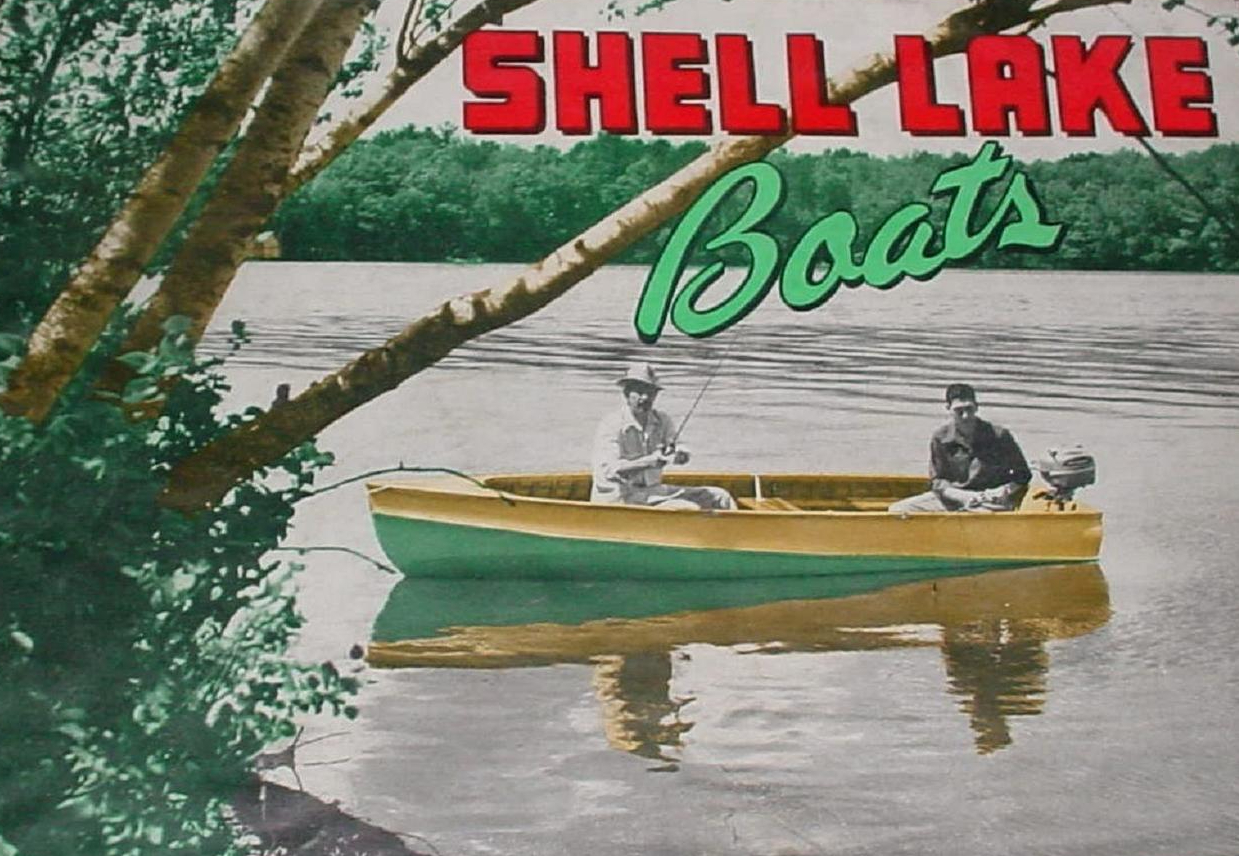
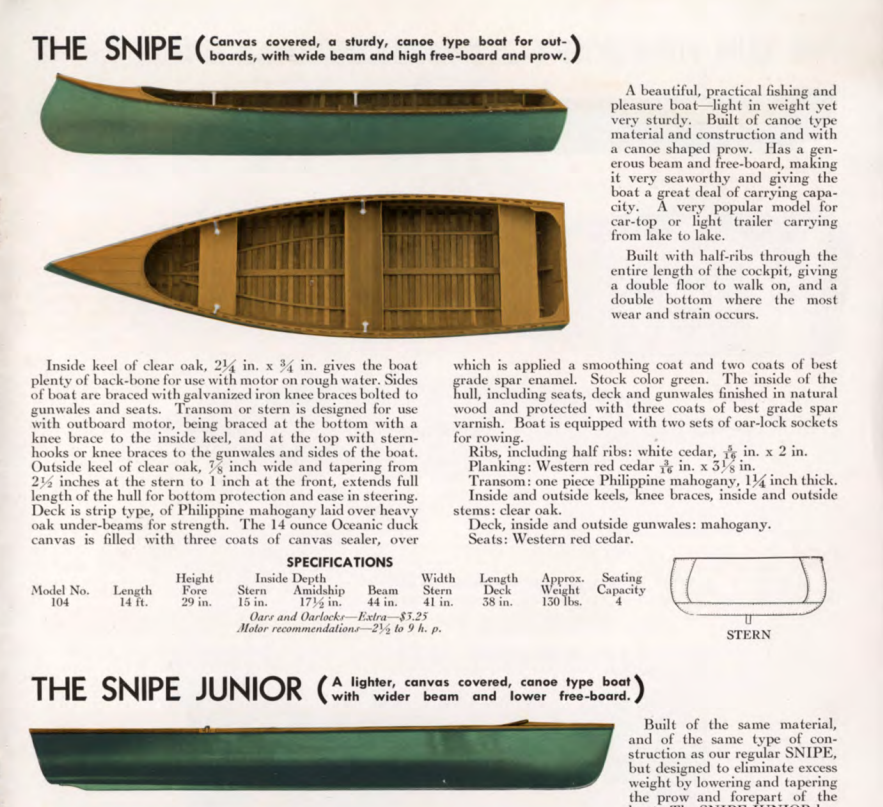
Let’s look at the catalog page showing the Snipe model boat that was at the AOMCI event (as seen above). It’s a 14-foot, 29-inch high, 41-inch stern width boat. The text reads,
A beautiful, practical fishing and pleasure boat–light in weight yet very sturdy. Built of canoe type material and construction and with a canoe shaped prow. Has a generous beam and free-board, making it very seaworthy and giving the boat a great deal of carrying capacity. A very popular model for car-top or light trailer carrying from lake to lake.
It really is a pretty boat, with clean, elegant lines and a lovely canoe-shape at the front. The interior visuals of this boat are really stunning for such a small craft. The outside has an “Oceanic duck canvas” cover that’s sealed with multiple layers of canvas sealer and old school green enamel that looks and feels like hardwood. The Snipe guide boat cost $100 in 1941. That’s almost $2,300 in today’s money.
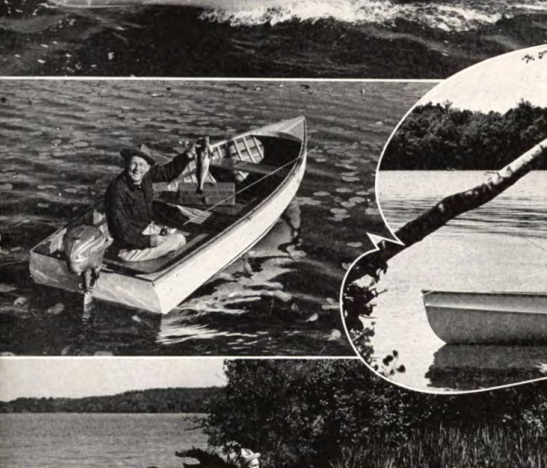
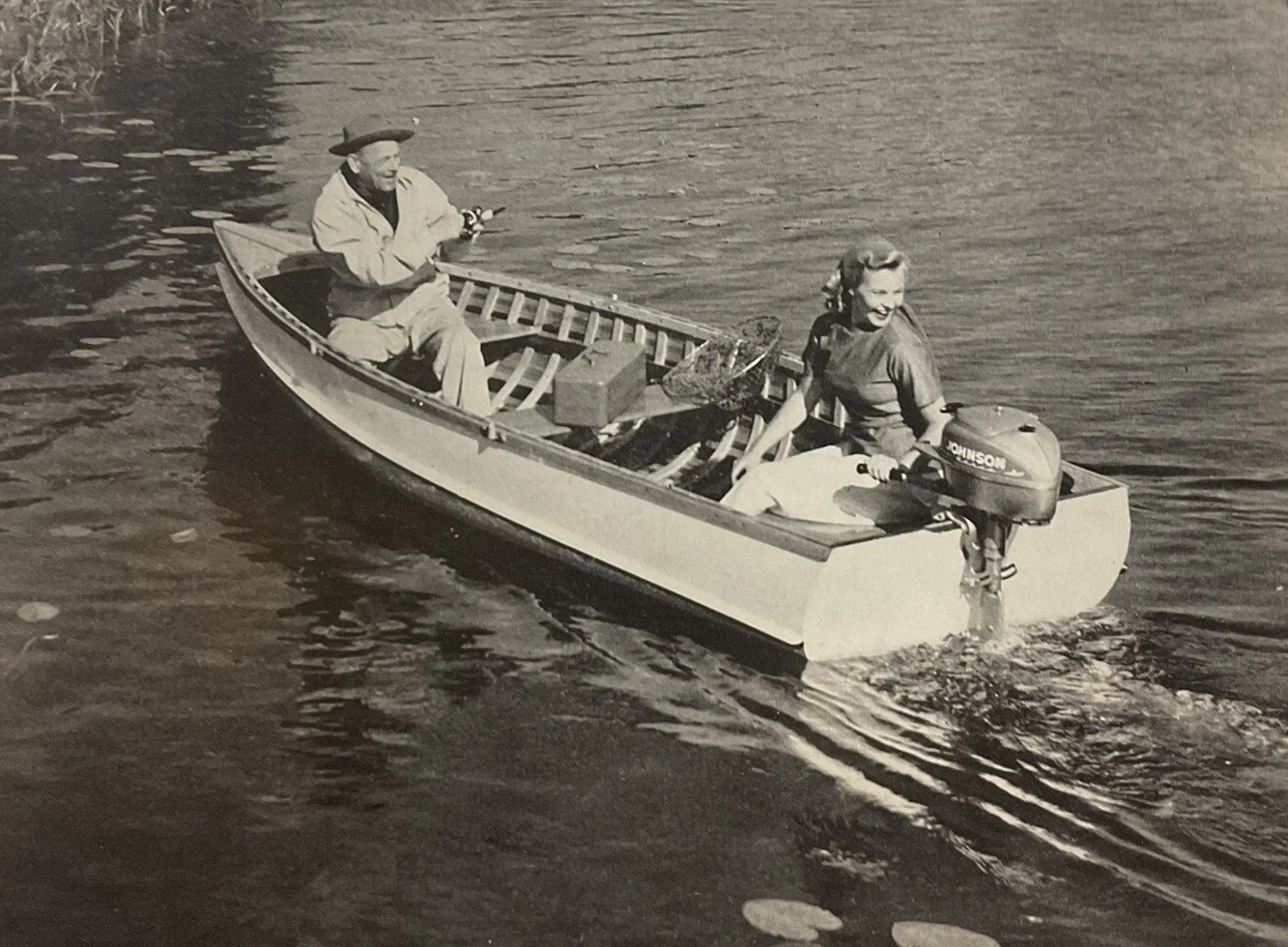
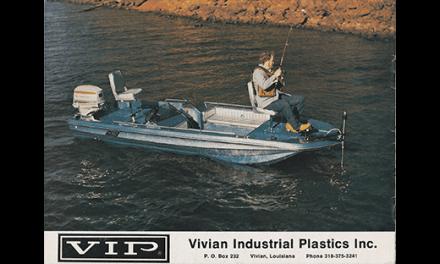
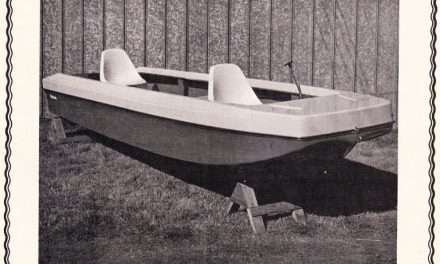
An interesting, to me, side note to the Shell Lake part of this article: As I was looking at the 1941 and 1942 catalogs I saw two images of a person in a Shell Lake boat that resembled one of my favorite old-time angling authors, Cal Johnson (images below). I thought that if it was Cal Johnson you’d think that the company would identify him and use his name to promote their boats. He was, after all, probably the leading angling authority of the day and was sponsored by many fishing companies. Then, upon reading Rhude’s history of Shell Lake Boats I came upon this paragraph:
Johnson outboard motors appointed Shell Lake Boat Company as one of their dealers. Many of the pictures used in the Shell Lake brochures and advertising were provided by Johnson. The synergy worked well for both firms. However, as more Johnson dealers were established, it became awkward for both companies and it was mutually agreed to have Shell Lake Boats drop the Johnson franchise.
So yes, I bet those pics below are of Cal Johnson. I assume they were provided to Shell Lake by Johnson Outboard Motors. That’s a trivia question right there.




Great look back at some prime craftsmanship.
Thanks bro! Wait until you see tomorrow’s post. That will be two great old Wisconsin companies. Appreciate you reading the story and commenting here.
Very Nice David. Love the fact you’re doing these posts!
Thanks Terry! History is fun!