

Recently, I shared a post on the bass covers of the Garcia Fishing Annuals. These publications of the 60s and 70s were not only multi-species but also covered both fresh and saltwater angling. Usually, there were always one or two good bass fishing articles to be found in each annual issue. One such gem appeared in the 1977 issue from author Pete Czura. The article, titled; “Bass Blitz at Tenkiller,” details an extraordinary trip he shared with not only Roland Martin, but also with his wife at the time, Mary Ann, on Lake Tenkiller in the Spring of 1976. In Roland and Mary Ann Martin-Tenkiller Twosome, we’ll dive into this historical treasure.
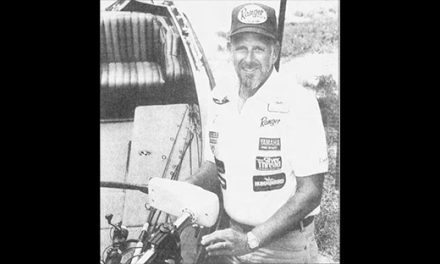
Roland Martin
If you are reading this post, then surely you know that Roland Martin is the proverbial “man who needs no introduction.” One of the most famous and successful bass tournament anglers of all time, he was in his prime when this article was penned by Mr. Czura. Always a nomad, Roland was living and pursuing bass out of Oklahoma at the time this article was written.
He had already established his dominance on the B.A.S.S tournament trail and as Pete Czura notes, “According to some expert bass anglers, he is acknowledged as one of the most scientific bass anglers in the country.” Roland was well on his way to cementing his legendary status at the time of this article, and it only adds to it.
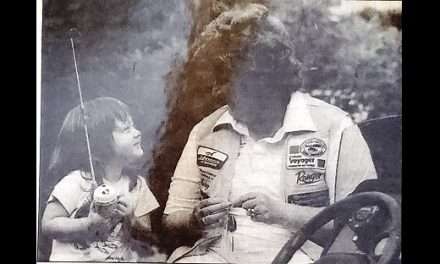
Mary Ann Martin
Having married Roland in 1972, Mary Ann was already an established bass angler and as this article shows, could hold her own. She would go on to have a very successful tournament career on the women’s Bass N’ Gal circuit.
She was a native Oklahoman and grew up a bit of a tomboy who loved to fish with her dad, Paul Colbert. It was on one of her tournament forays with her dad that she met Roland at Table Rock Lake, Missouri in November of 1970. Roland was preparing to fish an upcoming Bassmaster event and describes their first meeting in his book, One Hundred and One Bass Catching Secrets:
“Well, that afternoon (prior to the B.A.S.S. event), there was a small one- day tournament on the lake. Bill (Dance)suggested we go watch the weigh-in, see what they were catching, talk to some of the guys, and maybe learn something.
“I was walking down there with Bill, and we saw this little old guy all dressed up for this real cold day. The old fellow had black hair and was wearing a big hat and snowmobile suit. He was walking up the hill with a nice string of bass. I asked Bill if he knew the guy, and Bill said that’s not a guy, that’s a woman and her name is Mary Ann Colbert.
“He said she was a woman who catches a lot of fish and fishes tournaments with her dad, Paul Colbert…He commented that I wasn’t married, and she wasn’t married, and she was about my age, and she was a good fisherman, and I ought to meet her.”
Well, meet they did, and as Roland goes on to describe they spent the next few nights enjoying late dinners and dancing; while he ended up fishing three days with a hangover, losing to Dance, finishing in second place, but meeting the woman he would eventually marry.


Pete Czura
Roman Peter Czura, better known as Pete, was a prominent and prolific outdoor writer, having written for over 240 magazines around the world. He was also a renowned wildlife photographer. During his career as a writer, he served as President for both the Outdoor Writers of America and The Great Lakes Outdoor Writers. Both his writing and photography excellence are on full display in this fine piece.
Tenkiller Day One
Early in his article, Pete mentions that he had been in contact with the Martins about joining them for a fishing excursion on one of their favorite Oklahoma lakes. When he got a call from Roland in April 1976 indicating that, “conditions seem right at Tenkiller, when can you come?” Pete wisely replied, “I’ll be there tomorrow.” Tomorrow meant an 8-hour drive from his home in Lincoln, Nebraska to the Martin home in Broken Arrow, Oklahoma.
Pete’s anticipatory desire to fish with the Martins continued the day after arriving at their home, “The next morning I was up early and chompin’ at the bit to go, but the Martins slow-poked around, insisting we eat a big breakfast, cleaning out tackle boxes, changing lines on reels, until I couldn’t stand it any longer.” Around 10 a.m., I growled, C’mon! Let’s go fishing!”
When they finally hit the water, their playing field was sprawling Lake Tenkiller. Damned in 1953 on the Illinois River, the man-made reservoir consisted of 12,900 acres and 130 miles of shoreline.
It was early Spring, and on the way to the lake, Roland opined, “This warm spell might be sending the bass into shallow areas in preparation to spawn. If that happens, we could catch some big females.” How prophetic his words would turn out to be!
Early on, the trio experienced only fair success; Roland suggested they search for warmer water and try a shallow wooded point not far from the marina where they launched. It was here that as Pete described, they hit “paydirt.” Catching over 30 bass, most in the two-to-three-pound range, they also caught several approaching five pounds. They called it quits after a couple of hours and decided to come back the next day.
Tenkiller Day Two
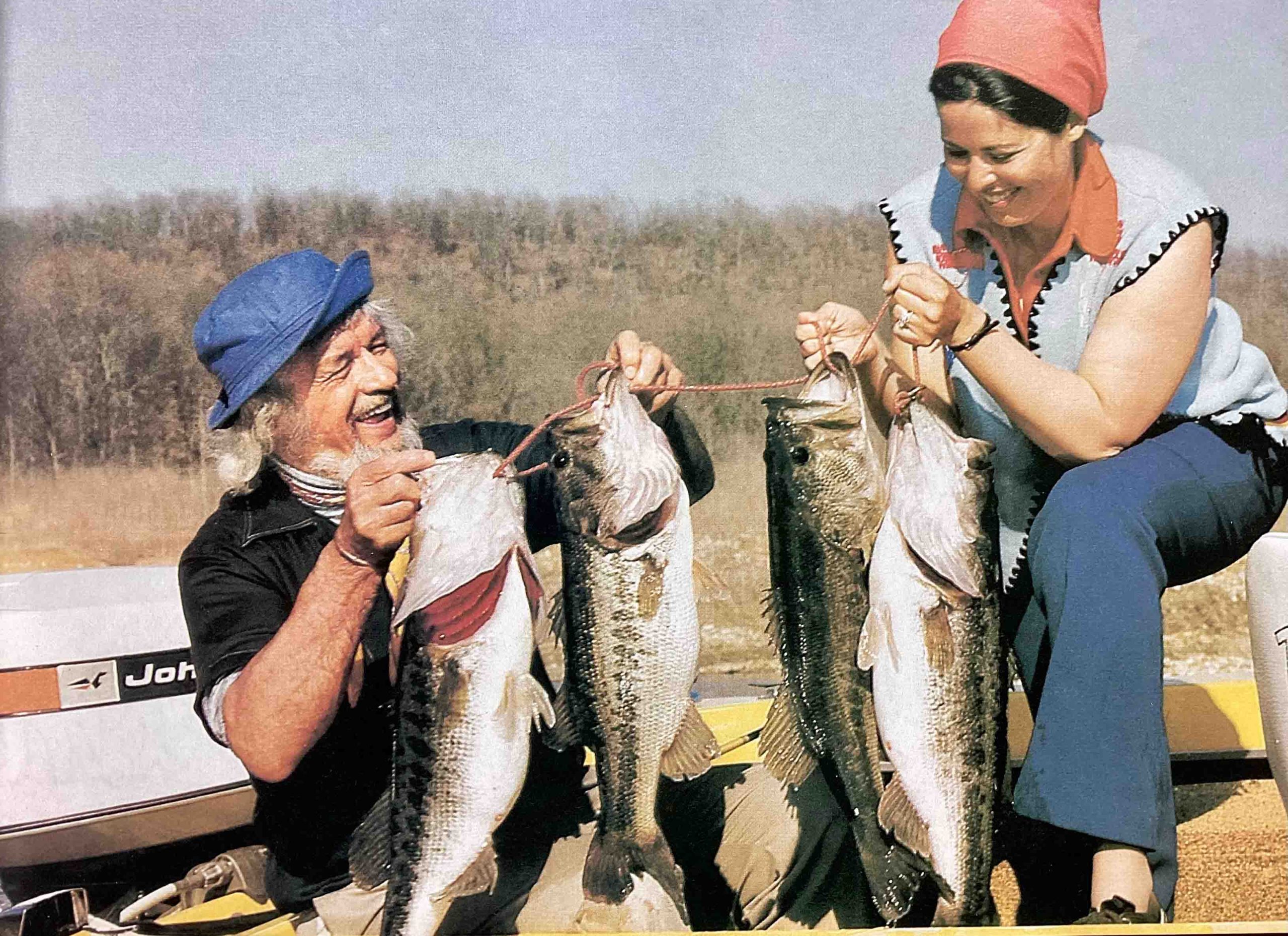
The following day found all three anglers back at the wooded point where they had experienced success the previous day. Starting around noon, the blitz began. Roland and Pete decided to wade the skinny water, as Roland felt the boat rubbing against the stickups might spook the shallow bass. Mary Ann stayed with the boat and fished from the Ranger.
By the time Roland and Pete waded back to the boat, Roland had landed a 9 pounder, along with a 6-pound, 15-ounce bass and a pair of 5 pounders. Pete also managed to catch his personal best weighing 8 pounds! Mary Ann was busy at the boat as well and had two-5-pounders of her own. But the fireworks weren’t over yet.
As Pete details, “Just as we were about to call it quits, Mary Ann plunked her worm near a solitary bush protruding out of the water. This is my last cast she said, working the worm back slowly. Just as the lure came by the bush, the water swooshed when a fish swirled near the surface and tried to take off with her lure.”
After a sure hookset and mighty battle, Mary Ann managed to land a brute weighing 9 pounds, 1 ½ ounces, just beating Roland’s earlier lunker.
Tackle That Tamed Tenkiller’s Lunkers
The article described the equipment and lures that worked well, and it sounds just like the epitome of power fishing 1970s style:
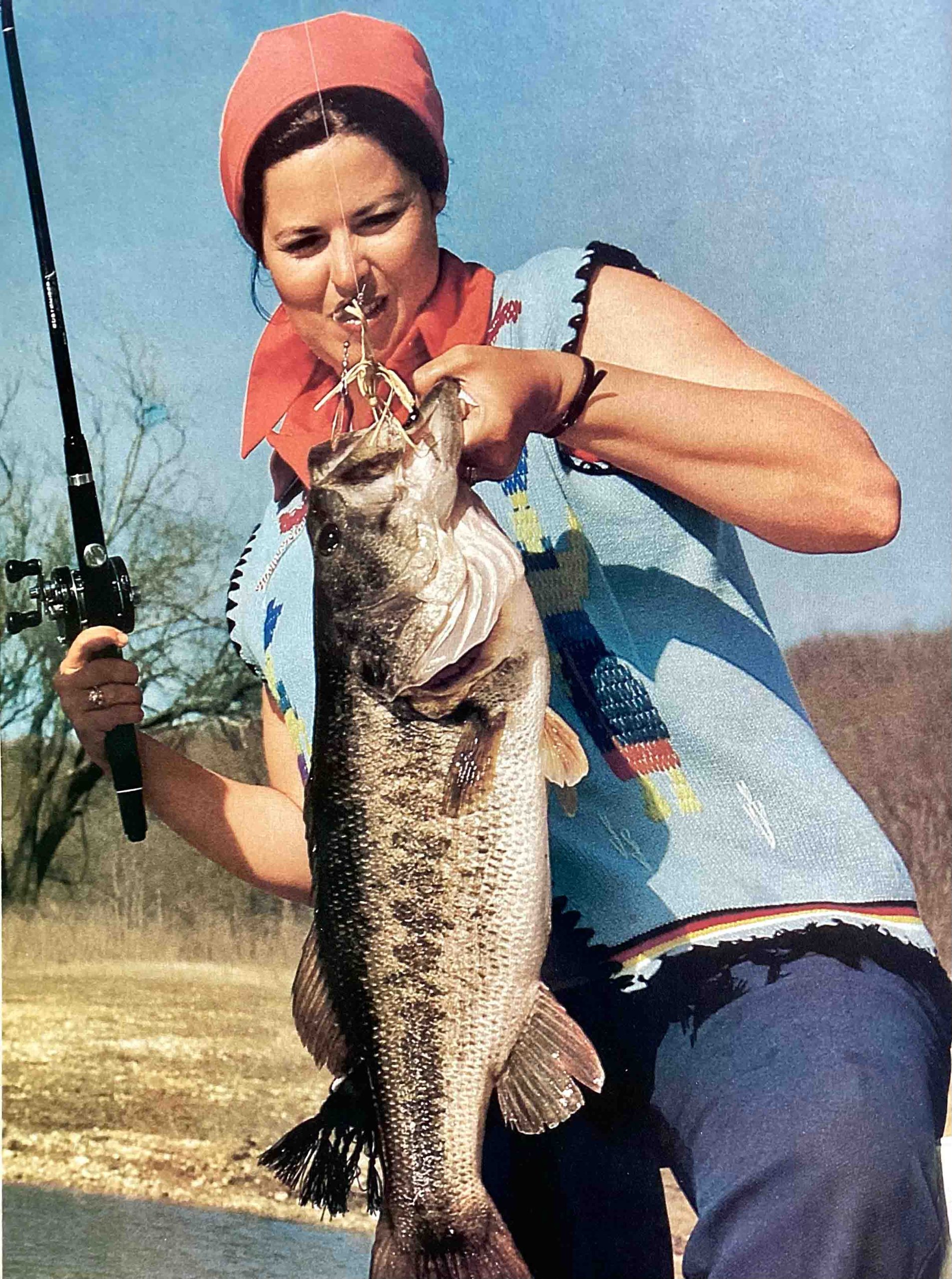
“To cope with the big fish we tangled with, all of us used 6-foot worm rods, or spinning rods with medium action tips when fishing in more open waters. Our Ambassadeur reels were primed with 17-pound test monofilament line which allowed us to wrangle the bass out of the underwater brush. Our best success came with Hellbenders, Bombers, Hot Spots, Bayou Boogies, Big Es, tandem spinners, and Fliptail plastic worms, with blue and purple colors the best.”
Bass Blitz Explained
When normally clear reservoirs get an influx of high and dingier water, often in the Spring, this leads to conditions that Roland defines as a bass blitz:
“High water to a lake is like getting a shot in the arm and it revitalizes a lake…. I could name a dozen lakes which had their water levels raised, and this created great fishing conditions. Of course, if trees and shrubs are removed before the water level is raised, forget that lake!
“The main reason bass blitzes occur is because bigger bass migrate instinctively towards new feeding areas to seek ambush points from which they can dart out for easy meals like terrestrial insects, bait fish, and worms, coming out of the soil.”
Conversely, Roland goes on to explain that dropping water levels have the opposite impact:
“That’s one of the worst situations for fishing and the fish. Big bass, especially, don’t like falling water conditions. As the lake level drops, the lunkers are the first to leave their shallow cover.”
Conclusion
As we all know, not many things remain the same after almost 50 years of time passing. Unfortunately, Roland and Mary Ann’s marriage ended but their business relationship carries on with Roland and Mary Ann Martins Marina and Resort on Lake Okeechobee. Roland at 85 is still taking out guide parties, and their son, Scott, is an accomplished and decorated tournament angler like his father.
Pete Czura passed away in 1982, but his writing lives on in works like we just delved into. We here at Bass Fishing Archives strive to preserve work like Pete’s and other writers who have contributed so much to the history and documentation of our sport. They deserve to be remembered.
Lastly, I would hasten to add that even bass blitzes like this amazing day at Tenkiller have probably faded as well. Most reservoirs have aged far beyond their fertile and fruitful years. Even with rising Spring waters, some of these grand old lakes just don’t support the population of lunkers they once did.
However, if you ever find yourself in the hills of Eastern Oklahoma, around Lake Tenkiller, you just may hear an echo of an amazing bass blitz that occurred almost 50 years ago, and a familiar refrain of, “Oh Son, that’s a good one!”
To read more of Mike’s posts, please click on this link.





Wonderful story, Mike. The text is awesome, with perfect quotes from Roland and Pete Czura, and the photos are amazing. Love those photos! This is an interesting and unique story, in a time and place that deserves to be remembered. And what a team of anglers: Roland Martin in his prime, his lovely wife beating Roland in the big bass department, and an accomplished writer and photographer. A real treat.
Thank you for your kind comments, David. Much appreciated. What a delightful trip Pete Czura must have had almost 50 years ago. Thankfully, he had the writing and photography skills to document it so that it could be enjoyed so many years later. I agree wholeheartedly the photos are fantastic! I was honored just to bring more awareness to such a great piece that Pete put together so many years ago….
Mike, I really enjoyed reading your post and the pictures you provided. For a moment, I was taken back in time to younger days enjoying bass fishing on Missouri lakes. I’ve fished at Table Rock many years ago and your article brought back some great memories. Keep the articles coming!
Thanks for your comments, Jim. Always great to know that our posts our reaching readers like you.
As a writer, lure designer and former guide, I appreciate going back to the good old days through the writings of past celebrated authors. There are special lures that are created and are forever productive. Born in 1937, as a bass and walleye angler, I grew up with two special favorites that I consider “genius” lures. Those being the Flatfish (walleyes) and the black Jitterbug (nighttime largemouth bass). After my profession as a dentist came to an end, I dedicated the rest of my life to wearing many different hats in the sport fishing world. Out of that came the creation of a variety of fishing lures. However, it was the unique effectiveness of the metal jig that became my specialty as a lure designer. It was the first time in my fishing life that I could literally fish the world with a single type of lure. Didn’t matter if it was in fresh or salt water or through the ice. That first metal jig was awarded a U.S. mechanical patent in 1986. It was called the Crippled Herring. By 1990, it was being called the “Rapala of jigging lures” for the many records it was setting. All-time Bassmaster money winner, Kevin Van Dam called the Crippled Herring his “#1 search bait”. On December 28, 1990, Bob Crupi caught an IGFA record 17.1 lb. line class largemouth on a 3/4 oz Crippled Herring. It stands today as the largest bass ever caught on a metal jig. Other notable multi species catches on the ‘Herring were a 55 lb. striped bass out of Kentucky’s Lake Cumberland and a 55 lb. chinook salmon out of the Campbell River, BC area. Since 2005, the Crippled Herring has been manufactured and marketed by Rapala.