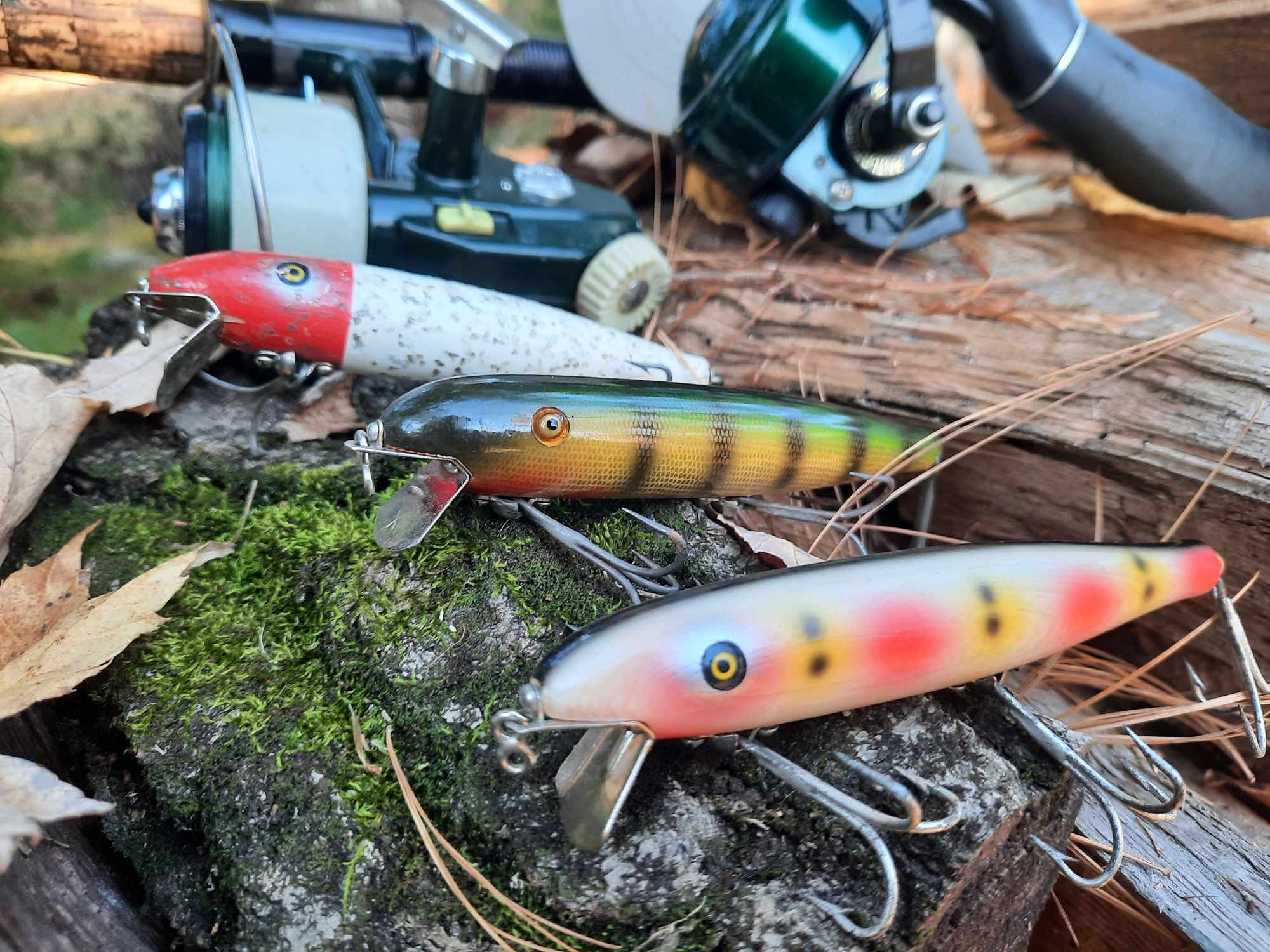
Pflueger was at one time a powerhouse in the fishing world, making and selling a variety of fishing gear. They became especially well known for their excellent fishing reels, and later added to their reputation with a line of high quality fishing lures under their Bulldog Brand. To highlight their dominance in the market, at one time Pflueger had two plants in Akron, Ohio, that employed 500 workers. In this article we’ll take a brief look at the Pflueger Pal-O-Mine bait. Over the last several months I’ve become enamored with the Pal-O-Mine and have casually acquired a few of these interesting lures.
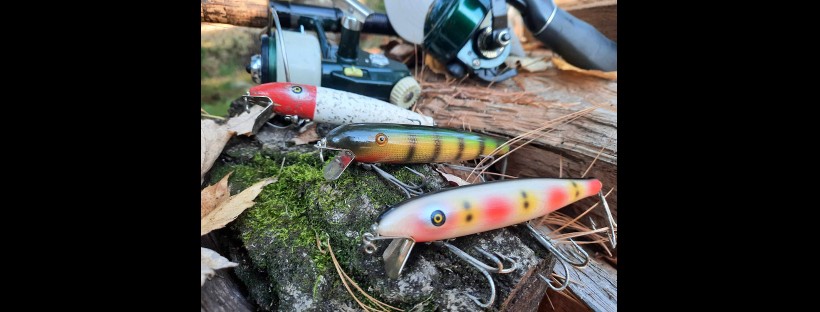
I guess a few things appeal to me about the Pal-O-Mine. First, the shape of the lure, with its streamlined comet-like profile interrupted at the head by a recessed metal diving lip. Although it was introduced in 1925, its silhouette brings to mind World War II era aesthetics. If I wasn’t familiar with its history I would indeed think it was designed in the mid-1940s. Secondly, its diving lip configuration is unique. It’s a V-shaped bent metal lip, with the upper leg of the lip being secured into a cut-away section of the lure’s chin, and the lower portion performing as the actual diving lip. Some of the Pal-O-Mine diving lips are plain or flat all around, and some have upturned edges. The upturned edges were not present on early models, but were developed 10 years after the original Pal-O-Mine. I’m unsure why the company viewed the upturned edges as an improvement, but I’m guessing they were added to give strength and resilience to the lip. Forming this little metal lip must have been a costly, multi-step process.
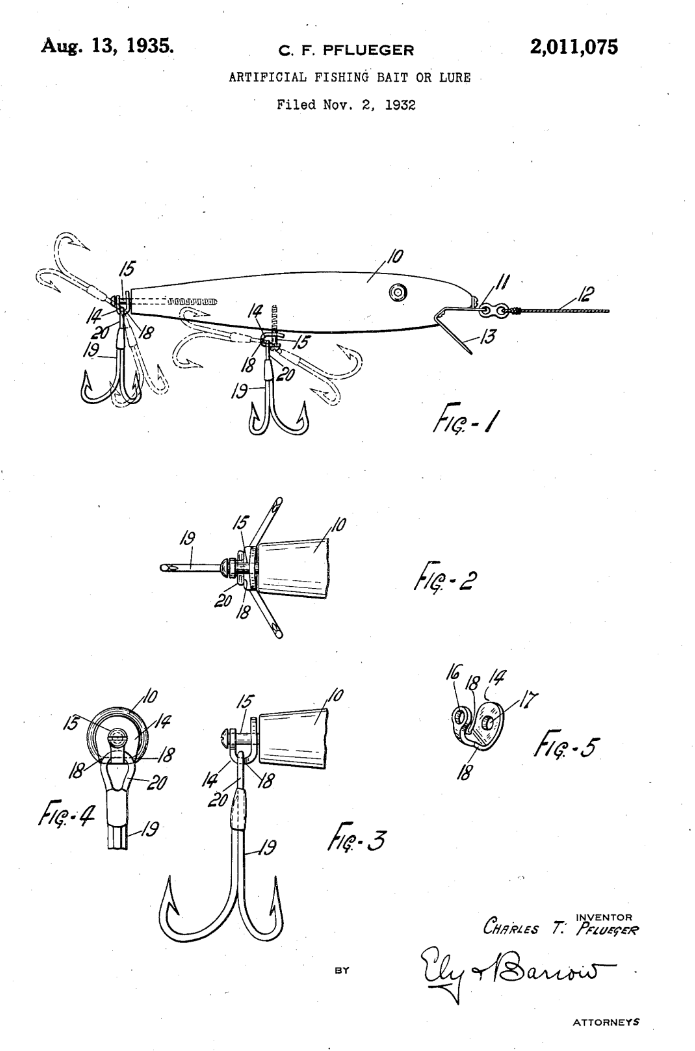
However, the real innovation in the Pal-O-Mine is the hook attachment hardware. Pflueger used a modified clevis system, similar to the clevis that holds the blade on, say, a Mepps inline spinner, but wider on one side than on the other. In the Pal-O-Mine’s patent description and explanation, they give several reasons for using this hook attachment. One, it purportedly allowed the hook to swing freely but prevented it from being locked in any particular position, which might spoil the action of the lure. Two, it prevented a struggling fish to get any leverage on a static hook position, which might allow it to escape or damage the hook or fastener. Three, it limited the forward movement of the rear hook, while allowing greater overall movement, and prevented it from becoming entangled with the belly hook. And lastly, they felt that this clevis system provided a stronger attachment to the lure body. This kind of attention to detail and inclusion of multi-piece hook hardware is impressive, to say the least.
The third thing I like is the name itself. Pal-O-Mine; it’s a memorable, sing-song name that easily rolls off the tongue. I read a blurb in an old issue of the NFLCC (National Fishing Lure Collectors Club) Gazette (1983, Volume 7, No. 18) that said, “The Pflueger Pal-O-Mine was named after the ‘pals’ of the Pflueger’s that were in the boat fishing – the guides of Bobcaygeon, Ontario, who guided members of the Pflueger family and their bait testers when they when they vacationed and fished in this area each year.” It’s little background stories like that that give life to history.
Finally, it appeals to me because of the fact that the Pflueger Pal-O-Mine is a tried and true fish catcher. That’s proven by its long production life, which ran from 1925 into the 1970s. Originally released in the 3¼” and 4¼” lengths, a few variations of the lure were also added to the Pal-O-Mine line in succeeding years. These included a 2¾” model in production from 1932-1957; a jointed 4¼” lure from 1933-1962; and another 3¼” jointed model from 1936-1963. I’ve also caught largemouth bass and northern pike myself on the lure, specifically the red head, white body, with silver glitter.
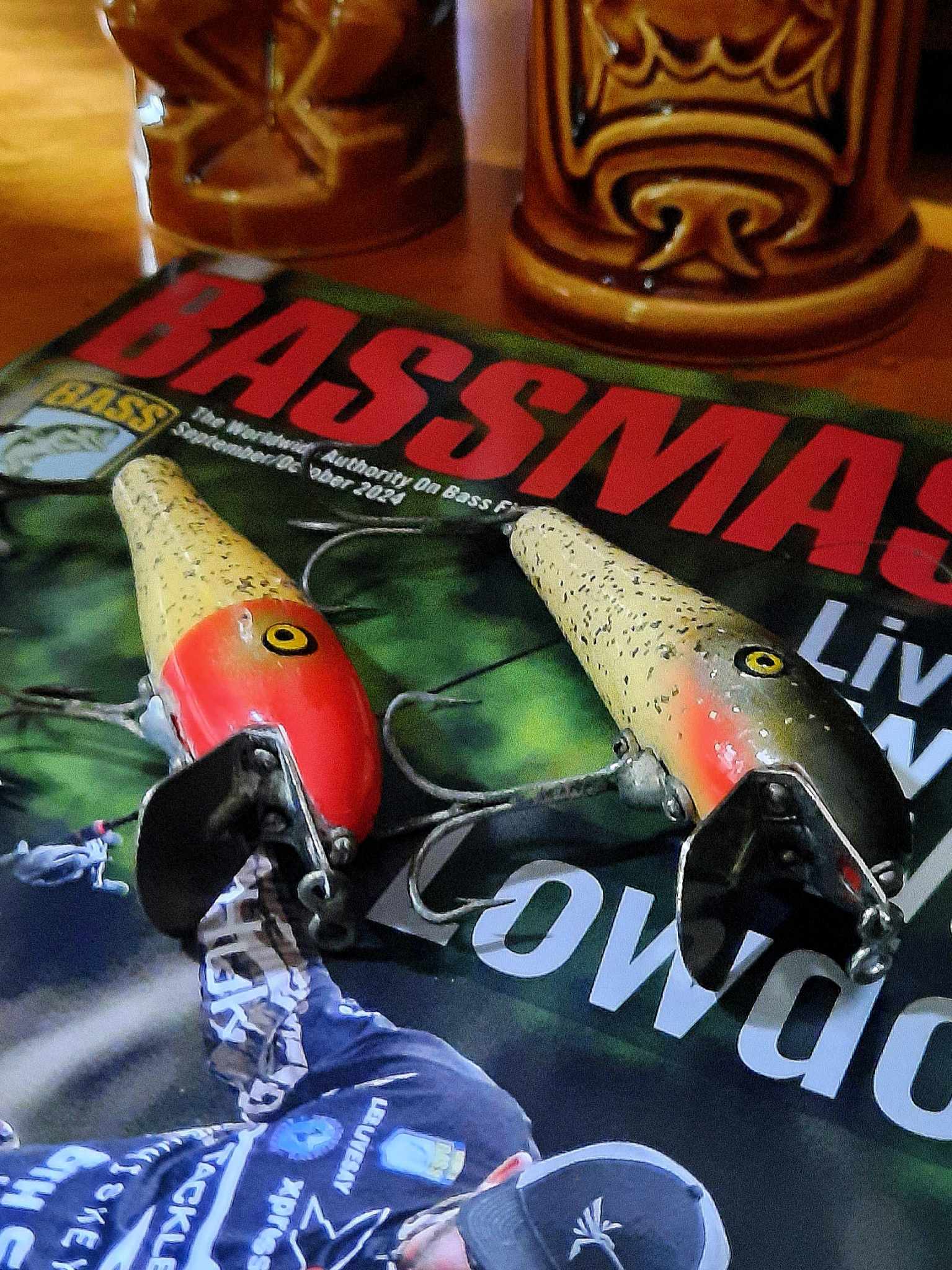
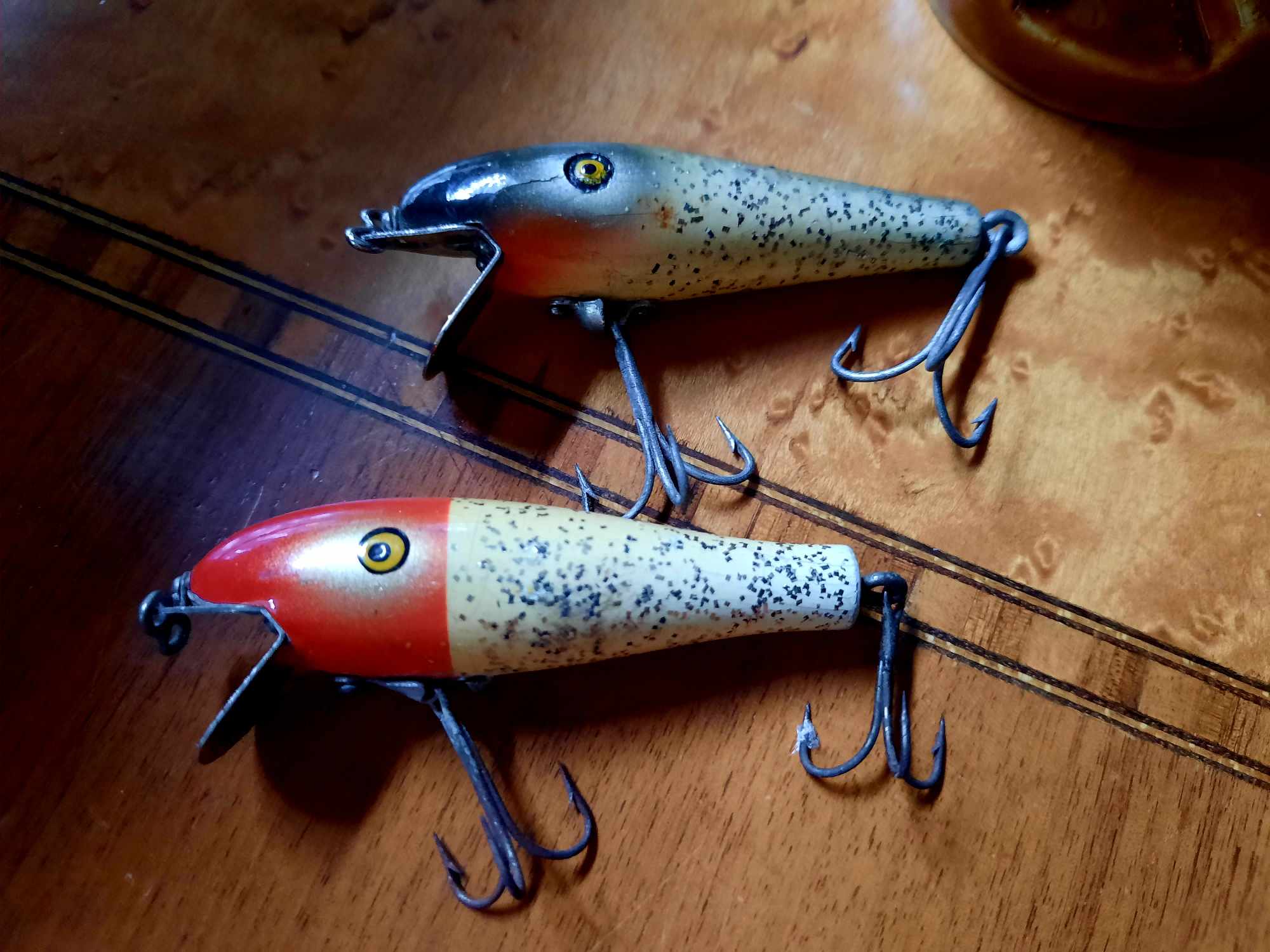
The lure was carved from cedar and came in a variety of color patterns. Different models displayed both glass eyes and painted eyes, depending on the lure size and configuration.
The Pal-O-Mine lure box insert reads “Pflueger Pal-O-Mine Minnow, Floats-Dives-Wiggles-Wobbles” with print ads also adding the words, “Acts like a struggling minnow.” Some catalog text read “A shallow running wooden minnow. Fish slow and steady or pump your rod on retrieve to imitate an injured minnow. Good in areas where seaweed grows 18 to 20 inches from the surface.” Other Pflueger catalogs had this, “A very popular bait of selected cedar coated with elastic enamels. Bright tin plated hooks attached with our patented hook fastener, which prevents the hooks from becoming tangled,” and this, “A darting, wobbling action that can’t be equalled. Floating or shallow running wooden lure. A proven fish-getter in countless lakes and streams. Its lively wiggle attracts fighting fish.”
The Pflueger Pal-O-Mine, a great vintage lure that had a long life, a proven fish catching record, is aesthetically impressive and has a great name. What more could you want in a bait?