
Over the past year or so we’ve presented a few ads from a company with the name P&K, or Pachner & Koller. Today in Pachner & Koller 1947 we’re going to dive into their 1947 catalog that features all their products for that sales year.
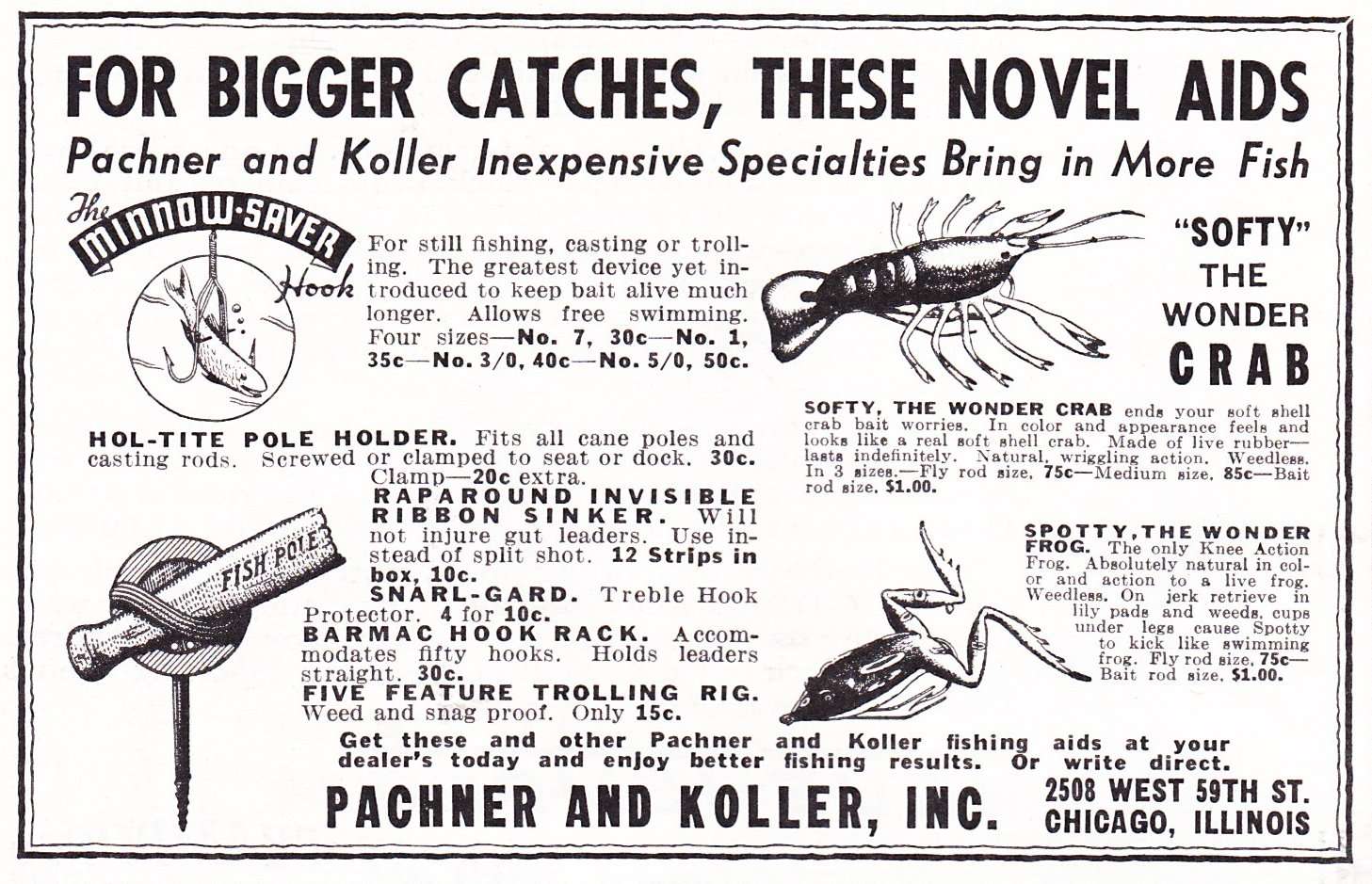
Leo Pachner, through a hook he developed called the Minnow Saver, started his tackle company in 1934. After a year of robust sales, Pachner joined forces with Fred Koehler and incorporated the company under the name Pachner and Koehler Inc. Koehler would become the sales rep and marketer for the company, allowing Pachner to make the hooks.
By 1936 Pachner wasn’t happy with Koehler’s work and secured capital from some investors to buy Koehler out. They changed the name of the company to Pachner & Koller, Inc. and expanded the line from the Minnow Saver hook to his Reel Thumb and a pole holder.
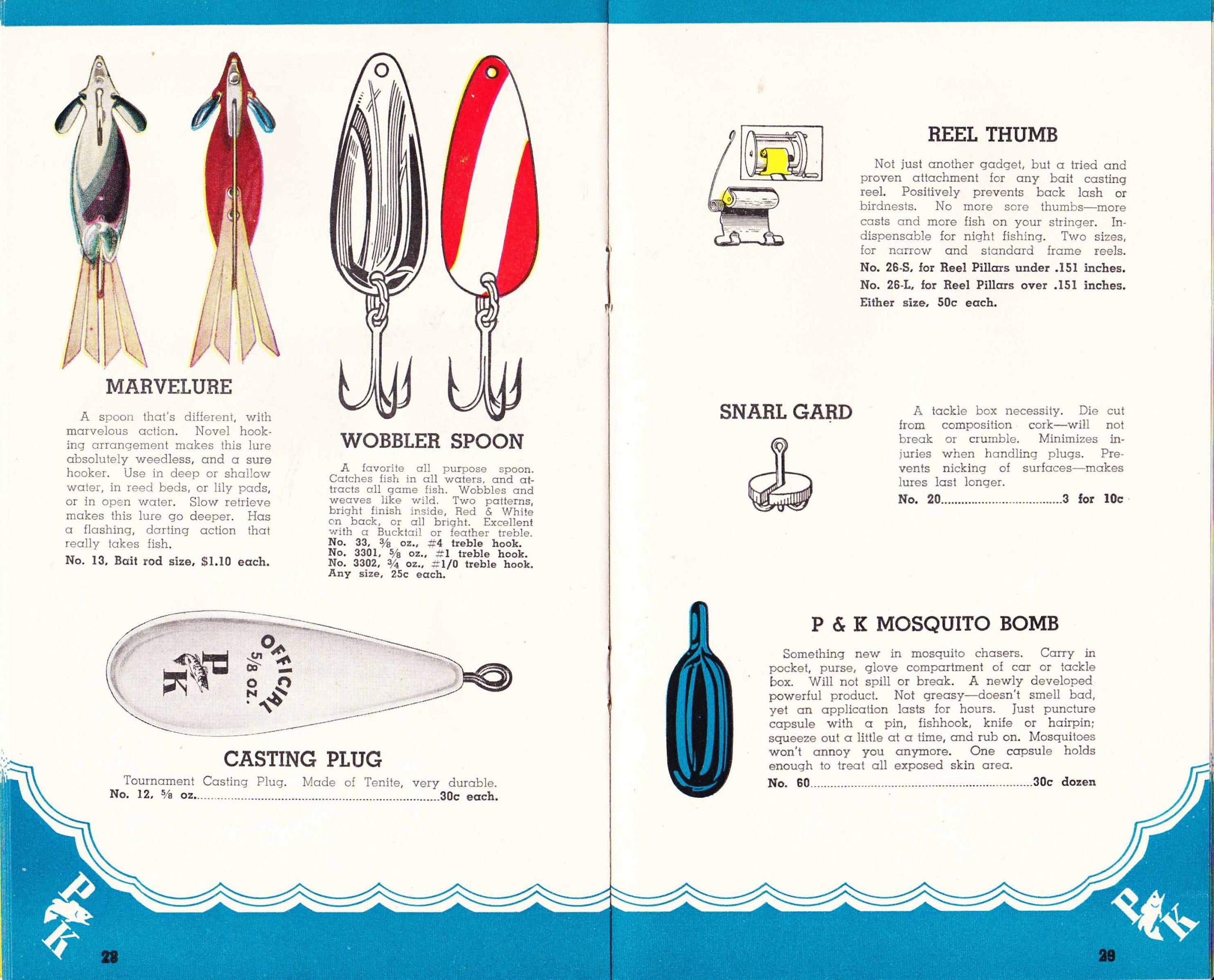
The Reel Thumb was a leather pad that could be clipped to the rear spacer bar and was billed as an anti-backlash accessory. In 1947 it was still available and can be seen on page 29 of this catalog.
In 1937, Pachner & Koller bought the rights to produce and market the lures of Doc Deering. The lures were known as Spotty ‘The Wonder Frog’ and Softy ‘The Wonder Crab. The lures were made from rubber and other creatures would find their way into the Pachner & Koller stable soon enough.
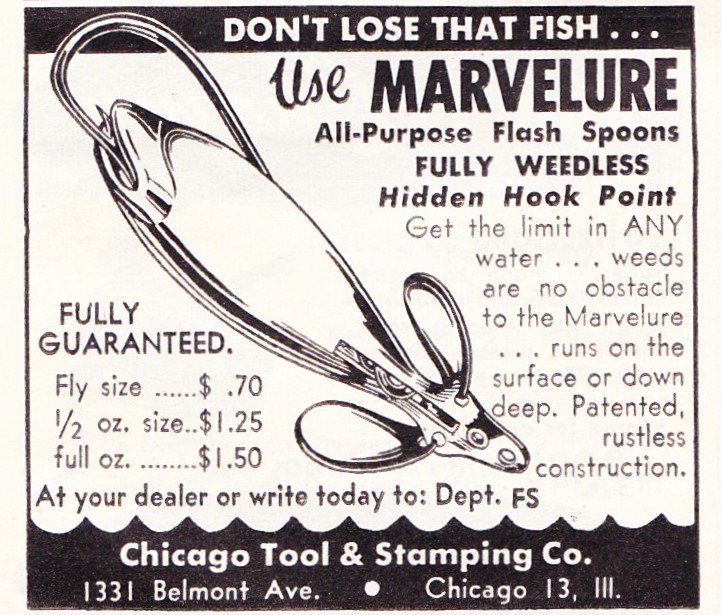
1938 was a year of big change for the company. It changed its name a final time to P&K Inc. and moved into a permanent building in Chicago. They also bought the rights to manufacture and sell a spoon called the Marvelure. By the start of the 1940s, P&K was becoming a very successful tackle company.
But let’s get on with this catalog.
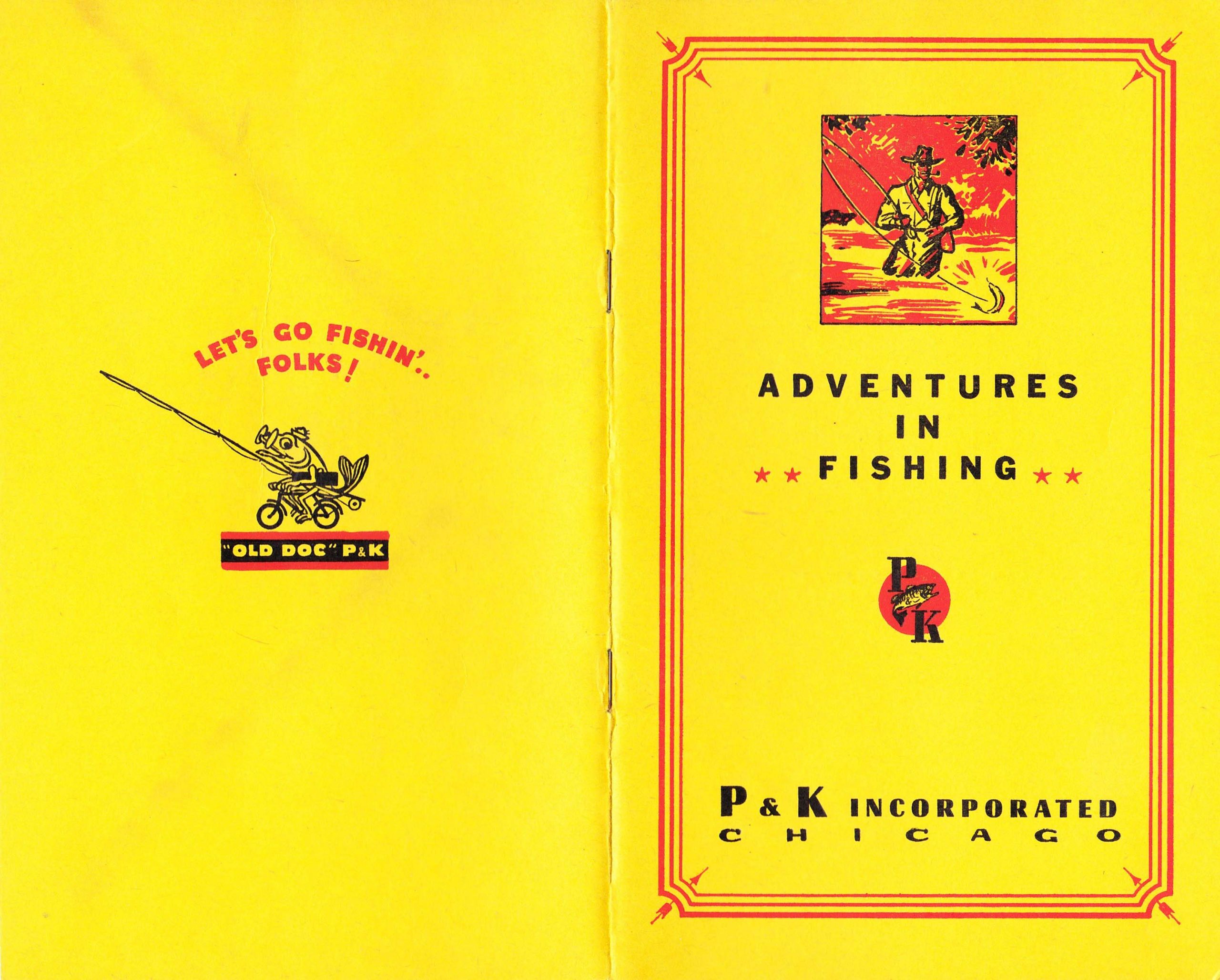
The cover of the catalog is bright yellow and is in pristine shape because it was stored in its original envelope. The front is titled “Adventures in Fishing,” with black lettering, red borders and a red and black etching of an angler hooked up. The back cover says “Let’s Go Fishin….Folks!”with a cartoon caricature of a fish riding a bike and carrying a rod. It’s a simple but effective cover.
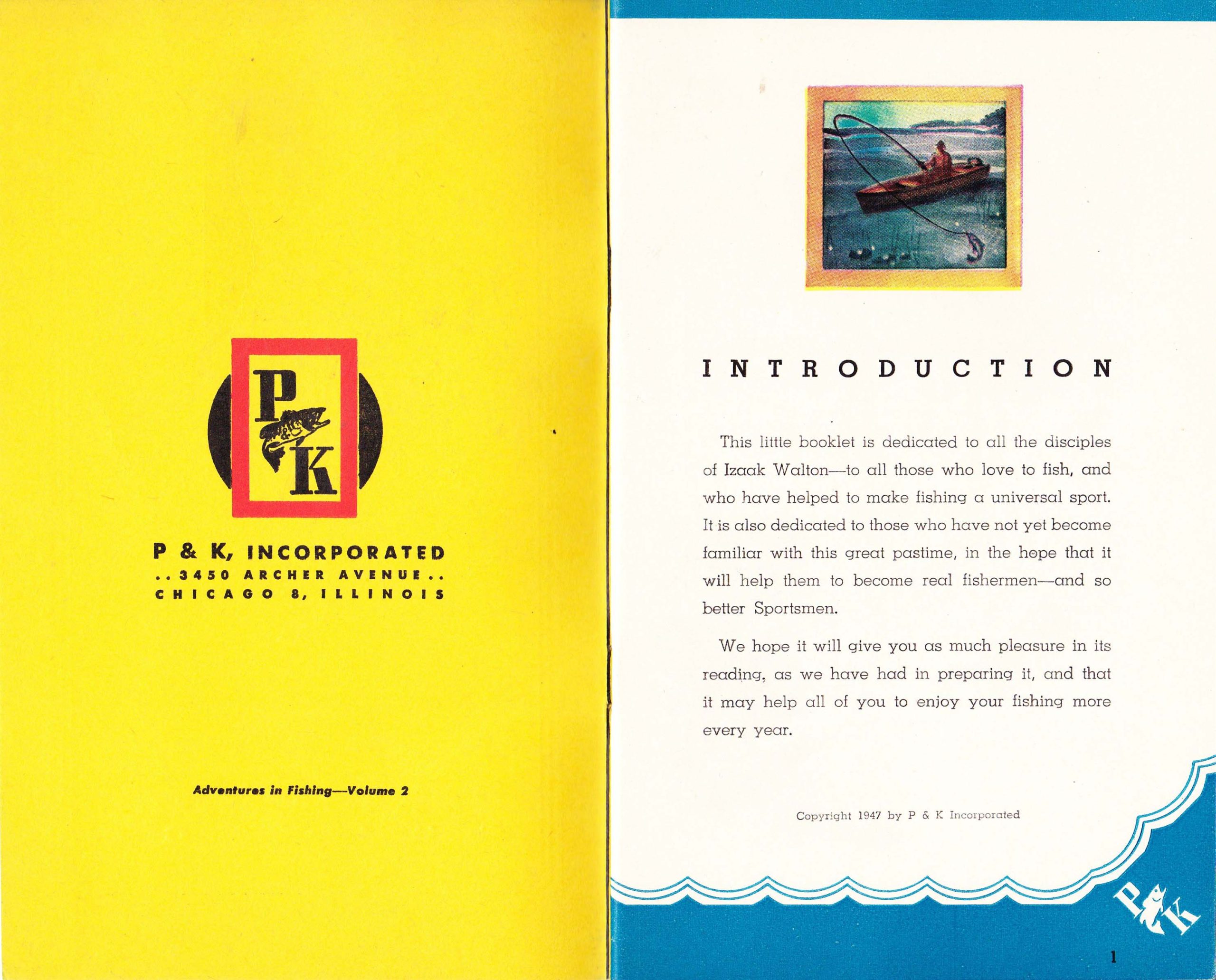
Opening the booklet to the inside cover, it maintains the black and red theme of the front and below that it says “Adventures in Fishing – Volume 2.” My first thought was this might have been the second catalog that the company had put together, but I believe there’s a better answer for that.
On page 1 there’s a nice introduction to the booklet but turning to page 2 you’ll see why I think there’s a better answer to the question posed above.
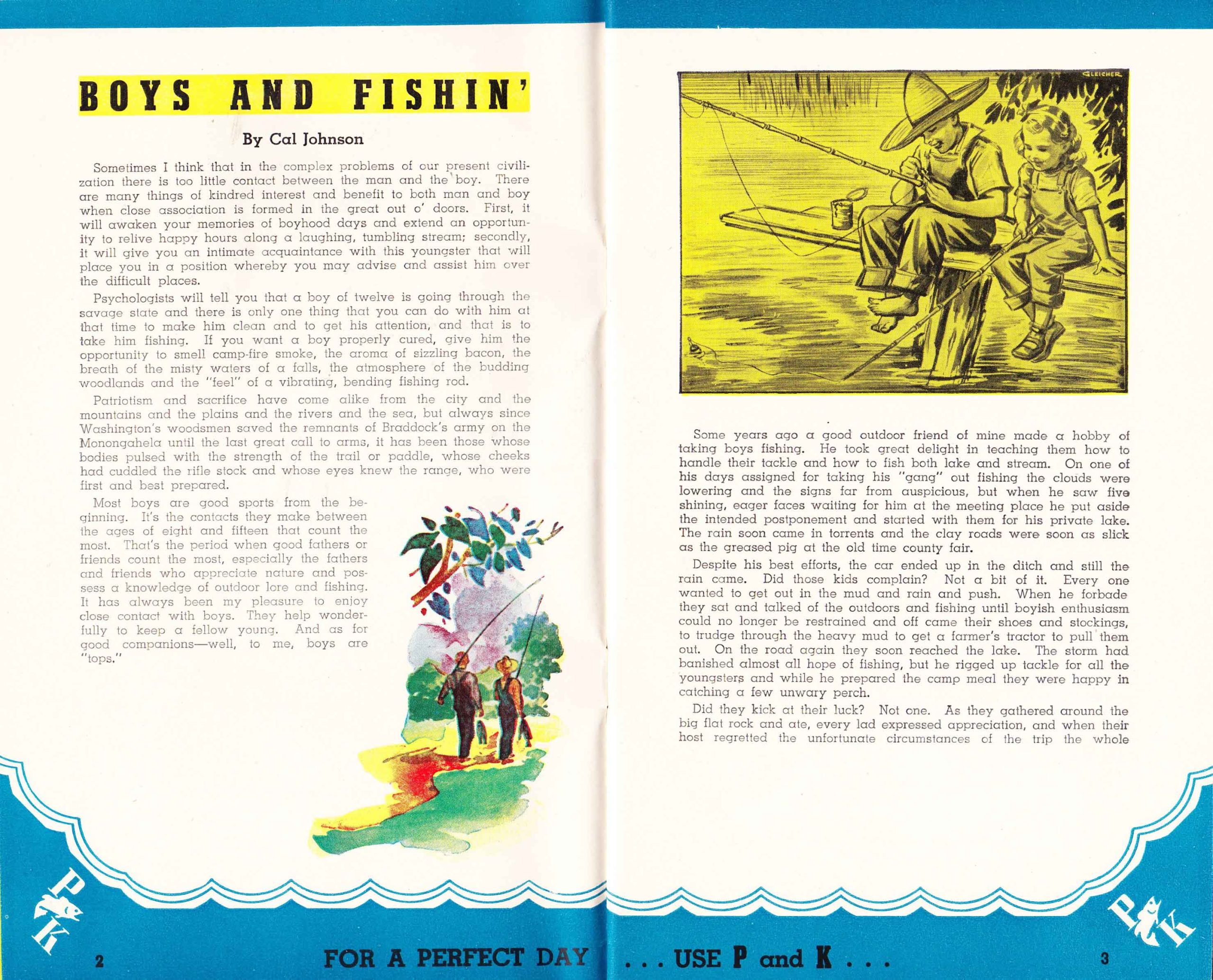
On pages 2 through 4 is an essay written by Cal Johnson, a writer of the time whom we have introduced here at the Bass Fishing Archives many times. The essay was titled “Boys and Fishin’” and gave Johnson’s thoughts on why we as men need to get the boys, and girls, out in nature or live with the results. It’s a treatise that is as true today as it was when written nearly 80 years ago.
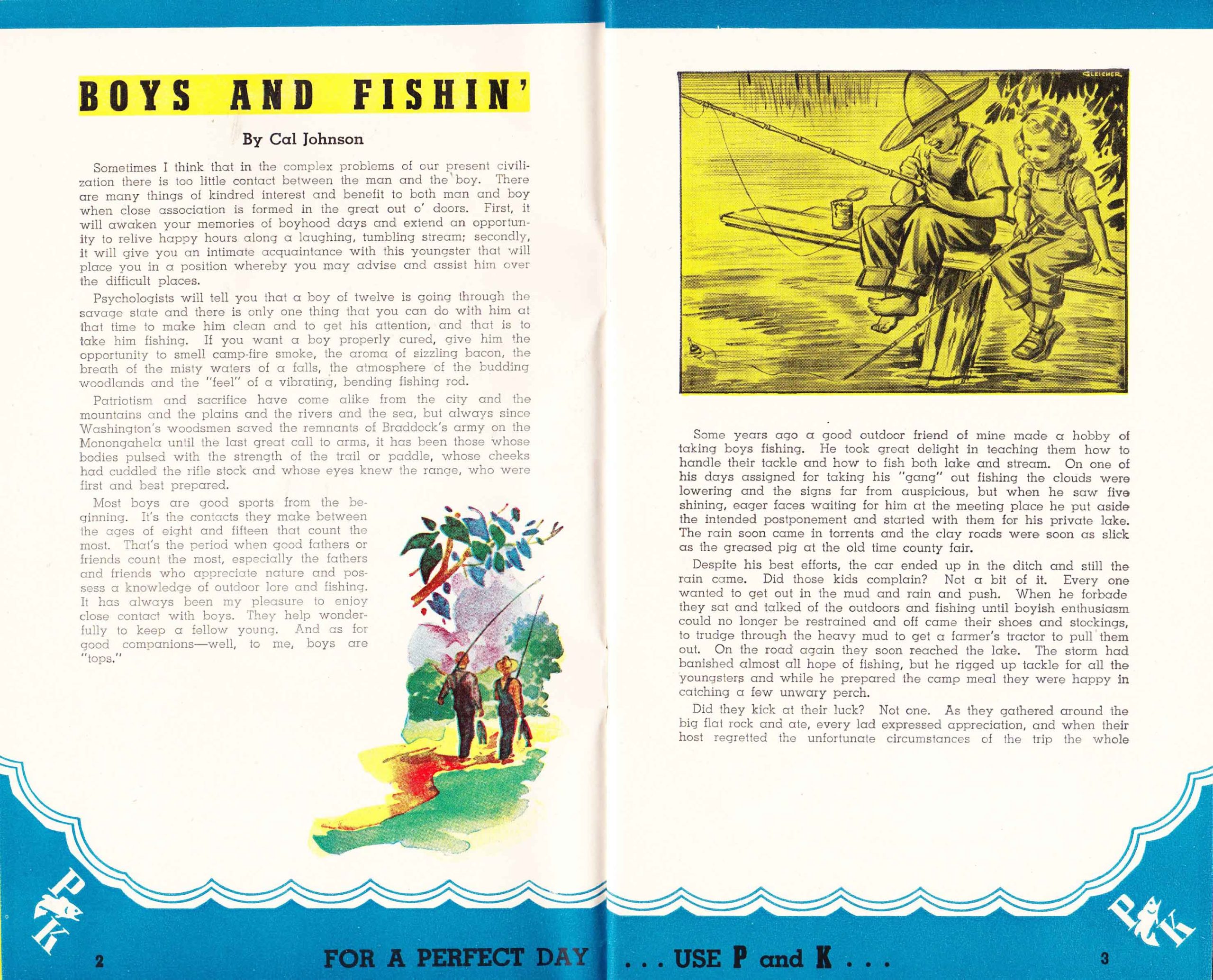
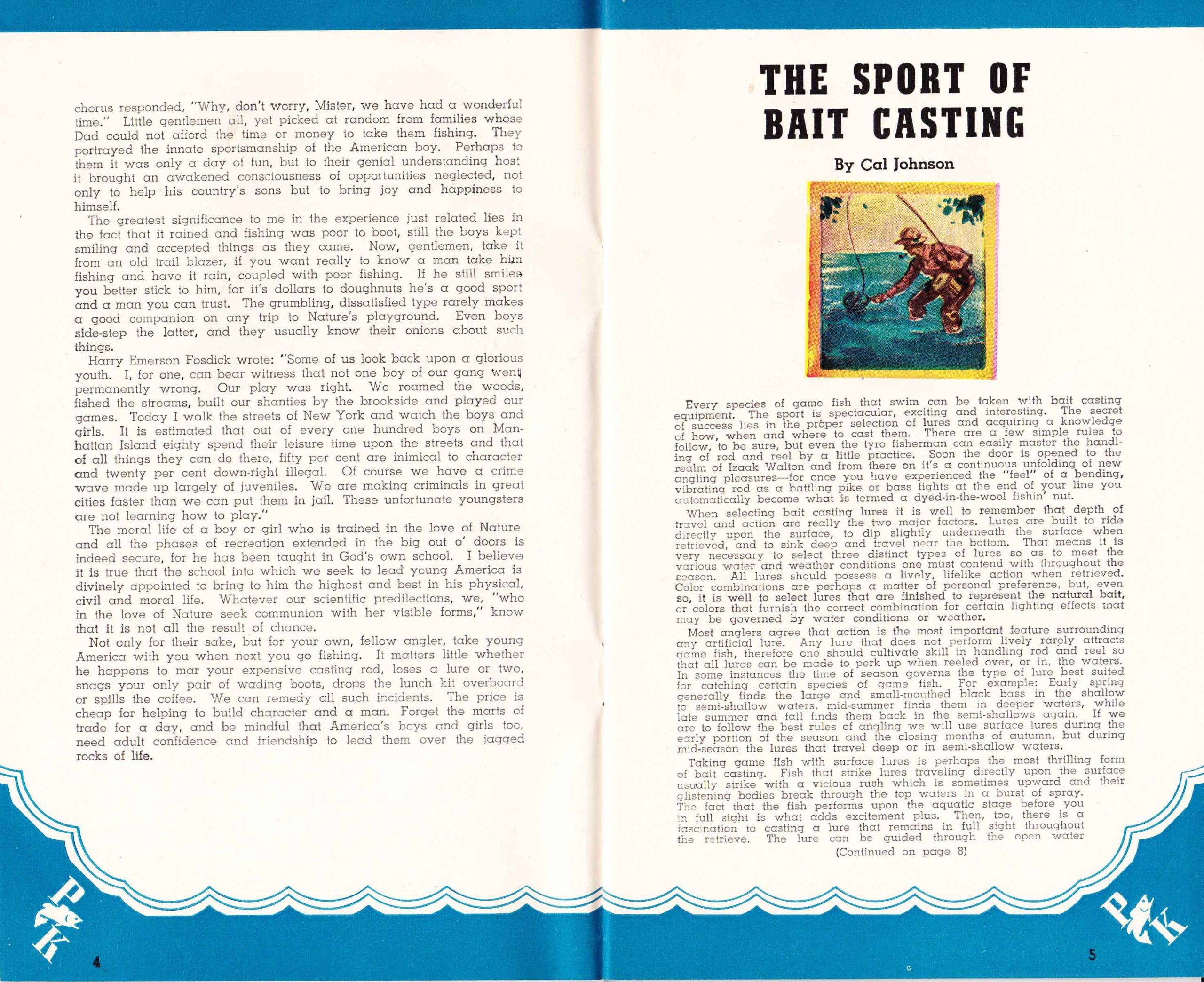
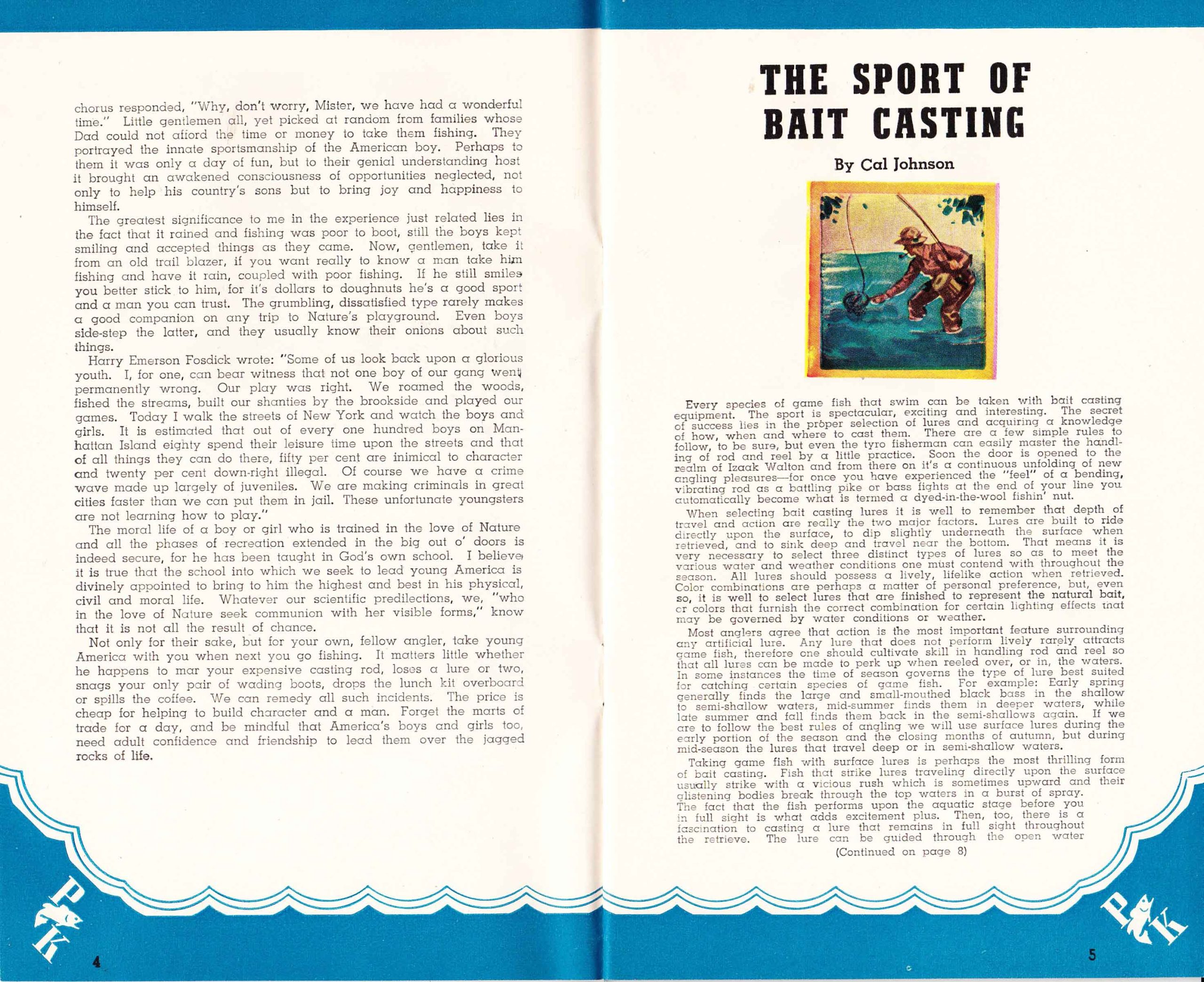
Then following the above article on page 5 is another piece, also written by Johnson, titled “The Sport of Bait Casting.” This got me wondering just how many articles were in this 50-page booklet. I started thumbing through the pages.
When I was done, I counted five more articles by Johnson all on techniques of fishing. Their titles were “Angling for Deep Water Bass”, “Fishing in Still Waters”, “Game Fish on the Fly-Rod”, and “How to Fish Strange Waters.”
I believe these articles and the fact that the booklet was titled “Adventures in Fishing” is what makes this volume two. Yes, it’s a catalog that features P&K’s wares but more so it’s a booklet that teaches. Plus, having been in business for over a decade, I would think P&K would have printed more than two catalogs.
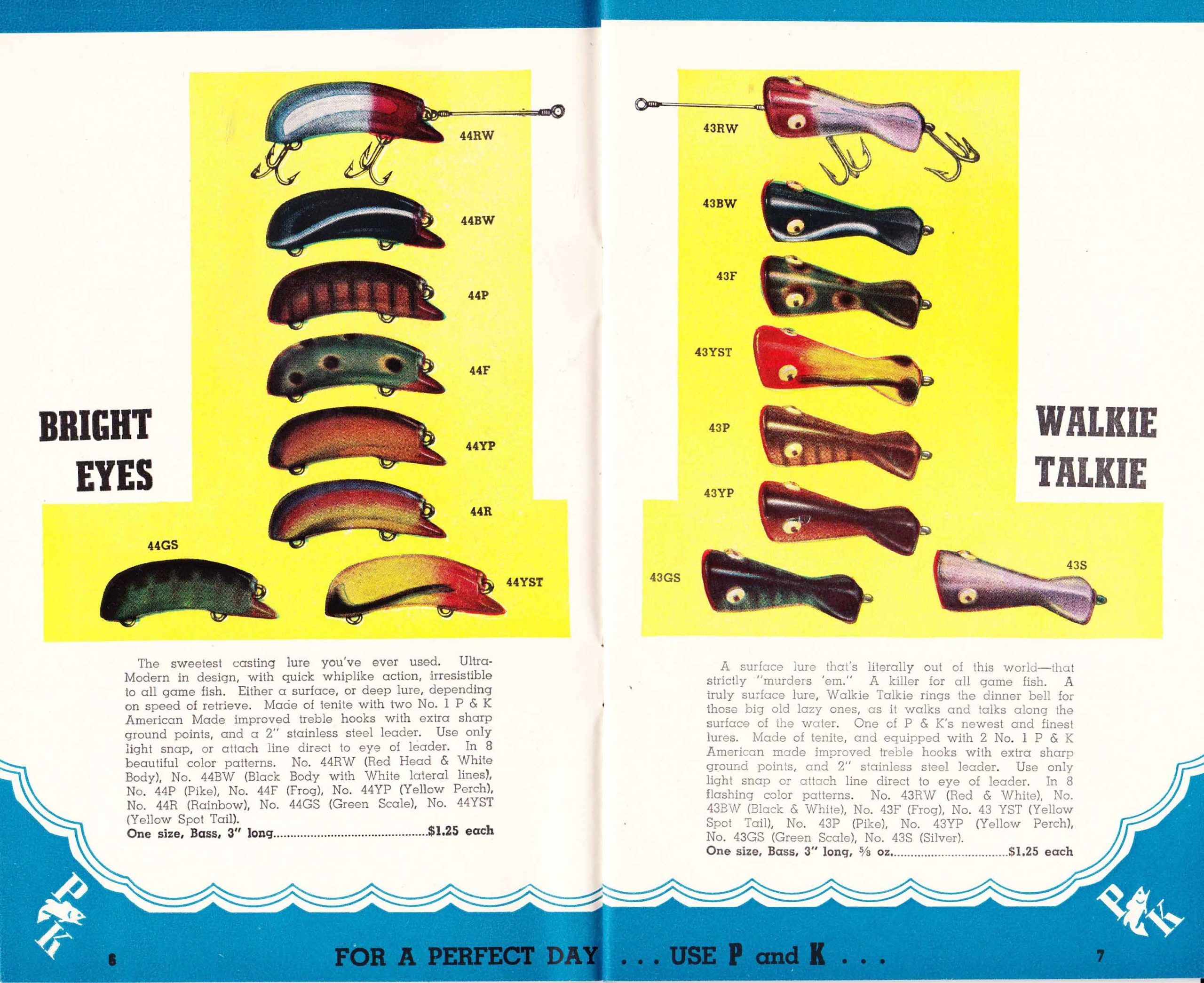
Interspersed throughout the catalog are P&K’s tackle. It starts out with their Bright Eyes and Walkie Talkie baits on pages 6 and 7 and then moves onto the Spinning Minnie, Amazing Maizie and Whirl-A-Way on pages 8 through 12. Except for the Whirl-A-Way, these baits were designed by Pop Adam between 1943 and 1947 and made from Tenite plastic.
Pages 14 and 15 feature the rubber lures from Doc Deering mentioned above, then on pages 18 and 19 are miniature rubber, wood and metal baits for the fly rod or cane pole. The first half of the catalog ends with more rubber bait selections.
The centerfold of the booklet features the men of P&K. Leo Pachner, the president, is in the pole position with Frank Koranda (Vice President), Pop Adam (Sales Promotion), Jesse Max Shannon (Sales Manager), and Curly Moulton (Assistant Sales Manager).
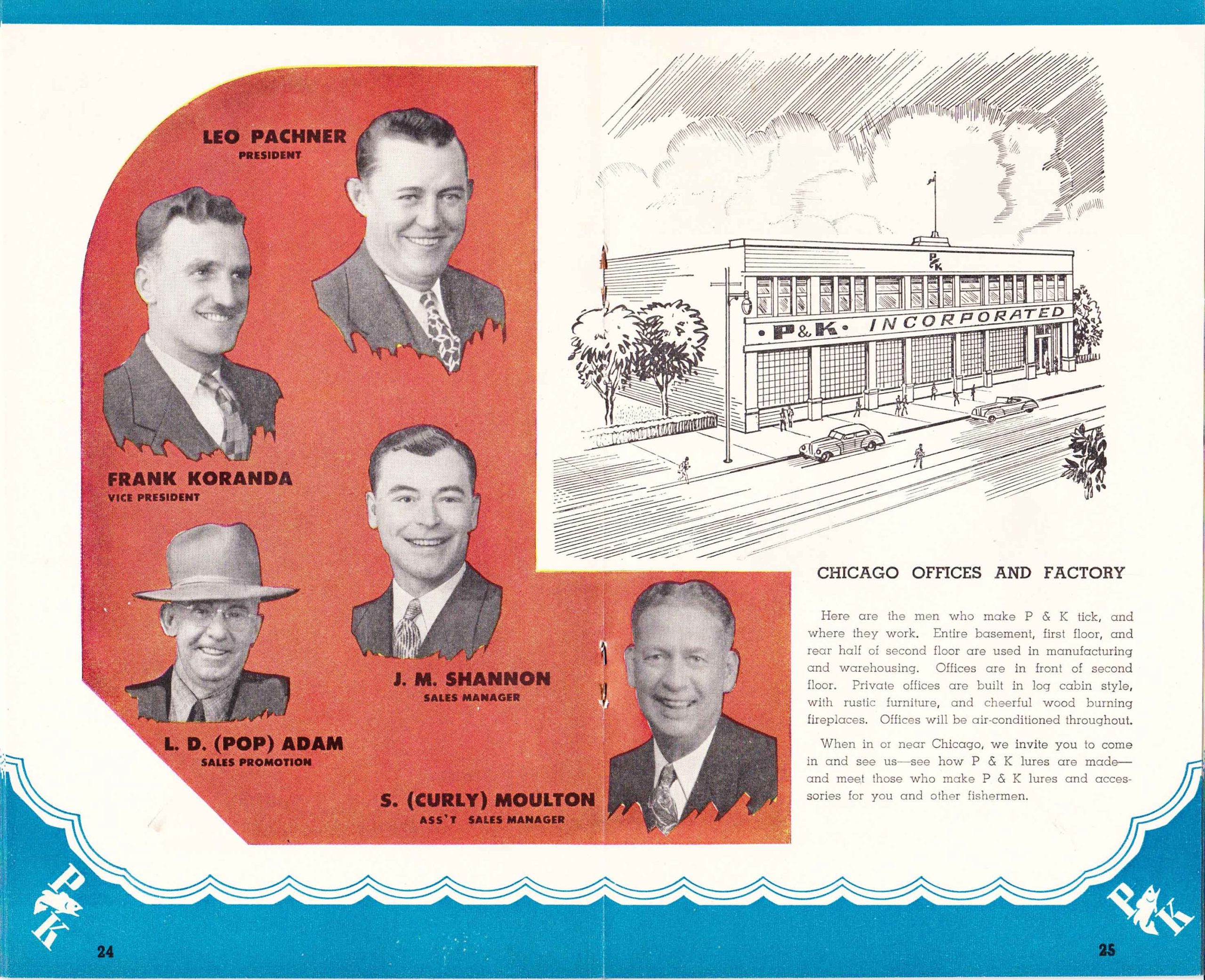
One thing I found interesting about this lineup was Jesse Max Shannon. Jesse’s father, Jesse Parker Shannon, is the man who invented the spinnerbait, or what was known at the time as the Shannon Twin Spinner. But that is another story for another time.
The remaining pages of the catalog are filled with spinners, dressed treble hooks, spoons like the Marvelure and Wobbler, their fly reel, nylon and linen lines, and several other gadgets including an outboard motor weedcutter. Add to this success stories from customers and this booklet/catalog is really fun to read.
Something else about P&K Inc. was they made their own hooks and sold hooks to the industry. When they started, they were buying hooks from Norway and the UK, but when World War II started, hooks became difficult to find. So in 1939 they started making their own.
The hook business was profitable and carried the company through the war years and after. That is until Japan got into the business. What was once a cash cow P&K’s hook business slowly died. By the late 1950s they were losing money and in 1966, they closed the doors for good.
There is a good writeup on P&K that I used for some of the research on this post. You can find it at the NLFCC website here. Meanwhile I hope you enjoy looking through the entire booklet below.
Gallery – Pachner & Koller 1947

1947 P&K Catalog Front and Back Cover
1947 P&K Catalog Inside Cover and Page 1
1947 P&K Catalog Pages 2 and 3
1947 P&K Catalog Pages 4 and 5
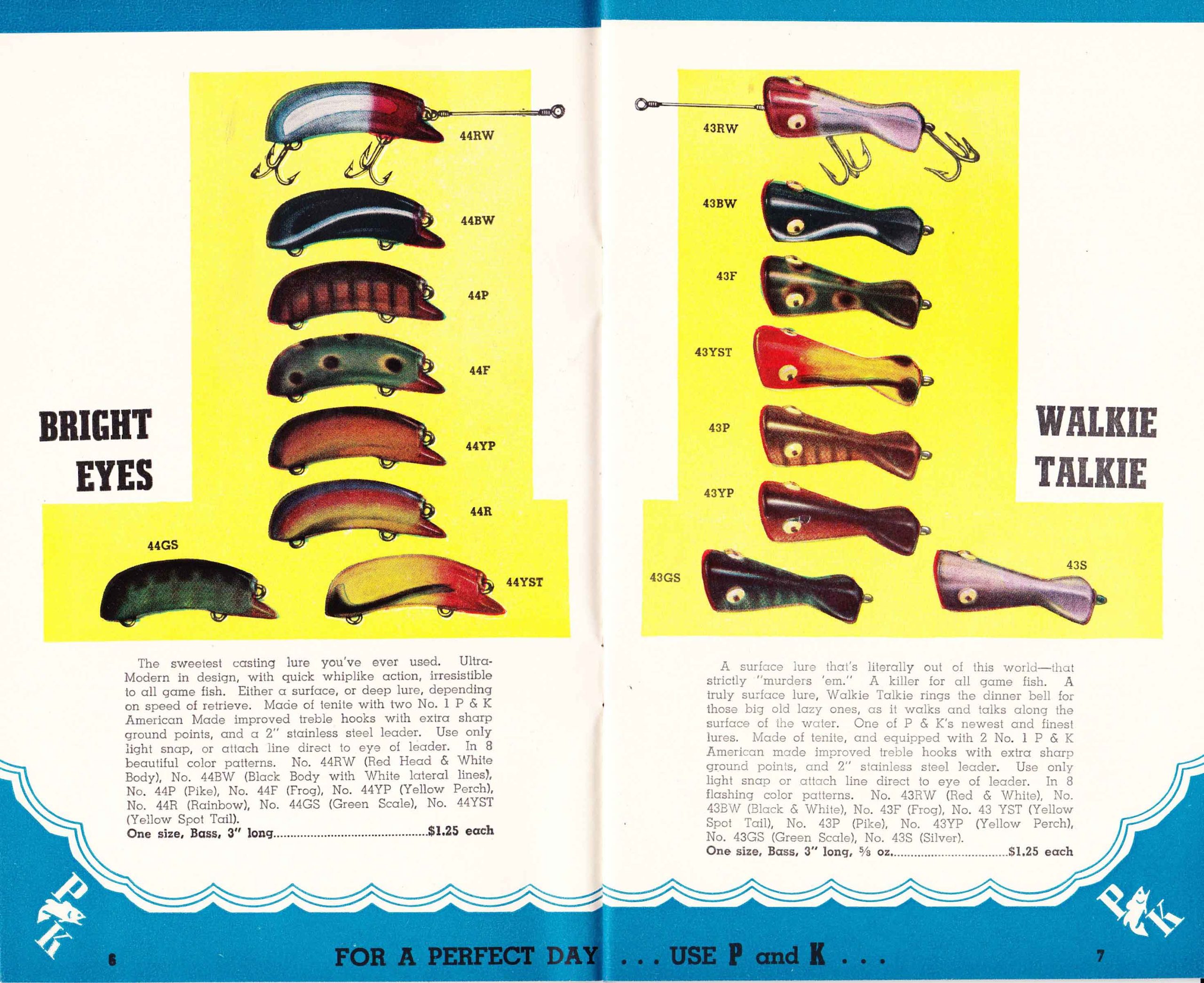
1947 P&K Catalog Pages 6 and 7
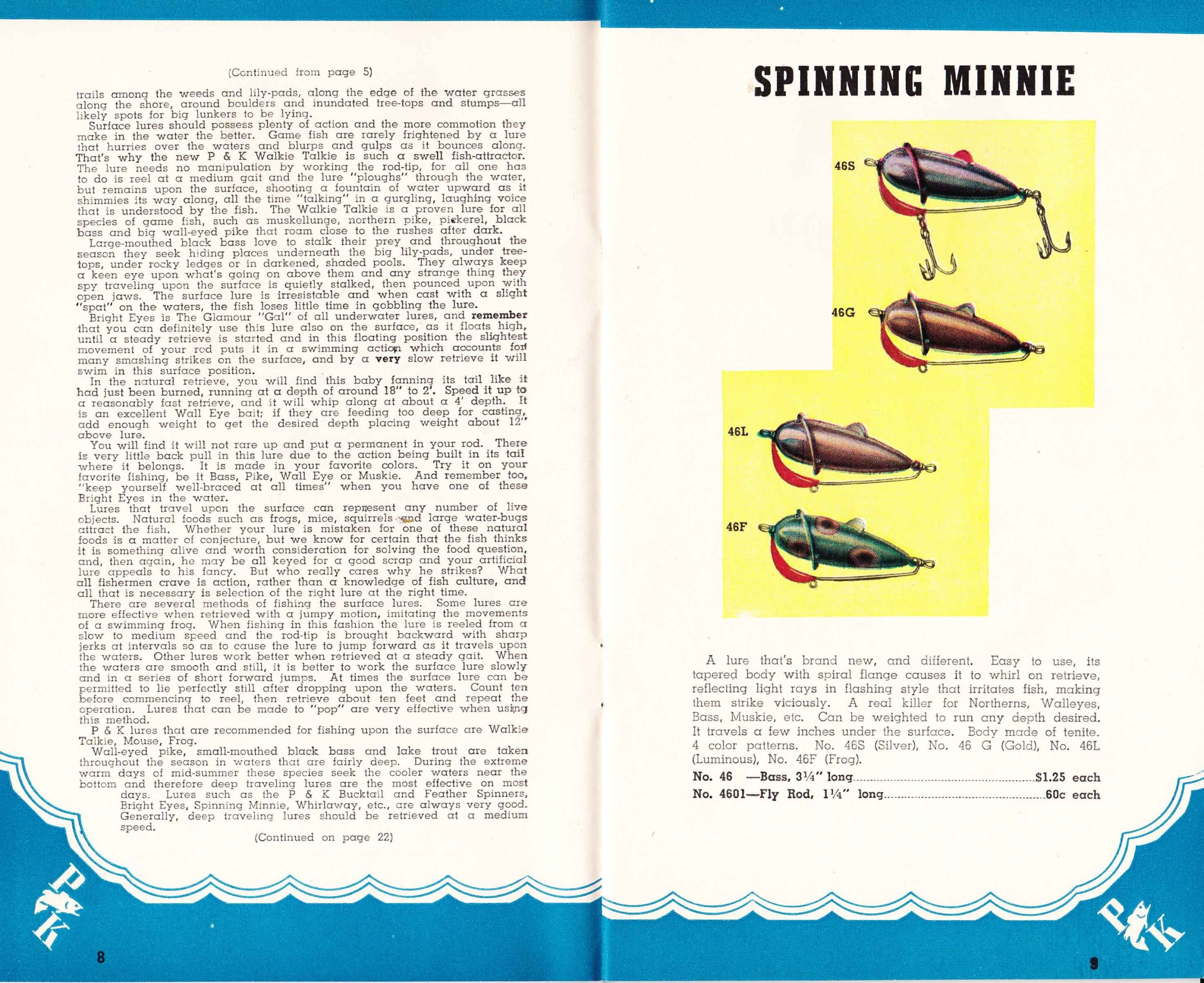
1947 P&K Catalog Pages 8 and 9
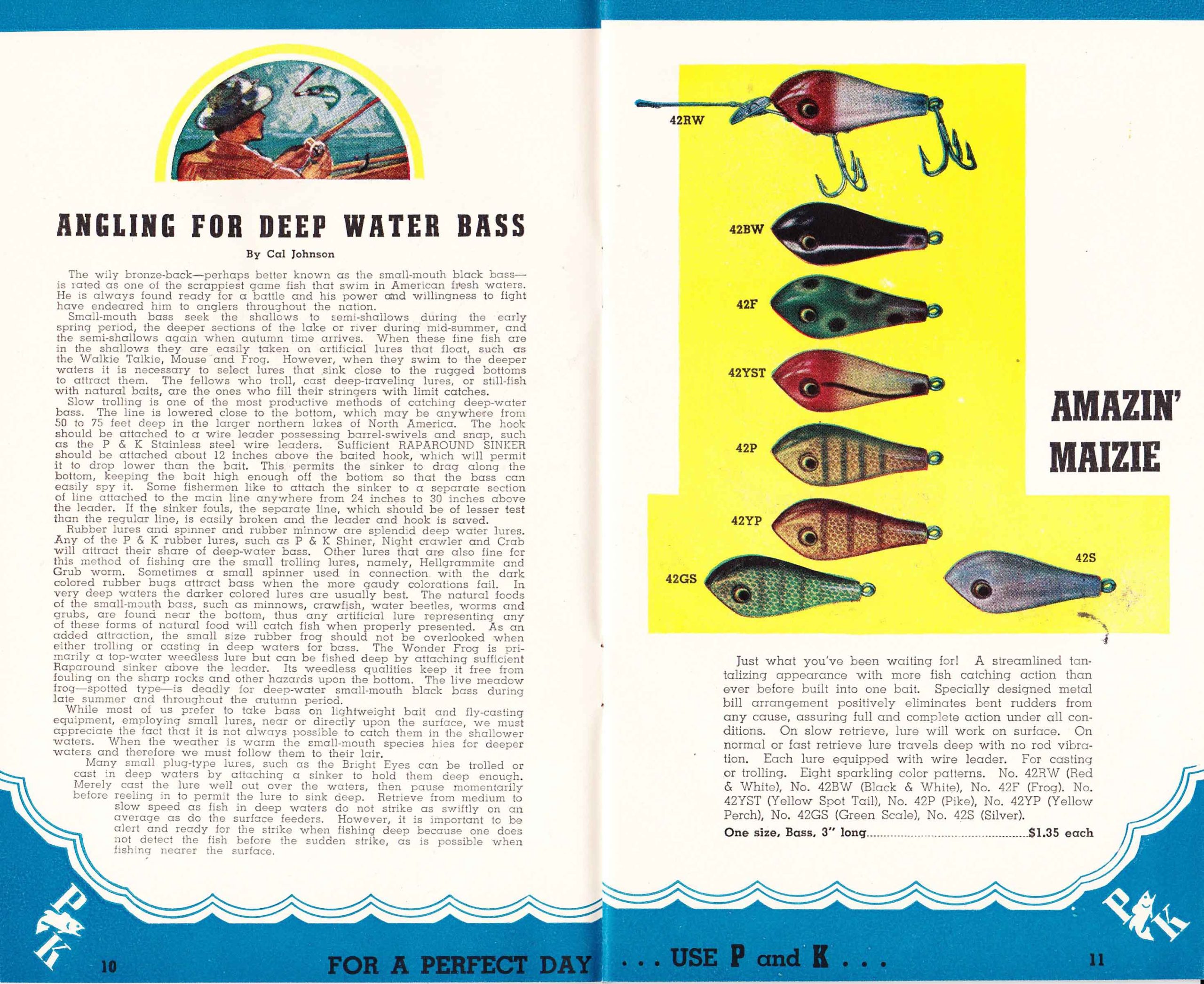
1947 P&K Catalog Pages 10 and 11

1947 P&K Catalog Pages 12 and 13
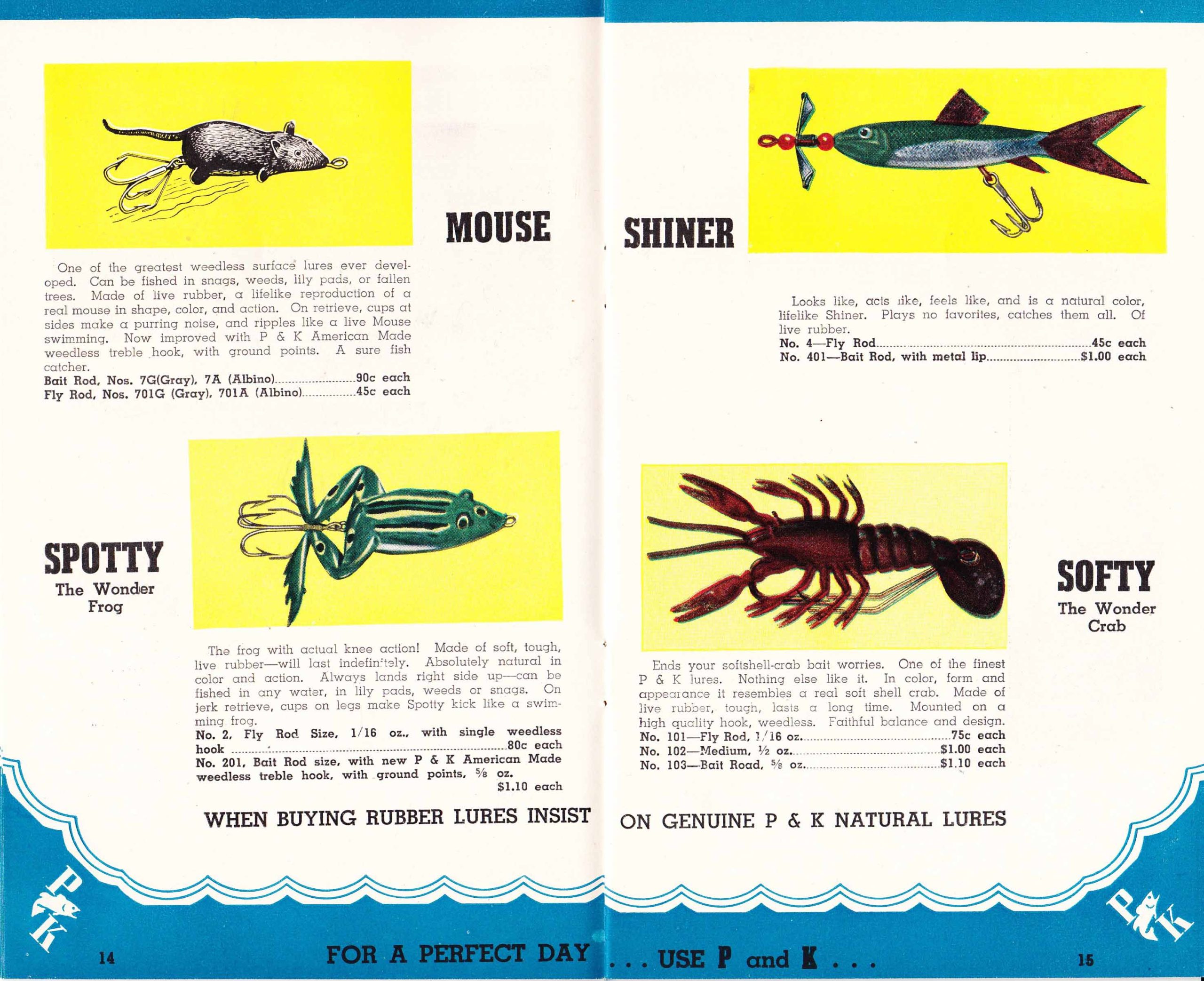
1947 P&K Catalog Pages 14 and 15
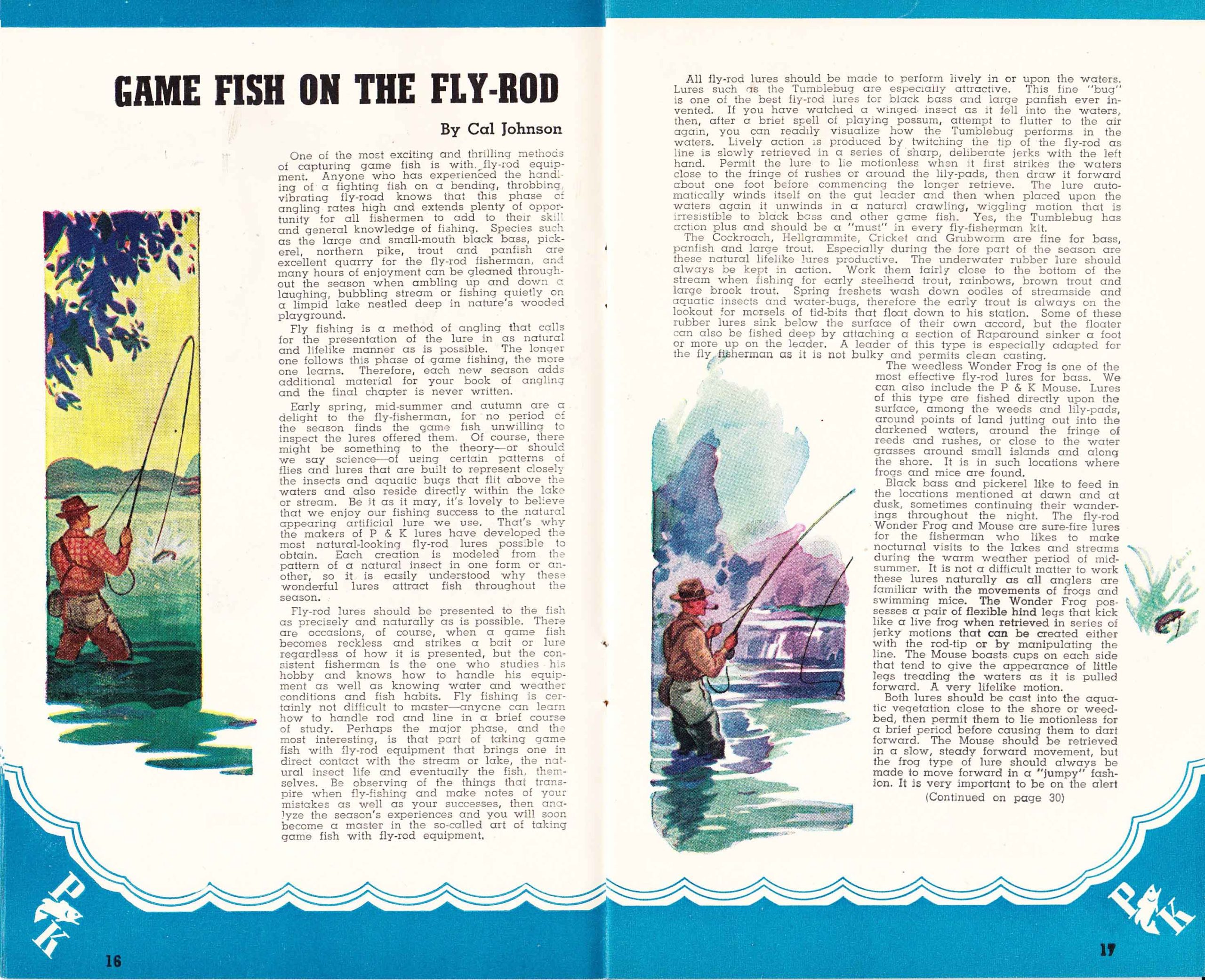
1947 P&K Catalog Pages 16 and 17
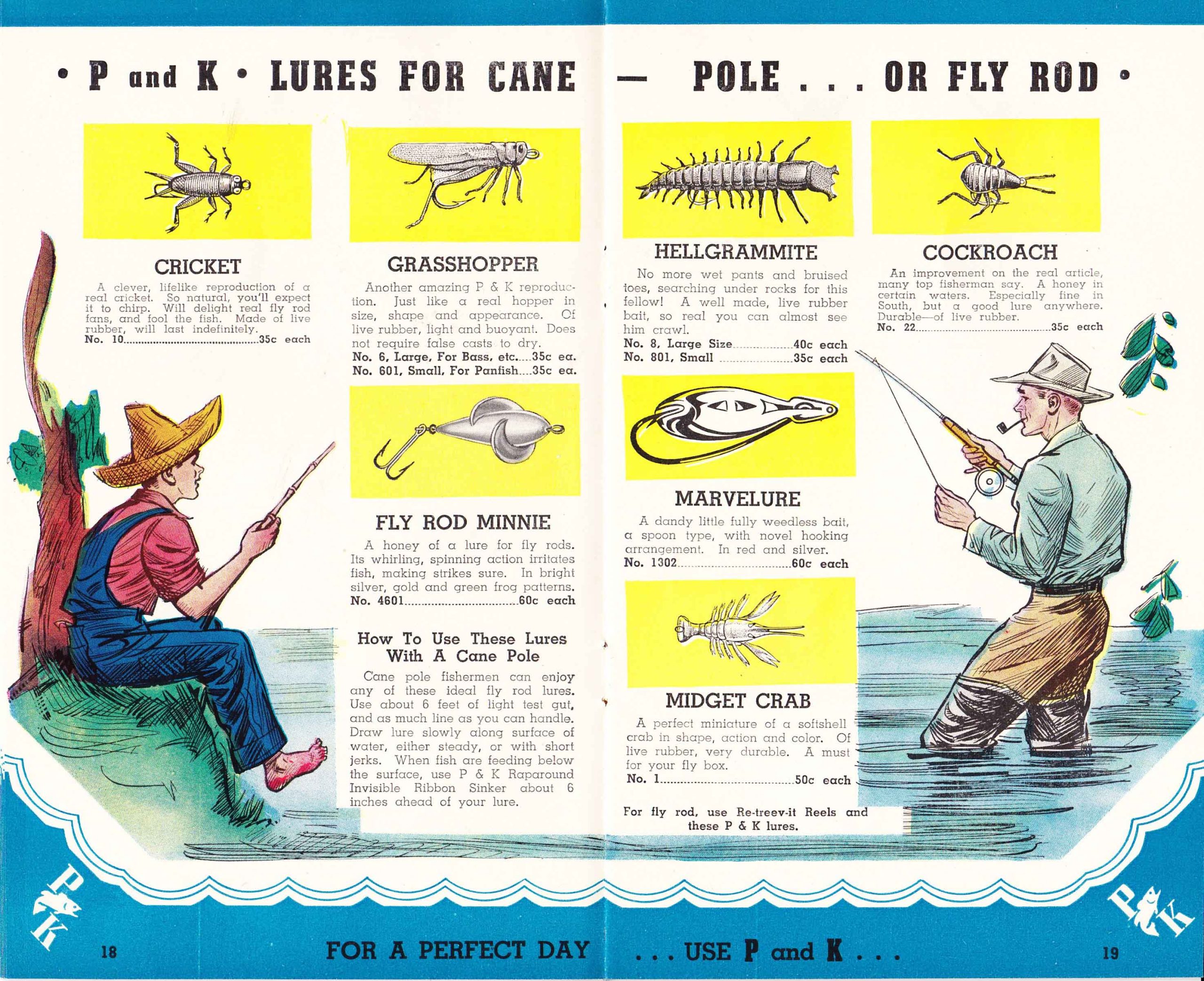
1947 P&K Catalog Pages 18 and 19
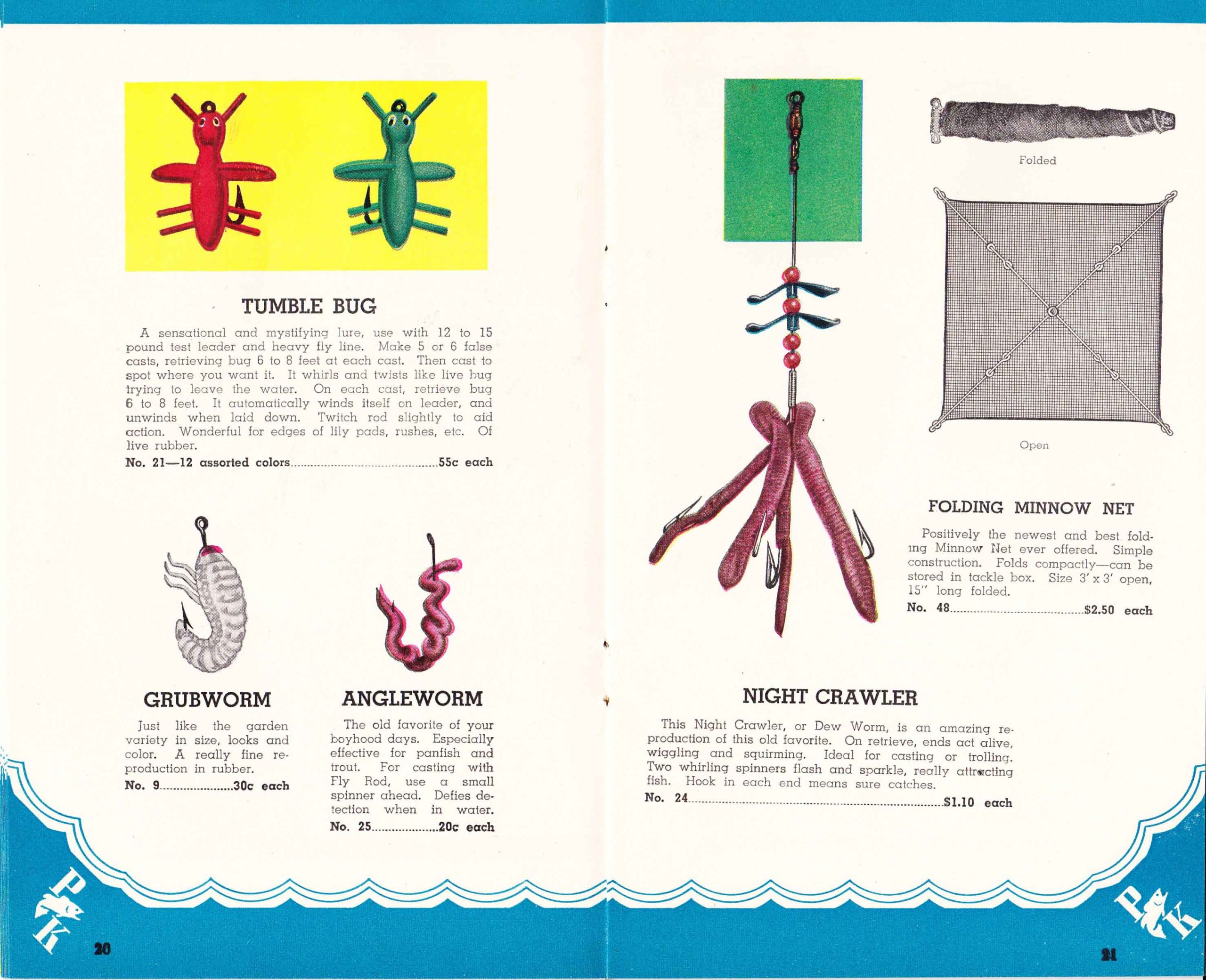
1947 P&K Catalog Pages 20 and 21
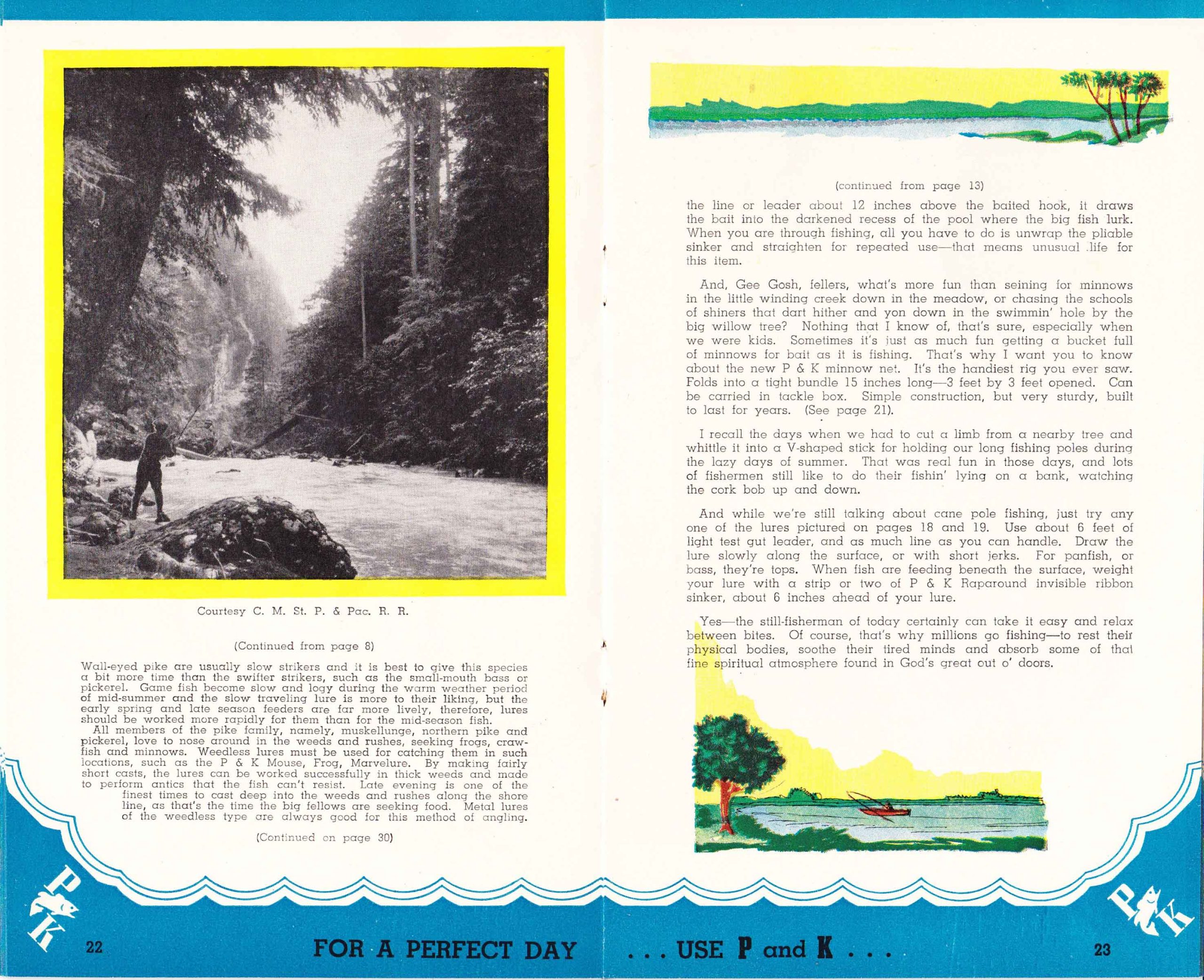
1947 P&K Catalog Pages 22 and 23

1947 P&K Catalog Pages 24 and 25
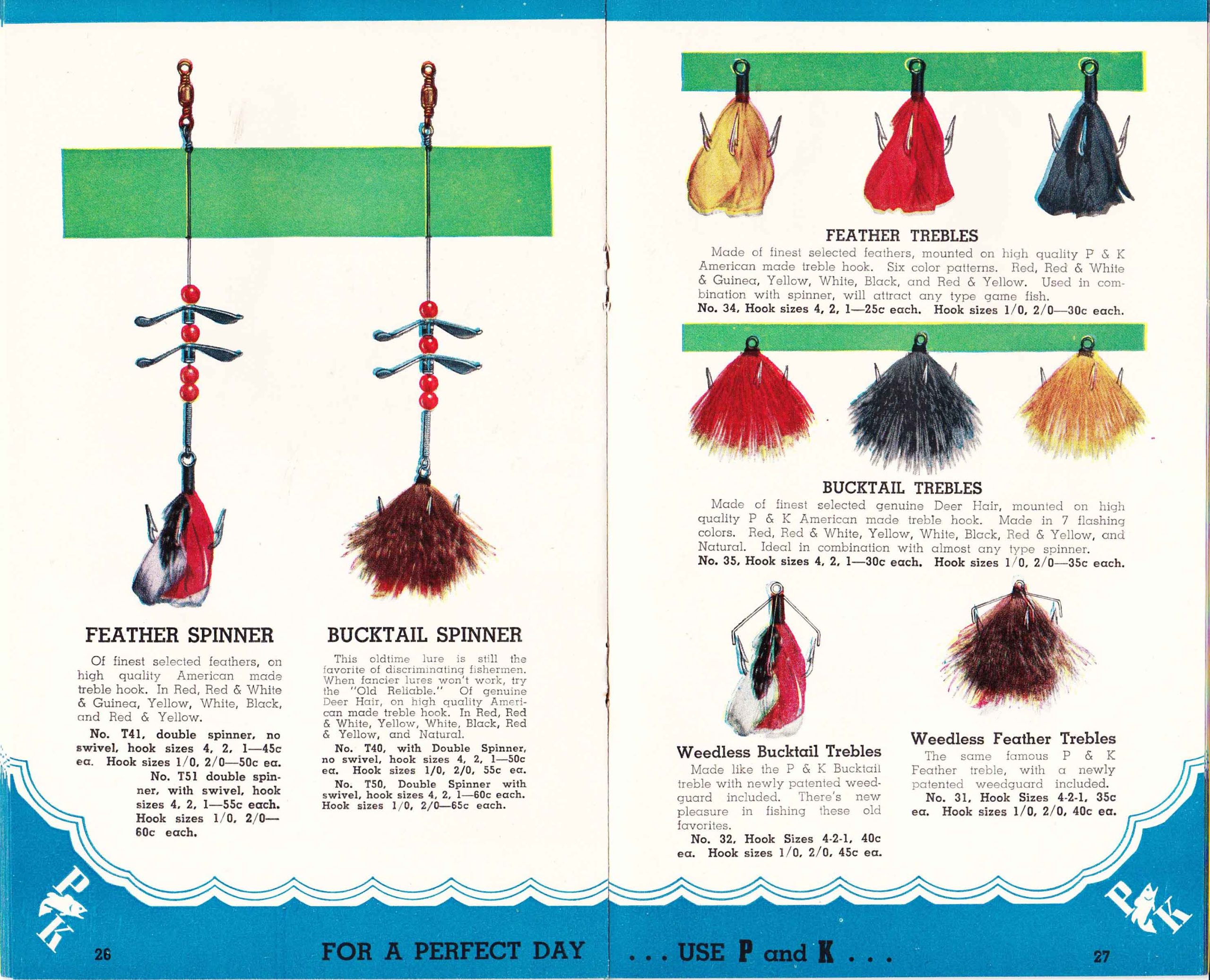
1947 P&K Catalog Pages 26 and 27
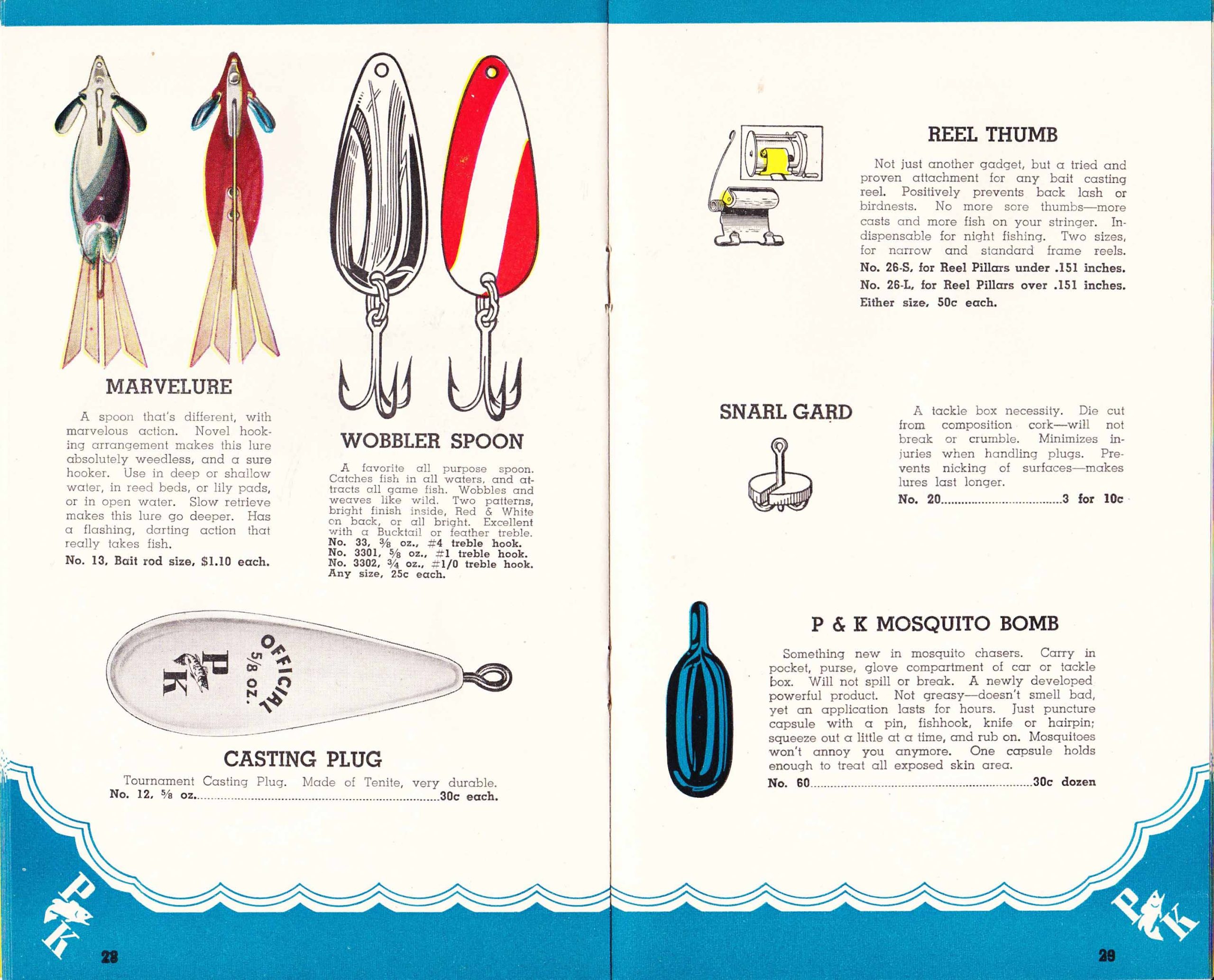
1947 P&K Catalog Pages 28 and 29
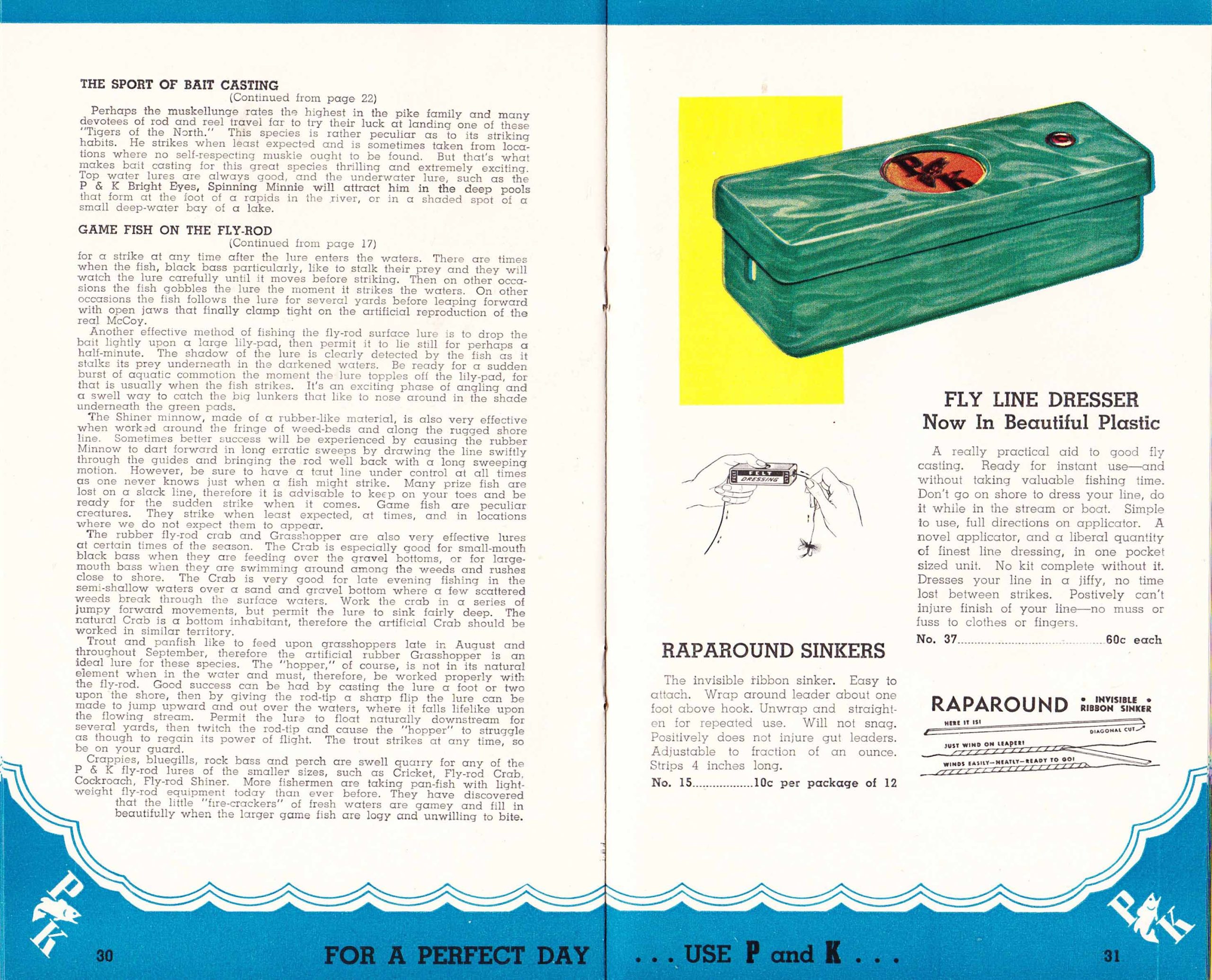
1947 P&K Catalog Pages 30 and 31
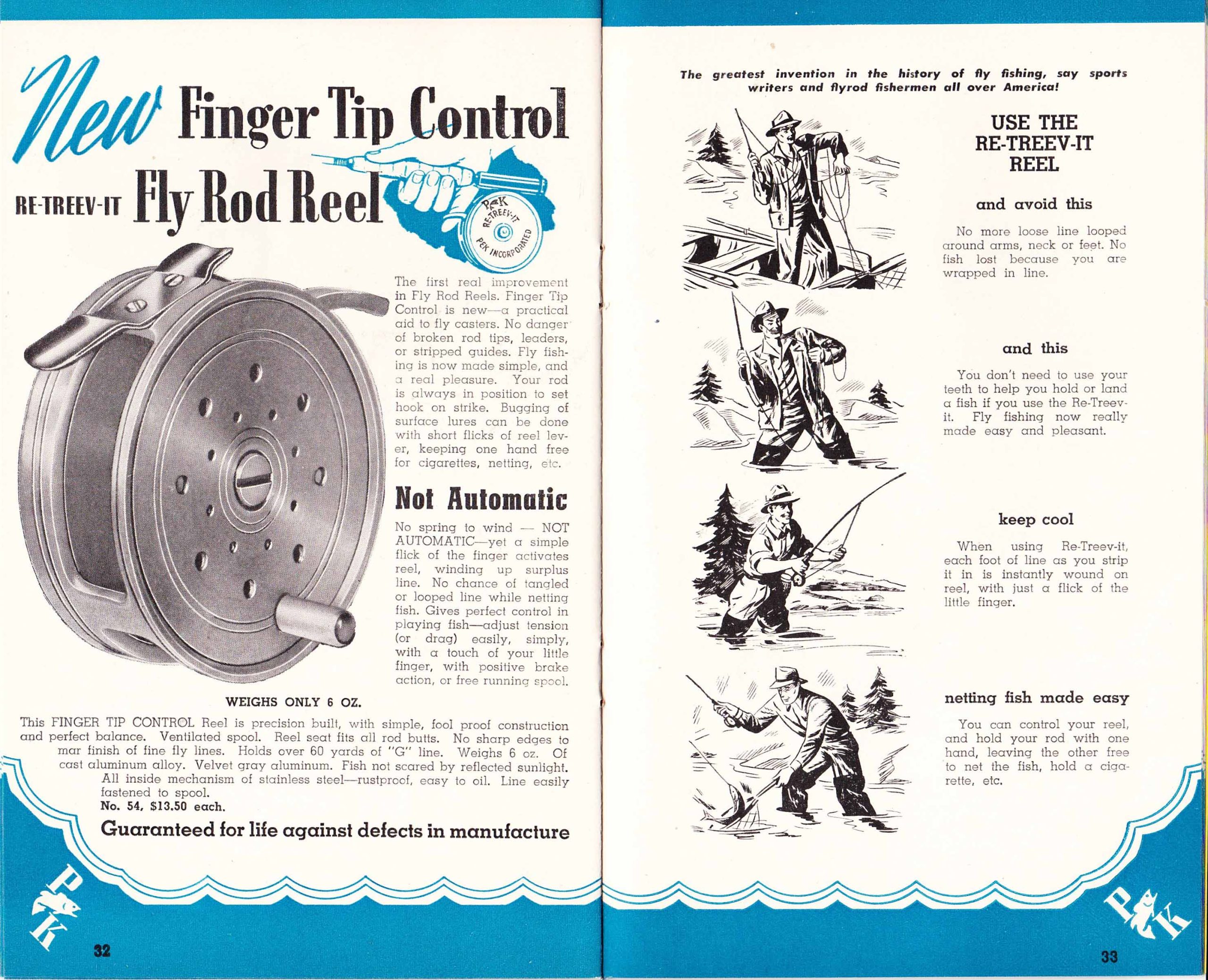
1947 P&K Catalog Pages 32 and 33
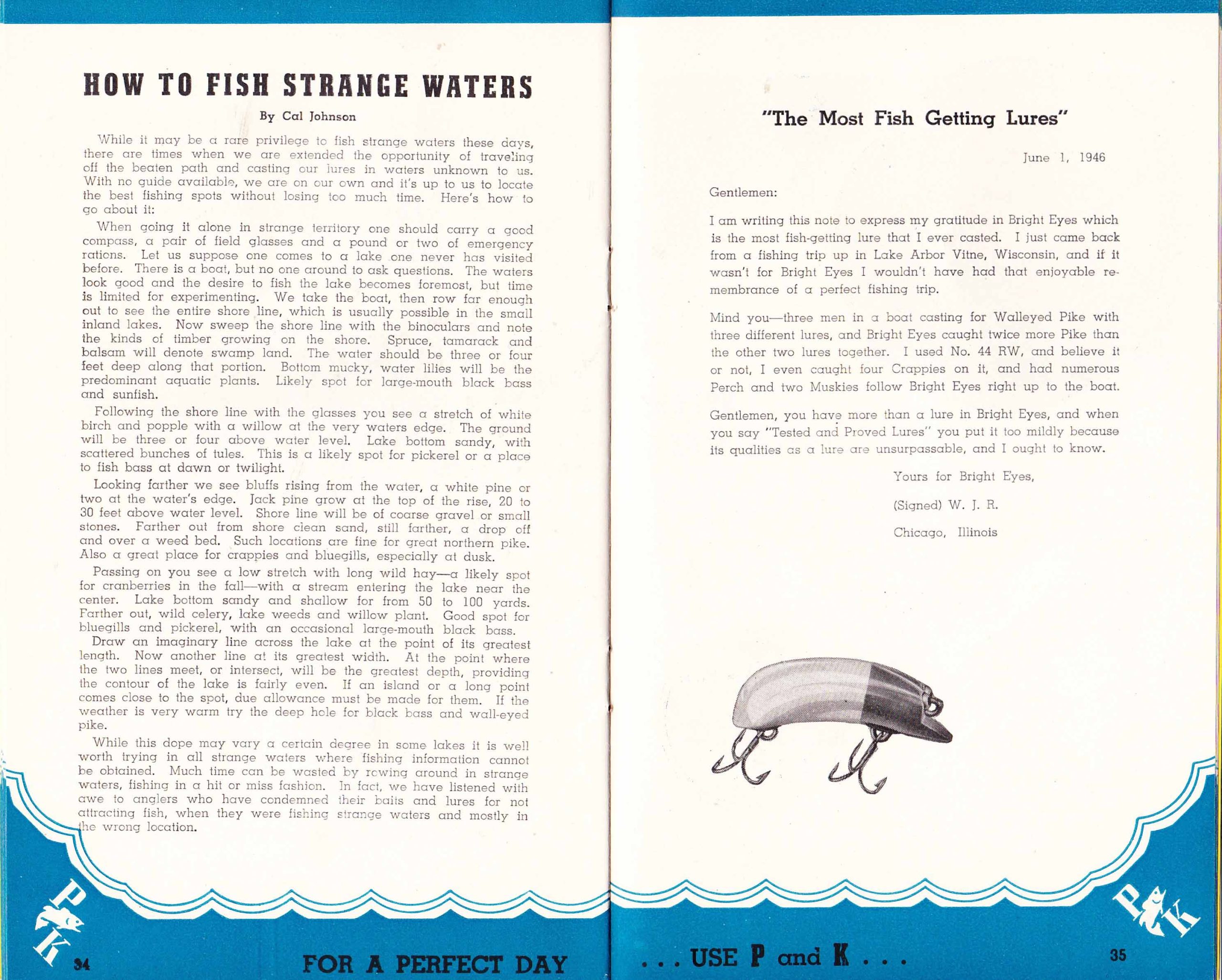
1947 P&K Catalog Pages 34 and 35

1947 P&K Catalog Pages 36 and 37

1947 P&K Catalog Pages 38 and 39
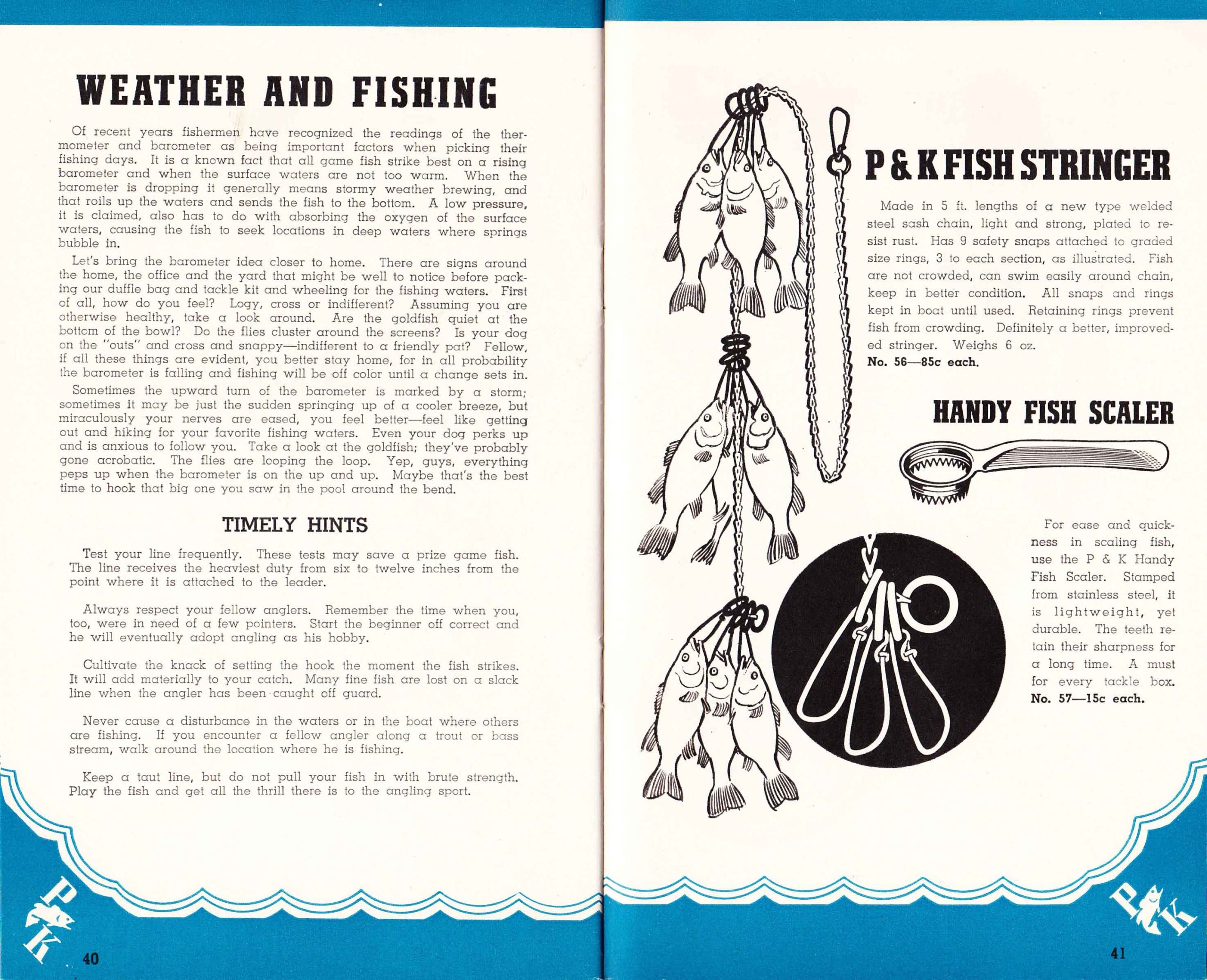
1947 P&K Catalog Pages 40 and 41
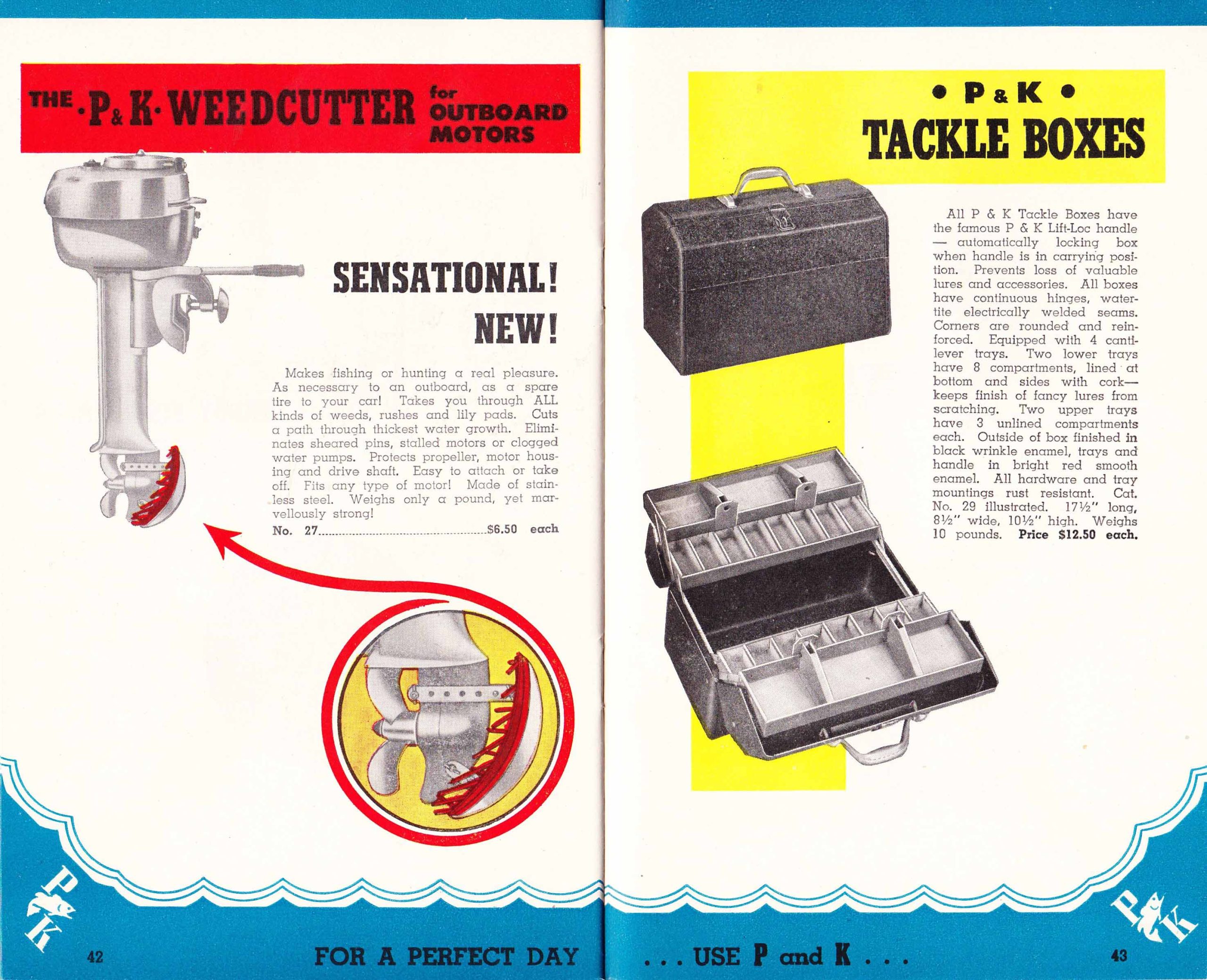
1947 P&K Catalog Pages 42 and 43
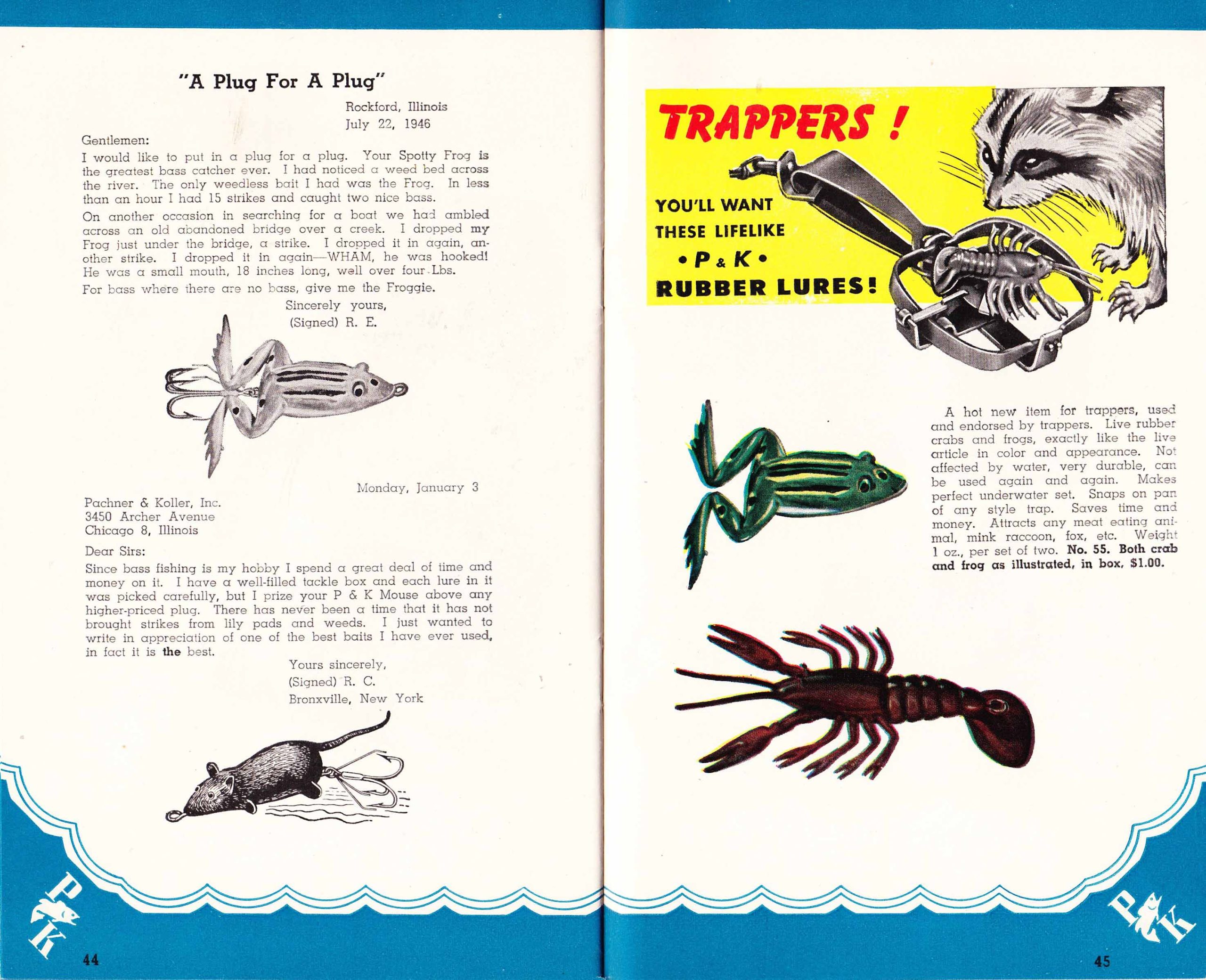
1947 P&K Catalog Pages 44 and 45
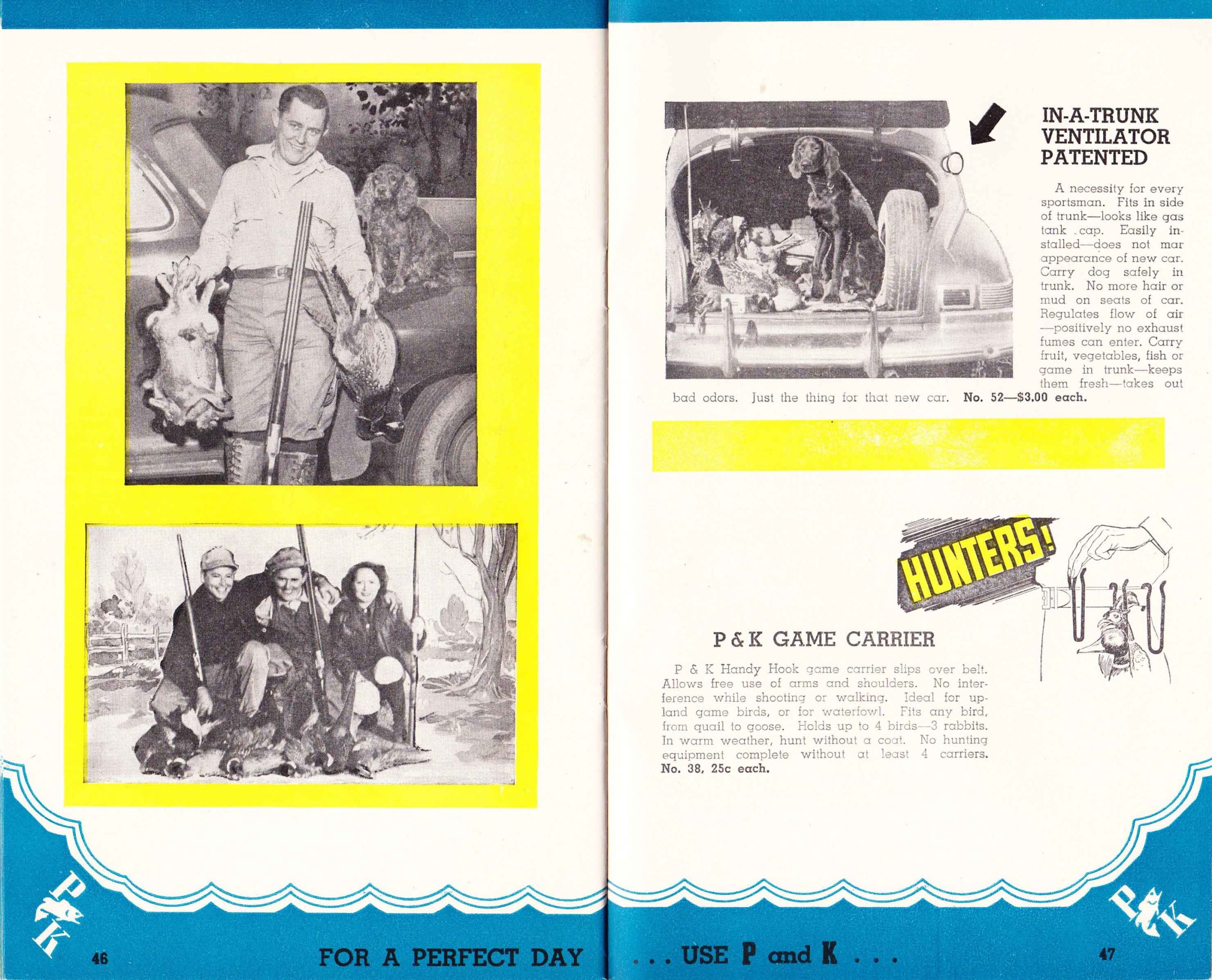
1947 P&K Catalog Pages 46 and 47
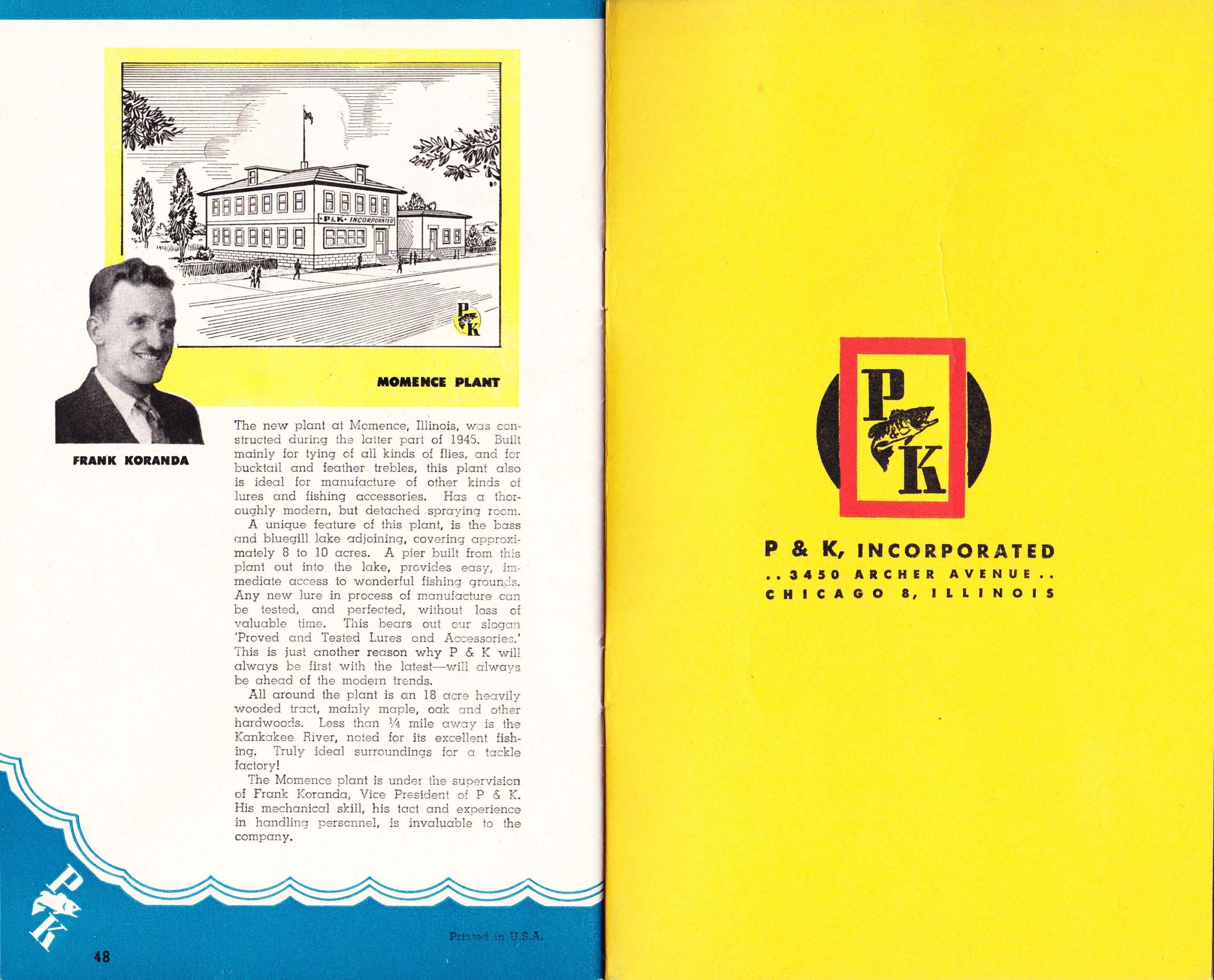
1947 P&K Catalog Page 48 and Inside Back Cover
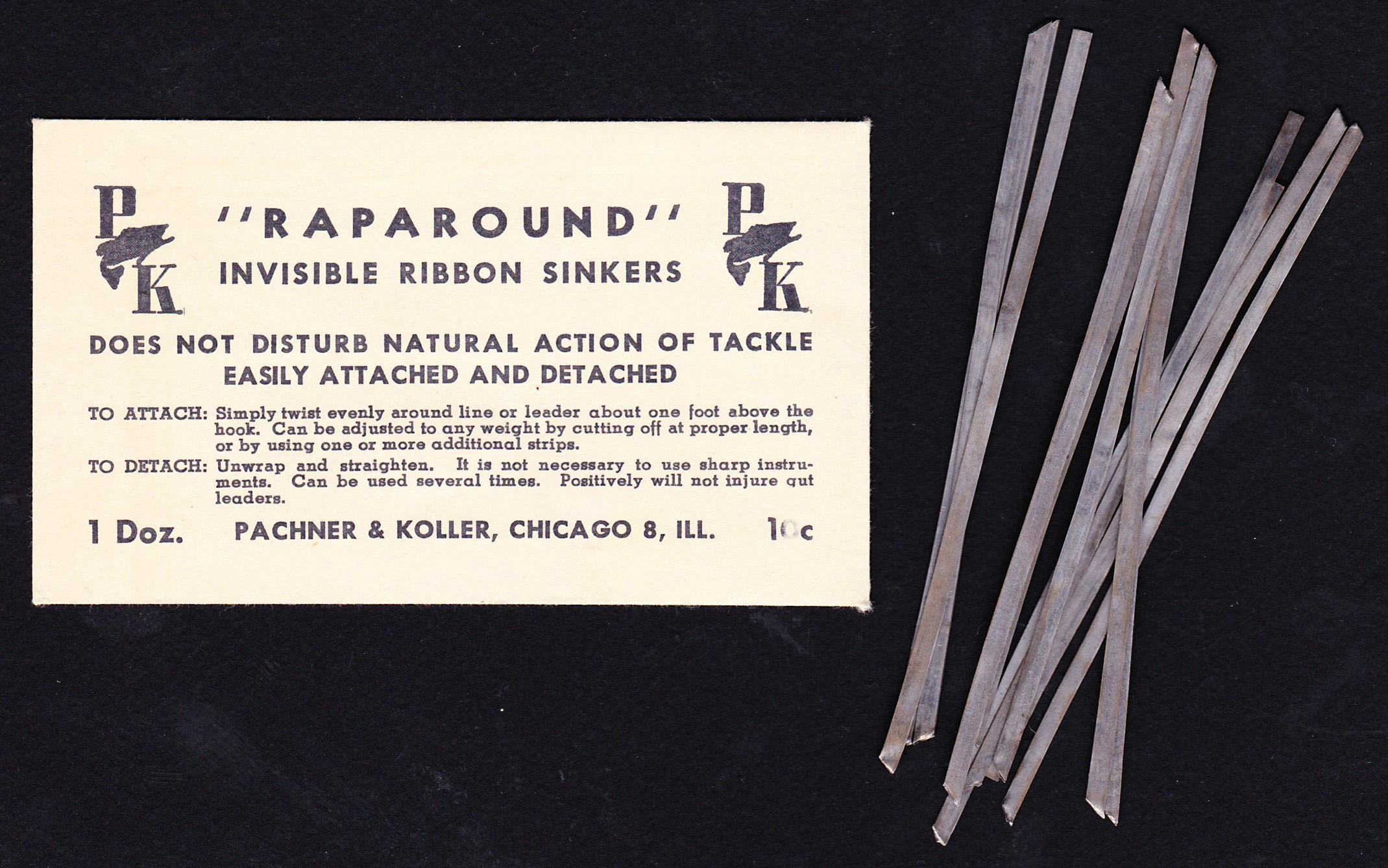
P&K Lead Weight Strips that came with the Catalog
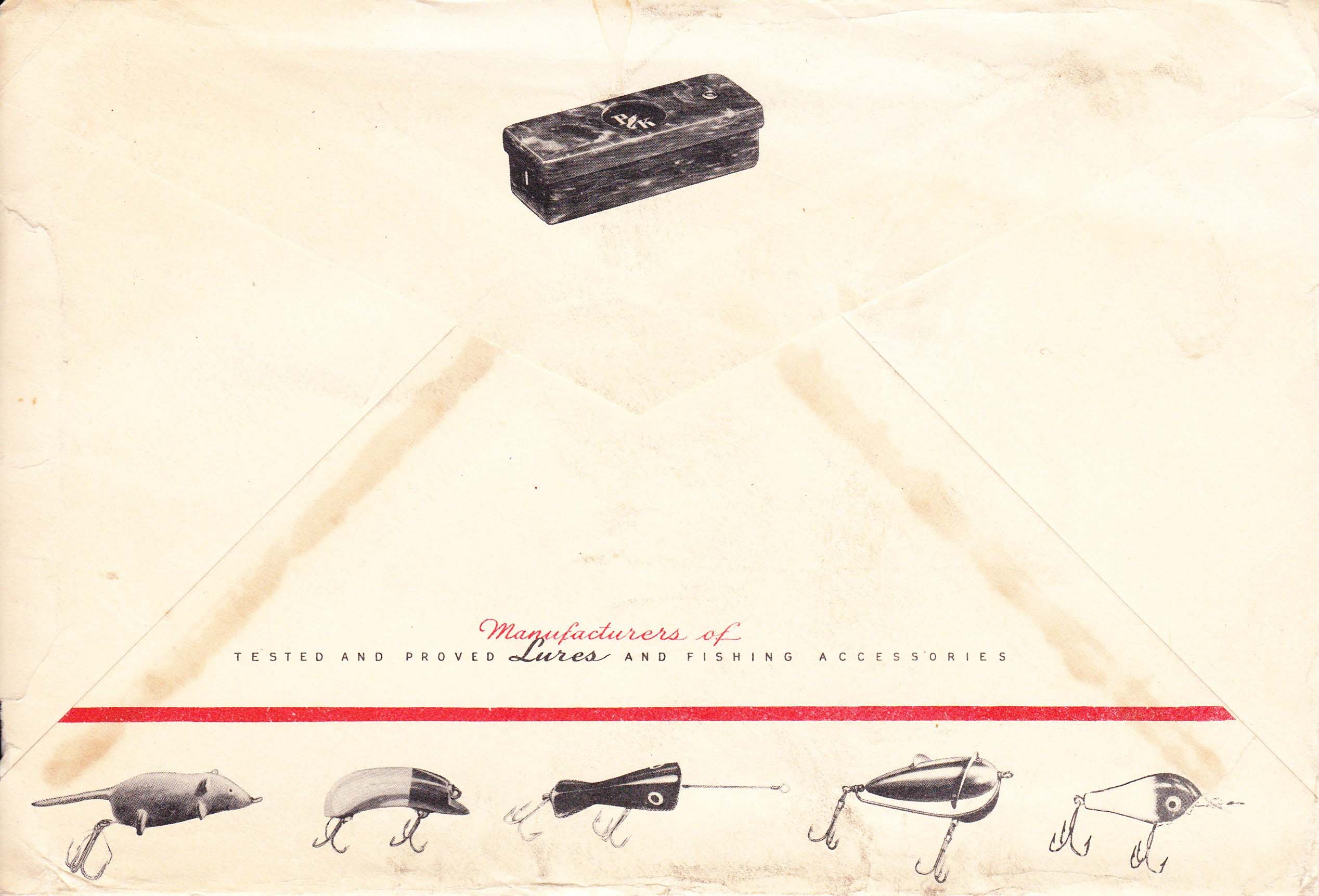
P&K 1947 Mailing Envelope Back
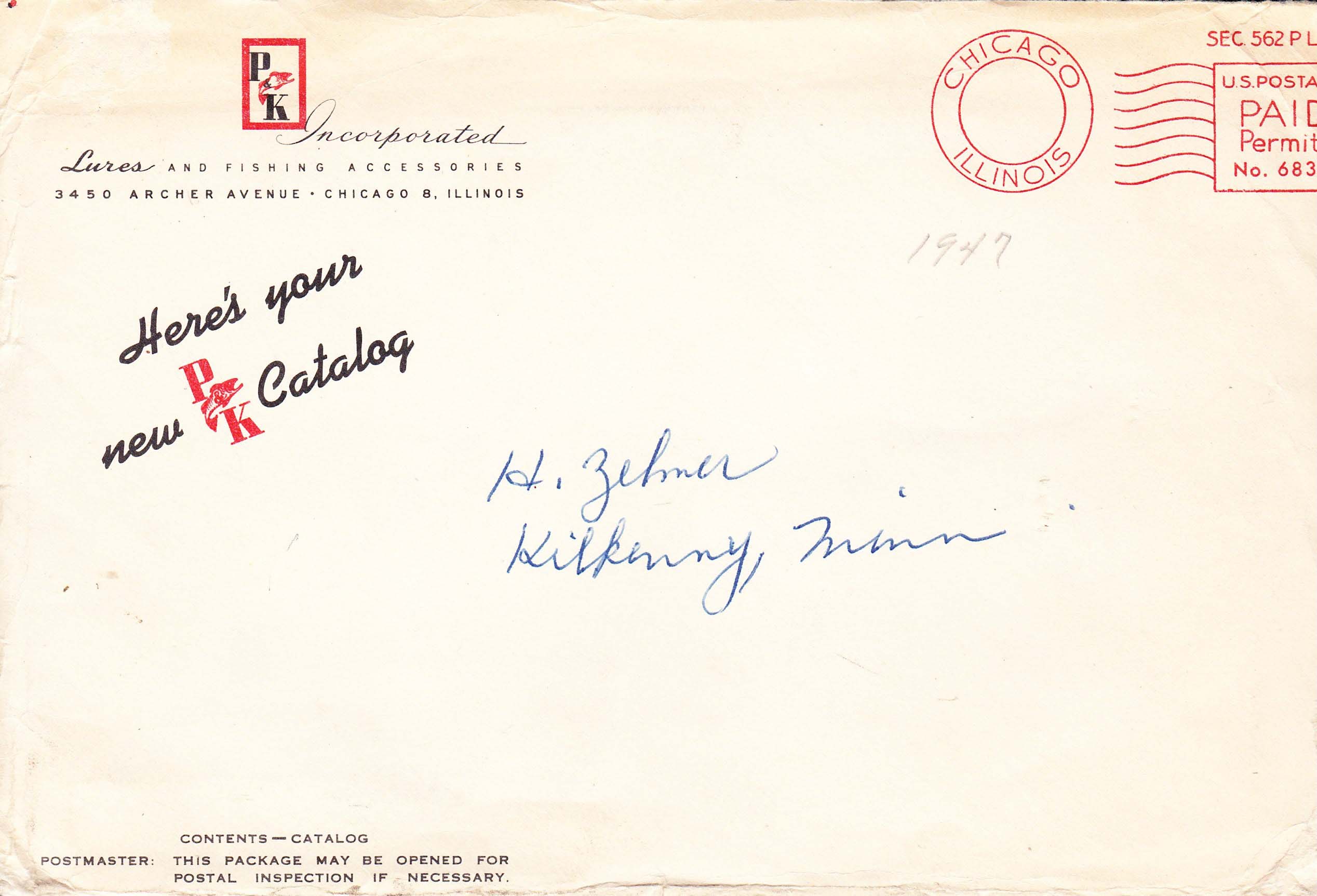
P&K 1947 Mailing Envelope Front




What a beautiful catalog. Gorgeous illustrations, and some of the best lure names ever: Bright Eyes, Walkie Talkie, Whirl-A-Way, Spinning Minnie, Marvelure…brilliant and fun. And the artful page border designs! One of the best lure and tackle catalogs I’ve seen. Just a gem.
Thanks David! I knew when I saw this catalog that’d you’d love it. And not just because of Cal Johnson! LOL.
Ol’ Cal is turning up a lot lately, isn’t he? The guy seems to have hired his pen out to just about every fishing company and magazine of the first half of the 20th century. Yes, his writing is great in this P&K catalog. I especially liked the introduction with “Boys and Fishin’.” It kind of reminded me of Robert C. Ruark’s “The Old Man and the Boy,” and I wouldn’t be surprised to discover that Ruark might have been influenced by Johnson’s little story. I think Ruark’s book came out 5-or-so years after this catalog.
On a side note, I have an old lure in one of my tackle boxes, a lure I think I inherited from my Dad. Never really knew what it was and never gave it much thought, other than thinking it was weird. Turns out it’s a Whirl-A-Way.