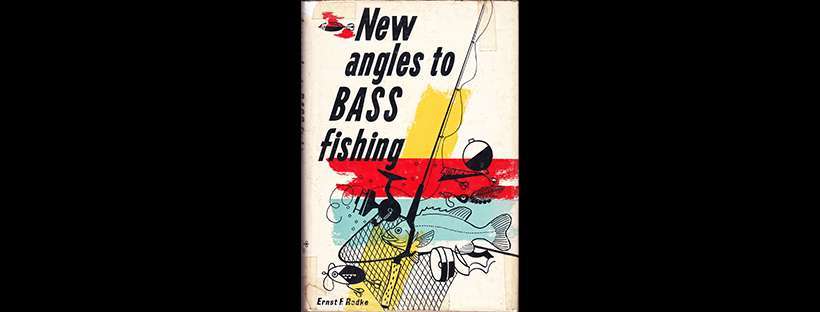

It’s been a few months since we’ve written a book review here on the Bass Fishing Archives. Having finished reading what has quickly become my new favorite old bass book, New Angles to Bass Fishing by Ernst Radke, I felt it was time for another. Published in 1955, Radke follows in some big footprints of the likes of James A. Henshall (1881) and more recently, Jason Lucas (1947). What Lucas did in the late 1940s to render some of the 19th century axioms as either invalid or just outdated theory, Radke does the same but with a nicer demeanor. In other words, he’s a kinder, gentler Jason Lucas.
For those of you who are Lucas zealots, please save your harsh words until you finish reading this post. There will never be another Jason Lucas. Lucas’ treatise on bass fishing was the contemporary bible when it comes to changing bass fishing. From theory to tackle and from tactics to procedures, Lucas covered it all. He wrote the book on it, pun fully intended.
What I find difficult about Lucas was his deep dives and writing style. I’ve read the book at least a half dozen times – all three editions – and I must be in the right mood to read Lucas. It can be hard reading. That does not make me dislike Lucas by any stretch of the imagination. I just find his writing style tortuous.
But let’s get back to Radke.
This book was brought to my attention by a dear friend, Bill Sonnett. As you may well know, Bill has provided a lot of help to the Bass Fishing Archives over the years when it comes to all things historical about bass fishing. From books, authors, old tackle, and my new obsession with mid-century baitcasting reels, Bill has opened my eyes to a world I had somewhat discounted when I started down this venture more than a decade ago.
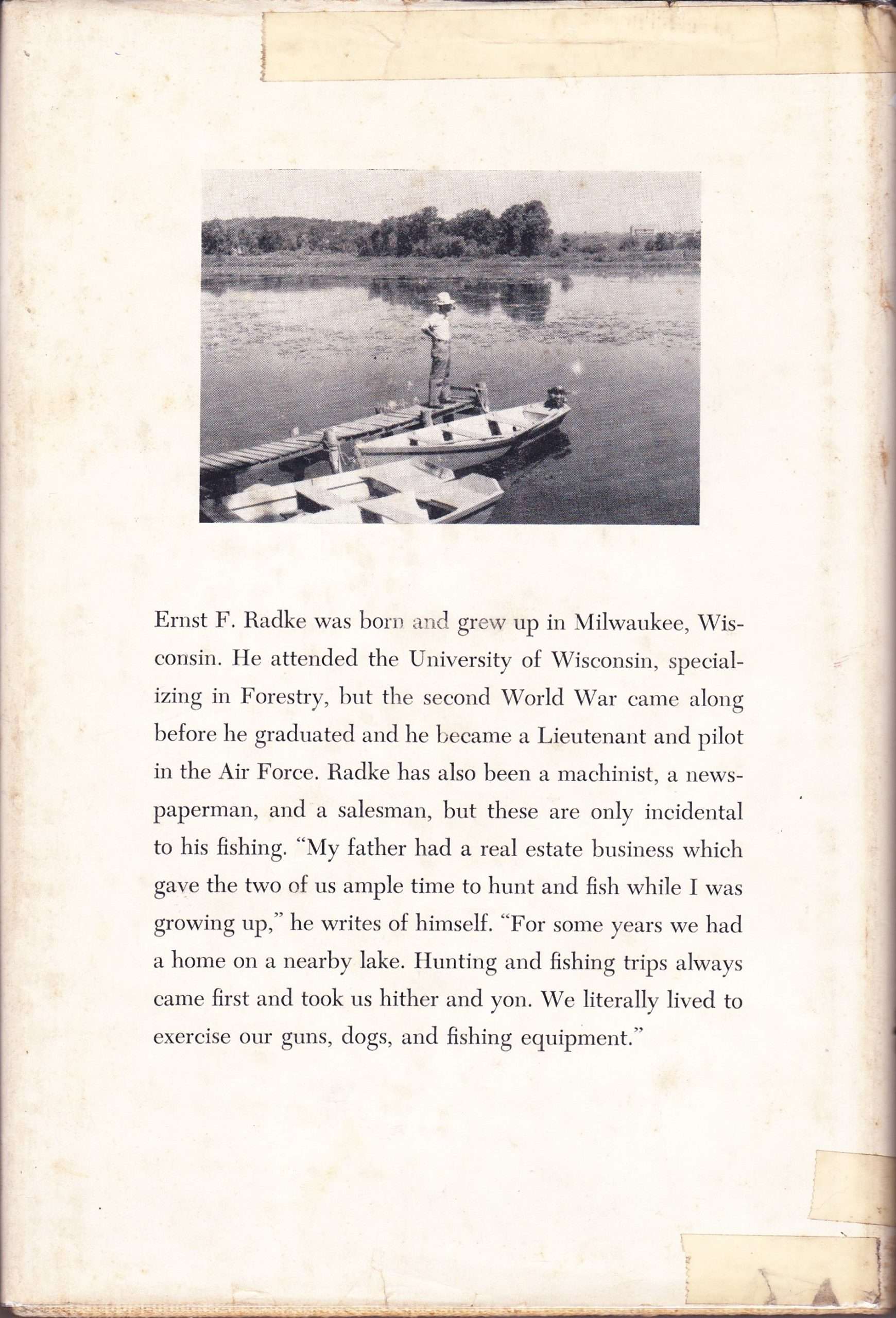
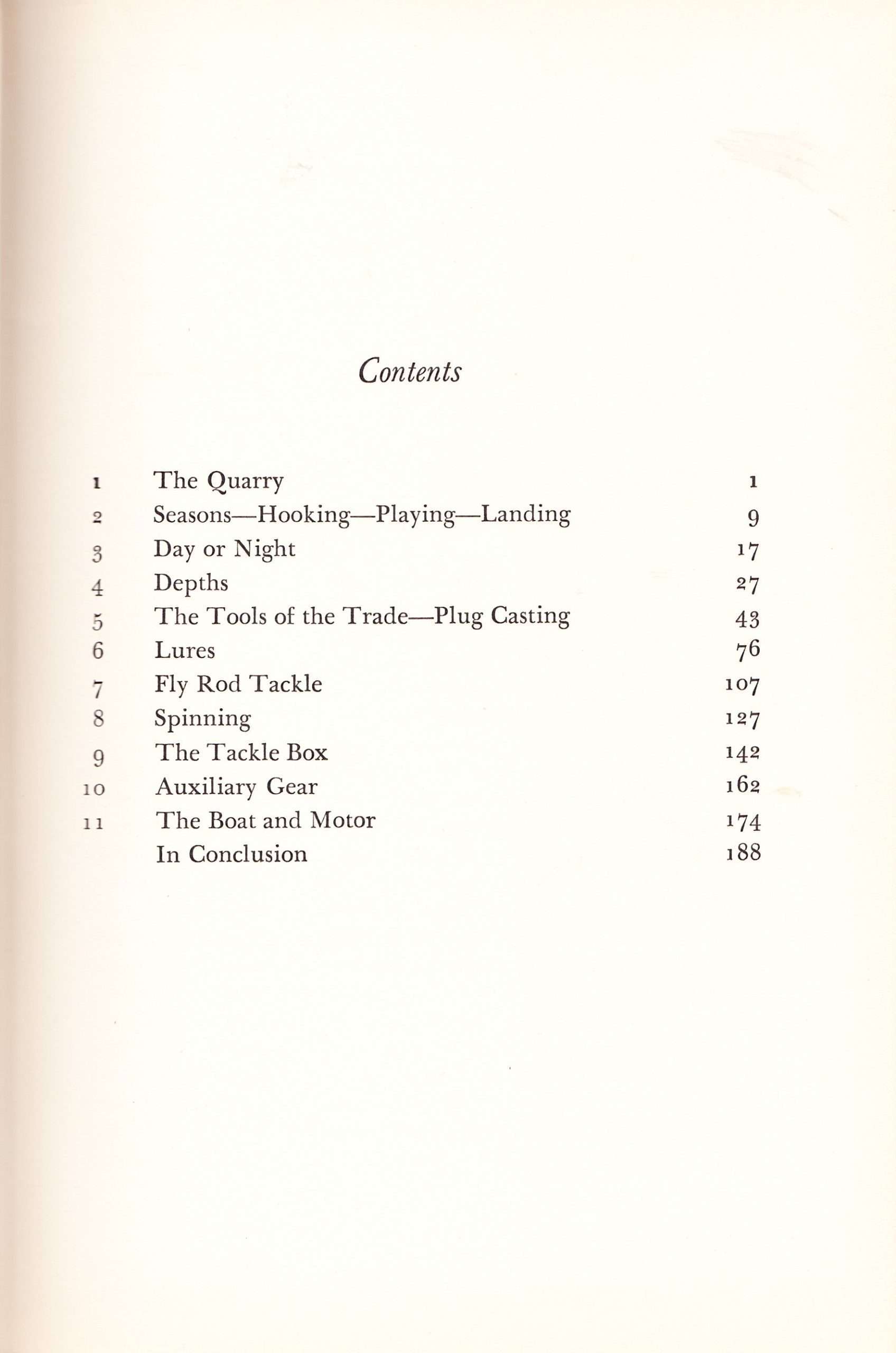
When Bill sends me an email mentioning something or someone, I listen. It may take me a month to act on it, but believe me when I say I do act on it. This book is a prime example. Bill told me in so many words it was one of his favorite books. So much so every time he reads it, it makes him want to be on the water. Now that’s power.
I had the book on my nightstand in the queue as the next book to read. Then a conversation we had made me set aside the current book I was reading and pick up Radke’s book. I’m glad I did.
As with all books, this one starts off with an introduction. The first sentence in his introduction grabbed me. It stated, “This book is dedicated to the premise that taking the black bass on artificial lures is the acme of fishing experiences.” It’s a powerful opening and one that resonates with James Henshall’s famous quote, “Inch for inch, and pound for pound, the gamest fish that swims.” I was hooked.
The introduction continues on giving the reader an idea of what Radke’s qualifications are to write a book. By 1955, Radke had been bass fishing for 30 years. He’d lived all over the United States and had been fishing three to four days a week for years. He was well read and threw praise at the publications, both book and periodical, of the day.
Chapter One starts off with a look at the Quarry, the bass. Radke talks lightly about the biology of the bass, giving enough detail to teach the reader but not make it a college-level course. It’s easy reading with the right amount of detail.
Living in the upper Midwest, Radke talks of the largemouth and smallmouth bass exclusively in this text. Being most of his experience revolved around that area of the country, he describes the types of cover and depths that bass frequent in those locals, although later in the book, he does deviate some.

One anecdote he used as an example in this chapter really caught my eye. One day when he was adjusting a “foot-long” Suick Musky Thriller on the water, he managed to catch a largemouth the same size as the lure. He went on to say later that year, he caught a four-pound smallmouth on the same lure. That made me think hard about the advent of big swimbaits in California.
Chapter Two is all about the seasons, hooking, playing, and landing bass. This chapter starts out telling the reader to make sure their hooks are sharp. He then delves into casting, the importance of short accurate casts, and keeping a tight line to the lure at all times.
After hooking a fish, Radke discusses the proper way to fight the fish for success. The tactics he describes are still the ones taught today. He talks of the correct nets and netting technique, and surprisingly about catch and release.
Chapter Three is all about the best times to fish. In Radke’s eyes, there’s no such thing as a bad time to fish. Just that some days or nights are more comfortable than others. Radke was a serous angler, one not to let a little rain, wind, or cold put a damper on his passion.
His solution to not having a bad day is to fish as much as possible to learn the habits of the bass on off days so when an angler encounters a tough day, they know what to do in order to connect with the quarry.
In this chapter Radke also starts talking about where to find fish. This is where he first mentions deepwater drop-offs as a sanctuary for bass during the daylight hours. Lucas talked about deepwater in his book and at the same time, Buck Perry was working on his structure fishing theories. Lucas’ book was widespread at the time but Perry’s theories were still not widely distributed. So it’s hard to tell if Radke’s deep water tactics were of his own findings or he’d implemented something that he’d read.
If Radke was enthusiastic about bass fishing, then bass fishing at night was his passion. He dedicates a lot to night fishing in this book, especially in this chapter. And his night fishing tips are still spot on today.
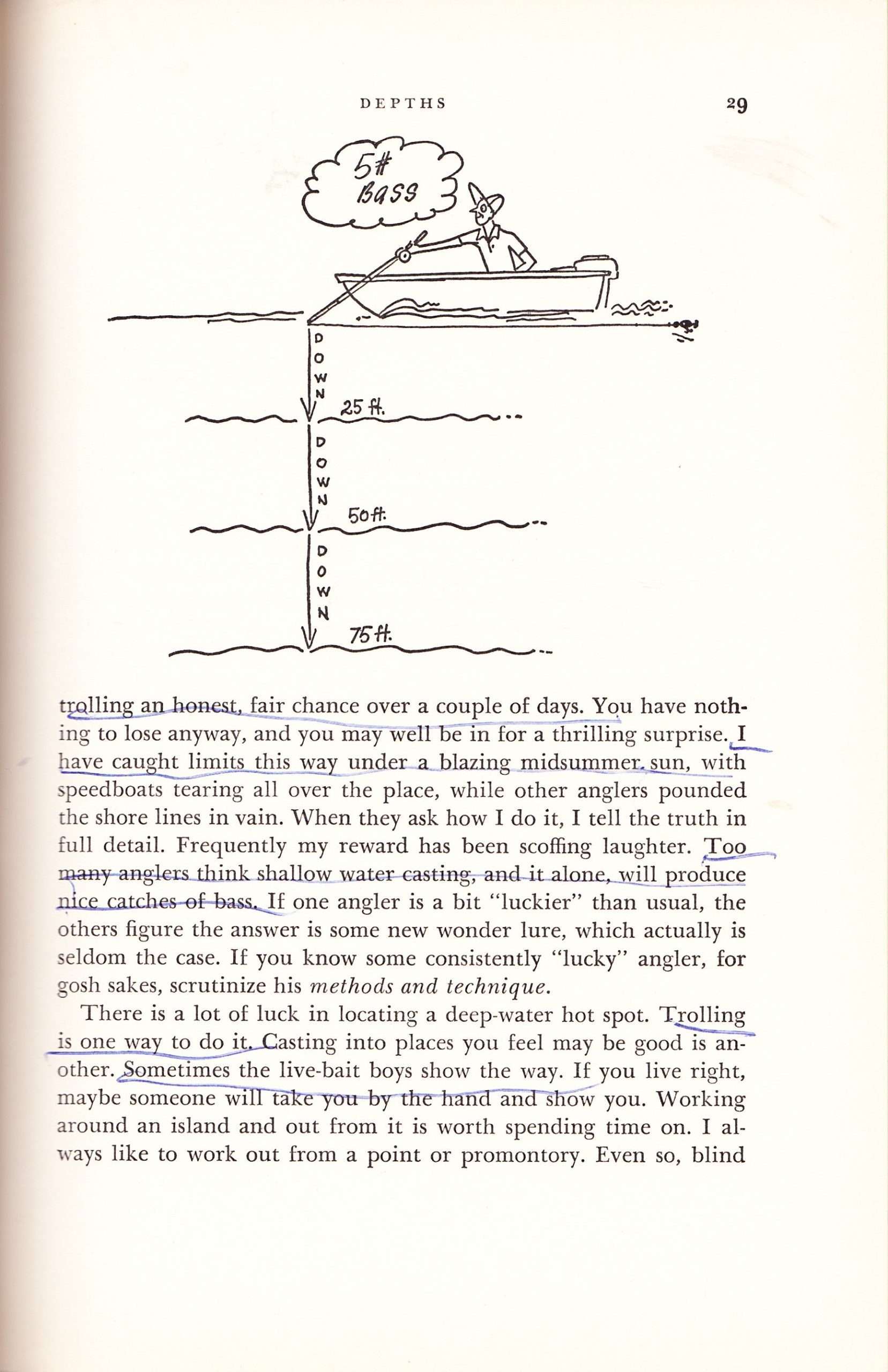
Chapter Four is all about the depths at which bass are caught. It starts out with, “Deep fishing for bass, blind as it were, is the very hardest kind of fishing.” To make it easier, he recommends learning one lake and learning it well. Know all the deep reefs, drop-offs, river bottoms, the list goes on.
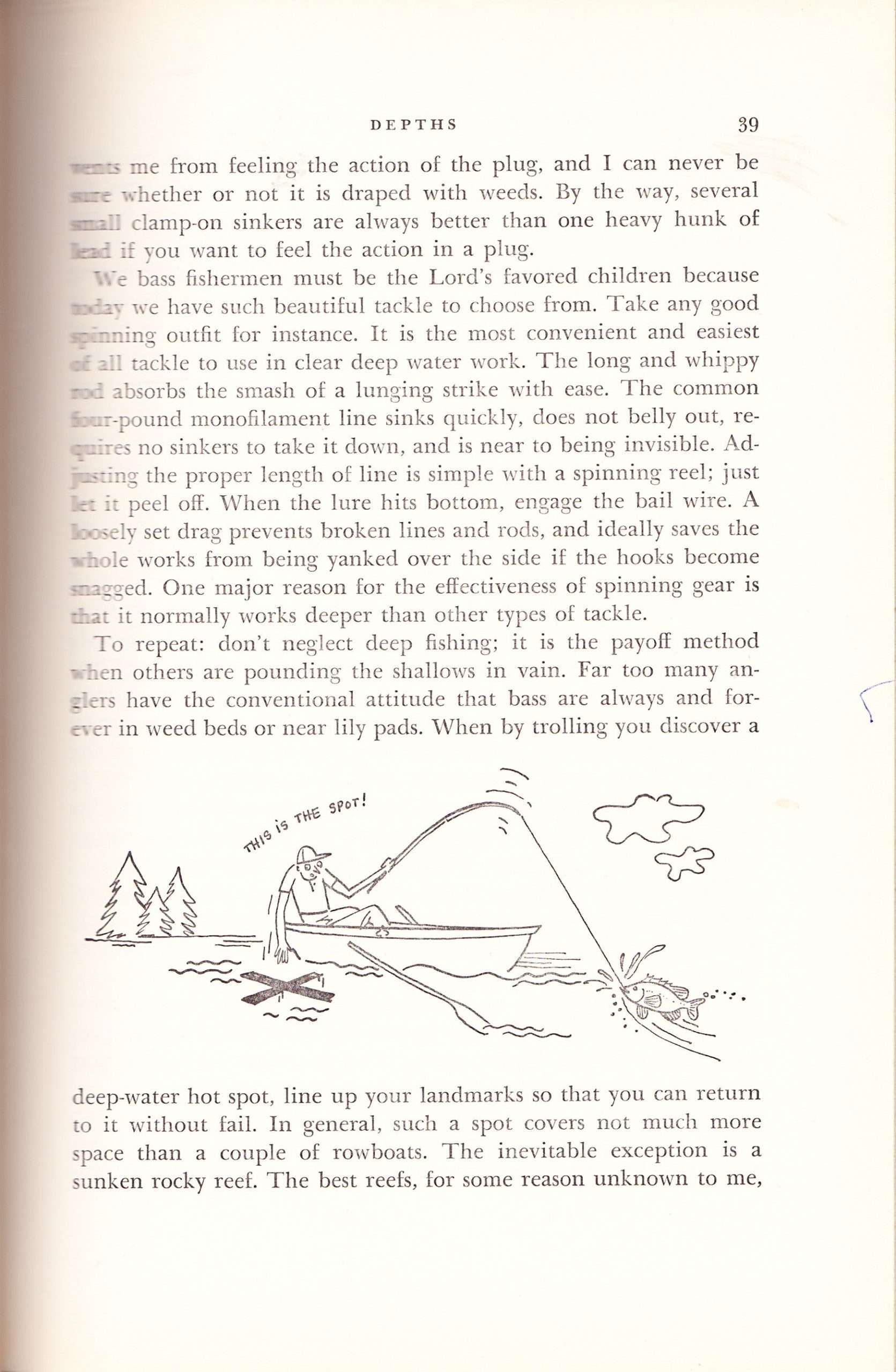
His other axiom is if you don’t want to learn to fish deep, then fish at night. He suggests procuring a topographical map or using trolling methods to locate offshore structure, although he doesn’t use the word structure. He also talks about lining up shoreline features when getting bit in order to be able to relocate a spot.
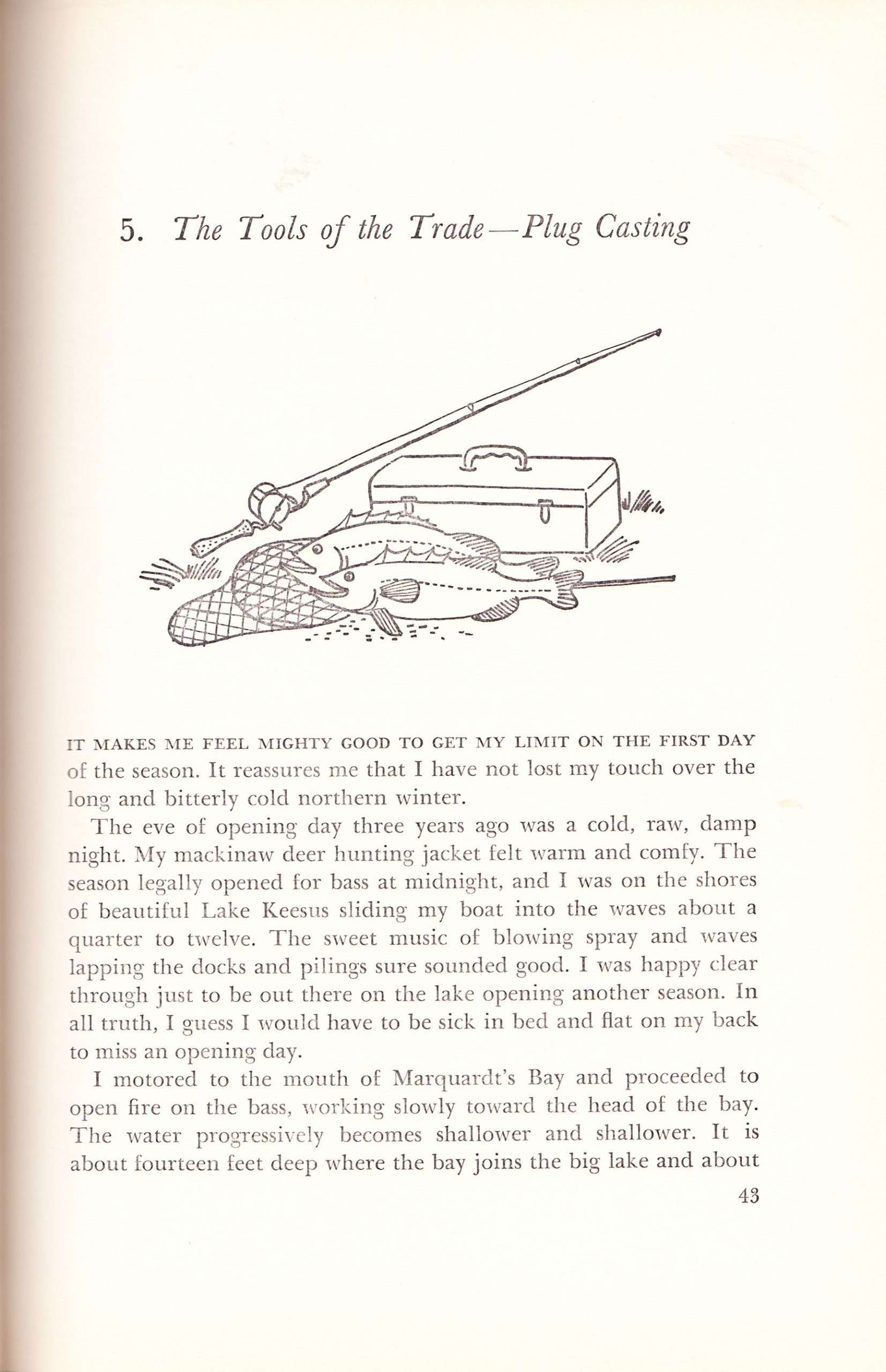
Chapter Five gets into the nitty gritty of the baitcasting gear of the time. But right off the bat, Radke has my attention with his mention of the Heddon Basser in Perch color. This is the same lure my friend Stan Fagerstrom spent years trying to get the Heddon company to bring back to life. It was his favorite lure and from reading Radke’s words, it was one of his favorites too.
This chapter is a lesson in old rods and reels of the day. Radke’s experience in this topic was wide as he describes the best rods and reels. He gets into steel and bamboo and gives several examples of rods he recommends. But then he relinquishes all those accolades to the new glass rods that had hit the industry only five years before.
As much time as he dedicated to rods he dedicates to reels. Having just been bitten by the mid-century reel bug, I found this section of the book filled with valuable information. He talks of all the big reel companies of the day. Companies like Langley, Pflueger, Shakespeare, and Heddon.
At this point I think I’ll conclude this book review. If what I’ve written doesn’t get you fired up to get a copy, you’re probably not interested in reading anymore of my words.
Overall, the book is very easy to read, the artwork is folksy and will provide a laugh, but more so, the book is filled with a historical look back on what bass fishing was like back in the 1950s. Radke’s authority is well understood but he also has a gift of making fun of himself. There is no hard selling of gear in the book and when he does make a recommendation, he does it through his experience using the gear.
I must thank Bill Sonnett again for sending me this book. It’ll be one I keep close at hand as I feel I’ll be reading it more and more as I continue down the path of documenting the sport we all love.





I see Radke is another Wisconsinite. I’m going to challenge Ken Duke and you on your claims that Florida and California are the bass meccas of the country, because Wisconsin is the true bass mecca of America! With more lure makers and writers on the sport than you can shake a stick at – and state records more questionable than George Perry’s 22lb. bass – Wisconsin deserves the title! lol But seriously, I just purchased Radke’s book immediately after reading your excellent review and looking at the photos of the book. The illustrations alone make it worth it. I just love that old cartoon-style of fishing illustration. Can’t wait to get it and put it on my nightstand for some evening reading. Thanks Terry!
I own two editions of this thoroughly delightful book(also based on Mr. Sonnett’s recommendation!) I know of no other bassin’ tome that so well exudes the joy of pursuing our favorite fish. It is one of my favorite reads and I return to it frequently when I want to recapture the fun and excitement of our favorite sport. Thanks for getting this review posted, Terry, so that more bass fishing fanatics can savor this wonderful read!
Your review has caused me to reread this book for at least the 10th time! Health problems have kept me off the water most of the summer, but as we all know some of the best fishing is in print. My long-time fishing partner Warren Platt has been a kindred soul when it comes to bass fishing with rods, reels, and lures from the 1930-1960 time period. He is not a reader, but could not put this book down and looked at me one day and said, “You know what is great about this book, he fishes just like we do”. I have given away at least a half dozen copies to folks who are getting started in vintage tackle fishing and they all agree that no book has been more helpful and inspiring.
Hey Bill! Thank you again for the book! It has become one of my all-time favorites!!! Maybe someday we’ll be able to share a boat together and catch some fish on the old gear!