
It seems the more magazines I investigate, the more ads I find of Fred Arbogast products. Recently we’ve run several ads from the 1940s era, and today in More Fred Arbogast 1940s, we’re featuring some more. The amazing thing about these ads, which were placed in 1940, 1942, 1945, and 1946, is that none of them are duplicate ads that we’ve shown before.
To say Fred Arbogast understood advertising would be an understatement. In every magazine from the 1940s I have scanned he had, at a minimum, one ad placed. Most of the time he had two ads placed and on occasion, three.
Most of his ads were small black and white ads featuring one bait and a headline. Others were larger ads, maybe 1/6 page, also in black and white. In the later part of the 1940s, Arbogast would run full-page color ads. In my opinion, the coolest ads he ran were the black and white print ads where the lure itself was adorned in color. They really popped out of the page and elicited your attention.
Today we have four different Arbogast baits to check out. We’ll start off with the Hula Dancer, then go to the Jitterbug, Hawaiian Wiggler, and end with the Tin Liz, Arbogast’s oldest bait at the time.
Hula Dancer
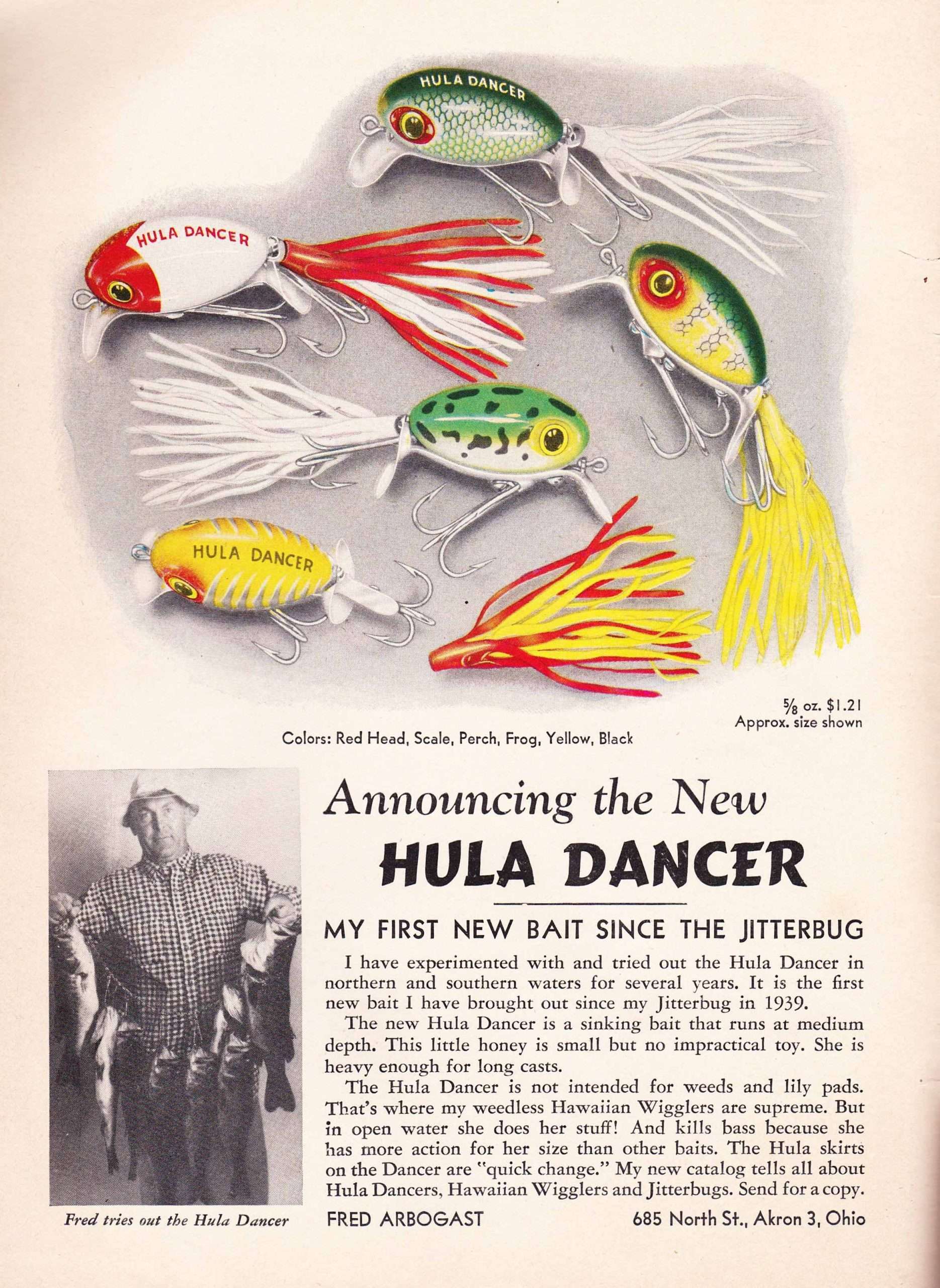
Released in 1946, the Hula Dancer was Fred Arbogast’s first new release since the Jitterbug in 1939. A sinking lure that dove to a medium depth, the bait weighed in at 5/8-ounce, had a diving lip, and featured Arbogast’s own flat rubber skirt.
According to Arbogast, he’d experimented with the bait for several years before its release. He’d tested the lure in northern and southern waters with great results. He also stated the bait was not designed for use in weeds or pads but was designed for open water.
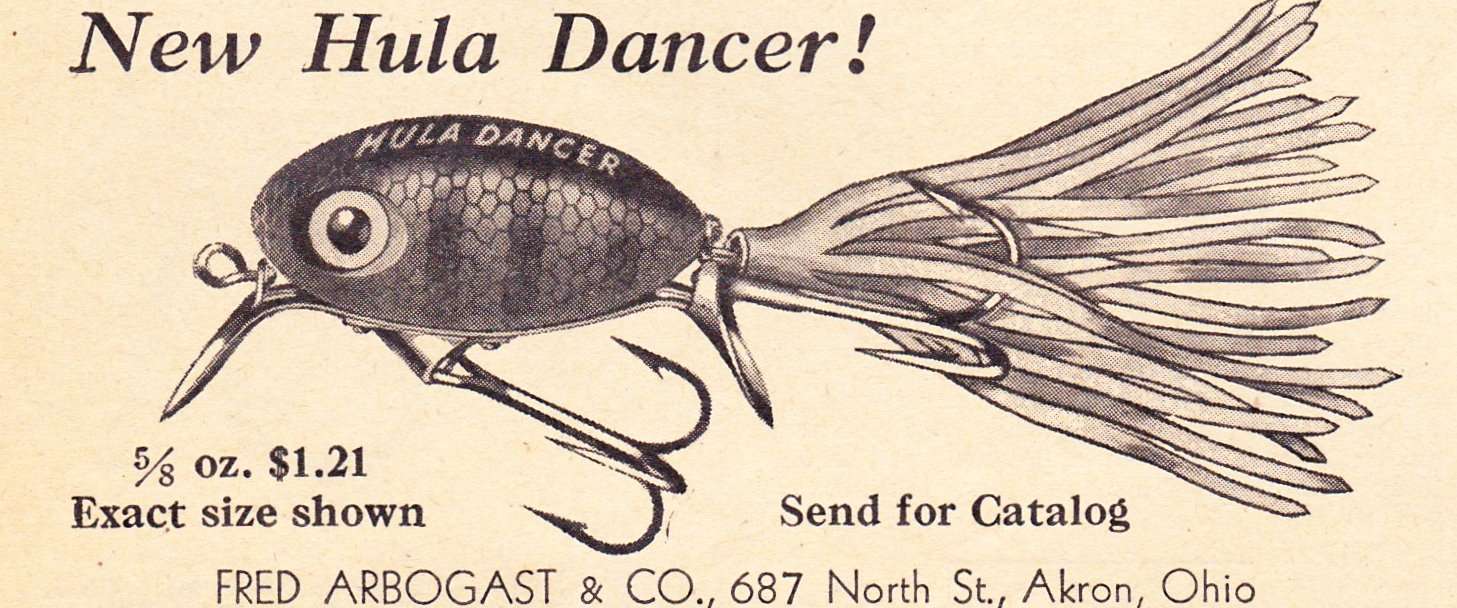
Looking at the bait, you’d think it would have been the forefather of the Strike King Spence Scout. Problem is the Spence Scout was not an original Strike King bait, but was purchased from C. A. Clark MFG Co., makes of the original Clark’s Water Scout. The Water Scout dates back to 1928 and from that time until Charles Spence bought it in the early 1960s, it didn’t have a skirt.
So, was Arbogast trying to compete with the Water Scout? That’s a question I have had for a long time.
Jitterbug
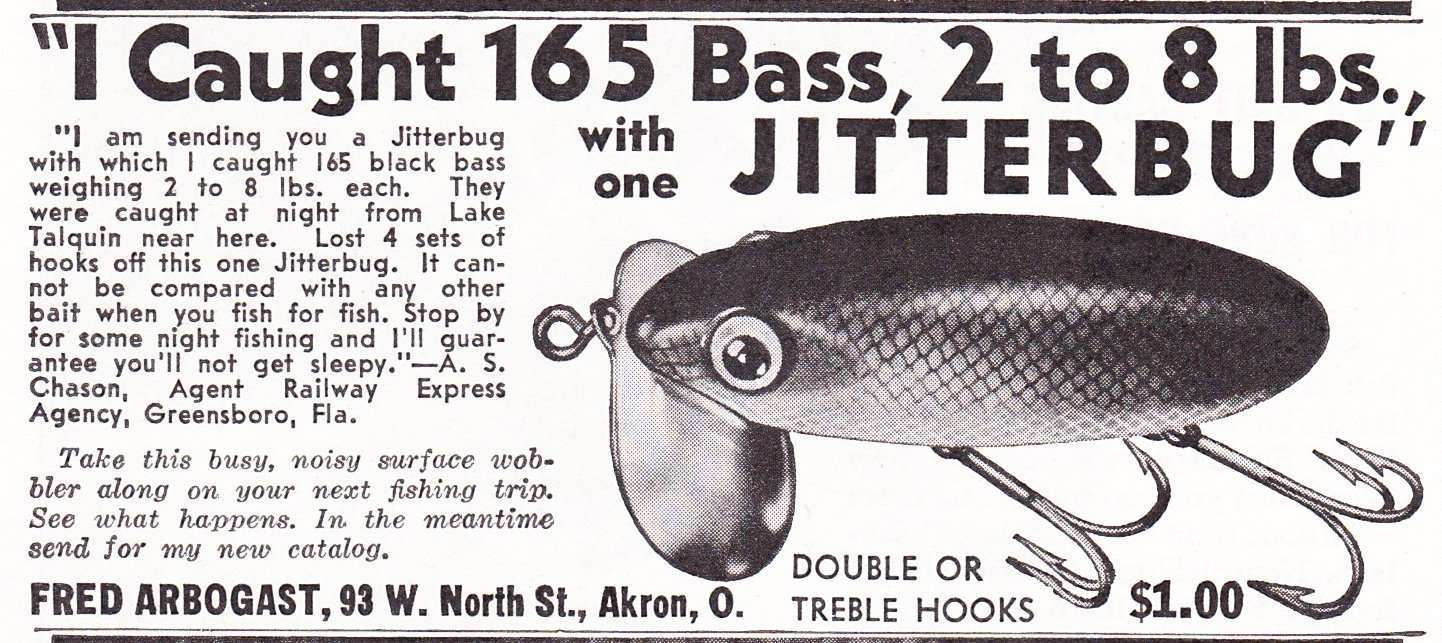
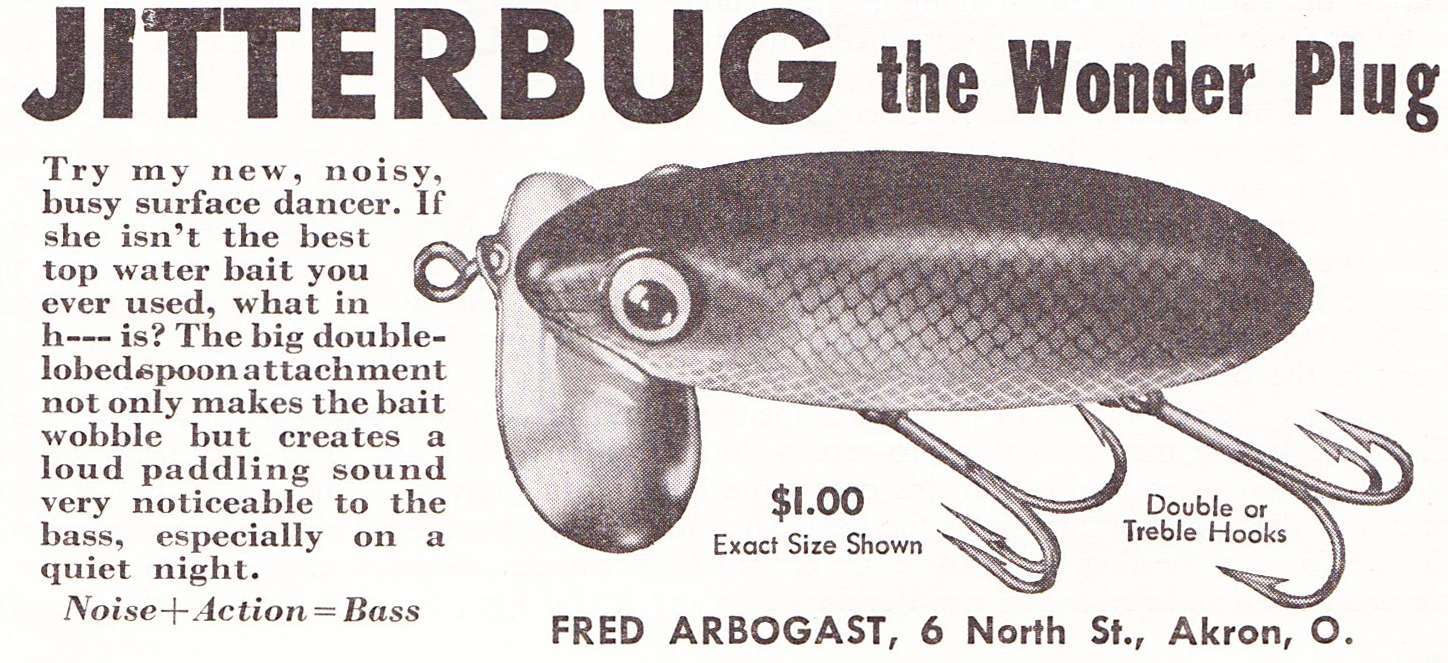
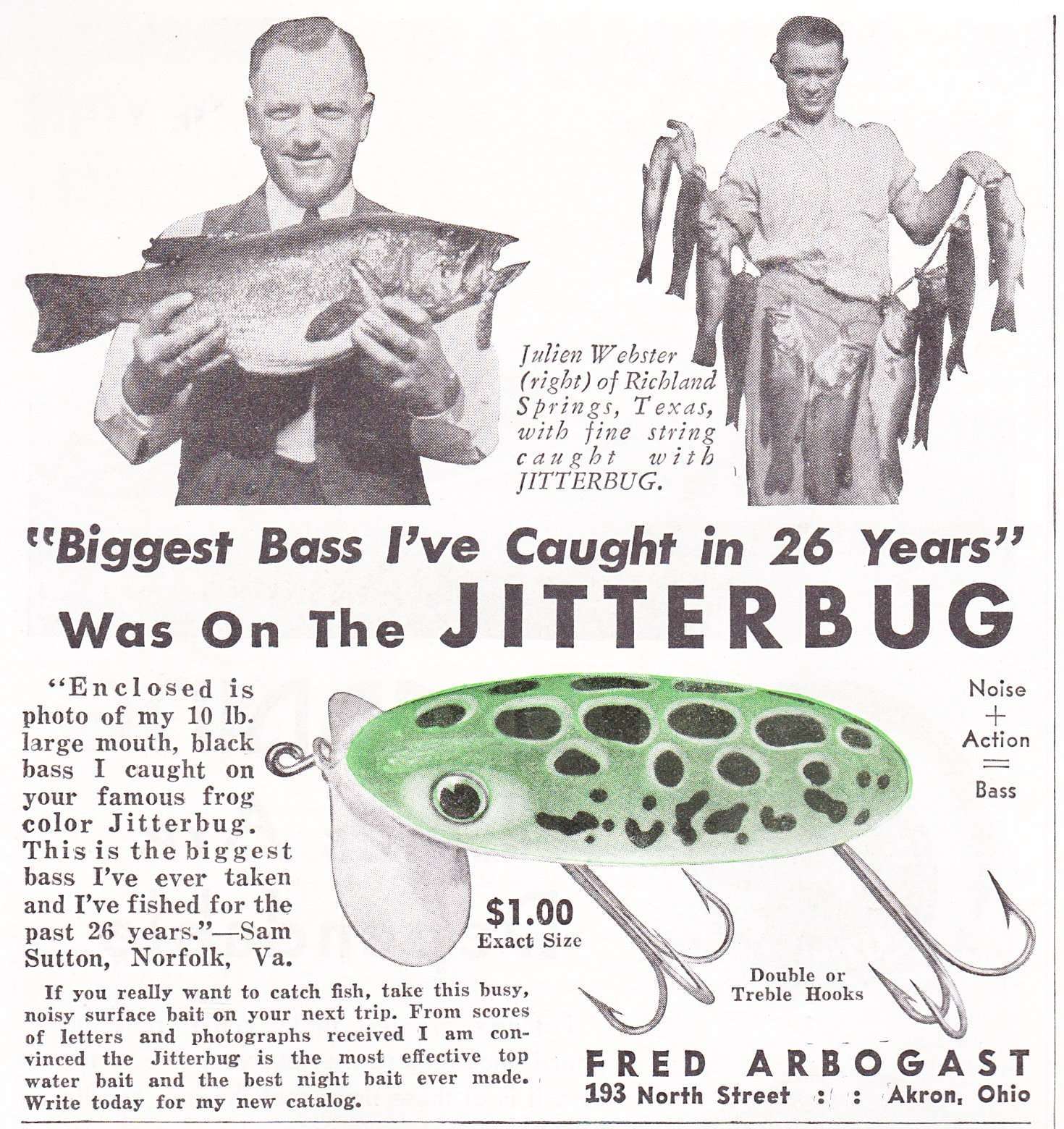
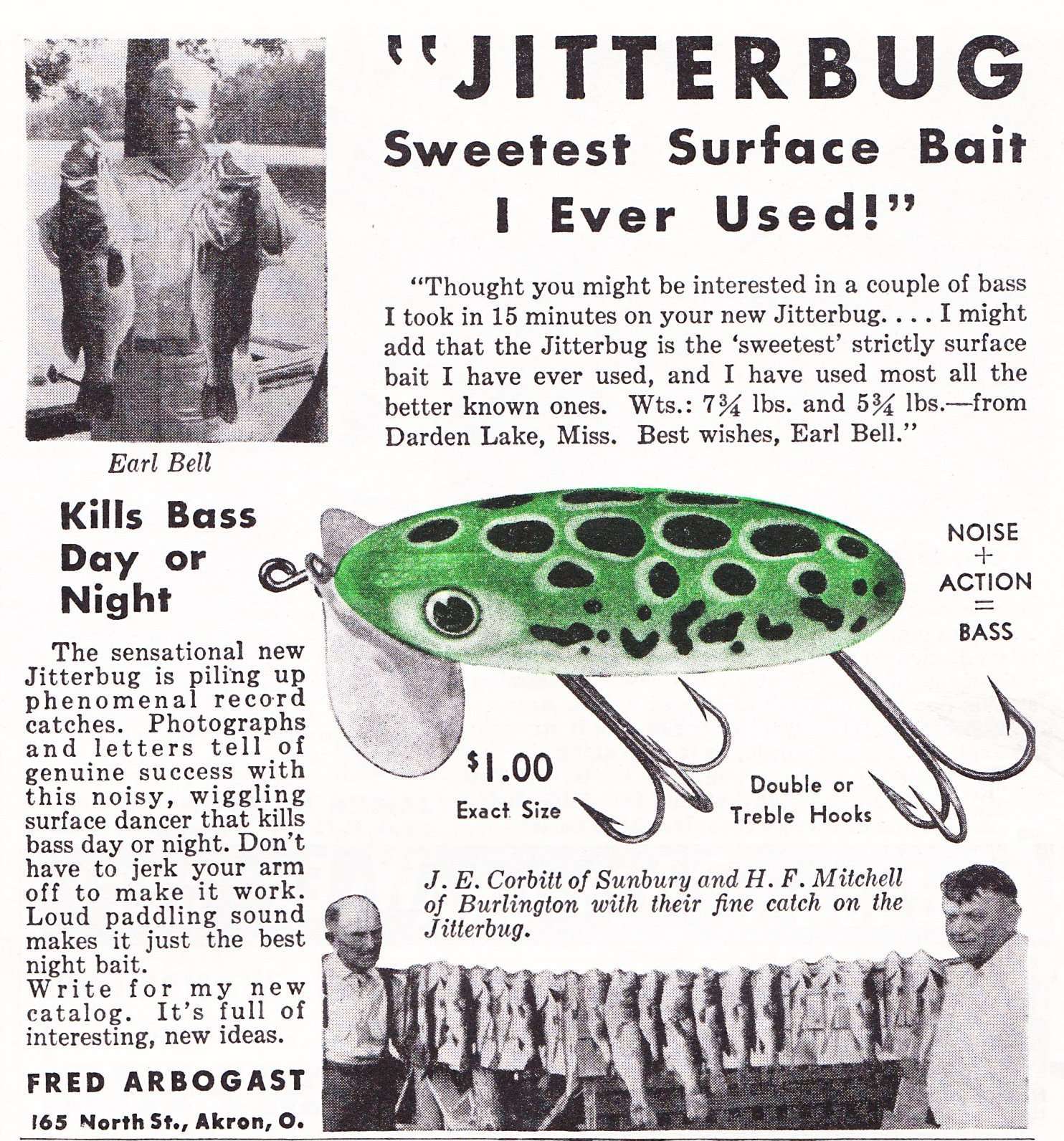
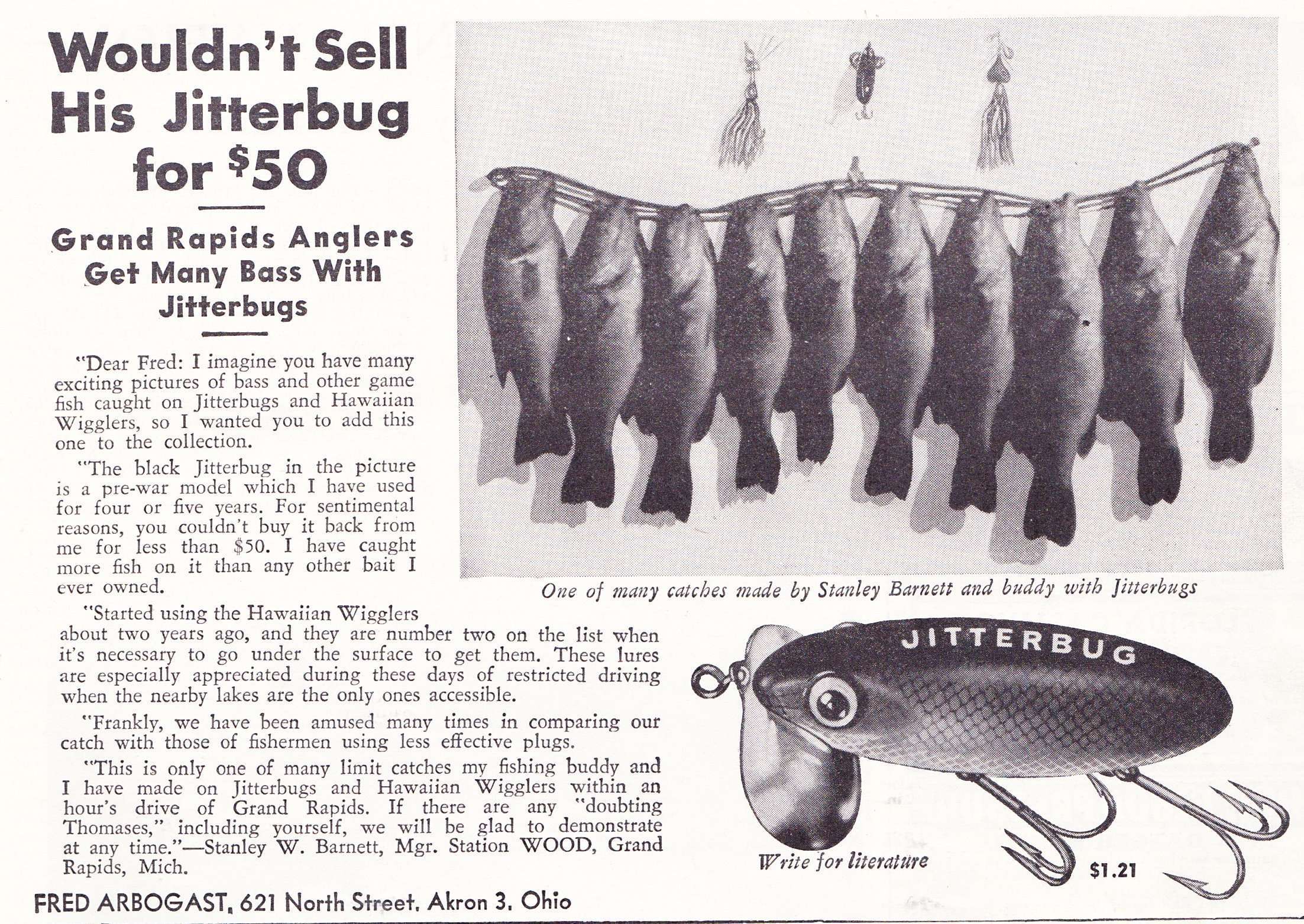
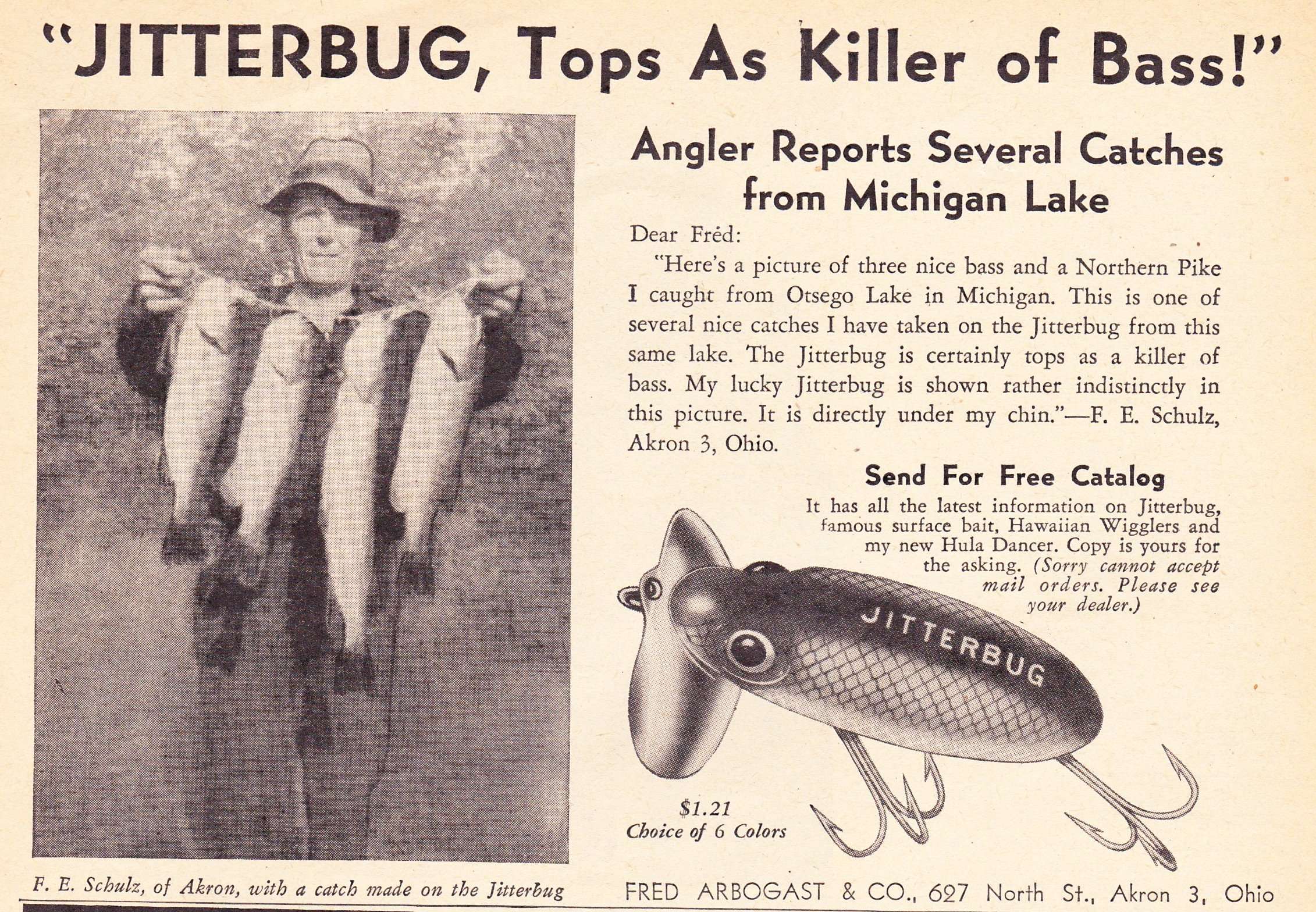
By the middle of the 1940s, the Fred Arbogast Jitterbug had become a staple lure in every serious bass angler’s tackle box. The bait was released in 1939 and within a year had established a cult following. You were hard pressed to investigate any outdoor magazine of the day and not see an ad for the topwater bait.
In this series of magazines I went through, I found seven new Jitterbug ads from the decade. Of the six, two were black and white with the Jitterbug colored in the famous bullfrog pattern. Both of these ads were different than the colored Jitterbug ad we featured a couple months ago in Bass Lures 1945.
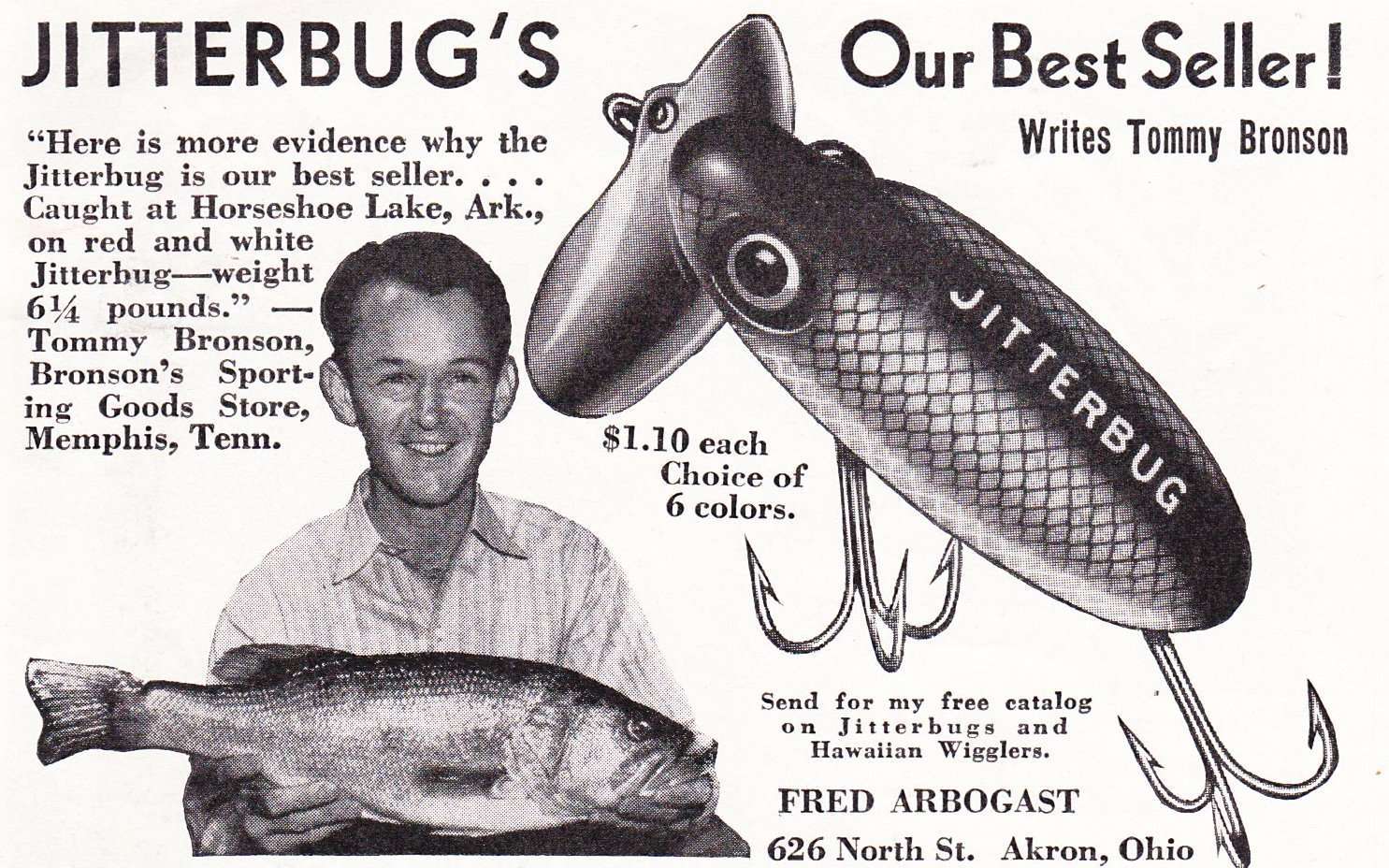
Each of the big ads features an angler holding either a single big fish or stringer and the story that went behind the catch. Typical Arbogast Advertising.
Hawaiian Wiggler
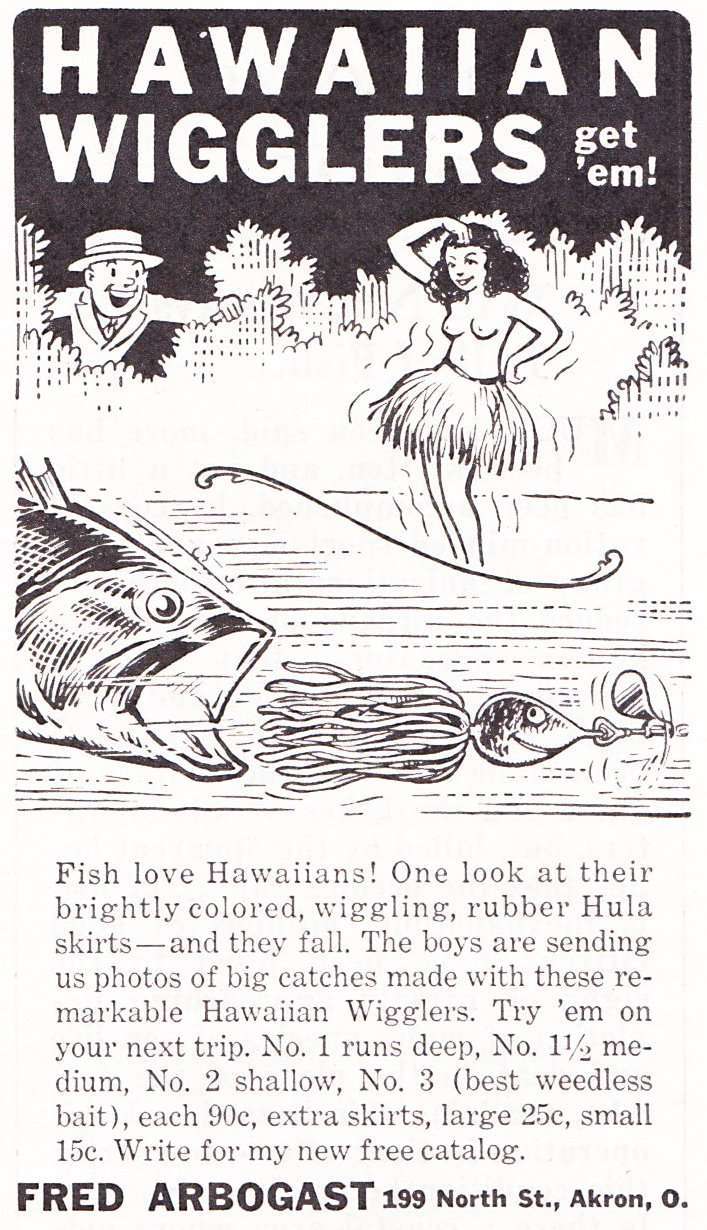
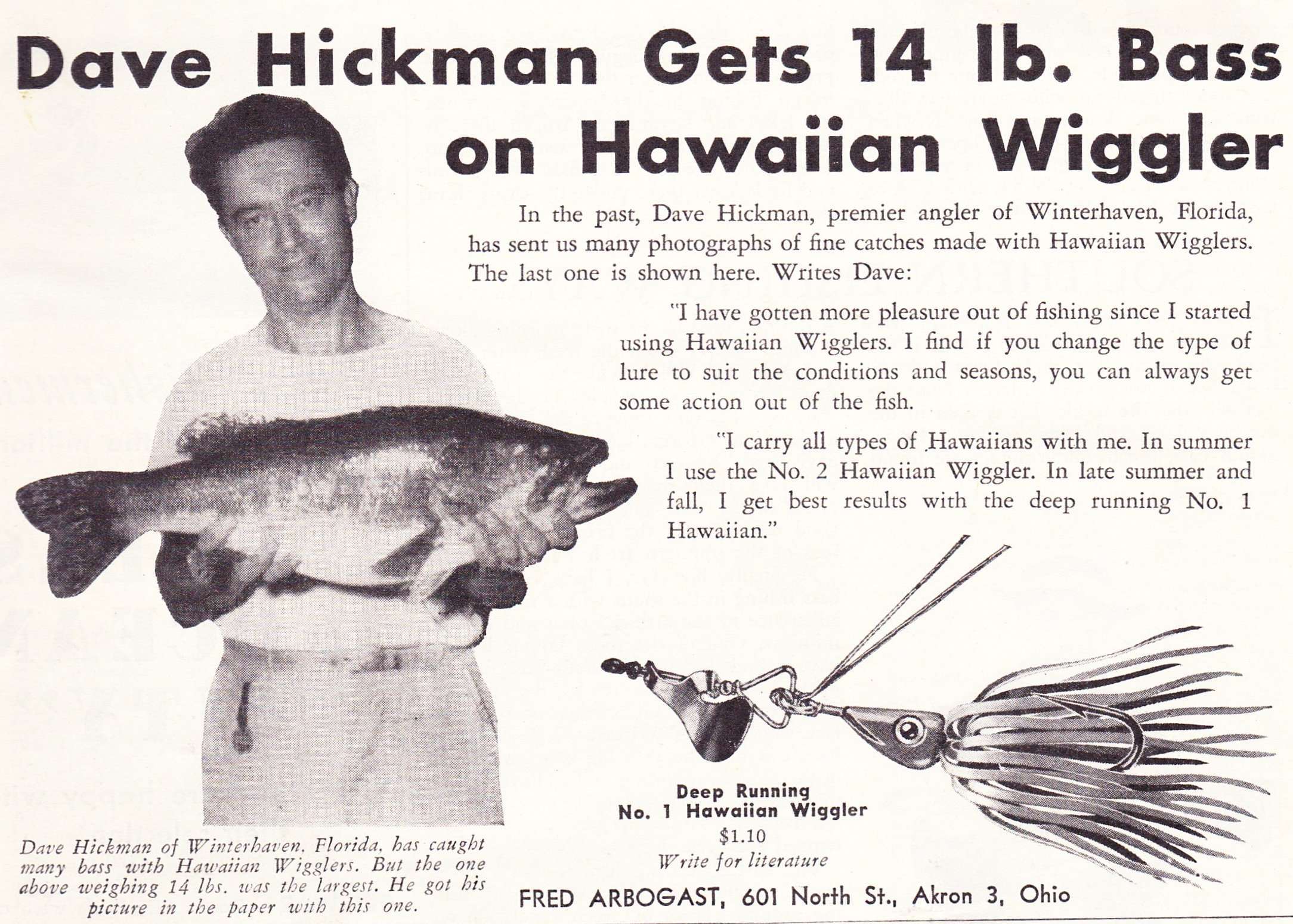
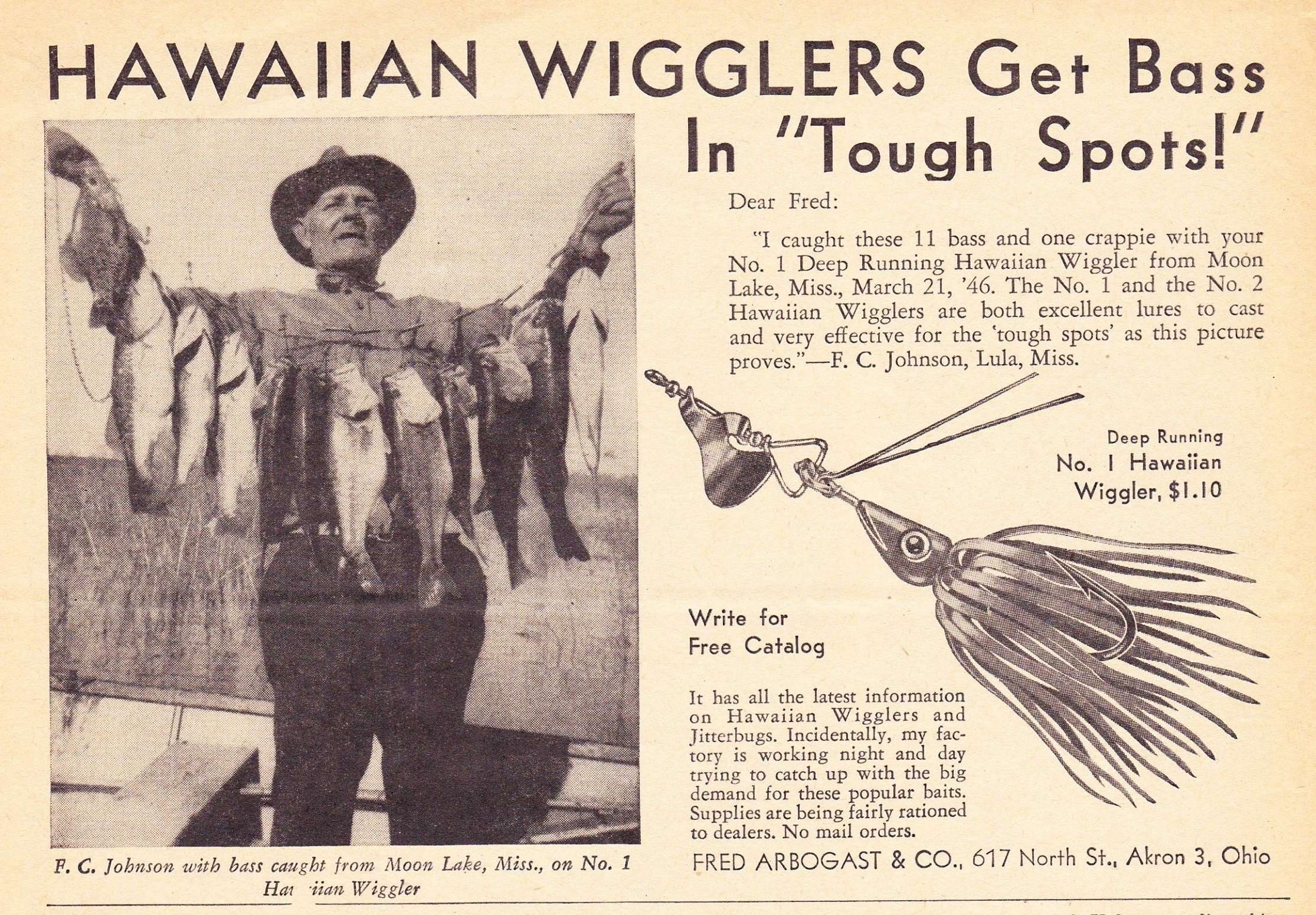
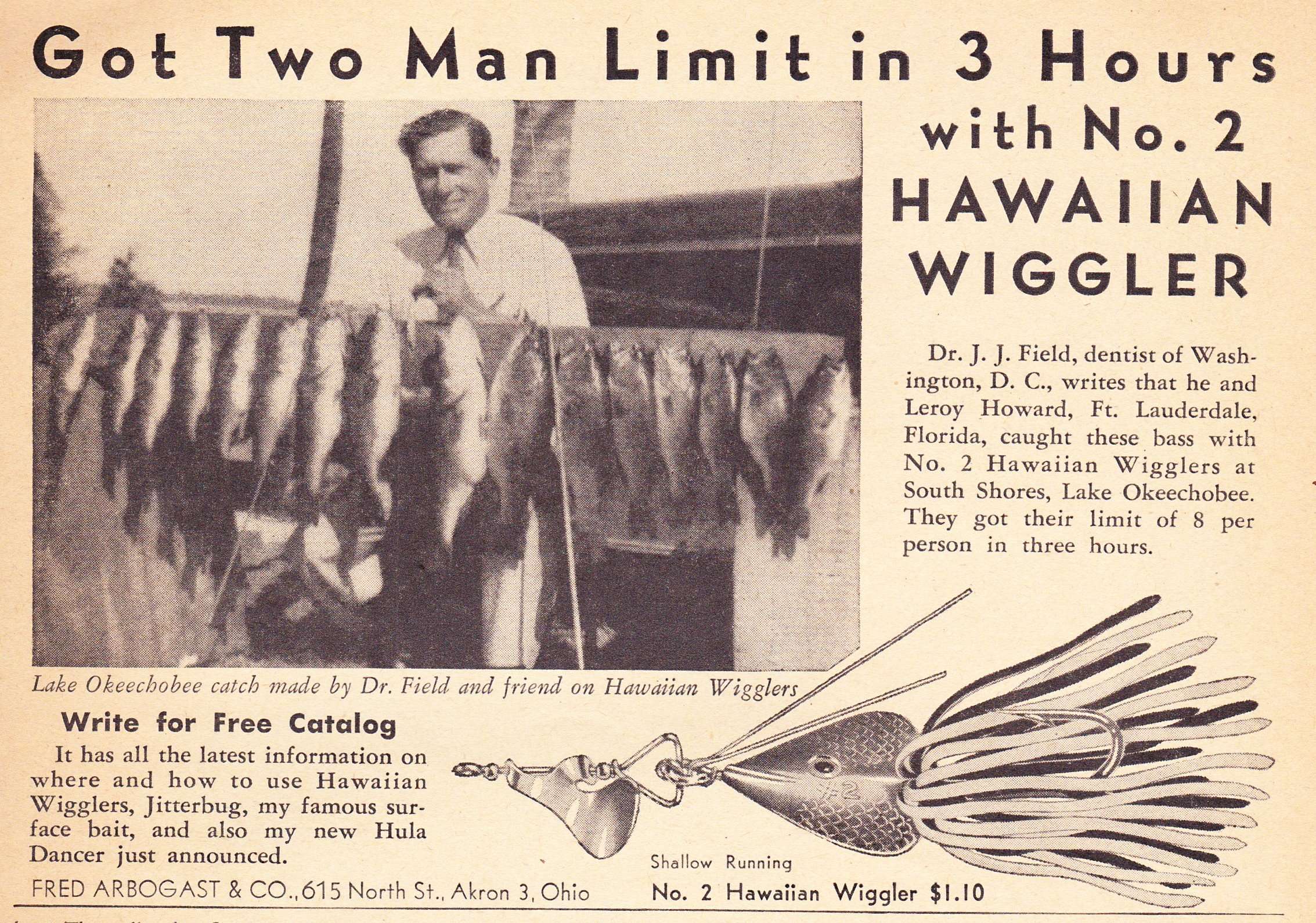
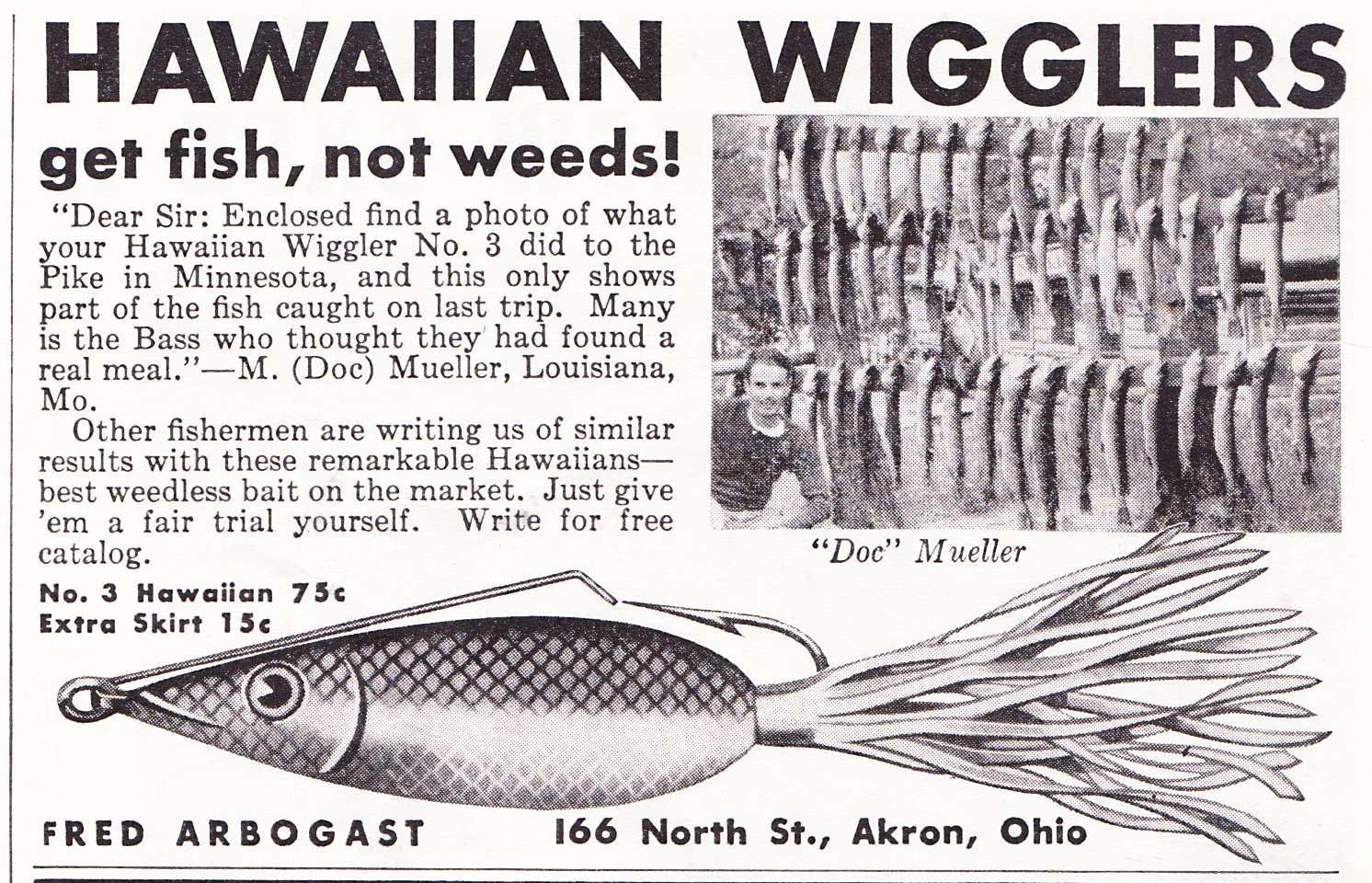
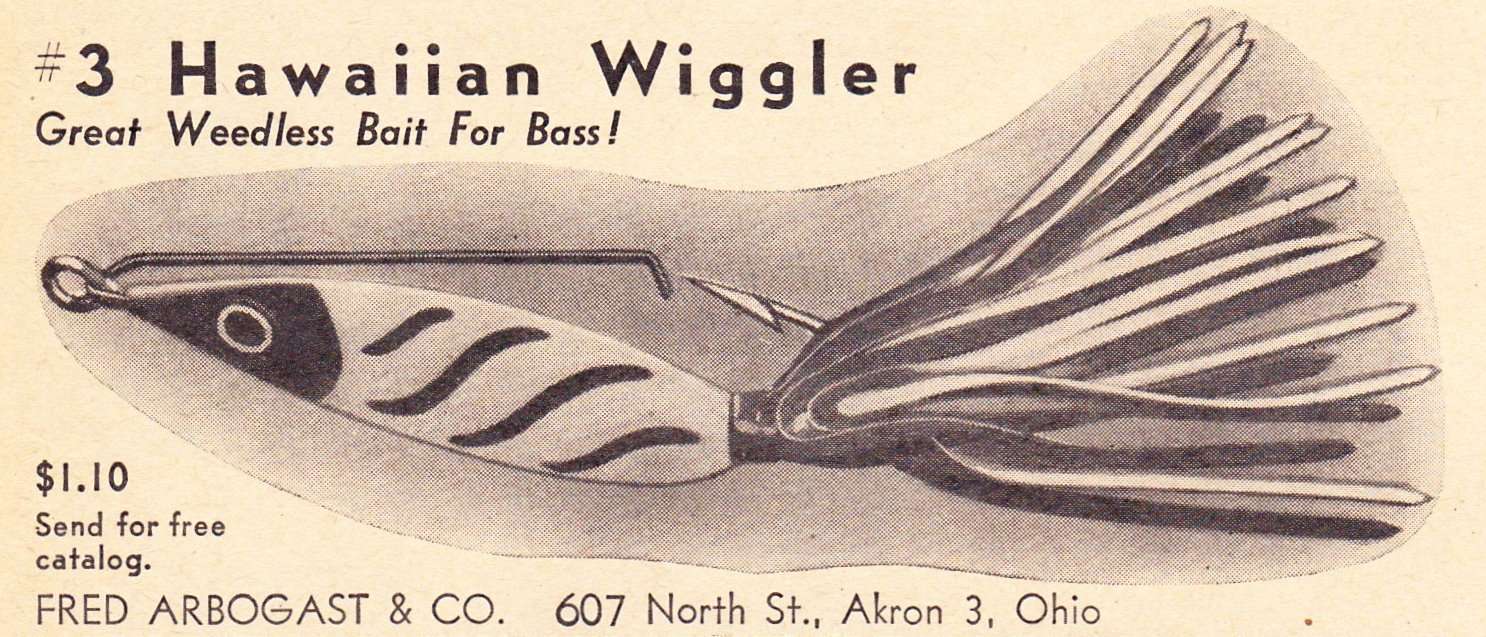
The Hawaiian Wiggler was another standard fish catcher for Fred Arbogast. The bait came in four sizes and configurations: the #1, #1 1/2, #2, and #3. The #1 was a deep runner, the 1 1/2 a medium runner, the #2 a shallow runner, and the #3 a weedless spoon version. All versions featured Arbogast’s flat rubber Hula Shirt, which was designed specifically for this lure genre.
The earliest ad in this series is a bit racy, especially for 1940. The ad featured a topless Hula Dancer doing her thing with some guy peeking through the bushes at her. Remember, this was the time when Hawaiian dancing was becoming popular and anything from Hawaii was deemed the “in” thing.
Nine total ads were placed for the Hawaiian Wiggler in the magazines I went through, and they broke down like this. Two featuring the #1, three featuring the #2, and three featuring the #3. Not one ad was placed for the medium running #1 1/2. And none of these ads were duplicates of the ads run in earlier Hawaiian Wiggler ads we’ve shown here on the Bass Fishing Archives.



Tin Liz
This little spoon bait was one of Fred Arbogast’s first successful lure designs. It came in several sizes, up to sizes that were used for musky. But the bait in the ad shown here was the fly rod size, which came in weights 1/64, 1/32, and 1/16-ounce. As stated in a previous post, this bait was metal and was formed from a material called duralumin, a material used for blimps at the time.
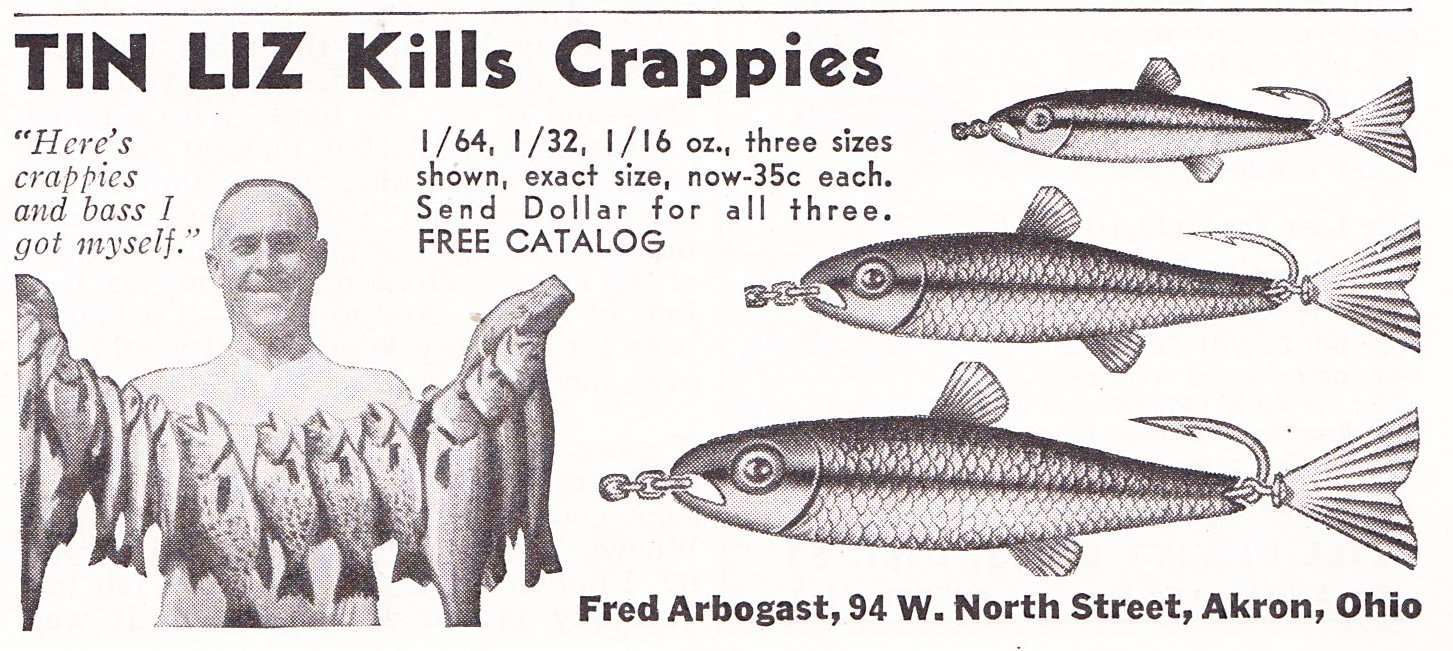
Arbogast would take the Tin Liz genre of baits and would also make shapes that resembled a bluegill, pike, musky, and other prey fish, not just the minnow looking body. Some of these early baits have become very collectable over the years, as have the baits released in the 1940s through the 1960s.
That about sums up the 1940 ads I have for the Fred Arbogast Company. If you’re enjoying this series, please let us know below in the comments. And, if there is another company you’d like us to dedicate some time to, please let us know.




The hula dancer is designed to sink like a brick, It is solid plastic not hollow. Shakespeare Dopey is a wooden version from the same period. The double bill is an older Keeling design as seen on the Tom Thumb lure and some other Keelings. The real beauty of his ad is that it is the first time I know of that Arbogast specifically dates the introduction of the Jitterbug as 1939. See Deconstructing Old Ads Vol III pages 25 and 26.
As usual Bill, I’m going to have to look up the Tom Thumb lure. I have an ad for the Dopey. :-)
Am I enjoying this series? Are you kidding? I’m loving it! I just love these old ads, and I’m with you, the ones where the lures are colored really pop. They’re frame-worthy. The country was going gaga over everything Hawaiian and tropical during WWII, and Arbogast was bit by the bug too it seems. Clever and timely marketing. When you say the man knew the value of advertising you aren’t kidding. Arbogasts color ads are some of the best in fishing,
LOL David. Thank you sir. I’m sure I’ll find more ads from the period. It seems I have a constant stream of magazines landing on my doorstep these days.