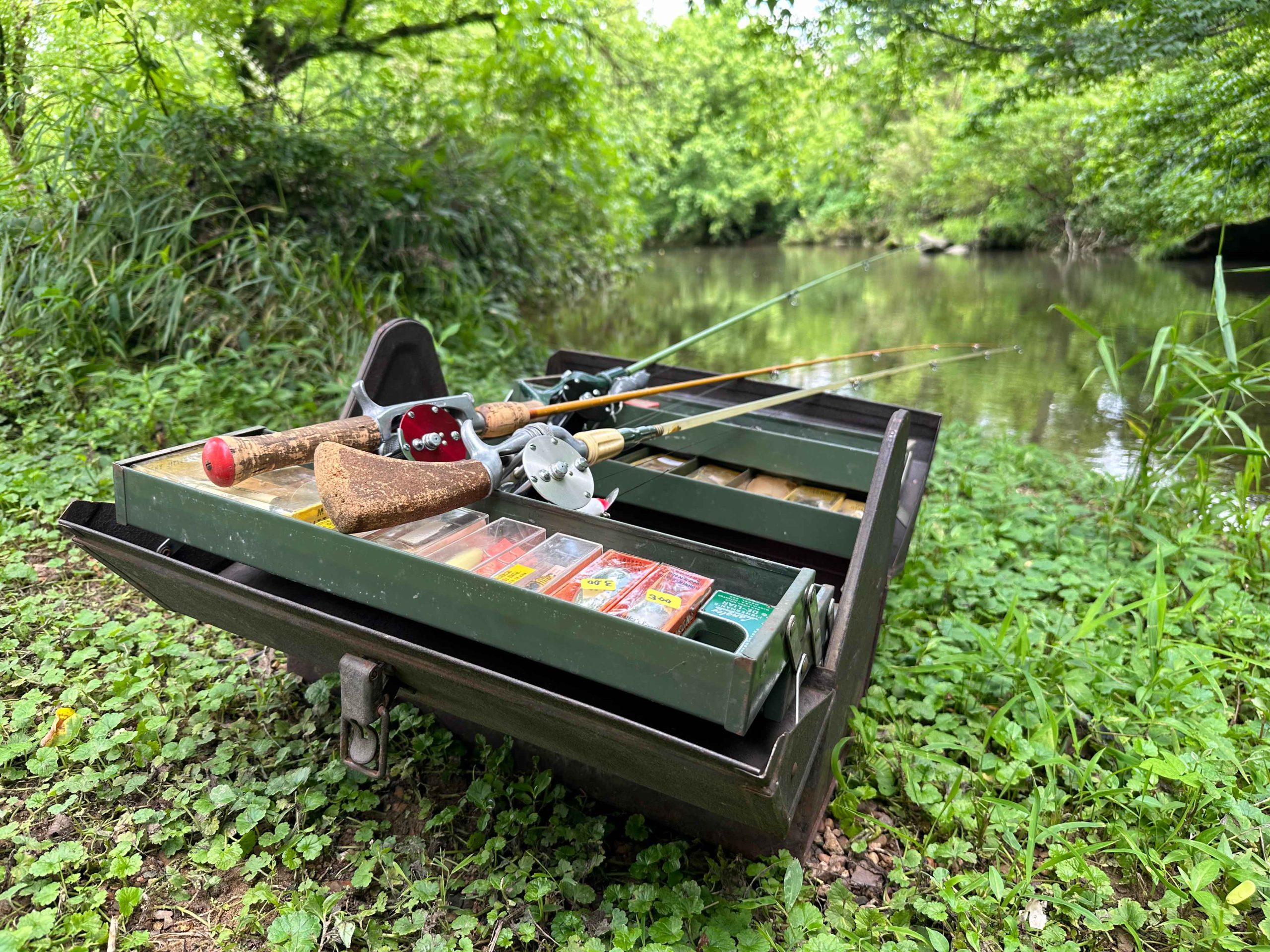
I have been looking through old tackle boxes for forty plus years. Many times, I have been amazed by what one could read into the contents of a particular tackle box. Probably the person who looked into more really early tackle boxes than anyone I knew was long-time collector Walter Blue. Walter lived in Kalamazoo Michigan and began looking for old tackle in the 1960s, long before it became the popular hobby it is today.
Walter held an annual garage sale in an attempt to get rid of the mountains of usable (but not quite collectible) tackle he accumulated. Walt separated items out to make it easier for the shoppers to locate what they wanted. I remember large metal boxes that were brim full of metal spoons and were so heavy it took a refrigerator cart to move one. One box I recall was full of dozens of sharpening stones that had come from tackle boxes. There were many shapes and sizes.
In the middle of these stones was one with a hole drilled in it. Having collected Indian artifacts for many years, I recognized it as a perfect ancient Indian pendant made from Huronian banded slate. When I told Walt what it was, he was somewhat shocked. I’ve often thought about the fellows who went fishing one day and found that artifact lying by the bank of a stream and threw it into their tackle box, where it remained.

One very old box I found many years ago had only two, well-made “folk art” baits in it. Today they are in Carl White’s book in the “unknown” section. What really made this box memorable was the rest of the contents. In the bottom were close to 40 whiskey corks. Cleverly hidden in the rest of the box’s contents were several corkscrews.
My take on the box was that when this fellow went “fishing” he had a pint of whiskey with him and after rowing out of sight, he anchored and started to imbibe. When finished, he probably sunk the bottle in the lake, tossed the cork in the tackle box and went home to report to his wife that fishing had been slow. If she did suspect his real activities, there was little evidence to be found as most folks then used common corks for bobbers.
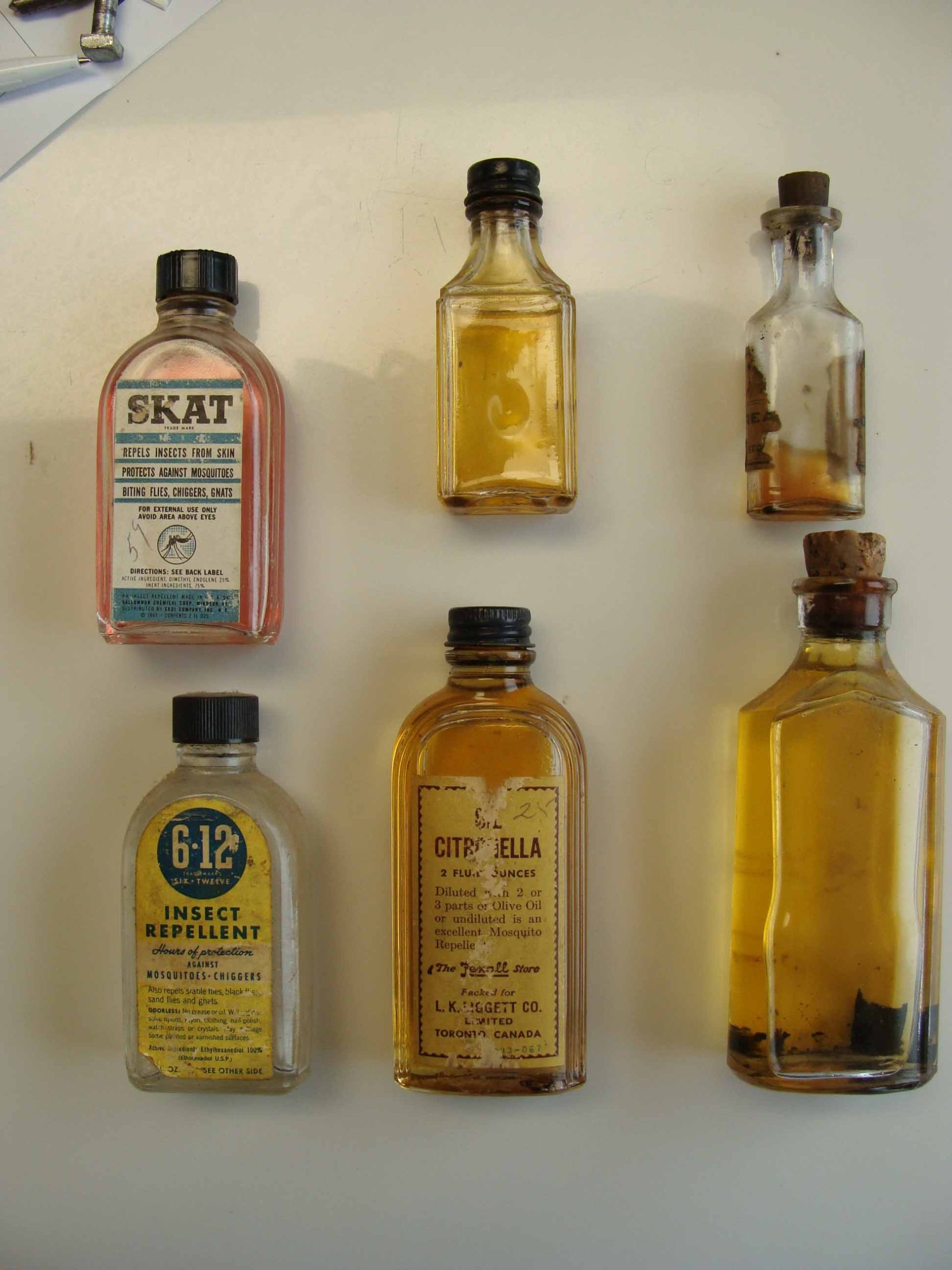
A common item found in older tackle boxes is insect repellent. It came with many names but most contained citronella in some form. I find the smell of this substance somewhat pleasant. It immediately brings back memories of my grandfather’s utility room where citronella’s sweet odor always permeated the atmosphere.
35 years ago, I attended an estate auction where I bought a well-stocked tackle box with many baits from the 1920’s. The auction ended on a Saturday evening.
The next day I had to leave early and would be gone for a week on business. As I would be in Cincinnati the following weekend, I planned to attend the NFLCC lure show in Blue Ash, Ohio. I took the tackle box with me, intending to sort through its contents when things slowed down at the show.
Around mid-morning at the show, I pulled the box from underneath my table and began to examine my finds. At the bottom of the box was a small glass medicine bottle of the very old type that used corks. I read the well-worn, hand-typed label. It said, “Oil of Pennyroyal.” The substance was the color of dark blue ink, and I assumed it must be some sort of insect repellent.
I don’t know if it really was “Oil of Pennyroyal” or for that matter what it was, but when the cork was removed, I immediately knew that I had made a BIG mistake. I jammed the cork back in as quickly as possible, but the damage was done.
Fellow collectors parted like the Red Sea in front of Moses and within a minute or two most vacated the show room. I went out a side door and found the nearest dumpster. At that point, I was told there should be no repeat of what had just happened. I still wonder what was really in that bottle!
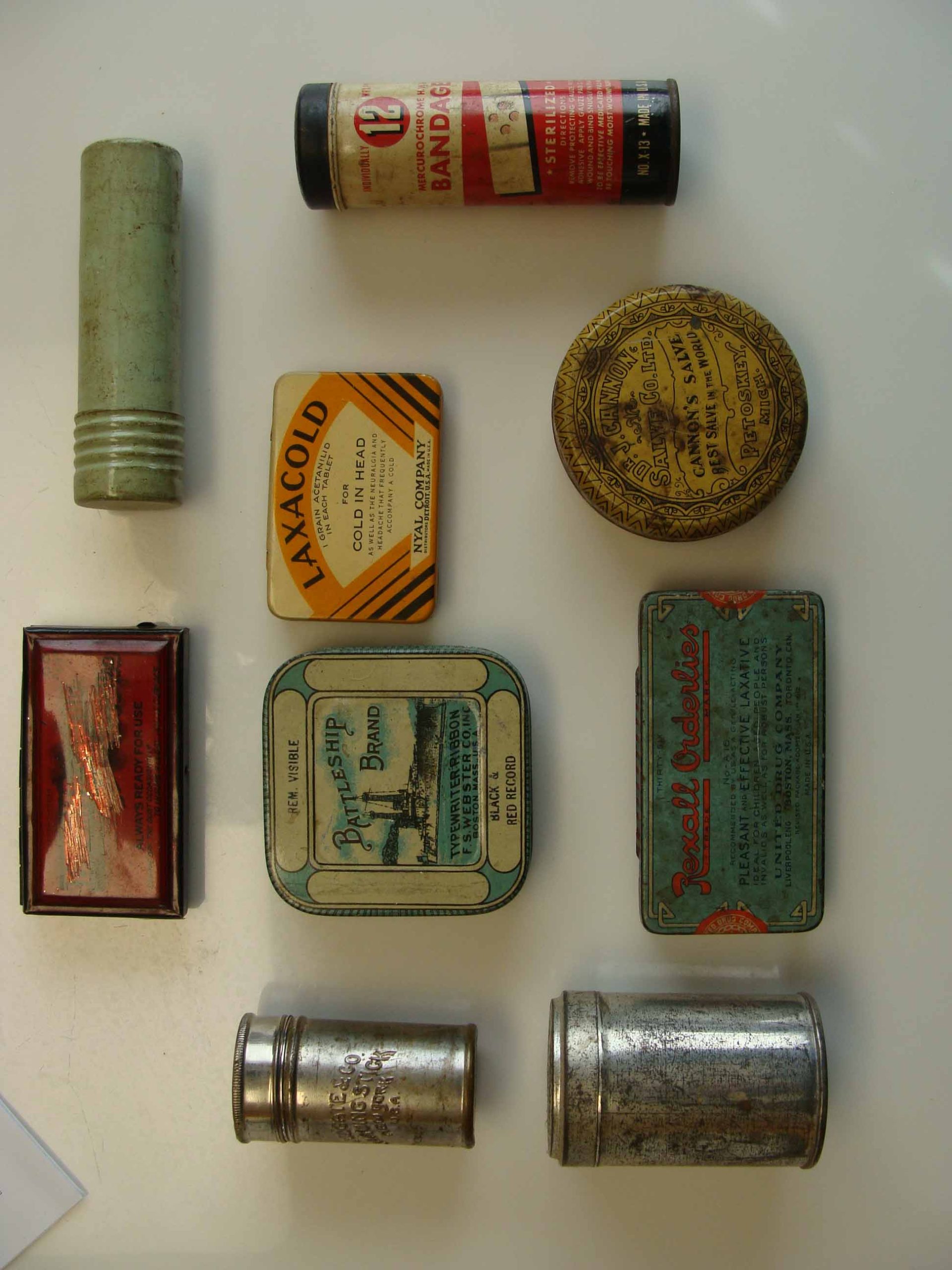
I am sometimes asked what the most memorable non-tackle items are that I have found in a tackle box. One was in a turn-of-the-century, small tin box that had several baits in it, all made before 1907. Tucked in the bottom of the box was a package of chewing tobacco (still half full) with a 1902 revenue stamp on it!
Another item seen here is a folding 12 inch ruler made of celluloid printed with advertising from a farm implement company as well as a “Farmer’s Calendar” that ran from June 1909 to November 1910.

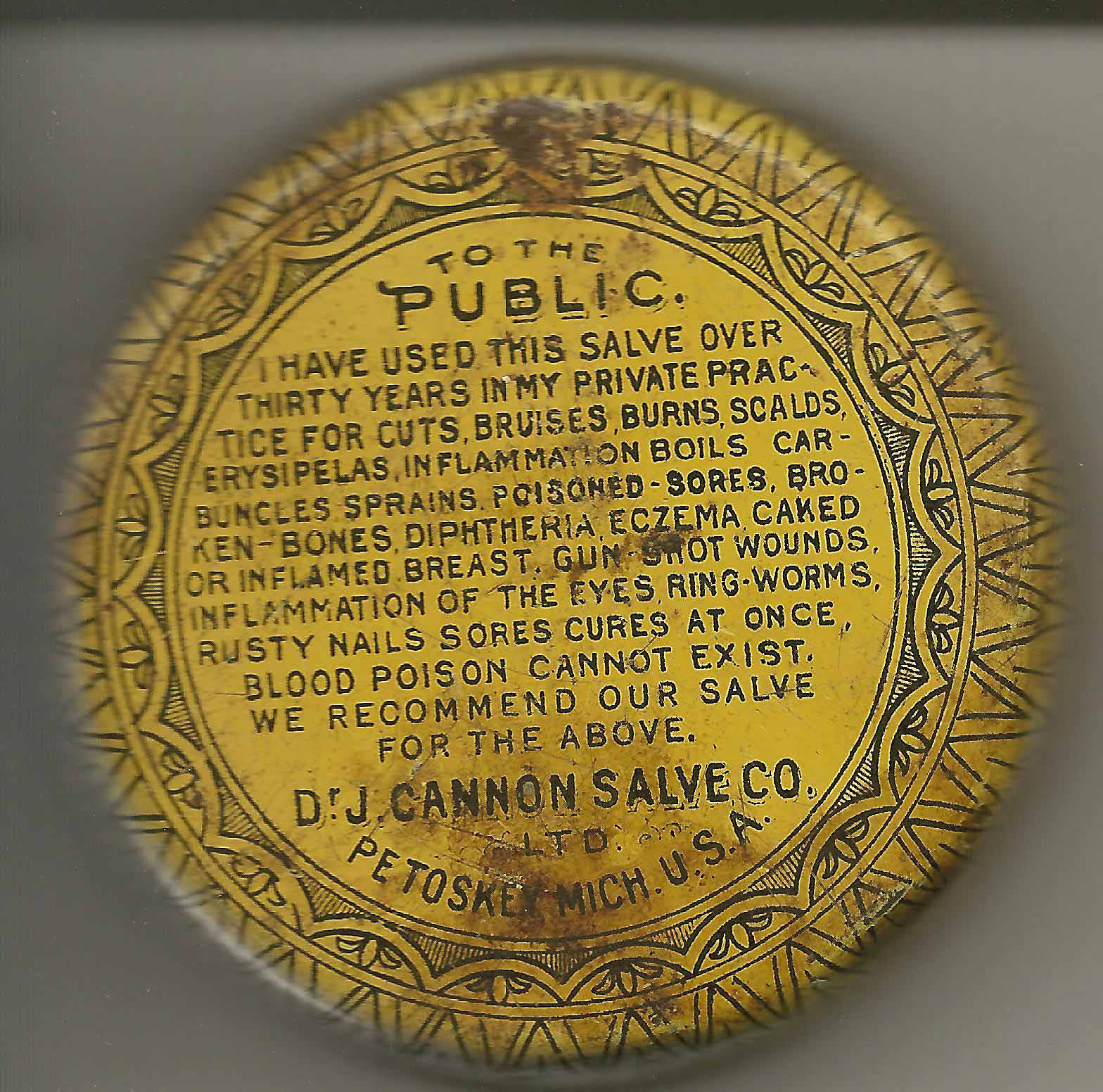
My all-time favorite is a tin of Dr Cannon’s Salve. It’s not in great shape and it does not contain hooks, sinkers, or small spinners, as most old tins in tackle boxes did. What is great about this item is the write-up on the bottom of the tin. I have enlarged it here so you can read the entire description of its uses. It makes one wonder why so much time and money are put into medical research when Dr Cannon discovered a cure for everything many years ago! LOL!





Wonderful article, Bill! I’ve also been interested in the little bottles and tins and weird little things found in old tackle boxes. Little yellowed sliding-top boxes full of teeny-tiny hooks, small bottles with caps rusted tight, lip stick viles of half melted raft repair plastic, small wood boxes full of odds and ends. And you are so right about the smell of citronella. It’s a smell that is on par with gun oil and leather. This is the perfect post for this lazy Sunday morning!
Dave, I agree with you 100%. Perfect post for the day. So much can be taken from the little artifacts of what was in these old boces from days gone by. It shows you how much has changed over the years and more importantly, what hasn’t. Thank you Bill for your insights into fishing history.