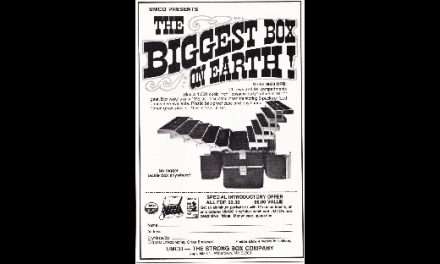

A few weeks ago I wrote a Bass Fishing Archives article titled “Mepps Mino Bass Ad” that looked at a 1979 full page ad promoting the Mepps Comet Mino. The ad sold the Comet Mino as a bass catching lure, with pictures of four anglers holding impressive largemouth bass they’d caught with the spinner. At the time I wrote that I thought I’d love to write an article that explores the development and history of the Mepps Mino lure more thoroughly. This is that article.
The Mepps Mino made its first appearance in the mid-1960s in Europe. The Mepps company in Contes, France, began selling the spinner and soft plastic minnow combination probably in 1965. I found a mention of the lure in a Scotland newspaper, the Lothian Courier, dated May 27, 1966, that describes the “new” lure thusly:
This season has seen an interesting addition to the very popular “Mepps” range of spinners. This new spoon is the “Mepps-Mino.” It consists of two parts. The head section contains a brass body and a spinning blade as on the standard Mepps. The tail section consists of an extremely realistic artificial minnow. This minnow is soft and pliable and is armed with a double hook under the belly and a treble at the tail. The “Mepps-Mino” is reputed to be exceptionally good in lochs and for trout and sea trout in spates on rivers.
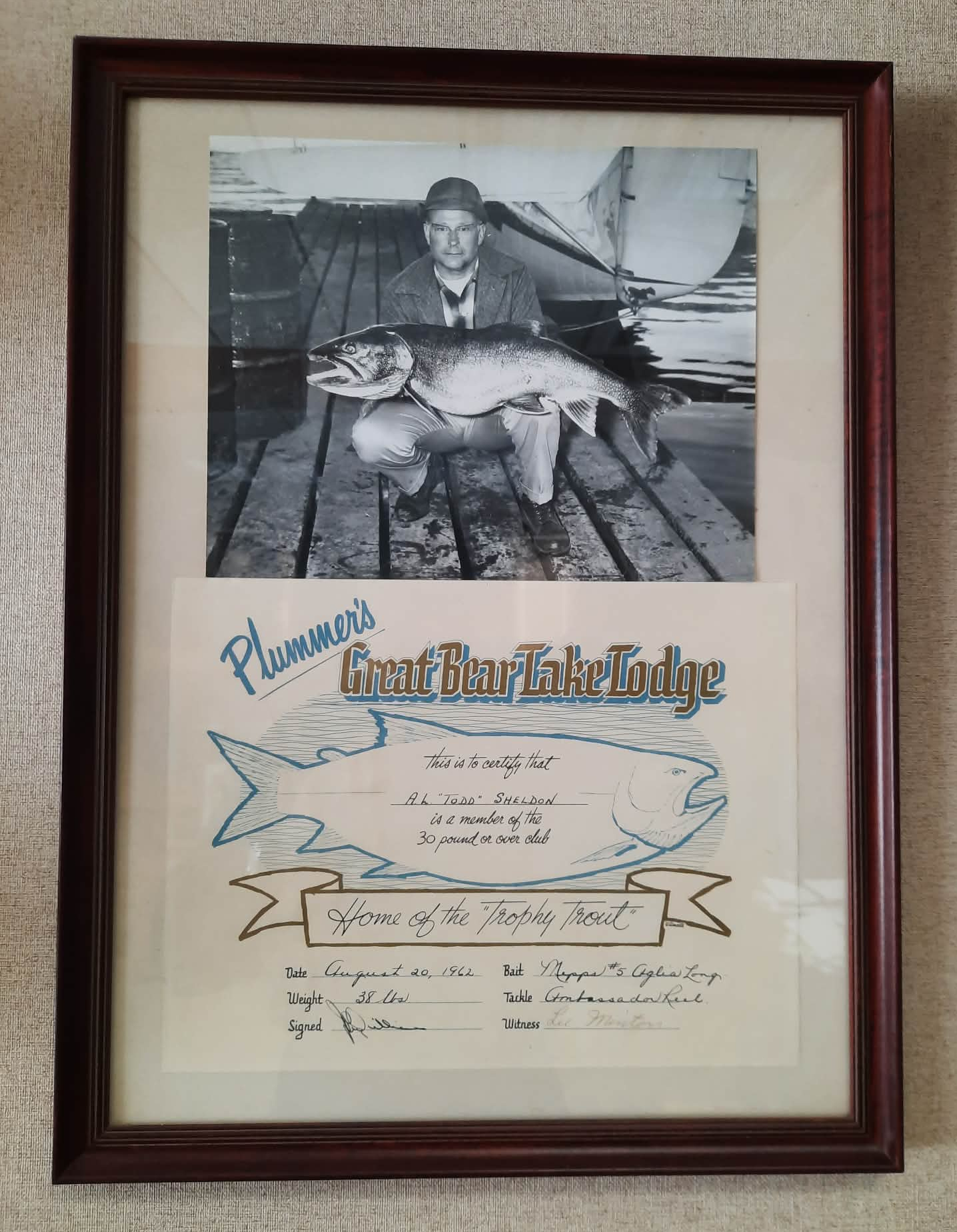
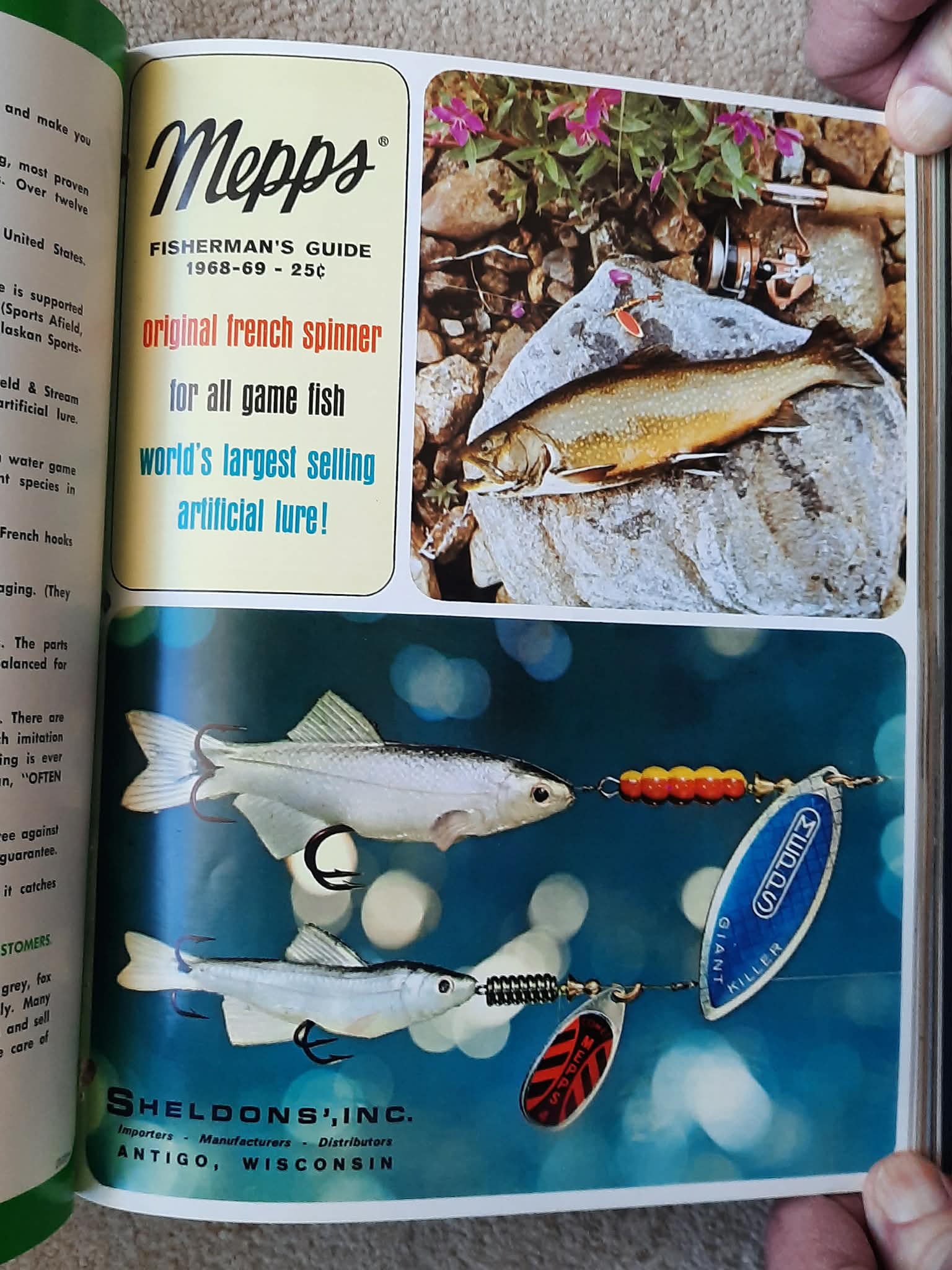
In the U.S. the Mepps Mino first showed up in the Sheldon’s Inc./Mepps catalog of 1968/69. So I assume, and have verified with Mepps/Sheldon’s Inc. President Mike Sheldon that it’s probably accurate that Sheldon’s Inc. began getting the Mino sometime in 1967. Mike said that the Mino was selling well in Europe, so they added it to their U.S. line as well, although it wasn’t available to the general public until sometime in late-1968 when the new catalog was released. Prior to getting their shelves stocked with Mino inventory ready to hit the market, Sheldon’s sent the lure to a few field testers for a try-out and to create some advance buzz about the lure. A July 31, 1968 edition of the Marysville Journal-Tribune (Ohio) had an “Angler’s Corner” column written by Joe Hofbauer wherein Hofbauer talked about his experience bass fishing the lakes and streams of the Ozarks during an Arkansas vacation. Hofbauer used several different Mepps spinners and had success catching bass, and he ended his column with this testimonial:
Another day found the lakes as inviting as before. But, still not satisfied, I decided to try one of Mepps newest creations that hasn’t reached the public yet. Sent to me by Bill Sheldon for field testing, I put it through its paces and believe me, it’s great. It’s a No. 1 Mepps Comet with a small, life-like rubber minnow trailing behind. The minnow, equipped with two small treble hooks seems to do the trick. On one retrieve I noticed two bass trailing the spinner at the same time. As with other Mepps spinners, it does its stuff, but still no trophy. It tends to get [an] angler frustrated after seeing those lunker bass turn up their noses to the best selections in your tackle box, but it seems that some days are just that way.
So, the new Mepps Mino became available to U.S. anglers at the end of 1968 with the release of the 1968/69 catalog. The April 18, 1969, Wausau Daily Herald (Wisconsin) reported, “Among this season’s new lures is the Mepps Mino, which is made by the Sheldon’s, Inc. of Antigo. It consists of a spinner followed by a lifelike rubber minnow.”
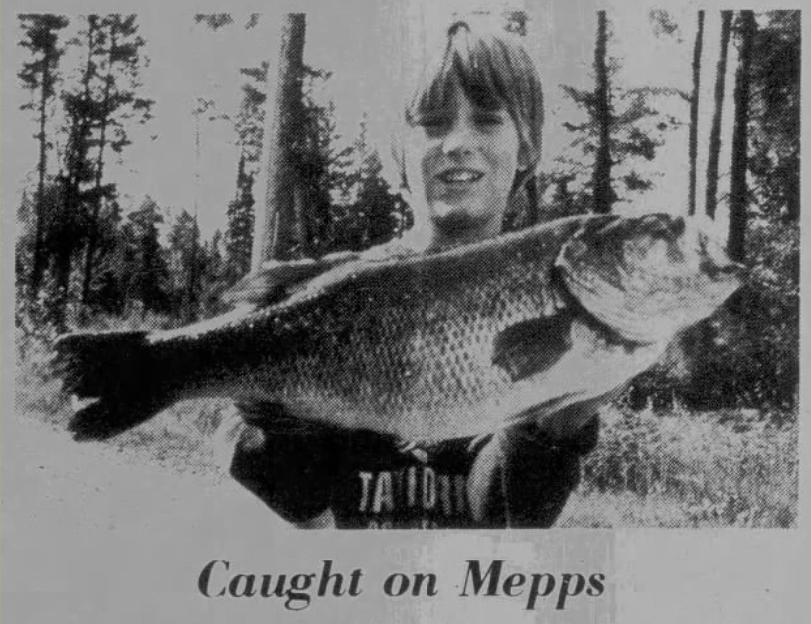
The 1968/69 Mepps catalog text describing the new Mino read,
Mepps spinners with plastic “Mepps Mino” attached have been field tested extensively for several years and have come through with flying colors. Because they travel in a natural upright position, have a lifelike appearance and an unbelievable minnow like feel they are a definite attraction for all fresh water game fish. Each is hand colored so occasionally there is a very slight color variation. They are hollow and are rigged with two ultra sharp “Lion D’Or” hooks mounted on a strong steel shaft. It would be almost impossible to make more durable construction and yet the hooks can be easily removed and replaced by the fisherman if so desired. Six sizes ranging from 1/20 to ½ oz. makes the “Mepps Mino” suitable for all fish and most types of fishing equipment.
According to Mike, the Mino was manufactured in France by a gentleman named Vincent Pelletier, who ran a plastics molding and injection business doing work for several clients, of which Mepps France was one. Mike said that “Mr. Pelletier always seemed to be short of funds and would ask for payment in advance of actual production. Eventually he went bankrupt.”
So, Sheldon’s was able to import the new minnow from France bait but orders were at times uncertain. For more than a decade, Sheldon’s lived with the sometimes less than 100% reliable nature of getting soft plastic minnows from France. Eventually, Mr. Pelletier’s business went belly up, and Sheldon’s source for plastic minnows disappeared. Todd Sheldon decided to manufacture the soft plastic minnows here in America, so they developed their own, new Mino molds. There were, however, issues with that decision as well. Creating the molds was not a cheap proposition, because the Mino molds were more complicated than, say, a worm or grub mold. If you’ve ever made your own soft plastic worms, for example, you know that injecting the plastic solution (Plastisol) is a pretty straight-forward process, and the molds can have many cavities or body forms – “50-60 or even more” forms for large commercial applications.

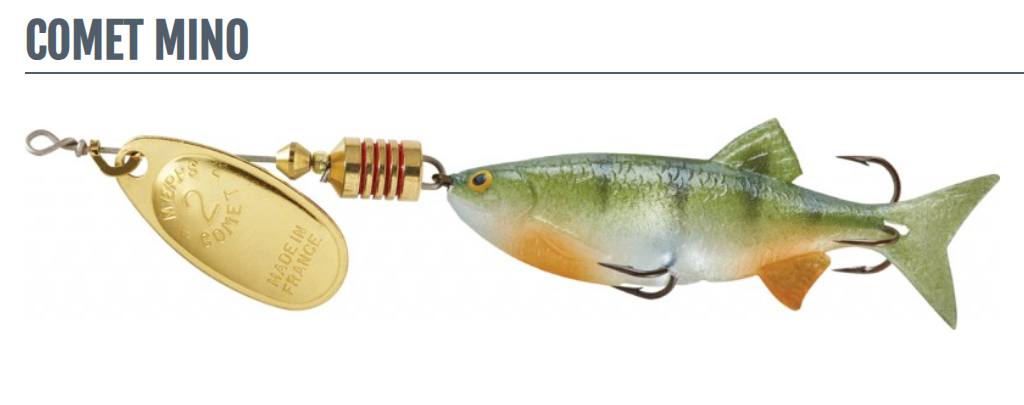
Mike states, however, that the “Mino molds have only a half-dozen cavities. That’s because the molds have a moving part – a pin – that is necessary to have a cavity inside the Mino, where the hooking system goes. The pin must move into the mold before the plastic is injected and then pulled out of the Mino before it is removed from the mold. Those pins are also susceptible to damage if the operator isn’t careful while operating.” The process is not only expensive, but is slower and more labor intensive.
Then there was the issue of the hooks used in the Mino, which were not ordinary treble hooks. Mike told me, “The Mino has custom hooks inserted inside of it during the assembly process. The hooks are unique in that they have a very long shaft so they can be inserted through the tail or belly of the Mino and the eye will come out through the mouth of the Mino. Some of the Minos actually have two hooks in them. One goes through the tail and one goes in the belly. The tail hook must go through the eye of the belly hook and then stick out the mouth of the Mino.
The custom hooks are of course much more expensive than a stock hook and hook manufacturers generally require an order of 100,000 of each size hook to run their machinery. Thus, that hook inventory is extensive and expensive. Each of these custom hooks cost several times as much as a standard hook.”

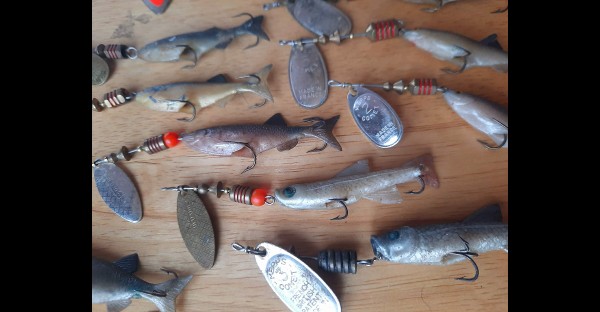
The French Mepps Mino “minnow” was a slender smelt-like bait fish, silver and delicate. When Sheldon’s introduced their version of the Americanized Mino, the profile was markedly different, fatter and darker in color. “The new molds were designed with a more American minnow shape than the original French design,” Mike said. “When we fished with minnows for gamefish, mainly walleye and northerns, we preferred golden shiners over all other minnows. Thus, we designed the molds in the image of a golden shiner.” Mepps France wasn’t thrilled with the new American minnow profile, objecting that the new plastic minnow didn’t look like any of the bait fish they had in Europe. But at that point, there wasn’t a lot they could do about it; the Americanized Mepps Mino was here to stay. The new Mino appeared in the 1983 Mepps catalog.
The new lure was not an immediate home run though. Anglers were not convinced that the revamped plastic minnow would be as effective as the original. “Fishermen like and stick with what works for them. They don’t like change,” Mike said. “So, when the newly shaped Mino came out we had complaints about its appearance. Over time it was accepted. I remember getting letters and photos back from anglers I sent Comet Minos to. They were excited and appreciative of getting something that really worked.”
Mike continues,
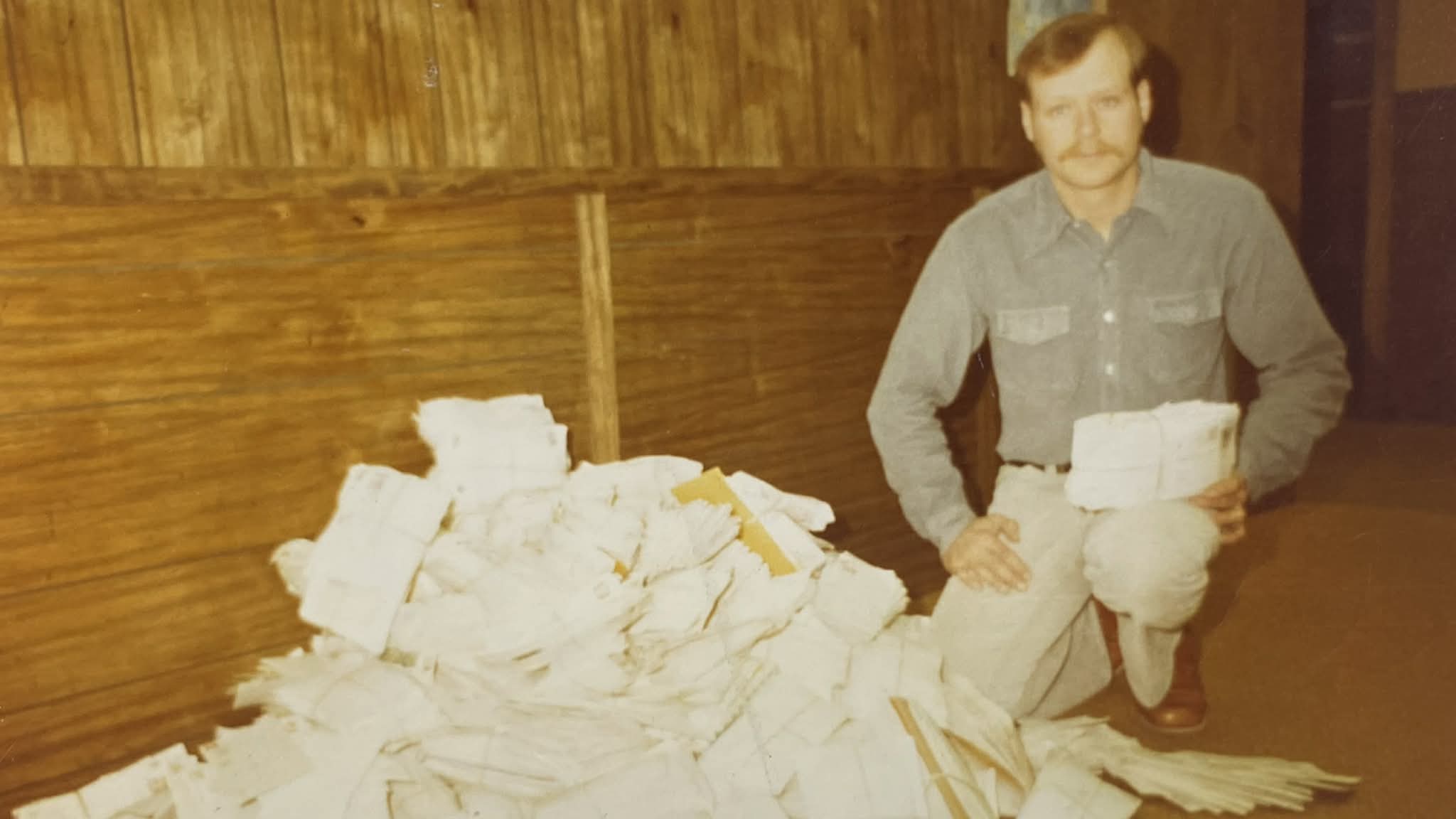
“When I started working at Mepps in 1973 all communications with fishermen was by U.S. mail. I can remember often getting two large canvas duffle bags of letters in a day. Hundreds or even thousands of letters. I answered many of those fishermen’s questions and congratulated them for their Mepps catches. I had a rule of thumb that if a fisherman sent a good quality photo with the letter, I’d send them a free lure. I most often would send a #2 Comet Mino, knowing that whatever they fished for they would catch fish on that lure.”
So, the question is, is the Mepps Mino a good lure – does it catch fish? The answer is a resounding yes! My own experience, as I recounted in my previous “Mepps Mino Bass Ad” article testifies to that fact, as do all of the anglers who wrote Mepps thanking and praising the company for putting the lure in their hands.