Introduction
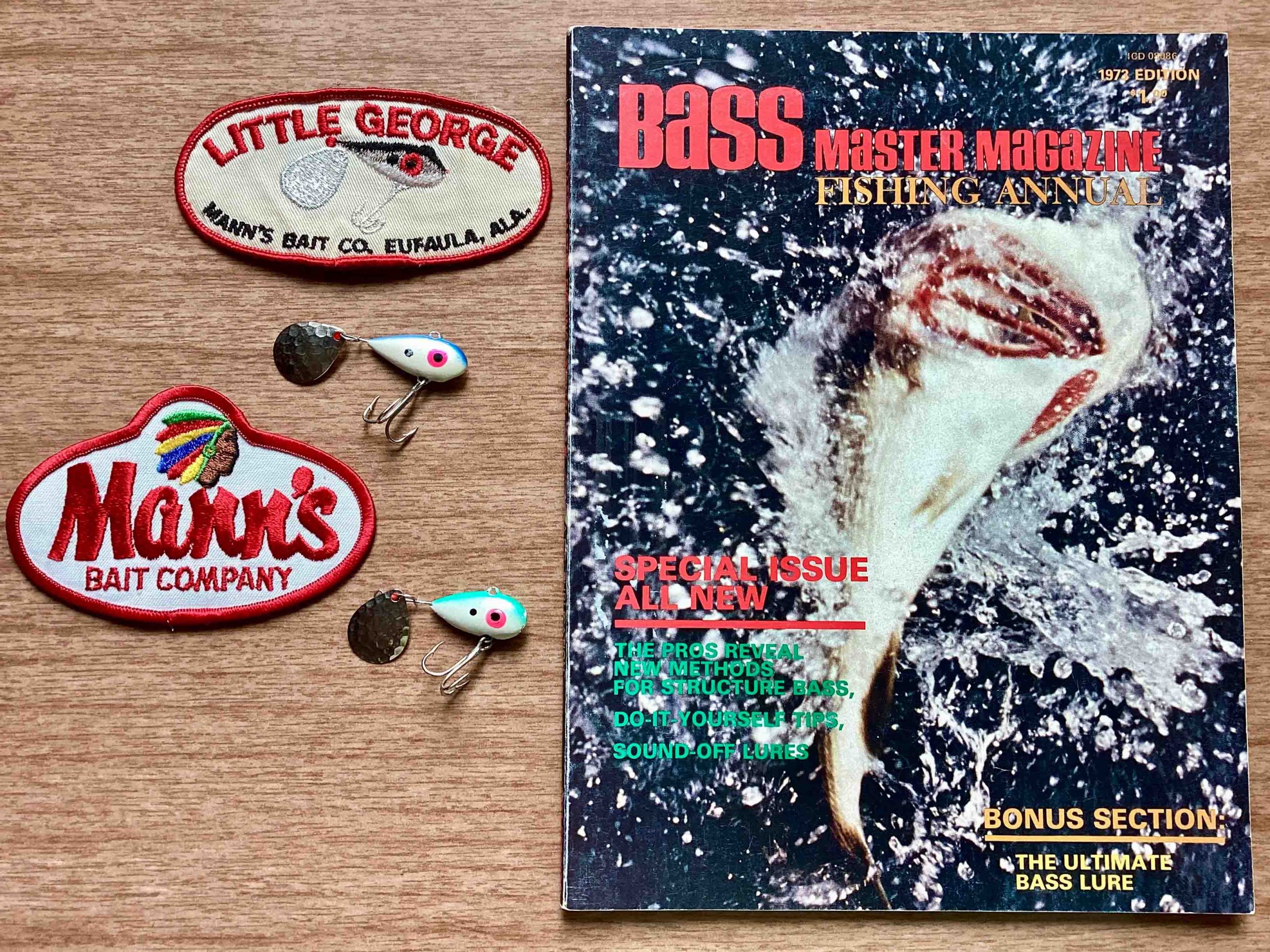
Can a fishing lure advertisement change your life? Seems like a preposterous question doesn’t it! In my case, however, I can assure that one such ad did. The ad in question was for the famous Mann’s Bait Company, Little George tailspinner lure, as it appeared in the 1973 Bassmaster Magazine Fishing Annual. In, Little George Builds Big Dreams, we’ll look at how this ad had a profound impact on my development as a fisherman, and more importantly, as a die-hard bassman. We’ll also look at the history of this famous bait, as well as the short lived Bassmaster Annuals that were always full of great information.
As a thirteen-year-old boy who had recently been introduced to the joys of cane pole and bobber fishing for bluegills at a local pond, my interest in fishing was rapidly developing. Like many other subjects that attracted my interest at this age, I yearned to learn as much about them as I could.
One Saturday afternoon, my friend and I were hanging out at a local Kmart store looking for things to spend our allowance on. I picked up a copy of the 1973 Bassmaster Fishing Annual that caught my attention and started perusing its pages. So much in this issue was just mesmerizing to me. In-depth articles about plastic worm fishing, structure fishing-including great shots of low water bass hangouts, and that colorful and intriguing Little George ad on page 13!
Like a lot of writers here at BFA who have expressed their fondness for old ads with mail-in lure offers, I was equally smitten by this ad. As a young boy the chance to get something “cool” sent to you in the mail was a great enticement and a welcome opportunity in a pre-internet era. Without hesitation, my allowance was happily exchanged to purchase this magazine that was both fascinating and exciting to my young eyes.
The Little George Ad
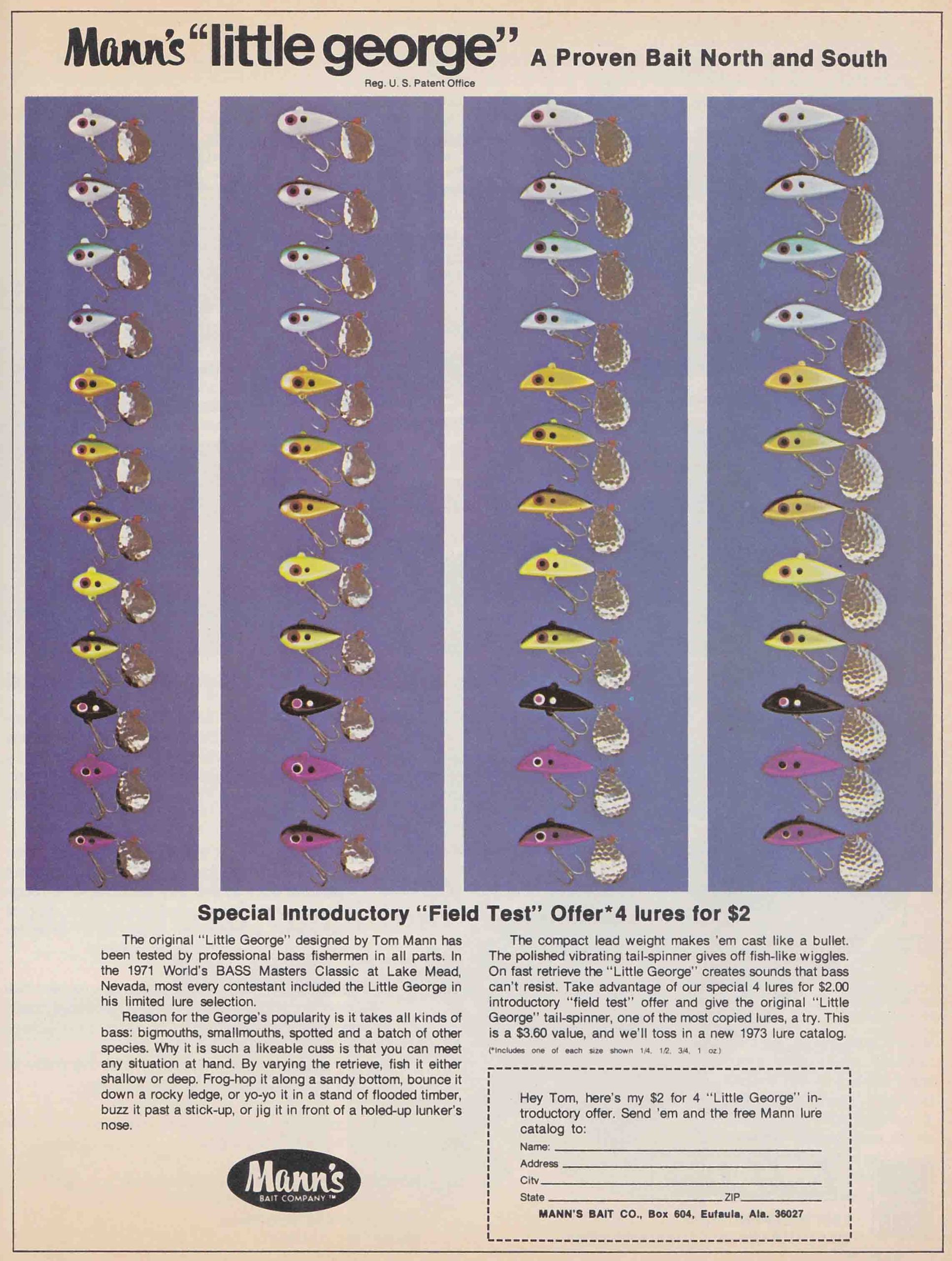
Being relatively unfamiliar with bass lures of any type at the time, the photo of all the Little George’s lined up by size and color was especially enticing. The colors were varied and unique (to me) and the lure was unlike anything I had ever seen. It literally looked to me like fishing magic on that page. My introduction to this lure via this advertisement was literally the “gateway drug” that led to a lifelong bass fishing passion and fascination with bass lures of all types.
I soon discovered that the Little George was far from a “magic” bait and was much easier to hang up than catch a bass on! It did have its applications but was best kept from anything resembling bass cover unless you had a bunch stockpiled.
Once when fishing Bull Shoals with my dad one evening just after dark, I decided to try and lure a bass from a submerged bridge in the Theodosia area. With my trusty 7’ Eagle Claw Tom Mann worm rod, I tossed a Little George out and let it settle in the deeper water in the vicinity of the submerged bridge. After a few pumps of the rod, I felt some resistance and reared back to set the hook.
I instantly felt resistance and a “pull” back. Thinking I had hooked a nice bass, I kept reeling and in the dark was sure I had something big. What I had was a heavy and very spongy limb snagged, that wasn’t apparent until it surfaced in the glare of our spotlight. Yes, my largest catch ever on the ‘George’ was a “stick” bass.
A “Little” George History
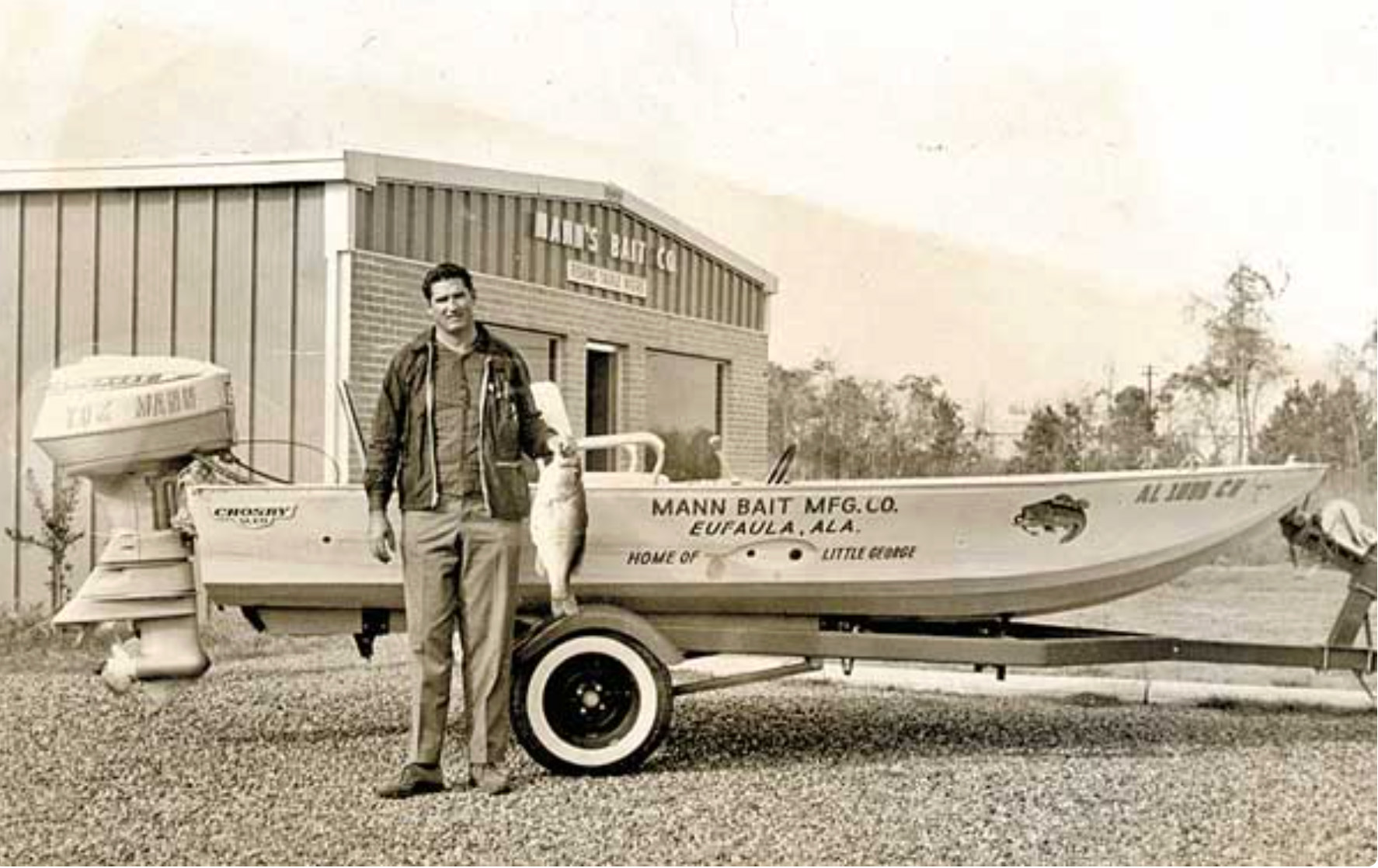
The Little George was first developed around 1964 while Tom Mann was working as a conservation officer, naming the lure after George Wallace, who was governor of Alabama at the time. The lure was similar in design to the Pedigo Spin-Rite, a popular tailspin lure of this era. It was a relatively heavy piece of lead, somewhat fish shaped, with a belly treble hook and a spinner blade affixed to a wire harness on its tail.
By the mid-seventies the Little George had surged in popularity and was one of the pros favored baits. It put Mann’s Bait company on the map and forged the way for even more popular baits to come like the legendary Jelly Worm.
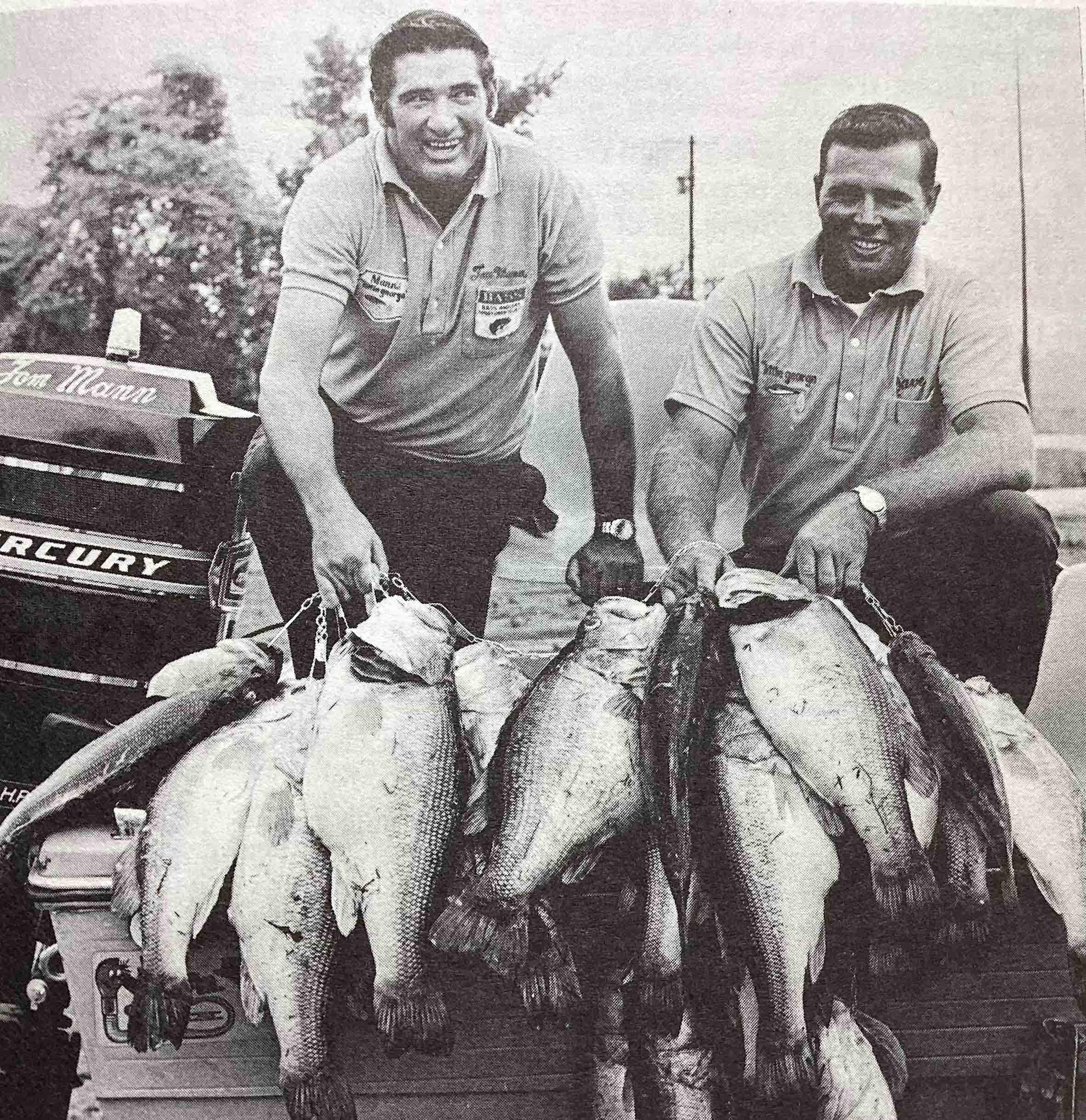
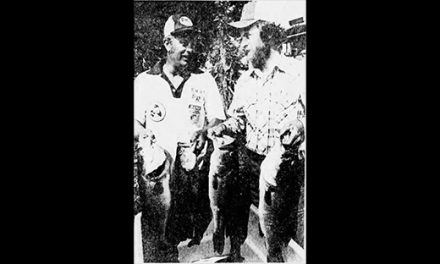
Tom Mann also did a great job of promoting the Little George, never more so than the legendary catch at Lake Eufaula in July 1972 he made with David Lockhart. 25 bass weighing a staggering 155 pounds, topped by Lockhart’s 13 pound-2ounce behemoth, all attributed to the Little George. Whether all these giants actually succumbed to the lure of the ‘George’ we will never know, but Tom made sure impressionable bassers like myself were well informed that they did. Notice how both Tom and David wore sport shirts embroidered with Little George logos for this famous photo!
For most anglers, the Little George was an effective but specialized bait, best suited for schooling bass or open water.
As Roland Martin wrote in his book, One Hundred and One Bass Catching Secrets: “The most popular of a few tailspin lures on the market is the Little George. Tom’s sold probably a zillion of ’em, and one of the reasons is it’s not like a Hula Popper that you can fish for fourteen years without losing it. Having one Little George is like having one potato chip; it’s not enough. You’re going to leave some Little Georges hanging on stumps and lodged between rock crevices in deep water.”
Bassmaster Fishing Annuals
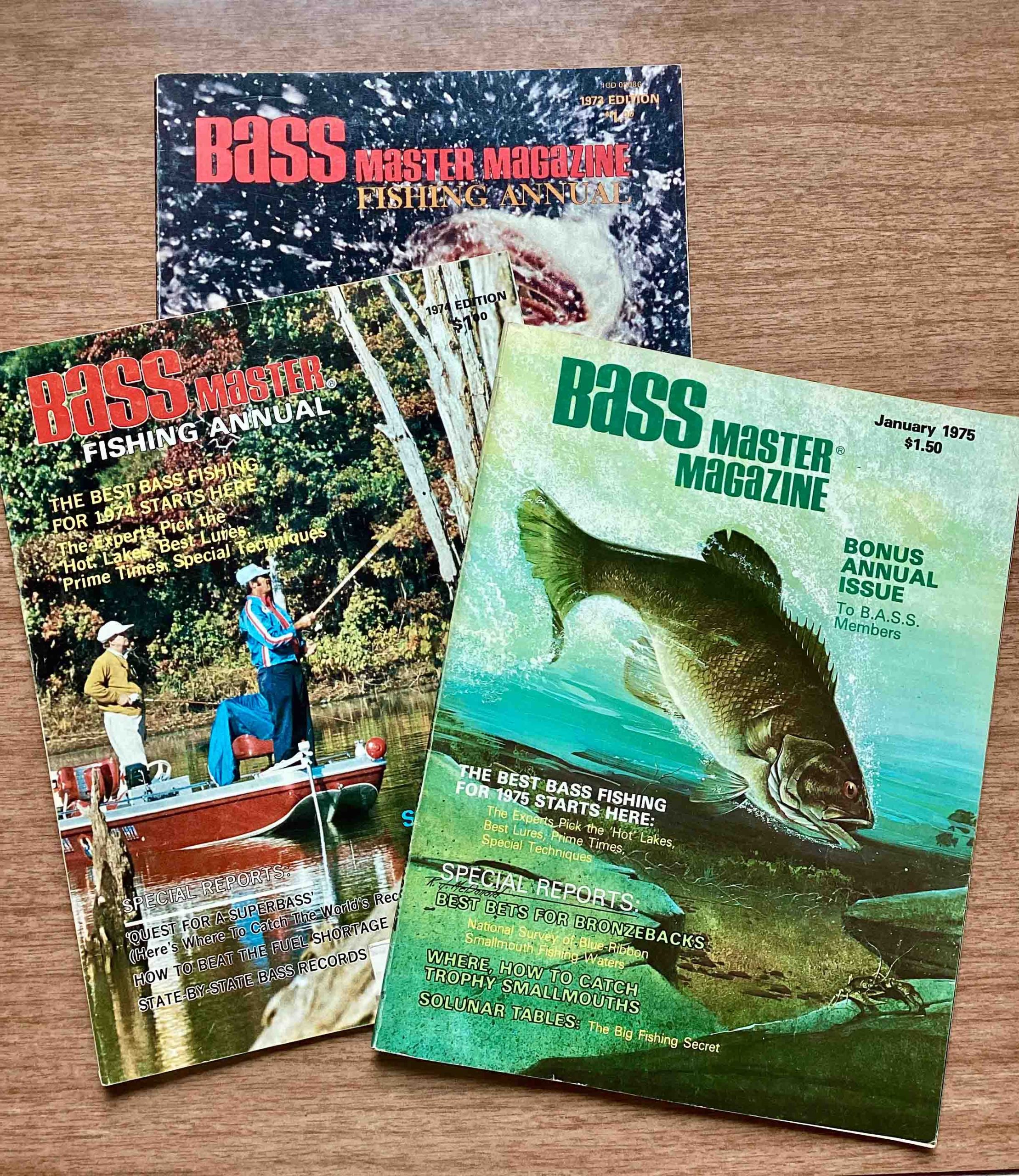
The 1973 Bassmaster Fishing Annual was the first such publication by the Bass Anglers Sportsman Society and was followed up in 1974 with a second edition similarly titled. In 1975, Bassmaster magazine which had been published bi-monthly for a few years, now split the Jan/Feb issue into a January issue titled, “Bonus Annual Issue” and then published a regular February Bassmaster issue. This lasted until the 1978 January issue that had no mention of “Annual”.
Then beginning in January 1979 and continuing through 1982, the January magazine was titled, “Special Issue.” Finally, in 1983 and continuing forward, the January issue had no unique extra moniker. It was just the January edition of Bassmaster.
1973 Bassmaster Fishing Annual
The 1973 Bassmaster Fishing Annual was my initial introduction to Bassmaster magazine, and it certainly left an indelible mark. Perhaps no other single publication before or since has made such an impact on me and inspired me to tenaciously pursue all things bass fishing.
Besides the Little George ad already mentioned, this issue contained so many articles that I found fascinating. “Anatomy of a Bass Lake” was written by Bob Whaley and contained numerous low water photos of bass hangouts. Roland Martin himself penned, “New Methods for Structure Bass”. And then, Thaine Walden’s, “How To Use a Map To Find Bass” finished this trio of articles that detailed how much I had to learn about dissecting big reservoir fishing potential.

There were in-depth articles about plastic worm fishing and a piece about some guy named Lew Childre and his new revolution in rod building, Speed Sticks! There were colorful ads for Ranger Boats, Bass Buster Lures and Stren fishing line, all stalwarts of this bygone era.
Conclusion
It is hard to imagine in today’s digital world how a magazine could have such a lasting and profound impact on one’s future. Magazines, in fact, appear to be not far behind newspapers in disappearing fast.
Over 50 years ago, it was still possible to have a printed magazine feed a young man’s imagination and foster a desire to learn and experience more. I was that young man and feel incredibly blessed that I walked into Kmart that day. A day that changed my life, fueling a lifelong passion for bass fishing, while also forging a lasting and beautiful bond with my father, now gone, that is irreplaceable.




Man-oh-man, Mike, you keep pumping out excellent articles, and this one is right in line with all the others. It offers a glimpse of history, a great focus on a single lure, some fantastic images, and plenty of wonderful personal anecdotes, all well-written and easy to read. Personally, I’ve never been attracted to the all-metal baits like the Little George, Heddon Sonic, or Buck Perry’s Spoonplug. I don’t really know why, but wood has always appealed to me so much more than metal. Which isn’t to say that I don’t have a bunch of metal lures, but they’re really more curiosities to me than actual working baits. I wonder if I’ve missed out on some good fishing because of that bias.
Of course you’re not alone in having certain magazines or books fire up your outdoors imagination! For me it was always the cover art that hooked me, and if I opened up a magazine and there was a single story that sparked my imagination, I’d read and reread it, over and over again, or just gaze at the pictures imaging myself in the boat or holding that lunker. Great story, as usual.
Thank you so much for your kind comments,David. They are always appreciated. While the Little George captured my attention first, it was only the prelude to the wonderful delights awaiting as other magical and captivating lures caught my attention. Now, I would definitely agree with you that lead and metal baits hold no special interest. In fact, the only two Little Georges I own are in the lead-in photo. However, they will always hold a special place in my conscious due to the impact they had on me 50+ years ago. For that, I can never forget them.
Wanted to post an update to this article, as some new information has come to light regarding the Bassmaster Fishing Annuals. Apparently B.A.S.S. continued to publish a Bassmaster Fishing Annual for newsstands at least through 1980. This was the same exact January edition of Bassmaster magazine that was sent to members as the “Bonus Annual Issue” or “Special Issue.” The cover was identical but was labeled “Bassmaster Fishing Annual” for retail sale.
Mike, I really enjoyed reading your post, the accompanied historical photos and history of the Little George lure. I too have used the Little George and agree it is best used in open water. My best luck was when the bass were “stacked up” and fishing right over the top of them. I caught quite a few bass that day!
Looking forward to reading your next article!
Thank you for your comments, Jim. Glad to hear that you found some success with the Little George in the past as well!