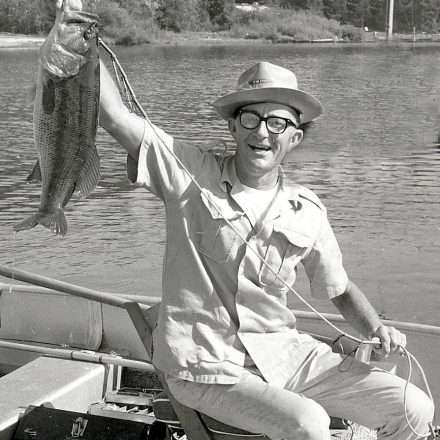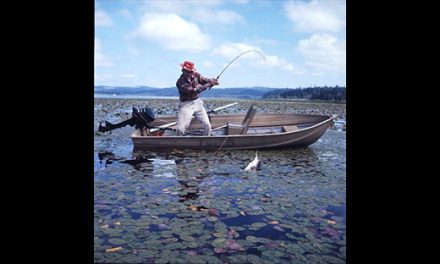
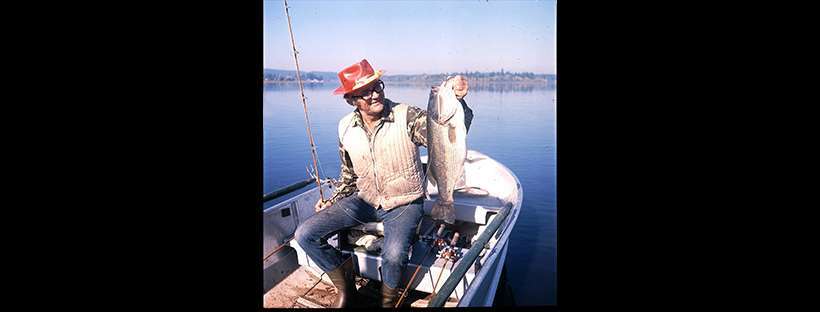

When this site first started back in March 2012, Stan Fagerstrom became one of the early supporters. A year later, during one of our frequent conversations on the phone, he asked how he could help. That conversation led to Stan’s monthly column, Let’s Look Back. Stan provided nearly 40 entries over that first iteration of the Bass Fishing Archives, and I feel it only respectful we start putting some of those articles back out for all to enjoy.
That beautiful old bass lure I’ve been writing about in these columns lately was a hefty piece of hardware.
If you’re one of the old timers fortunate to have a Heddon Basser in your lure collection, you’re aware the Basser is made of wood and is four inches in length. It weighs 5/8th-ounce.
The lure has a distinctive “V” shaped metal plate held to its face by a couple of small screws. Some of the early models of the lure were beautifully made with realistic glass eyes and a great looking finish.
It made a different sound when manipulated properly than my other early day bass baits. I mentioned in my previous column that my early experience with the Basser taught me what a tremendous difference proper manipulation can make in a lure’s productivity. I didn’t have the foggiest idea of what to do with the lure in the beginning.
When I started I began by just casting the Basser up to cover and then reeling it back in. The lure had a slow side to side swimming action. Even doing just that with it I caught a few fish. I had the good fortune to get to know a couple of old timers who had moved to Washington State from Alabama. They showed me another approach that really opened the fish-catching doors for me.
There wasn’t all that much “How To” information back there more than a half century ago as there is now. As a youngster just starting down the bass fishing road I was reading everything I could get my hands on regarding largemouth. I remember thinking some of what I read about lure manipulation was just so much nonsense. How wrong I was!
The Basser was a lure that floated at rest and then dove on the retrieve. As I’ve mentioned, the first few fish I caught on it came when I just cast it out there and began reeling it back. It was difficult for me to realize I could do far better with this lure when I threw it up close to cover, then left it alone for what seemed like eternity before I moved it by manipulating my rod tip.
Another fact also emerged. It was far more productive nearly always to not use big jerks that made the lure plop loudly as it dove and started to swim back to me. Note the word “nearly.” It’s there because you see I also discovered rare days when a noisy, surface disturbing approach was just what those boogers wanted.
This was my first introduction to the cold, hard fact that there is no “always” associated with largemouth bass fishing.
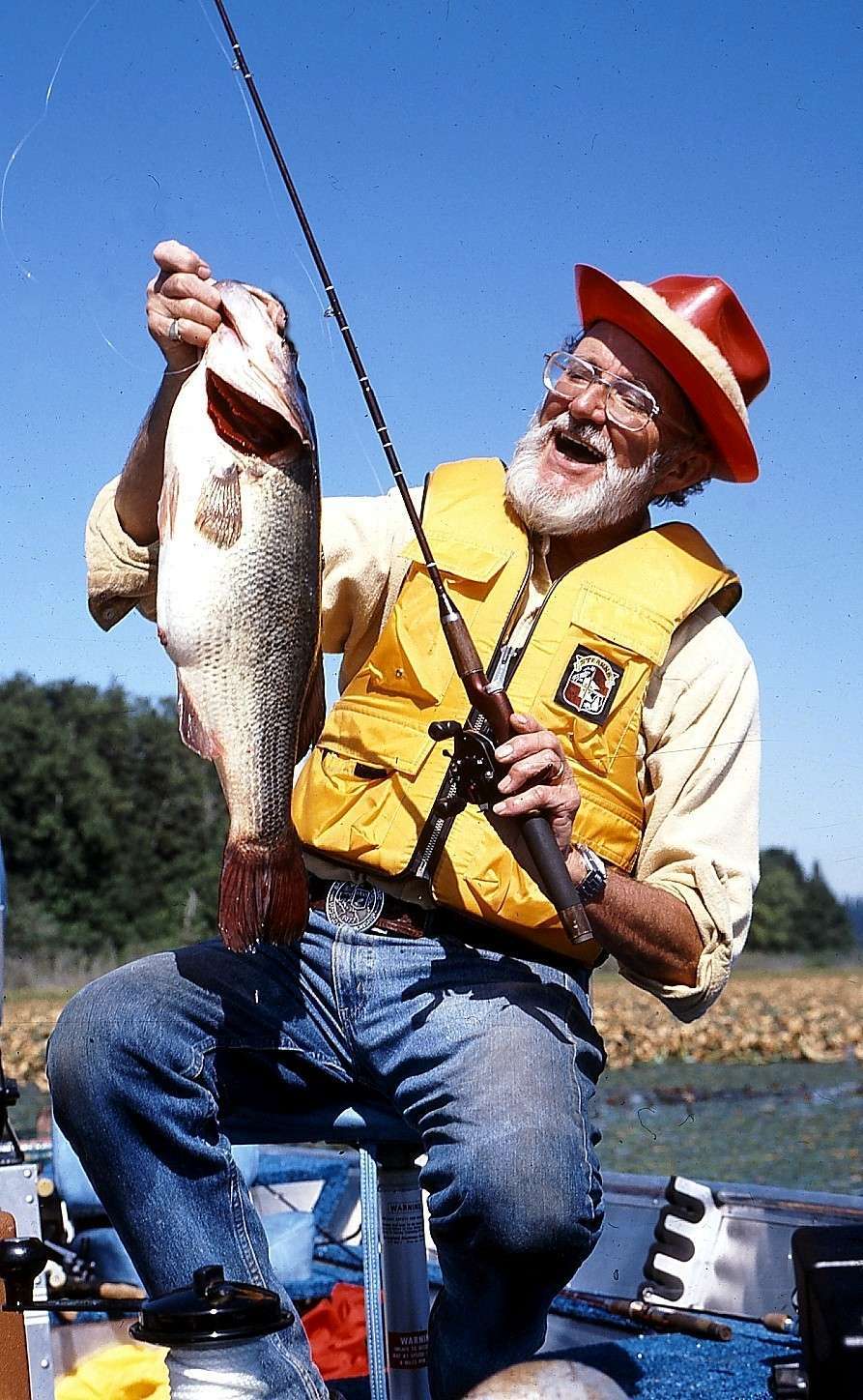
If you’re just getting into bass fishing, learn to replace the word “always” with “usually” and “often”. Don’t hesitate to change your approach so the fish can tell you which one they want.
Something else I’m convinced that can be especially important with certain floating and diving lures like the old Basser is the sound they make when manipulated on the surface. If you’ve not discovered this yet—you will. You will, that is, if you carefully listen as well as watch to what your lure is doing.
The long gone old Basser isn’t the only lure where this special sound is so important. I was to learn it also applied to several others, but that’s another story I’ll get into later. Working with the Basser was where I first realized its importance. Once I did it has put a heck of a lot more bass in the boat.
I discovered the very best way to get exactly the sound I needed depended on the position the lure was in when I twitched my rod tip. I found it was best to wait until the lure was looking right at me before I moved it at all.
Another of the most important truths I learned fishing the Heddon Basser at Silver Lake was just how darned important it was to match the lure I used to the forage the bass were feeding on most of the time. Watch for my next Let’s Look Back Column. I’ll detail what that turned out to be in Southwest Washington’s best bass lake.
-To Be Continued-
To read Stand’s other Let’s Look Back columns, click the link.