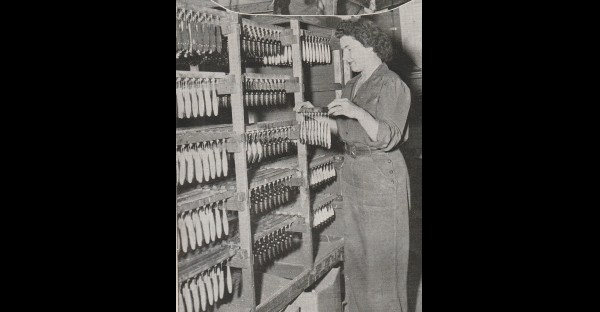
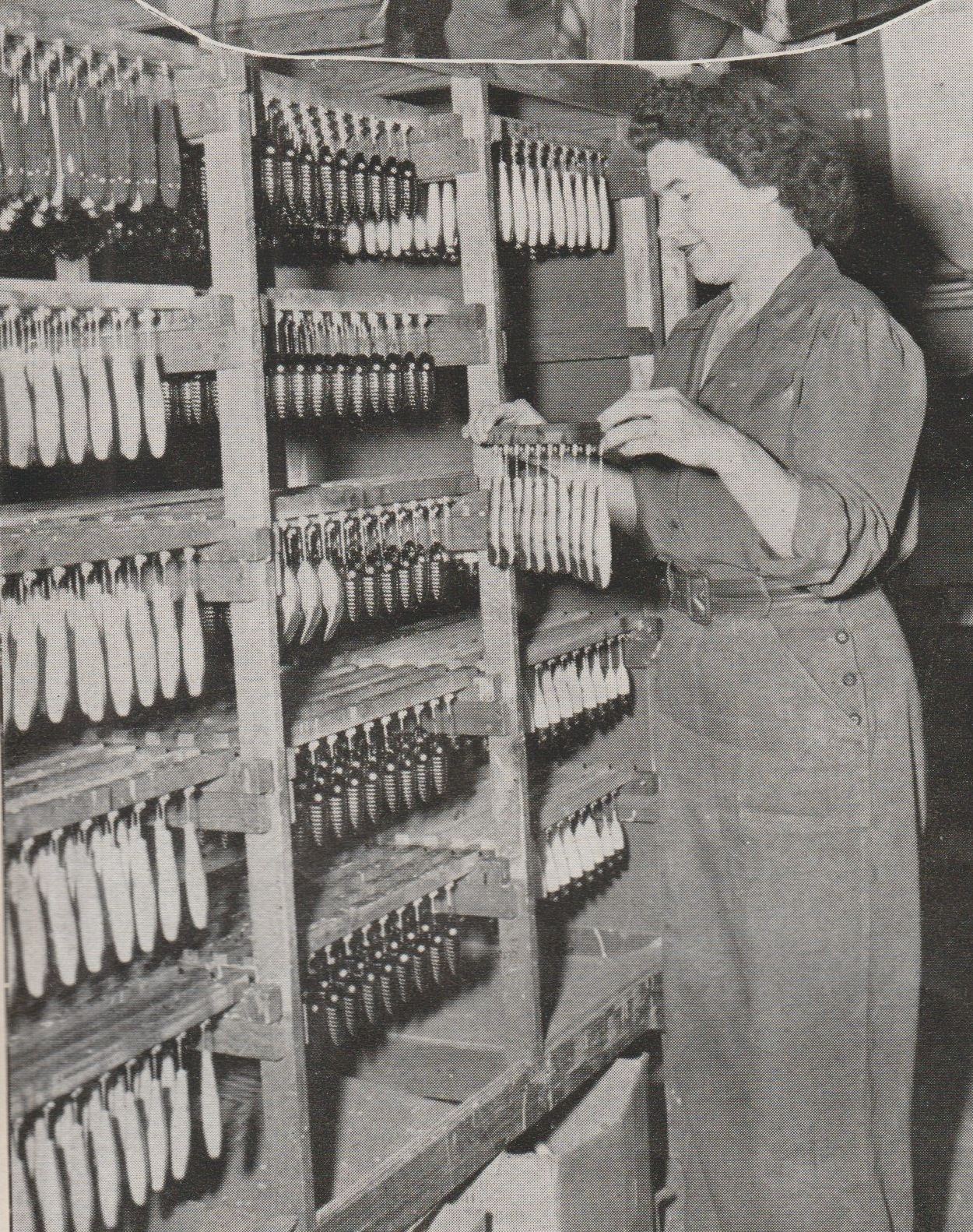
Caption: Plugs going into the drying racks from the finishing room. Here every plug is inspected so that when it goes into the next department for final finishing it is PERFECT.
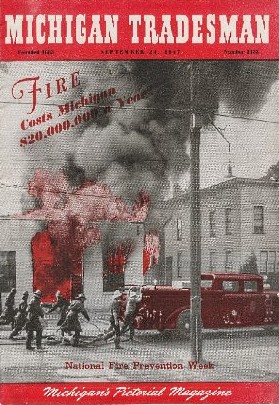
I recently saw a few online images of the inside of the Paw Paw Bait Company. Gary Montague posted the photos on the NFLCC (National Fishing Lure Collectors Club) Message Board Facebook group, from a September 24, 1947 issue of Michigan Tradesman. Like a lot of us who love old lures and bait companies, the inner workings of these factories are an endless source of fascination and interest. Images of workers painting color schemes and patterns on wood lures, or special lathes turning wood blanks into aerodynamic lure forms, are just as cool as can be.
A brief word on Michigan Tradesman magazine: This weekly publication provided information on a variety of banking and business-related subjects. It was first published in September, 1883 and ran until, I believe, 1973, at which time it changed its name, and this change would not be the first or only time it changed its focus and title. The first issue of Michigan Tradesman outlined its mission, part of which reads, “the Michigan Tradesman, a weekly journal, issued from the Grand Rapids market, paying particular attention to the wants of the patrons of this mercantile center, and yet being of such a general character that it will be of interest to all engaged in wholesale or retail traffic anywhere.” The magazine covered not only Michigan but the general Great Lakes region, and as such is a great resource for historians of the Midwest area’s business development. I would not be in the least surprised if other issues contained material on more fishing companies.
The story “Michigan Firsts,” written by Edward Dreier, is largely a pictorial of the Paw Paw Bait Company, showing various images both inside and outside the factory. Dreier writes,
“Down in Paw Paw which most of us think of as the ‘home of the annual Grape Festival,’ there is a little factory, set back off the main street, making close to one million fish baits a year, leading the Nation in plug making.”
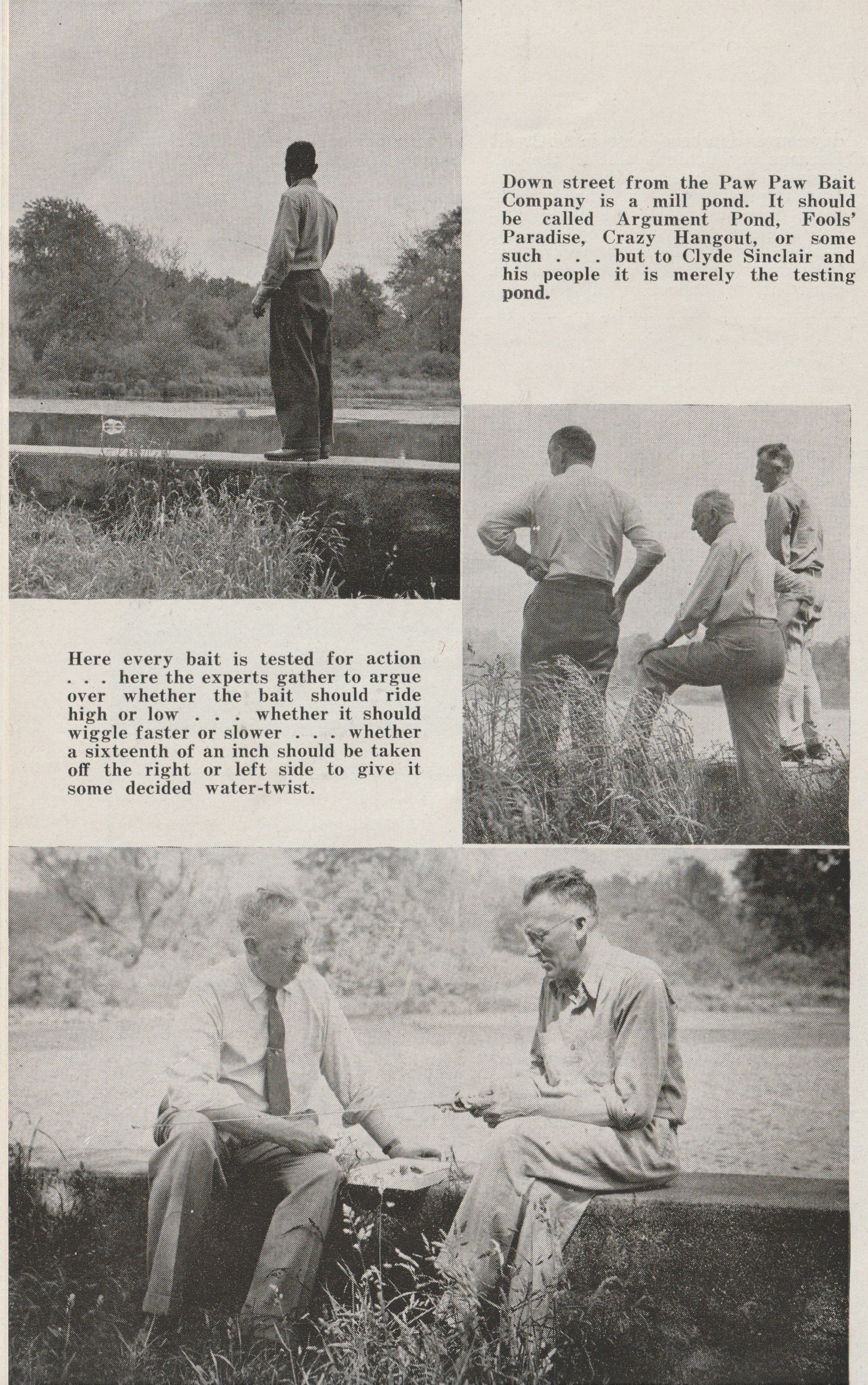
“Clyde Sinclair, head of the Paw Paw Bait Company, says: ‘Bait makers and bait designers don’t HAVE to be crazy, but it helps.’ The styles of the plugs are many; they don’t ‘just happen.’ They are very carefully worked out. From all over the world ideas are sent in. Some of them have merit…more of them do not. If they have any merit, they are given a very thorough test…not only for action in the testing pond, but are sent to anglers all over the country for tryouts under actual fishing conditions.”
“Then all the ideas and criticisms are worked into final models and again tested before they go into The Line.”

Caption: This is the day shift in front of the Paw Paw Bait Factory…local folks and from the nearby countryside – everyone having a great pride in the product. It is these folks who have made the famous slogan “GOOD FISHING…BEGINS HERE.”
Dreier continues:
“Most of the higher-priced baits are made of plastics. Expensive dies have to be made. Models are in the testing stage for a year or two before getting the final OK to go into production. In the experimental department of the Paw Paw Bait Company something new is constantly being worked out…new shapes…new finishes…new sizes…new manufacturing methods.”
“Every employee who is an angler brings in his own ideas on baits…on changes…on finishes…all employees make suggestions on manufacturing methods.”
“They are quite a family down there at Paw Paw.”
“The Paw Paw Bait Company sells its products through jobbers throughout this country and in many foreign countries. Dealers are given many display helps and all individual bait boxes carry advertising matter on other baits…to help build up consumer acceptance for the dealers and to give anglers a picture of the baits that are producing good catches.”
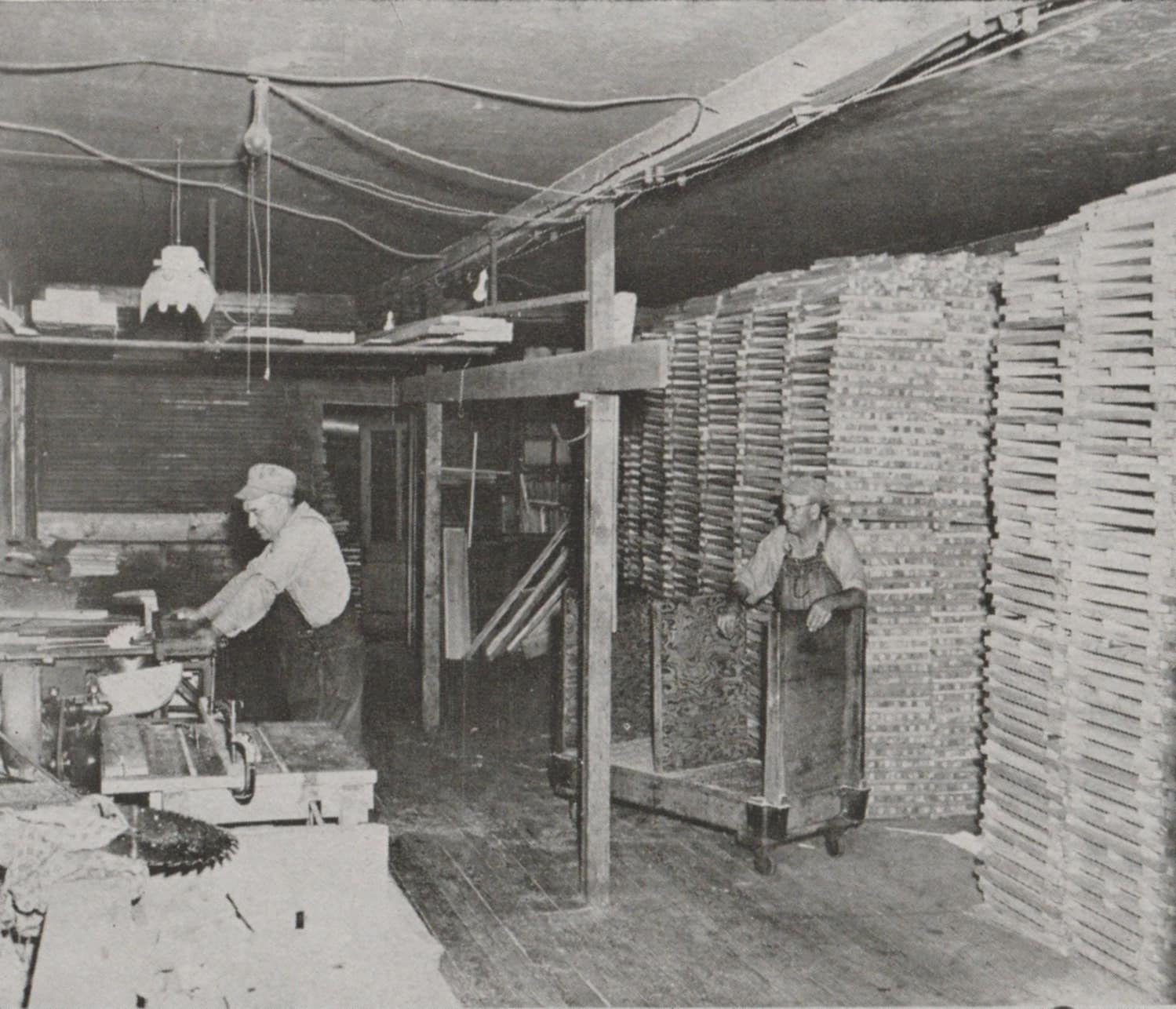
Caption: From logs…to boards…to strips like the above…all operations are carried on at the Paw Paw factory. Woods are bought on many markets in Michigan and elsewhere…some coming from the West Coast.
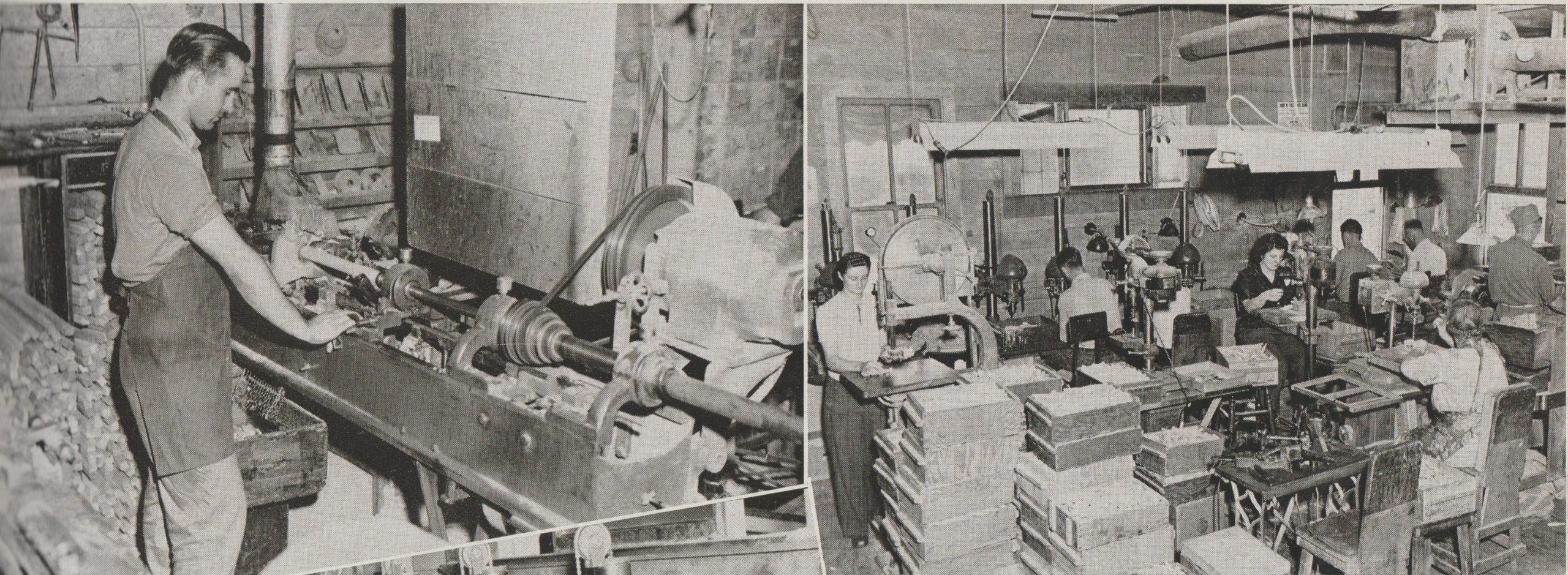
Caption: Left: Sticks are fed by hand into machines and the shaped plugs come out. These rough plugs then go through many processes before reaching the finish room…they are sanded velvet-smooth…drilled to receive eyes, hooks and other things necessary to make a good bait. Right: A mass of machinery is needed for the proper production of good baits. Above, boxes containing hundreds of plugs that are going through the various operations from one machine to another on line production.
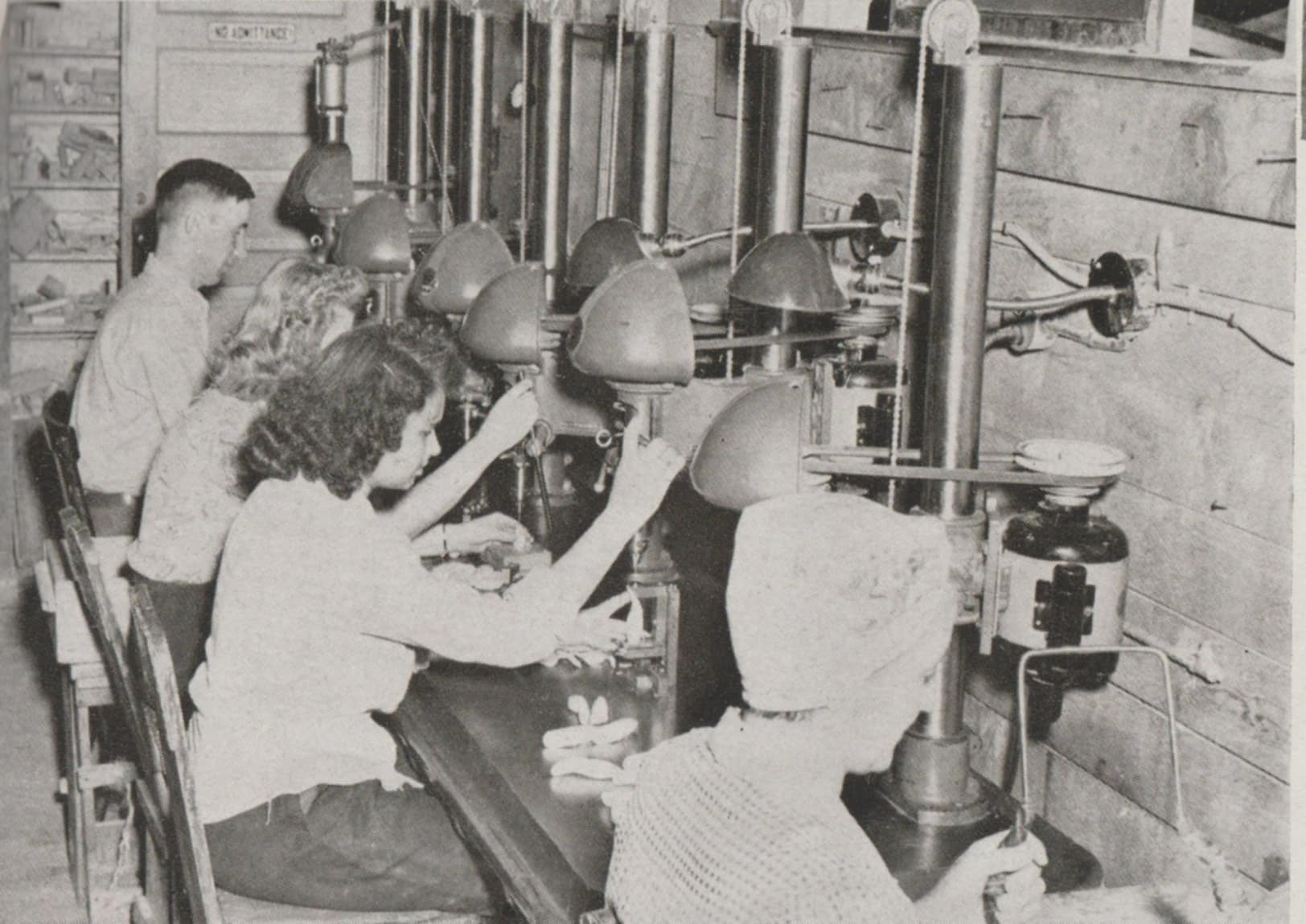
Caption: A battery of machines drilling baits for the various hook arrangements and other metal parts that are needed.
Dreier,
“Finishes of baits are VERY important. Wherever there are anglers there are arguments, and one of the greatest will be the argument over the color-blindness of fish…yet it has been found that the right color bait…at the right time of day…will take fish when another color phase of the same bait will get no strikes. Sp Paw Paw Bait Company has its experts all over the country constantly reporting on finishes and colors. Paw Paw Bait Company recently perfected a new finish that has improved the attractiveness of many of even the best fish-getters in The Line.”
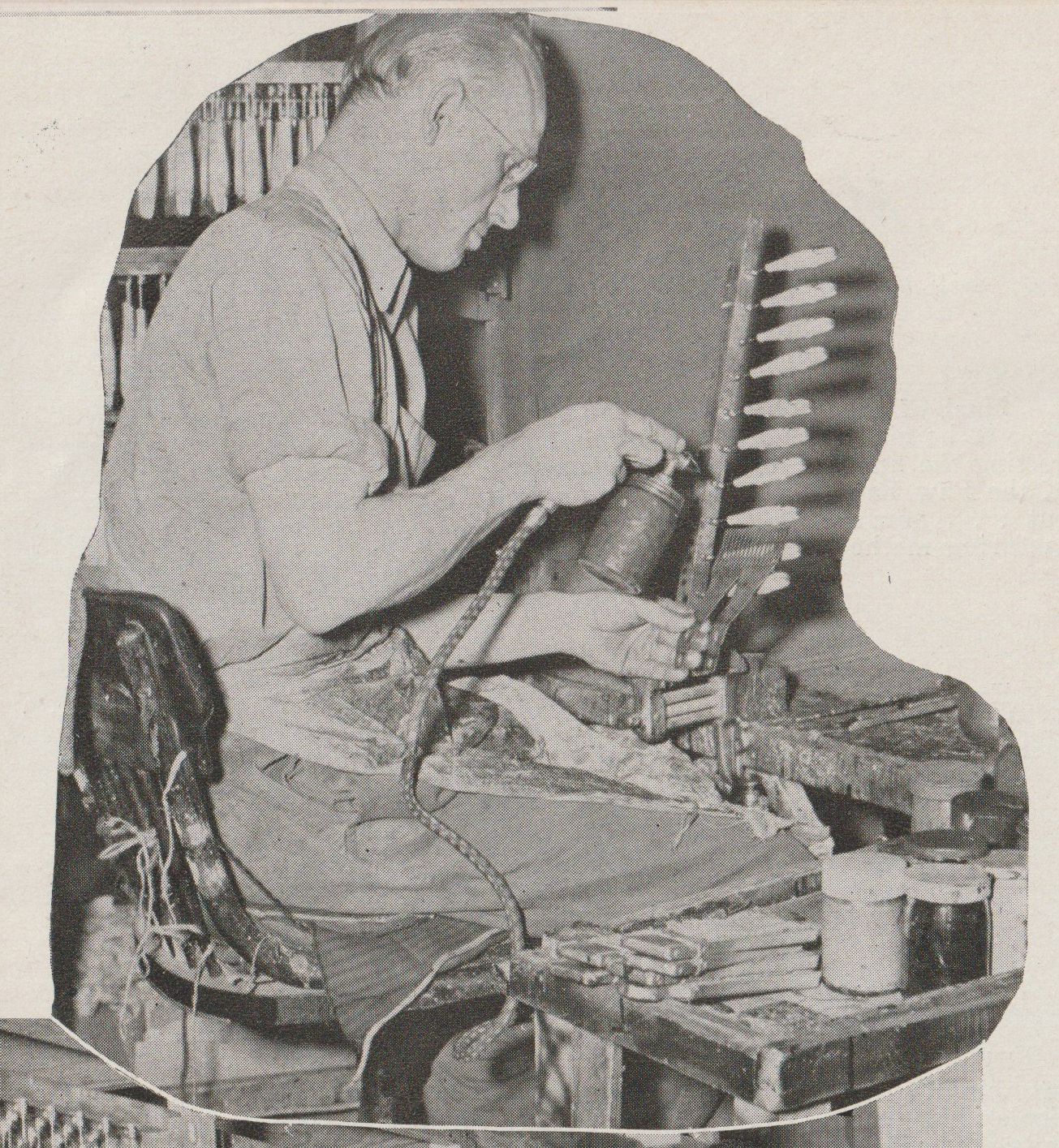
Caption: Many of the special finishes are done “by hand.” Expert employees…good lighting…automatic machinery…the very best of materials…all combine to make “Good Fishing Begins Here” a slogan that really means what it says.
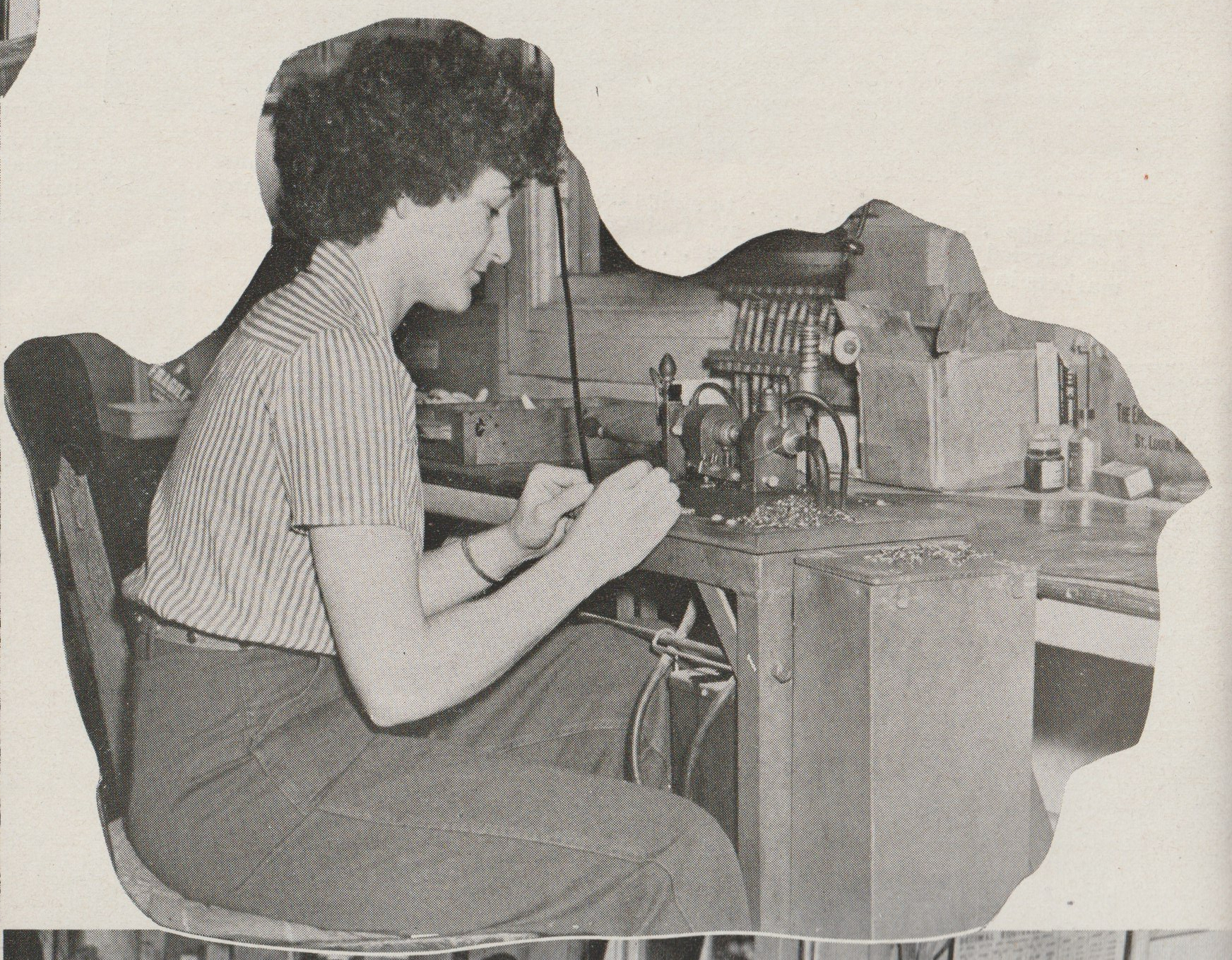
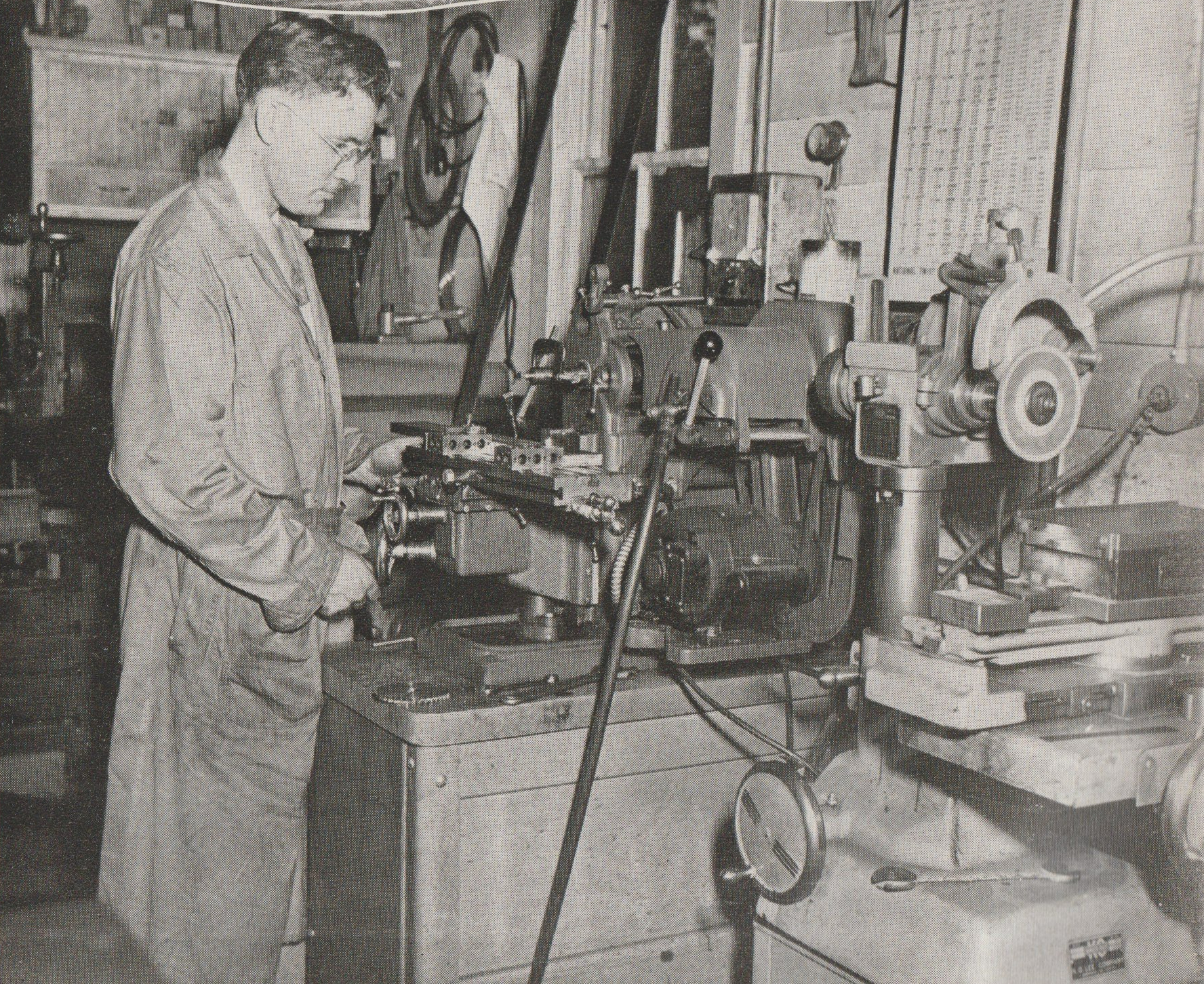
Caption: Much of the machinery in the Paw Paw factory was designed and produced in the company’s own machine shops. Many of the intricate operations formerly done by hand are now done by automatic machines…and these machines have enabled the company to service larger markets…to make more baits…to go into new fields and to increase the list of employees to take care of the new business.
Dreier concludes,
“For a number of years Michigan has led the Nation in the number of fishing licenses sold…going over the 900,000 mark last year. Paw Paw Bait Company could furnish every one of those license holders with a bait and have many left over for distribution to other points.”
“Many of the baits have been made to suit certain conditions in various parts of the country. Some are made for salt water fishing…some for fishing through the ice…some for waters in the tropics…others for the Northern countries.”
“‘Good Fishing…Begins Here’ is the title of a new booklet now on the presses for free distribution to all anglers and picturing the baits for all manner of fishing.”
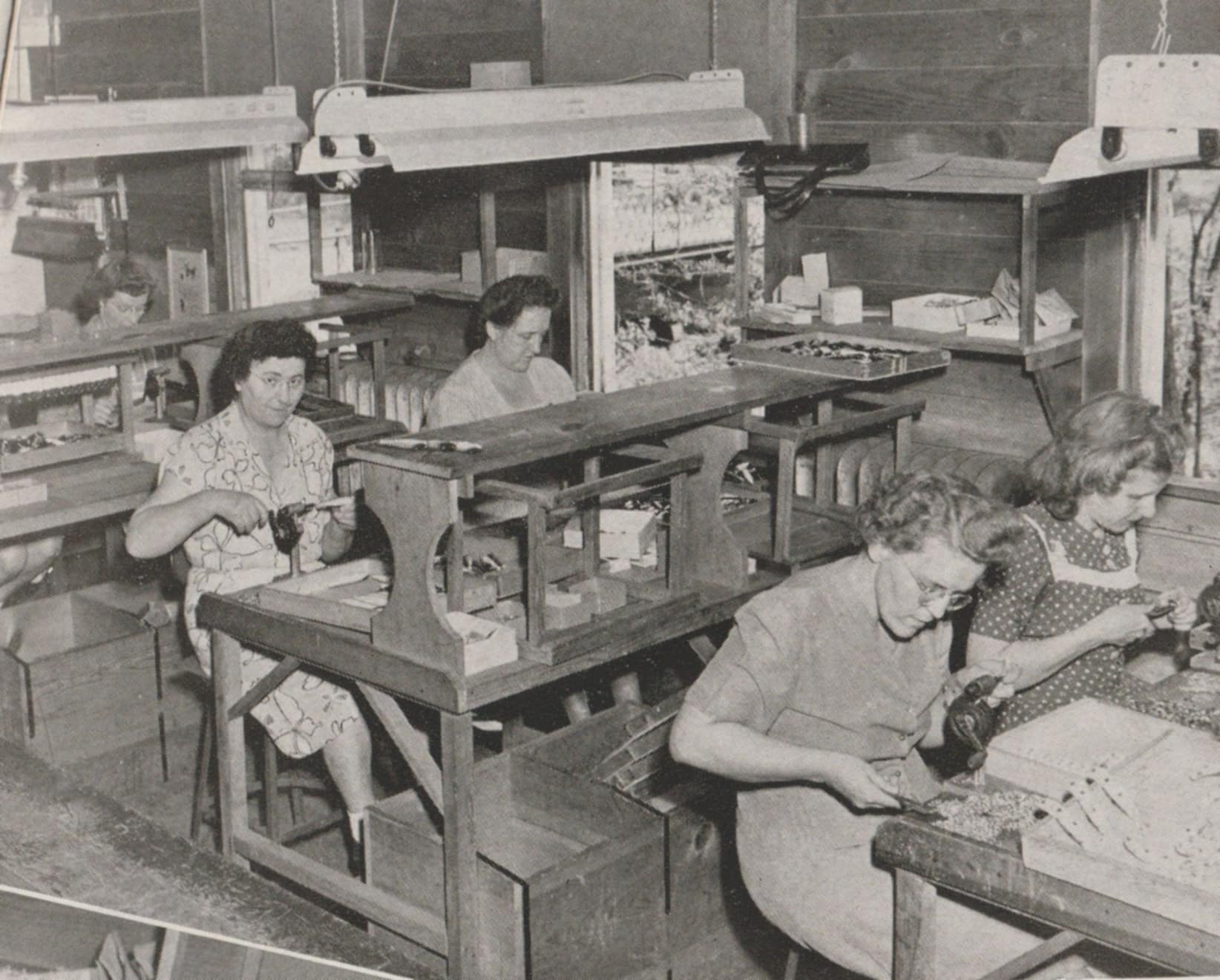
Caption: Baits get hooks and other appurtenances necessary to make them get good results for the anglers. Each hook is placed in a certain spot…hung just right – every lip is bent at just the right angle for the desired action.
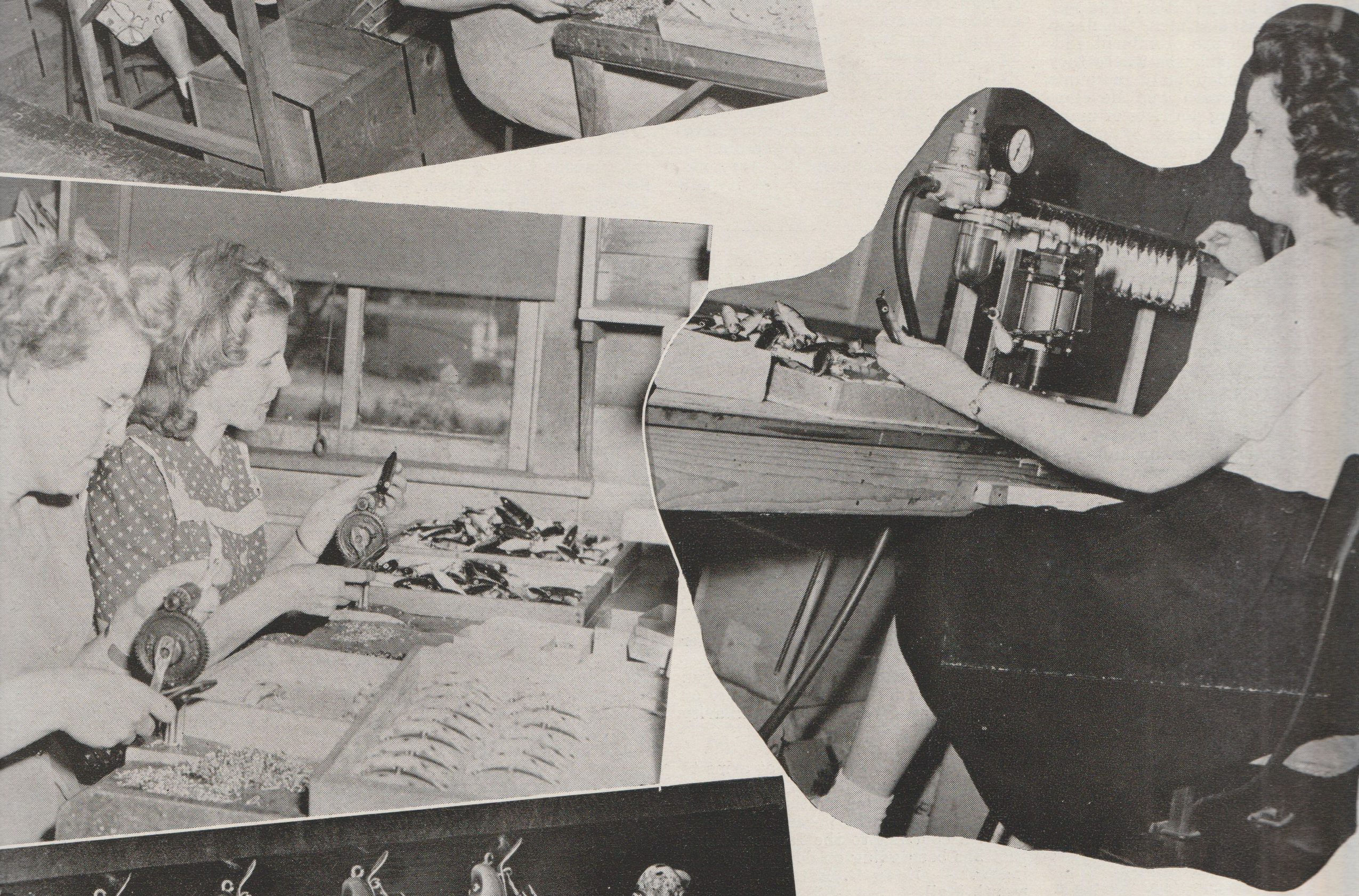
Caption: Left: While machines do much of the work it is necessary for these machines to be guided by expert employees.
Right: One of the automatic machines designed and made in the factory which does one of the operations that make Paw Paw Baits last longer and give such good service on the “field of action.”
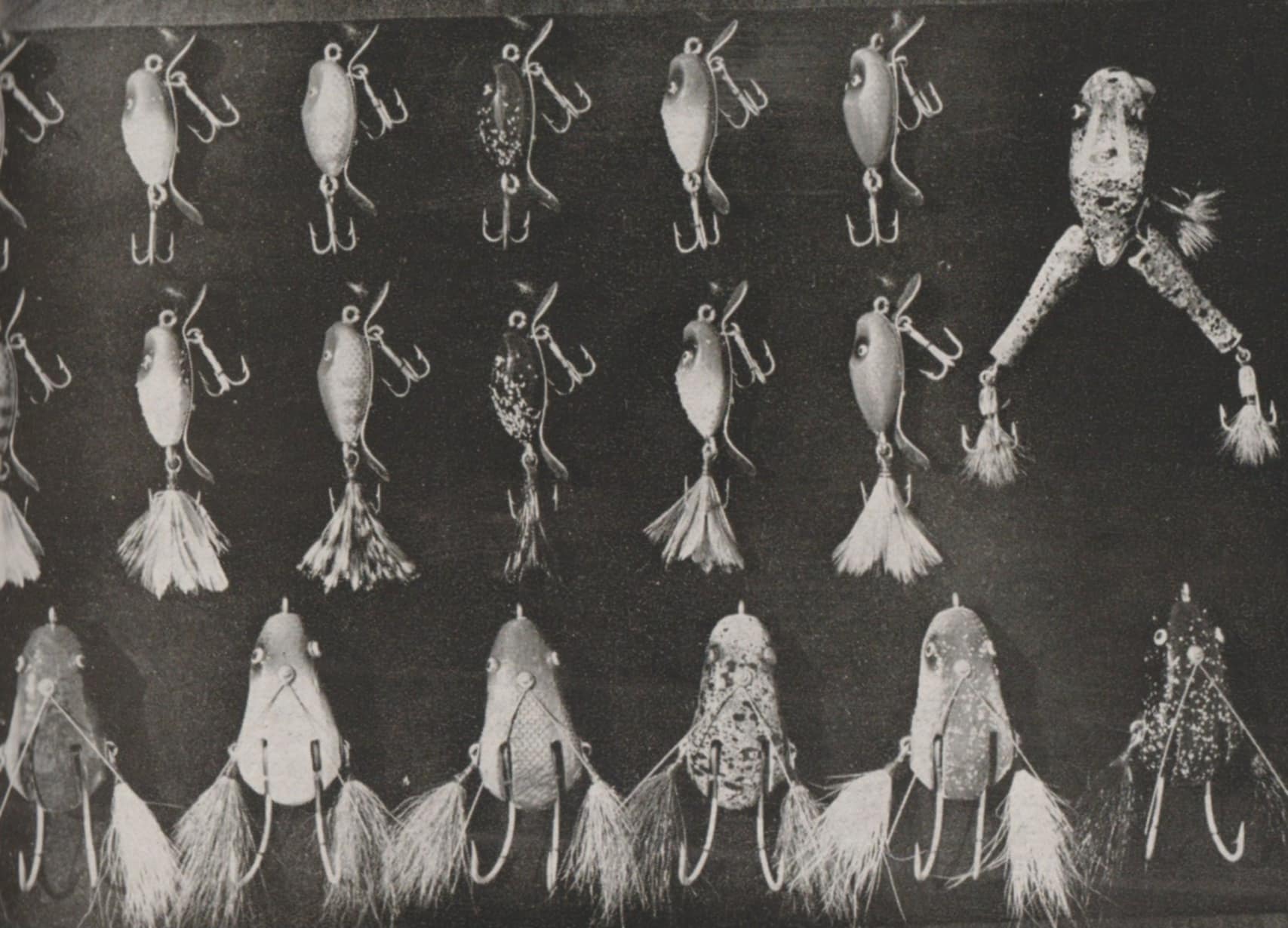
Caption: The Line consists of several hundred different baits…made of wood, metal, plastics, feathers. One wonders why there are so many…and one wonders why a fish would strike at some of them…yet EVERY ONE is a tested bait and EVERY ONE has proven that it will catch fish.
Paw Paw Bait Company began sometime around 1928, earlier if you discount some naming issues, and lasted until 1970 when Shakespeare bought the company. The company history is fascinating and rich, a bit convoluted, and well worth digging into. The NFLCC site has a number of excellent articles on this history.





What a great behind the scenes look at how handcrafted lures were made prior to today’s technologies. That is what makes so many of these old baits desirable collectibles. The human touch is sorely lacking in most of today’s mass produced baits. Nice post as usual, David!
I agree Mike. And thanks for the kind words. Very much appreciated.