It happens over and over in the history of fishing tackle; a successful idea spawns many imitations and variations. A great example would be the so called “rotary head” baits. The earliest I can think of at the moment is the Hinkley Phantom with a patent date of 1897. There have been so many imitations over the years that author Terry Oxley has filled a large book with nothing but rotary head plugs (his book can be found used sometimes on the auction sites) and they are still being made today!
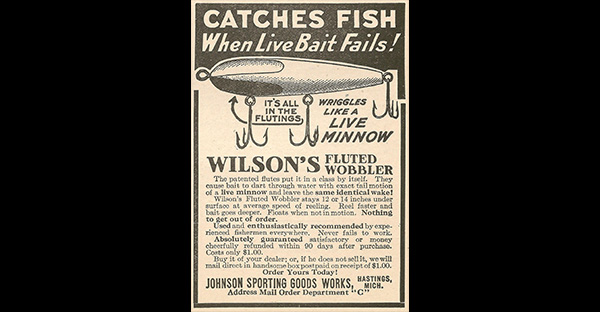
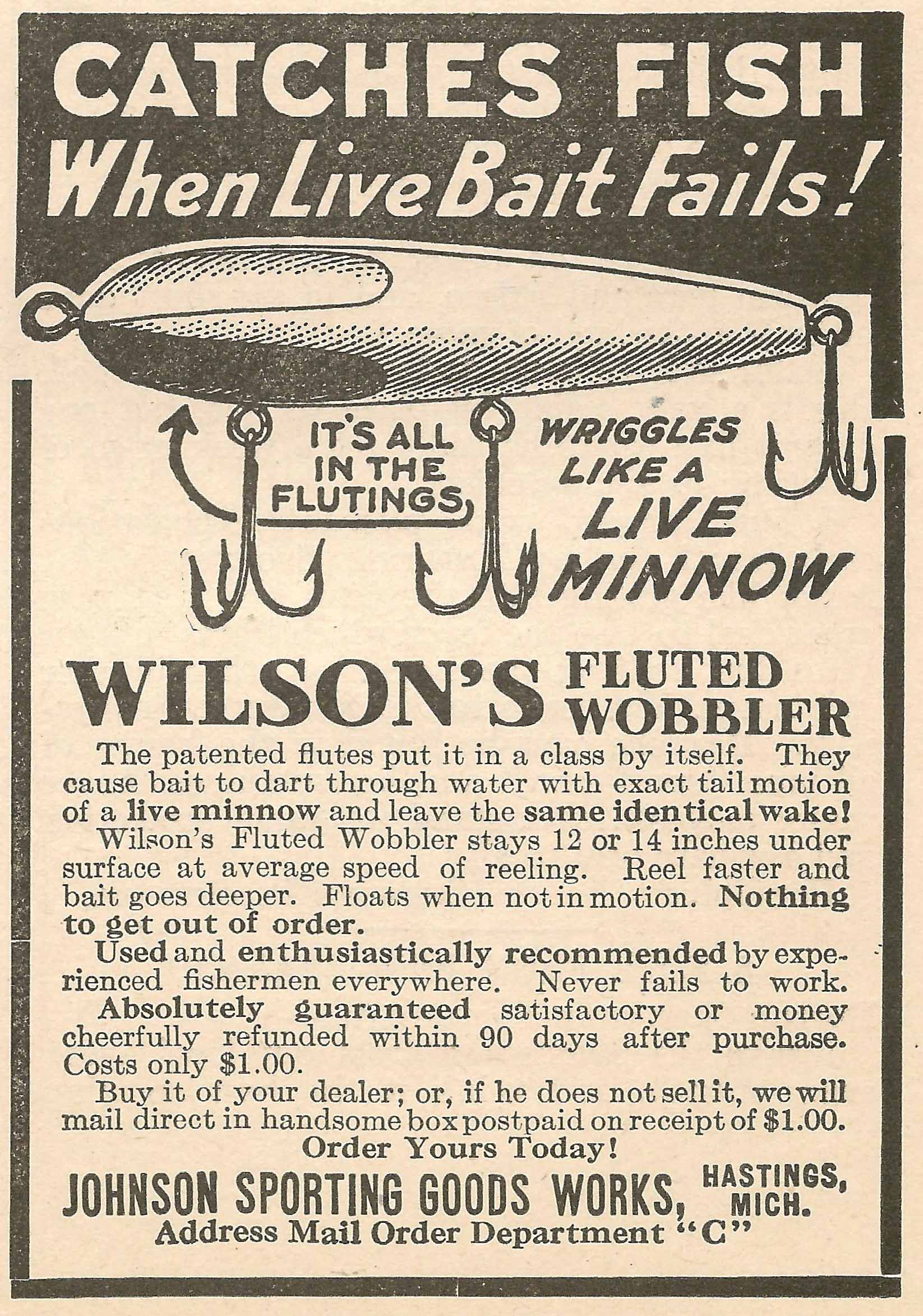
Another innovation that goes back to 1911 is the cutting of grooves in the front edges of a bait to cause it to wobble or send out vibrations as it is retrieved. The bait that seems to have started this trend in 1911 is the Wilson Fluted Wobbler from Hastings, Michigan. This bait was one of the first plugs designed to wiggle in a swimming motion. It was a terrific success and was sold in large numbers for many years. It went through a succession of body shape changes through the years and many smaller sizes were introduced but it always had those four flutes or grooves on the front end that gave it a distinctive swimming motion. The flutes were more often than not painted red. The Wilson’s Wobbler was first advertised in 1912 in the ad shown above.
The bait had a very good reputation in my home state of Michigan and 20 years ago I still ran into older fishermen who swore by the lure and were willing to trade other older lures they owned for a fishable Wilson’s Fluted Wobbler.
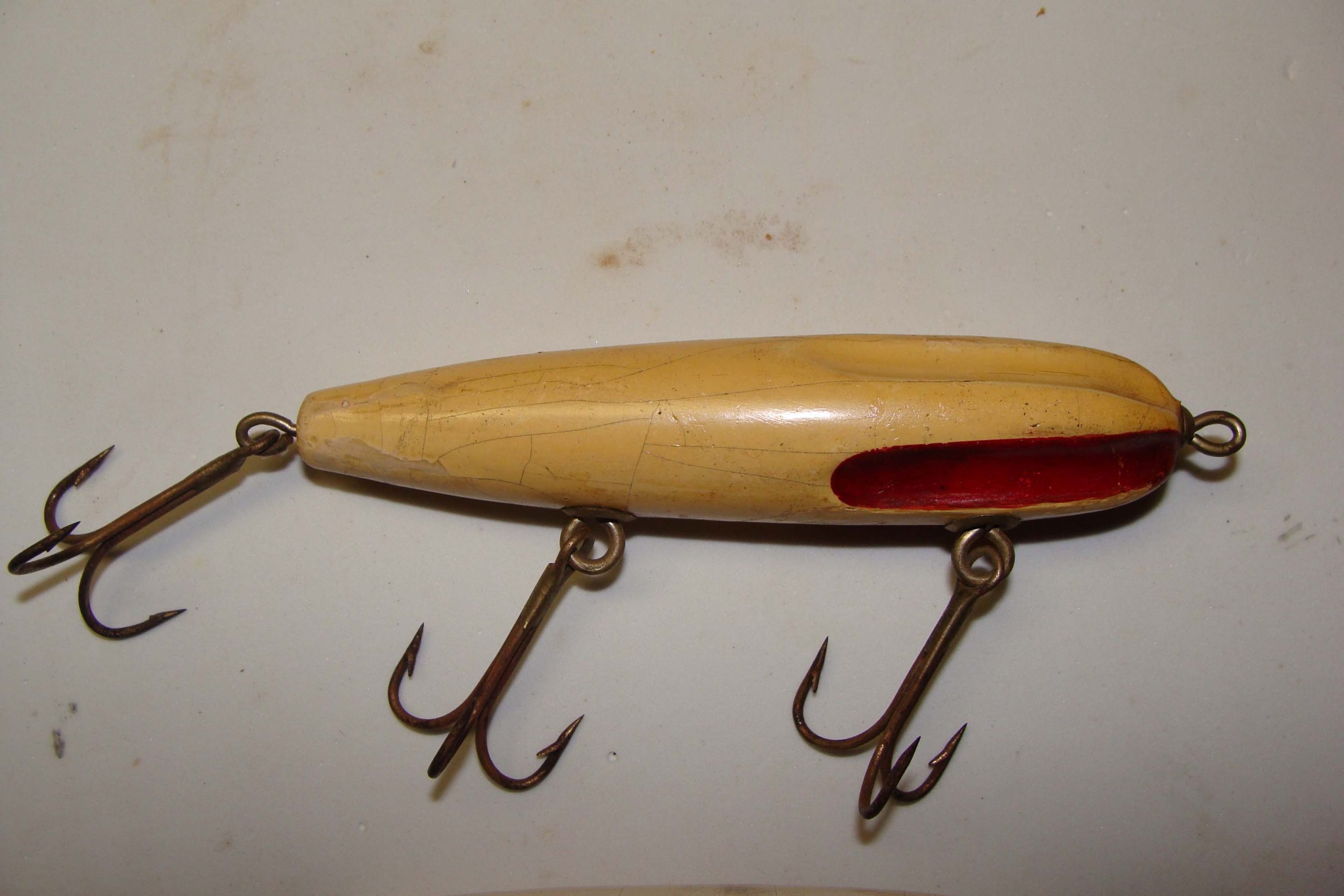
The Lockhart WW Special
The success of the Wilson bait was not lost on Mr. E. J. Lockhart in nearby Galesburg, Michigan. Mr. Lockhart had been having decent success since 1909 selling his “Wagtail Witch” plug which worked on the principle of water being forced into a large hole where the mouth of the plug was located and exiting out of a much smaller hole on the lure’s back. The sales of the Wilson bait however were far greater than those of the Lockhart’s.
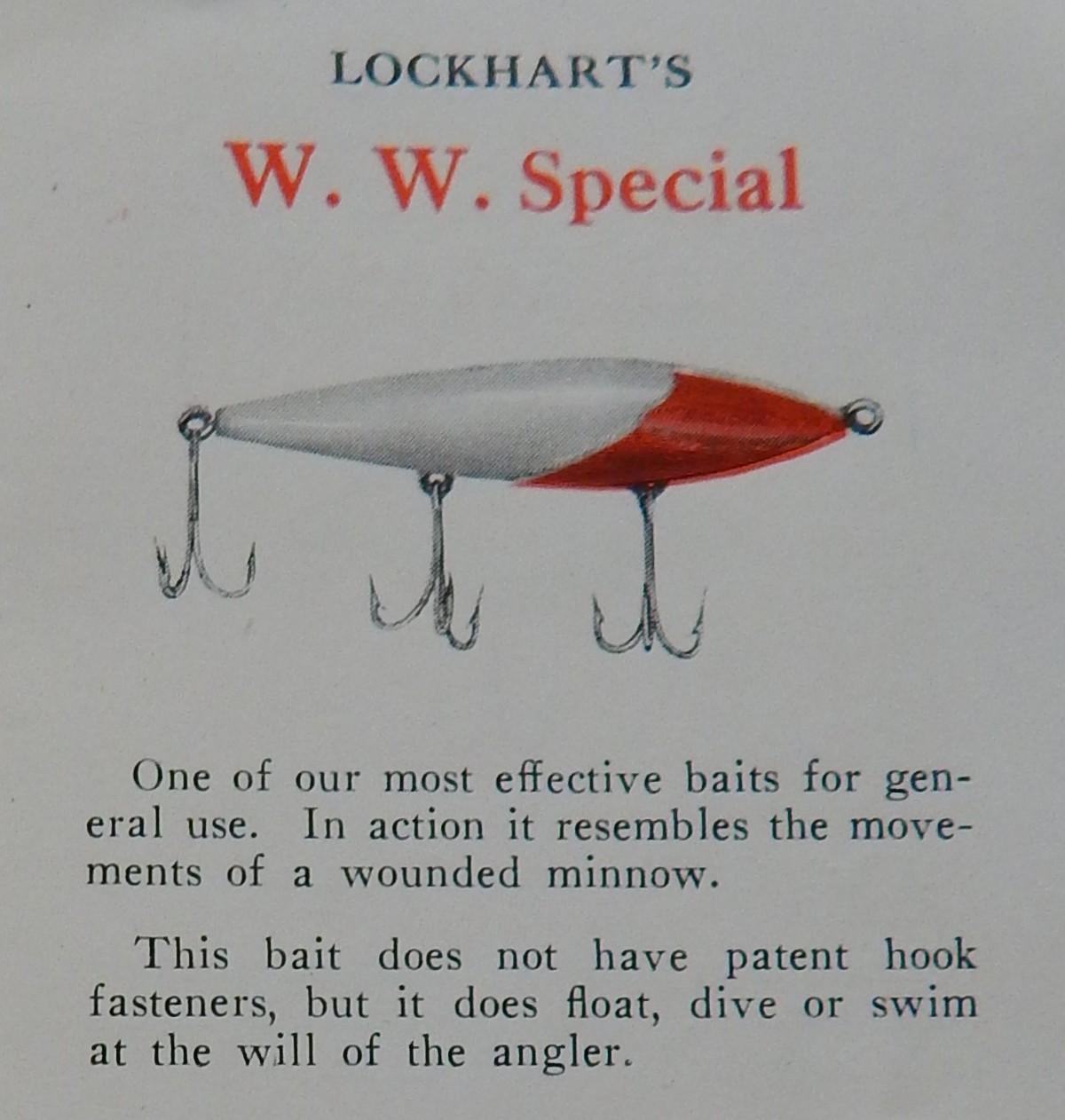
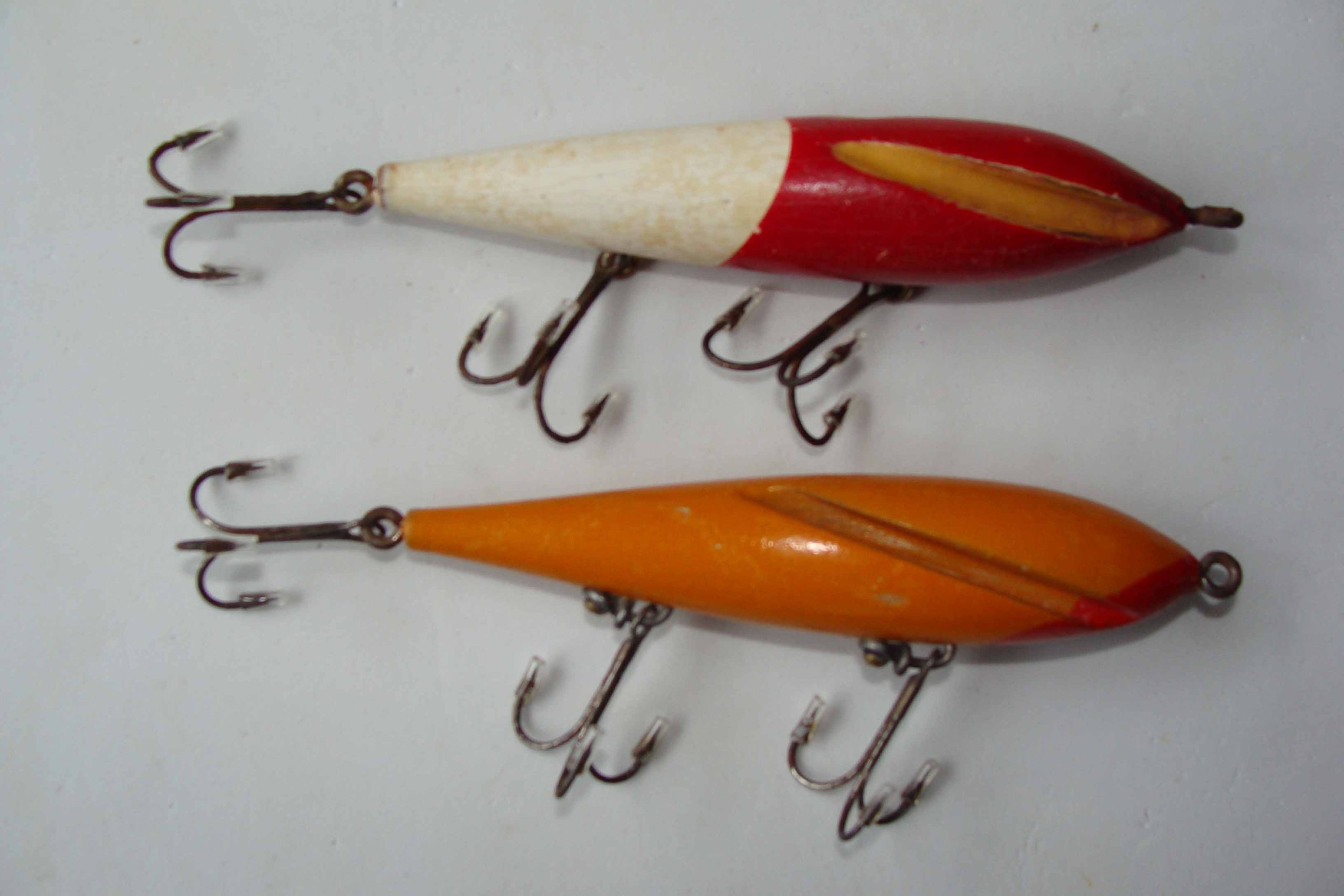
Not to be outdone, Mr. Lockhart took the Water Witch body and rather than drill entrance and exit holes for water to run through, he cut deep saw cuts in the front sides of the bait to help make the plug wobble when retrieved. At first the bait was advertised as the “Water Wizard.” By 1914 the deep saw cuts were modified to more closely resemble the more rounded flutes of the Wilson Wobbler and the flutes were moved toward the top of the lure’s head. Soon after it was cataloged and advertised as the “Wobbler Wizard” and then the “W.W. Special.” It seems to me that the “W. W.” was an early subliminal reference to Wilson Wobbler. However, the success of this bait was very modest when compared to Mr. Wilson’s Wobbler. It was Mr. Lockhart’s last bait design as his production facility burned to the ground in 1916 and he did not remain in business.

The Bignall and Schaff Diamond Wiggler
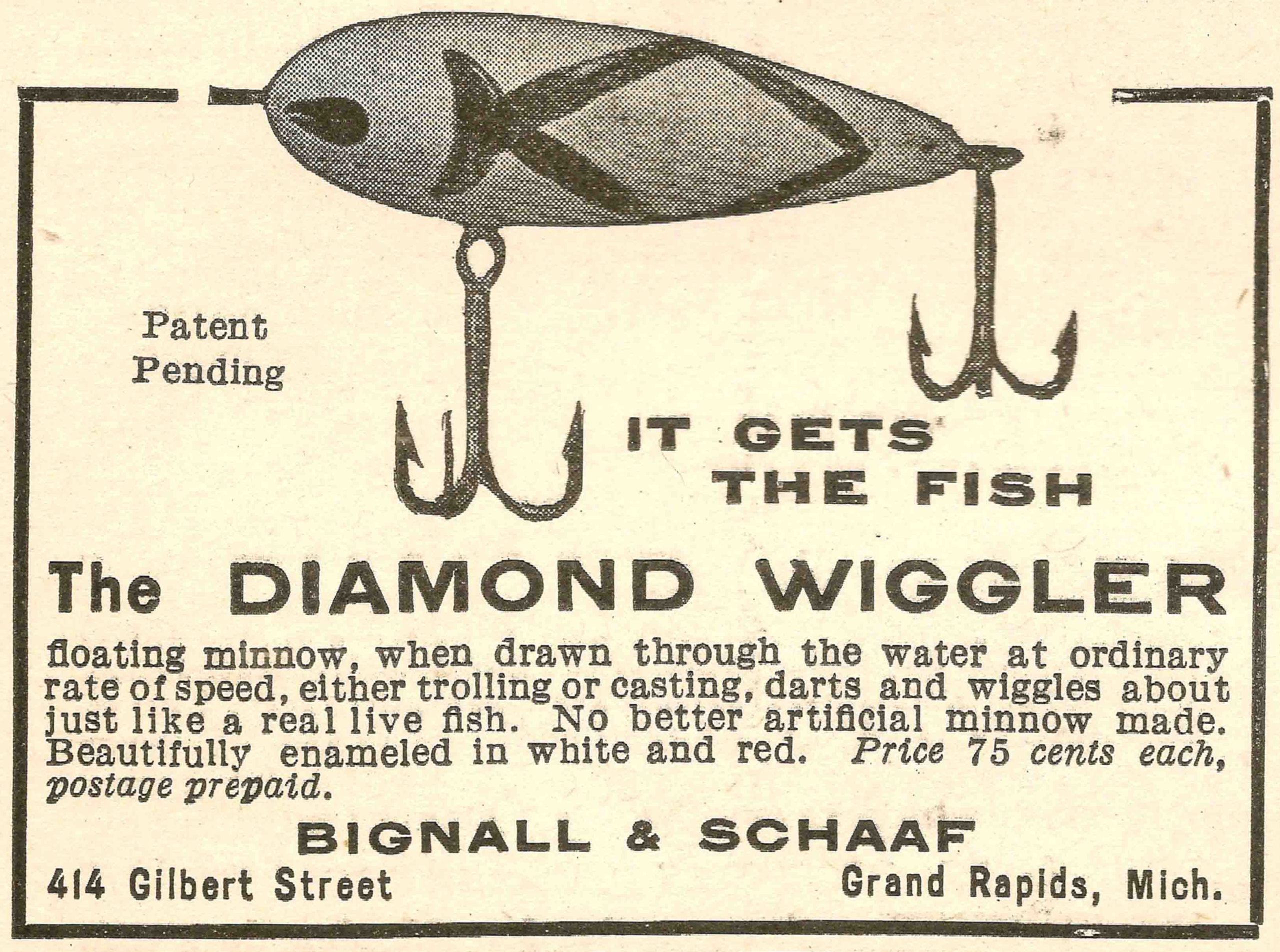
Meanwhile up in Grand Rapids, Michigan, a Mr. Bignall and a Mr. Schaaf decided to get in on the trend. Let me say that very little is known about either of the gentlemen. Researcher Terry McBurney made great efforts to ferret out some information on these two gentlemen. Aside from identifying the most probable Mister’s Bignall and Schaaf (there were more than one of each in the area) he was able to determine that no company by the name of “Bignall & Schaaf” ever appeared in the City Directory and no patent was issued for the lure.
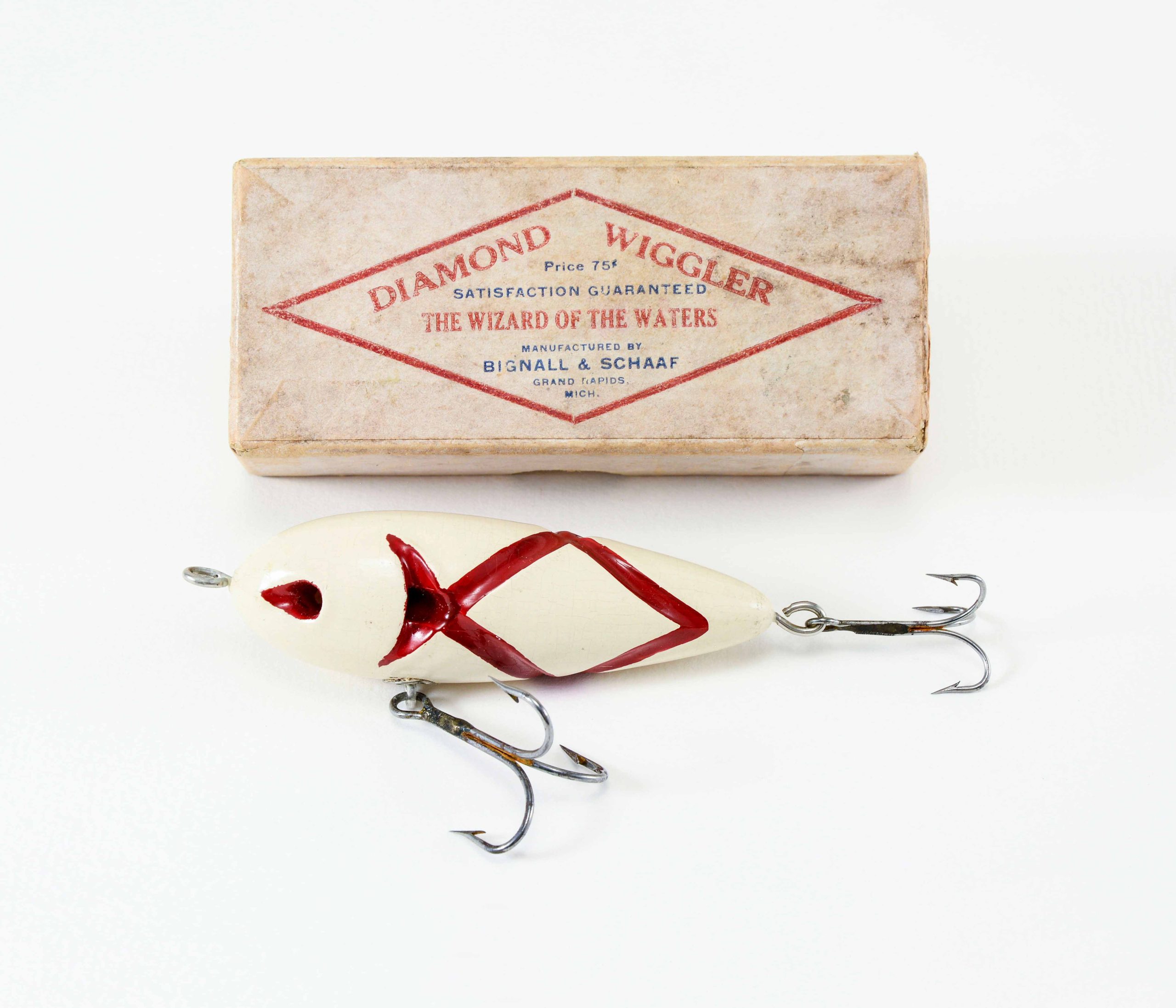
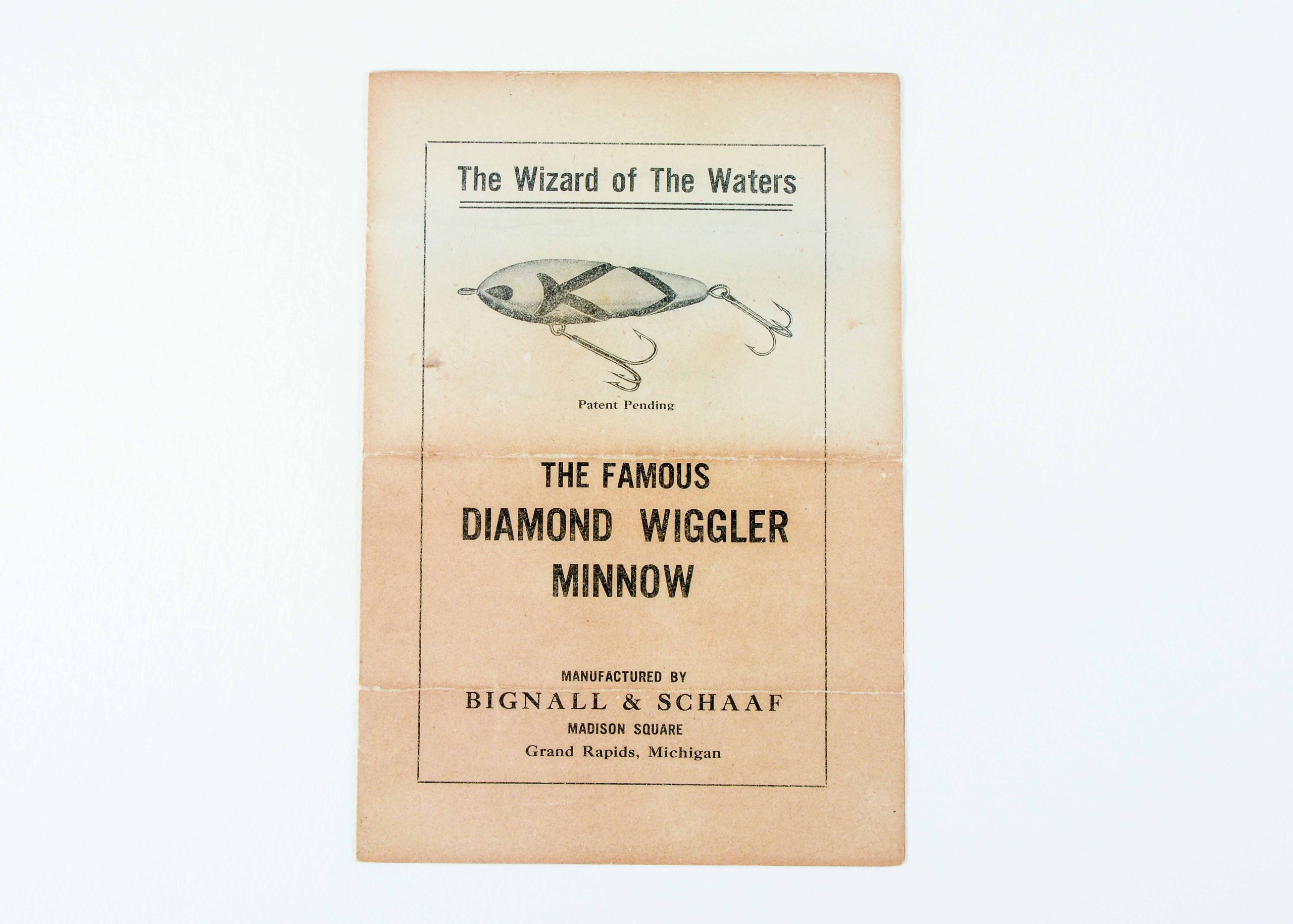
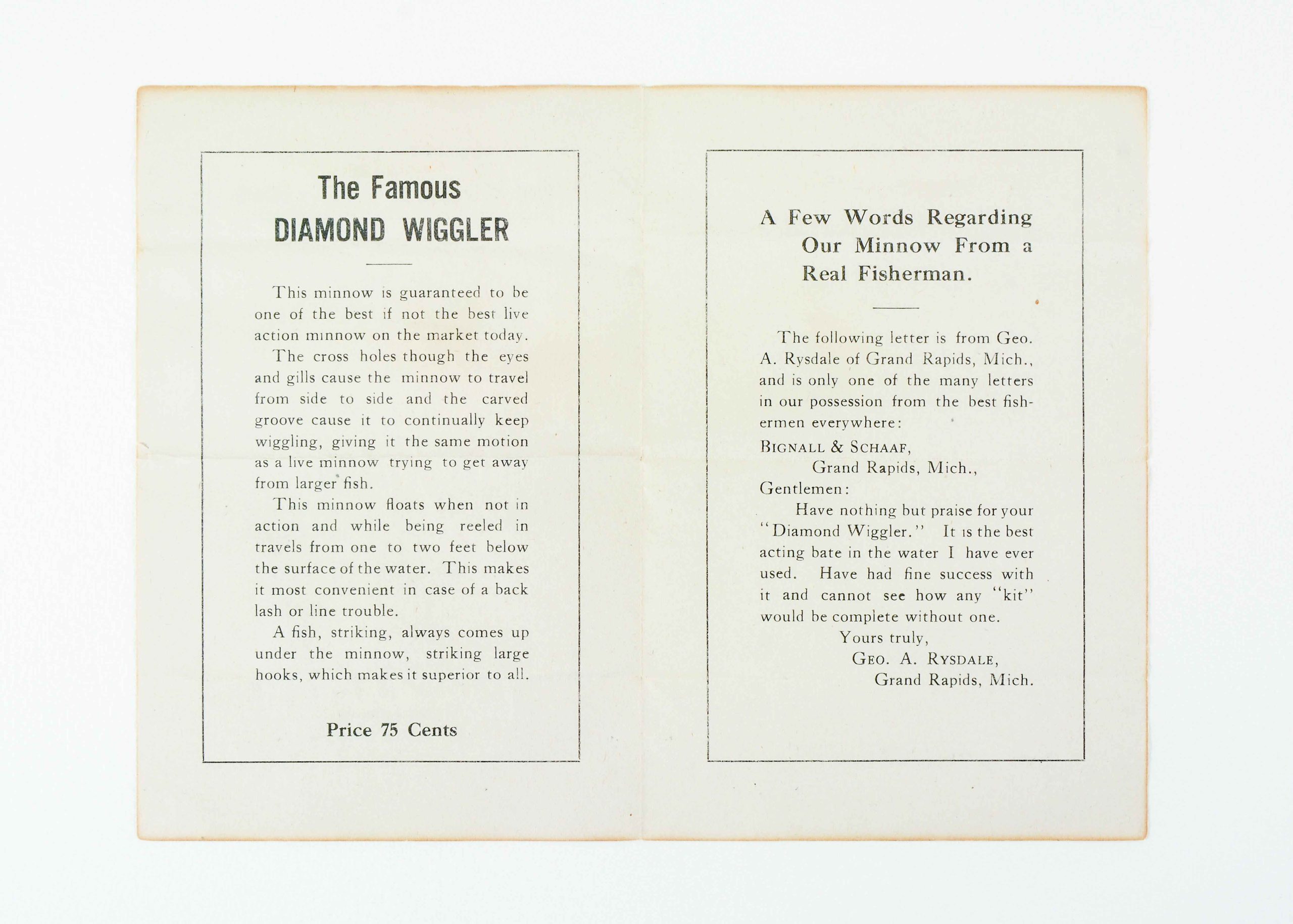
The lure itself is known as the Diamond Wiggler and is quite rare and much sought after by collectors. The Diamond Wiggler is advertised in 1914 and combines the attributes of the original Lockhart baits with water running through holes in the body and the Wilson concept of grooves on the outside of the lure. On the Diamond Wiggler water enters two holes that appear as “eyes” and runs out at the “gills” and immediately flows over the diamond patterned grooves cut into the flanks of the plug. Luckily, we have a copy of the box papers for this bait. They tell us how the bait is designed to work. To give you an idea of how rare and desirable this bait is, recently a mint bait in a mint box with box papers sold for just over $5,000 at Langs auction!
To read more of Bill’s Sunday Sonnetts, please click this link.