

Introduction
Recently, I posted a piece on the Fred Arbogast Mud-Bug, one of the great metal lipped crankbaits of yesteryear. In today’s post, Goin’ Deep, The Bomber Water Dog, we’ll explore the legacy of this unique, , metal-lipped, deep diving bait.
Growing up in the shadow of its more famous brother, the Bomber, the Water Dog still had its following and a fairly long run before it was discontinued. Unlike the Mud-Bug, which was plastic, the majority of Water Dogs produced were made of wood. Toward the end of its life cycle, production did change to plastic, which ultimately became the fate of most long-tenured baits that initially were manufactured in wood.
Early History
Most indications are that the lure was introduced sometime in the early 1950s. A very reliable source, Luckey’s, “Old Fishing Lures and Tackle”, places initial production in 1954. The lure was made of white cedar and came in a two-piece orange/brown cardboard box. Amazingly, even today some of these older, original wood models still maintain a mild cedar odor. Color selection was based on the prevailing Bomber lure colors of that time.

Although there is no evidence of what the impetus for the Waterdog introduction was, there was a popular lure called the Martin’s Lizzard, that was yielding great results in the Ozark Region. (for more information see my BFA post- “You Don’t Know Jack-The Martin’s Lizzard.”).
The Martin’s Lizzard was made of wood, had a shovel shaped metal diving bill and a small trailing tail spinner. The Waterdog design was similar but had a slimmer three sectioned body; a smaller head and tail, and a longer mid-section. The diving lip was also oval shaped. The Martin’s Lizzard had a small metal “half-moon” line tie where a snap could be affixed, while the Water Dog had the same Luxon type line tie found on Bombers of the era.

Mention should also be made of the Whopper Stopper Hellbender lure that was introduced right about the same time that the Waterdog was. This was a plastic bait that bore an even more striking resemblance to the Martin’s Lizzard. Its unique feature was the heart shaped metal diving bill. Of the three baits, (Martin’s Lizzard, Water Dog, and Hellbender) the Hellbender garnered more attention and popularity over its lifespan. Very early models were introduced in two-piece cardboard boxes and originally called the lure the “Texhoma Lizard”.

Interestingly, even though Bomber and Whopper Stopper would be competitors for years, I have found several examples where their baits were painted in the exact same patterns that were unique to each company. Below is a photo of a Water Dog painted in Whopper Stopper color#05-Gray Shad Minnow, and a Hellbender painted in Bomber color#70-Silver Back-Yellow Belly. The mystery remains on how this was achieved. Did each company send unpainted baits to the other for painting? Possibly yes, as they were only 34 miles apart down Texas highway 82.

Later Production
From the onset of production, the lure was offered in three sizes:
the smallest 1500 series at 3”, the 1600 series at 4.25” and the largest 1700 series at 5.25” These are measurements of the lure body and diving bill combined.

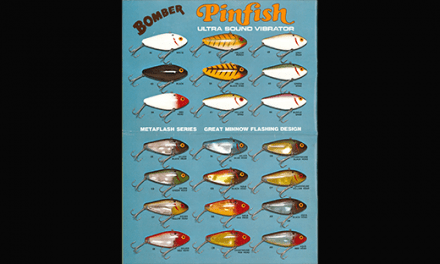
The Water Dog color pallet increased over time to include new Bomber offerings like the unique metascale and metachrome finishes introduced in the early 1970s. While not like anything in nature these were some of the prettiest colors ever offered on wooden baits in my humble opinion.

Sometime in the 1960s packaging changed from the original two-piece cardboard box to a cardboard/plastic top slide box. This gave the consumer a direct look at the bait without having to remove a cardboard lid. This packaging lasted even into the early 1970s when wood production was curtailed and plastic versions were introduced. Later plastic versions of the bait began to include rattles.

When Bomber was eventually purchased by Pradco in 1988, the Water Dog was one of the models that was phased out and another legendary lure was lost to history.
Meager Advertising
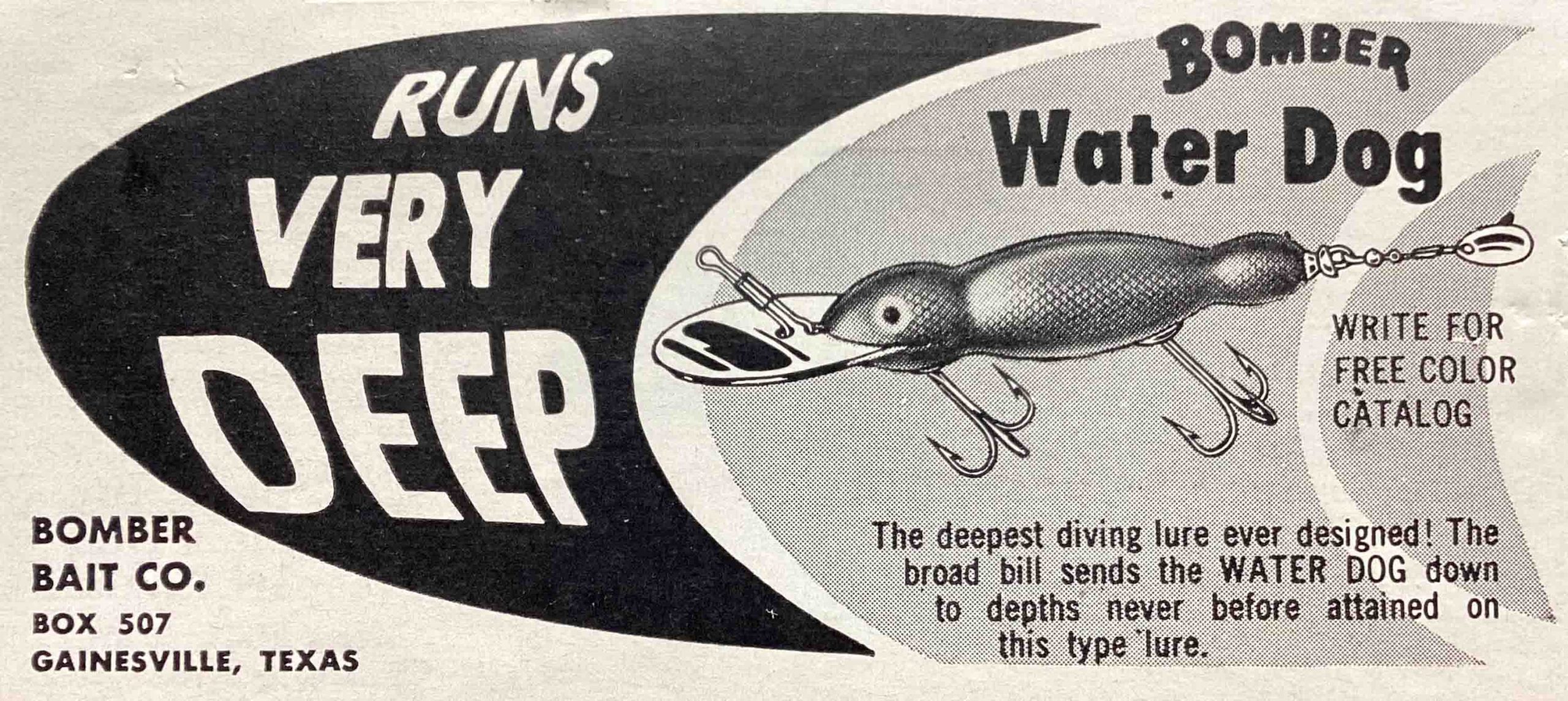
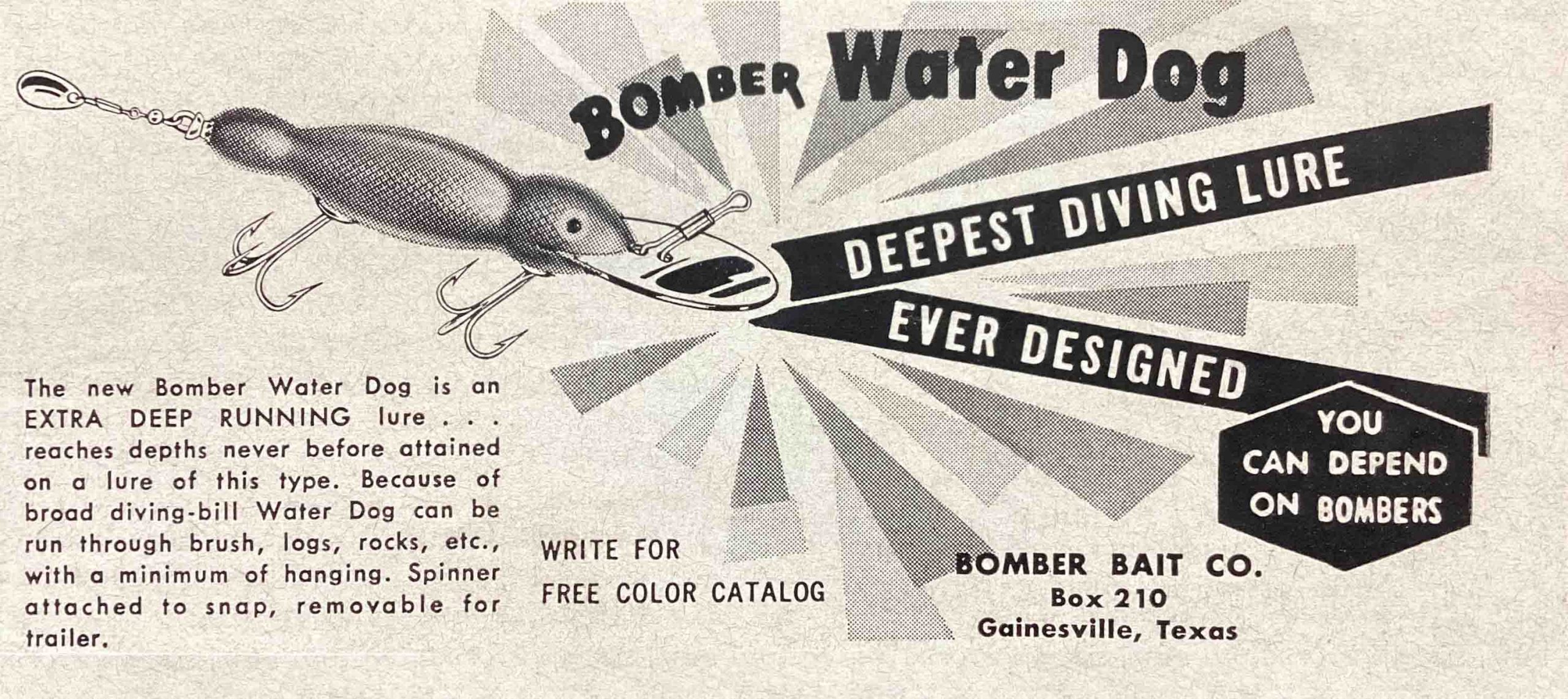
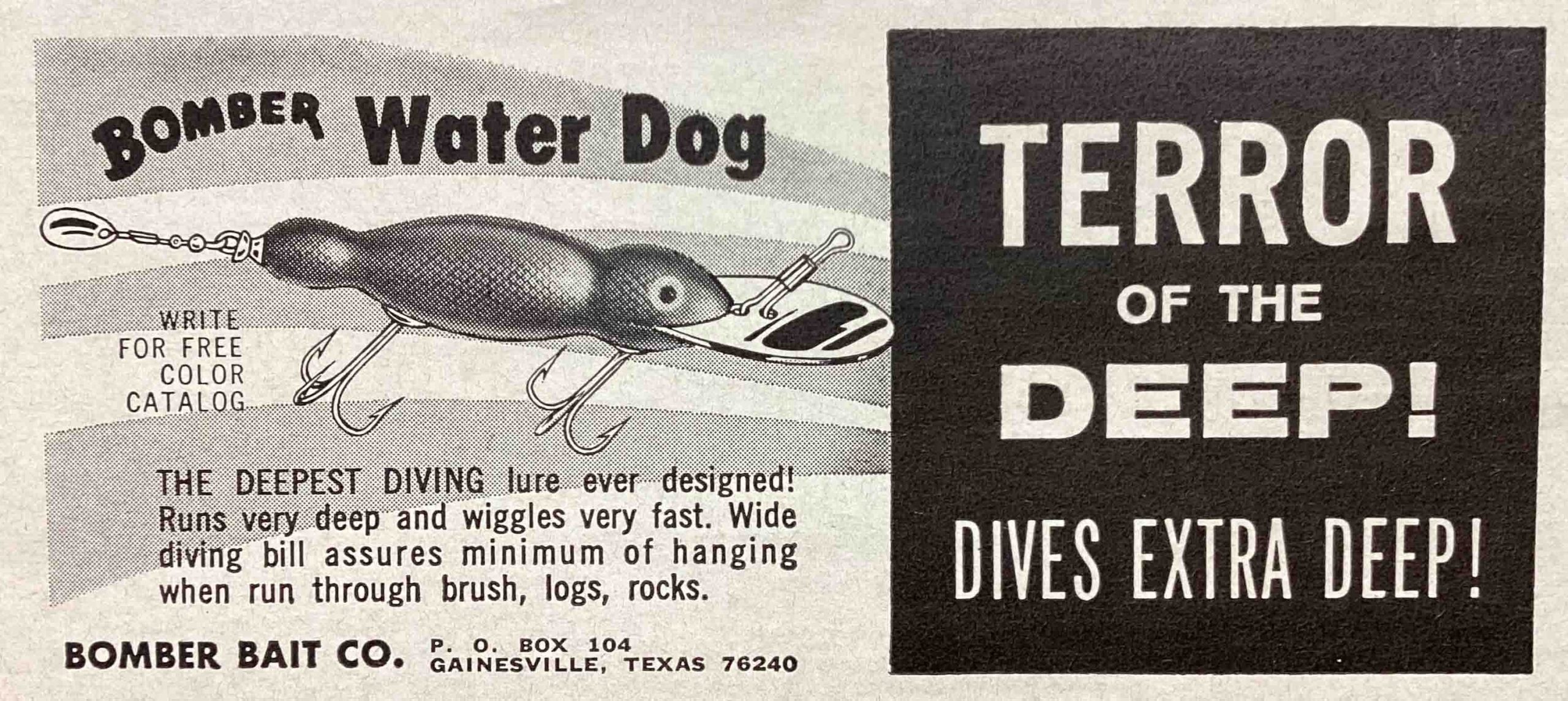
Unlike its famous sibling, the Water Dog never received much advertising support. What little advertising there was, was mostly relegated to smaller print ads in magazines of the era. Noticeably, the ads focused on the deep running capabilities of the bait. Probably like a lot of great lures, word of mouth testimonials were the best advertising.

Unique Variations
Bomber collectors have unearthed an unusual variation of the Waterdog. Designed as a very deep diving bait, it was apparently also tested as a topwater. Known as the “Lipless Water Dog”, multiple examples have been found by collectors, with and without props. This lure was never cataloged. It was apparently a Bomber prototype that to my knowledge, was never marketed to the public. The photo below shows the amazing collection of this variation amassed by Texas Bomber collector, Blake Taylor.
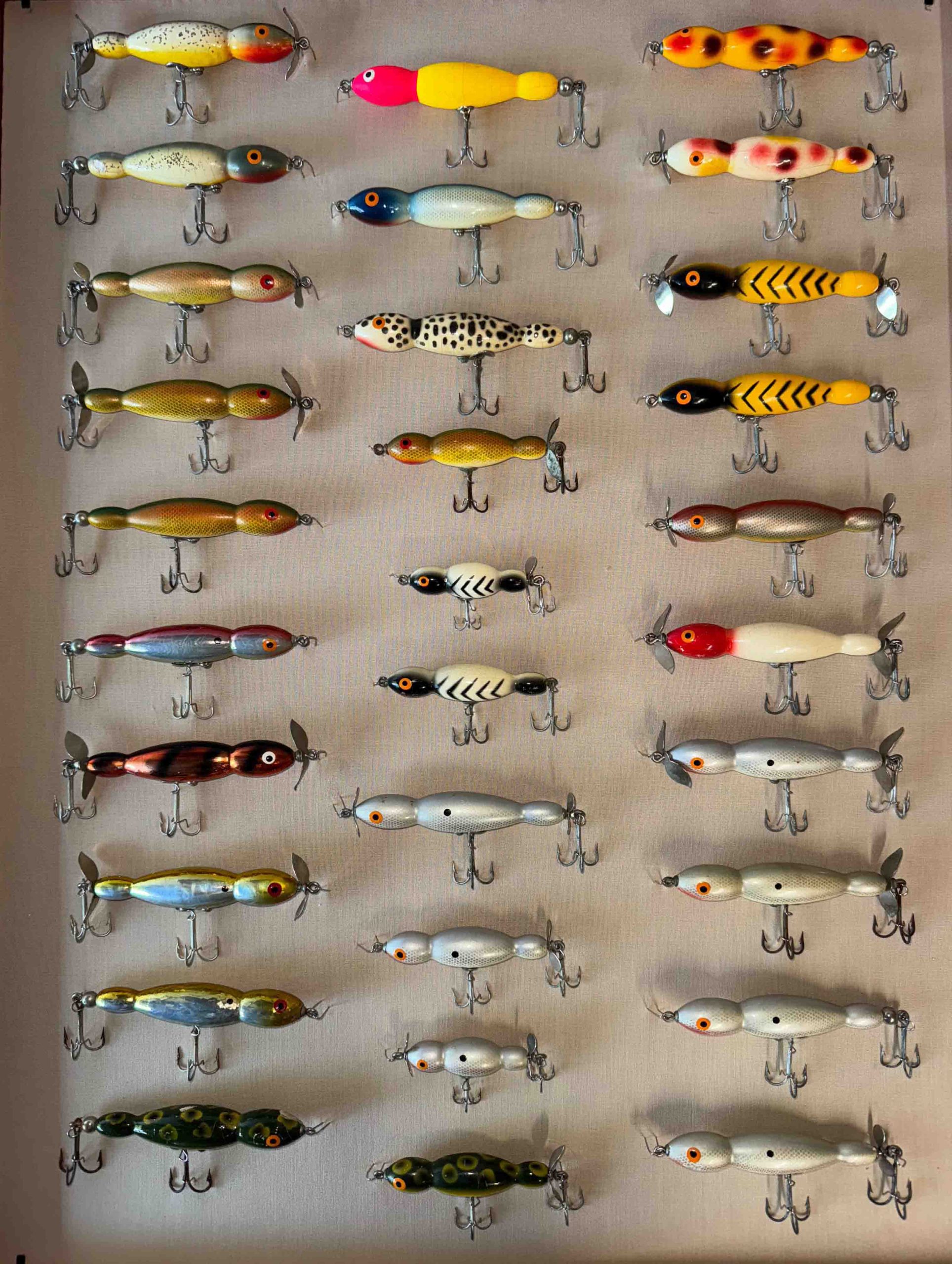
Water Dogs were also often offered in color schemes that were uncatalogued for the lure. Some were regular Bomber colors and some special-order colors. These baits have the most appeal to ardent collectors.

Stan the Fan
No mention of the Water Dog would be complete without giving credit to one of its biggest proponents, Stan Fagerstrom. Stan of course was a great author and bassman, as well as a contributor and friend to Bass Fishing Archives.
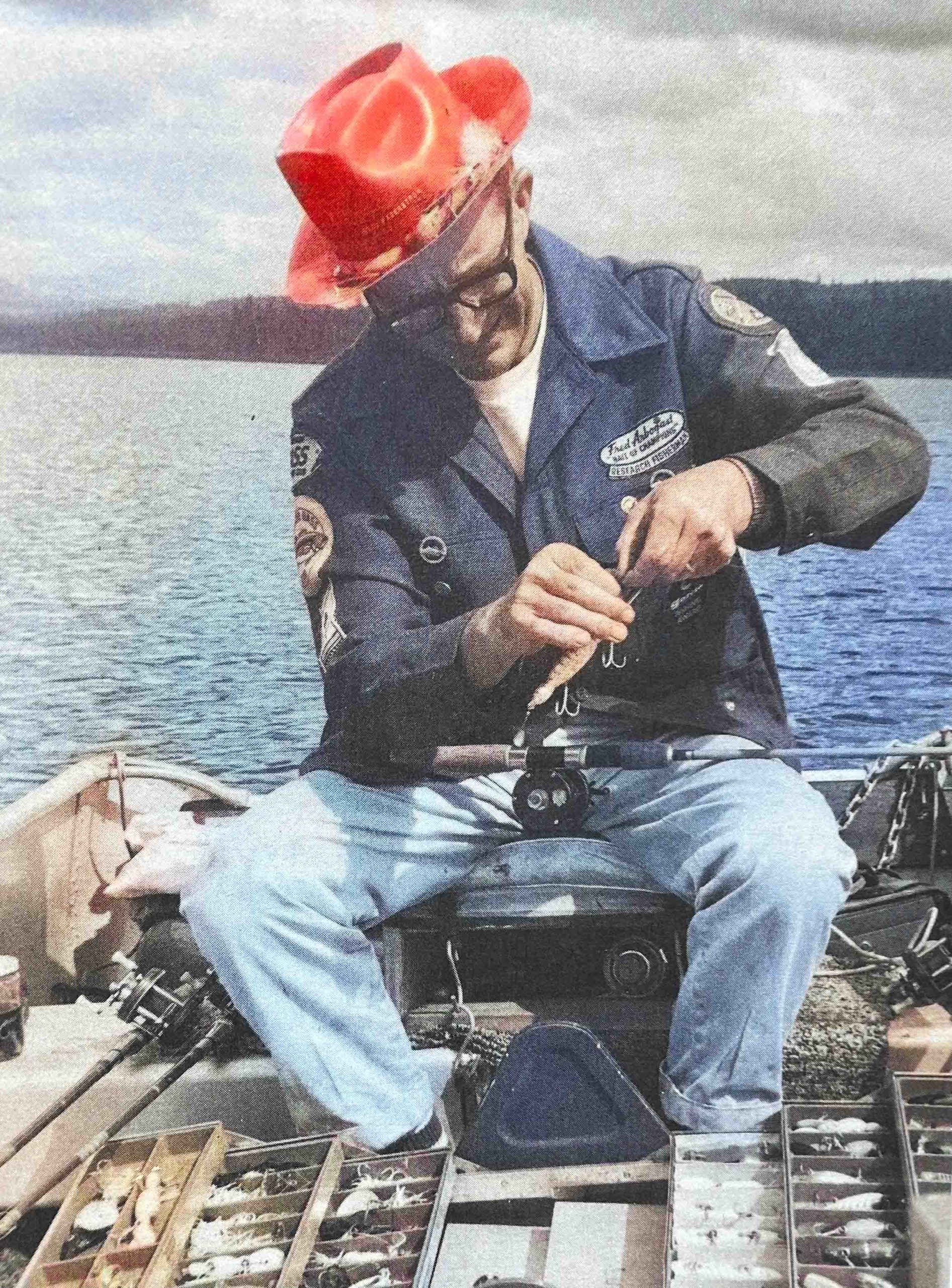
It was Stan’s musings on this bait that first caught my attention. Initially it was a Bassmaster magazine article describing how he would remove the tiny tailspinner and affix a 4” long pork strip to the bait. Here is how Stan described it in his own words:
“Pork rind can also be a real winner when employed with certain plugs. Bomber’s Water Dog and the Hellbender family are two such lures. You can remove the little spinner that comes with these lures and hang a strip of pork rind in its place. I took a pair of eight pounders one Spring using a four-inch white bass strip hung from the snap of a green and white Bomber ‘Dog.”
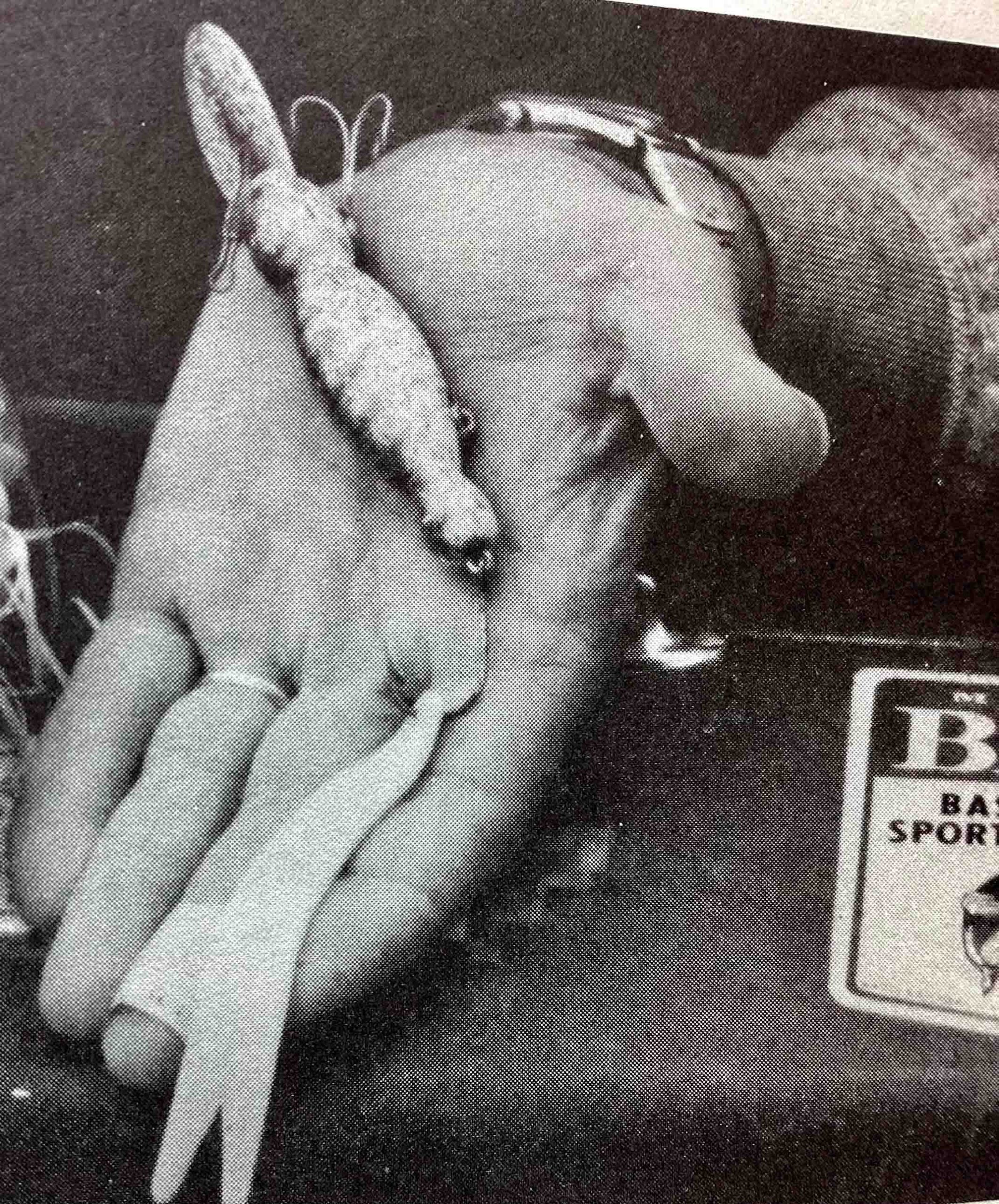
Later, I found Stan’s excellent book, Catch More Bass. In the chapter on lures, he once again extols the merits of the Water Dog, especially for lunkers:
“Would you remember a lure which took a pair of bass better than eight pounds before the Spring season really got going good? I would and do. That’s how it is with me and that beautiful hunk of wood the Bomber people call their Waterdog. This lure is my magnum. I carry it for lunkers. It is not a lure that is going to get me all kinds of bass and I know it. But I also know every time I chuck it out there next to a likely bass hangout, I just might get a hook into my biggest fish ever.”
Another name you might recognize, Roland Martin, also sings the lure’s praises in his tome, One Hundred & One Bass-Catching Secrets:
“My first experience with crank baits came in the late 1950s after they built several reservoirs in Maryland. I fished a lot back then with Tom McNey, and we got onto a plug which might be the deepest running crank bait ever manufactured: the Waterdog, made by the Bomber Bait Company……We used the largest of the three sizes, which is about 5 inches long, and we’d make long casts with spinning tackle……We cast those Waterdogs to points, rock piles, old house foundations, underwater islands, bridges, and anything we could find that was from 10 to 15 feet deep. One Spring Day, we caught a 6-pound, 5-ounce, 6-pound, 4- ounce and a 6 pound, 2- ounce smallmouth. We also had a 7 ½ pound and 7 ¼ pound largemouth. We had a total of nine bass over 5 pounds, and we caught all of ‘em on Waterdogs. This was in Maryland, and those bass approached state-record sized bass.”
Conclusion
Unlike the Mud Bug which I fished quite a bit, and had success with, I never fished the Water Dog much back in the day. I did own a few, but they never saw much action for some reason.
Years ago, when I got into collecting Bombers, I fell in love with the old Water Dogs and now realize them to be truly classic baits. Like all Bomber products, the quality and craftsmanship of this lure is second to none, especially with the earlier wooden models.

The color selection and multitude of special and one-off finishes make them a great collectible.
When you get ahold of a 1700 series Water Dog and hold that marvelous four-inch wood body in the palm of your hand, catching a faint waft of aromatic cedar, it will transport you back to another era that you probably thought was lost forever.




What a great article, Mike. I’ve never been attracted to or interested in the Water Dog, but I sure am now! I agree, those metascale and metachrome finishes are some of the prettiest colors ever offered on a bait. And the special order finishes are dynamite too. This in-depth piece has lit a fire under me to scour eBay and other places to see what I can find concerning the Bomber Water Dog. Another Home run and a perfect bookend to your Mud Bug story. I wonder why, in those small ads, they didn’t show some of the Water Dogs with different colors, but decided to stick with a plain overall body shade.
Thank you for your comments, David. As a long-time member of the NFLCC, I am always befuddled as to why lures like the Water Dog do not merit more collecting interest. They have beautiful sculpted wood bodies, come in a wide variety of colors and have plenty of scarce special order finishes to boost collecting interest. In my humble opinion, Bomber’s quality and craftsmanship rivals that of Heddon and Creek Chub, which seem to garner the most collecting attention. And, as Stan and Roland put forth in the post, Water Dogs were productive fish catchers that enticed lunker bass!
Oh, I completely agree concerning the quality and craftsmanship of Bomber lures vs. other makers. That kind of comparison is easily seen in any number of other “smaller” lure companies (small by comparison to the output of the large companies like Heddon). The detail and quality that could be found in, for example, companies like Bomber, Paul Bunyan, Hubbard, All Foss, P&K, or any number of other companies, was outstanding, as witnessed by lures that still have strong, durable paint finishes, solid hook attachments, and general overall condition despite being fished for years. It seems likely that while Heddon, Creek Chub, South Bend and the like all had excellent quality control, the smaller companies at the very least matched their standards.
Like a lot of things in life, the old adage, “beauty is in the eye of the beholder”, is never more true than when it comes to collecting interests, especially fishing tackle. For my money, the Bomber Water Dog will always be one of my favorite lures of all time. I hope this post conveyed the affinity I have for it and will have created an awareness and interest in fellow enthusiasts for the beauty of its design and construction. Based on your comments, David, at least I have succeeded in that endeavor with you. Glad it made an impact!