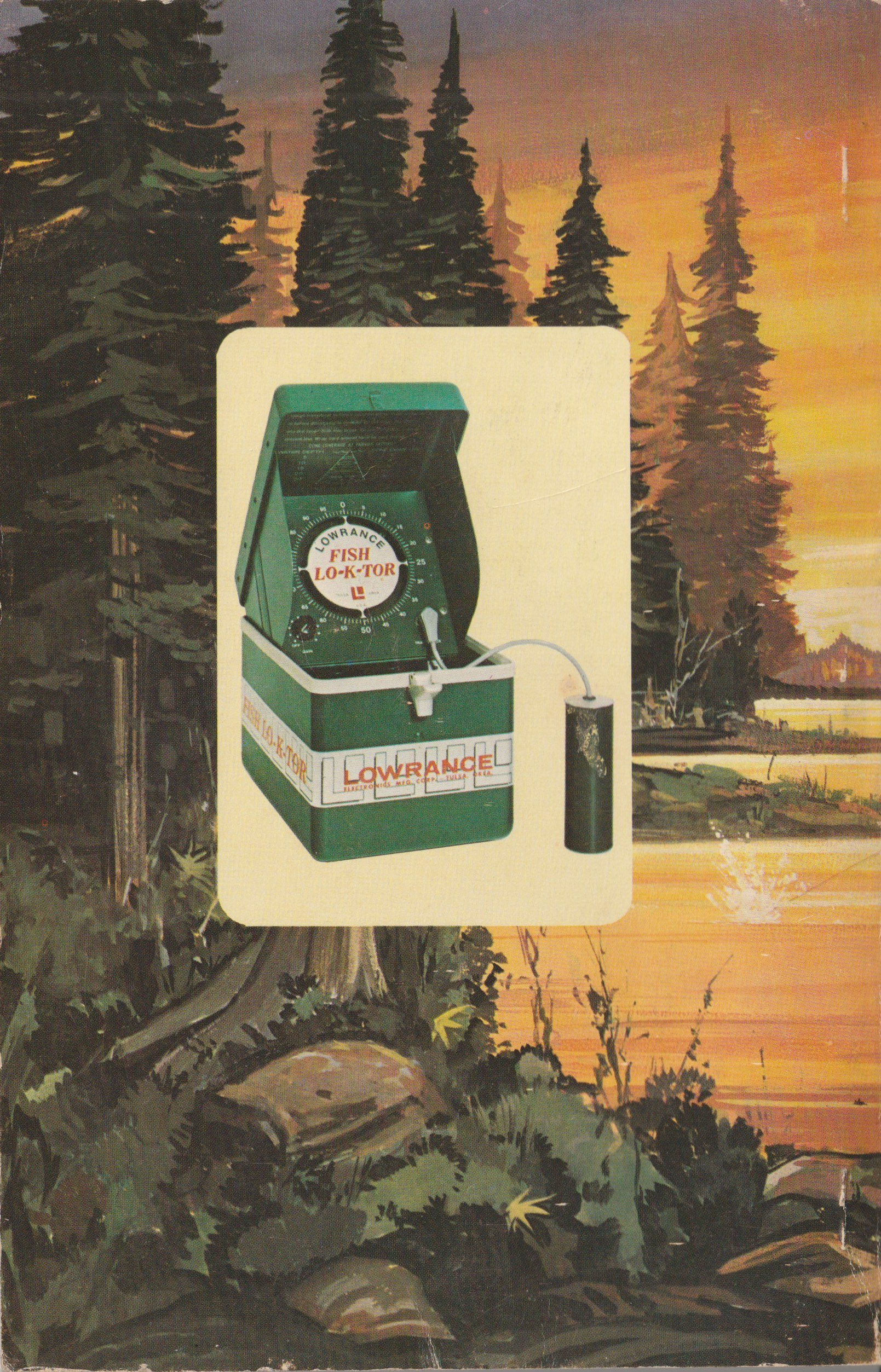

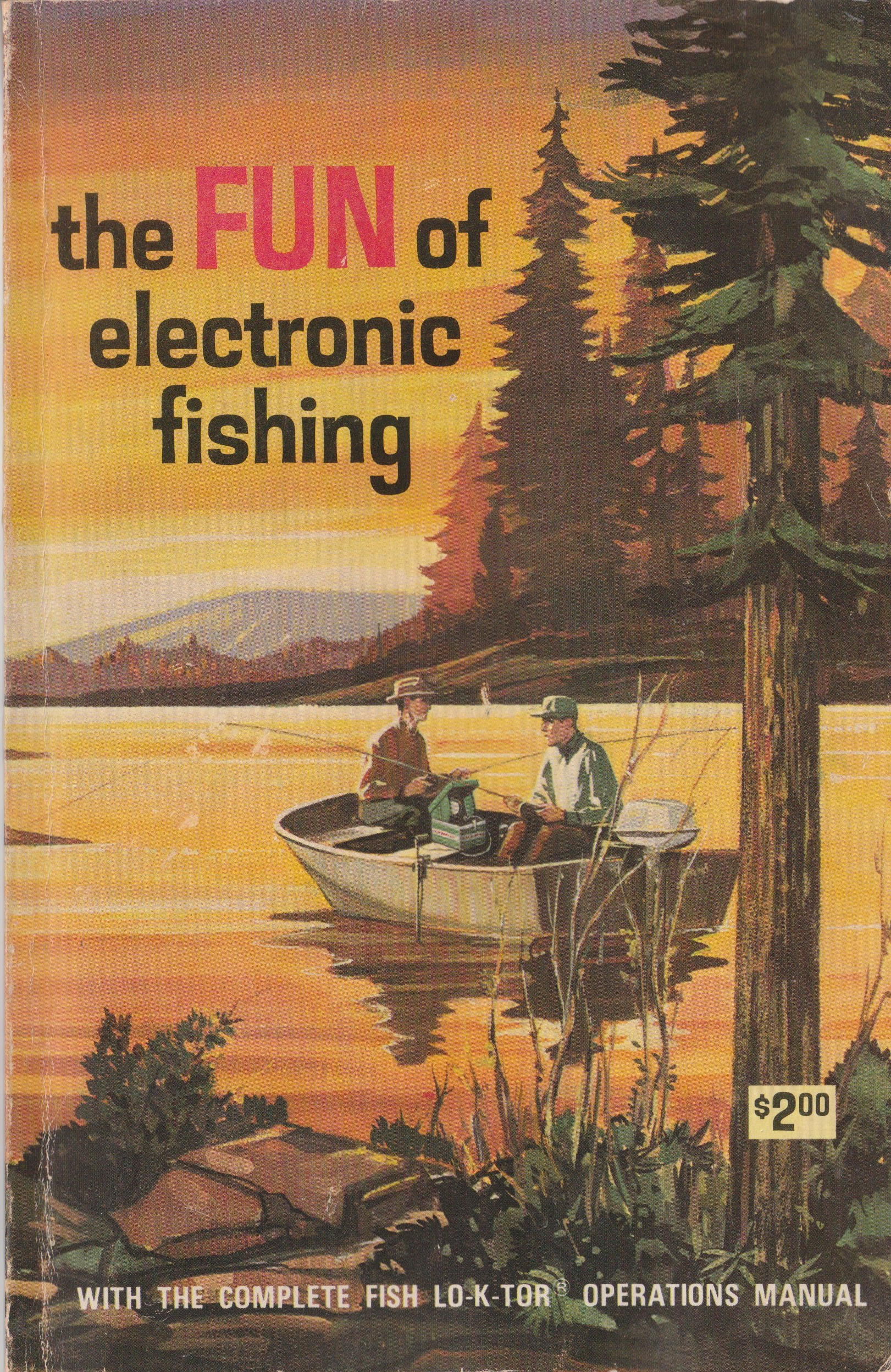
Bass Fishing Archives has spent a considerable amount of Internet ink on the subject of fishing electronics and the Lowrance Fish Lo-K-Tor. As I own a couple of Fish Lo-K-Tor flashers (the “Little Green Box”) I’m always interested in any stories pertaining to these units. So I’m happy that BFA has a healthy archive of stories related to vintage electronic fish finders. I’d like to add to that catalog by documenting a sweet little book published by the Lowrance Electronics Mfg. Corp. in the late 1960s titled The Fun of Electronic Fishing. This book was mentioned in Terry Battisti’s piece titled “Lowrance Electronics 1971,” and I was leafing through my copy the other day and thought it deserved a little more attention.
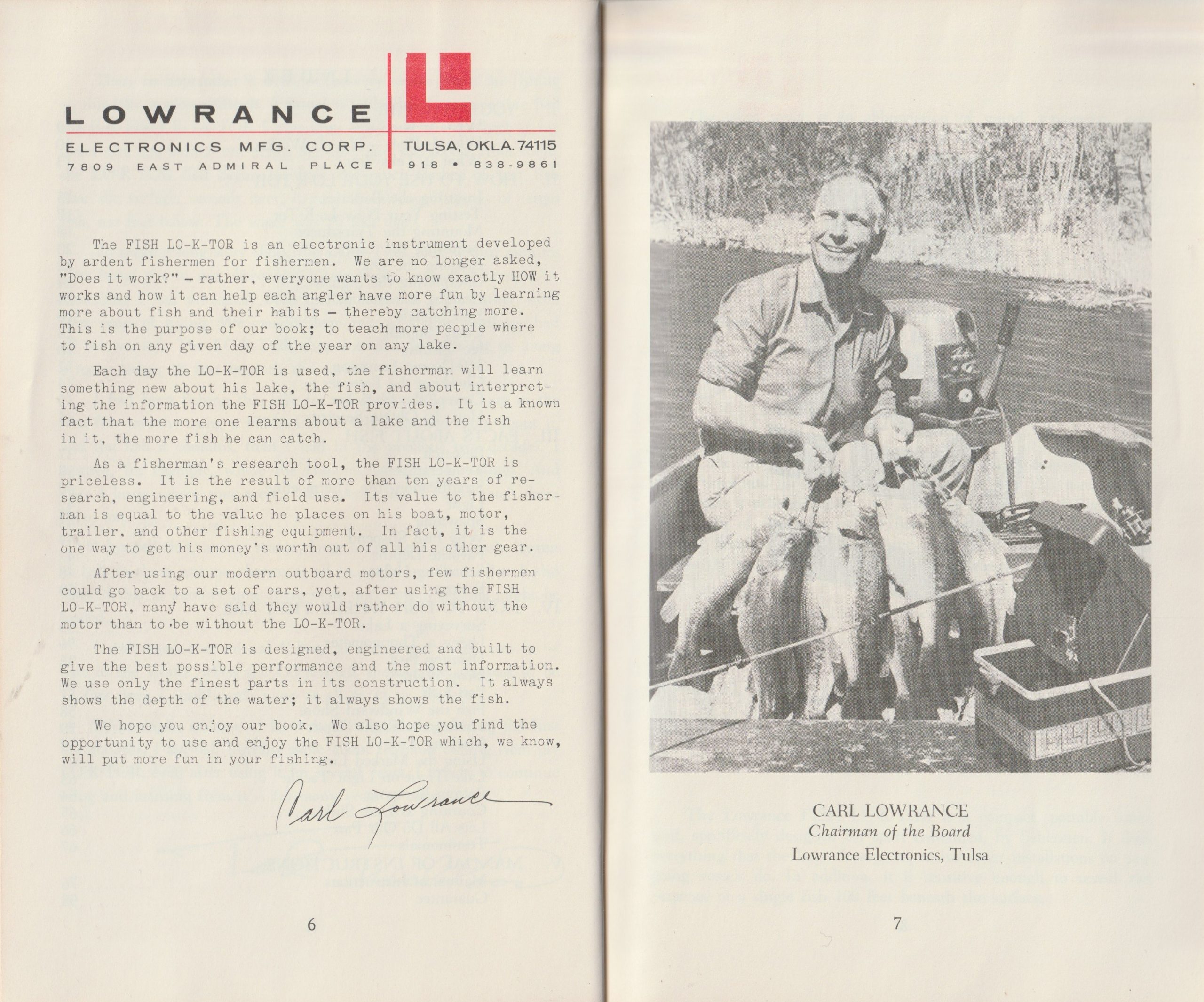
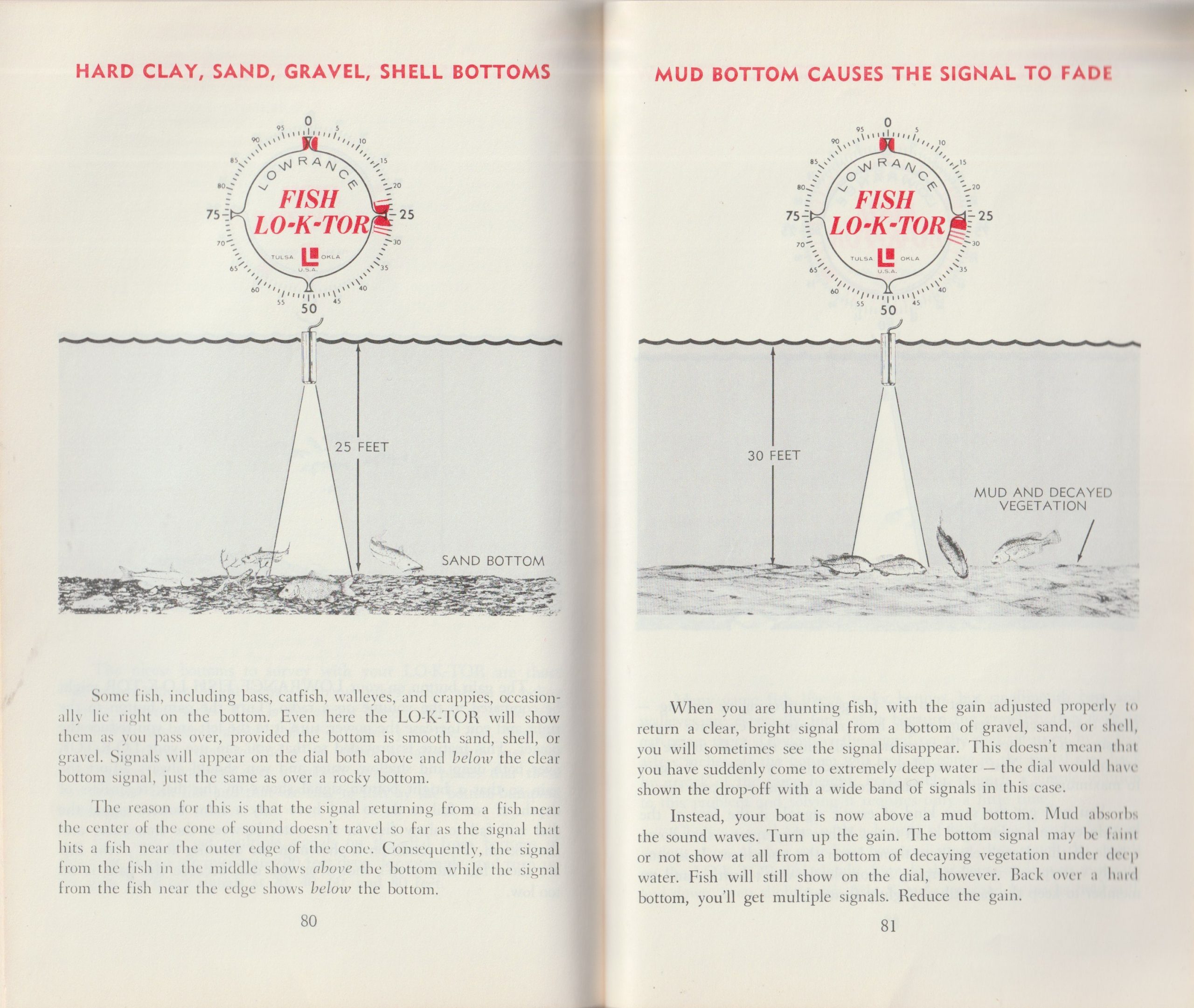
The full title of the book is The Fun of Electronic Fishing With the Complete Fish Lo-K-Tor Operating Manual. The 98 page book can be roughly divided into three sections: 1) How To Use Your Lo-K-Tor and Instructions, 2) Facts About Fish (general fish knowledge and biology), 3) How To Fish Where They Are (practical fishing know-how). But the book kicks off with introductions by famed angler author Ted Trueblood and chairman and founder of the company Carl Lowrance. Lowrance’s introduction looks as though it was typed using a manual typewriter on company letterhead, and it’s juxtaposed with a great photo of Lowrance in a boat with a beautiful stringer of big bass. Of course the Fish Lo-K-Tor figures prominently in the foreground. If you’re like me and you get excited over vintage fishing items, these personal introductions and images set the stage for what is an enjoyable read, even if it is a little bit technical as well.
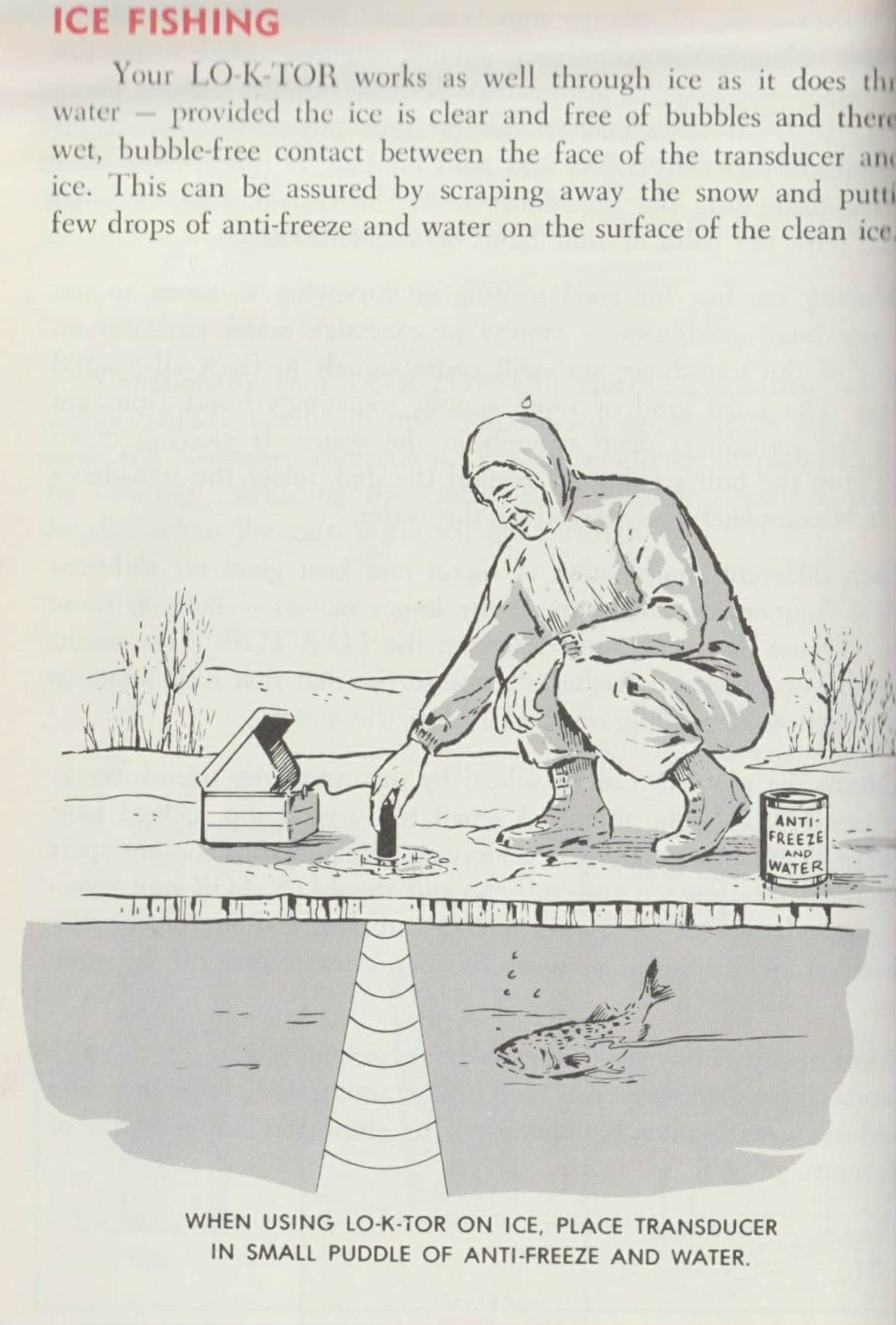
The first third is basically a how-to manual for how the unit works and the practical aspects of using the Lo-K-Tor. This is a section I try to remember to read every year, just to refresh. Up to now I’ve viewed the Lowrance Lo-K-Tor as a warm weather unit, but one of these years I’m going to bring the Lo-K-Tor out onto the ice with me and use it instead of my modern Vexilar flasher, for at least one outing. At least that’s what I tell myself every year.
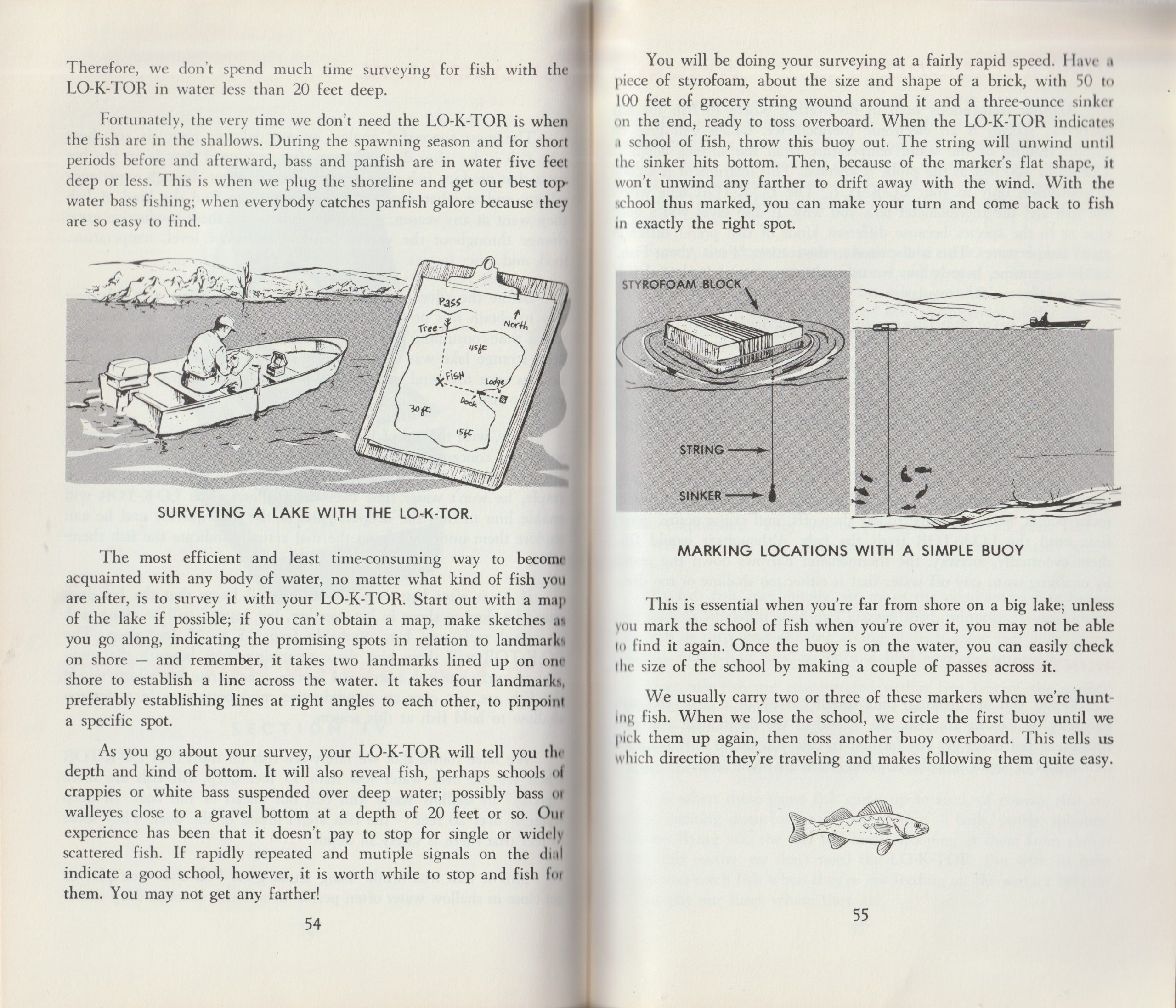
The middle sections concerning fish biology and fishing methods are interesting, especially if you’re an angler who likes to fish it old school. The line-drawn illustrations are great and the techniques discussed are of course as effective today as they were nearly 70 years ago when this book was published. Finding spots and mapping your lake using triangulation and the Lo-K-Tor is a method I still use, and as much as I love using my cellphone and the Internet when I’m on the water, there’s something just as effective and, in my opinion, even cooler using pen and paper notebook and map.
The final chunk, the Manual of Instructions, really belongs to the first section about how to use the Lo-K-Tor, but I’m glad they divided that into two sections and put this portion at the end of the book. This is a section I dutifully read every year because it covers actual on-the-water conditions and how to interpret your Lo-K-Tor dial readings. Brian Waldman has a great BFA article titled “Forward Facing Sonar 1972?” where he discusses how to use a Lo-K-Tor to effectively replicate Forward Facing Sonar. It’s well worth a read if you want to stretch your flasher prowess.
There’s also a great little section in the book where Lowrance has reprinted several angler testimonials praising the efficacy of the Fish Lo-K-Tor. One of these testimonials comes from famed angler Virgil Ward. After recounting how he and his fishing buddy saved a trip using the Lo-K-Tor Virgil writes, “I used the LO-K-TOR in 1962 to win the World Series of Sport Fishing in Oklahoma, the National Championship of Sport Fishing in Table Rock Lake and the 1964 Outdoor Writers and Broadcasters National Championship. When we fish the North country in summertime, we use the LO-K-TOR, a spinning outfit and a hand full of Bass-Buster jigs. With this combination we have yet to fail to bring in heavy stringers of Lake Trout, Walleye or Smallmouth Bass. Keep up the good work!”
The Lowrance Fish Lo-K-Tor is around 70 years old, and it’s still a viable, usable option for anglers who want to fish with electronics. It’s easy to use and once you learn how to adjust it and how to read what the flashing dials tell you, you can certainly get a lot more out of your fishing trips by employing it. Terry says of this book in his BFA article, “…for those who really want to learn electronics, it is still a must read.” I agree.
You can still acquire a working Lowrance Fish Lo-K-Tor if you keep your eyes open at resale or antique shops, or via eBay. They generally run from around $10 to over $100 on eBay. If you’re looking for a fully operable unit be sure to ask questions. You can also readily find this The Fun of Electronic Fishing book on eBay for around $15-$20.
Below is a copy of the 1971 Lowrance catalog ad advertising the book. It’s kind of funny because you could get the book for $1, but as the ad states, “If I am not a better fisherman after reading it, I will return it for a full refund.” A dollar just ain’t what it used to be!