
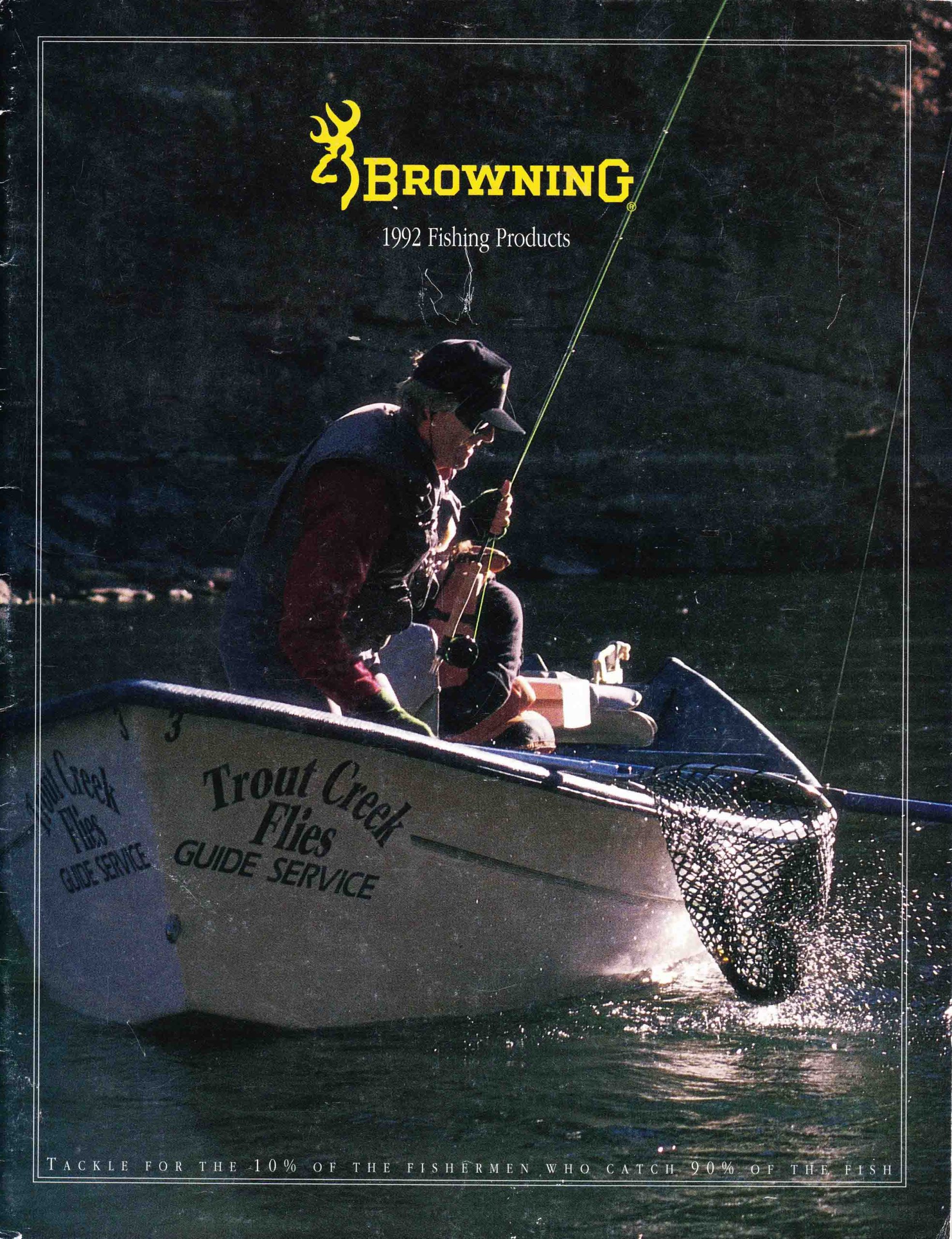
The history of Browning dates to 1880 when John Moses Browning started his arms company after acquiring his first patent on his single shot rifle. By the end of his life in 1926, J.M. Browning would be credited with 128 gun patents and would become known as the father of modern firearms. But it would take another 80 years for the company to step into the fishing industry. Today in Browning Catalog 1992, we’re going to investigate one of the most important years for Browning with respect to their tackle lineup.
Browning finally delved into the fishing industry when in 1962 they acquired Silaflex, a fiberglass rod making company. Silaflex, along with Conolon, were two of the leading glass rod developers and manufacturers dating back to the 1950s. Garcia Corp would end up procuring Conolon in the early 1960s and Browning bought out Silaflex.
This purchase instantly put Browning in the high-end rod market as there were only a few competitors, Conolon and Fenwick, whose rods could compare.
At this time, it is my understanding that Browning was still owned by the Browning family. Then in 1977 they sold the company to Fabrique Nationale (FN), a Belgian company who had been manufacturing several of their firearms for over 70 years.
In 1991 FN sold Browning to ZEBCO and ZEBCO assumed all of the Browning line of fishing tackle. This would turn out to be a windfall for ZEBCO come the 1993 fishing season.

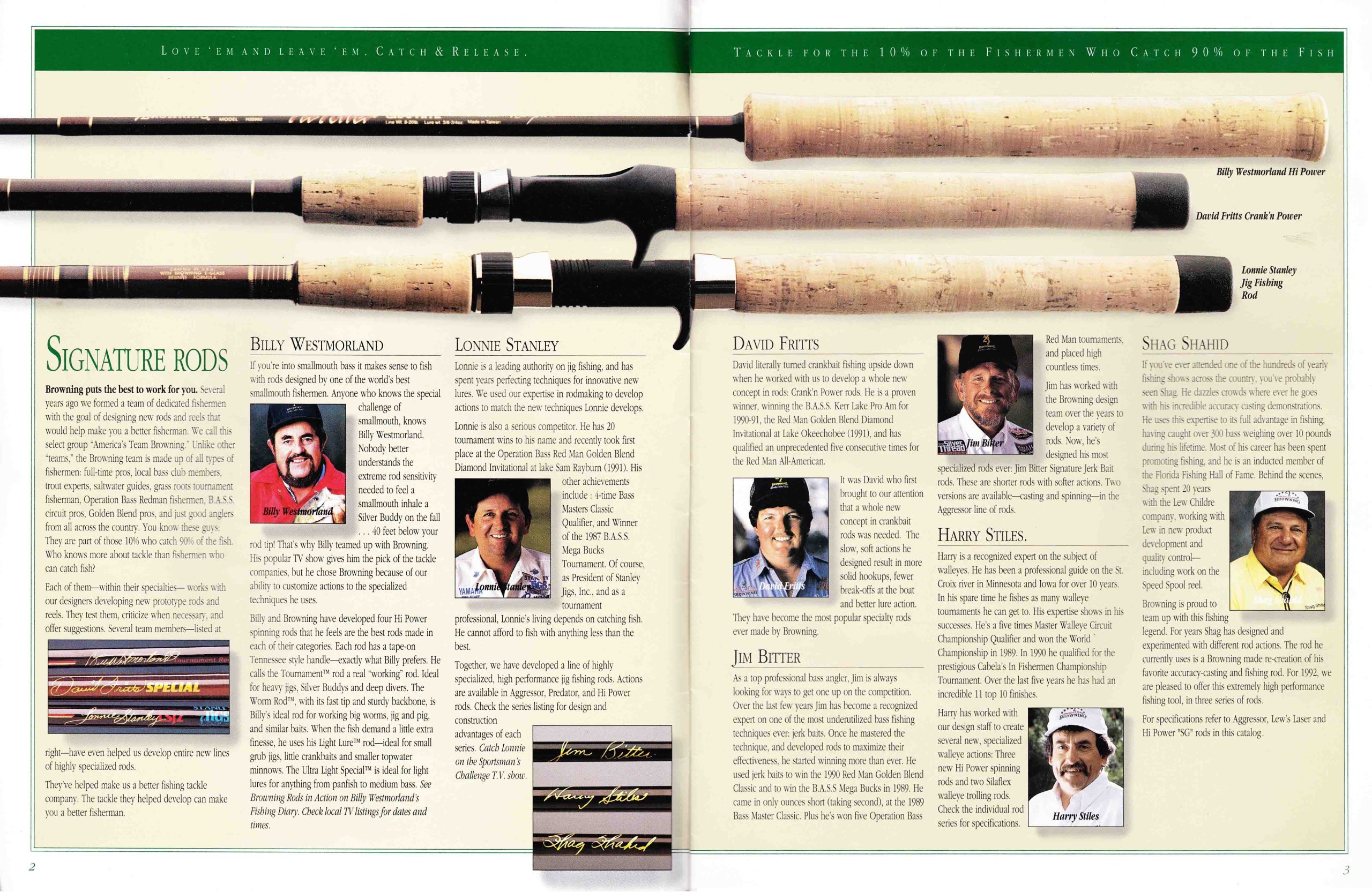
In 1992, Browning had a substantial prostaff of anglers that included Billy Westmoreland, Lonnie Stanley, David Fritts, Jim Bitter, walleye angler Harry Stiles, and casting legend Shag Shahid. Browning had also taken over the production of all Lew Childre Speed Spools and Lew’s rods.
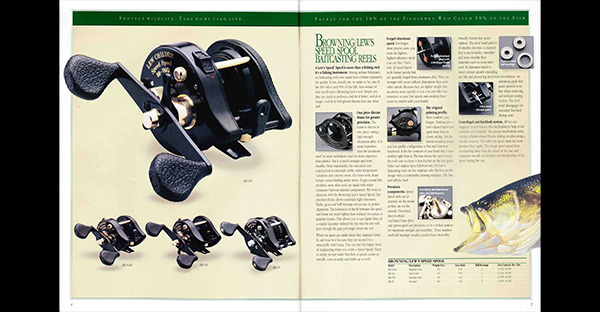
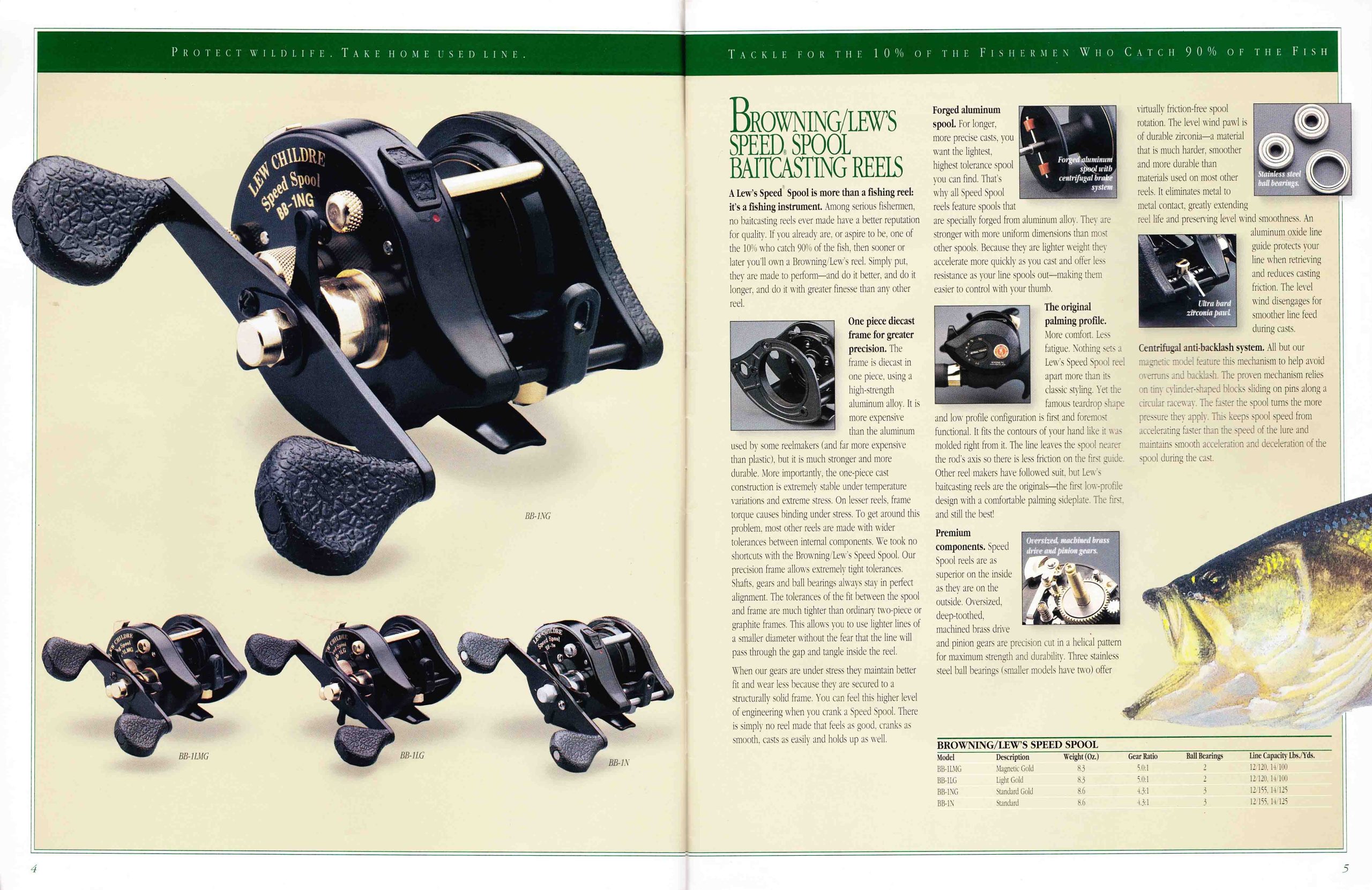
Upon acquiring the acquisition of Lew’s products, Browning took the Speed Spool and corrected the manufacturing flaws that Ryobi had introduced, and bringing the reel back from the dead. They also introduced four new models of the reel, two with a 4.3:1 gear ratio and two with the standard 5.0:1 gear ratio.
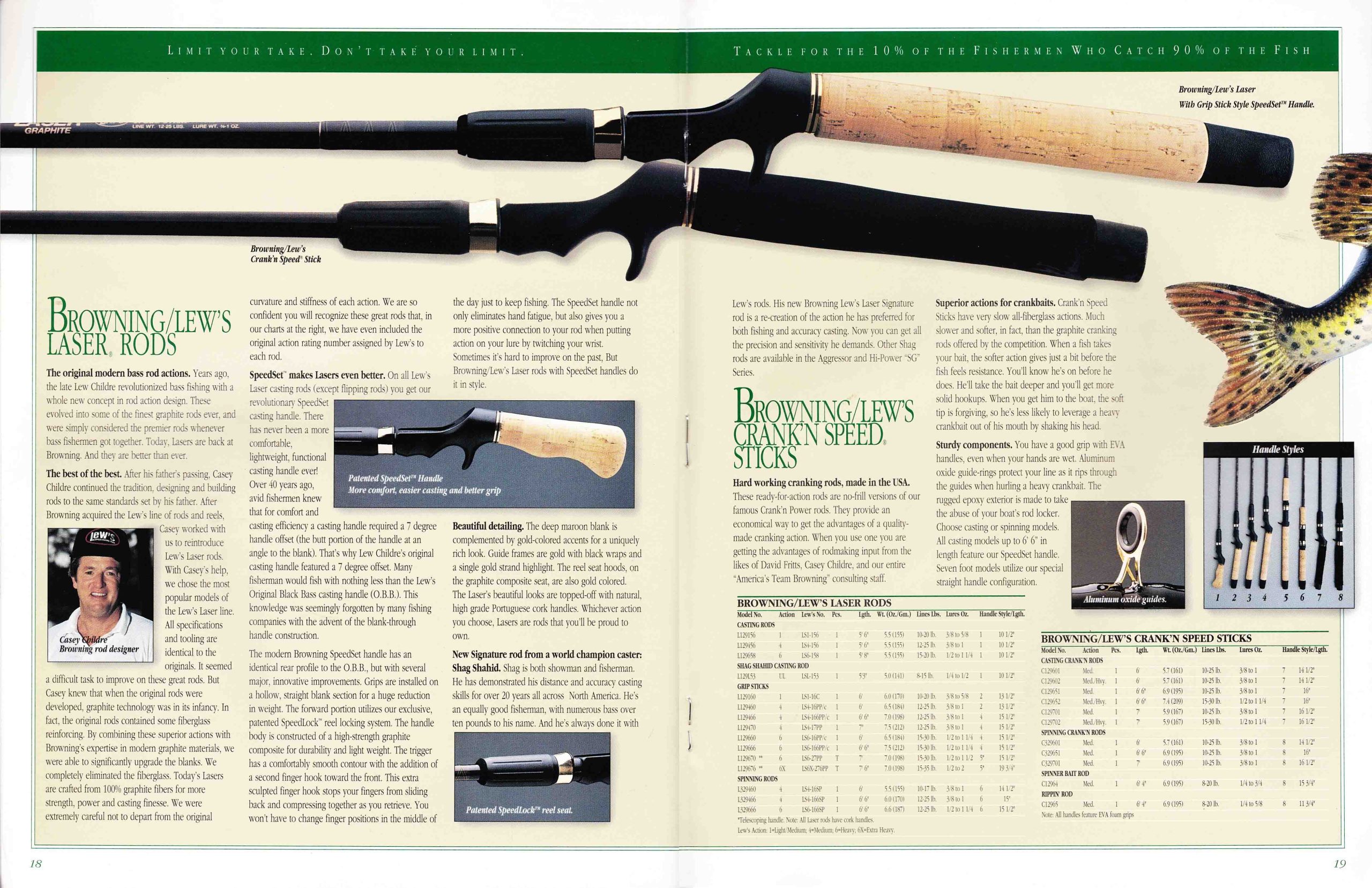
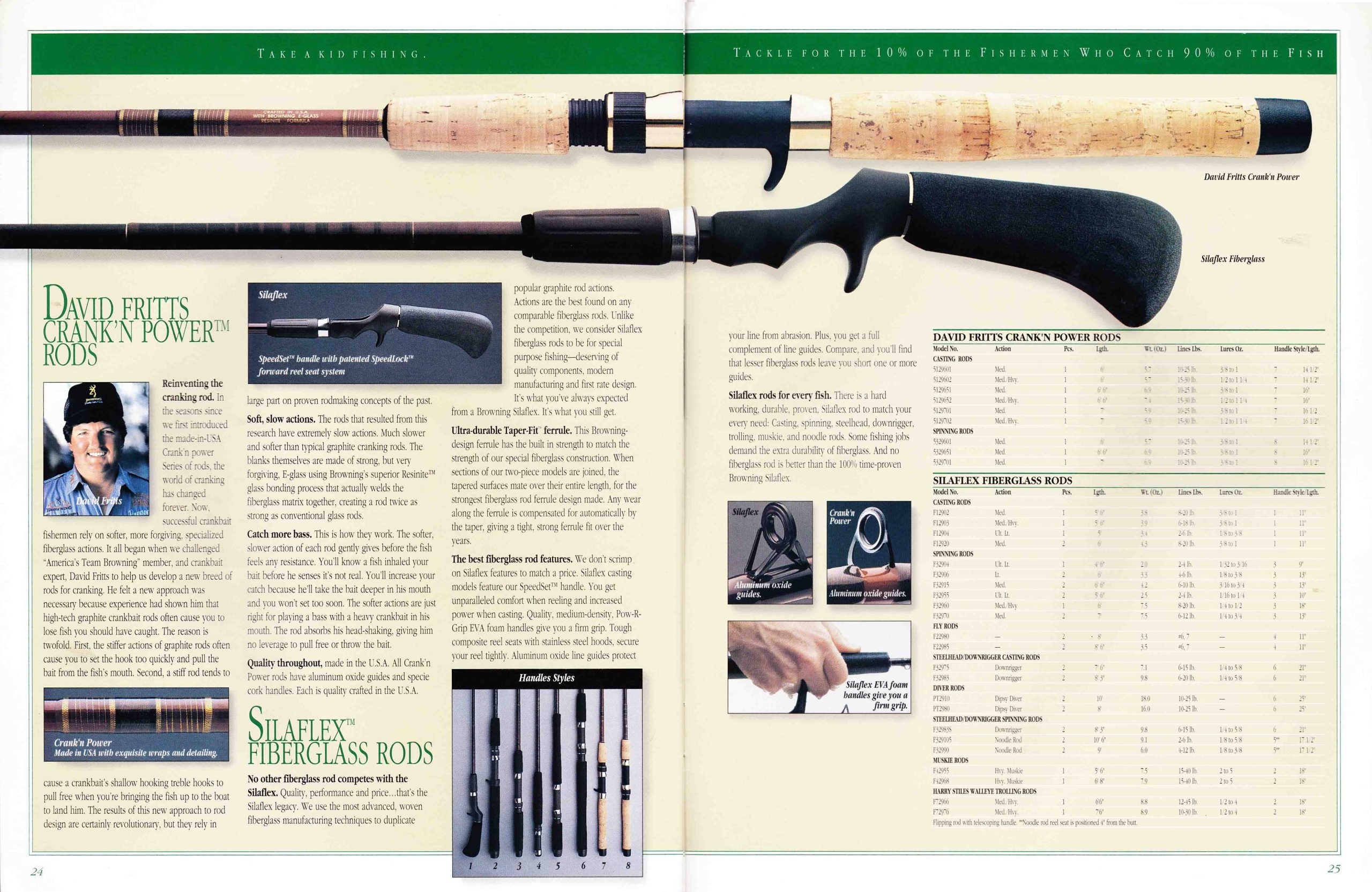
The 4.3:1 ratio was what pro David Fritts preferred for his cranking reel, which brough in a magical 21 inches of line per turn of the crank. But that wasn’t all Fritts got Browning to make for his use.

Fritts had also noticed that he lost fewer fish on crankbaits when using a glass rod. By this time rod companies couldn’t sell a glass rod as graphite had taken over the market since the mid-1970s. Browning, still touting the Silaflex brand, made several rods for Fritts and he took to the tour with a vengeance. By 1992 more anglers had seen the light and were starting to convert to the old technology.
Then in 1993, David Fritts won the BASS Master Classic deep cranking with the slow Speed Spool and his signature glass cranking rod. He didn’t stop there.
In 1994 Fritts became the first angler to win Bassmaster AOY after a Classic victory. Again, he did it with the Speed Spool and glass cranking stick. Tackle shops nationwide couldn’t keep the rods and reels on the shelf. It was a windfall for Browning/ZEBCO and for David Fritts.
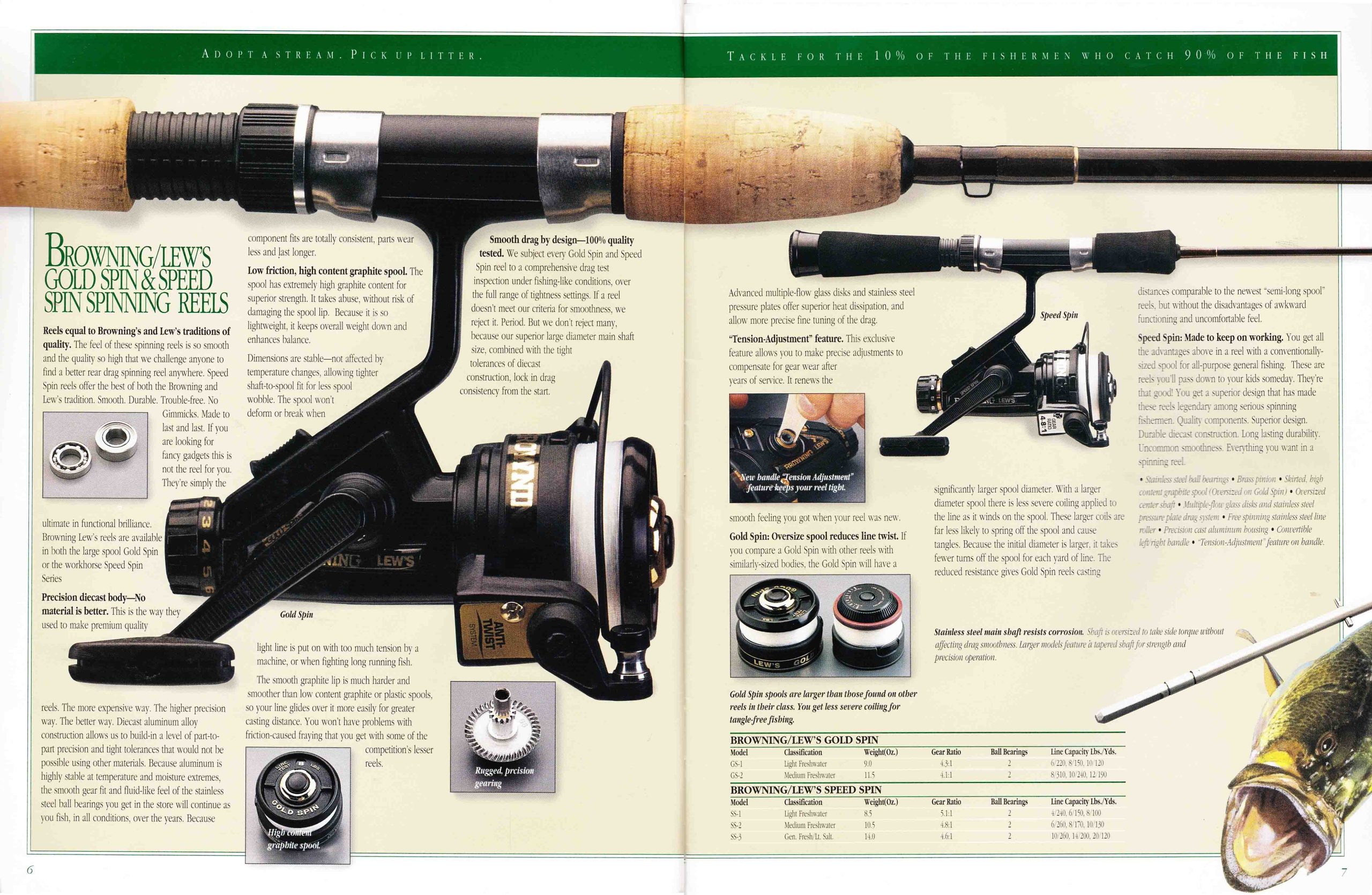
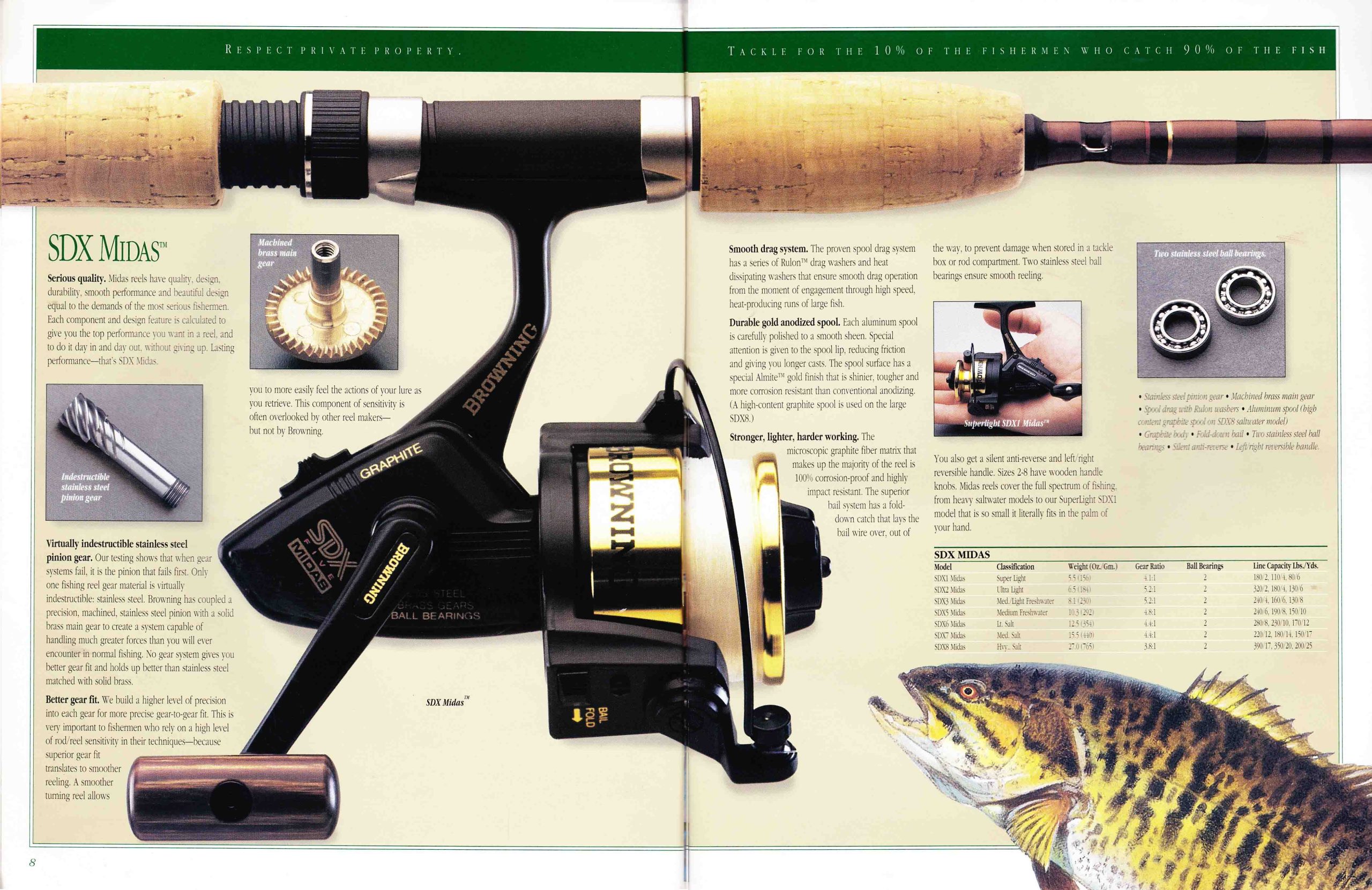
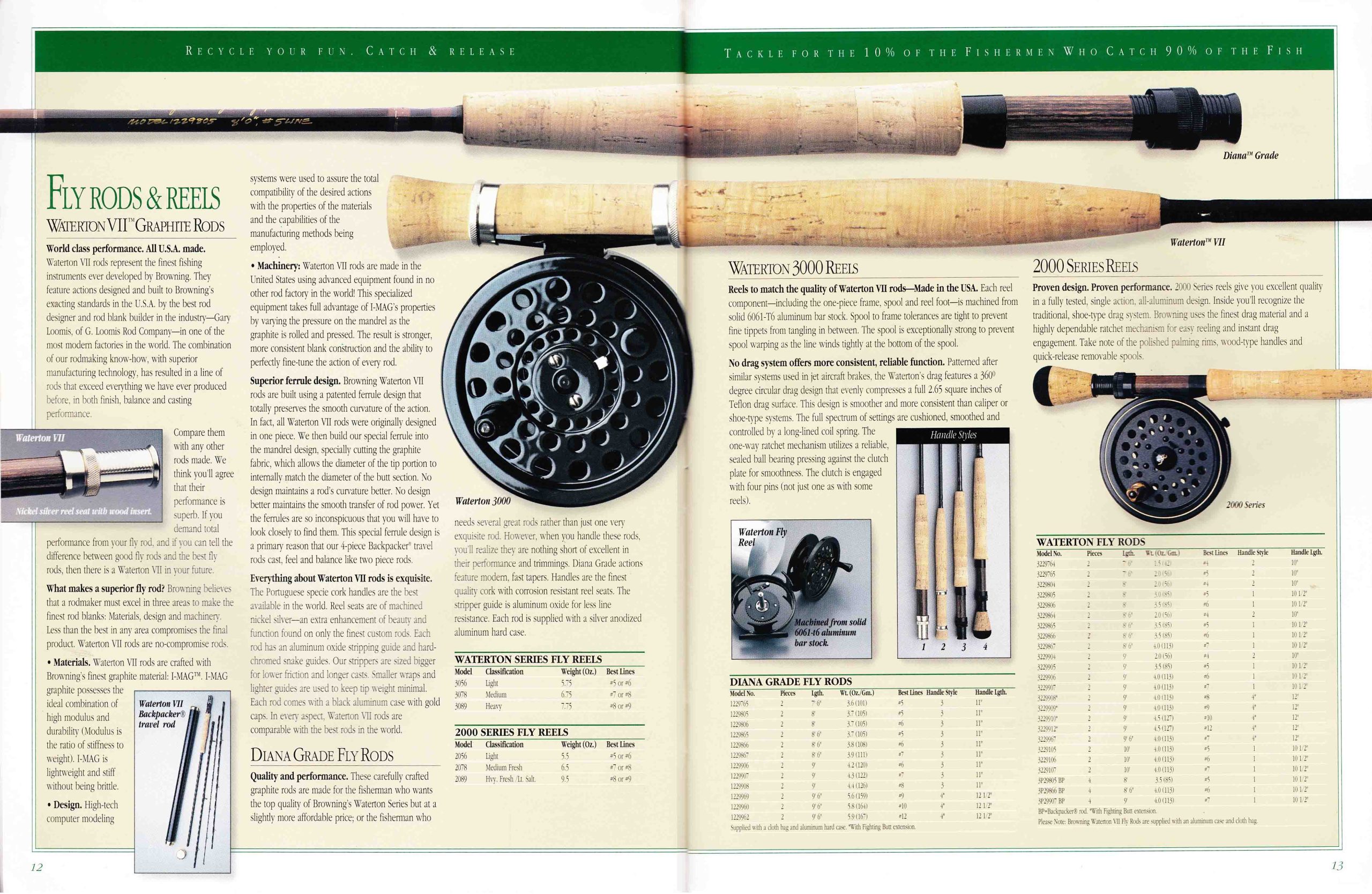
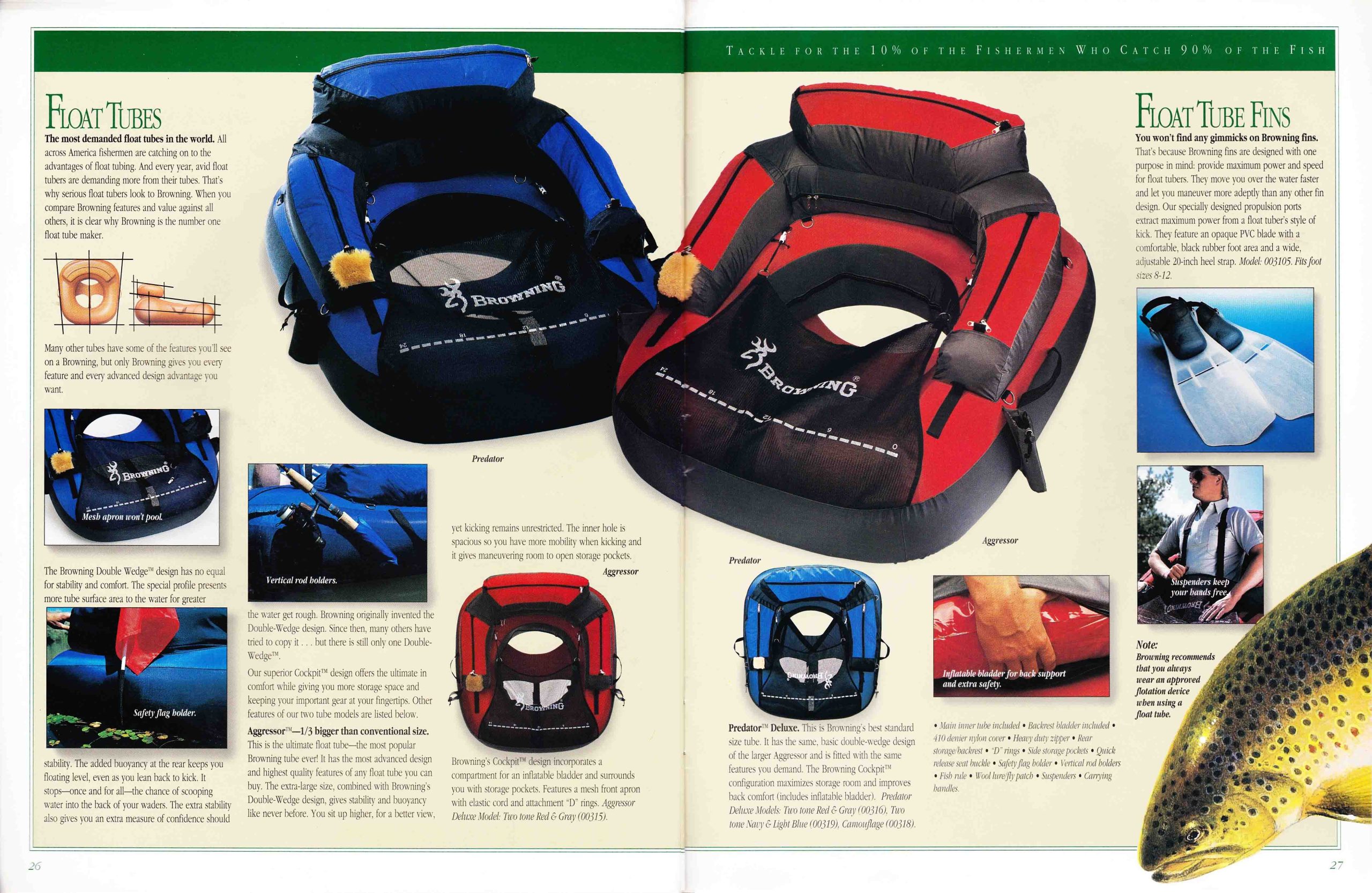
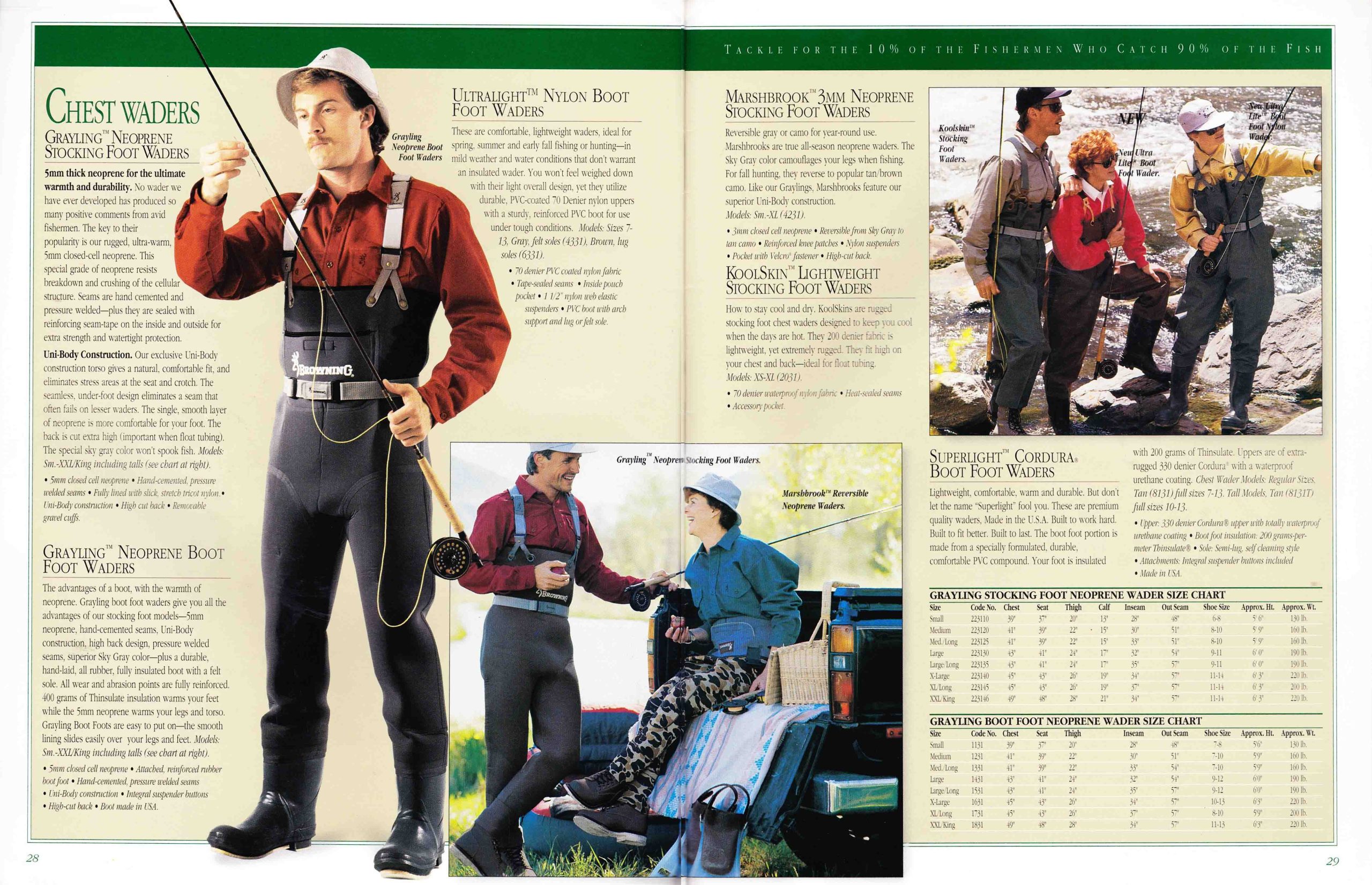
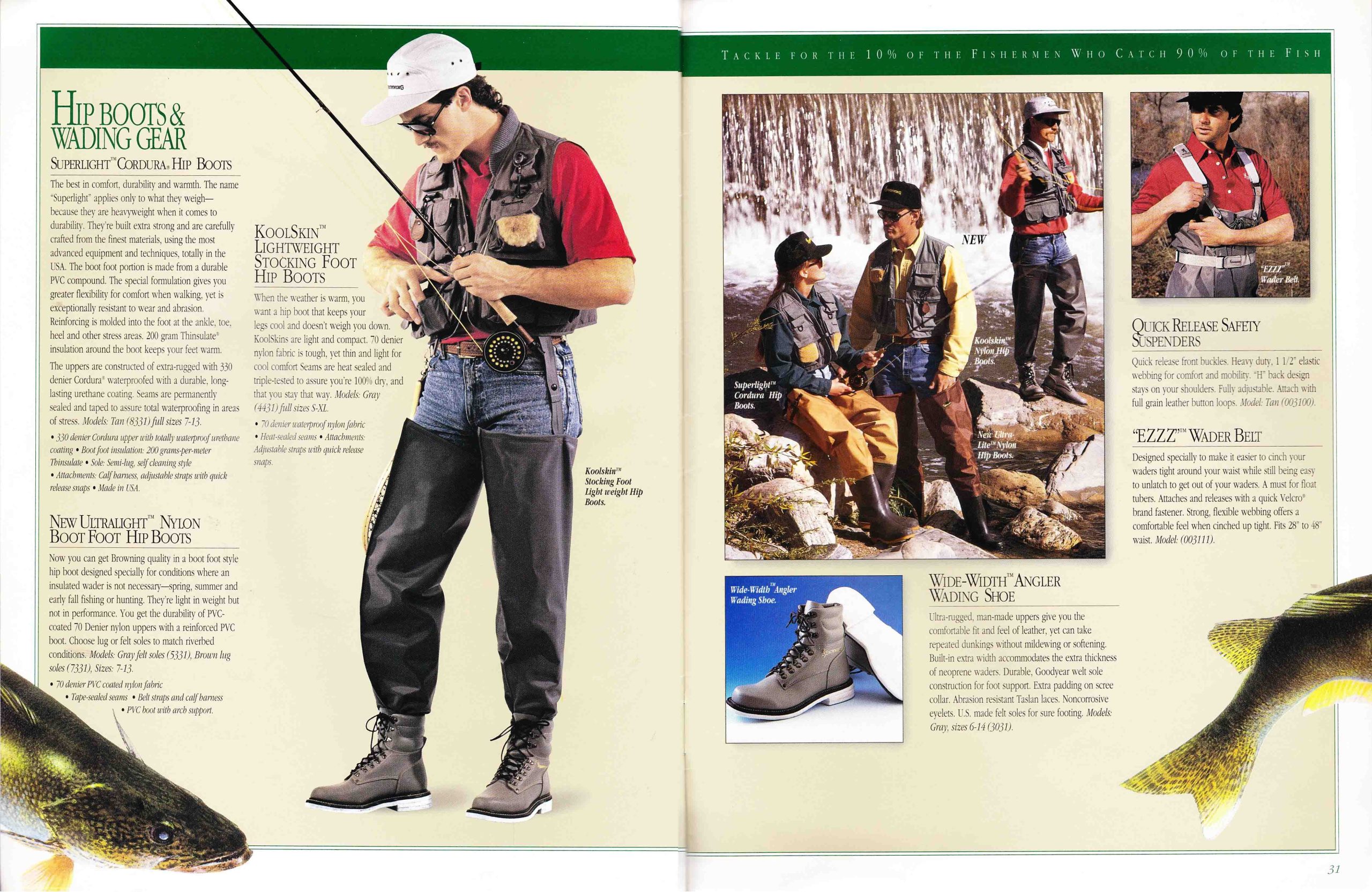
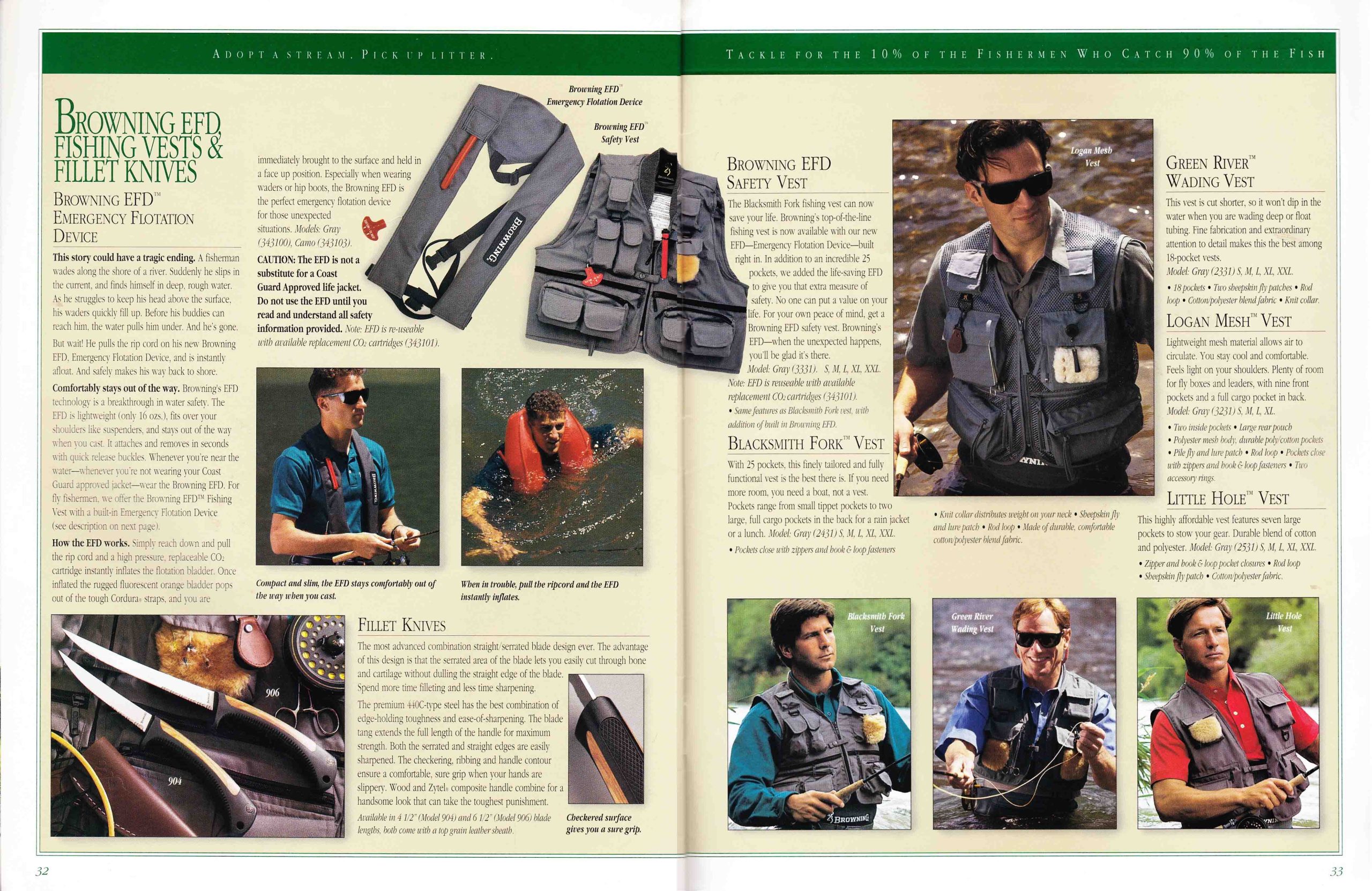
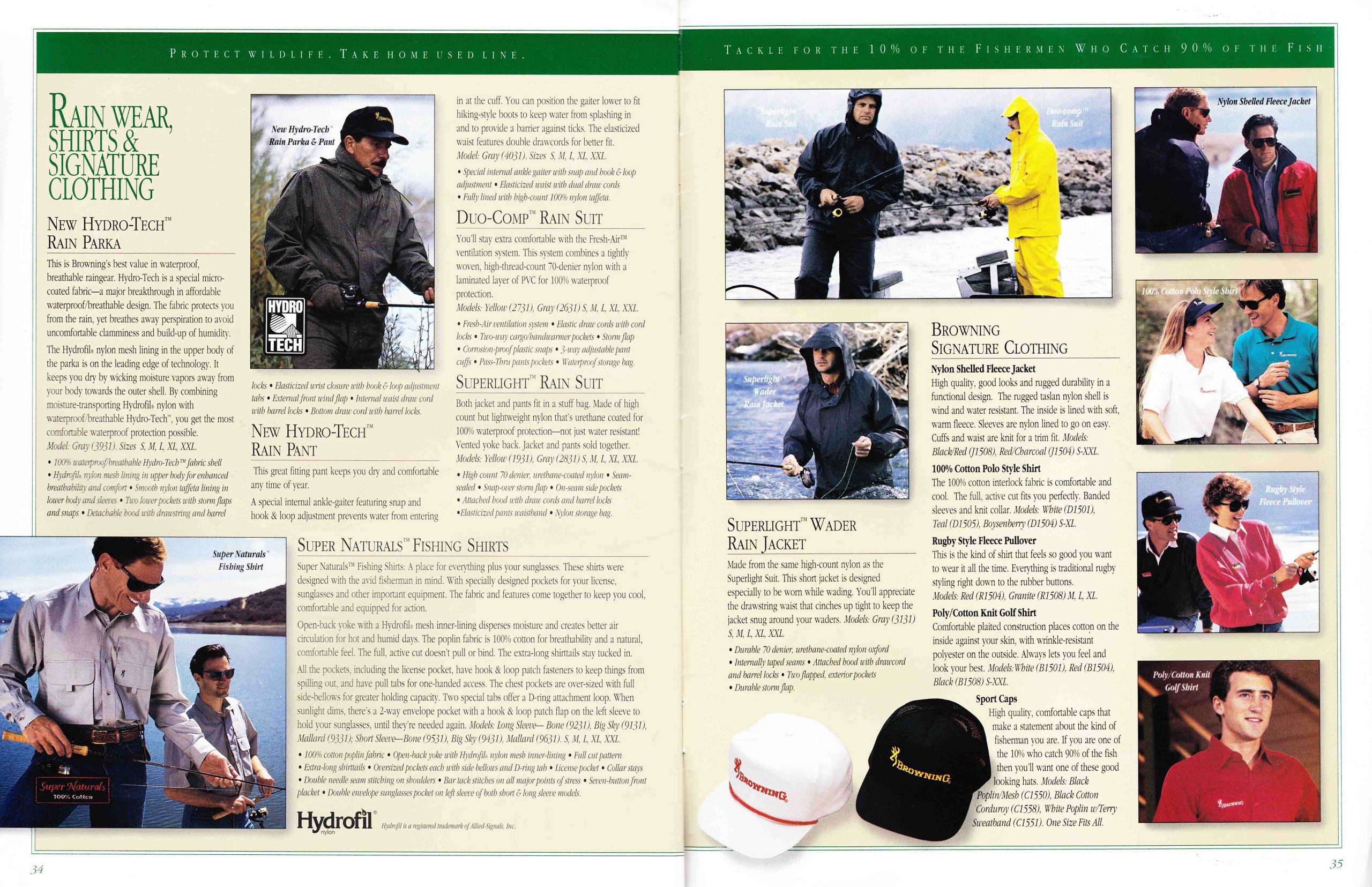
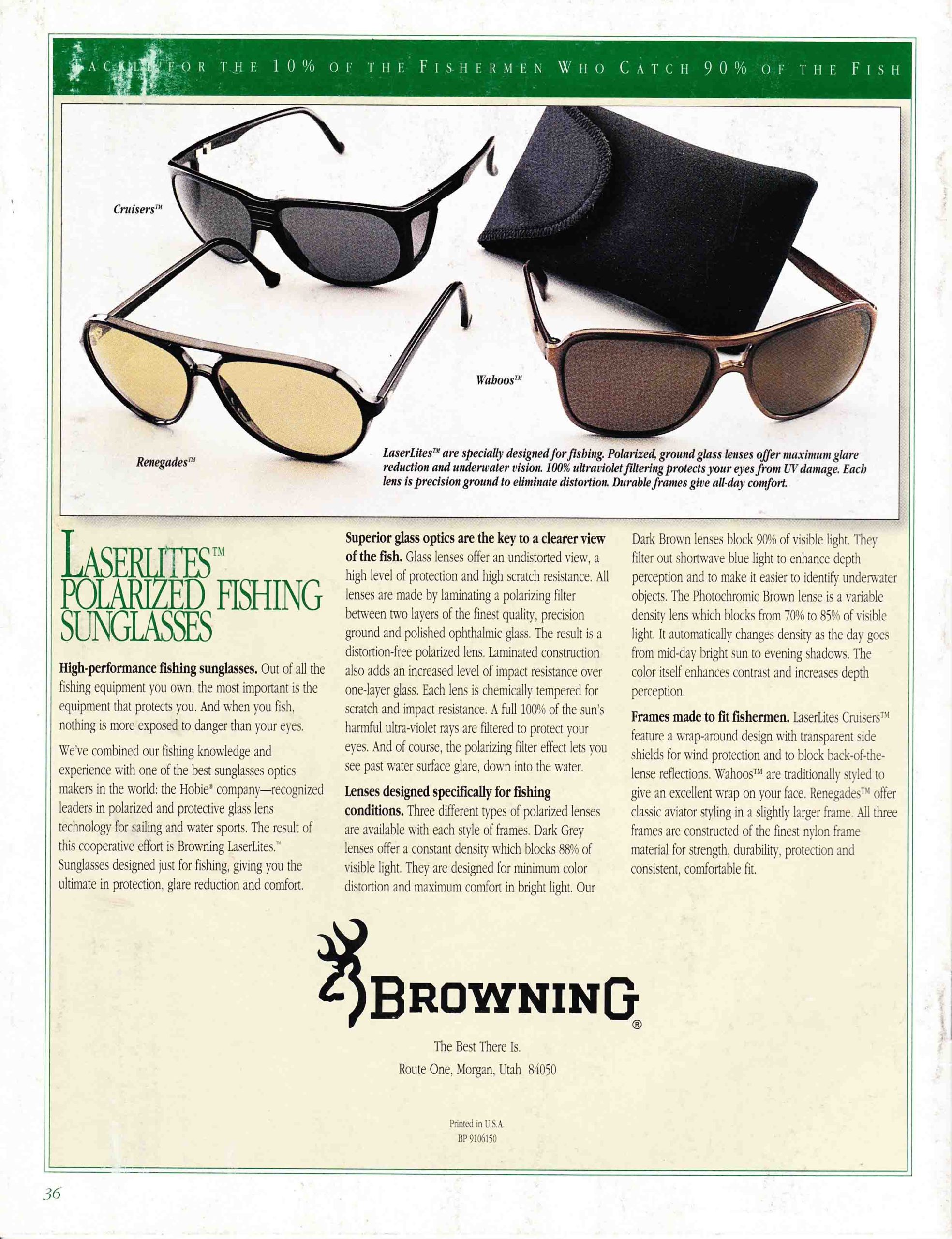
I’ve talked a lot about the history of Browning here as well as two of their most popular tackle products. But the catalog is also filled with spinning reels, several more rod lines, fly rods and reels, float tubes, and other outdoor products.
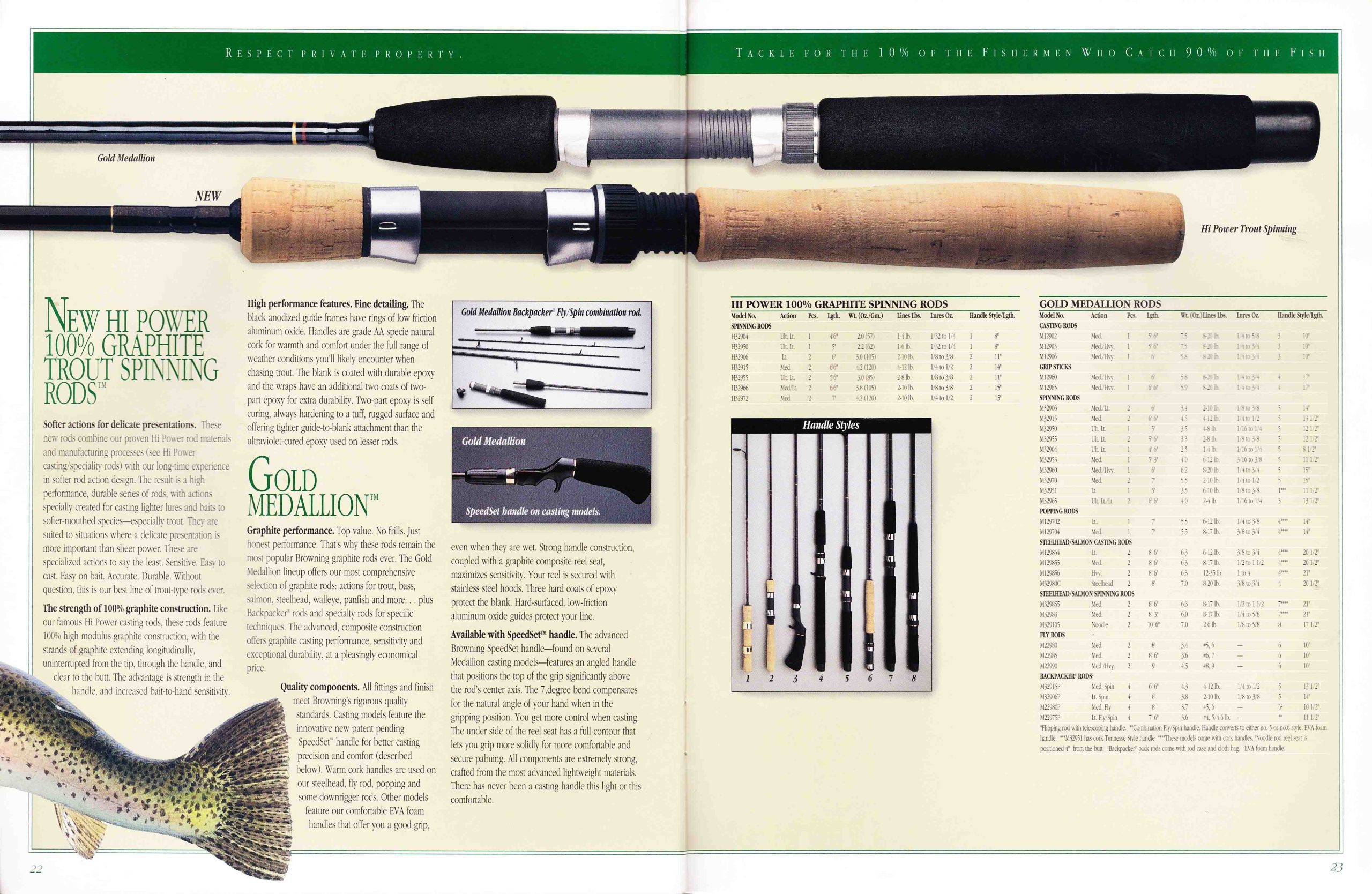
Being that Browning was centered out of Utah, trout country, if made sense they would target that market with nine pages of gear. And that doesn’t include some of the spinning reels and rods that were designed for what I call bass bait.
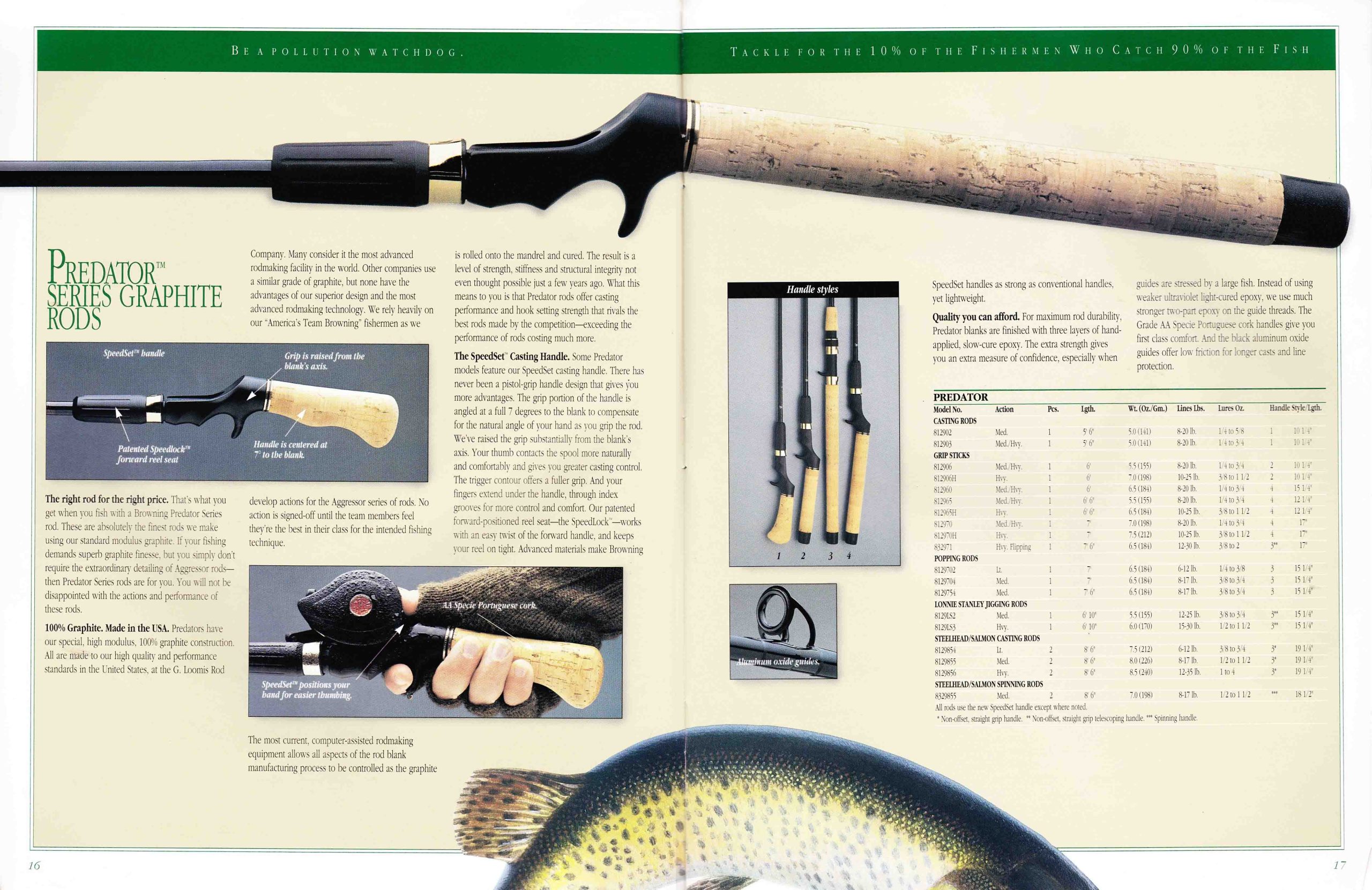
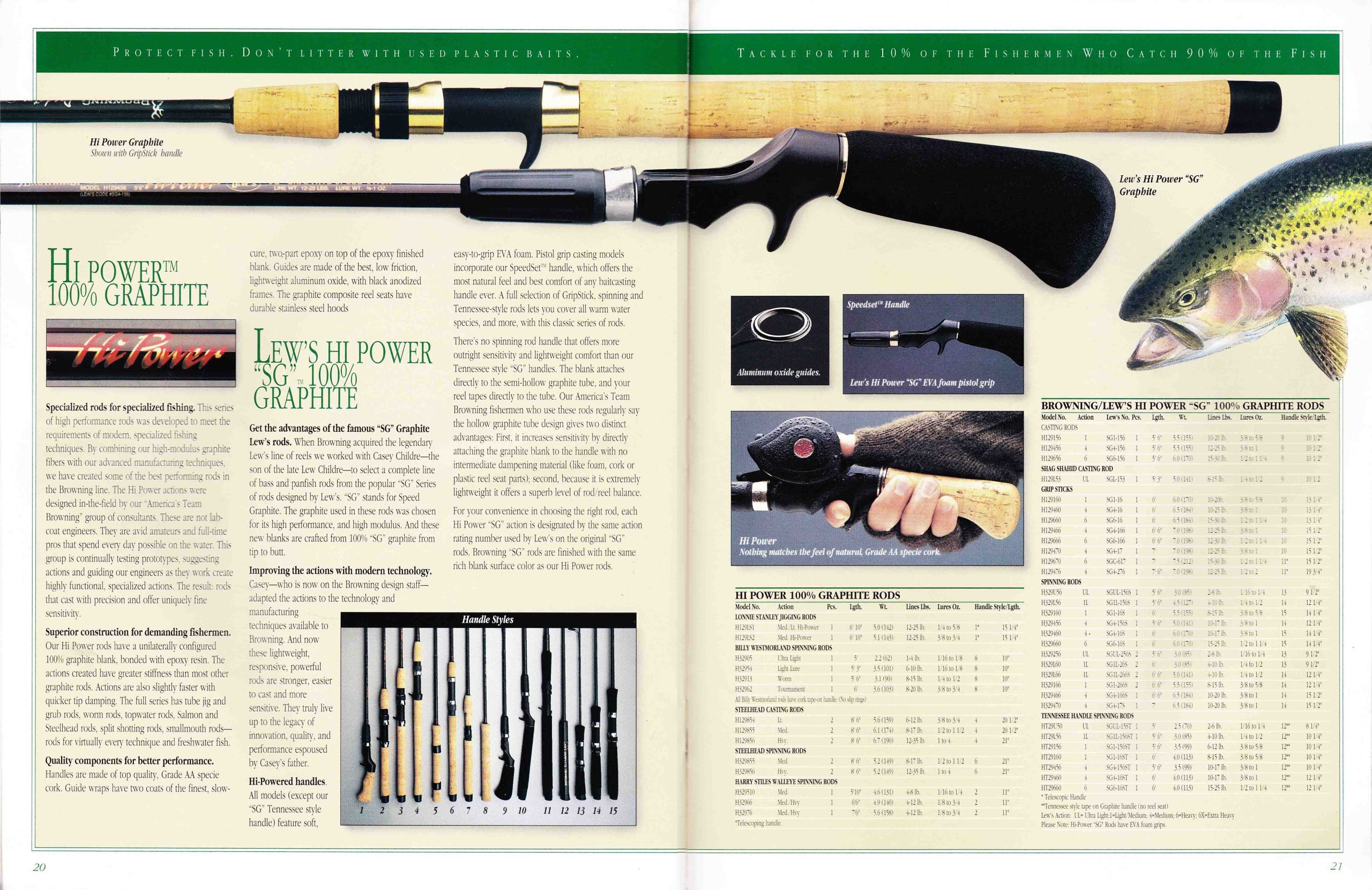
Looking through the other bass gear is interesting from a historical perspective. Every casting rod line has several short pistol grip rods and longer rods with a double handed pistol grip. Why these handles have been cast aside for today’s straight handled rods is beyond me. Yes, long handled rods provide an advantage under certain circumstances but so do the short-handled pistol grip rods. It wasn’t long after this catalog came out that pistol grip rods would be gone from nearly every bass boat in the country.
This has been a drastically different look at a catalog than what we’ve done in the past. I felt it best to concentrate on the historically relevant bass gear and the anglers of the day. For those of you who’d like to see the rest of the catalog, you can view it below.
I hope you enjoyed this look back into one of the biggest sporting good producers of all time and how they affected the outcome of bass fishing.






Cool stuff Terry! I am a big fan of both the Speed Spool and the Speedset rod handle. This post brings to mind two questions: 1) What changes were made by Browning to the Speed Spool reels? 2) Is Casey Childre still alive, and if so, wouldn’t it be awesome to interview him about the evolution of the Lew’s product line through the years?
Ben, Browning beefed up the reel after they got it from Ryobi. For example, when Ryobi first released their version, the main gear shaft was only pressed into the plate and would break free. They fixed that but it still wasn’t as good at the Shimano-made reels. When Browning took over, they redid the plate/gear shaft the way Shimano had done it. Yes, Casey is still alive and I have been chasing him down for years at ICAST and the Classic. I seem to always miss him by a few minutes. I still would love to talk with him.