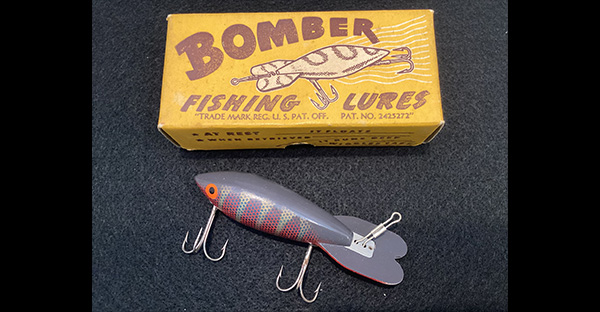
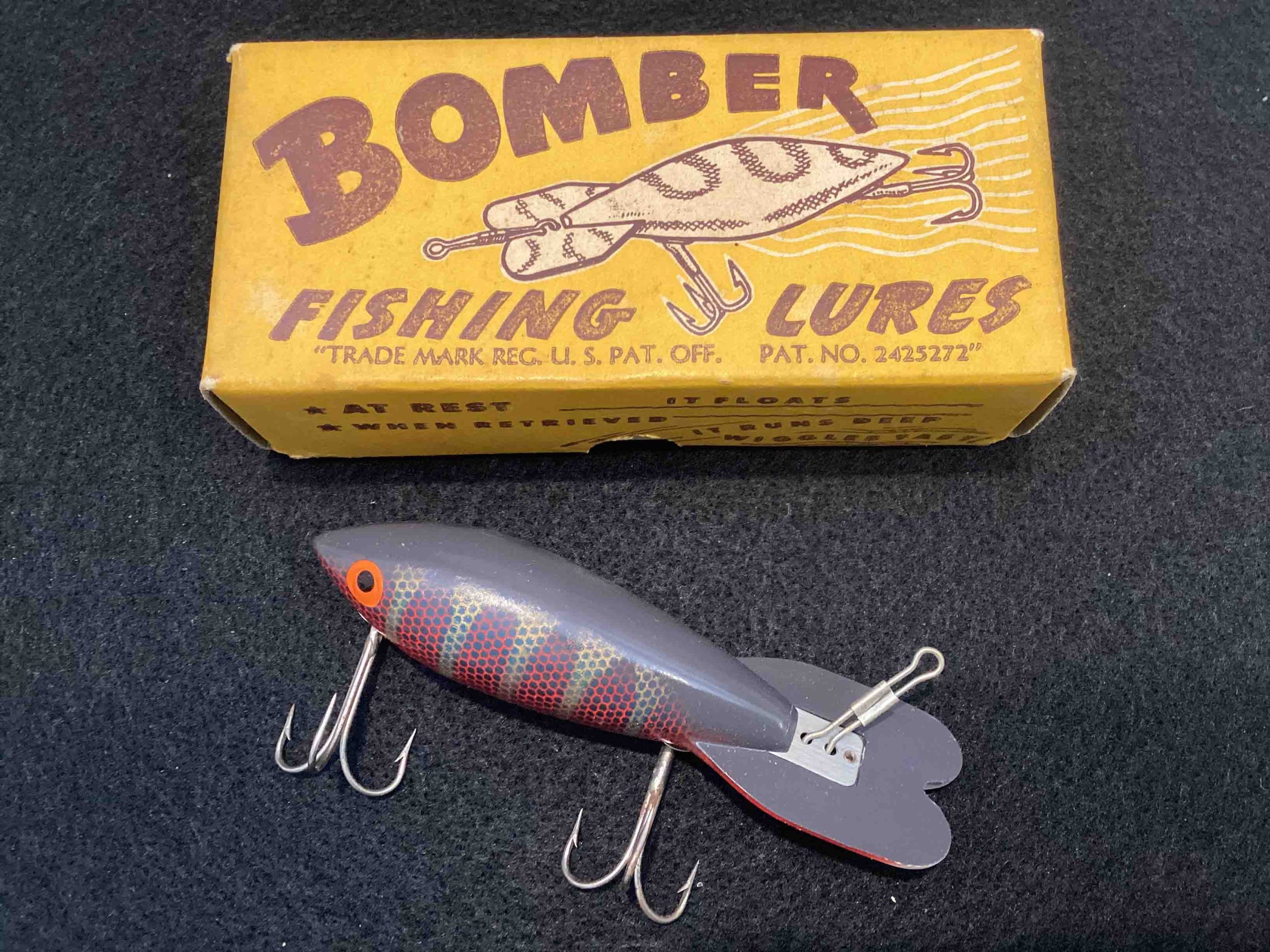
In the annals of bass fishing history very few lures have a long and storied run. There are exceptions, and some like the Zara Spook and the Big-O even created new lure categories. One famous and productive lure that stood the test of time for nearly 50 years was the original Bomber. A metal lipped, wooden plug designed to dive deeply upon retrieve and aptly named given its bomb-shaped body.
The Bomber originated in Gainesville, Texas as the brainchild of Ike Walker and C.S. “Turby” Turbeville. The Creek Chub Crawdad lure was an early inspiration but did not dive nearly deep enough to suit the two anglers. Early Bomber prototypes were developed around 1942-44 and eventually a patent was applied for in 1945. Early versions were handmade but beginning in 1946 the lure production process became more automated and standardized.
Baits started to sell regionally, and the business gained momentum in the late 40s. Then in 1949 a drastic and unexplained major design change was implemented. Plastic production of Bomber lures was introduced. In Bomber Baits “49er” we’ll explore this short lived and unusual design change in a bait that was just coming into its own in the wooden version.
“49er”
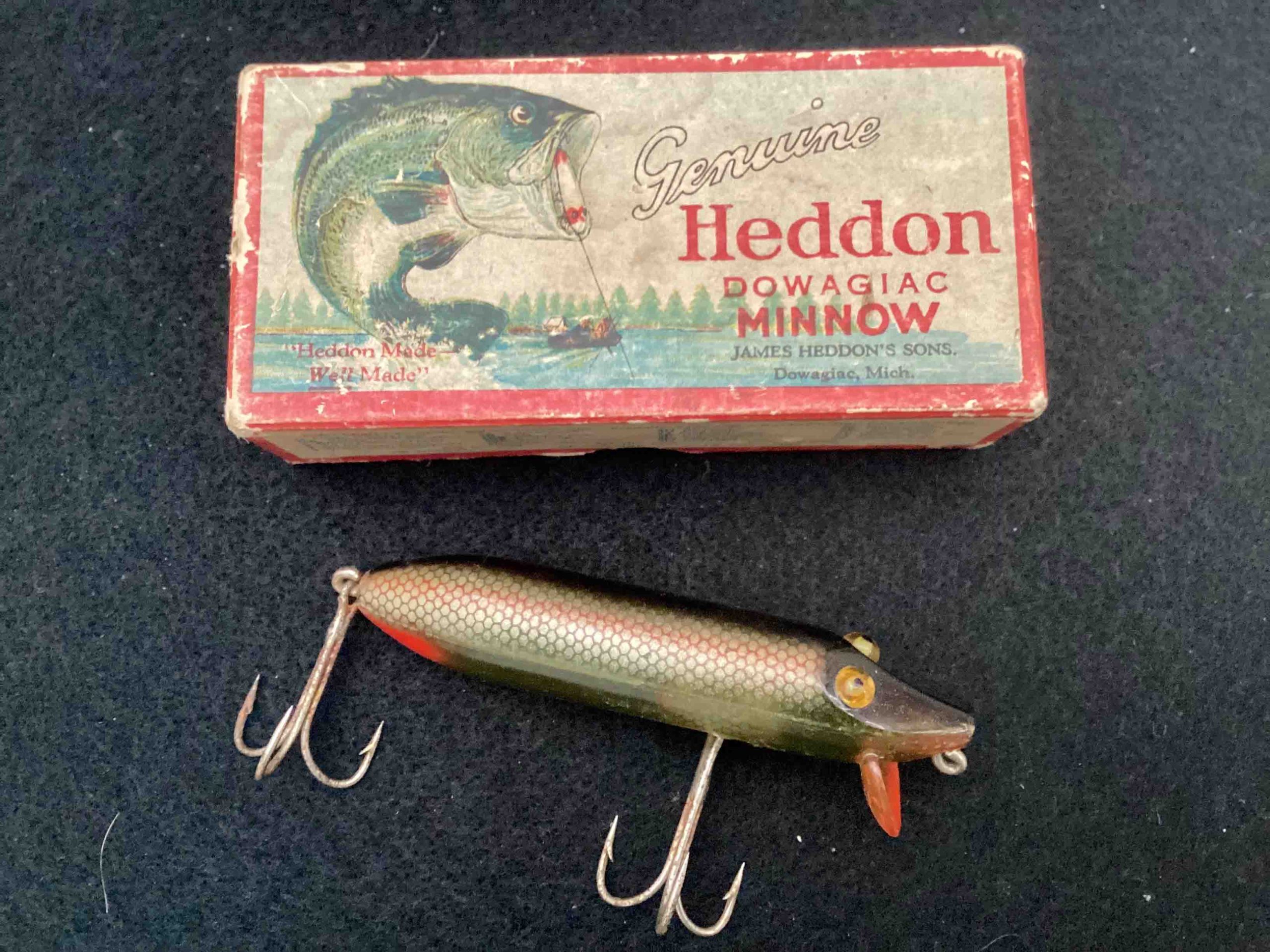
In 1949 most fishing lures were still being constructed of wood. One exception was Heddon which had already introduced their “fish flesh” or “spook” plastic versions of some of their famous baits. After initial issues with the plastic formulations deforming over time, Heddon was able to correct the issue and maintain production without experiencing these issues moving forward.
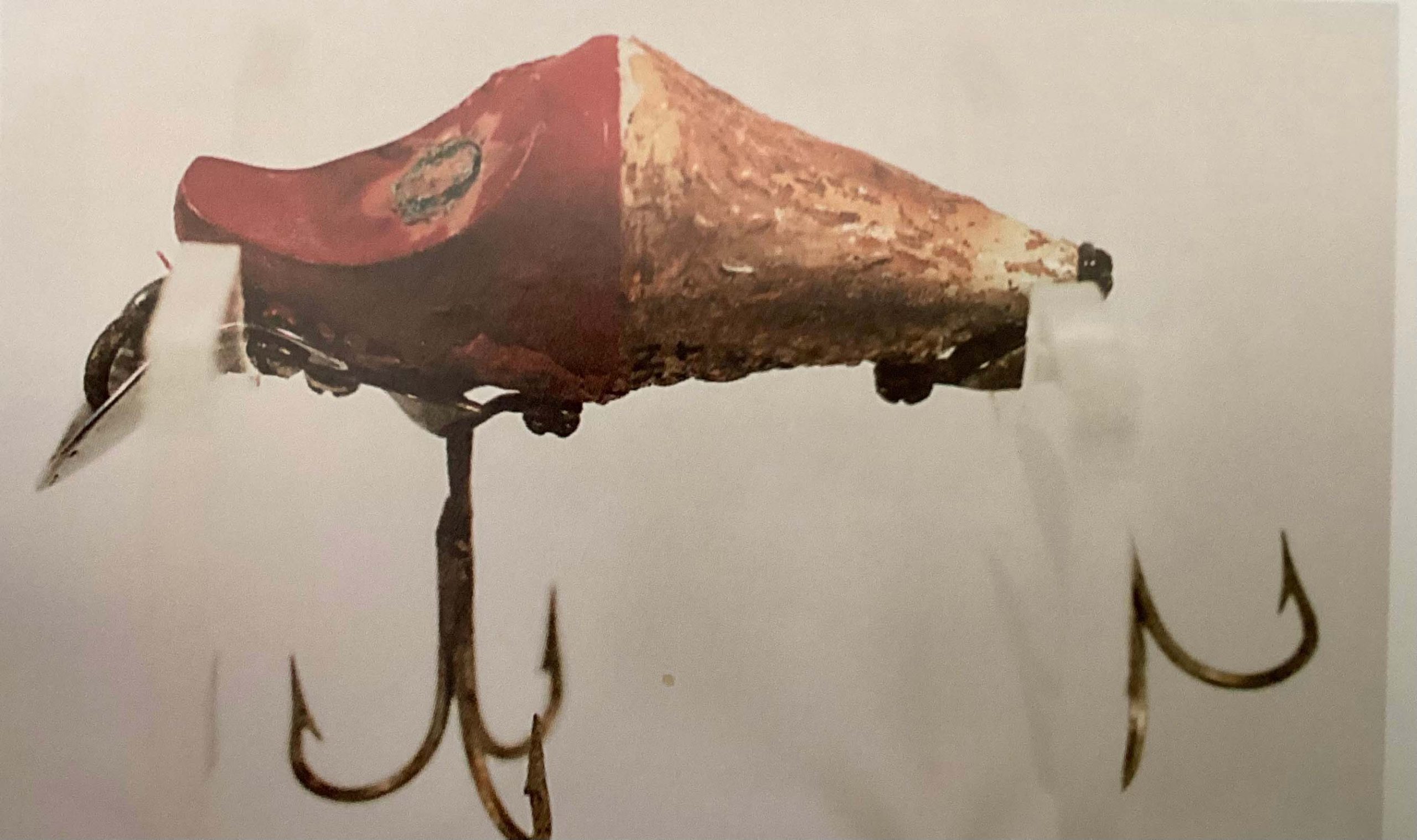
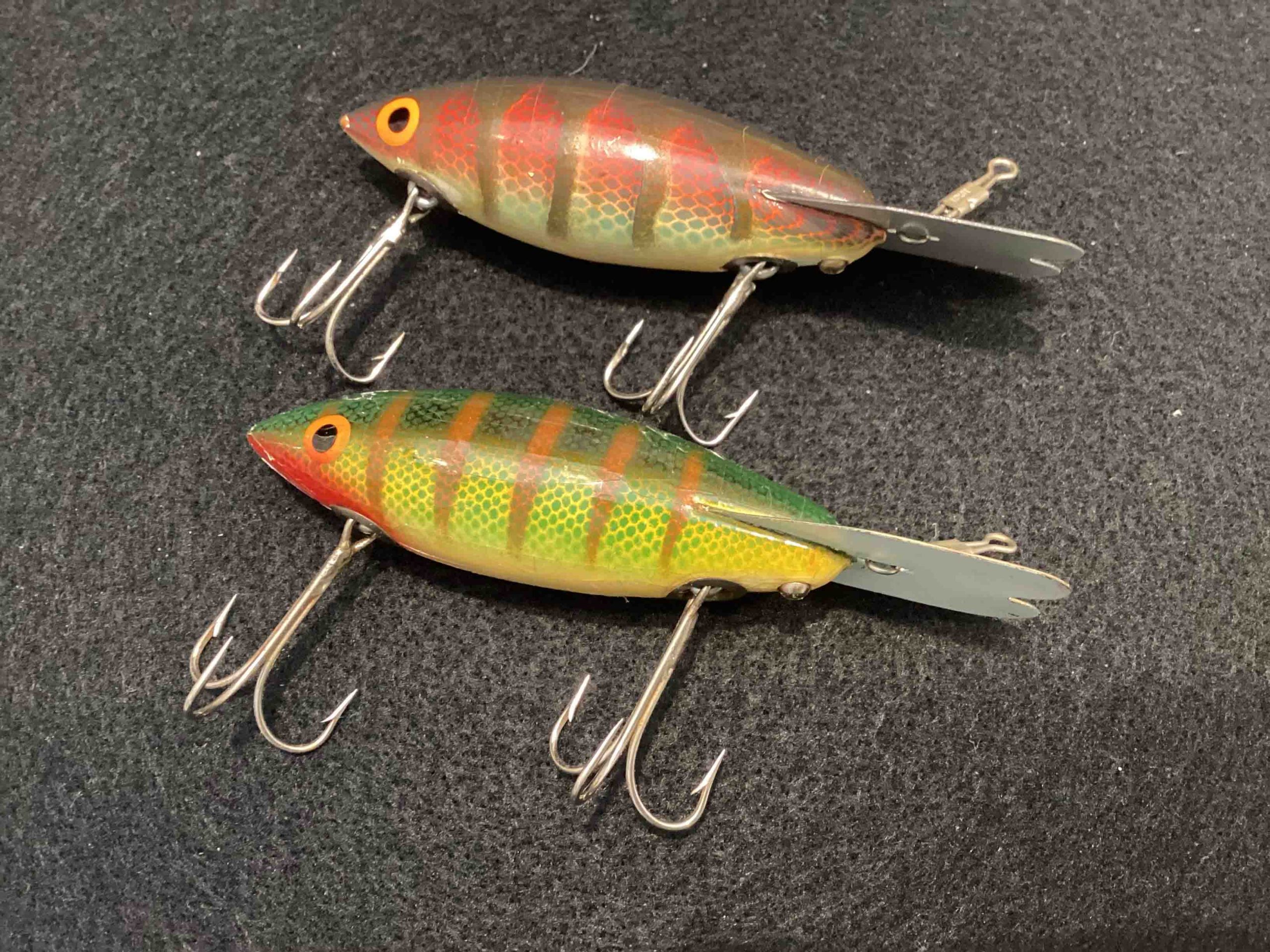
For some unexplained reason, Bomber also decided in 1949 to produce a plastic version of its namesake lure, just four years after it submitted the patent for its wooden version. Bomber collectors have dubbed this early era plastic bomber, the “49er”, as it was only produced that one year.
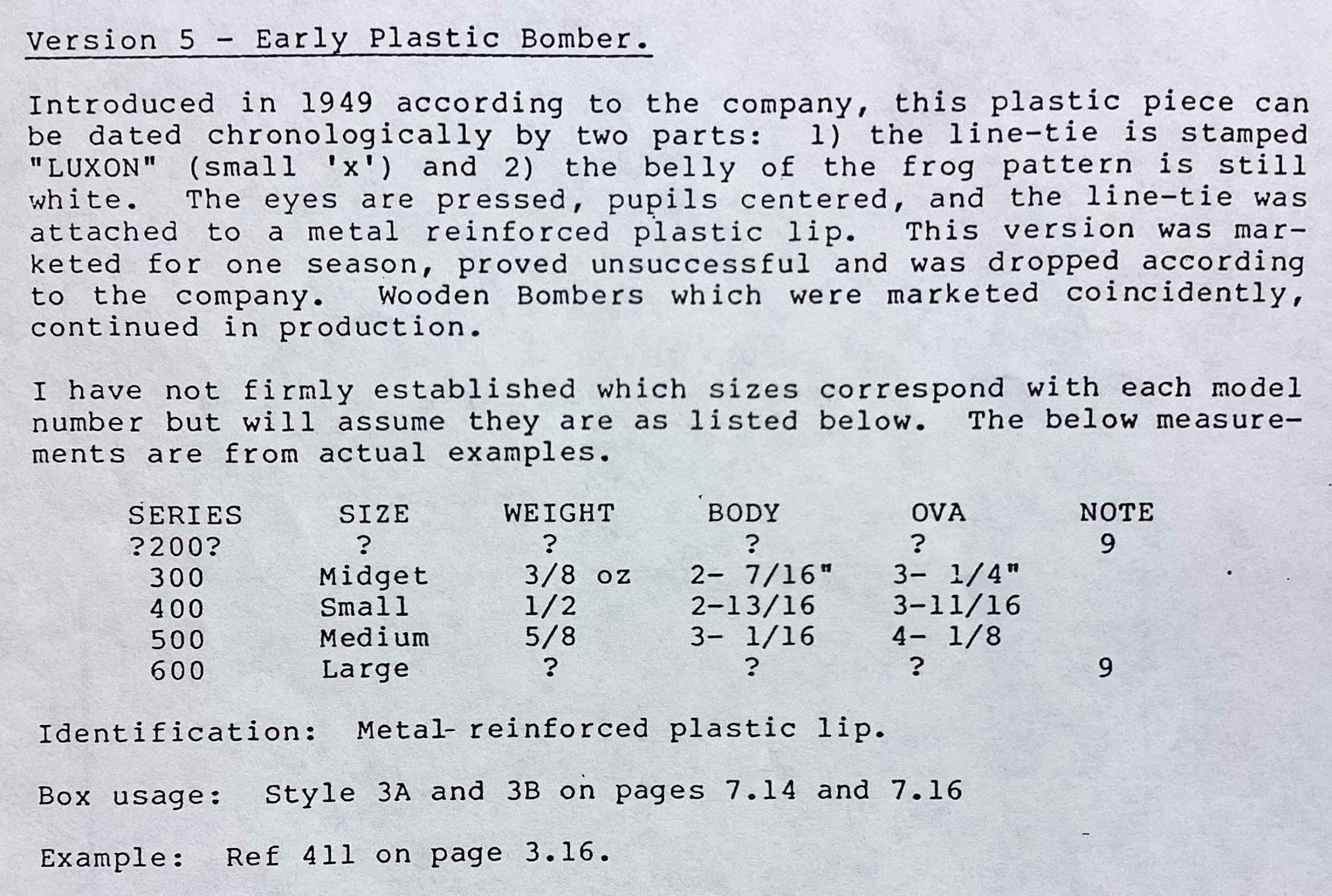
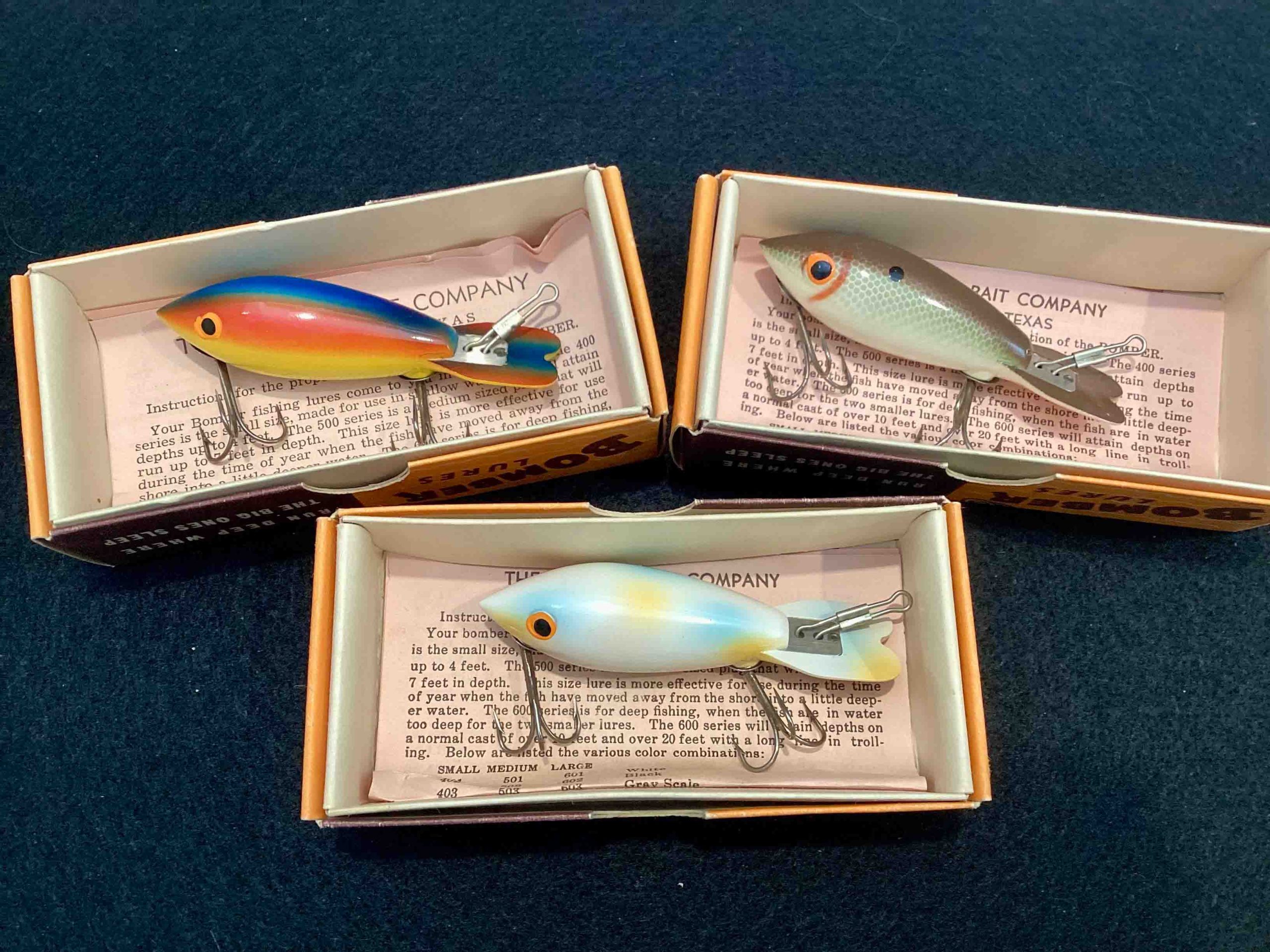
Production in 1949 featured both wood and plastic construction. The plastic version was produced in a mold that integrated the body and diving bill in one piece. The diving lip was metal reinforced and partially exposed on top where the luxon line tie was affixed. Hooks and belly cups were shared with wood versions of the era. Paint schemes were also identical between the plastic and wooden baits. The plastic version was offered only in 3 sizes: 400, 500 and 600. Below is an excerpt from Jim Bourdon’s book, The Bomber Bait Company, that gives additional details on this early plastic version (note: the sizes listed are mistakenly shown as one size below the actual model# -i.e. the 300 is the 400 size, the 400 is the 500 size, and the 500 is the 600 size).
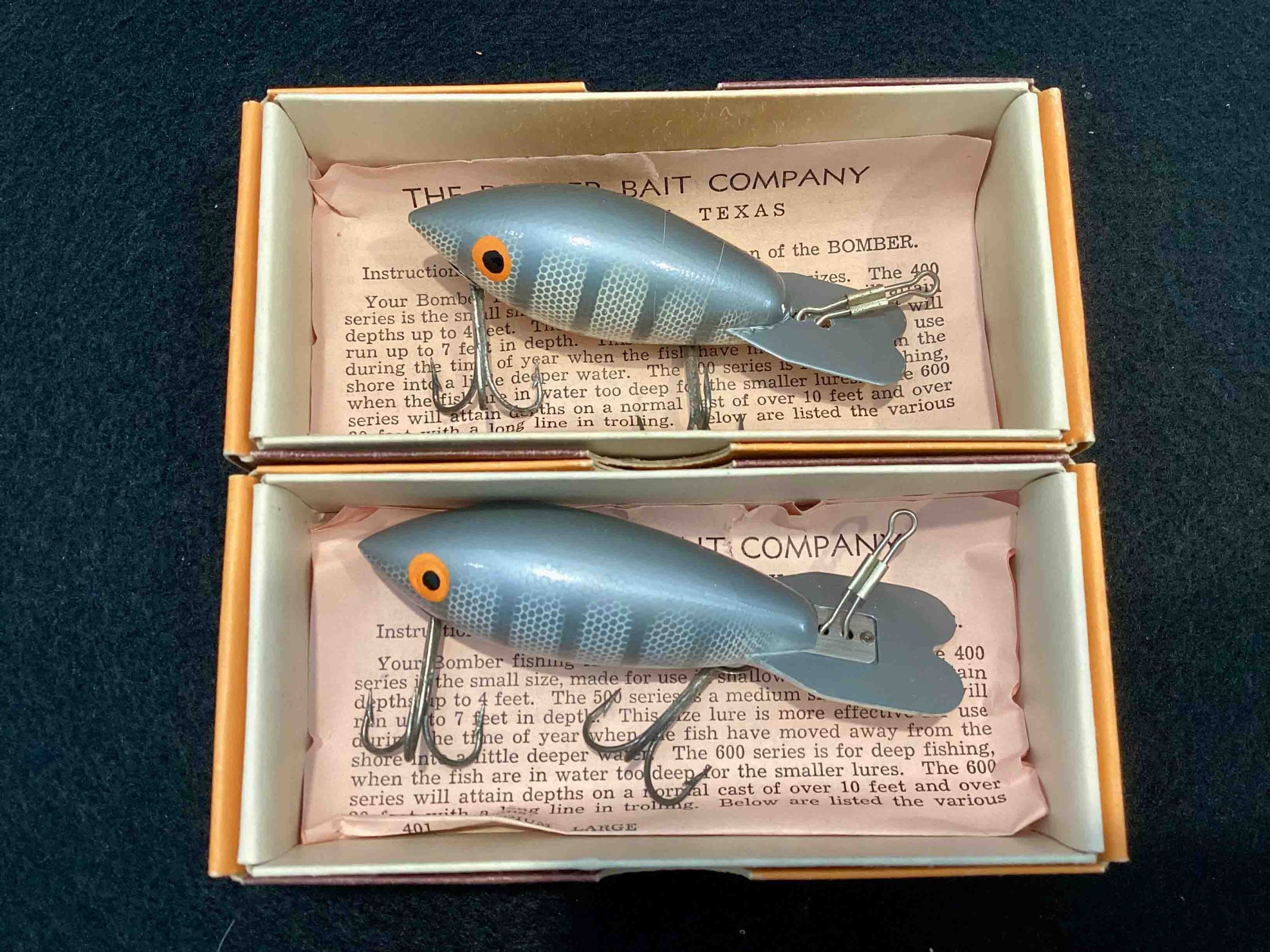
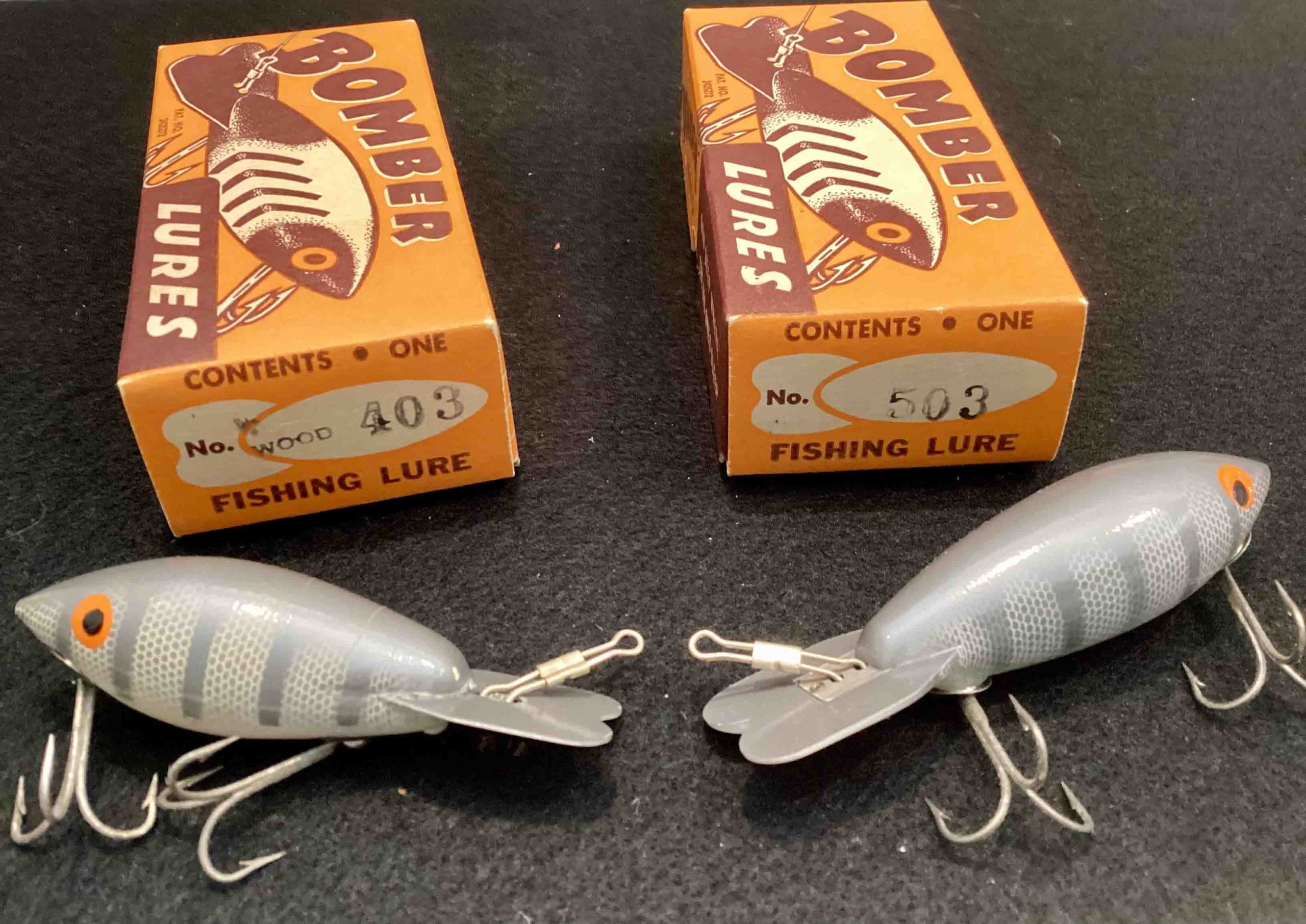
Bomber lures of this era were shipped in two-piece cardboard boxes. To distinguish between the plastic and wood models, boxes containing the latter were stamped “wood” next to the model# on the end of the box. Here is an example of a #503 plastic bomber and a #403 wood bomber that shared the same box type and pink catalog paper.
Early Demise
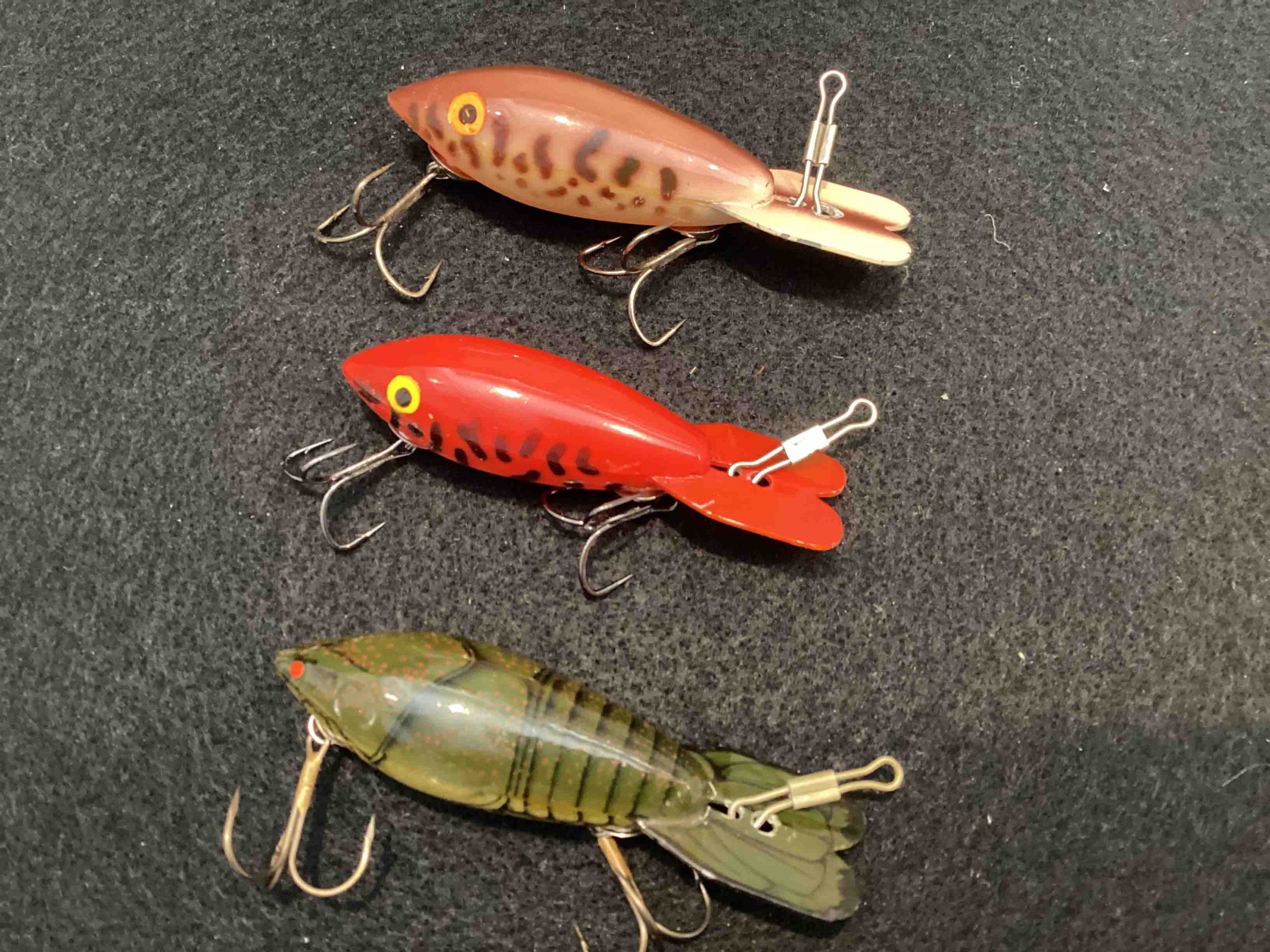
Apparently, the plastic “49er” version met with less than stellar angler reception as it was only produced in 1949 and then dropped. As a collector, it is much easier to find clean examples of these plastic bombers than a wood version from the same era. More than likely, they got fished once or twice and then put away due to their ineffectiveness. Bomber continued with wood only production until 1971 when they reverted to plastic only production (although not a 49er version!) until discontinuing the original Bomber lure altogether in the 1990s.
Conclusion
It is interesting to speculate on why Bomber felt the need to develop a plastic version of a lure that they had just recently introduced successfully in wood. Perhaps they saw plastic as the wave of the future or more cost competitive. Possibly it was just an experiment.
Coincidentally, one of their regional competitors, Whopper Stopper, had introduced their Backrunner lure in wood to compete with the Bomber. It only lasted briefly in wood before production was switched over permanently to plastic. Unlike Heddon which had used plastic to create more transparent and “lifelike” lures, all of Bombers early plastic production were standard solid paint patterns available as well on their wooden versions. So, there was no initial advantage in finishes for the plastic baits.
What this one-year wonder did do, is present a great and somewhat rare collectible for the antique lure enthusiast, as well as a mystery as to its original intent and quick demise.
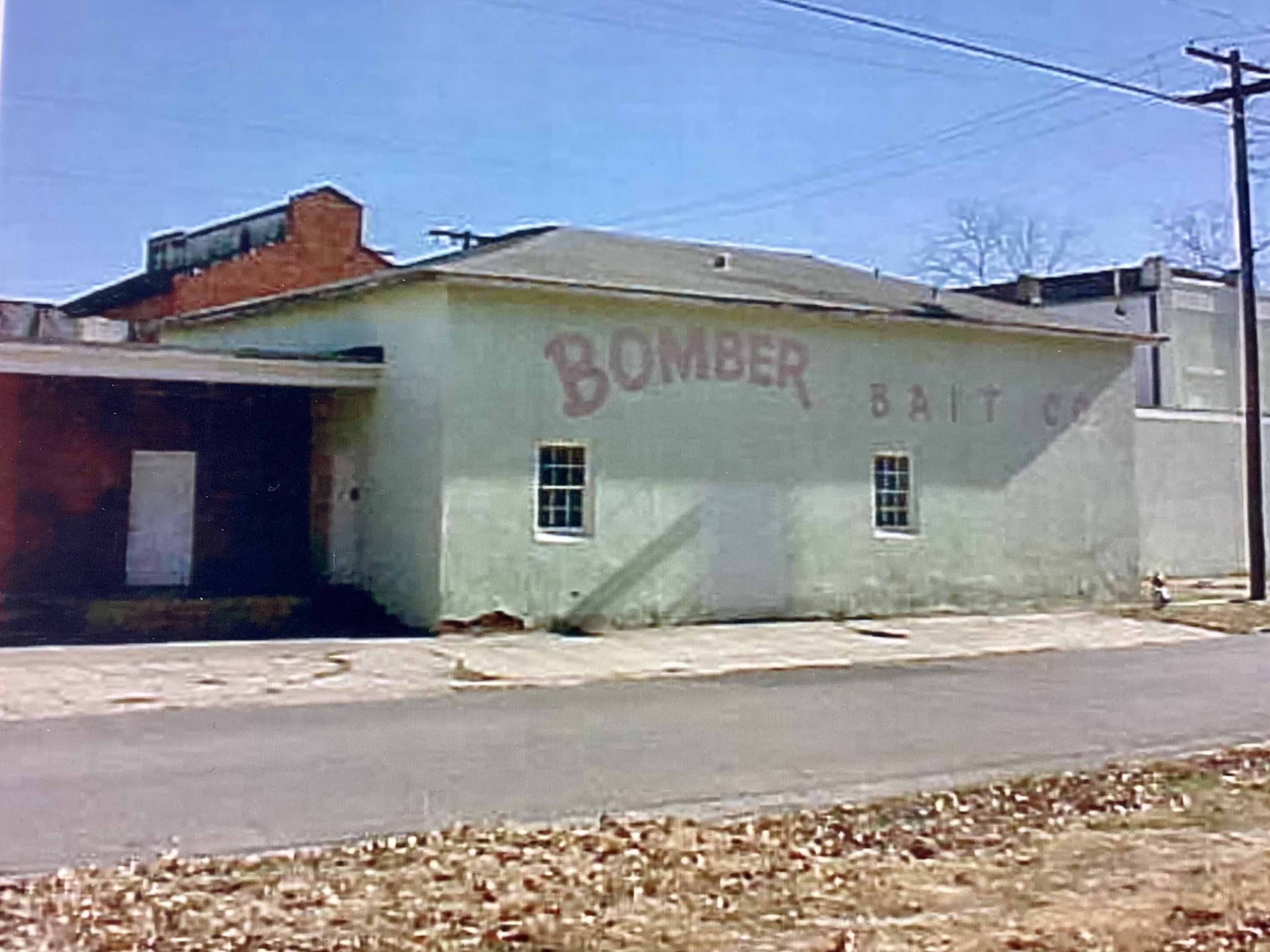
Fellow NFLCC member and Bomber historian, Blake Taylor, is currently working with the current owners of the original Bomber factory and planning a museum there that will house and showcase this venerable old brand’s multiple lure offerings. Let’s wish him luck in getting it opened, and if you are ever in the Gainesville, Texas area stop in and check it out!




Great story on a much beloved lure. I think everyone loved the look of the original Bomber; I know I sure did. But what I like just as much about an article with great pictures of old Bombers (that rainbow-colored one at the bottom is stunning) is that I got to learn something as well. I never knew about the wood/plastic 49er or that history. That’s very interesting indeed. Great job, Mike. This is one I know I’ll be bookmarking and referring to again as I continue to seek out old Bomber lures.
Glad you enjoyed the post, David, and thanks as always for your comments. Bomber may not be the “cache” lure collectible like Heddon or Creek Chub but they produced some really fine baits that were proven fish catchers. Most of all the early models were wood and there is a tremendous variety of sizes and finishes that make them a great collectible.
Mike, interesting story about the Bomber bait history. That would be cool to stop in the old Bomber bait factory turned museum down in Gainsville, Tx.
John, thank you for your comment. Blake Taylor has been working with Pradco to reopen the old factory as a museum, and in the process has made some incredible finds. Not sure what the timeframe is for the opening but hoping that it will be soon.