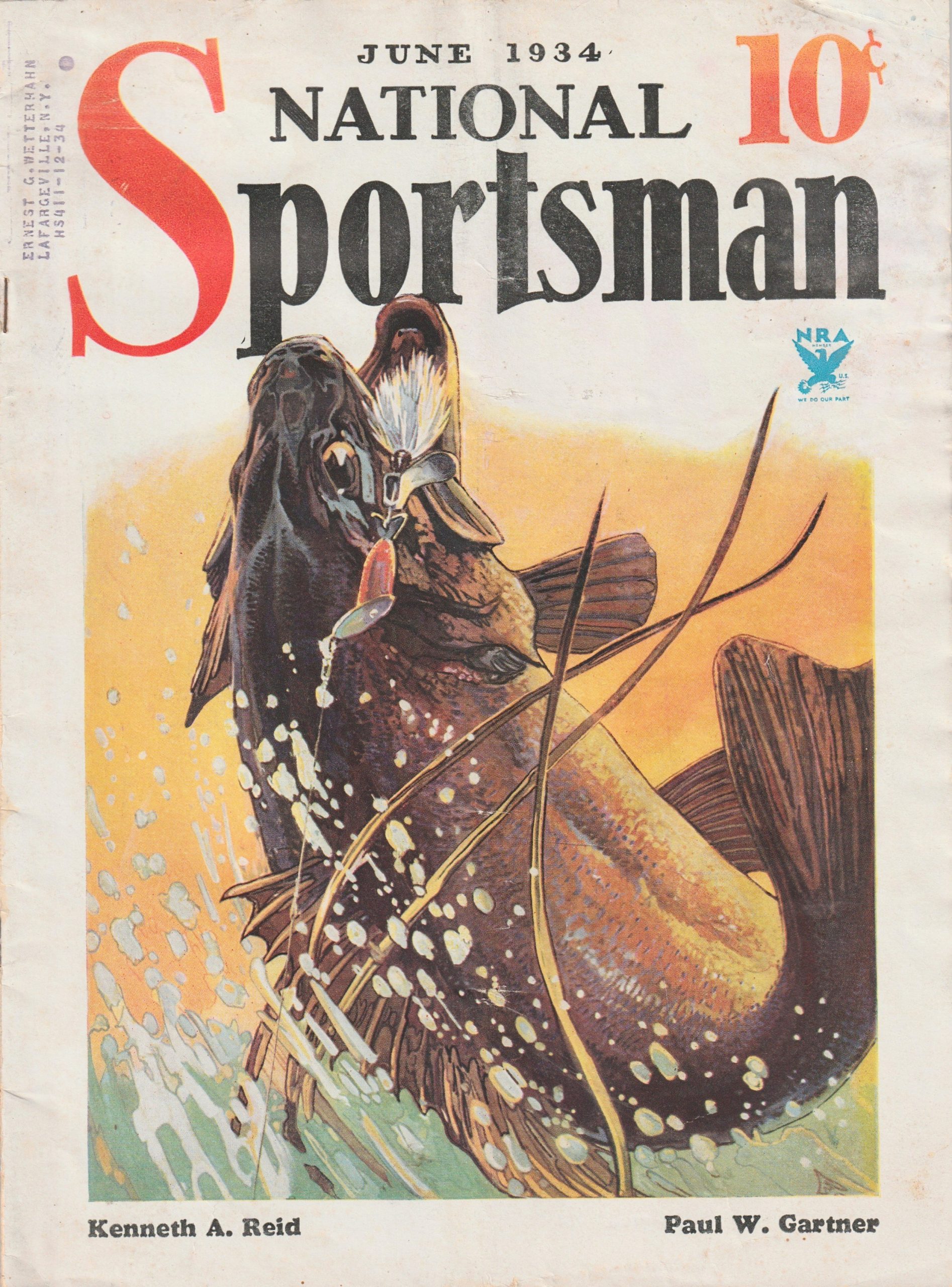
The June 1934 National Sportsman magazine might have the best fighting bass cover ever. At the very least it’s in the top group of the all-time best. You sure don’t need any kind of academic knowledge or expertise in art to determine that this is a great, dynamic, action-packed image. I saw this magazine on eBay a couple weeks ago and was just blown away by the cover, so I immediately bought it. Upon receiving it I was even more pleased to find it contained a few articles on bass fishing, along with some great old fishing ads. But first, let’s dig into the fantastic cover art.
Unfortunately, there’s no attribution of the artist either on the cover or in the table of contents. I spent an hour or so digging around on the Internet but couldn’t find anything on this particular image. I did, however, get some clues as to who the artist probably was, or could be. Without getting into the particulars of the possible artists, I’ve narrowed my list to either William Harnden Foster or Phillip Brown Parsons. What looks like an “F” in the lower right corner gives the nod to Foster, but the style is also reminiscent of Parsons. Both of these artists did covers for National Sportsman at this time, and Foster also served as one of the magazine’s editors. Anyway, my research is continuing, but I need to get this piece submitted for publication, so I’m going to make an educated guess that the artist is Foster, although I’m not 100% certain. Both of these men were also accomplished artists beyond their work in illustration and had gallery shows of their fine art work.
But the image itself. Wow! The foam is spraying as the bass leaps entirely out of the water, and blades of emergent grass sways opposite the flying water. The head of this bass is almost more lizard or dinosaur than fish. The creature has an expression of anger, with eyes seemingly a bit too far forward in an extra bony and ridged head. And the gills are flared extra wide and sharply pointed. If you could put a sound effect to this image, I think the sound of a bellowing T-Rex, the kind of sound you heard coming from the terrible lizard in the film, Jurassic Park, would be perfect. Yes, this is one violent, dynamic image. I wonder how the artist pictured the angler at the other end of the line in this image. I can see the fisherman being either fearful or fearsome, as the prospect of landing this beast approaches. It is a truly great image.
There are three bass fishing stories in this National Sportsman issue, two of which are stories designed only to inspire reverie, and one that is of a more practical nature, that is, to instruct the angler on how to catch bass. The first, in my opinion, is the best of the three. The story, by Paul William Gartner titled “Two Kinds of Luck,” is a tale of a couple of anglers who lose almost all of their fishing lures – through mistake or theft – on route to a wilderness lake. Gartner tries to convince his partner that losing gear is a good sign that they would be lucky later on. They carry on with just a few crummy lures, and do fairly poorly, catching only a sizable goldfish, of all things. Then, yes, their luck changes when the author snags his only spinner on a stump and goes in after it. Not only does he find his beat up spinner, but he finds a whole bunch of other lures snagged on the stump. Their cache now full, they end up making a very nice catch with the new lures. It’s a fun story.
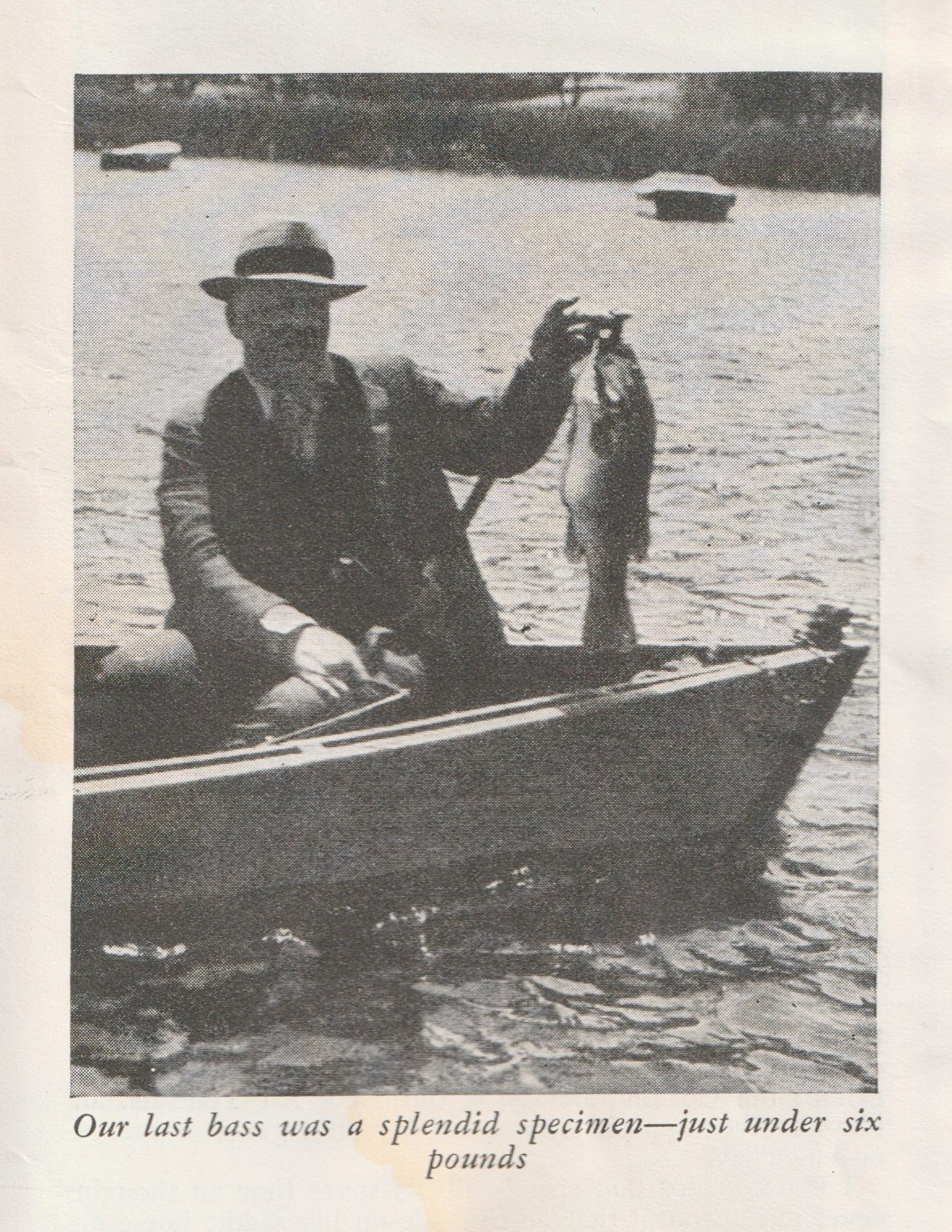
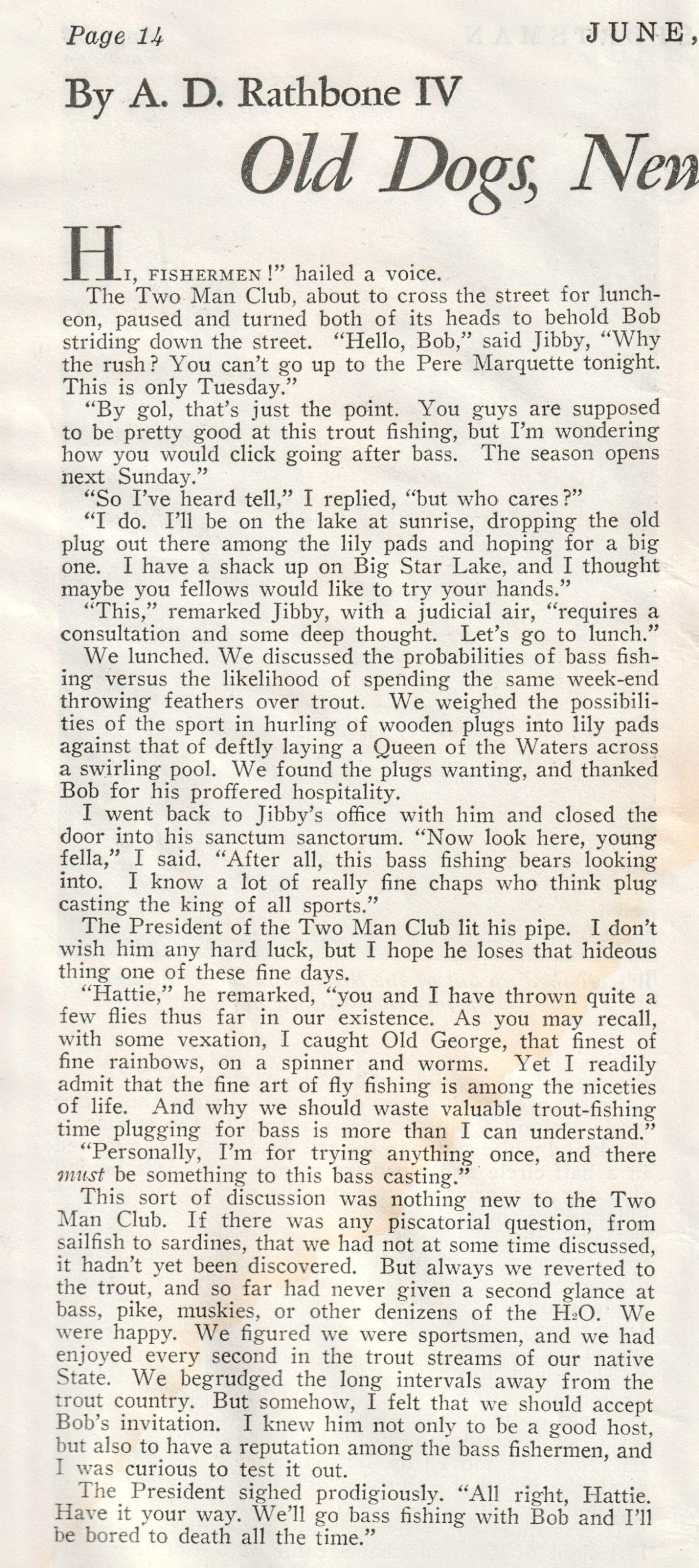
The second article, titled “Old Dogs, New Tricks – Bass,” written by A.D. Rathbone IV, WWI veteran and well-known writer and editor, is another feel-good tale. But this one is a little unusual. It reads like the script for an early television soap opera, complete with overly dramatic character dialogue. Two fly fishing trout purists join a pair of baitcasting bass anglers and have a great time fishing for largemouth, their negative preconceptions of bass fishing turned completely on their heads. That’s a nice story itself, but Rathbone’s writing style is melodramatic to the point of comedic satire. I’ve included his introduction below. It’s full of period slang, extended unrealistic dialogue, and an almost painful attempt to be humorous. I’m not trying to be overly critical of Rathbone’s writing, because he was a respected author as well as the editor of Scientific American, but this story certainly seems to speak to the time in which it was written and no doubt reads differently to modern eyes.
The final piece is quite different. It’s angling editor Kenneth A. Reid’s monthly column, “Pools and Ripples.” Reid discusses in a very straightforward and matter-of-fact manner some methods for catching largemouth and smallmouth bass. I found a couple of things interesting in Reid’s piece. One, he says that fishing with live minnows is surely the most popular method of bass fishing, but he strongly encourages anglers to try artificials, declaring that once proficient with artificials an angler will often outfish live bait. But more than that, he makes an argument that using artificials will lead to stronger bass populations, as all of the anglers who pull minnows, frogs, crawdads and the like from the lakes they fish is having a negative impact on the food supply, and in turn on the bass populations and growth. That’s mighty interesting, because it seems that anglers procuring their own live bait from the lakes they fished was a common practice. Unlike today, when most live bait fishermen get their bait from bait shops before they get to the lake or river.
Also of note is his advice that a modest baitcasting set-up is within the reach of the most budget-minded angler: “…a ten dollar bill will buy rod, reel and line with a few lures thrown in that will be fairly serviceable for baitcasting.” We know that $10 in 1934 is not the same as $10 in 2025, but still, it’s fun to read what you could get for ten bucks 90 years ago.
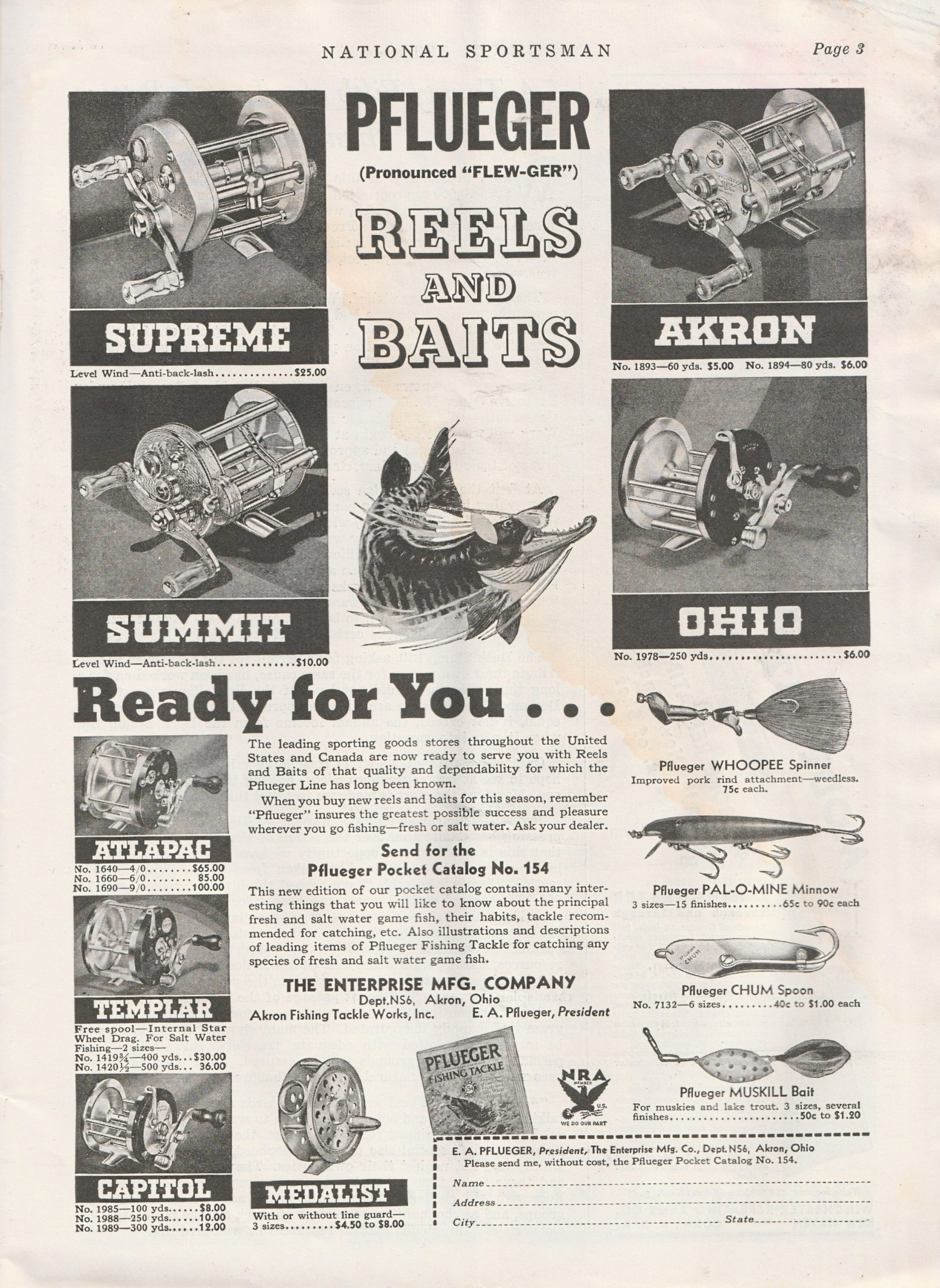
Finally, we have to take a look at a few of the great old ads from this issue. First is a full-page ad from Pflueger, highlighting their popular reels and a few lures. The Pflueger Supreme sold for $25 in 1934, the equivalent of well over $500 in today’s money. The ad also contains images of four Pflueger lures, including their Whoopee Spinner. Let’s see if you were paying attention. Does the Whoopee look familiar? The Whoopee also happens to be the lure that the fighting bass on the cover is desperately trying to throw! I wonder if Pflueger had any input into the commission of the cover.
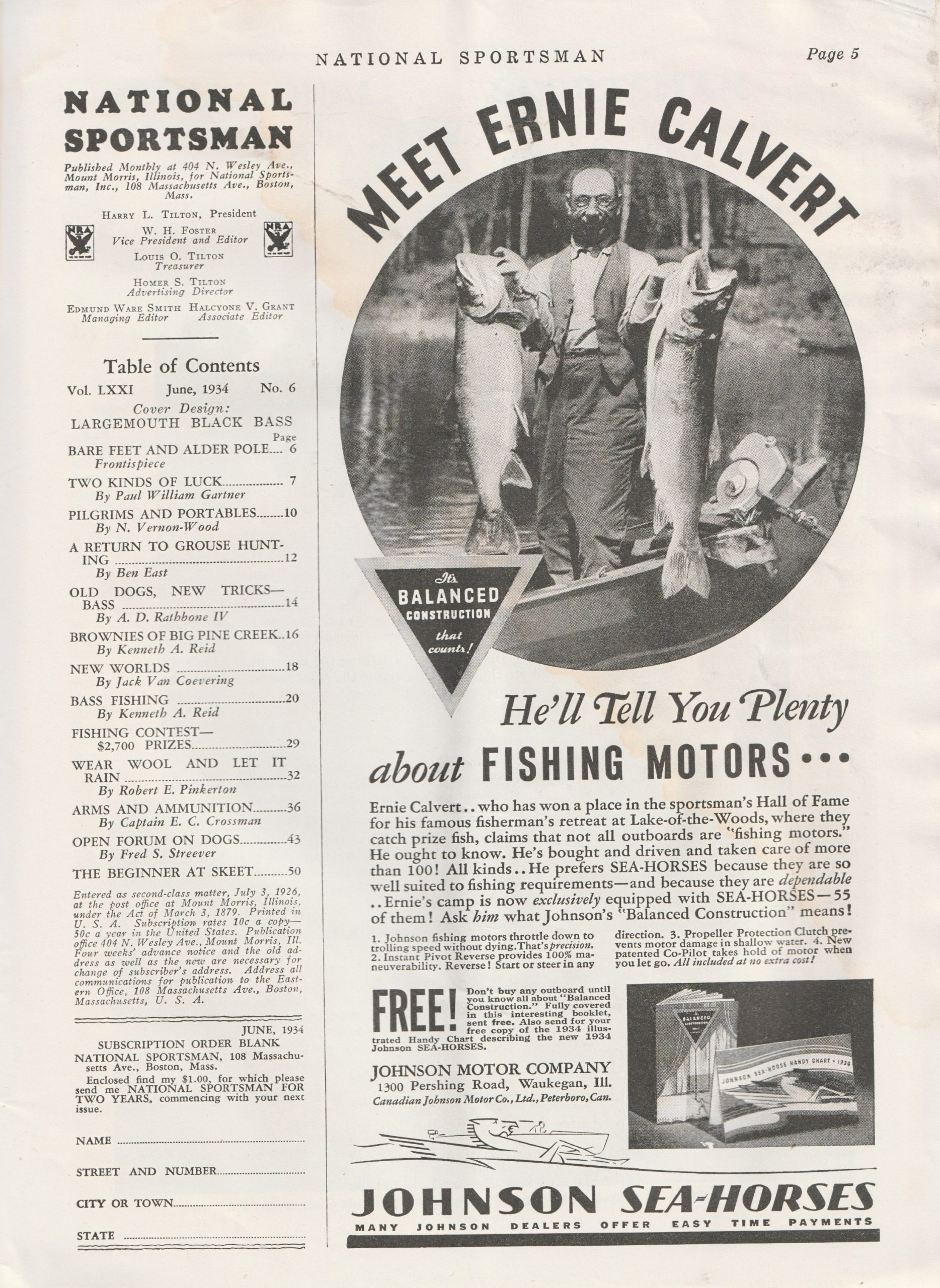
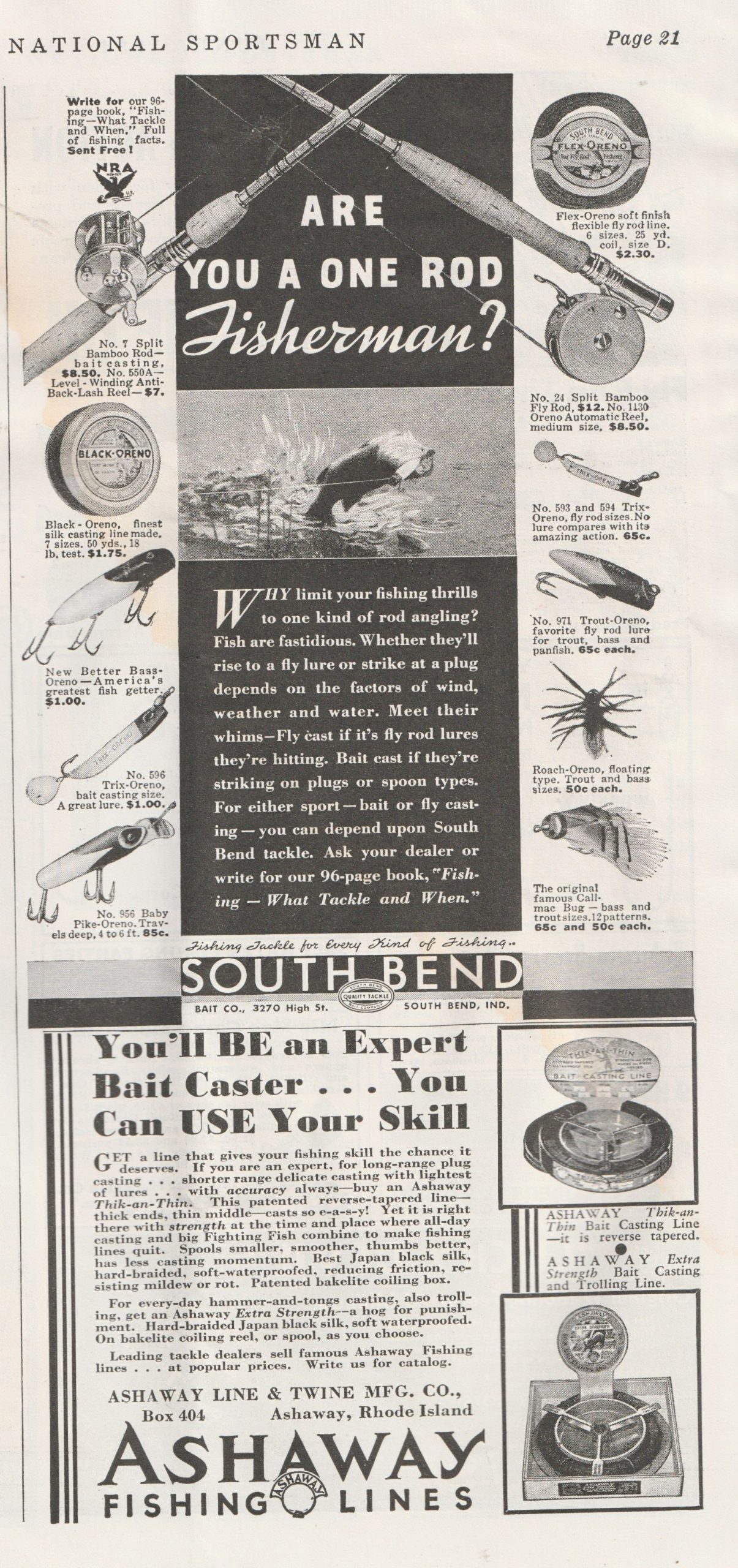
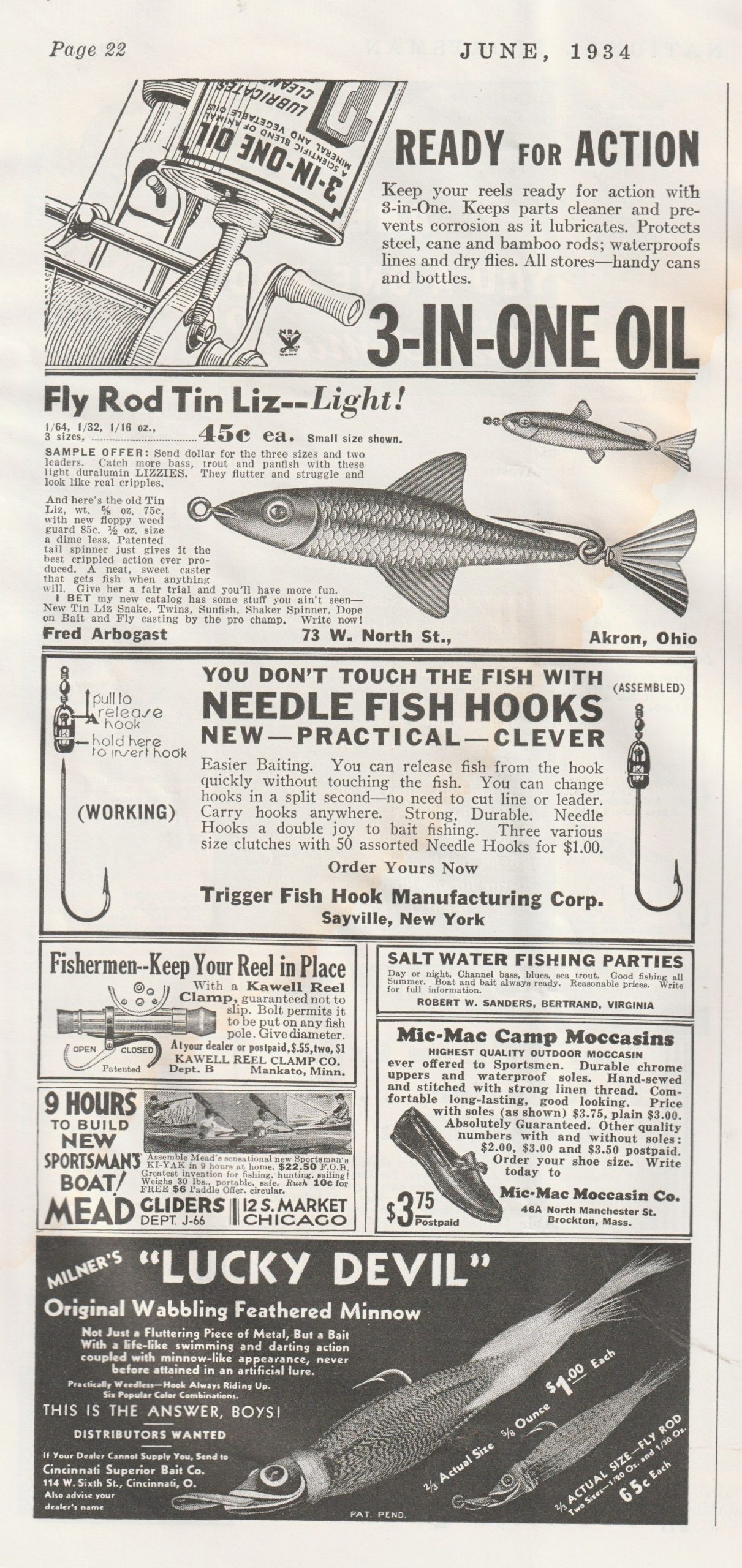
This issue of National Sportsman has more ads than those I’m sharing here. These are the major ones. Next we have an ad that assumes ⅔ of the page with the table of contents. It’s for Johnson Motor Company and relies on the expert testimony of Ernie Calvert, a Lake-of-the-Woods retreat owner who the ad says has outfitted all of his boats with Johnson Sea-Horse motors. It’s an effective sales pitch. Then, ads for South Bend and Ashaway Fishing Line. And a column of ads that includes the Arbogast Company’s Tin Liz – this one for the fly fishing version of the lure. At this point in Arbogast history the Tin Liz was the only bait that the company offered. Two years later, in 1936 Arbogast would add the Hawaiian Wiggler to its catalog.
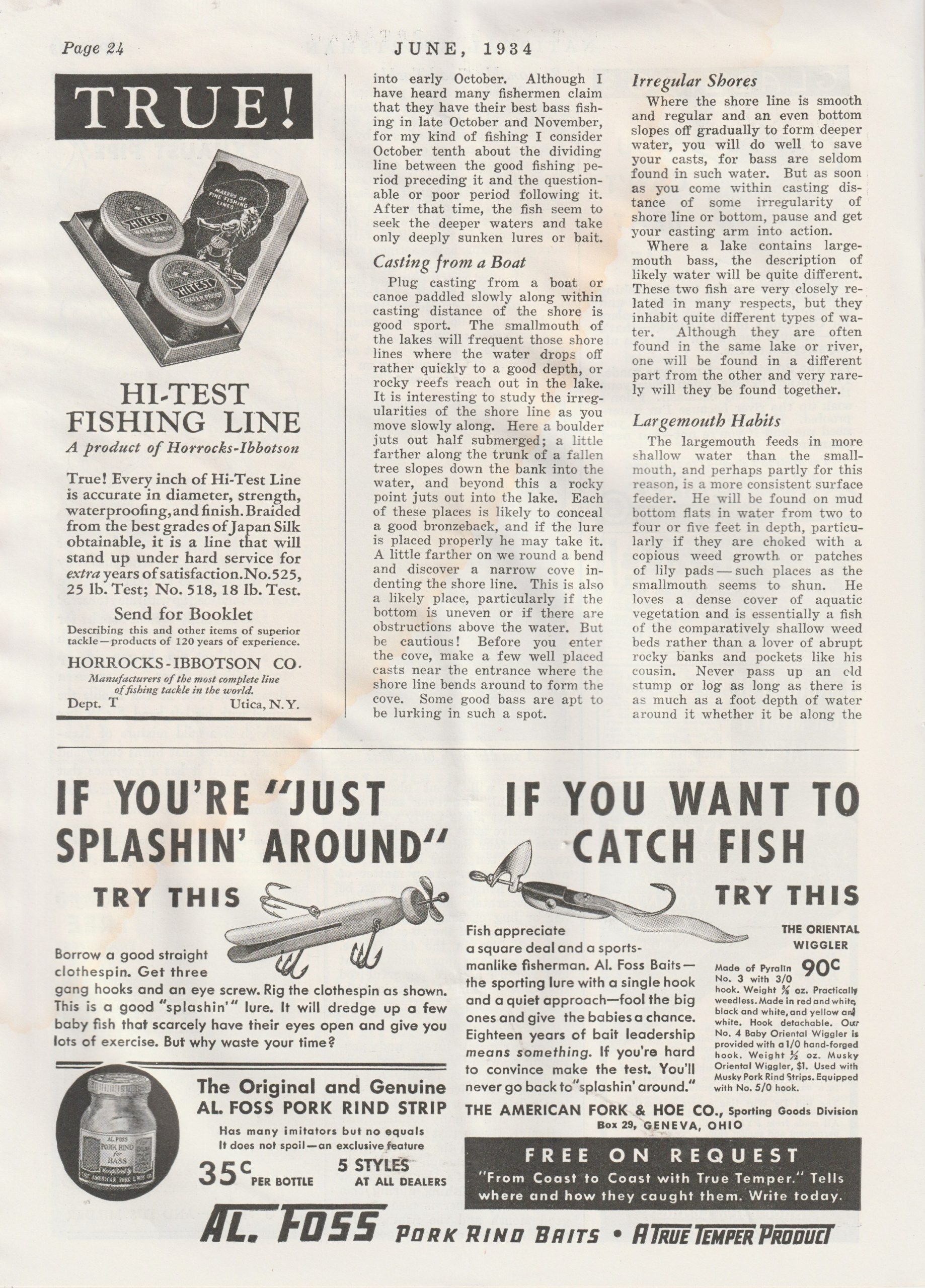
Finally, we’ve got a page with an ad for Horrocks-Ibbotson fishing line and an ad from Al Foss and the True Temper company that I think is delightful. It shows a homemade lure crafted from a clothespin, and advises the reader to make one himself if he’s only interested in “just splashin’ around” and not fishing seriously. Next to the clothespin bait is Foss’s Oriental Wiggler, with the humorous text, “Fish appreciate a square deal and a sportsmanlike fisherman. Al Foss Baits – the sporting lure with the single hook and the quiet approach – fool the big ones and give the babies a chance.” No doubt a lot of anglers did indeed rig clothespins as lures, but this effective ad surely added the Oriental Wiggler to a lot of tackle boxes.
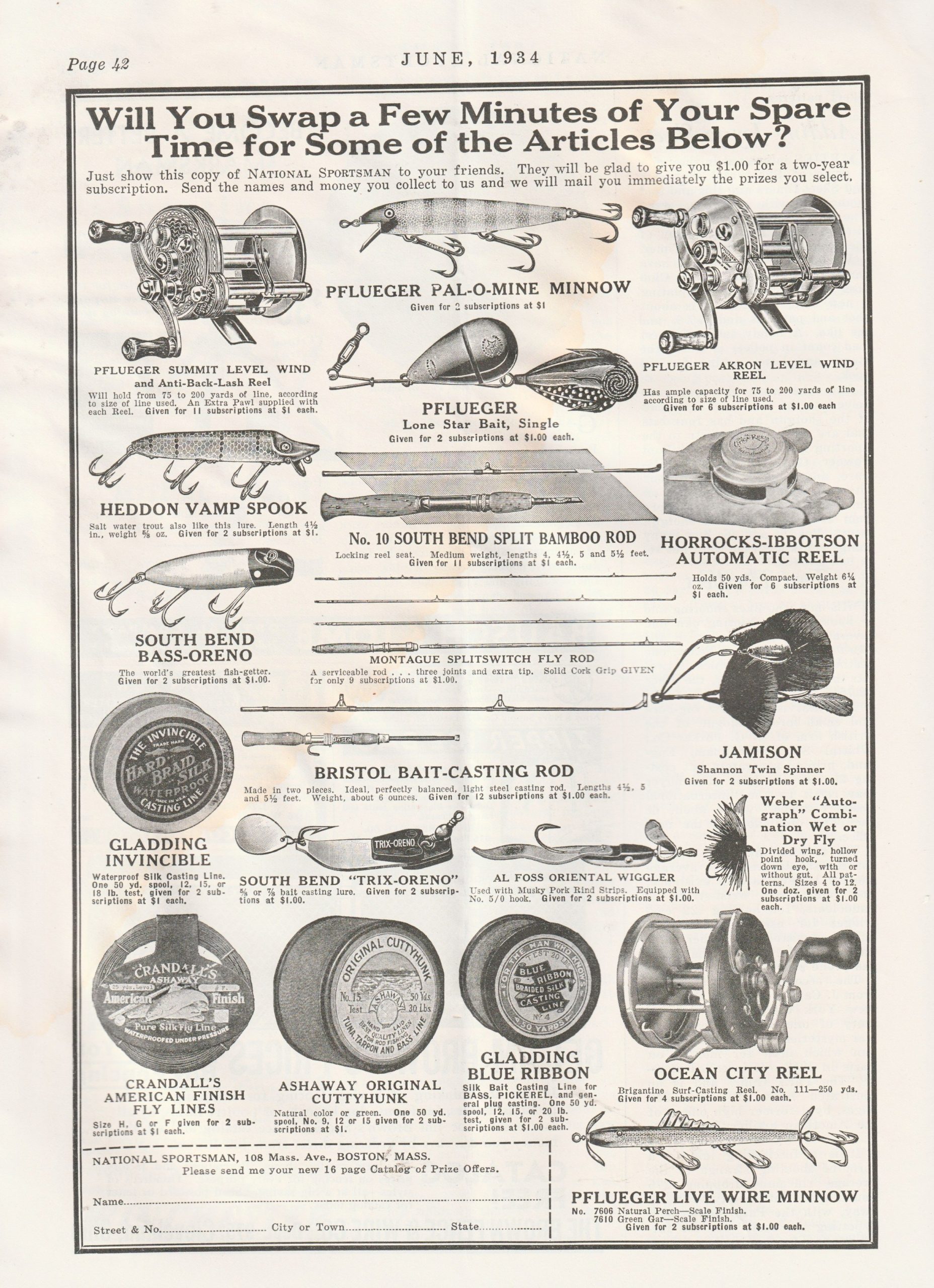
Lastly, we’ve got an interesting full-page ad that enlists readers in expanding the National Sportsman subscription base. If a sportsman could convince his friends to purchase a subscription – only $1 for two years! – he or she would be rewarded with some of the items on this page. Two subscriptions could get you, for instance, a Heddon Vamp Spook or a South Bend Bass Oreno. Eleven subscriptions and you could win a beautiful Pflueger Summit baitcasting reel or a South Bend Split Bamboo Rod.