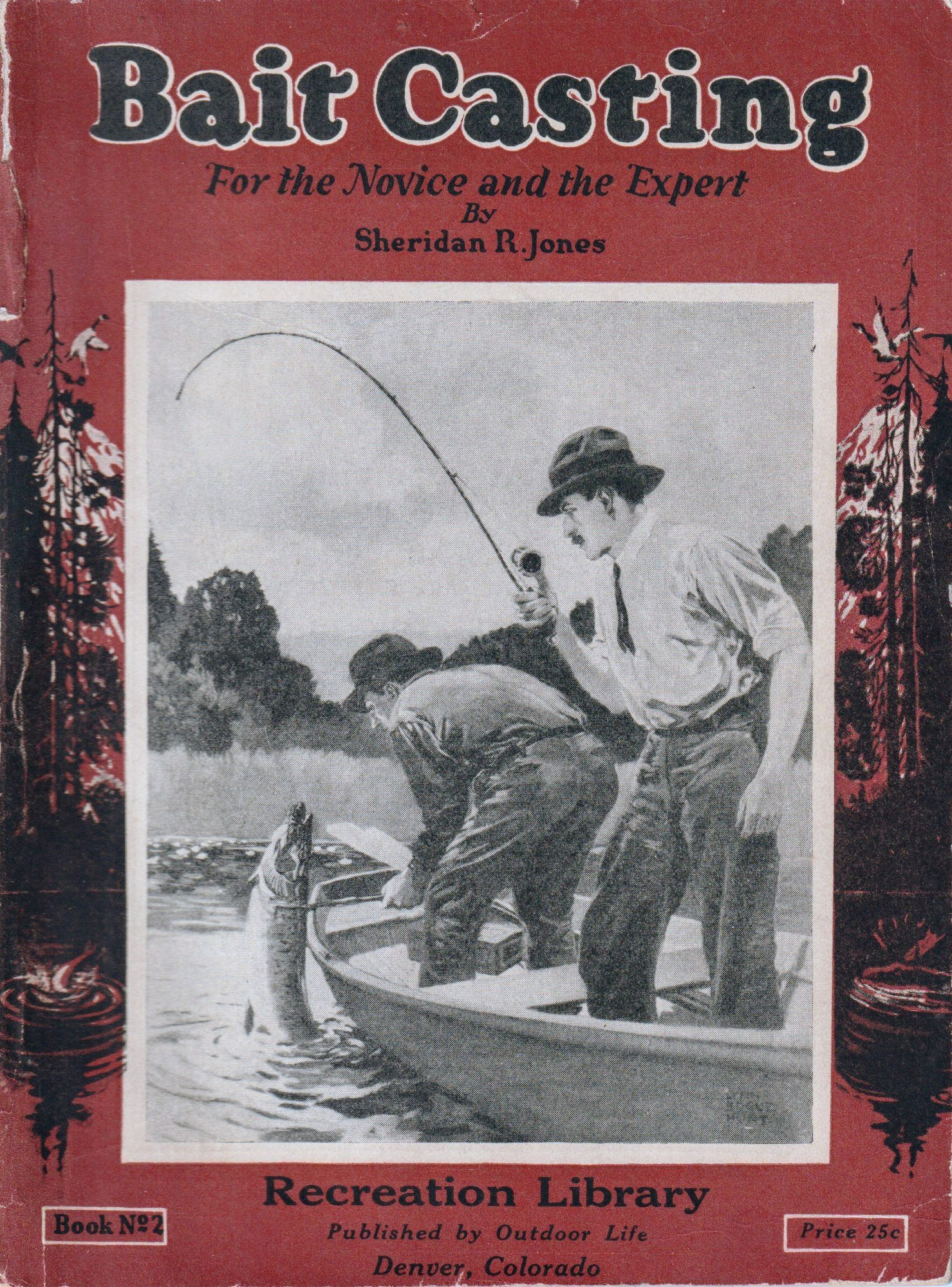
Part 2 in our series on early 1900s fishing writer Sheridan R. Jones, looks at one of the Recreation Outdoor Library paperback books published in the early 1920s. This particular book, Bait Casting by Sheridan Jones, was one of three that Jones authored for the series. Prior to this book, Jones wrote Fishing Facts and following Bait Casting he penned Fly Casting. Other books covered subjects on hunting, shooting, and camping. Cal Johnson authored The Fly-Rod for Bass in 1925. Jone’s Bait Casting was first published in 1923 by Outers’ Book Company and republished in 1927 by Outdoor Life Publications.
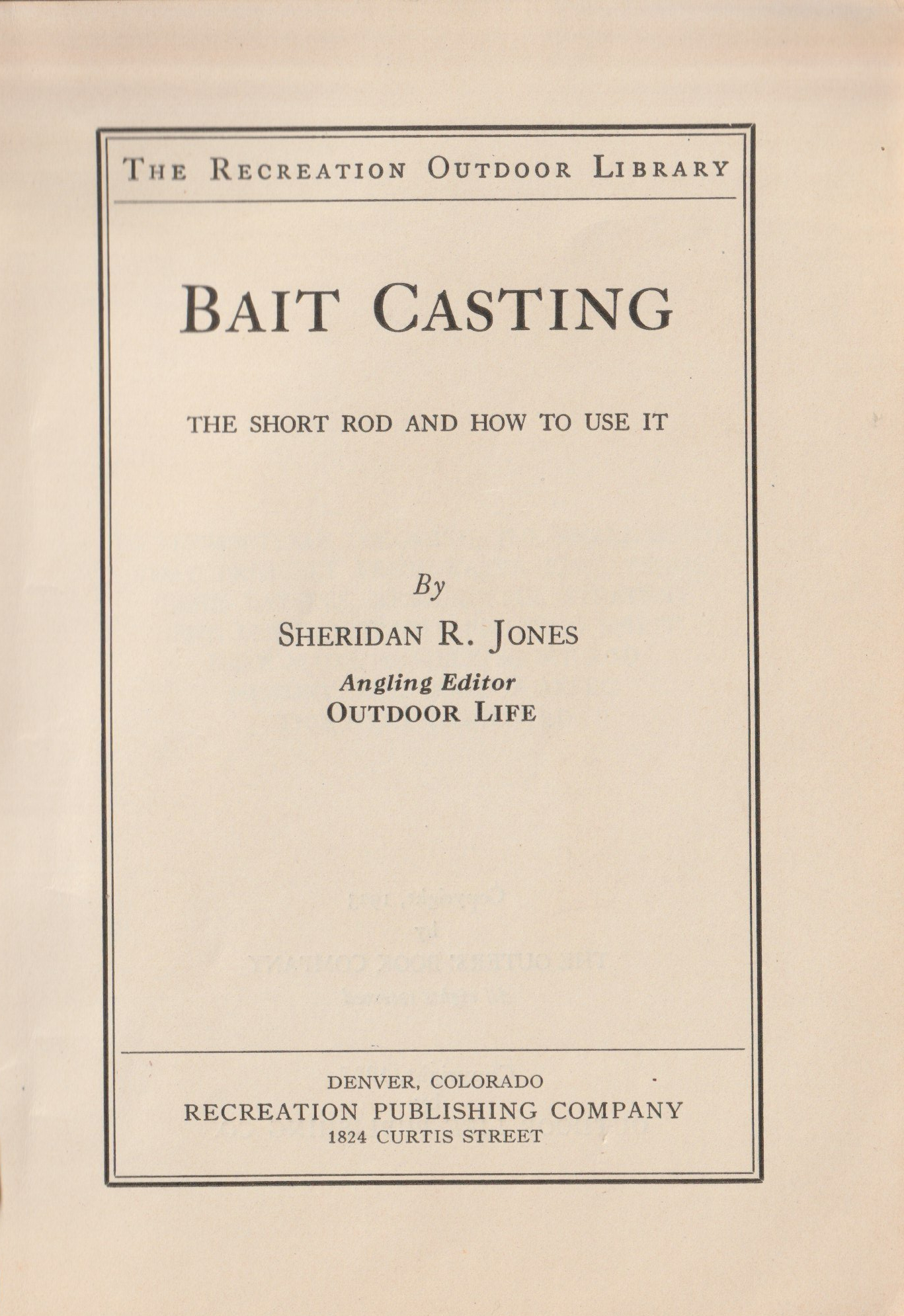
The full title of the book is a little confusing. On the cover it reads, Bait Casting, For the Novice and the Expert, while the inside title page reads Bait Casting, The Short Rod And How To Use It. In any case, Jones covers nine main areas or chapters, which include:
The Bait-casting Rod.
The Bait-casting Reel.
The Bait-casting Line.
The Art of Bait Casting.
The Bait-casting Lure.
Bait-casting Waters–Lakes.
Bait-casting Waters–Streams.
Weather, Seasons and Fish.
Care of Bait-casting Tackle.
Each chapter is further broken down into manageable sections. For example, in the chapter The Art of Bait Casting, Jones has broken the subject into the following subjects:
The Art of Bait Casting:
Rigging the Rod.
Thumbing the Reel.
Making the Cast.
Retrieving the Lure.
Striking, Playing and Netting.
Handling Leaping Fish.
Night Casting.
Beating a Back-lash.
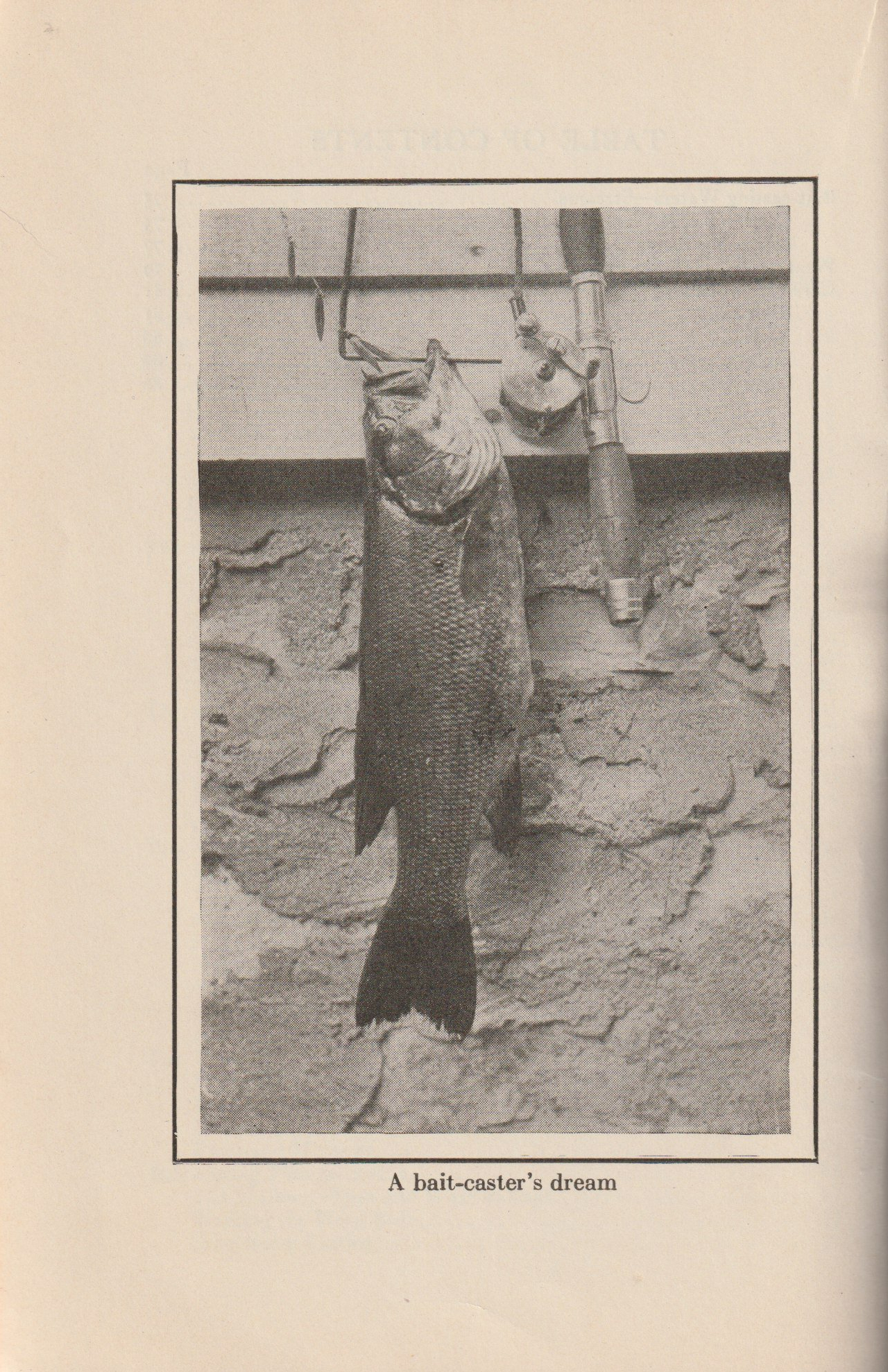
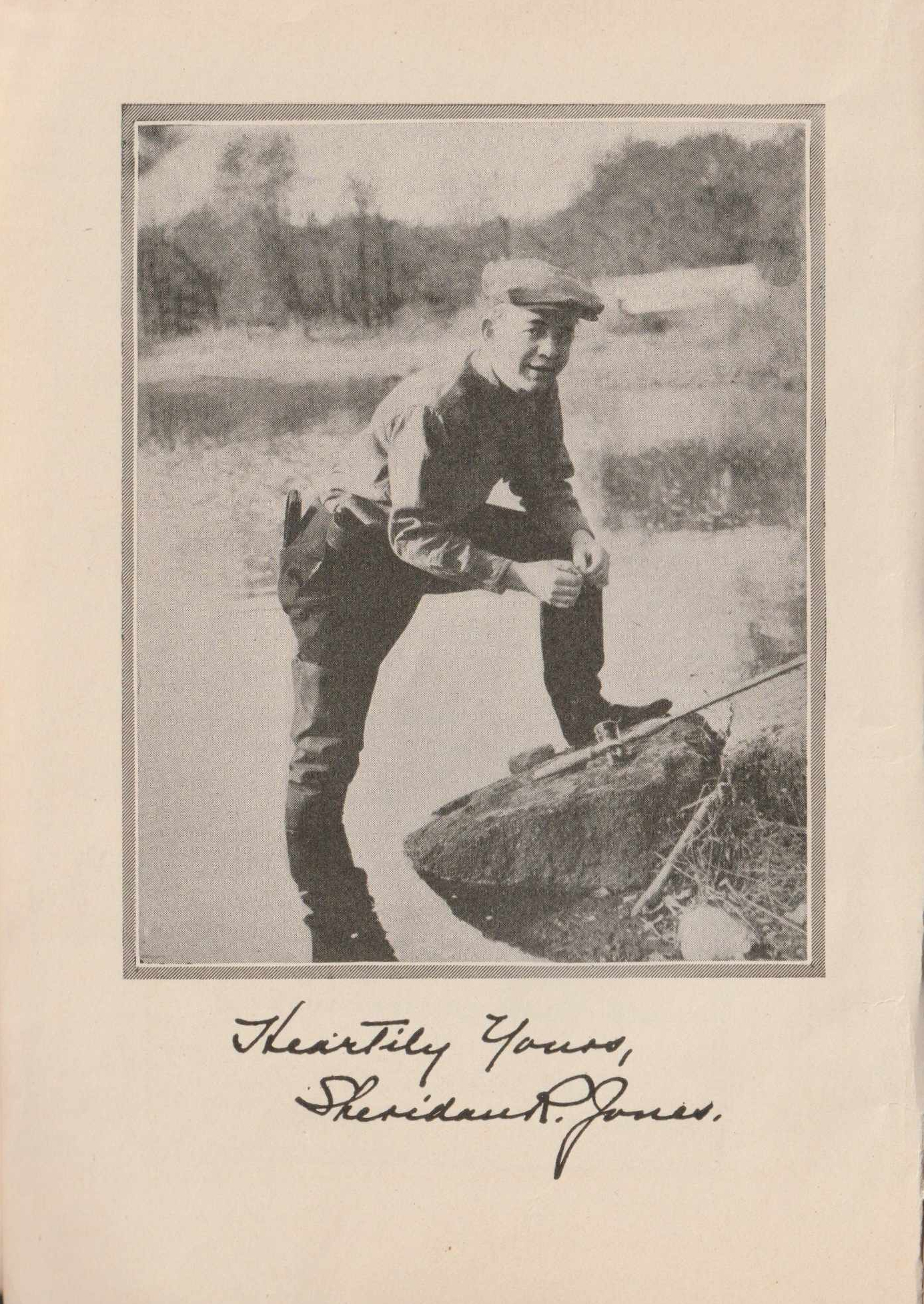
His writing is matter of fact, clear and well organized. This is, of course, in keeping with Jones’ background and other career as a professor of the natural sciences at Ellsworth College. I’m not going to go into depth about much of the content in Bait Casting, but I will touch on a couple of areas to give you a feel for the book. There aren’t a ton of photographs in the book, but the few that are there do add to the text and the reader’s enjoyment. It is particularly nice to see several pages of Sheridan R. Jones himself, as a man in his early 40s demonstrating the mechanics of casting. Clad in a wide lapel sweater, shirt and tie, and ivy or newsboy cap, Jones looks every bit the casual 1920s university professor. The introductory image shows Jones as a young man, wearing thigh waders and ivy cap, standing in presumably some Iowa lake or stream, one foot in the water as he leans over the other propped upon a rock bearing his baitcasting rod and reel. His easy smile speaks to his reported kind and upbeat nature. His students and the Iowa Falls community where he lived, without fail reported a genuine love for the biology professor and angling author.

In the above-mentioned chapter, The Art of Bait Casting, Jones discusses three primary methods of casting: the overhead cast, the lateral cast, and the underhand cast. I’m not sure if Jones is the originator of the lateral cast (or sidearm cast) but he could well be. Baitcasting with a short rod was still in its early stages at the time of this writing. But even if he isn’t the man who “invented” it, he is the one who popularized it and made it a legitimate technique. His underhand cast in the 1920s is just a matter of degree away from today’s skipping cast practiced by so many serious bass anglers. I wouldn’t be surprised at all if Sheridan Jones skipped a lure or two in his time on the water. He writes, “…the practical bait-caster will need all the space from the ground on the one side to the water level on the other, if he is to master all the situations in a day’s mixed casting. Nor will the angler be content with the casts described if he progresses far as a short rod artist. There are many little flips of the lure, scarcely to be dignified as casts, that will win under difficult situations.”
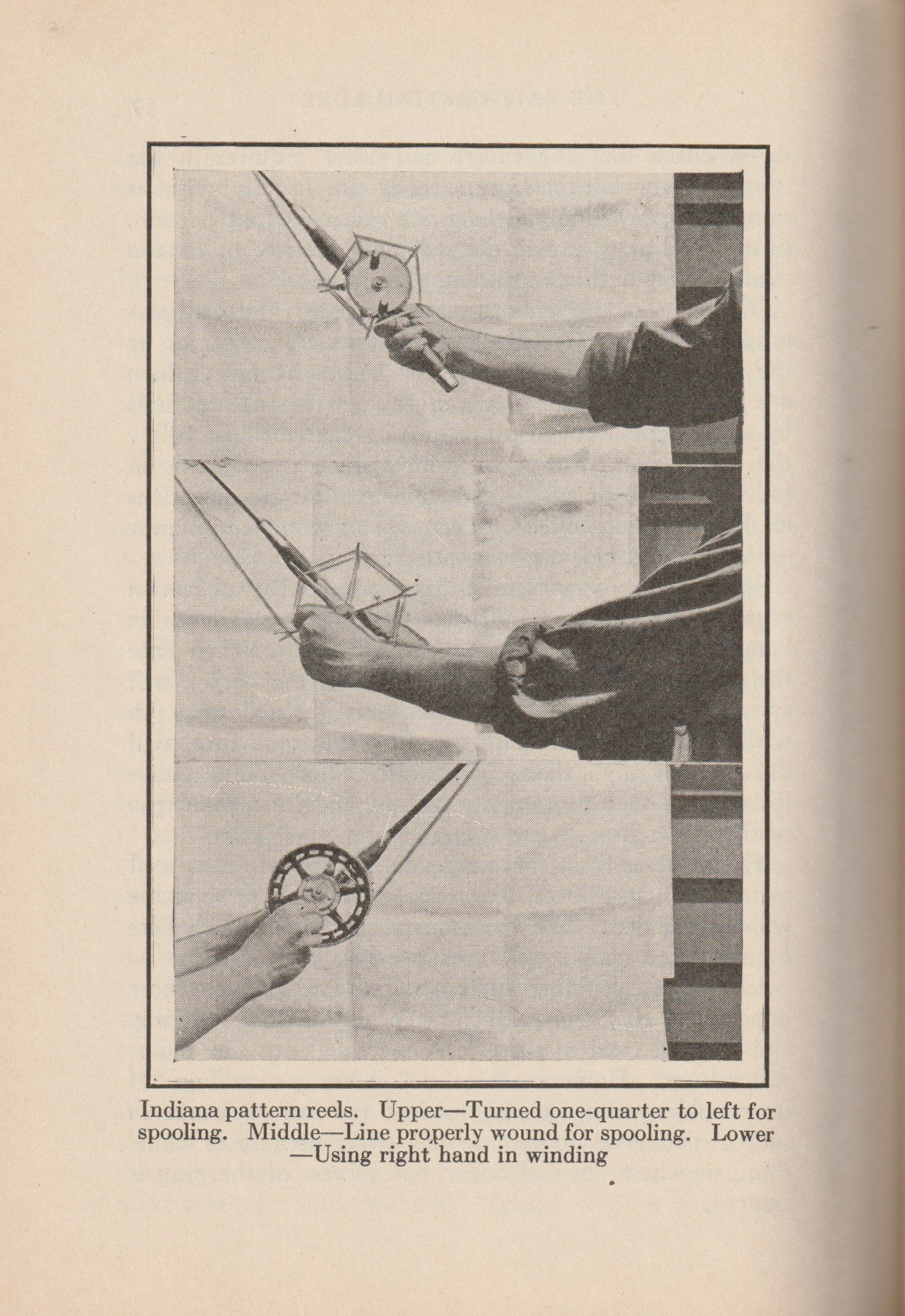
One other interesting piece of baitcasting gear now lost to time, is Jones’ brief discussion of the Indiana Pattern Reel. When I saw the photo in the book my first thought was, “Oh, he’s going to talk about ice fishing gear?” Because these reels look much like old ice fishing reels (photo below). I think it’s worth reprinting Jones’ entire brief text about these reels here:
“The Indiana Pattern reel differs from the Kentucky Pattern in that it is a single action reel of large diameter. It is a radical departure from the ordinary bait-casting reel in that it is simply a large spiderlike revolving disk that picks up about eighteen inches of line at each revolution of the handle. These reels are mainly equipped to be anti-back-lash and their very nature makes them self-spooling. One of their best features is the fact that they dry line quickly, due to their wide open build and broad diameter. Most of them may be thumbed if the angler so desires.”
“Many fishermen hold these large diameter reels in high favor since they make it possible for an amateur to make excellent casts with a minimum of practice, and they can be used in the casting of the lightest lures. Anglers who have been brought up on the Kentucky Pattern reel will, naturally, favor the long spool quad, and it is doubtful if the large reels will ever take the place of this pattern for many reasons, chief among which is the fact that they are difficult to pack and carry.”
“That they do good work goes without saying, and their low price is attractive.”
I find it interesting that Jones’ included two pages of photographs for this reel, each page showing three different Indiana reels. He must have been a fan of them himself, as he spent little time in discussing them but gave them a significant amount of image space. I looked up the Indiana reel on eBay to get an idea of what they sell for, and they’re not cheap, going anywhere from $50 to several hundred dollars.
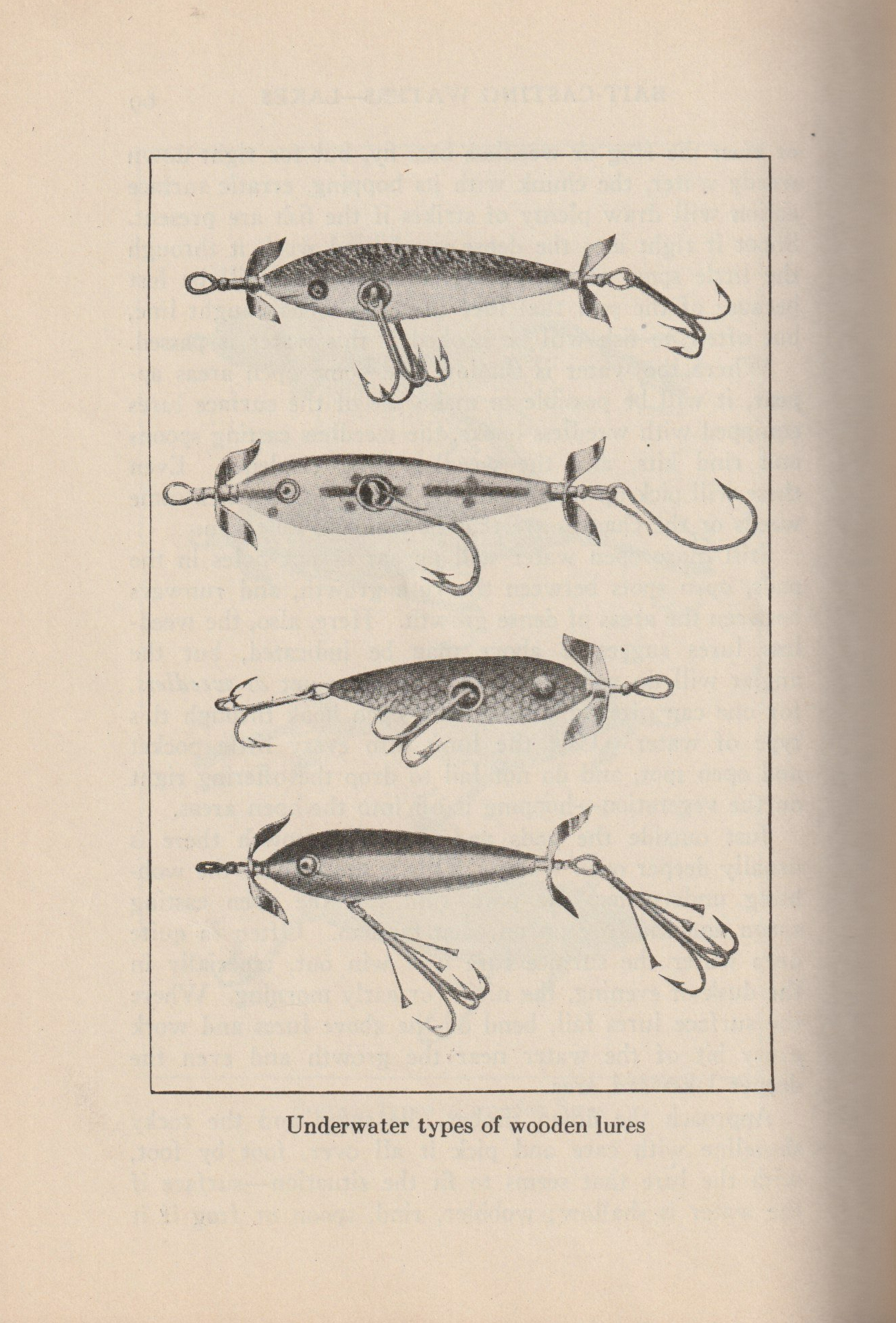
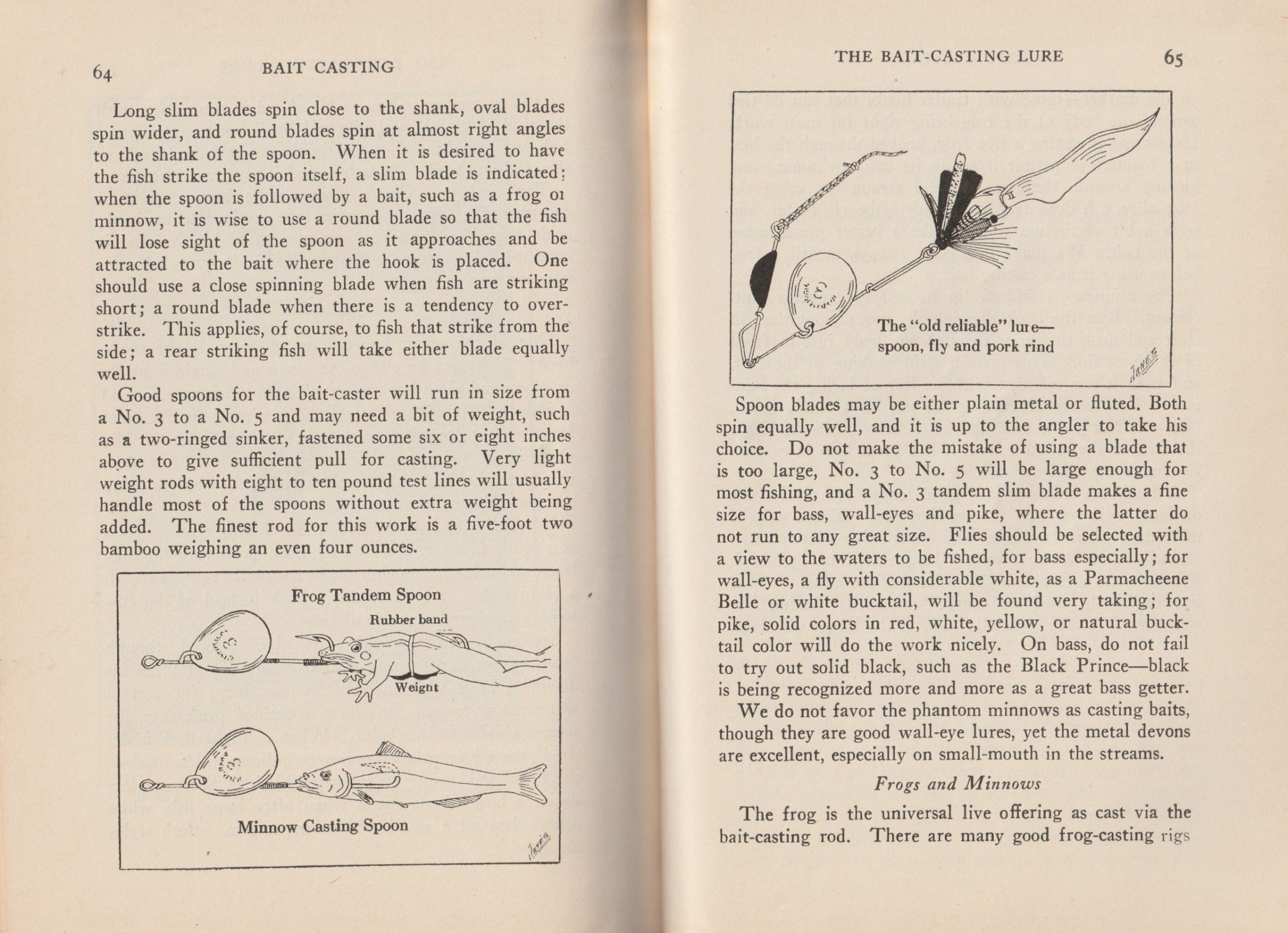
At the end of the book Jones’ discusses baitcasting in lakes and streams. In his chapter on lake fishing he covers familiar ground by referring to fishing the shallows, working weed beds, and deep water casting. It is in this short chapter and the one prior, The Bait-casting Lure, that he shares some opinions on types of plugs and lures to use. In addition to surface and underwater plugs recommendations, no writer of the 20th century would dare not include a discussion of pork rinds and chunks. He also includes spoons and live bait, frogs and minnows. As for stream fishing, this is a brief chapter that I personally wish he had spent more time on, because I love river fishing most of all. He breaks this chapter up into two sections: Casting Rapid Waters, and Sluggish Streams. “The frog is a wonderful bass bait in sluggish rivers,” advises Jones, “for here we usually find the large-mouthed species; just as we would cast a minnow in fast streams for the small-mouth.”

Please go back and read Part 1 in this series, my piece on the life of Sheridan R. Jones, as told in Joseph Hilko’s biography. And if you can pick up a copy of Bait Casting by Sheridan Jones by all means do so. Good copies of this little book are still out there waiting to be added to your angling library. In Part 1 I said I intended this to be a 3-part series, with a review of Jones’ 1924 Black Bass & Bass Craft hardcover book. But since then I searched for and purchased a copy of the April 1918 issue of Outers’ Recreation, which was the first issue of the first magazine that Sheridan R. Jones wrote for. So this might be a 4-part series. Good fishing, and may you avoid the backlash.