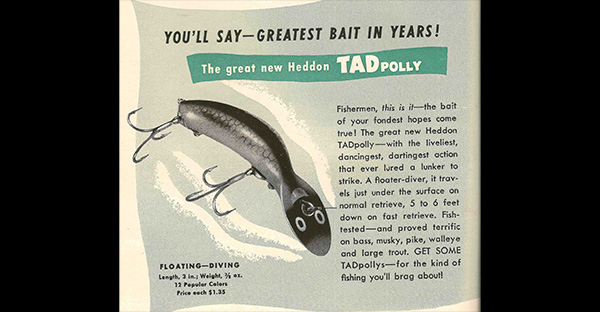
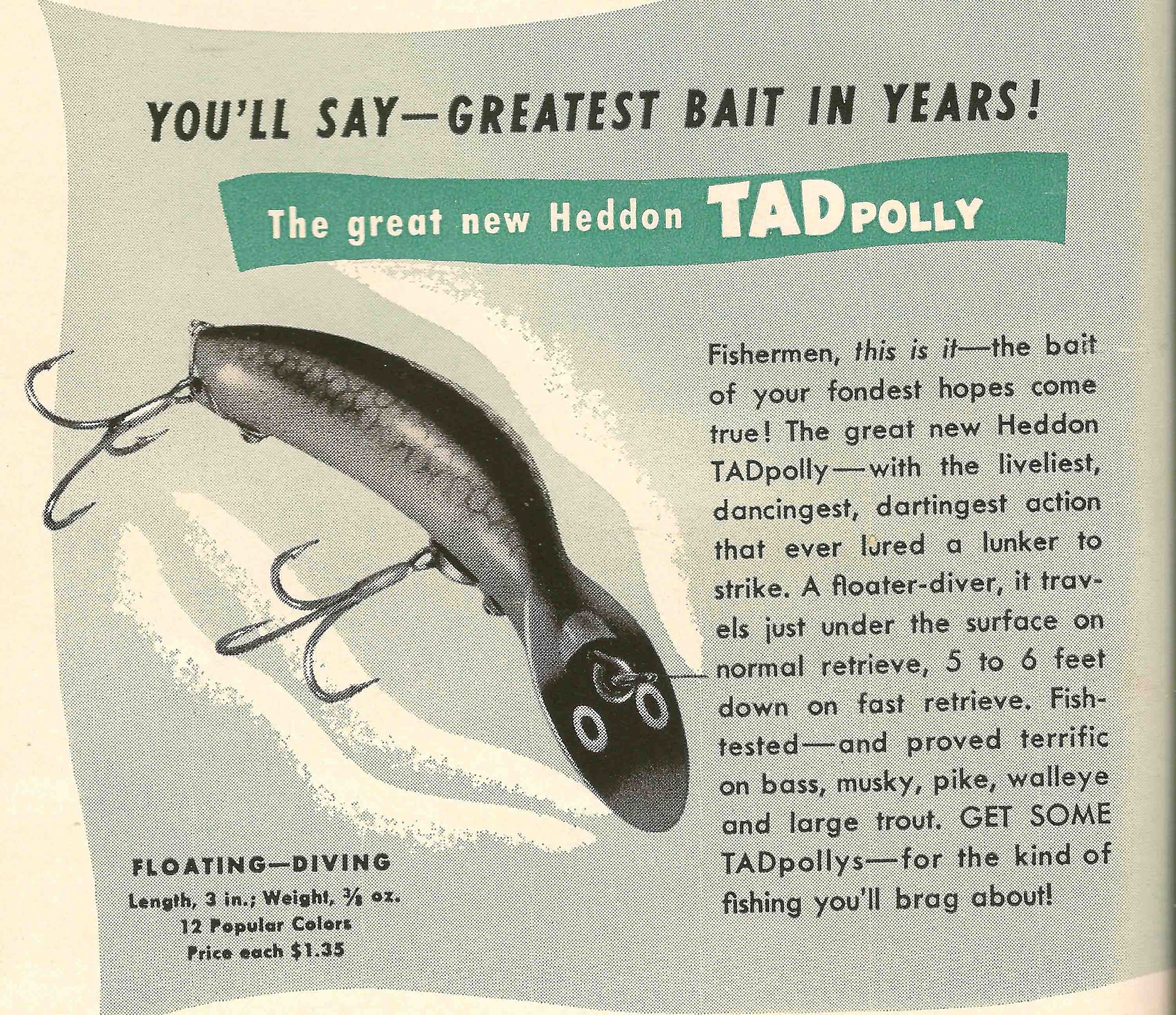
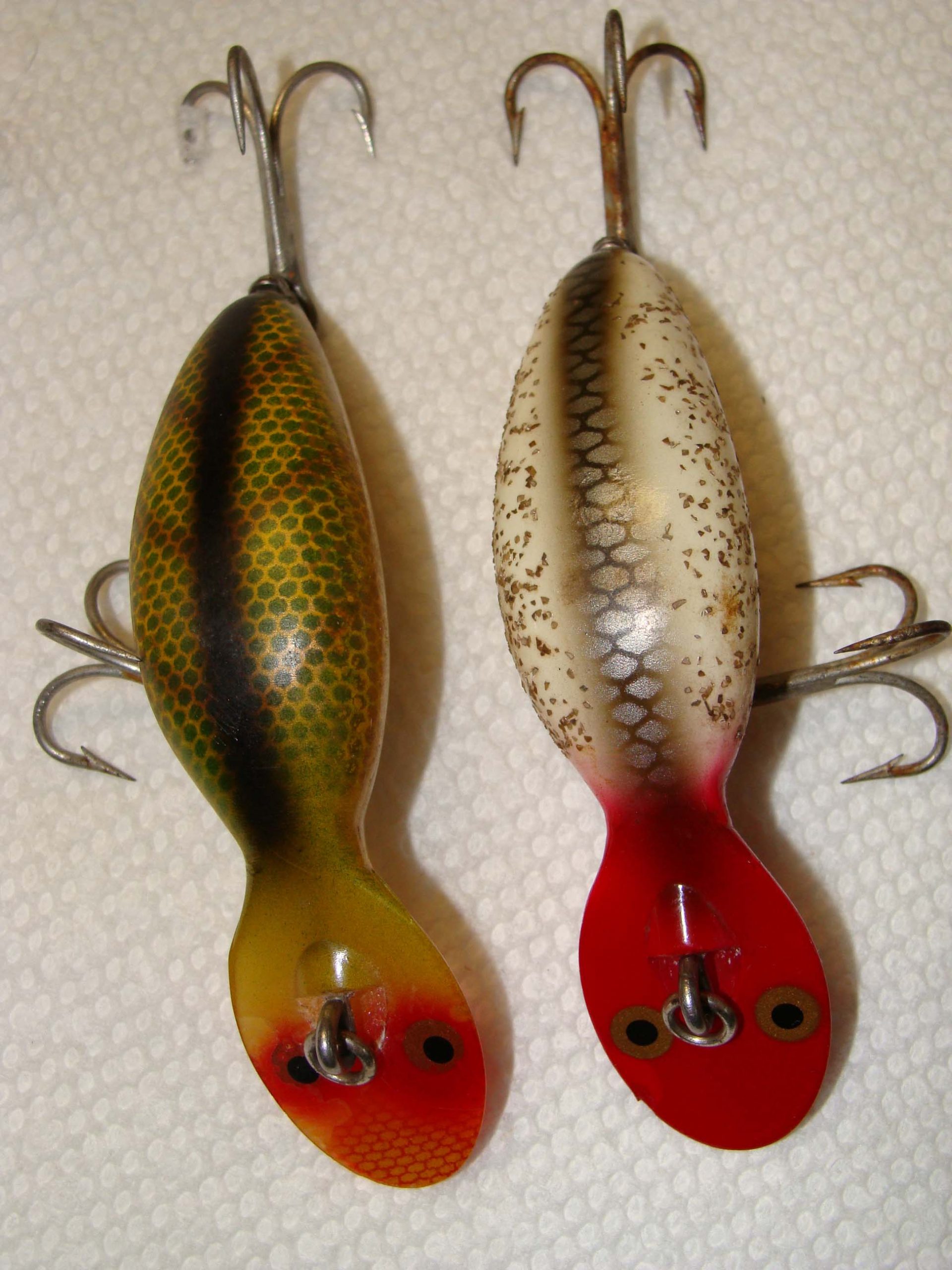
The Heddon Tadpolly Spook was introduced as “NEW” in this two-part advertisement in the May 1952 issue of Outdoor Life magazine. As is usually the case, great things were expected. It was a lure that had good action, floated at rest, and traveled five or six feet under the surface when retrieved. It was light for its 3-inch length, weighing only 3/8 oz. A spinning size was introduced the following year in 1953.
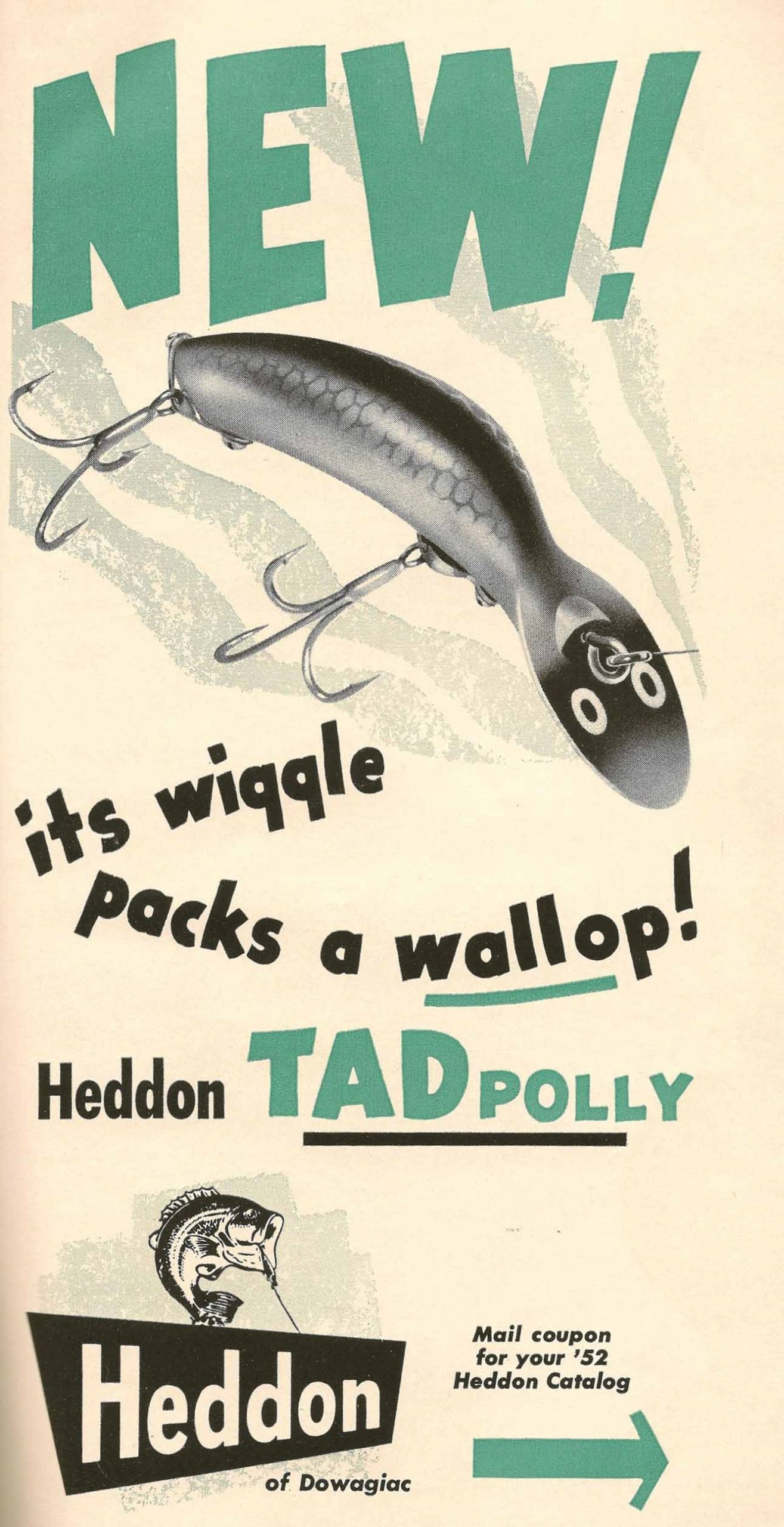
Ernst Radke, in his 1955 book New Angles to Bass Fishing, gave the Tadpolly a strong review, noting that it landed softly on the water and had produced well for him at night over sunken weed beds. It had an attractive look that appealed to me, and I purchase one in the late 1950s with the usual high hopes. I don’t ever remember taking a bass on it. After a time, one did not hear much about this lure and it disappeared from the tackle shop shelves for what seemed like several years.
With the introduction of Coho Salmon into the Great Lakes and a growing interest in trolling for Coho, Brown Trout and Steelhead in those same bodies of water, an odd thing happened. Someone discovered that the somewhat forgotten Tadpolly was a very effective lure in this new venue.
Tadpolly sales skyrocketed and new colors, new sizes, and models with internal rattles soon hit the market. By the 1980s at least seven different models were on the market. The original bait was equipped with standard Heddon surface hardware, light hooks and a screw eye line tie. None of this was nearly strong enough to handle a large salmon. My guess is that many a Coho swam off with hooks or part of the lure before Heddon came to the rescue.
Internal metal plates were soon molded into the plastic body which provided a greatly strengthened line tie as well as hook attachments. Some changes were also made over the life of the Tadpolly in the shape of certain models to add structural strength to the lure.
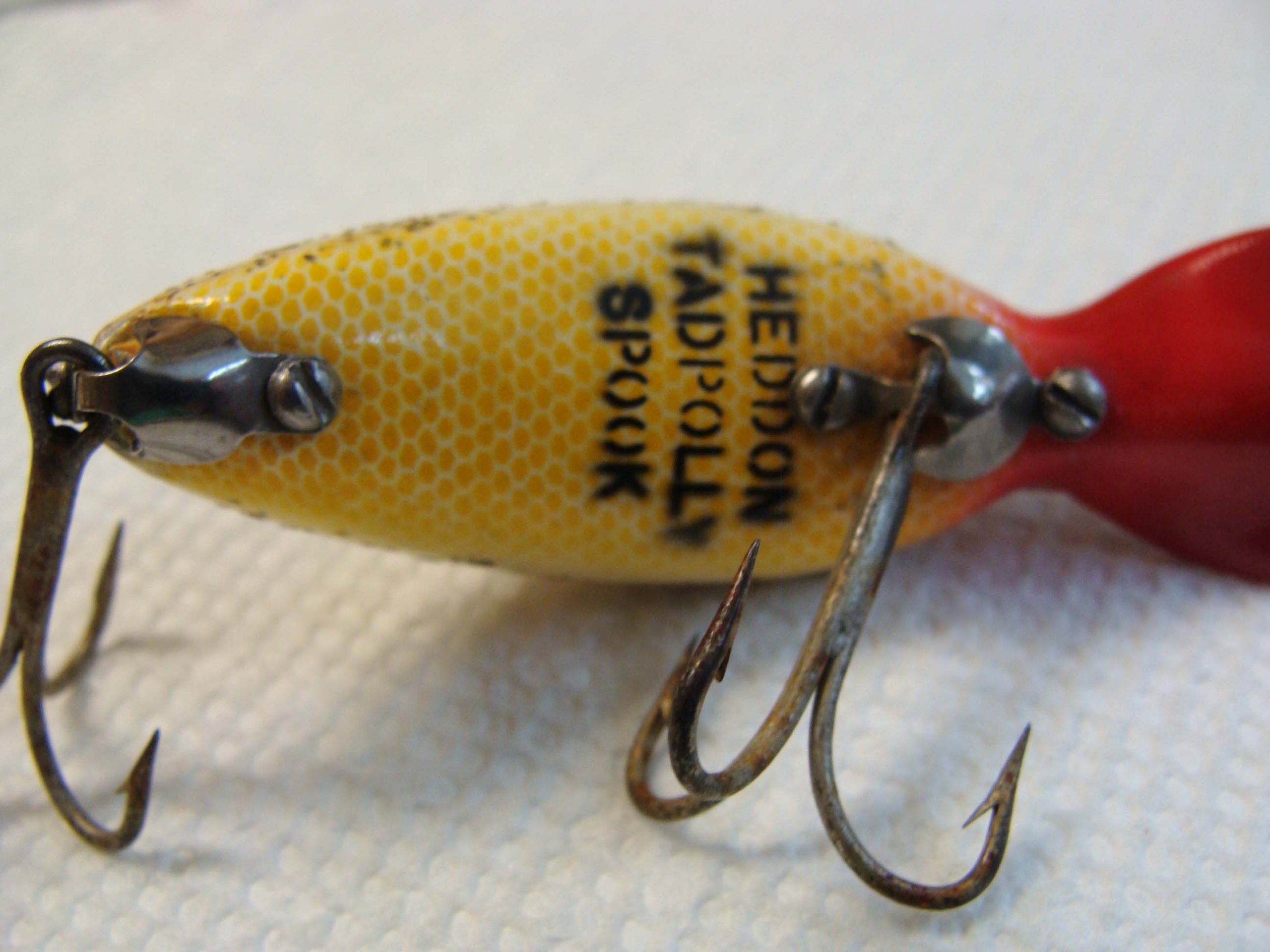
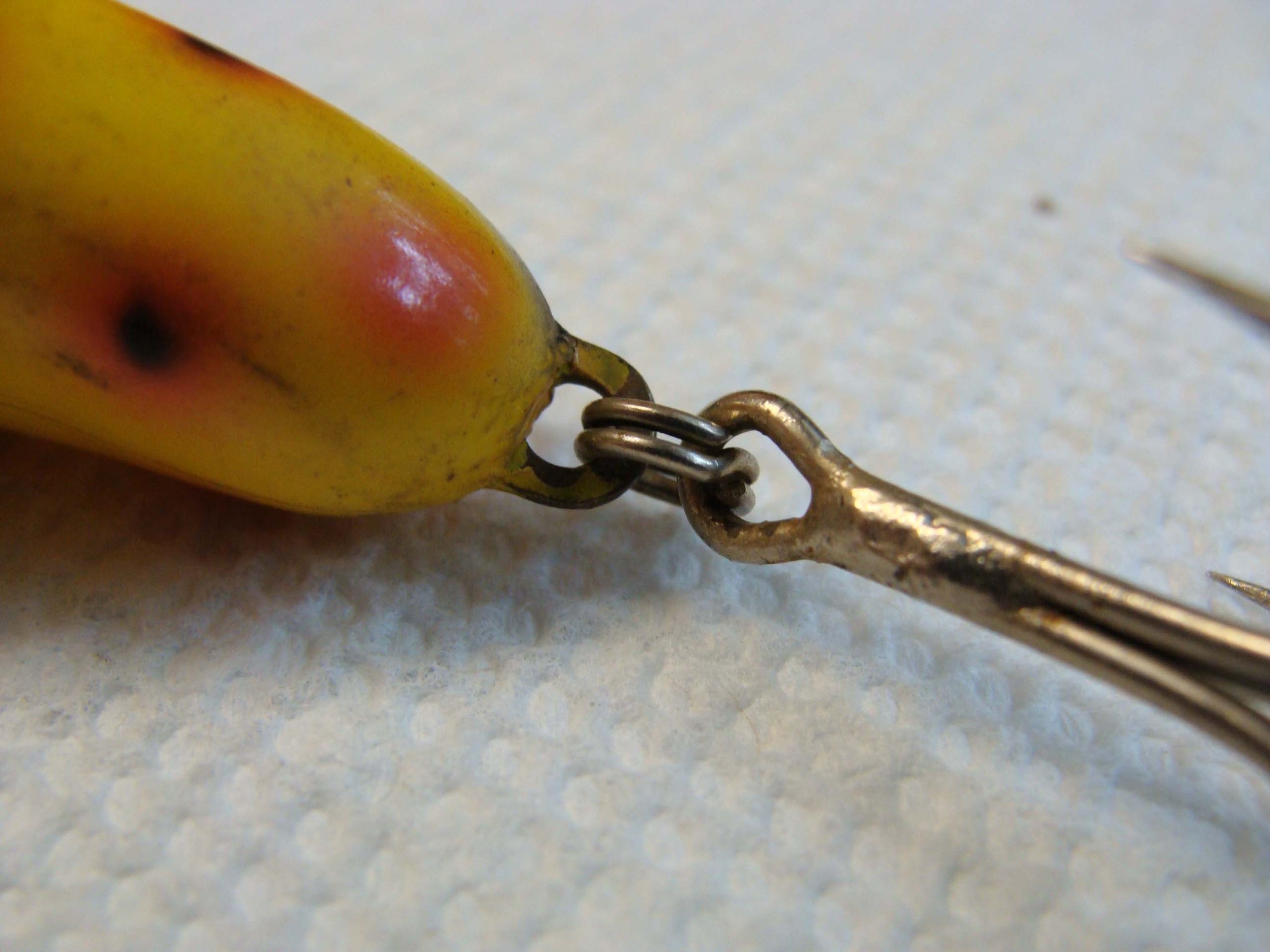
With the introduction of so many new and sometimes bazaar colors, the Tadpolly has taken on a third life as a natural for the “color collector” of Heddon Plastics.

If you’d like to read more of Bill’s stories from the past, please click this link.